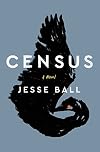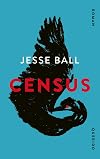
Census
by Jesse Ball
On This Page
Description
A powerful and moving new novel from an award-winning, acclaimed author: in the wake of a devastating revelation, a father and son journey north across a tapestry of towns. When a widower receives notice from a doctor that he doesn't have long left to live, he is struck by the question of who will care for his adult son--a son whom he fiercely loves, a boy with Down syndrome. With no recourse in mind, and with a desire to see the country on one last trip, the man signs up as a census taker show more for a mysterious governmental bureau and leaves town with his son. Traveling into the country, through towns named only by ascending letters of the alphabet, the man and his son encounter a wide range of human experience. While some townspeople welcome them into their homes, others who bear the physical brand of past censuses on their ribs are wary of their presence. When they press toward the edges of civilization, the landscape grows wilder, and the towns grow farther apart and more blighted by industrial decay. As they approach "Z," the man must confront a series of questions: What is the purpose of the census? Is he complicit in its mission? And just how will he learn to say good-bye to his son? Mysterious and evocative, Census is a novel about free will, grief, the power of memory, and the ferocity of parental love, from one of our most captivating young writers. show lessTags
Recommendations




Member Recommendations
booklove2 sad yet humorous road trips with children
Member Reviews
Beautiful. Spare. Ethereal. Elusive. Unsettling. Inspiring. Profound. Puzzling. Unique.
This is a fable defined by absence, holes, and omission, conjuring detached empathy.
“We as humans are so full of longing; what is blank eludes us.”
It starts with a man digging a grave.
The people and places are nameless, the period and location are vague (simultaneously foreign and familiar), and adjectives and adverbs are barely used. We know the central character almost entirely from the reactions of others: he is both absent and a mirror.
It ends with a man digging a grave.
The message I took was that even the least of us leaves marks on the world, and on each other. Make sure they’re the right ones. Then maybe, just maybe, we can live show more without regret, as the central character does.
Image: A deserted road, through snowy woods (Source.)
Seed
“I would make a book that was hollow. I would place him in the middle of it, and write around him for the most part. He would be there in his effect.”
In the short Preface, Jesse Bell explains his older brother, Abram, had Down Syndrome, and that even as a child, Jesse assumed that one day, he would be Abram’s caretaker. It was not to be: Abram died aged 24. This novel reconfigures what might have been: a widowed father whose adult son has an unspecified condition that fits with Down Syndrome. When the father gets a terminal diagnosis, he makes arrangements for his son’s future care, then takes him on a road trip.
The road trip is not the usual kind: he will be a census-taker.
Census
The census is not the usual kind. The census is not kind. Nor, it’s suggested, is the country or its administration.
“I signed the paper joining myself and my will to the mission of the census.”
And all who do so “sign away their basic rights of protection.”
The father’s reminiscences (“traveling into my own past”) are interspersed with those of the people he interviews across the country, gathering data for a future he will not live to see.
Foreboding lurks, simmering from the sinister, sometimes painful requirements of a bureaucracy of unclear purpose. It’s a fresh twist on Kafka.
“It’s hard… convincing someone else to do something the value of which you do not understand.”
The census records “the inchoate shape of lives”, but what for, and should it be quantitative or qualitative?
Like the archetype of the wise fool, the census-taker’s son is, in some ways, more deserving of the title:
“His the true census, he whose eyes have seen all, whose heart has felt all.”
Image: Clown in the mirror after the show in circus, by Wabyanko (Source.)
Connecting clowns and cormorants
“The person she was in her letters was someone she herself did not know until the letter was written.”
The census-taker was instructed to consider himself an archaeologist, scientist, artist, and priest. As citizens pour out their lives, he ponders the fundamental unknowability of other people’s experiences, especially his son’s, but also the “many versions” of himself:
“Is that really you in the photograph? Or is it someone you have a connection with? Someone you once knew, but who now is foreign to you?”
Two absent women provide an allegory. Each strives to understand others by physical connection and transformation:
• The wife/mother was a performer: a clown who was “telepathic not with mind but body”: the perfect preparation for having a child whose language and understanding are simple and different, but not necessarily less. (The book she wrote before he was born, but never published, was titled “A Fool is a Mirror”.)
• Mutter, a fictitious (hence, named) German woman, studied and drew cormorants in Victorian times, but “her real desire was to leave her body and become in absolute terms a cormorant”. Not to be a human mind in a bird’s body, but actually be a cormorant. It reminded me of The Crane Wife in Japanese folklore (though when I checked, it’s rather different).
Connecting the two, when the wife was at clown school:
“She had found a place… between wing beats.”
Image: Father, son, and cormorant, by Simon Pemberton (Source.)
For a very different novella, but where the philosophy of clowning also plays a role, see Josipovici's delightful, elegant, and ultimately very clever, bit of whimsy, Only Joking, which I reviewed HERE.
The end…?
Beautifully ambiguous. Heartbreakingly joyful. Totally fitting.
Quotes
• “Ever since he was born, our lives, my wife’s, mine, bent around him like a shield.”
• “Is there none who can simply wander alone beneath a sort of cloth tent painted with dreams?”
• “A name is almost always a kind of cowardice - an attempt to confine a thing to being only what it is, rather than what it may be.”
• “Brief blooms of wealth leave their impressions most in architecture… Something hollow is left when it fails.”
• “The freedom of burdens… somehow we are all seeking some appropriate burden. Until we find it, we are horribly shackled, can in fact scarcely live.”
• "Read widely because nothing has been everywhere applied... I took it to mean... a person with a wide range of interests will find the mirror of one thing in another."
• "It's your life, your presence is required."
See also
Four months after this, I enjoyed China Miéville's This Census-Taker. It’s similarly hard to place and unravel, with dubious intent behind the titular census, but it has more plot (albeit quite opaque) and is not as hauntingly beautiful as this. See my review HERE. show less
This is a fable defined by absence, holes, and omission, conjuring detached empathy.
“We as humans are so full of longing; what is blank eludes us.”
It starts with a man digging a grave.
The people and places are nameless, the period and location are vague (simultaneously foreign and familiar), and adjectives and adverbs are barely used. We know the central character almost entirely from the reactions of others: he is both absent and a mirror.
It ends with a man digging a grave.
The message I took was that even the least of us leaves marks on the world, and on each other. Make sure they’re the right ones. Then maybe, just maybe, we can live show more without regret, as the central character does.
Image: A deserted road, through snowy woods (Source.)
Seed
“I would make a book that was hollow. I would place him in the middle of it, and write around him for the most part. He would be there in his effect.”
In the short Preface, Jesse Bell explains his older brother, Abram, had Down Syndrome, and that even as a child, Jesse assumed that one day, he would be Abram’s caretaker. It was not to be: Abram died aged 24. This novel reconfigures what might have been: a widowed father whose adult son has an unspecified condition that fits with Down Syndrome. When the father gets a terminal diagnosis, he makes arrangements for his son’s future care, then takes him on a road trip.
The road trip is not the usual kind: he will be a census-taker.
Census
The census is not the usual kind. The census is not kind. Nor, it’s suggested, is the country or its administration.
“I signed the paper joining myself and my will to the mission of the census.”
And all who do so “sign away their basic rights of protection.”
The father’s reminiscences (“traveling into my own past”) are interspersed with those of the people he interviews across the country, gathering data for a future he will not live to see.
Foreboding lurks, simmering from the sinister, sometimes painful requirements of a bureaucracy of unclear purpose. It’s a fresh twist on Kafka.
“It’s hard… convincing someone else to do something the value of which you do not understand.”
The census records “the inchoate shape of lives”, but what for, and should it be quantitative or qualitative?
Like the archetype of the wise fool, the census-taker’s son is, in some ways, more deserving of the title:
“His the true census, he whose eyes have seen all, whose heart has felt all.”
Image: Clown in the mirror after the show in circus, by Wabyanko (Source.)
Connecting clowns and cormorants
“The person she was in her letters was someone she herself did not know until the letter was written.”
The census-taker was instructed to consider himself an archaeologist, scientist, artist, and priest. As citizens pour out their lives, he ponders the fundamental unknowability of other people’s experiences, especially his son’s, but also the “many versions” of himself:
“Is that really you in the photograph? Or is it someone you have a connection with? Someone you once knew, but who now is foreign to you?”
Two absent women provide an allegory. Each strives to understand others by physical connection and transformation:
• The wife/mother was a performer: a clown who was “telepathic not with mind but body”: the perfect preparation for having a child whose language and understanding are simple and different, but not necessarily less. (The book she wrote before he was born, but never published, was titled “A Fool is a Mirror”.)
• Mutter, a fictitious (hence, named) German woman, studied and drew cormorants in Victorian times, but “her real desire was to leave her body and become in absolute terms a cormorant”. Not to be a human mind in a bird’s body, but actually be a cormorant. It reminded me of The Crane Wife in Japanese folklore (though when I checked, it’s rather different).
Connecting the two, when the wife was at clown school:
“She had found a place… between wing beats.”
Image: Father, son, and cormorant, by Simon Pemberton (Source.)
For a very different novella, but where the philosophy of clowning also plays a role, see Josipovici's delightful, elegant, and ultimately very clever, bit of whimsy, Only Joking, which I reviewed HERE.
The end…?
Beautifully ambiguous. Heartbreakingly joyful. Totally fitting.
Quotes
• “Ever since he was born, our lives, my wife’s, mine, bent around him like a shield.”
• “Is there none who can simply wander alone beneath a sort of cloth tent painted with dreams?”
• “A name is almost always a kind of cowardice - an attempt to confine a thing to being only what it is, rather than what it may be.”
• “Brief blooms of wealth leave their impressions most in architecture… Something hollow is left when it fails.”
• “The freedom of burdens… somehow we are all seeking some appropriate burden. Until we find it, we are horribly shackled, can in fact scarcely live.”
• "Read widely because nothing has been everywhere applied... I took it to mean... a person with a wide range of interests will find the mirror of one thing in another."
• "It's your life, your presence is required."
See also
Four months after this, I enjoyed China Miéville's This Census-Taker. It’s similarly hard to place and unravel, with dubious intent behind the titular census, but it has more plot (albeit quite opaque) and is not as hauntingly beautiful as this. See my review HERE. show less
There is something about literary fiction which attracts me and repels me at the same time. I love it for the way it typically evokes a strong emotional response, the strong character development, and slow pace that allows the story to fully build, and yet while reading it I cannot help but feel like I am not intelligent enough to catch every nuance. I always envision intellectuals sitting around over drinks talking about the philosophical themes and the sociological implications of the novel’s events, referencing classical literature or philosophers that are unknown to me. In other words, literary fiction is intimidating as hell.
In his latest novel Census, Jesse Ball creates an approachable literary novel that any person can show more understand because it is not about esoteric philosophies but rather about the one thing everyone can understand – love, grief, and the memories that surround those emotions. Everything that occurs to the narrator and his son on their journey is nothing but the impetus for memories to arise. There is no action, no real plot. It is nothing more than the memories of a person at the end of his life remembering the love and affection for and from others that graced his life and his wishes for his son. It is powerful and poignant and compelling.
To go into Census without preparation does mean struggles in the beginning. For one, much is made of the census for which the narrator begins his journey. Much is made of it but no one ever explains it. At the same time, there is no world-building. We are left with nothing but geographic areas identified by a single letter, a nebulous journey north, and an indication that the world of the narrator is not our world. There is no time stamp nor any hint whether the world is post-apocalyptic or simply an alternate universe. It would be easy to get caught up in these lack of details if only because inquiring minds want to know but also because the narrator expects us to know. There is no world-building because the narrator understands we are from his world and therefore already know all about his world’s history and the history of the census. To focus on that though is to miss the point of the story.
The point of Census is not the census. Nor is it the journey the narrator takes with his son. Rather, the novel is nothing more than an ode to his son. Once you realize that, you can become the active reader the story requires you to be as you go along with the narrator through his memories and get to know both men through them. Once you stop fighting the lack of world-building, you are swept away on a tide of emotions.
Little is actually made about the fact that the narrator’s son has Down’s Syndrome. In fact, I am still trying to remember if the narrator ever directly mentions it or whether this is a piece of information we know from the synopsis and the author’s note at the beginning of the novel. What we do see is how the narrator has structured his life around making sure his son experiences as little pain and grief as possible, and we especially see the joy his son brings him. There are dark moments when we are reminded of people’s cruelty, but the majority of the novel focuses on the positive – on the little joys his son brings to every moment and the subsequent joys his son brings him as a result. When our world is falling further into chaos and negativity, the narrator’s stories are a reminder that love trumps hate every single time.
Census is not flashy, and it will not generate the loud buzz that some other spring books are already receiving. Yet, it is going to be a success because it is so very lovely, and we all need a little beauty and joy in our lives right now. It is one that will mean different things to different people but will affect everyone who reads it. In the author’s note, Mr. Ball mentions he set out to write a love story about his brother who passed away several years ago. In that, he more than succeeded, for Census is a love story about everyone who has ever been loved, about anyone who has been considered different or not normal. Census is a balm to heal the wounds from which we all suffer caused by the hatred and vitriol being spewed by all sides on a daily basis. show less
In his latest novel Census, Jesse Ball creates an approachable literary novel that any person can show more understand because it is not about esoteric philosophies but rather about the one thing everyone can understand – love, grief, and the memories that surround those emotions. Everything that occurs to the narrator and his son on their journey is nothing but the impetus for memories to arise. There is no action, no real plot. It is nothing more than the memories of a person at the end of his life remembering the love and affection for and from others that graced his life and his wishes for his son. It is powerful and poignant and compelling.
To go into Census without preparation does mean struggles in the beginning. For one, much is made of the census for which the narrator begins his journey. Much is made of it but no one ever explains it. At the same time, there is no world-building. We are left with nothing but geographic areas identified by a single letter, a nebulous journey north, and an indication that the world of the narrator is not our world. There is no time stamp nor any hint whether the world is post-apocalyptic or simply an alternate universe. It would be easy to get caught up in these lack of details if only because inquiring minds want to know but also because the narrator expects us to know. There is no world-building because the narrator understands we are from his world and therefore already know all about his world’s history and the history of the census. To focus on that though is to miss the point of the story.
The point of Census is not the census. Nor is it the journey the narrator takes with his son. Rather, the novel is nothing more than an ode to his son. Once you realize that, you can become the active reader the story requires you to be as you go along with the narrator through his memories and get to know both men through them. Once you stop fighting the lack of world-building, you are swept away on a tide of emotions.
Little is actually made about the fact that the narrator’s son has Down’s Syndrome. In fact, I am still trying to remember if the narrator ever directly mentions it or whether this is a piece of information we know from the synopsis and the author’s note at the beginning of the novel. What we do see is how the narrator has structured his life around making sure his son experiences as little pain and grief as possible, and we especially see the joy his son brings him. There are dark moments when we are reminded of people’s cruelty, but the majority of the novel focuses on the positive – on the little joys his son brings to every moment and the subsequent joys his son brings him as a result. When our world is falling further into chaos and negativity, the narrator’s stories are a reminder that love trumps hate every single time.
Census is not flashy, and it will not generate the loud buzz that some other spring books are already receiving. Yet, it is going to be a success because it is so very lovely, and we all need a little beauty and joy in our lives right now. It is one that will mean different things to different people but will affect everyone who reads it. In the author’s note, Mr. Ball mentions he set out to write a love story about his brother who passed away several years ago. In that, he more than succeeded, for Census is a love story about everyone who has ever been loved, about anyone who has been considered different or not normal. Census is a balm to heal the wounds from which we all suffer caused by the hatred and vitriol being spewed by all sides on a daily basis. show less
The Short of It:
A quiet, complex story about the love between a father and his son.
The Rest of It:
A widower is told by his doctor that he doesn’t have long to live. As a doctor himself, he takes this information in but then immediately thinks about how his special-needs son will survive without him. Who will the boy live with? Who could take this responsibility on?
As the man ponders this, he sets himself up as a census taker. A door-to-door census taker. One who will travel from town to town and record its inhabitants. He believes this road trip is what he and his son needs. Time together, in the car, going door to door. One last trip.
Census has been called a dystopian sci-fi. If you dig deep, you can see it. A census taker, applying show more permanent tattoos on the citizens he encounters, nameless towns that are only represented by a letter of the alphabet. Strange people. Often quirky and then the way this man deals with his own impending death. There is a lot to take apart.
The author set out to write a story that would honor his brother who had Down Syndrome. A brother who passed away. Although the boy’s affliction in this story is not mentioned specifically, the reader is well aware that he is special needs. But did the author succeed in honoring the brother he lost? I think the author believes so. The way in which the boy is drawn, the interactions he has with strangers, and the bond he holds with his father speaks to something but not Down Syndrome specifically.
What I enjoyed while reading this book is how different it was from past reads. It was unique but not overly so. Really, a quiet story that moves you along slowly. Occasionally beautiful prose. Ball is a poet and you can sense that in his writing. I enjoyed the quiet moments that the father and son shared.
I didn’t agree with the ending, even though the story opens with the ending. It should not have been a surprise to me but it left me a little unsettled. That said, I am glad I read it and I would happily read another story by Ball. He’s written nine novels!
For more reviews, visit my blog: Book Chatter. show less
A quiet, complex story about the love between a father and his son.
The Rest of It:
A widower is told by his doctor that he doesn’t have long to live. As a doctor himself, he takes this information in but then immediately thinks about how his special-needs son will survive without him. Who will the boy live with? Who could take this responsibility on?
As the man ponders this, he sets himself up as a census taker. A door-to-door census taker. One who will travel from town to town and record its inhabitants. He believes this road trip is what he and his son needs. Time together, in the car, going door to door. One last trip.
Census has been called a dystopian sci-fi. If you dig deep, you can see it. A census taker, applying show more permanent tattoos on the citizens he encounters, nameless towns that are only represented by a letter of the alphabet. Strange people. Often quirky and then the way this man deals with his own impending death. There is a lot to take apart.
The author set out to write a story that would honor his brother who had Down Syndrome. A brother who passed away. Although the boy’s affliction in this story is not mentioned specifically, the reader is well aware that he is special needs. But did the author succeed in honoring the brother he lost? I think the author believes so. The way in which the boy is drawn, the interactions he has with strangers, and the bond he holds with his father speaks to something but not Down Syndrome specifically.
What I enjoyed while reading this book is how different it was from past reads. It was unique but not overly so. Really, a quiet story that moves you along slowly. Occasionally beautiful prose. Ball is a poet and you can sense that in his writing. I enjoyed the quiet moments that the father and son shared.
I didn’t agree with the ending, even though the story opens with the ending. It should not have been a surprise to me but it left me a little unsettled. That said, I am glad I read it and I would happily read another story by Ball. He’s written nine novels!
For more reviews, visit my blog: Book Chatter. show less
Jesse Ball had a brother with Down Syndrome and as a child, he envisioned taking care of his brother when they were both adults. Sadly, his brother died in his 20s. Ball wrote this book to envision what that life might have been like, with the main character raising a child with Down Syndrome. In the novel, the father knows he is dying, so he and his son set off on a weird road trip. I've heard it took him a week to write this, but if this book was to honor his sweet hearted brother, I feel he should have put a little more work into it. With such a tough subject matter for him, the writing did seem at a remove. The book is one of those 'collection of profound tiny moments' sort of books (see Rachel Khong's 'Goodbye Vitamin'). But of the show more other from Jesse Ball I've read, he seems to write those sorts of books. This book reminded me of a Tarkovsky movie: the plot makes little sense but the details and imagery are freakin beautiful. show less
In a brief intro, Ball writes that this book is for his older brother, who died at age 24 and had Down Syndrome. Ball has had 20 years to come to terms with his death and the changes that it meant for his own life (he had always known he would be his brother's caretaker, for example), but did not want to write a memoir.
This book reads very post-apocalyptic: a dying widowed father and his adult son with Down Syndrome, traveling through towns A to Z, administering the census and tattooing respondents. I think, though, that this book is an allegory.
The road is the strange road parents with a disabled child find themselves on.
They meet wonderful people who are kind to his son, and happy to have him help them or to entertain him.
They meet show more people who are mean and cruel.
They find empty towns.
The father decides to do the census differently than he was actually told, because it works better.
I'm not sure what the tattoos mean--kinder people are marked by their kindness? Take brief pain for their kindness?
In the end, the father puts his son on a train, back to their home and the couple who promised he and his wife they would look after their son. Just as any parent of a severely disabled child must launch them off into the world hoping for the best, and hoping they can trust the people who need to look out for that child. show less
This book reads very post-apocalyptic: a dying widowed father and his adult son with Down Syndrome, traveling through towns A to Z, administering the census and tattooing respondents. I think, though, that this book is an allegory.
The road is the strange road parents with a disabled child find themselves on.
They meet wonderful people who are kind to his son, and happy to have him help them or to entertain him.
They meet show more people who are mean and cruel.
They find empty towns.
The father decides to do the census differently than he was actually told, because it works better.
I'm not sure what the tattoos mean--kinder people are marked by their kindness? Take brief pain for their kindness?
In the end, the father puts his son on a train, back to their home and the couple who promised he and his wife they would look after their son. Just as any parent of a severely disabled child must launch them off into the world hoping for the best, and hoping they can trust the people who need to look out for that child. show less
In Jesse Ball's Census there were difficult stretches of not understanding and bewilderment but as the novel moved on I felt deeply moved by my insights gained for the relationship and journey of a dieing father and his Downs-Syndrome son. To partly quote one of the advertising blurbs within, the book is “ uniquely memorable and utterly profound.” One does get “...what it is like to know and love a Downs-Syndrome boy or girl...” There is a mix of melancholy provided mainly by the father balanced with his lively life hugging son.
Quotes: (pages 3 and 4) “Most of all it was my son who prepared me for this work, my son who showed me, not in speech, but in his daily way, that we are by our nature a kind of measure, that we are show more measuring each other every moment. This was the census he began at birth, that he continues even now. It was his census that led into ours, into our taking of the census, our travel north.”
(page 93) “But, do I, asked myself as we drove on, doubt the census itself? No, a thousand times, no. It is only my particular application of it, an application mired in confusion, the confusion of my life and circumstance. I imagine in my head, late at night, what a real census taker would be like, the manner of his arrival at the house, the greeting he would receive, what questions he would ask, caparisoned, as it were in garments of silver, moonlight perhaps?”
(pages 146-147) “It seems to me that there is an excellence in discrimination-in telling one thing apart from another, in being able to break down into parts and see it simultaneously as its parts, and as a whole-and to do this for all the things that one sees, to be simultaneously both grain and branch, to see the pore the limb the leap all together. But this endeavor is often tied to another-that is, that each part should be named. The naming of each part, and the knowing of these names is then spoken of as being identical to the excellence of discriminating between the parts. In fact, it is useful only in so much as one might choose to speak about any particular part. The wondrousness of felt experience resides in the discrimination, not in the name.
So I would be speaking for, then, a world without names-wherein we see what is, and are impressed by it-the impressions push into us and change us forever. This is the world I believe my son lives in.”
(page 213) “However that may be, the spinning around was very difficult for him. His legs would end up in the wrong place, and he would become angry. So my wife practiced it with him and practiced it with him, the turning, going very slowly, again and again, until finally, one day, he managed it. Of course, even then it wasn't exactly the spinning blow that a swordsman would use. He took quite a bit of time in the turning around-however it was enough. I heard him calling to me all the way from the downstairs of the house, and I heard him on the stairs, and then in the hall by my study door. A part of me is, I think, still there behind the door, full of joy, listening to his approach.” show less
Quotes: (pages 3 and 4) “Most of all it was my son who prepared me for this work, my son who showed me, not in speech, but in his daily way, that we are by our nature a kind of measure, that we are show more measuring each other every moment. This was the census he began at birth, that he continues even now. It was his census that led into ours, into our taking of the census, our travel north.”
(page 93) “But, do I, asked myself as we drove on, doubt the census itself? No, a thousand times, no. It is only my particular application of it, an application mired in confusion, the confusion of my life and circumstance. I imagine in my head, late at night, what a real census taker would be like, the manner of his arrival at the house, the greeting he would receive, what questions he would ask, caparisoned, as it were in garments of silver, moonlight perhaps?”
(pages 146-147) “It seems to me that there is an excellence in discrimination-in telling one thing apart from another, in being able to break down into parts and see it simultaneously as its parts, and as a whole-and to do this for all the things that one sees, to be simultaneously both grain and branch, to see the pore the limb the leap all together. But this endeavor is often tied to another-that is, that each part should be named. The naming of each part, and the knowing of these names is then spoken of as being identical to the excellence of discriminating between the parts. In fact, it is useful only in so much as one might choose to speak about any particular part. The wondrousness of felt experience resides in the discrimination, not in the name.
So I would be speaking for, then, a world without names-wherein we see what is, and are impressed by it-the impressions push into us and change us forever. This is the world I believe my son lives in.”
(page 213) “However that may be, the spinning around was very difficult for him. His legs would end up in the wrong place, and he would become angry. So my wife practiced it with him and practiced it with him, the turning, going very slowly, again and again, until finally, one day, he managed it. Of course, even then it wasn't exactly the spinning blow that a swordsman would use. He took quite a bit of time in the turning around-however it was enough. I heard him calling to me all the way from the downstairs of the house, and I heard him on the stairs, and then in the hall by my study door. A part of me is, I think, still there behind the door, full of joy, listening to his approach.” show less
This has been on my shelf since 2018. A father, a surgeon, recent widow, who is dying decides to go to work as a census taker with his disabled son. Jesse Ball wrote this story in honor of his brother who had Down's Syndrome. In writing this, the author decided to write a story around the presence of this brother. One of the things parents of children with disabilities have to face is what will happen to these children when they die and are no longer there to care for them. The book is set up with chapters headed by the alphabet; A,B,C, etc all the way to Z. They represent towns that they travel to as census takers. This census is not the census we're familiar with. It involves some kind of interview and then placing a tattoo mark on a show more rib. One of the things that stands out in the book is the references of Cormorants. Not sure what this book represents but this is a book that does a better job of swimming/diving than flying. It is a very good at catching fish. show less
Members
- Recently Added By
Lists

2019 Tournament of Books
18 works; 17 members

Top Five Books of 2018
802 works; 265 members

Powell's Indiespensable
79 works; 6 members
Author Information

23+ Works 2,411 Members
Jesse Ball was born in Port Jefferson, New York on June 7, 1978. He received a bachelor's degree from Vassar College and an MFA from Columbia University. His novels include Samedi the Deafness, Silence Once Begun, A Cure for Suicide, and How to Set a Fire and Why. His poem, Speech in a Chamber, was chosen for the anthology The Best American Poetry show more 2006. He won the 2008 Paris Review Plimpton Prize for The Early Deaths of Lubeck, Brennan, Harp, and Carr. (Bowker Author Biography) show less
Awards and Honors
Awards
Distinctions
Common Knowledge
- Original publication date
- 2018
- Canonical DDC/MDS
- 813.6
- Canonical LCC
- PS3602.A596
Classifications
Statistics
- Members
- 386
- Popularity
- 81,225
- Reviews
- 21
- Rating
- (3.56)
- Languages
- 8 — Catalan, Czech, Dutch, English, French, German, Portuguese, Spanish
- Media
- Paper, Audiobook, Ebook
- ISBNs
- 21
- ASINs
- 4