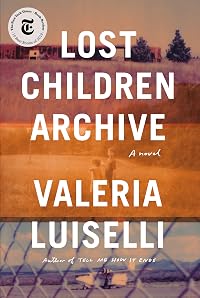
Lost Children Archive
by Valeria Luiselli
On This Page
Description
"From the two-time NBCC Finalist, a fiercely imaginative novel about a family's summer road trip across America--a journey that, with breathtaking imagery, spare lyricism, and profound humanity, probes the nature of justice and equality in America today. A mother and father set out with their kids from New York to Arizona. In their used Volvo--and with their ten-year-old son trying out his new Polaroid camera--the family is heading for the Apacheria: the region the Apaches once called home, show more and where the ghosts of Geronimo and Cochise might still linger. The father, a sound documentarist, hopes to gather an "inventory of echoes" from this historic, mythic place. The mother, a radio journalist, becomes consumed by the news she hears on the car radio, about the thousands of children trying to reach America but getting stranded at the southern border, held in detention centers, or being sent back to their homelands, to an unknown fate. But as the family drives farther west--through Virginia to Tennessee, across Oklahoma and Texas--we sense they are on the brink of a crisis of their own. A fissure is growing between the parents, one the children can feel beneath their feet. They are led, inexorably, to a grand, unforgettable adventure--both in the harsh desert landscape and within the chambers of their own imaginations. Told through the voices of the mother and her son, as well as through a stunning tapestry of collected texts and images--including prior stories of migration and displacement--Lost Children Archive is a story of how we document our experiences, and how we remember the things that matter to us the most. Blending the personal and the political with astonishing empathy, it is a powerful, wholly original work of fiction: exquisite, provocative, and deeply moving"-- "A novel about a family of four, on the cusp of fracture, who take a trip across America--a story told through varying points of view, and including archival documents and photographs"-- show lessTags
Recommendations









Member Recommendations
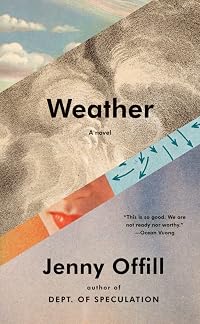
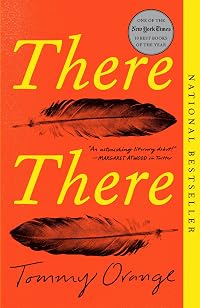
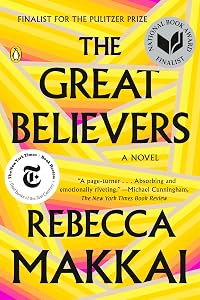
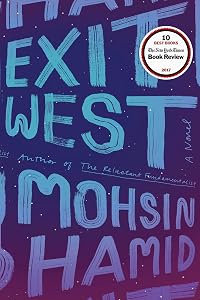
hairball Children in the desert and other good writing.
Census by Jesse Ball
booklove2 sad yet humorous road trips with children

booklove2 told through short chapters, sad yet humorous, focusing on family
Member Reviews
This inventive, multilayered, cerebral and compelling novel is based largely on the author's experience traveling with her family from New York City to the Arizona-México border in the summer of 2014. At that time there was a crisis at the border, as tens of thousands of Central Americans fleeing violence in their countries made a harrowing trek by foot and train in order to seek safety in the United States, but most were prevented from entering this country, including thousands of unaccompanied minors. Luiselli, who was born in México, chronicled some of theIr stories in her earlier nonfiction book, Tell Me How it Ends.
The main narrator of Lost Children Archive is an audio documentarian and formerly single mother of a five year old show more daughter who captures sounds of everyday life and people in New York City, who meets and marries a fellow Mexican-American audio documentarian and father of a 10 year old son while working together on a project. Due to their common interests and backgrounds they marry and live contentedly together for some time. The marriage begins to fray, and when the husband decides to go on a trip to Oklahoma to document the journey and resting places of Geronimo and the Apache people, the last of the native Americans to lose their freedom to European invaders to their land, they decide to make a family vacation out of it. Just before they leave the narrator learns about the humanitarian crisis at the border, and she decides to chronicle it during the trip, and to attempt to locate the two young daughters of Manuela, a Central American woman she meets, who were placed in a modern day internment camp in Arizona after their arrival to the border but have become lost since then. However, it is clear that the journey will be the last one the family spends intact, as the husband intends to remain in Oklahoma to complete his project and not return to New York with his wife and children.
During the often claustrophobic journey by car the family listens to audiobooks to pass the time, taking time to sightsee and capture their discoveries by audiotape and Polaroid instant cameras, while spending their evenings in often dodgy motels in small towns in the heartland populated by Americans who are distrustful and occasionally hostile toward the Latino family. They also read books by well known authors that the parents brought with them, most notably "Elegies for Lost Children", which describes the harsh journey of children accompanied by a strange man to an unknown destination and an uncertain future.
In the second part of the book, the 10 year old boy gains a voice as a narrator, and through his eyes we see the stress that he and his sister experience as they watch their parents' slowly fraying relationship, his deep love for his parents and especially his stepsister, and his desire to locate Manuela's daughters and keep the family intact.
Luiselli, unlike the author of an inauthentic and currently popular middlebrow novel, does not attempt to tell the stories of the Lost Children, as she does not know them personally, and, being brought up in a prosperous Mexican family and having spent much of her life outside of her home country, she realizes that she cannot truly identify with the conditions that caused these immigrants to leave their homelands and the experiences they faced en route to the border and after they arrived there.
Lost Children Archive is a superb accomplishment and a very compelling novel based on the author's personal experiences, which brings attention to the plight of the Lost Children encamped at the US-México border in an intellectually satisfying and educational read without descending into inauthenticity or trauma porn. Due to its rich complexity the reader would benefit from a second or third effort, which I will do later this year or in 2021. show less
The main narrator of Lost Children Archive is an audio documentarian and formerly single mother of a five year old show more daughter who captures sounds of everyday life and people in New York City, who meets and marries a fellow Mexican-American audio documentarian and father of a 10 year old son while working together on a project. Due to their common interests and backgrounds they marry and live contentedly together for some time. The marriage begins to fray, and when the husband decides to go on a trip to Oklahoma to document the journey and resting places of Geronimo and the Apache people, the last of the native Americans to lose their freedom to European invaders to their land, they decide to make a family vacation out of it. Just before they leave the narrator learns about the humanitarian crisis at the border, and she decides to chronicle it during the trip, and to attempt to locate the two young daughters of Manuela, a Central American woman she meets, who were placed in a modern day internment camp in Arizona after their arrival to the border but have become lost since then. However, it is clear that the journey will be the last one the family spends intact, as the husband intends to remain in Oklahoma to complete his project and not return to New York with his wife and children.
During the often claustrophobic journey by car the family listens to audiobooks to pass the time, taking time to sightsee and capture their discoveries by audiotape and Polaroid instant cameras, while spending their evenings in often dodgy motels in small towns in the heartland populated by Americans who are distrustful and occasionally hostile toward the Latino family. They also read books by well known authors that the parents brought with them, most notably "Elegies for Lost Children", which describes the harsh journey of children accompanied by a strange man to an unknown destination and an uncertain future.
In the second part of the book, the 10 year old boy gains a voice as a narrator, and through his eyes we see the stress that he and his sister experience as they watch their parents' slowly fraying relationship, his deep love for his parents and especially his stepsister, and his desire to locate Manuela's daughters and keep the family intact.
Luiselli, unlike the author of an inauthentic and currently popular middlebrow novel, does not attempt to tell the stories of the Lost Children, as she does not know them personally, and, being brought up in a prosperous Mexican family and having spent much of her life outside of her home country, she realizes that she cannot truly identify with the conditions that caused these immigrants to leave their homelands and the experiences they faced en route to the border and after they arrived there.
Lost Children Archive is a superb accomplishment and a very compelling novel based on the author's personal experiences, which brings attention to the plight of the Lost Children encamped at the US-México border in an intellectually satisfying and educational read without descending into inauthenticity or trauma porn. Due to its rich complexity the reader would benefit from a second or third effort, which I will do later this year or in 2021. show less
Valeria Luiselli’s novel begins with a family of four setting out from New York City for the borderlands of Arizona. In this blended marriage, the father has a ten-year-old son, his wife a five-year-old daughter. The unnamed couple, in their fourth year of marriage, have different agendas for heading west. A documentarist, he is interested in recording the aural traces of the Apache history in the Southwest, while she is a documentarian, hoping to research the plight of migrant children who travel by foot in attempting to cross the US-Mexican border. The first half of the story is narrated by the wife, relating what they encounter and do as a family on their trip through America. It is a journey she fears will end with the couple’s show more marriage breaking apart as they pursue their separate reasons for relocating to Arizona.
As her husband drives, to keep the children entertained she reads aloud from a book called Elegies For Lost Children, a story featuring seven children who set off on a perilous train journey to reach an unnamed destination, leaving their families behind. The first half of Lost Children Archives is a detailed account of adventures encountered along the way and focuses on the mother’s interactions with the children and her husband. Her observations are often quite funny. In the book’s second half, after reaching the Southwest, the mood darkens, and the narrator changes as well. It is taken up by the ten-year-old son. While the children’s true names are never given, on the trip, each chooses a new one. His is Swift Arrow, while the daughter becomes Memphis. The son, sensing his parent’s marriage is endangered, decides to take his sister on a hike to reach a nearby destination his parents have told them about called Echo Mountain. On the hike, like the characters in Elegies For Lost Children, they too become lost as they cross a dangerous desert landscape.
Blending fictional and nonfictional narratives, the book addresses the migrant crisis on our southern border, interwoven with the story of a family crossing into unknown territory as well. It is an ambitious novel, and experimental in format. One section features a run-on sentence twenty-eight pages long. While a challenging read, it is a deeply touching one. Valeria Luiselli was born in Mexico City but grew up in America. The author of five precious books, Lost Children Archives is the first that she’s written in English. Published in 2019, with Trump’s current enactment of stricter immigration policies, it puts a human face on an ongoing problem that has yet to be compassionately dealt with. show less
As her husband drives, to keep the children entertained she reads aloud from a book called Elegies For Lost Children, a story featuring seven children who set off on a perilous train journey to reach an unnamed destination, leaving their families behind. The first half of Lost Children Archives is a detailed account of adventures encountered along the way and focuses on the mother’s interactions with the children and her husband. Her observations are often quite funny. In the book’s second half, after reaching the Southwest, the mood darkens, and the narrator changes as well. It is taken up by the ten-year-old son. While the children’s true names are never given, on the trip, each chooses a new one. His is Swift Arrow, while the daughter becomes Memphis. The son, sensing his parent’s marriage is endangered, decides to take his sister on a hike to reach a nearby destination his parents have told them about called Echo Mountain. On the hike, like the characters in Elegies For Lost Children, they too become lost as they cross a dangerous desert landscape.
Blending fictional and nonfictional narratives, the book addresses the migrant crisis on our southern border, interwoven with the story of a family crossing into unknown territory as well. It is an ambitious novel, and experimental in format. One section features a run-on sentence twenty-eight pages long. While a challenging read, it is a deeply touching one. Valeria Luiselli was born in Mexico City but grew up in America. The author of five precious books, Lost Children Archives is the first that she’s written in English. Published in 2019, with Trump’s current enactment of stricter immigration policies, it puts a human face on an ongoing problem that has yet to be compassionately dealt with. show less
57. Lost Children Archive by Valeria Luiselli
readers: Valeria Luiselli, Kivlighan De Montebello, William DeMeritt, Maia Enrigue Luiselli
published: 2019
format: 11:16 audiobook (385 pages in hardcover)
acquired: November
listened: Nov 6-19
rating: 5
One of the best audiobooks I've listened too. Luiselli writes beautifully and she reads it herself with a elegant type of Mexican accent that is perfect for her text. The book, and the audiobook, take an abrupt turn when the fictional son narrates, but it rounds out and works, especially in audio where the voices alternate over the final pages.
When I finished I had a kind of wow feeling, that kind of all over emotional feeling when you just completed something that has you thinking and maybe show more feeling or whatever it is. I couldn't capture it, I just kind of thought, "wow", and wondered if it would last. A few days later I posted this on Litsy:
What I liked, or think what I liked, was how she lets the reader ponder the whole variety of the experience even as she talks and talks. It's a pace slowed for reflection and I never wanted it to speed up. I really didn't want this one to end. Obviously I adored it. Highly recommended to those interested.
2019
https://www.librarything.com/topic/312033#6980483
2020 - read the text this time
https://www.librarything.com/topic/322920#7251575 show less
readers: Valeria Luiselli, Kivlighan De Montebello, William DeMeritt, Maia Enrigue Luiselli
published: 2019
format: 11:16 audiobook (385 pages in hardcover)
acquired: November
listened: Nov 6-19
rating: 5
One of the best audiobooks I've listened too. Luiselli writes beautifully and she reads it herself with a elegant type of Mexican accent that is perfect for her text. The book, and the audiobook, take an abrupt turn when the fictional son narrates, but it rounds out and works, especially in audio where the voices alternate over the final pages.
When I finished I had a kind of wow feeling, that kind of all over emotional feeling when you just completed something that has you thinking and maybe show more feeling or whatever it is. I couldn't capture it, I just kind of thought, "wow", and wondered if it would last. A few days later I posted this on Litsy:
Perhaps Luiselli was trying to reach the children caught and forgotten within the inhumane US immigration policy, to feel them as real, to personalize their suffering and fragility by using her own fictional loss of a marriage and child. Whatever it was, it felt very personal and I was mesmerized listening and I miss it now. Special novel.Now it's been a couple weeks and I still think about it and I still miss it. The narrator (is she named?) and her husband capture sounds of New York City for a academically funded project. He records the ambient noise while she does interviews, especially recording the different languages (about 800). But then her husband wants to live briefly in Appacheria, in Arizona, in the Chiricahua Mountains where the last independent Apaches resided, and capture the sounds, or the ghost sounds of the lost Apaches, but she has no interest in this. They take a family road trip, the family falling apart, the husband distant and our narrator wondering about the border-crossing children, those lost forever in the desert or found and deported without a family. And, as I note above, the book takes a twist somewhere down the line, which will throw the reader/listener a bit until it comes together.
What I liked, or think what I liked, was how she lets the reader ponder the whole variety of the experience even as she talks and talks. It's a pace slowed for reflection and I never wanted it to speed up. I really didn't want this one to end. Obviously I adored it. Highly recommended to those interested.
2019
https://www.librarything.com/topic/312033#6980483
2020 - read the text this time
https://www.librarything.com/topic/322920#7251575 show less
Abandoned. Not only is this book a deeply tedious exercise in intellectual masturbation (Valeria Luiselli really, really, really wants you to know that she's smart, so smart, and has read serious books and can use words like "edulcorated"), but in referring to the Apache and Cherokee in trying to draw attention to the migrant crisis at the U.S.-Mexico border, Lost Children Archive reproduces the racist narrative of the "vanished Indian." Native people function here only as long-ago echoes and metaphors and (inaccurate) historical references—they're not present as living people or cultures. The narrator trying to be cutting about the (admittedly shitty!) actions of the American government, equates the consequences of the Indian Removal show more Act with deportation. Only deportation isn't what happened to the Cherokee, because you can't deport someone from their own land. A book as pretentious as it is thoughtless. show less
There is much to admire in Lost Children Archive by Valeria Luiselli. The writing is wonderful, the setting is interesting, the style of the book is original and her characters, especially the son and daughter are spot-on. This is a book that is guaranteed to make you think, she covers a wide variety of topics, from how thousands of unaccompanied migrant children are processed in an immigration system that is not prepared and at times even hostile to the their situation; to the history of the native Indians and the treatment they received at the hands of the American government.
But along with these bigger issues, she also tells a wonderful story as she delves into the intricacy of family life as the bulk of the book is set in a car as a show more family takes a road trip, driving from New York City to Arizona. The couple is in conflict as he wants to relocate to Arizona for his research on Apaches while she can’t imagine leaving New York and her work chronicling missing child refugees. With a slowly dying marriage and two lively and perceptive children, who sense problems even if they aren’t exactly sure what they are, they head across America.
Lost Children Archive takes the great American road trip and twists it into a story of alienation and estrangement with the author staying true to both her political opinions and her personal empathy. I believe this is a polarizing book that one will either love or hate, personally I came down mostly on the side of love, although I found the switching of the narrator toward the end a little off-putting. I do know that I will be thinking of Lost Children Archive for quite some time. show less
But along with these bigger issues, she also tells a wonderful story as she delves into the intricacy of family life as the bulk of the book is set in a car as a show more family takes a road trip, driving from New York City to Arizona. The couple is in conflict as he wants to relocate to Arizona for his research on Apaches while she can’t imagine leaving New York and her work chronicling missing child refugees. With a slowly dying marriage and two lively and perceptive children, who sense problems even if they aren’t exactly sure what they are, they head across America.
Lost Children Archive takes the great American road trip and twists it into a story of alienation and estrangement with the author staying true to both her political opinions and her personal empathy. I believe this is a polarizing book that one will either love or hate, personally I came down mostly on the side of love, although I found the switching of the narrator toward the end a little off-putting. I do know that I will be thinking of Lost Children Archive for quite some time. show less
In Lost Children Archive, a blended family sets out on a road trip from NYC to the southwest. The parents, who have each brought a child to their marriage, are nearing the end of their relationship, but are driving out west all together as they avoid the actual end of their marriage. They are both artists working in sound engineering. The husband is on his way to study the Apaches and the wife has become involved with the crisis at the border. She has been helping a woman try to locate her children and work with the authorities since her children crossed the border and were caught by border police. She is hoping (probably futilely) to locate them while she is in the region.
There is a lot going on in this book. We mainly have the show more perspective of the wife and the 10 year old son. There are threads about their family and the trip itself, the small towns and communities they discover along the route, and the immigration crisis. Luiselli weaves all of these story lines together in a really creative way. As you near the end of the book it begins to become difficult to distinguish reality and fiction and storylines meld together so much so that you question and think back through events that happened earlier. It's a book I'd like to reread and would get even more out of the second time.
There is also a lot of motion in this book. The family is constantly moving through the U.S. And then in the last quarter of the book, the children inadvisedly strike out on their own and have their own travel "adventure" that ties in with the migrant story and themes.
I found the whole book creative and very "of the moment". show less
There is a lot going on in this book. We mainly have the show more perspective of the wife and the 10 year old son. There are threads about their family and the trip itself, the small towns and communities they discover along the route, and the immigration crisis. Luiselli weaves all of these story lines together in a really creative way. As you near the end of the book it begins to become difficult to distinguish reality and fiction and storylines meld together so much so that you question and think back through events that happened earlier. It's a book I'd like to reread and would get even more out of the second time.
There is also a lot of motion in this book. The family is constantly moving through the U.S. And then in the last quarter of the book, the children inadvisedly strike out on their own and have their own travel "adventure" that ties in with the migrant story and themes.
I found the whole book creative and very "of the moment". show less
A family - the narrator, her husband, the boy (her husband's son) and the girl (her daughter) - take a cross country road trip from their home in New York to New Mexico, where the husband is working on a sound project and wants to see where the Apache lived.
Our unnamed narrator reflects a lot on the incompleteness of our memories and our narratives, the stories we tell about ourselves and others that are shaped, rather than perfectly preserved. What stories become history? What do we leave out? At the same time, in the boxes the family brings along with them on the trip and create in memories along the way becomes their own imperfect archive and family history. The reflective writing caused me to read slowly for much of the book, but I show more was also surprised by the change of gears and at one point was reading almost feverishly to even find a stopping point. Probably as perfectly crafted a book as I have ever read, and one I feel I would have to reread again to fully appreciate. show less
Our unnamed narrator reflects a lot on the incompleteness of our memories and our narratives, the stories we tell about ourselves and others that are shaped, rather than perfectly preserved. What stories become history? What do we leave out? At the same time, in the boxes the family brings along with them on the trip and create in memories along the way becomes their own imperfect archive and family history. The reflective writing caused me to read slowly for much of the book, but I show more was also surprised by the change of gears and at one point was reading almost feverishly to even find a stopping point. Probably as perfectly crafted a book as I have ever read, and one I feel I would have to reread again to fully appreciate. show less
Members
- Recently Added By
Published Reviews
In ihrem Roman "Archiv der verlorenen Kinder" rückt Valeria Luiselli das Schicksal der Flüchtlingskinder an der Grenze zu den USA wieder in den Fokus.
added by DeusXMachina
Lists

2020 Tournament of Books
18 works; 18 members

2019 Women's Prize for Fiction Longlist
16 works; 12 members

Recommend the 20 best books you've read in the last five years
2,168 works; 606 members

Top Five Books of 2020
982 works; 348 members

Books recommended by Barack Obama
295 works; 28 members

2020 Notable Books for Adults
26 works; 5 members

Powell's Indiespensable
79 works; 6 members

Camp Tournament of Books 2019
6 works; 2 members

Kirkus Starred Fiction Reviews of Books Published in 2019
411 works; 12 members

Elena Ferrante's 40 favourite books by female authors
40 works; 10 members

Books Read in 2020
4,379 works; 123 members

Facebook list
55 works; 3 members

History: Africa & Latin America
38 works; 1 member

Translingualism
191 works; 4 members

Books Read in 2021
5,361 works; 114 members

Best Road Trip Books
13 works; 1 member

The Atlantic's The Great American Novel
136 works; 12 members

Barack Obama's Favorite Books of 2019
19 works; 3 members

.
184 works; 1 member

Patriarchy and white supremacy de-programming
69 works; 1 member

Books Read in 2026
1,916 works; 66 members
Author Information

17+ Works 4,149 Members
Valeria Luiselli was born in Mexico City in 1983 and grew up in South Africa. A novelist (Faces in the Crowd) and essayist (Sidewalks), he work has been the recipient of the Los Angeles Times Art Seidenbaum Award for First Fiction and the National Book Foundation's 5 Under 35 award.
Some Editions
Awards and Honors
Awards
Distinctions
The Guardian Book of the Day (2019-03-15)
Common Knowledge
- Canonical title
- Lost Children Archive
- Original title
- Lost Children Archive
- Original publication date
- 2019-02-12
- Important places
- New York, New York, USA; Memphis, Tennessee, USA; Apacheria, Arizona, USA; Mexico
- Dedication
- To Maia and Dylan, who showed me childhood all over again.
- First words
- Mouths open to the sun, they sleep.
- Quotations
- I stand in front of the trunk of our boxes, five of them, with our archive - Though it's optimistic to call our collected mess an archive - plus the two empty boxes for the children's future archive. p42
What's a midwife? the girl asks. Someone who delivers babies, says my husband. Like the postwoman? Yes, he says, like a postwoman. p54
We order four hamburgers and four pink lemonades, and spread our map out on the tale while we wait for the food. We follow yellow and red highway lines with the tips of our index fingers, like a troupe of gypsies reading an e... (show all)normous open palm. p125
Then, in a gasstation outside a town called
Loco, I get asked about my accent and place of birth, and I say no, I was not born in this country, and when I say where I was born, I don't even get a nod in return.
Jus... (show all)t cold, dead silence, as if I had confessed a sin. p129
I take my recorder from the glove compartment and start and start recording my husband,.. . His stories are not directly linked to the piece I'm working om, but the more I listen to the stories he tells about the country's p... (show all)ast, the more it seems like he's talking about the present. p133
"Look mama, look over there!" I slowly walk my eyes and the line of small figures now stepping of the hangar and onto the runaway. They are all children. Girls, boys: one behind another, no backpacks, nothing. p182We called for Pa and Ma now and then, but our voices got drowned in the air as soon as we cried out. Not an echo not anything, That's when we really realized, like inside our stomachs, that we'd got lost. ... (show all) ler> p264 - Last words
- (Click to show. Warning: May contain spoilers.)You might feel lost one day, but you have to remember that you're not, because you and I will find each other again.
- Blurbers
- Orange, Tommy; Bennett, Claire-Louise
Classifications
- Genres
- General Fiction, Fiction and Literature
- DDC/MDS
- 863.7 — Literature & rhetoric Spanish Literature Spanish fiction 21st Century
- LCC
- PQ7298.422 .U37 .L67 — Language and Literature French, Italian, Spanish and Portuguese literatures Spanish literature Provincial, local, colonial, etc. Spanish America
- BISAC
Statistics
- Members
- 1,507
- Popularity
- 15,326
- Reviews
- 73
- Rating
- (3.82)
- Languages
- 11 — Danish, Dutch, English, Finnish, French, German, Italian, Spanish, Swedish, Turkish, Portuguese (Portugal)
- Media
- Paper, Audiobook, Ebook
- ISBNs
- 36
- ASINs
- 8