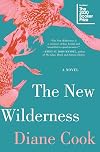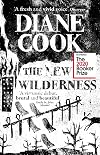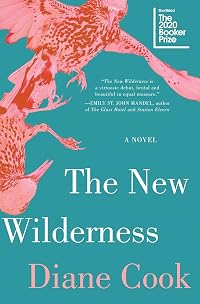
The New Wilderness
by Diane Cook
On This Page
Description
Bea's five-year-old daughter, Agnes, is slowly wasting away, consumed by the smog and pollution of the overdeveloped metropolis that most of the population now calls home. If they stay in the city, Agnes will die. There is only one alternative: the Wilderness State, the last swath of untouched, protected land, where people have always been forbidden. Bea, Agnes, and eighteen others volunteer to live in the Wilderness State, guinea pigs in an experiment to see if humans can exist in nature show more without destroying it. Living as nomadic hunter-gatherers, they slowly and painfully learn to survive in an unpredictable, dangerous land, bickering and battling for power and control as they betray and save one another. But as Agnes embraces the wild freedom of this new existence, Bea realizes that saving her daughter's life means losing her in a different way. The farther they get from civilization, the more their bond is tested in astonishing and heartbreaking ways. show lessTags
Recommendations













Member Recommendations

Member Reviews
“In the beginning, there were twenty. Officially, these twenty were in the Wilderness State as part of an experiment to see how people interacted with nature, because, with all land now being used for resources—oil, gas, minerals, water, wood, food—or storage—trash, servers, toxic waste—such interactions had become lost to history.”
The storyline follows this group of twenty. It focuses on a family of three – Glen, Bea, and Agnes. They decide to join this experimental project and escape The City, which has become too polluted for young Agnes. The group is expected to be nomadic, so building, settling, and farming are prohibited. They carry around The Manual, which contains rules the group must follow, and are monitored by show more Rangers, who show up occasionally to take measurements, remove their trash, and cite infractions. The ex-city dwellers must figure out how to live in the wild as hunter-gatherers. Much of the plot revolved around Agnes’s coming of age, as she rebels against her mother, acts on her instinctive skills for living in the wilderness, and develops into a leader.
For a dystopian novel, it is rather light on world-building. There are few details of how this world has come to be the way it is, other than the general idea that it has to do with humans destroying their environment through neglect and overpopulation. The experiment is not detailed in any depth. Where it succeeds is in descriptions of human interactions. The leadership clashes and differing opinions of how things should be done feel realistic. The descriptions of nature feel authentic. The coming-of-age story is my favorite part. I think Agnes is one of the most developed of the characters, displaying personal growth along the course of the story. Agnes has grown up in the wilderness, so she feels she belongs there. She has no memory of The City and has adapted to her environment based on what she has learned by observing the animals. There are a few inconsistencies, and it meanders a bit, but overall, I found it a fitting addition to the canon of environmental fiction. show less
The storyline follows this group of twenty. It focuses on a family of three – Glen, Bea, and Agnes. They decide to join this experimental project and escape The City, which has become too polluted for young Agnes. The group is expected to be nomadic, so building, settling, and farming are prohibited. They carry around The Manual, which contains rules the group must follow, and are monitored by show more Rangers, who show up occasionally to take measurements, remove their trash, and cite infractions. The ex-city dwellers must figure out how to live in the wild as hunter-gatherers. Much of the plot revolved around Agnes’s coming of age, as she rebels against her mother, acts on her instinctive skills for living in the wilderness, and develops into a leader.
For a dystopian novel, it is rather light on world-building. There are few details of how this world has come to be the way it is, other than the general idea that it has to do with humans destroying their environment through neglect and overpopulation. The experiment is not detailed in any depth. Where it succeeds is in descriptions of human interactions. The leadership clashes and differing opinions of how things should be done feel realistic. The descriptions of nature feel authentic. The coming-of-age story is my favorite part. I think Agnes is one of the most developed of the characters, displaying personal growth along the course of the story. Agnes has grown up in the wilderness, so she feels she belongs there. She has no memory of The City and has adapted to her environment based on what she has learned by observing the animals. There are a few inconsistencies, and it meanders a bit, but overall, I found it a fitting addition to the canon of environmental fiction. show less
In The New Wilderness Diane Cook explores the sometimes fraught relationship between a mother Bea, and her daughter, Agnes. She plays this relationship out on a dystopian landscape, stripped of all modernity’s distractions. She warns us about mismanaging our home planet and simultaneously lays human nature and human interaction open to review and judgment. The author celebrates and grieves over the eternal give and take between mother and daughter; Cook tackles this essential chore brilliantly, showing all its depth and tenderness, and not sparing us the painful moments. In fact, she handles this volatile relationship so perfectly that the novel was shortlisted for the 2020 Booker Prize.
Bea gives birth to Agnes in the City, and like show more so many children in that toxic, dangerous pit, she becomes critically ill, to the level of coughing up blood. Desperate, Bea and her husband Glen win passes to join a group of like-minded pilgrims and leave the City permanently behind, and make their collective way in the Wilderness State. The Wilderness State is a vast tract of natural environment—free of the devastation that has left the City uninhabitable. This group, called the Community, generally succeeds at living off the land. Yes, they run afoul a few times of the Rangers, the formal authority over the Wilderness State, but things don’t really spiral out of control until other groups violate the borders of this reserve, after which daily subsistence becomes too much of a challenge.
Cook’s kernel remains Bea and Agnes. Other plot directions orbit this way and that, but Bea and Agnes continually return front and center. The author always portrays these two women with such logic, such love, and, after Agnes grows to approximate independence, at high stakes loggerheads—it simply isn’t possible that it could have been handled any more fairly, or with any more love or mercy.
The author crafts her love story in admirable and direct prose. Speech and reasoning within the group progresses in blunt terms, because decisions have direct consequences when you’re a migrant group living off the land. There’s no higher power, no magisterial narrator to describe beautiful scenes, or give hints about advisable survival strategies, which is exactly how it should be.
The book contains at length a subtle hint at a higher symbolism, but I won’t speculate about it, because I think it would remain a minor feature, and not a very influential one. But if you sit down to this book, it will take you on a journey through human nature in the face of the natural world, and plot out for you the parabola of love’s trajectory of two willful women, tied together by love. Memorable and merciful, true to life and thought-provoking, the Booker committee was right to honor this one. A true winner.
https://bassoprofundo1.blogspot.com/2025/11/the-new-wilderness-by-diane-cook.htm... show less
Bea gives birth to Agnes in the City, and like show more so many children in that toxic, dangerous pit, she becomes critically ill, to the level of coughing up blood. Desperate, Bea and her husband Glen win passes to join a group of like-minded pilgrims and leave the City permanently behind, and make their collective way in the Wilderness State. The Wilderness State is a vast tract of natural environment—free of the devastation that has left the City uninhabitable. This group, called the Community, generally succeeds at living off the land. Yes, they run afoul a few times of the Rangers, the formal authority over the Wilderness State, but things don’t really spiral out of control until other groups violate the borders of this reserve, after which daily subsistence becomes too much of a challenge.
Cook’s kernel remains Bea and Agnes. Other plot directions orbit this way and that, but Bea and Agnes continually return front and center. The author always portrays these two women with such logic, such love, and, after Agnes grows to approximate independence, at high stakes loggerheads—it simply isn’t possible that it could have been handled any more fairly, or with any more love or mercy.
The author crafts her love story in admirable and direct prose. Speech and reasoning within the group progresses in blunt terms, because decisions have direct consequences when you’re a migrant group living off the land. There’s no higher power, no magisterial narrator to describe beautiful scenes, or give hints about advisable survival strategies, which is exactly how it should be.
The book contains at length a subtle hint at a higher symbolism, but I won’t speculate about it, because I think it would remain a minor feature, and not a very influential one. But if you sit down to this book, it will take you on a journey through human nature in the face of the natural world, and plot out for you the parabola of love’s trajectory of two willful women, tied together by love. Memorable and merciful, true to life and thought-provoking, the Booker committee was right to honor this one. A true winner.
https://bassoprofundo1.blogspot.com/2025/11/the-new-wilderness-by-diane-cook.htm... show less
I have been looking forward to this one - the first novel of Diane Cook... right at the top of my most anticipated mountain in a year of book releases! I love the concept here, which somehow has never existed in another novel that I'm aware of yet - there is very little wilderness remaining in this overcrowded dystopia. All of the land is for manufacturing, garbage, or something involving humans. Things are grim, cities are terrible, children are getting sick, and the main character Bea takes her sick daughter Agnes to the last of the wilderness to get some fresh air (or the freshest it can possibly be anyway). The initial group of twenty people in the experiment are loosely overseen by the Rangers. For some reason, I wasn't expecting a show more group, I was expecting a mother and daughter in the woods. I was also expecting man vs. nature (which hilariously, I then realized is the very name of Cook's first book). But there is a whole lotta man vs. man here, despite this wilderness still being very full of animals somehow, when these animals have such a small space to live in. Of course, in an overcrowded world, it's the people that are the problem. But the writer isn't writing to my expectations and I liked the book well enough. Bea is a real mom - flaws and all from page one. Not a martyr, not a saint, which is a great way to avoid writing a mom. The book starts with Bea kicking a coyote, which... can you even do that? Little tricks of the plot make the book great to me. My only complaint would be the many dramatics within the group, but I'm sure that is a problem with me as a reader. (I like solitude+forest living sort of books!) If I had to place this book on a shelf next to others, it would fit right in with MANY of T.C. Boyle's books (The Terranauts, East Is East, A Friend of the Earth and Drop City and The Tortilla Curtain from what I have read) -- both for Boyle's love of nature and also for his love of putting his characters through the ringer. show less
Diane Cook’s bold dystopian novel, The New Wilderness, posits a dismal future for humanity in a ravaged world. The action, which takes place over several years, follows a group known as the Community as they pursue a nomadic existence in the only patch of untouched wilderness left on the planet. Previously, access to this “Wilderness State” was forbidden. But there’s been a change. The members of the Community, who once lived in the City—a crowded, hostile, toxic, glass-and-concrete environment—have been allowed in, giving up contact with civil society to participate in an experiment intended to study wilderness survival strategies and the impact of human activity on nature. The cast of characters is sizable, but Cook’s show more novel focuses primarily on Bea and her daughter Agnes. A few years earlier, while still in the City, Agnes, then a toddler, developed severe lung disease because of poor air quality. Believing her daughter was going to die, Bea signed on to the experiment. In the Wilderness, Agnes, around eight when we meet her, has regained her health and is thriving. Cook describes life in the Wilderness in unvarnished, even brutal terms: as the novel begins, Bea has just given birth unaided to a stillborn baby, cradling the tiny corpse briefly before burying it. Cook vividly details the dangers and drudgery of life in the wild and portrays the inevitable power struggles and shifting allegiances among Community members. From time to time, the Community visit a “Post” (there are a number of these in the Wilderness), where they collect mail and receive directions from the Rangers, authority figures who enforce the rules and impose penalties for violations (conduct in the Wilderness is governed by a set of rules laid out in the “Manual,” the most important of which is “leave no traces”). The tensions that arise in Cook’s bulky narrative have various sources: the Community itself, with its ebb and flow of leadership and influence, the loving and combative mother-daughter drama that unfolds between Bea and Agnes, and the nebulous world offstage, where a faceless Administration wields ultimate control over the Wilderness State and from which the Rangers take their orders. As time passes, Community members witness a significant change in the attitude and demeanor in the Rangers, who in the beginning were helpful and encouraging, but later seem to regard the Community with disdain and treat them with high-handed malice. It is the perception that the Rangers pose a threat to the Community’s survival that leads to the fragmentation of the group and the end of the experiment. The novel is compelling to a point: the creative vision that drives the story is stunningly detailed and disturbingly plausible. Diane Cook writes with great confidence; her powers of invention are often strong enough to dispel any doubts and sweep the reader along. But, somewhat like The Community’s trek through the Wilderness, the story too often meanders and at times seems to go in circles, treading ground we’ve already covered. Bea and Agnes carry all the emotional weight, and though we do care what happens to them, the book is simply too long and Cook’s narrative focus too diffuse to sustain the tension. Ultimately, we finish reading The New Wilderness with relief, grateful for the experience but not sorry that it's over. show less
Shortlisted for the Booker Prize 2020 (God only knows why - this one isn't even a political choice)
I do not normally seek out dystopian fiction, and have seen some negative reviews of this book from friends I trust, but I found it surprisingly gripping and for the most part credible.
In the future world of this book, most of the (American?) population lives in a single large City, which is becoming too polluted for children to thrive in. The Wilderness State is a state that has been set aside and allowed to revert to nature, patrolled and defended by the Rangers.
The main protagonists are female members of a group of 20 people that has been permitted to settle in the Wilderness as long as they abide by a strict Manual which attempts to show more minimise their "footprint" and follow the instructions of the Rangers.
Bea(trice) agrees to join her academic partner Glen (the architect of the settlement project) and her sick young daughter Agnes in the group, hoping that the cleaner environment will prove beneficial to Agnes's health. The story of the group's period in this wilderness is mostly told chronologically apart from one move backwards near the start.
I was impressed by how well Cook described the environment of the wilderness, the hazards the group faced and the problems they faced adapting to a primitive nomadic lifestyle. Mother/daughter relationships, the dysfunctional dynamics of the group and how they start to adopt elements of pack animal behaviour are key themes. The story of how Agnes develops an intuitive understanding of the new environment rather better than the adults around her is convincing and moving.
The framing narrative seemed rather less plausible, and a few of the group's choices seemed a little far-fetched, but that seems secondary to the main story. For me, this is another book that deserves the recognition its longlisting should bring it. show less
I do not normally seek out dystopian fiction, and have seen some negative reviews of this book from friends I trust, but I found it surprisingly gripping and for the most part credible.
In the future world of this book, most of the (American?) population lives in a single large City, which is becoming too polluted for children to thrive in. The Wilderness State is a state that has been set aside and allowed to revert to nature, patrolled and defended by the Rangers.
The main protagonists are female members of a group of 20 people that has been permitted to settle in the Wilderness as long as they abide by a strict Manual which attempts to show more minimise their "footprint" and follow the instructions of the Rangers.
Bea(trice) agrees to join her academic partner Glen (the architect of the settlement project) and her sick young daughter Agnes in the group, hoping that the cleaner environment will prove beneficial to Agnes's health. The story of the group's period in this wilderness is mostly told chronologically apart from one move backwards near the start.
I was impressed by how well Cook described the environment of the wilderness, the hazards the group faced and the problems they faced adapting to a primitive nomadic lifestyle. Mother/daughter relationships, the dysfunctional dynamics of the group and how they start to adopt elements of pack animal behaviour are key themes. The story of how Agnes develops an intuitive understanding of the new environment rather better than the adults around her is convincing and moving.
The framing narrative seemed rather less plausible, and a few of the group's choices seemed a little far-fetched, but that seems secondary to the main story. For me, this is another book that deserves the recognition its longlisting should bring it. show less
An epic, heartbreaking, tale of motherhood and belonging by way of a future climate crisis made worse by bureaucracy and flawed government planning. Set in a far-ish future scenario cities are collapsing into chaos amid worsening climate change / collapse and a wilderness area is set up with a study in progress to see if people can go back to nomadic living and how that will affect the land. Flawed from its inception the government plan is a stop-gap at best, a patch to keep business as usual going forward. It is within this confusion that we find Bea and Agnes. Bea is Agnes Mother and the novel centers on the dynamic between the two women. The cast of characters comes into and out of focus by way of these two women. It is an at time show more dry-novel its prose is paired down and then expands and blossoms where it needs to and so the pacing feels right and appropriate to the moody tone of the story.
Reading closely, Diane Cook has written a deeply complex story about motherhood, longing, coming of age, government failures & flawed 'best intentions', and the climate. It reinforces the feeling of detachment and confusion created by governmental oversight that at the end of things does not seem to really care about anything but keeping government itself running. It really is a story about trust and abandonment. What it means to trust to loose it and what it means to walk away and sometimes come back, rebound, and then leave again. Like the seasons themselves that are warping and changing in response to climate change the story central themes are this ebb and flow of power and trust.
The story is beautifully told and the characters reinforce the climate change angle. Which is to say all fiction is now science fiction but the other way around: all fiction is now climate fiction. It just is the backdrop of life and so it plays a central role in the story but Diane Cook writes about it in a natural way that puts the characters up front. Highly recommend. show less
Reading closely, Diane Cook has written a deeply complex story about motherhood, longing, coming of age, government failures & flawed 'best intentions', and the climate. It reinforces the feeling of detachment and confusion created by governmental oversight that at the end of things does not seem to really care about anything but keeping government itself running. It really is a story about trust and abandonment. What it means to trust to loose it and what it means to walk away and sometimes come back, rebound, and then leave again. Like the seasons themselves that are warping and changing in response to climate change the story central themes are this ebb and flow of power and trust.
The story is beautifully told and the characters reinforce the climate change angle. Which is to say all fiction is now science fiction but the other way around: all fiction is now climate fiction. It just is the backdrop of life and so it plays a central role in the story but Diane Cook writes about it in a natural way that puts the characters up front. Highly recommend. show less
Cook, Diane. The New Wilderness. Harper, 2020.
Diane Cook, known best for her pieces on NPR’s This American Life, has written a debut science fiction novel that is getting a lot of buzz in literary circles. It has been longlisted for the Booker prize and has been reviewed in major newspapers and magazines. The novel is set in a near-future America in which a city and its support structures dominate the nation, except for one Wilderness State in the American West. I was much reminded of William Gibson’s Sprawl. The city is crowded, dangerous, and the air is toxic. A group of 20 urbanites, led by Glenn, an anthropologist, sign up for an academic experiment in nomadic hunting and gathering society. They are left alone in the wilderness show more with only what they can carry and are loosely supervised by morally ambiguous government rangers. It is something like the 2002 PBS show, Frontier House, in which some urbanites were asked to live like northern plains homesteaders for a year. After several years, Glenn’s group has lost several members to wilderness accidents and has devolved almost to the level of an episode of Naked and Afraid. Glen’s wife Bea and her daughter Agnes are the central characters of the story. The novel begins with Bea alone in the forest giving birth to a stillborn and burying the afterbirth. When Bea leaves the group, the point of view switches to Agnes, and we discover that the story is not so much about wilderness survival as about an abandoned daughter coming of age in a dangerous world. It is that mother-daughter story that I am sure got the attention on the Booker prize readers. It is intense, nuanced, and inciteful. Agnes is one of the most fully alive characters I have found in any novel in quite a while. Science fiction world building, however, is more problematic. Life in the city is never fully described. Nor are the goals of the wilderness experiment. Several reviewers have pointed out how illogical inconsistent, and stupid the whole enterprise seems to be. But I think that is part of the point. It is a Trump-era story, and government on all levels is revealed to be venal and incompetent to a Kafkaesque extent. One example: every time a government administration changes, the rangers wear uniforms of different colors and adopt different unexplained policies and rules for the survivalist group to follow. In the end, all we care about is the human drama. I wonder if the novel stands a better chance of winning the Booker or a Hugo. It may fall between the stools, and that would be a shame. show less
Diane Cook, known best for her pieces on NPR’s This American Life, has written a debut science fiction novel that is getting a lot of buzz in literary circles. It has been longlisted for the Booker prize and has been reviewed in major newspapers and magazines. The novel is set in a near-future America in which a city and its support structures dominate the nation, except for one Wilderness State in the American West. I was much reminded of William Gibson’s Sprawl. The city is crowded, dangerous, and the air is toxic. A group of 20 urbanites, led by Glenn, an anthropologist, sign up for an academic experiment in nomadic hunting and gathering society. They are left alone in the wilderness show more with only what they can carry and are loosely supervised by morally ambiguous government rangers. It is something like the 2002 PBS show, Frontier House, in which some urbanites were asked to live like northern plains homesteaders for a year. After several years, Glenn’s group has lost several members to wilderness accidents and has devolved almost to the level of an episode of Naked and Afraid. Glen’s wife Bea and her daughter Agnes are the central characters of the story. The novel begins with Bea alone in the forest giving birth to a stillborn and burying the afterbirth. When Bea leaves the group, the point of view switches to Agnes, and we discover that the story is not so much about wilderness survival as about an abandoned daughter coming of age in a dangerous world. It is that mother-daughter story that I am sure got the attention on the Booker prize readers. It is intense, nuanced, and inciteful. Agnes is one of the most fully alive characters I have found in any novel in quite a while. Science fiction world building, however, is more problematic. Life in the city is never fully described. Nor are the goals of the wilderness experiment. Several reviewers have pointed out how illogical inconsistent, and stupid the whole enterprise seems to be. But I think that is part of the point. It is a Trump-era story, and government on all levels is revealed to be venal and incompetent to a Kafkaesque extent. One example: every time a government administration changes, the rangers wear uniforms of different colors and adopt different unexplained policies and rules for the survivalist group to follow. In the end, all we care about is the human drama. I wonder if the novel stands a better chance of winning the Booker or a Hugo. It may fall between the stools, and that would be a shame. show less
Members
- Recently Added By
Published Reviews
ThingScore 100
Evidence of the increasing interpenetration of SF and literary fiction, this Booker-shortlisted novel is set in a climate emergency-ravaged near future. Bea and her daughter Agnes get the chance to escape the choking City for a Wilderness zone where they must relearn humanity's old hunter-gatherer skills. Cook leavens her satire with sly wit and real wisdom, expertly deconstructing the show more borderline separating human beings and other animals. show less
added by Cynfelyn
Lists

Best Dystopias
280 works; 277 members

The Guardian Books of the Year 2020
126 works; 8 members

Lit Lattes Ep 006
12 works; 1 member

Books Read in 2020
4,379 works; 124 members

2021 - List of books read
53 works; 1 member
Author Information

3+ Works 891 Members
Some Editions
Awards and Honors
Work Relationships
Is contained in
Common Knowledge
- Canonical title*
- Dans l’État sauvage
- Original title
- The New Wilderness
- Original publication date
- 2020
- Epigraph
- . . . I am glad I shall never be young without wild country to be young in. Of what avail are forty freedoms without a blank spot on the map?
—Aldo Leopold
Get me out of here, get me out of here
I hate it here, get me out of here
—Alex Chilton - Dedication
- For my mother, Linda, and my daughter, Cazadora
And for Jorge - First words
- The baby emerged from Bea the color of a bruise.
- Last words
- (Click to show. Warning: May contain spoilers.)When Fern awoke, she rubbed her eyes twice and said, "I know that place," a serene smile on her face, her voice thick with sleep and with wonder.
*Some information comes from Common Knowledge in other languages. Click "Edit" for more information.
Classifications
Statistics
- Members
- 711
- Popularity
- 40,075
- Reviews
- 24
- Rating
- (3.63)
- Languages
- 5 — Dutch, English, French, Portuguese, Spanish
- Media
- Paper, Audiobook, Ebook
- ISBNs
- 24
- ASINs
- 5