Ecstasy: A Novel
by Mary Sharratt
On This Page
Description
"In the glittering hotbed of turn-of-the-twentieth-century Vienna, one woman's life would define and defy an era ... Gustav Klimt gave Alma her first kiss. Gustav Mahler fell in love with her at first sight and proposed only a few weeks later. Bauhaus founder Walter Gropius abandoned all reason to pursue her. Poet and novelist Franz Werfel described her as "one of the very few magical women that exist." But who was this woman who brought these most eminent of men to their knees? In Ecstasy, show more Mary Sharratt finally gives one of the most controversial and complex women of her time the center stage. Coming of age in the midst of a creative and cultural whirlwind, young, beautiful Alma Schindler yearns to make her mark as a composer. A brand-new era of possibility for women is dawning and she is determined to make the most of it. But Alma loses her heart to the great composer Gustav Mahler, nearly twenty years her senior. He demands that she give up her music as a condition for their marriage. Torn by her love and in awe of his genius, how will she remain true to herself and her artistic passion? Part cautionary tale, part triumph of the feminist spirit, Ecstasy reveals the true Alma Mahler: composer, author, daughter, sister, mother, wife, lover, and muse."-- "A novel of Klimt's muse and Mahler's greatest love: Alma Mahler, the woman whose life would define and defy an era"-- show lessTags
Recommendations
























Member Reviews
Such a tragic, challenging and difficult life was had by Alma Schindler Mahler, wife of famous composer and conductor, Gustav Mahler. She was born into a Viennese bourgeois family. Her father was a renowned landscape painter and her mother, an opera singer. With such artistry in one home, how could Alma avoid her own artistic leanings? She was a bright, stunning young woman, a skilled pianist and an aspiring composer. Her first composition teacher did not encourage her. Her second did but may have had ulterior motives; she wasn't sure. And then there was Gustav Mahler. She was as captivated by him as he was by her. However, he insisted on her giving up her own music, embracing his and calling it theirs. This was the start of their show more tumultuous marriage. Such squelching of one's spirit cannot be endured forever and ultimately results in unfortunate consequences.
Previous biographies have not looked kindly on Alma Mahler. She was a modern woman brought into a less modern world at the tail end of the 19th century. Author Mary Sharratt offers the reader a fictional account with a more human approach to the complex person of Alma Mahler. It is based on fact through Sharratt's extensive research. Ms. Sharratt presents a young Alma eager to please her mature and older husband. She lives for him and yearns for his approval. Why wouldn't she; she's only 20? As her eyes were opened, his were not and therein lies the rub.
This was a beautifully written account of the Mahlers' lives, mostly through Alma's perspective. The prose is elegant and one is thoroughly transported to a different time and place. The story was truly an emotional roller coaster - the highs so high and the lows so very devastating.
As a musician with a fondness for Mahler, I personally was enthralled to read about the historic performances of his famous works, especially the choral pieces which I have had the pleasure to perform.
Thank you Ms. Sharratt for giving voice to a woman of great achievement who could so easily have been lost to the annals of history.
I am grateful to Ms. Sharratt and publisher Houghton Mifflin Co. for having provided a free copy of this book. Their generosity, however, did not influence this review - the words of which are mine alone.
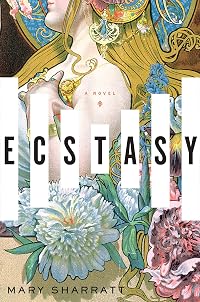
Note: I was rather curious about the dust jacket's artwork. It looked so much like something of Alphonse Mucha (and is often assumed to have been done by him). However, according to various sources on the internet, it is actually the work of Louis Théophile Hingre. (The original artist was not noted in the design credits.) show less
Previous biographies have not looked kindly on Alma Mahler. She was a modern woman brought into a less modern world at the tail end of the 19th century. Author Mary Sharratt offers the reader a fictional account with a more human approach to the complex person of Alma Mahler. It is based on fact through Sharratt's extensive research. Ms. Sharratt presents a young Alma eager to please her mature and older husband. She lives for him and yearns for his approval. Why wouldn't she; she's only 20? As her eyes were opened, his were not and therein lies the rub.
This was a beautifully written account of the Mahlers' lives, mostly through Alma's perspective. The prose is elegant and one is thoroughly transported to a different time and place. The story was truly an emotional roller coaster - the highs so high and the lows so very devastating.
As a musician with a fondness for Mahler, I personally was enthralled to read about the historic performances of his famous works, especially the choral pieces which I have had the pleasure to perform.
Thank you Ms. Sharratt for giving voice to a woman of great achievement who could so easily have been lost to the annals of history.
I am grateful to Ms. Sharratt and publisher Houghton Mifflin Co. for having provided a free copy of this book. Their generosity, however, did not influence this review - the words of which are mine alone.
Note: I was rather curious about the dust jacket's artwork. It looked so much like something of Alphonse Mucha (and is often assumed to have been done by him). However, according to various sources on the internet, it is actually the work of Louis Théophile Hingre. (The original artist was not noted in the design credits.) show less
The fascinating story of Alma Schindler Mahler Gropius Werfel. Awarded four stars on Goodreads.
I first learned about Alma as a child when I heard Tom Lehrer’s satirical ditty, Alma. I learned that this captivating Viennese woman was famous for marrying three brilliant and artistic giants of the 20th century [composer Gustav Mahler (1860-1911), architect Walter Gropius (1883-1969), author Franz Werfel (1890-1945)]. What I did NOT learn until reading THIS book, was that Alma was the daughter of artist Emil Jakob Schindler (1842-1892), grew up amid artitist of the Viennese Secession movement, and was also a talented composer in her own right. At least she was until she was forced to set aside her own aspirations at the insistence of show more husband Gustav Mahler, an already established composer 20 years her senior. It seems Mahler (and his monumental ego) insisted Alma be 100% dedicated to looking after him, with no other distractions!
Getting to know Alma by reading ECSTASY was a revelation. As author Mary Sharratt acknowledges in her Historical Afterword, Alma is no easy subject for historical fiction. As a woman possessed with talent, ambition, confidence, and beauty — she was simply born at the wrong time. Mahler’s expectation that, as his wife, Alma would subsume her own desires to promote his was the norm for this era. Which means her contemporaries often write about her as some kind of seductress, harlot or unnatural man-eater.
But even under these limitations inherent in primary research materials, Sharratt succeeds in revealing Alma’s psyche, believably portraying her as a smart and gifted musician whose talent was squelched for many years by a sexist society. Sharratt’s Alma is a woman who could not be completely fulfilled through the traditional roles of wife and mother and instead yearned for her own artistic expression, professional success, and love with someone who considered her an equal, rather than subservient. A woman who is continually questioning herself.
ECSTASY covers Alma’s life from childhood until her second marriage. It’s a wonderful book to read from a 21st century feminist perspective. And I hope that one day Mary Sharratt decides to continue Alma’s story in a sequel. show less
I first learned about Alma as a child when I heard Tom Lehrer’s satirical ditty, Alma. I learned that this captivating Viennese woman was famous for marrying three brilliant and artistic giants of the 20th century [composer Gustav Mahler (1860-1911), architect Walter Gropius (1883-1969), author Franz Werfel (1890-1945)]. What I did NOT learn until reading THIS book, was that Alma was the daughter of artist Emil Jakob Schindler (1842-1892), grew up amid artitist of the Viennese Secession movement, and was also a talented composer in her own right. At least she was until she was forced to set aside her own aspirations at the insistence of show more husband Gustav Mahler, an already established composer 20 years her senior. It seems Mahler (and his monumental ego) insisted Alma be 100% dedicated to looking after him, with no other distractions!
Getting to know Alma by reading ECSTASY was a revelation. As author Mary Sharratt acknowledges in her Historical Afterword, Alma is no easy subject for historical fiction. As a woman possessed with talent, ambition, confidence, and beauty — she was simply born at the wrong time. Mahler’s expectation that, as his wife, Alma would subsume her own desires to promote his was the norm for this era. Which means her contemporaries often write about her as some kind of seductress, harlot or unnatural man-eater.
But even under these limitations inherent in primary research materials, Sharratt succeeds in revealing Alma’s psyche, believably portraying her as a smart and gifted musician whose talent was squelched for many years by a sexist society. Sharratt’s Alma is a woman who could not be completely fulfilled through the traditional roles of wife and mother and instead yearned for her own artistic expression, professional success, and love with someone who considered her an equal, rather than subservient. A woman who is continually questioning herself.
ECSTASY covers Alma’s life from childhood until her second marriage. It’s a wonderful book to read from a 21st century feminist perspective. And I hope that one day Mary Sharratt decides to continue Alma’s story in a sequel. show less
The fascinating story of Alma Schindler Mahler Gropius Werfel. Awarded four stars on Goodreads.
I first learned about Alma as a child when I heard Tom Lehrer’s satirical ditty, Alma. I learned that this captivating Viennese woman was famous for marrying three brilliant and artistic giants of the 20th century [composer Gustav Mahler (1860-1911), architect Walter Gropius (1883-1969), author Franz Werfel (1890-1945)]. What I did NOT learn until reading THIS book, was that Alma was the daughter of artist Emil Jakob Schindler (1842-1892), grew up amid artitist of the Viennese Secession movement, and was also a talented composer in her own right. At least she was until she was forced to set aside her own aspirations at the insistence of show more husband Gustav Mahler, an already established composer 20 years her senior. It seems Mahler (and his monumental ego) insisted Alma be 100% dedicated to looking after him, with no other distractions!
Getting to know Alma by reading ECSTASY was a revelation. As author Mary Sharratt acknowledges in her Historical Afterword, Alma is no easy subject for historical fiction. As a woman possessed with talent, ambition, confidence, and beauty — she was simply born at the wrong time. Mahler’s expectation that, as his wife, Alma would subsume her own desires to promote his was the norm for this era. Which means her contemporaries often write about her as some kind of seductress, harlot or unnatural man-eater.
But even under these limitations inherent in primary research materials, Sharratt succeeds in revealing Alma’s psyche, believably portraying her as a smart and gifted musician whose talent was squelched for many years by a sexist society. Sharratt’s Alma is a woman who could not be completely fulfilled through the traditional roles of wife and mother and instead yearned for her own artistic expression, professional success, and love with someone who considered her an equal, rather than subservient. A woman who is continually questioning herself.
ECSTASY covers Alma’s life from childhood until her second marriage. It’s a wonderful book to read from a 21st century feminist perspective. And I hope that one day Mary Sharratt decides to continue Alma’s story in a sequel. show less
I first learned about Alma as a child when I heard Tom Lehrer’s satirical ditty, Alma. I learned that this captivating Viennese woman was famous for marrying three brilliant and artistic giants of the 20th century [composer Gustav Mahler (1860-1911), architect Walter Gropius (1883-1969), author Franz Werfel (1890-1945)]. What I did NOT learn until reading THIS book, was that Alma was the daughter of artist Emil Jakob Schindler (1842-1892), grew up amid artitist of the Viennese Secession movement, and was also a talented composer in her own right. At least she was until she was forced to set aside her own aspirations at the insistence of show more husband Gustav Mahler, an already established composer 20 years her senior. It seems Mahler (and his monumental ego) insisted Alma be 100% dedicated to looking after him, with no other distractions!
Getting to know Alma by reading ECSTASY was a revelation. As author Mary Sharratt acknowledges in her Historical Afterword, Alma is no easy subject for historical fiction. As a woman possessed with talent, ambition, confidence, and beauty — she was simply born at the wrong time. Mahler’s expectation that, as his wife, Alma would subsume her own desires to promote his was the norm for this era. Which means her contemporaries often write about her as some kind of seductress, harlot or unnatural man-eater.
But even under these limitations inherent in primary research materials, Sharratt succeeds in revealing Alma’s psyche, believably portraying her as a smart and gifted musician whose talent was squelched for many years by a sexist society. Sharratt’s Alma is a woman who could not be completely fulfilled through the traditional roles of wife and mother and instead yearned for her own artistic expression, professional success, and love with someone who considered her an equal, rather than subservient. A woman who is continually questioning herself.
ECSTASY covers Alma’s life from childhood until her second marriage. It’s a wonderful book to read from a 21st century feminist perspective. And I hope that one day Mary Sharratt decides to continue Alma’s story in a sequel. show less
I was torn about requesting this book. On the one hand, I love Mary Sharratt. Her writing really resonates with me. On the other, it’s about Alma Schindler Mahler Gropius Werfel. A couple of years ago I read a biography of her, and it did *not* portray her in a good light. It was in agreement with what I already knew of her: she was an anti-Semite, despite having married two Jewish men and having had affairs with others. She was emotionally abusive and controlling. She was, in most every way, a horrid person. But… Mary Sharratt! I had to give it a go.
Sharratt paints Schindler in a totally different light. We meet a beautiful young woman who is serious about music and composing and longs to take advanced lessons, which her mother show more and step-father say is a waste of money. She is also wakening to the attractions of me; her first kiss is from Klimt – who her stepfather advises to get the heck away from the underage Alma. When she is given permission to take some more music lessons, she and her tutor fall in love, but they are forbidden to marry as the tutor is a Jew. Later, when she wishes to marry another Jew, composer and music director Mahler, it is all right- he has prestige and money. Her parents demonstrated some unpleasant prejudices to her!
Head over heels in love with Mahler, she agrees to marry him under his conditions: she must give up her own music and just support him in his career. Take care of the house, the finances, and the kids when they come along, leaving him free to give his total attention to composing and conducting. It’s a brutal compromise. Numerous times, she longs to go back to composing or at least playing the piano, but it is forbidden. She finally has a nervous breakdown.
I found this Alma Schindler appealing and sympathetic- women are still making the compromise she did these days (so do men, but not as often as women do). This is not the Alma of the biographies. I liked this Alma, and her sacrifice resonated with me. I could see how this could have made her bitter and cynical- ‘Ecstasy’ ends shortly after Mahler’s death, so we don’t see how Sharratt would have dealt with Alma’s later life.
I give the book five stars. Sharratt’s writing style is, as usual, wonderful, and she made a person I was prejudiced against likeable and well rounded. show less
Sharratt paints Schindler in a totally different light. We meet a beautiful young woman who is serious about music and composing and longs to take advanced lessons, which her mother show more and step-father say is a waste of money. She is also wakening to the attractions of me; her first kiss is from Klimt – who her stepfather advises to get the heck away from the underage Alma. When she is given permission to take some more music lessons, she and her tutor fall in love, but they are forbidden to marry as the tutor is a Jew. Later, when she wishes to marry another Jew, composer and music director Mahler, it is all right- he has prestige and money. Her parents demonstrated some unpleasant prejudices to her!
Head over heels in love with Mahler, she agrees to marry him under his conditions: she must give up her own music and just support him in his career. Take care of the house, the finances, and the kids when they come along, leaving him free to give his total attention to composing and conducting. It’s a brutal compromise. Numerous times, she longs to go back to composing or at least playing the piano, but it is forbidden. She finally has a nervous breakdown.
I found this Alma Schindler appealing and sympathetic- women are still making the compromise she did these days (so do men, but not as often as women do). This is not the Alma of the biographies. I liked this Alma, and her sacrifice resonated with me. I could see how this could have made her bitter and cynical- ‘Ecstasy’ ends shortly after Mahler’s death, so we don’t see how Sharratt would have dealt with Alma’s later life.
I give the book five stars. Sharratt’s writing style is, as usual, wonderful, and she made a person I was prejudiced against likeable and well rounded. show less
Ecstasy by Mary Sharratt is a 2018 Houghton Mifflin Harcourt publication.
This story is a fictionalized accounting of composer and pianist Alma Schindler’s life during the period she was married to famed composer Gustav Mahler. As a condition of her marriage, Alma promised her husband, she would give up her own music and channel all her passion for music through his compositions and successes, which eventually takes her down the path of depression and melancholy, and into the arms of another man.
Vienna…
It doesn’t seem to matter what kind of story I’m reading- if Vienna is the location- It immediately puts me into an entirely different mood. There is just something so atmospheric about it, so romantic and steeped in incredible show more history- especially from an artistic standpoint. This book was no exception. I willingly allowed myself to fall dreamily into the angst ridden, highly dramatic, often tragic life of Alma Schindler Gustuv. Alma was a talented composer, someone who swore she would never succumb to traditional married life, always putting her music first- until she fell in love with Gustuv Mahler.
This story follows the impulsive Alma as she struggles through her teenage years, where she copes with the way her mother demurs to her new husband, and the addition to their family of a younger brother, as well as her sister’s struggle with mental illness. While Alma's often petulant and selfish, she is also a great romantic and feels things deeply.
She falls in and out of love easily enough, but did seem to have a tremendous depth of feeling for Gustuv who was more self -absorbed than Alma ever thought of being. Despite his dismissive attitude towards her, she lives for those periods of great passion between them. It was an amazing journey Alma took, as she suffered from discontent, boredom, and pent up creative power that left her frustrated and badly in need of release.
The story and the marriage between Alma and Gustuv reads like a musical composition at times with staccato and legato, diminuendo, and crescendos, Molto and Sempre, melody and harmony. I enjoyed the high drama, I must say. If this had been a strictly fictional book, I may have rolled my eyes at some of the intense emotional turmoil Alma was always on the verge of, thinking it just a little bit too melodramatic or over the top, but since this story is based on true events, it proves that life often is packed with more high -pitched angst than we want to admit. Artists of all forms seem more prone to those fits of agony and mania, but I’ll keep this in mind the next time I become exasperated by an overwrought heroine.
I also enjoyed Alma journey back to the place where she was able to take charge of her life and music again, was able to express herself musically and artistically, feeling more fulfilled and more independent, perhaps learning that lesson the hard way. In the end, Alma was more of a trailblazer for women than she is credited with, eventually leaving behind her own musical legacy, despite her continual attraction to men driven by their careers.
Many of you, myself included, will want to know more about Alma’s life after reading this book. It is interesting to note, that she often maintained her role as muse, becoming the subject of plays, books, and movies. While there are plenty of resources to choose from, the truth of Alma’s life is often speculative, elusive, and the subject of much debate.
This is quick, fascinating read, I found to be quite interesting and very absorbing.
4 stars show less
This story is a fictionalized accounting of composer and pianist Alma Schindler’s life during the period she was married to famed composer Gustav Mahler. As a condition of her marriage, Alma promised her husband, she would give up her own music and channel all her passion for music through his compositions and successes, which eventually takes her down the path of depression and melancholy, and into the arms of another man.
Vienna…
It doesn’t seem to matter what kind of story I’m reading- if Vienna is the location- It immediately puts me into an entirely different mood. There is just something so atmospheric about it, so romantic and steeped in incredible show more history- especially from an artistic standpoint. This book was no exception. I willingly allowed myself to fall dreamily into the angst ridden, highly dramatic, often tragic life of Alma Schindler Gustuv. Alma was a talented composer, someone who swore she would never succumb to traditional married life, always putting her music first- until she fell in love with Gustuv Mahler.
This story follows the impulsive Alma as she struggles through her teenage years, where she copes with the way her mother demurs to her new husband, and the addition to their family of a younger brother, as well as her sister’s struggle with mental illness. While Alma's often petulant and selfish, she is also a great romantic and feels things deeply.
She falls in and out of love easily enough, but did seem to have a tremendous depth of feeling for Gustuv who was more self -absorbed than Alma ever thought of being. Despite his dismissive attitude towards her, she lives for those periods of great passion between them. It was an amazing journey Alma took, as she suffered from discontent, boredom, and pent up creative power that left her frustrated and badly in need of release.
The story and the marriage between Alma and Gustuv reads like a musical composition at times with staccato and legato, diminuendo, and crescendos, Molto and Sempre, melody and harmony. I enjoyed the high drama, I must say. If this had been a strictly fictional book, I may have rolled my eyes at some of the intense emotional turmoil Alma was always on the verge of, thinking it just a little bit too melodramatic or over the top, but since this story is based on true events, it proves that life often is packed with more high -pitched angst than we want to admit. Artists of all forms seem more prone to those fits of agony and mania, but I’ll keep this in mind the next time I become exasperated by an overwrought heroine.
I also enjoyed Alma journey back to the place where she was able to take charge of her life and music again, was able to express herself musically and artistically, feeling more fulfilled and more independent, perhaps learning that lesson the hard way. In the end, Alma was more of a trailblazer for women than she is credited with, eventually leaving behind her own musical legacy, despite her continual attraction to men driven by their careers.
Many of you, myself included, will want to know more about Alma’s life after reading this book. It is interesting to note, that she often maintained her role as muse, becoming the subject of plays, books, and movies. While there are plenty of resources to choose from, the truth of Alma’s life is often speculative, elusive, and the subject of much debate.
This is quick, fascinating read, I found to be quite interesting and very absorbing.
4 stars show less
This novel opens with Alma, a sensual and talented young woman in nineteenth-century Vienna, who dreams of becoming a composer. She flirts with the artist Gustav Klimt and falls in love more than once before she weds the noted conductor and composer Gustav Mahler. However, the condition of their marriage is that Alma must give up her efforts at composing to devote herself to caring for her husband. She reluctantly agrees, but finds herself desperately unhappy. Alma's struggle to purpose her passion while so being a wife and mother made for the central conflict of this novel and fascinating reading that may women even today could relate to. A wonderful book about a woman I previously knew nothing about but now find endlessly fascinating.
I jumped on reading this book because of the author before I knew anything at all about the book. I’ve read several of Ms. Sharratt’s books and enjoyed them so I was excited at the prospect of a new one. When it arrived and I read the synopsis I was intrigued. I will admit to knowing nothing about Alma Schindler Mahler and very little about her husband, Gustav. So I will admit that I did some googling and I listened to both of their compositions while I read the book. I felt that was appropriate background music.
This IS Alma’s story but Gustav plays an out sized role in her life an in the novel. He almost sucks the life out of her. I have to admit that he really annoyed me – but I suppose anyone with a great talent will be show more temperamental and a bit crazed at given times. Add that to the way women were treated at this period in time and it’s a recipe for a talented woman to lose herself in doing the expected. For that is what Alma fought against; she was a woman with many passions and her personality did not fit the model for the perfect little woman of her day. She felt she had two paths; marry and have children or be a spinster, pursue her music and be one of the dreaded “third sex.” A woman who is trying to be a man.
Alma was a great beauty in her day and she had no dearth of suitors but she wanted love and passion. Her mother who lived a less than secure life wanted security for her even at the cost of love. Alma, at least in this tale seemed to fall in love with any man that was totally unsuitable for her. Even Mahler while acceptable was not financially stable.
Ms. Sharratt develops her Alma in a way you would expect a sheltered teenager to behave. The character is a mass of contradictions and at times very unlikable. But she is a strong woman who believes in her talent until told by a man that she doesn’t have any. Like so many women before her and after her she learns her own self and comes out stronger for it. Whether she comes out wiser. well you will have to decide.
The book is a delight to read, full of passion and pain, love, hate and joy. Ms. Sharratt brings Vienna from the turn of the 20th century alive. The good and the bad. I read the book over the course of a day. It grabbed me and just wouldn’t let me go. I also learned that I enjoy Gustav Mahler’s music very much. show less
This IS Alma’s story but Gustav plays an out sized role in her life an in the novel. He almost sucks the life out of her. I have to admit that he really annoyed me – but I suppose anyone with a great talent will be show more temperamental and a bit crazed at given times. Add that to the way women were treated at this period in time and it’s a recipe for a talented woman to lose herself in doing the expected. For that is what Alma fought against; she was a woman with many passions and her personality did not fit the model for the perfect little woman of her day. She felt she had two paths; marry and have children or be a spinster, pursue her music and be one of the dreaded “third sex.” A woman who is trying to be a man.
Alma was a great beauty in her day and she had no dearth of suitors but she wanted love and passion. Her mother who lived a less than secure life wanted security for her even at the cost of love. Alma, at least in this tale seemed to fall in love with any man that was totally unsuitable for her. Even Mahler while acceptable was not financially stable.
Ms. Sharratt develops her Alma in a way you would expect a sheltered teenager to behave. The character is a mass of contradictions and at times very unlikable. But she is a strong woman who believes in her talent until told by a man that she doesn’t have any. Like so many women before her and after her she learns her own self and comes out stronger for it. Whether she comes out wiser. well you will have to decide.
The book is a delight to read, full of passion and pain, love, hate and joy. Ms. Sharratt brings Vienna from the turn of the 20th century alive. The good and the bad. I read the book over the course of a day. It grabbed me and just wouldn’t let me go. I also learned that I enjoy Gustav Mahler’s music very much. show less
Members
- Recently Added By
Lists

Amazon best fictional genre picks monthly for 2018
418 works; 9 members
Author Information

9+ Works 1,779 Members
Classifications
Statistics
- Members
- 103
- Popularity
- 314,188
- Reviews
- 14
- Rating
- (3.76)
- Languages
- English
- Media
- Paper, Audiobook, Ebook
- ISBNs
- 8
- ASINs
- 1