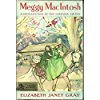
Meggy MacIntosh: A Highland Girl in the Carolina Colony
by Elizabeth Janet Gray
On This Page
Tags
Recommendations





















Member Reviews
Opening in January of 1775, in the city of Edinburgh, Meggy MacIntosh: A Highland Girl in the Carolina Colony - one of eight Newbery Honor Books selected in 1931, along with such titles as The Dark Star Of Itza, Queer Person, and Mountains Are Free (amongst others) - follows its eponymous orphaned heroine as, unhappy with the well-meaning but emotionally distant relatives with whom she is living, and determined to know something of adventure, she sets out to make a new life for herself in the Americas. Hoping to join her personal heroine, Flory MacDonald, whose famous rescue of Bonnie Prince Charlie had long been one of her favorite stories, Meggy runs away from home, substitutes herself for her cousin Veronica on a sea voyage, and show more generally finagles her way to North Carolina, only to discover that the new world isn't quite what she expected. With the colonies in turmoil, and fast heading into open revolt, she finds herself in a quandary: although sympathetic to the cause of the Patriots, she has great love for her fellow Highlanders, who, under the leadership of none other than Flory MacDonald, are staunch Loyalists. Where does Meggy really belong, and which side will she eventually choose...?
Seeing Elizabeth Janet Gray resolve that question regarding her heroine's loyalties - indeed, her very identity - is what made this book worth reading for me. I appreciated the complexity of emotion that she managed to capture, in her depiction of her Meggy: her uncertain and vacillating beliefs, when it came to the Patriot and Loyalist causes; her evolving feelings for and perceptions of Ewan, whom she hero-worshiped in Edinburgh, and for whom she felt almost a maternal kindness, by the end; and her simultaneous pride in, and disagreement with, the Highlanders who settled in North Carolina, but sided with the British. This latter, in particular, was terribly poignant. The scene in which the grizzled old soldier, a veteran of Culloden, speaks of being on the "winning side" this time, was terribly moving. Knowing what I do about the aftermath of the Jacobite rebellions, and of Culloden; and aware of which side really did triumph, in the Revolution, I found myself close to tears, while reading. A fine achievement on Gray's part!
All that said, I also found much that was dated and distasteful in Meggy MacIntosh, particularly in the author's depictions of the slaves, who are described, at various times, as "black monkeys," and who hardly emerge as human beings, in the story, let alone as sensitively depicted ones, with complex emotional lives. That contrast, between the nuanced view of the Revolution - the sensitive appreciation shown, for the idea that people on different sides of an issue can partake equally of high ideals and noble qualities - and the simplistically dismissive take on slaves, who are depicted (when they enter the picture at all) as incompetent and stupid, particularly struck me here, and I came away with the impression that this was authorial prejudice, rather than just a realistic depiction of the prejudices of the day. After all, it isn't characters who say or think that the slaves are like "black monkeys," it's the narrator.
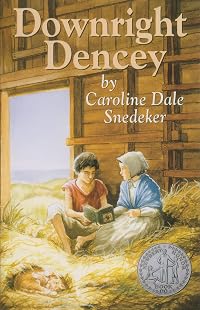
It really is a shame, because I do feel that the book has merit, as a work of historical fiction. But unlike Downright Dencey (another of the books I have read for this Newbery project), I'm not sure there is enough merit to compensate for the racism - especially when the racism here seems so much more consciously held, on the part of the author. Recommended primarily to Newbery completists like myself, and to fans of historical fiction, with the proviso that there is some pretty sharply anachronistic content here. show less
Seeing Elizabeth Janet Gray resolve that question regarding her heroine's loyalties - indeed, her very identity - is what made this book worth reading for me. I appreciated the complexity of emotion that she managed to capture, in her depiction of her Meggy: her uncertain and vacillating beliefs, when it came to the Patriot and Loyalist causes; her evolving feelings for and perceptions of Ewan, whom she hero-worshiped in Edinburgh, and for whom she felt almost a maternal kindness, by the end; and her simultaneous pride in, and disagreement with, the Highlanders who settled in North Carolina, but sided with the British. This latter, in particular, was terribly poignant. The scene in which the grizzled old soldier, a veteran of Culloden, speaks of being on the "winning side" this time, was terribly moving. Knowing what I do about the aftermath of the Jacobite rebellions, and of Culloden; and aware of which side really did triumph, in the Revolution, I found myself close to tears, while reading. A fine achievement on Gray's part!
All that said, I also found much that was dated and distasteful in Meggy MacIntosh, particularly in the author's depictions of the slaves, who are described, at various times, as "black monkeys," and who hardly emerge as human beings, in the story, let alone as sensitively depicted ones, with complex emotional lives. That contrast, between the nuanced view of the Revolution - the sensitive appreciation shown, for the idea that people on different sides of an issue can partake equally of high ideals and noble qualities - and the simplistically dismissive take on slaves, who are depicted (when they enter the picture at all) as incompetent and stupid, particularly struck me here, and I came away with the impression that this was authorial prejudice, rather than just a realistic depiction of the prejudices of the day. After all, it isn't characters who say or think that the slaves are like "black monkeys," it's the narrator.
It really is a shame, because I do feel that the book has merit, as a work of historical fiction. But unlike Downright Dencey (another of the books I have read for this Newbery project), I'm not sure there is enough merit to compensate for the racism - especially when the racism here seems so much more consciously held, on the part of the author. Recommended primarily to Newbery completists like myself, and to fans of historical fiction, with the proviso that there is some pretty sharply anachronistic content here. show less
Meggy is a young orphan living with her aunt, uncle and cousin in Edinburgh, feeling unwanted, lonely and restless, until a random opportunity to jump a ship to North Carolina gives her the chance at a new life, even if it is amidst colonies on the brink of war with England.
A nice little read, with a strong female lead who had me rooting for her from the start.
A nice little read, with a strong female lead who had me rooting for her from the start.
Ratings
Members
- Recently Added By
Lists

Best Newbery Honor Books
257 works; 32 members

Newbery Honor Books By Year - I - 1922-1980
199 works; 3 members

Books Read in 2002
197 works; 8 members
Author Information

41+ Works 5,649 Members
Elizabeth Janet Gray was born and grew up in Philadelphia. She was graduated from Bryn Mawr College, and in the years that followed, under the names Elizabeth Janet Gray and Elizabeth Gray Vining, she wrote many books for adults and children, including the Newbery Award winner Adam of the Road During and immediately after World War II, Mrs. Vining show more worked for the American Friends Service Committee. In 1946 she was appointed tutor to Crown Prince Akihito of Japan and later wrote the widely read Windows for the Crown Prince. She is the author of several novels and biographies and two autobiographical works Elizabeth Gray Vining lives south of Philadelphia, in Kennett Square, Pennsylvania show less
All Editions
Awards and Honors
Awards
Series
Belongs to Publisher Series
Common Knowledge
- Canonical title
- Meggy MacIntosh: A Highland Girl in the Carolina Colony
- Original publication date
- 1930
- Important events
- American Revolution (1776)
- Dedication
- TO THE MEMORY OF MY FATHER
- First words
- "Edinburgh, January 5, 1775."
- Last words
- (Click to show. Warning: May contain spoilers.)They stood there, shivering a little, and looked toward the road.
- Disambiguation notice
- Elizabeth Janet Gray (1936) - also listed in LT as "Vining, Elizabeth Gray"
Classifications
Statistics
- Members
- 56
- Popularity
- 547,276
- Reviews
- 2
- Rating
- (3.44)
- Languages
- English
- Media
- Paper
- ISBNs
- 2
- ASINs
- 8