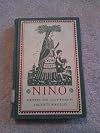
Nino
by Valenti Angelo
On This Page
Tags
Recommendations










Member Reviews
For heaven's sake, why would you leave a prosperous farm to live in, surely, a tenement in New York City? I know I idealize (and idolize) an Italian peasant existence, but damn, not without reason.
The book mentions Viareggio, putting the farm near the coast in the north. They grow corn and olives, eat risotto and polenta, goat's cheese and lamb, chestnuts and wine. Bliss. But off they go to America: another bit of propaganda.
Of course, as a children's book it glosses over political and economic repression and other such adult motivations. The male protagonist, born around the 1900, is the perfect age to die in WWI, but moving to the United States will only postpone his being drafted.
The book mentions Viareggio, putting the farm near the coast in the north. They grow corn and olives, eat risotto and polenta, goat's cheese and lamb, chestnuts and wine. Bliss. But off they go to America: another bit of propaganda.
Of course, as a children's book it glosses over political and economic repression and other such adult motivations. The male protagonist, born around the 1900, is the perfect age to die in WWI, but moving to the United States will only postpone his being drafted.
I finally got a chance to read this Newbery Honor book and I did enjoy it. It reminded me much of [b:Dobry|1351679|Dobry|Monica Shannon|https://d.gr-assets.com/books/1295974194s/1351679.jpg|1341363], a quiet story of a happy boyhood in the Old Country. But of course [a:Valenti Angelo|235303|Valenti Angelo|https://s.gr-assets.com/assets/nophoto/user/u_50x66-632230dc9882b4352d753eedf9396530.png]'s book is autobiographical: http://www.catholicauthors.com/angelo.html.
But, no, I cannot guess why the father went to America. I find no evidence he would have been an activist escaping persecution or anything like that, as there was no revolution or civil war at the time. The family was one of the more comfortable in the village, Nino makes clear show more in the chapter about harvest and the gleaners. There's no evidence of local scandal. It's just odd. show less
But, no, I cannot guess why the father went to America. I find no evidence he would have been an activist escaping persecution or anything like that, as there was no revolution or civil war at the time. The family was one of the more comfortable in the village, Nino makes clear show more in the chapter about harvest and the gleaners. There's no evidence of local scandal. It's just odd. show less
A young Italian boy spends his days in the fields with his mother and at home with his grandfather, thinking of his father, who has traveled to America.
Inventive neither in its story or its writing, this one. Another Newbery Honor Book that hasn't aged particularly well, I think. *shrug*
Inventive neither in its story or its writing, this one. Another Newbery Honor Book that hasn't aged particularly well, I think. *shrug*
1st ed dw. Famous illustrator-author memoir.
Ratings
Members
- Recently Added By
Lists

Newbery Honor Books By Year - I - 1922-1980
199 works; 3 members

Books Read in 2024
4,727 works; 128 members
Author Information

45+ Works 622 Members
Awards and Honors
Awards
Work Relationships
Is abridged in
Common Knowledge
- Original publication date
- 1938
Classifications
Statistics
- Members
- 45
- Popularity
- 662,887
- Reviews
- 4
- Rating
- (3.33)
- Languages
- English
- Media
- Paper
- ISBNs
- 2
- ASINs
- 2