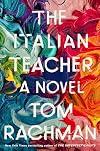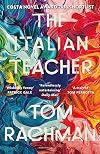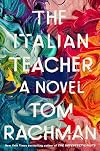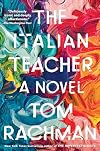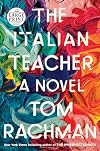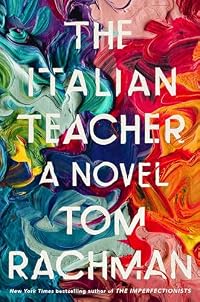
The Italian Teacher
by Tom Rachman
On This Page
Description
"A masterful novel that moves from Roman apartments to SoHo galleries to the South of France and tells the story of the son of a great painter striving to create his own legacy, by the bestselling author of THE IMPERFECTIONISTS. Rome, 1955. The artists gather for a picture at a party in an ancient villa. Bear Bavinsky, creator of vast canvases, larger than life, is at the centre of the picture. His wife, Natalie, edges out of the shot. From the side of the room watches little Pinch - their show more son. At five years old he loves Bear almost as much as he fears him. After Bear abandons their family, Pinch will still worship him, striving to live up to the Bavinsky name; while Natalie, a ceramicist, cannot hope to be more than a forgotten muse. Trying to burn brightly in his father's shadow, Pinch's attempts flicker and die. Yet by the end of a career of twists and compromises, Pinch will enact an unexpected rebellion that will leave forever his mark upon the Bear Bavinsky legacy. A masterful, original examination of love, duty, art and fame, The Italian Teacher cements Tom Rachman as among this generation's most exciting literary voices"-- show lessTags
Recommendations
















Member Reviews
Tom Rachman writes really well and has, so far, chosen to write about things that interest me. So my expectations were unnaturally high for The Italian Teacher (art! Italy!). I'm happy to say that Rachman exceeded what I had anticipated. The Italian Teacher hit all my sweet spots, while also being a very good book.
Pinch is born in 1950, the son of Natalie, a young Canadian woman who came to Rome to work on her art, and Bear Bavinsky, a larger than life prominent painter who dominates every room he enters. Bear eventually leaves his second family for a third, and Natalie and Pinch become a team. She encourages his painting and he helps his increasingly unstable mother negotiate life in Rome and then in London. The novel follows Pinch all show more through his life, one that is quiet and restrained, but also dominated by the spirit (and occasionally the presence) of his father.
This book, guys. It's a whole bunch of things. Just when it starts to approach a dead end or seems to be going somewhere expected, it shifts into something different. The coming of age novel in which Pinch and his mother negotiate a rag tag life in Rome becomes a college novel set in Canada, and then it all becomes somewhat Stoner-esque, as Pinch, a naturally modest person, lives quietly as a foreign language teacher, and then the whole book explodes with deception, intrigue, forgeries and lies. I liked it. show less
Pinch is born in 1950, the son of Natalie, a young Canadian woman who came to Rome to work on her art, and Bear Bavinsky, a larger than life prominent painter who dominates every room he enters. Bear eventually leaves his second family for a third, and Natalie and Pinch become a team. She encourages his painting and he helps his increasingly unstable mother negotiate life in Rome and then in London. The novel follows Pinch all show more through his life, one that is quiet and restrained, but also dominated by the spirit (and occasionally the presence) of his father.
This book, guys. It's a whole bunch of things. Just when it starts to approach a dead end or seems to be going somewhere expected, it shifts into something different. The coming of age novel in which Pinch and his mother negotiate a rag tag life in Rome becomes a college novel set in Canada, and then it all becomes somewhat Stoner-esque, as Pinch, a naturally modest person, lives quietly as a foreign language teacher, and then the whole book explodes with deception, intrigue, forgeries and lies. I liked it. show less
Bear Bavinsky is a globally revered artist so absorbed in his own self-importance that he leaves a trail of family devastation in his wake. Spawning multiple children from a string of failed relationships and marriages, there is only one child - Pinch, the narrator of the story - who he keeps up any kind of meaningful relationship with. Pinch worships the ground his father walks on from an early age, which Bear takes advantage of, ensuring that Pinch remains forever in the his shadow and the ultimate protector of the lifelong vanity project of his art.
This is a wonderful novel, quick to pull you in. Bear is a fantastically unlikeable alpha character who bursts in and out of the novel creating hurt on nearly every page he's on, whilst show more Pinch is his antithesis, frustrating to the reader as he consistently holds himself back through life, convinced he's not good at anything as he never receives the validation he craves from his father.
4 stars - one of those books that's just a blooming good read and will keep you turning the pages way longer than you'd planned to. Will be looking out for more from this author. show less
This is a wonderful novel, quick to pull you in. Bear is a fantastically unlikeable alpha character who bursts in and out of the novel creating hurt on nearly every page he's on, whilst show more Pinch is his antithesis, frustrating to the reader as he consistently holds himself back through life, convinced he's not good at anything as he never receives the validation he craves from his father.
4 stars - one of those books that's just a blooming good read and will keep you turning the pages way longer than you'd planned to. Will be looking out for more from this author. show less
We are all familiar with the injunction not to judge a book by its cover, but I think we might perhaps extend that to include not making assumptions based upon the title. My initial thoughts on seeing piles of a book called ‘The Italian Teacher’ heaped on one of the table in Daunt Books was that it sounded like a Mills & Boon style romance (‘… he taught her Italian and then they both spoke the language of love …’). Indeed, if I had not recognised Tim Rachman’s name as the author of [The Imperfectionists], I would probably simply have ignored it completely.
To have done so would have been to miss out on a treat. This is a marvellous novel that addresses, among other issues, the nature of art, and the shifting parameters of show more the relationship between a father and son. That may all sound rather ominous, but Rachman delivers it all with great humour.
The story opens in 1955 in Rome, where five-year-old Charles ‘Pinch’ Bavinsky is living with his expatriate parents. His mother Natalie is Canadian and in her twenties while Bear is American and some twenty years older than her. Bear is a celebrated artist, having already established his position in the vanguard of the post-war American art world. Natalie is an aspiring sculptress, but is gradually losing confidence in her abilities, and sense that Bear has come wholly to disregard her creative ambitions.
Bear is an enigmatic figure. He is perfectly happy with his status as a former ‘enfant terrible of the American art world, and has an unshakeable confidence in his own talent. Paradoxically, however, he becomes increasingly reluctant to exhibit any new work, adopting a stance similar to that of J D Salinger. Even at this relatively early stage, he is increasingly adamant that he will not sell any more paintings, preferring instead that, after his death, his oeuvre should be donated to a museum or gallery which will ensure that the works are available to everyone, rather than languishing in a private collection.
It becomes clear that relations between Bear and Natalie are delicate, and they are subject to further strain when Birdie, Bear’s daughter from a previous relationship, comes to visit for a few days. One of the most notable aspects of Birdie’s visit is the increased attention Bear pays to Pinch, as if he is playing his offspring off against each other. This manifests itself principally in the lessons in the basic skills of painting that Bear gives to Pinch, convincing the boy that he has a strong natural talent.
Bear departs shortly afterwards, although Pinch believes that he is simply on a visit somewhere, and constantly expects his return. Eventually Pinch accepts that Bear will not be coming back, and we learn that he is now living in New England, with a new family. Such flitting from one relationship to another, leaving ex-wives and children behind him, is a recurring pattern for Bear. Pinch’s own relationship with Bear fluctuates widely and will prove to be the bedrock for the whole novel. Veering from ardent adulation almost to hatred, Pinch seems always to struggle to hold Bear’s attention, even on the relatively rare occasions when they are together.
The book is beautifully written. Although the narrative focuses on ‘Pinch’ and his passage through life, Bear dominates. Rachman captures the frustrations of Pinch’s life, and his frequent tendency to vacillate, or over-think any situation. Rachman moves fluidly between heart-warming or, occasionally heart-rending, moments and episodes of almost slapstick comedy, but none seem out of place. He also captures the reader’s attention right from the start. Having bought the book on an impule, when I came to read it I had made sure that I had a couple of other books with me to fall back upon if I didn’t like it, but I needn’t have bothered: I found myself ensnared from the very start. show less
To have done so would have been to miss out on a treat. This is a marvellous novel that addresses, among other issues, the nature of art, and the shifting parameters of show more the relationship between a father and son. That may all sound rather ominous, but Rachman delivers it all with great humour.
The story opens in 1955 in Rome, where five-year-old Charles ‘Pinch’ Bavinsky is living with his expatriate parents. His mother Natalie is Canadian and in her twenties while Bear is American and some twenty years older than her. Bear is a celebrated artist, having already established his position in the vanguard of the post-war American art world. Natalie is an aspiring sculptress, but is gradually losing confidence in her abilities, and sense that Bear has come wholly to disregard her creative ambitions.
Bear is an enigmatic figure. He is perfectly happy with his status as a former ‘enfant terrible of the American art world, and has an unshakeable confidence in his own talent. Paradoxically, however, he becomes increasingly reluctant to exhibit any new work, adopting a stance similar to that of J D Salinger. Even at this relatively early stage, he is increasingly adamant that he will not sell any more paintings, preferring instead that, after his death, his oeuvre should be donated to a museum or gallery which will ensure that the works are available to everyone, rather than languishing in a private collection.
It becomes clear that relations between Bear and Natalie are delicate, and they are subject to further strain when Birdie, Bear’s daughter from a previous relationship, comes to visit for a few days. One of the most notable aspects of Birdie’s visit is the increased attention Bear pays to Pinch, as if he is playing his offspring off against each other. This manifests itself principally in the lessons in the basic skills of painting that Bear gives to Pinch, convincing the boy that he has a strong natural talent.
Bear departs shortly afterwards, although Pinch believes that he is simply on a visit somewhere, and constantly expects his return. Eventually Pinch accepts that Bear will not be coming back, and we learn that he is now living in New England, with a new family. Such flitting from one relationship to another, leaving ex-wives and children behind him, is a recurring pattern for Bear. Pinch’s own relationship with Bear fluctuates widely and will prove to be the bedrock for the whole novel. Veering from ardent adulation almost to hatred, Pinch seems always to struggle to hold Bear’s attention, even on the relatively rare occasions when they are together.
The book is beautifully written. Although the narrative focuses on ‘Pinch’ and his passage through life, Bear dominates. Rachman captures the frustrations of Pinch’s life, and his frequent tendency to vacillate, or over-think any situation. Rachman moves fluidly between heart-warming or, occasionally heart-rending, moments and episodes of almost slapstick comedy, but none seem out of place. He also captures the reader’s attention right from the start. Having bought the book on an impule, when I came to read it I had made sure that I had a couple of other books with me to fall back upon if I didn’t like it, but I needn’t have bothered: I found myself ensnared from the very start. show less
“He supposes that this is how culture works: The taste-makers call something important until it becomes so, making themselves important in the process.”
Character-driven novel about the life of Charles “Pinch” Bavinsky, son of famous American artist Bear Bavinsky. The story starts in Italy in the 1950s, where Bear and Pinch’s mother, Natalie, are living an artist’s unconventional lifestyle. Natalie is an artist in her own right, specializing in pottery. Bear is a larger-than-life presence in his son’s life, an acclaimed genius of the art world, but unfortunately, he is a despicable person. Everything is about what Bear wants and his family suffers from neglect. He collects lovers and wives and has many children but none of show more them gain any foothold in his attentions, except for his son Pinch. Pinch is devoted to his father and does everything in his power to gain his favor. Bear throws him crumbs and can be extremely cruel, telling his son he has no artistic talent, which we find out later is not true.
Bear appears in Pinch’s life, wreaks havoc on his psyche, then disappears for long periods of time. His father intentionally damages his romantic relationship with a young woman, and Pinch carries a torch for her for years. The story follows Pinch’s life as he moves around the world, featuring stints in Rome, Toronto, London, and a cabin in France.
Pinch’s life includes all the expected phases in an ordinary life, while exploring themes of truth, beauty, and the intricacies of a father-son relationship. The characters in this novel are very well drawn, including the secondary characters that take center stage toward the end. Rachman has definitely done his homework regarding the creation of oil paintings. Unlike some other novels I have read, this one is extremely realistic.
This book is a combination of many of my favorite elements – a deep character study, a book about the art world, and a protagonist that eventually triumphs. I really enjoyed this one! show less
Character-driven novel about the life of Charles “Pinch” Bavinsky, son of famous American artist Bear Bavinsky. The story starts in Italy in the 1950s, where Bear and Pinch’s mother, Natalie, are living an artist’s unconventional lifestyle. Natalie is an artist in her own right, specializing in pottery. Bear is a larger-than-life presence in his son’s life, an acclaimed genius of the art world, but unfortunately, he is a despicable person. Everything is about what Bear wants and his family suffers from neglect. He collects lovers and wives and has many children but none of show more them gain any foothold in his attentions, except for his son Pinch. Pinch is devoted to his father and does everything in his power to gain his favor. Bear throws him crumbs and can be extremely cruel, telling his son he has no artistic talent, which we find out later is not true.
Bear appears in Pinch’s life, wreaks havoc on his psyche, then disappears for long periods of time. His father intentionally damages his romantic relationship with a young woman, and Pinch carries a torch for her for years. The story follows Pinch’s life as he moves around the world, featuring stints in Rome, Toronto, London, and a cabin in France.
Pinch’s life includes all the expected phases in an ordinary life, while exploring themes of truth, beauty, and the intricacies of a father-son relationship. The characters in this novel are very well drawn, including the secondary characters that take center stage toward the end. Rachman has definitely done his homework regarding the creation of oil paintings. Unlike some other novels I have read, this one is extremely realistic.
This book is a combination of many of my favorite elements – a deep character study, a book about the art world, and a protagonist that eventually triumphs. I really enjoyed this one! show less
"Oh, Daddy! The art was so much better than the man.”
Tom Rathman's latest novel, The Italian Teacher was a nominee for the Costa Award and with good cause. The novel is in one sense about the great painter Bear Bavinsky who is recognized as an American Master though few have ever seen his very private collection. "They’re here for Bear Bavinsky, creator of expressionistic masterworks, wild colors crashing across each composition, a bare throat filling the huge canvas, or a roll of tummy fat, or a pricked shoulder. His detail portraits are too intimate—uncomfortably penetrating despite never once including a subject’s face."
But since the story is told through the eyes of his son, Charles, the novel is much more about fathers and show more sons and the extent to which a family should suffer for the art of their patriarch. We come to realize that Charlie is but one of 17 children sired by Bear who floats into new marriages and families throughout his life, but Charlie becomes the one that Bear decides he will leave his legacy to. "When I check out,” Bear concludes, “I’m in your hands. You, my boy. You are the one.” Although Bear never realizes it, this is the moment when his son takes over."
Charles, or Pinch, as he is nicknamed after a small snack in Spain, has an unfulfilled life, struggling along always looking for his father's approval. He tried painting also and was quite pleased with his ability until his father set him straight. He becomes an Italian Teacher in London and over the years has become a sad but accepted fixture in the school. "After a few years at Utz, Pinch becomes a personality there, his self-satirizing quirks drifting into shtick: the white Panama hat in summer, the smelly briar pipe, his necktie of turtles, the socks with double-decker buses."
His saving solace is to return to the studio in France where his father has stored his collection of "life stills". As he wrestles with how to appropriately keep the Bavinsky legacy intact and please all the siblings who want some compensation for a fatherless life, he finally takes shape as a character more complicated than initially described. Let's just say I loved the last third of the book. Highly recommend.
Some lines: "But an artist can’t worry about other people. Think of the middle-aged French stockbroker who left his wife and kids to paint in the tropics, never bothering to see them again, scarring them forever. Who doubts Gauguin was right to go?"
"I’ve never been able to get mad at your father. Why is that?” “Because there’s no malice in Dad. He’s just that way. Like a huge ship, powering forward on his mission, and nobody can stop it.” “I see,” Natalie notes, “that you’re still very engaged with Bear.” He looks to the restaurant clock, irritated. Nobody likes to be understood without warning.
But he does look older than his years, with a hunch of which he is hardly aware, lacking anyone intimate enough to correct his downward trend. Only a few cross-swept strands of hair still intervene between his bald dome and the rain. A paunch juts over his belt, as if peeking off a high diving board.
She casts back her long chestnut hair, which cascades ticklishly over his face. He blinks through the strands, inhaling the scent of rose-patchouli shampoo and the distant musk from between her thighs. show less
Tom Rathman's latest novel, The Italian Teacher was a nominee for the Costa Award and with good cause. The novel is in one sense about the great painter Bear Bavinsky who is recognized as an American Master though few have ever seen his very private collection. "They’re here for Bear Bavinsky, creator of expressionistic masterworks, wild colors crashing across each composition, a bare throat filling the huge canvas, or a roll of tummy fat, or a pricked shoulder. His detail portraits are too intimate—uncomfortably penetrating despite never once including a subject’s face."
But since the story is told through the eyes of his son, Charles, the novel is much more about fathers and show more sons and the extent to which a family should suffer for the art of their patriarch. We come to realize that Charlie is but one of 17 children sired by Bear who floats into new marriages and families throughout his life, but Charlie becomes the one that Bear decides he will leave his legacy to. "When I check out,” Bear concludes, “I’m in your hands. You, my boy. You are the one.” Although Bear never realizes it, this is the moment when his son takes over."
Charles, or Pinch, as he is nicknamed after a small snack in Spain, has an unfulfilled life, struggling along always looking for his father's approval. He tried painting also and was quite pleased with his ability until his father set him straight. He becomes an Italian Teacher in London and over the years has become a sad but accepted fixture in the school. "After a few years at Utz, Pinch becomes a personality there, his self-satirizing quirks drifting into shtick: the white Panama hat in summer, the smelly briar pipe, his necktie of turtles, the socks with double-decker buses."
His saving solace is to return to the studio in France where his father has stored his collection of "life stills". As he wrestles with how to appropriately keep the Bavinsky legacy intact and please all the siblings who want some compensation for a fatherless life, he finally takes shape as a character more complicated than initially described. Let's just say I loved the last third of the book. Highly recommend.
Some lines: "But an artist can’t worry about other people. Think of the middle-aged French stockbroker who left his wife and kids to paint in the tropics, never bothering to see them again, scarring them forever. Who doubts Gauguin was right to go?"
"I’ve never been able to get mad at your father. Why is that?” “Because there’s no malice in Dad. He’s just that way. Like a huge ship, powering forward on his mission, and nobody can stop it.” “I see,” Natalie notes, “that you’re still very engaged with Bear.” He looks to the restaurant clock, irritated. Nobody likes to be understood without warning.
But he does look older than his years, with a hunch of which he is hardly aware, lacking anyone intimate enough to correct his downward trend. Only a few cross-swept strands of hair still intervene between his bald dome and the rain. A paunch juts over his belt, as if peeking off a high diving board.
She casts back her long chestnut hair, which cascades ticklishly over his face. He blinks through the strands, inhaling the scent of rose-patchouli shampoo and the distant musk from between her thighs. show less
I saw this title on the Costa Awards shortlist for best novel and then learned that the author was raised in Canada, so I just had to read it. I’m glad I did.
The protagonist is Pinch Bavinsky, the son of a world-renowned artist, Bear Bavinsky. We meet Pinch at the age of 5 and it is immediately clear that he worships his father. In fact, throughout his life, Pinch craves his father’s attention and approval, always making choices that he hopes will bring him closer to Bear. His artistic endeavours come to naught, and he ends up teaching Italian at a language school. Only later in life does he try to escape from his father’s shadow.
Bear Bavinsky is a character who cannot be ignored. Like his huge paintings, he dominates a room with show more his presence. His talent and charm make him the centre of attention at social gatherings. But behind that charm hides the truth: he is a supremely arrogant narcissist. He rails against those who do not recognize his talent and allows his canvases to be purchased only by museums and art galleries, not individual collectors, because he believes his work should be seen and admired by everyone. “Bear destroys paintings that he deems unfit” because he cannot let the public see anything that would not show him in the best light.
As a father, Bear is best described as “a deadbeat dad who flew the coop.” He is a womanizer who has several wives and “Several of Bear’s families overlapped, including a few wives.” One of Bear’s seventeen children warns Pinch, “’Everything’s always about his art . . . He doesn’t actually care about his actual creations. . . . The human ones.’” At one point, Bear leaves Rome for work in New York but “Pinch finds out only after his father has left.” Even Bear describes himself as “a lousy sonofabitch.” Once Bear has moved on to another wife, Pinch writes to his father “with all sorts of questions” but Bear may not respond for months and then his letters “rarely connect to his son’s questions.”
Pinch does become Bear’s favourite child, but there’s a price. Bear wants someone who sees him as he sees himself, someone who confirms his opinions. One of Pinch’s siblings summarizes, “’He loved us when we were cute, right? Not so much when we developed opinions.’” And Pinch realizes, “Total allegiance is what you demand, with the hint that one of us might become your favorite. And, Pinch realizes with self-disgust, I won that contest. Few of Dad’s other kids are even allowed his private phone number. But I kowtow. I’m his servant. So I was chosen.”
Pinch is a foil for his father. He is shy and insecure. He is socially inept and has difficulty making friends. His romantic liaisons are few. It is heart-wrenching to see Pinch try so hard to connect with his father. A girlfriend describes him as “a grown man who acts like a worshipful little boy around his father.” His artistic tastes are just imitations of his father’s: he “revered Caravaggio because his father does.” Pinch tries to paint and though his mother begs him to keep his work, he does as his father does: “Bear destroys paintings that he deems unfit, however, so Pinch must do the same.” After Pinch finally shows his father one of his paintings, Bear tells him, “’So I got to tell you, kiddo. You’re not an artist. And you never will be.’” After this rebuke, Pinch decides he will study art history and write his father’s biography: “What . . . if I wrote the biography of Bear Bavinsky? A rush of optimism as he foresaw Dad’s approval, not to mention the hours they’d talk and debate. What if I even become famous for it?”
Pinch eventually realizes that “this life has hardly been his own” and “If he had been born to another father, they would consider Pinch’s achievements perfect respectable. But relatives are judged relatively.” I found myself hoping that Pinch would finally move beyond his “needy ambition.” He is eventually left in charge of Bear’s legacy and he feels “that makes him almost important,” and he doesn’t want to sell his father’s paintings because “If he cedes control, what has he got?” I cheered when he finally decides to leave his individual mark on his father’s legacy in a very original way! One critic comments that “’Bear redeemed himself in the purest way: through art’” but it is actually Pinch who redeems his father and himself.
Though the focus is on the father-son relationship, there is also a mother-son relationship. Natalie is a single mother for most of Pinch’s life. He admits to her that “’When I was growing up, you were by far my closest friend.’” Unfortunately, Pinch’s obsession with his father means that he relegates his mother to the background. He spurns her, “never explaining the source of his anger: that she had encouraged him, had adored his painting, had stoked his hopes, telling him, “You are really very good.”’” Pinch dismisses her opinion because it doesn’t match his father’s. Natalie struggles to be a ceramicist but Pinch disregards her efforts: “Yet he does not praise Natalie, instead launching into a silly dance to draw her attention, an intrusion he’d never have contemplated when Bear was painting.” Later, he thinks, “She has skill and knows her craft. But he wishes she would stop hurting herself in this attempt to be an artist. It’s so effortless for Bear, so beyond her.” It is tragic that the one person who loves Pinch without reservation is the one whom he avoids.
The novel also has a lot to say about the art world. Who decides whether a piece of art is worthy of esteem? Pinch “supposes that this is how culture works: The taste-makers call something important until it becomes so, making themselves important in the process.” Gallery owners also manipulate. Pinch’s actions at the end can be interpreted as a type of vengeance on the self-serving art purveyors and art critics.
I loved this novel. The characterization is outstanding and the twist at the end provides added satisfaction. It is very deserving of the Costa Award.
Note: Please check out my reader's blog (https://schatjesshelves.blogspot.com/) and follow me on Twitter (@DCYakabuski). show less
The protagonist is Pinch Bavinsky, the son of a world-renowned artist, Bear Bavinsky. We meet Pinch at the age of 5 and it is immediately clear that he worships his father. In fact, throughout his life, Pinch craves his father’s attention and approval, always making choices that he hopes will bring him closer to Bear. His artistic endeavours come to naught, and he ends up teaching Italian at a language school. Only later in life does he try to escape from his father’s shadow.
Bear Bavinsky is a character who cannot be ignored. Like his huge paintings, he dominates a room with show more his presence. His talent and charm make him the centre of attention at social gatherings. But behind that charm hides the truth: he is a supremely arrogant narcissist. He rails against those who do not recognize his talent and allows his canvases to be purchased only by museums and art galleries, not individual collectors, because he believes his work should be seen and admired by everyone. “Bear destroys paintings that he deems unfit” because he cannot let the public see anything that would not show him in the best light.
As a father, Bear is best described as “a deadbeat dad who flew the coop.” He is a womanizer who has several wives and “Several of Bear’s families overlapped, including a few wives.” One of Bear’s seventeen children warns Pinch, “’Everything’s always about his art . . . He doesn’t actually care about his actual creations. . . . The human ones.’” At one point, Bear leaves Rome for work in New York but “Pinch finds out only after his father has left.” Even Bear describes himself as “a lousy sonofabitch.” Once Bear has moved on to another wife, Pinch writes to his father “with all sorts of questions” but Bear may not respond for months and then his letters “rarely connect to his son’s questions.”
Pinch does become Bear’s favourite child, but there’s a price. Bear wants someone who sees him as he sees himself, someone who confirms his opinions. One of Pinch’s siblings summarizes, “’He loved us when we were cute, right? Not so much when we developed opinions.’” And Pinch realizes, “Total allegiance is what you demand, with the hint that one of us might become your favorite. And, Pinch realizes with self-disgust, I won that contest. Few of Dad’s other kids are even allowed his private phone number. But I kowtow. I’m his servant. So I was chosen.”
Pinch is a foil for his father. He is shy and insecure. He is socially inept and has difficulty making friends. His romantic liaisons are few. It is heart-wrenching to see Pinch try so hard to connect with his father. A girlfriend describes him as “a grown man who acts like a worshipful little boy around his father.” His artistic tastes are just imitations of his father’s: he “revered Caravaggio because his father does.” Pinch tries to paint and though his mother begs him to keep his work, he does as his father does: “Bear destroys paintings that he deems unfit, however, so Pinch must do the same.” After Pinch finally shows his father one of his paintings, Bear tells him, “’So I got to tell you, kiddo. You’re not an artist. And you never will be.’” After this rebuke, Pinch decides he will study art history and write his father’s biography: “What . . . if I wrote the biography of Bear Bavinsky? A rush of optimism as he foresaw Dad’s approval, not to mention the hours they’d talk and debate. What if I even become famous for it?”
Pinch eventually realizes that “this life has hardly been his own” and “If he had been born to another father, they would consider Pinch’s achievements perfect respectable. But relatives are judged relatively.” I found myself hoping that Pinch would finally move beyond his “needy ambition.” He is eventually left in charge of Bear’s legacy and he feels “that makes him almost important,” and he doesn’t want to sell his father’s paintings because “If he cedes control, what has he got?” I cheered when he finally decides to leave his individual mark on his father’s legacy in a very original way! One critic comments that “’Bear redeemed himself in the purest way: through art’” but it is actually Pinch who redeems his father and himself.
Though the focus is on the father-son relationship, there is also a mother-son relationship. Natalie is a single mother for most of Pinch’s life. He admits to her that “’When I was growing up, you were by far my closest friend.’” Unfortunately, Pinch’s obsession with his father means that he relegates his mother to the background. He spurns her, “never explaining the source of his anger: that she had encouraged him, had adored his painting, had stoked his hopes, telling him, “You are really very good.”’” Pinch dismisses her opinion because it doesn’t match his father’s. Natalie struggles to be a ceramicist but Pinch disregards her efforts: “Yet he does not praise Natalie, instead launching into a silly dance to draw her attention, an intrusion he’d never have contemplated when Bear was painting.” Later, he thinks, “She has skill and knows her craft. But he wishes she would stop hurting herself in this attempt to be an artist. It’s so effortless for Bear, so beyond her.” It is tragic that the one person who loves Pinch without reservation is the one whom he avoids.
The novel also has a lot to say about the art world. Who decides whether a piece of art is worthy of esteem? Pinch “supposes that this is how culture works: The taste-makers call something important until it becomes so, making themselves important in the process.” Gallery owners also manipulate. Pinch’s actions at the end can be interpreted as a type of vengeance on the self-serving art purveyors and art critics.
I loved this novel. The characterization is outstanding and the twist at the end provides added satisfaction. It is very deserving of the Costa Award.
Note: Please check out my reader's blog (https://schatjesshelves.blogspot.com/) and follow me on Twitter (@DCYakabuski). show less
It’s awfully easy to satirize the uppermost layer of the market for contemporary art, where new works by name artists sell for millions to hedge fund managers and Russian oligarchs. Which isn’t to say doing so would be wrong. When a market shaping dealer in this novel is credited with the quip, “Success in art is fifty percent timing, fifty percent geography. The rest is talent”, it’s funny because it seems true.
Within that rarified community of artists, collectors, and dealers, one suspects, are more than a few raging narcissists. “Bear” Bavinsky certainly qualifies. He passes through the novel trampling over the well-being of his wives (7 or 8 of them in succession) and children (more than a dozen), leaving emotional show more carnage in his wake. Thankfully for the reader the novel’s focus is not on him but on his son Charles, aka Pinch.
Pinch struggles with a desperate need for his narcissistic father’s attention and approval, which can never be held with anything more than the most tenuous grip, and with often painful results. It’s almost enough to make one feel sorry for others who seem to be in a similar place, like, maybe, Eric Trump perhaps. They sometimes behave badly; they are badly damaged. But Pinch hopes that by finding a way to make himself useful to his father, and to his father’s identity, he will matter.
Of course it’s not to be. No matter who you are, you can never be important to a narcissist, not really. “Hear this. You work for me. Get it? You always worked for me,” Bear spits at Pinch, as he ultimately ejects Pinch from his life. “I win. You hear? I fucking win.”
The novel continues on from that point and Pinch proceeds to pull a fast one on the art world, a line of action which seems to have some believability issues, but hey, might could happen, never know. It’s fun to root for him, anyway. Later in life, on his deathbed, Pinch reaches an acceptance that feels real, and full of a grace we should all grant ourselves:
Within that rarified community of artists, collectors, and dealers, one suspects, are more than a few raging narcissists. “Bear” Bavinsky certainly qualifies. He passes through the novel trampling over the well-being of his wives (7 or 8 of them in succession) and children (more than a dozen), leaving emotional show more carnage in his wake. Thankfully for the reader the novel’s focus is not on him but on his son Charles, aka Pinch.
Pinch struggles with a desperate need for his narcissistic father’s attention and approval, which can never be held with anything more than the most tenuous grip, and with often painful results. It’s almost enough to make one feel sorry for others who seem to be in a similar place, like, maybe, Eric Trump perhaps. They sometimes behave badly; they are badly damaged. But Pinch hopes that by finding a way to make himself useful to his father, and to his father’s identity, he will matter.
Of course it’s not to be. No matter who you are, you can never be important to a narcissist, not really. “Hear this. You work for me. Get it? You always worked for me,” Bear spits at Pinch, as he ultimately ejects Pinch from his life. “I win. You hear? I fucking win.”
The novel continues on from that point and Pinch proceeds to pull a fast one on the art world, a line of action which seems to have some believability issues, but hey, might could happen, never know. It’s fun to root for him, anyway. Later in life, on his deathbed, Pinch reaches an acceptance that feels real, and full of a grace we should all grant ourselves:
And his own life? Viewed at any point along the way, it seemed to Pinch to have so little direction. But from the present vantage, what happened feels inevitable - not because events were beyond his control but because they were within it. He couldn’t have been other than he was. That doesn’t hurt anymore. Just another ant, marching up and down.show less
Members
- Recently Added By
Lists

2019 Tournament of Books
18 works; 17 members

Amazon best fictional genre picks monthly for 2018
418 works; 9 members

Books Read in 2018
4,360 works; 110 members

To Read
617 works; 7 members

Dim Sum Lunch Reading
43 works; 2 members
Author Information

6+ Works 5,248 Members
Tom Rachman was born in London, England and raised in Vancouver, Canada. He is a graduate of the University of Toronto and the Columbia School of Journalism. He was a foreign correspondent for the Associated Press and from 2006 to 2008 was an editor at the International Herald Tribune in Paris. Rachman is the author of The Imperfectionists and The show more Rise & Fall of Great Powers. (Bowker Author Biography) show less
Awards and Honors
Common Knowledge
- Canonical title
- The Italian Teacher
- Original title
- The Italian Teacher
- Original publication date
- 2018-02-18
- People/Characters
- Charles "Pinch" Bavinsky; Bear Bavinsky; Natalie; Birdie Bavinsky
- Important places
- Rome, Italy; London, England, UK
- Dedication
- For Allesandra
- First words
- Seated in a copper bathtub, Bear Bavinsky dunks his head under steaming water and shakes out his beard, flinging droplets across the art studio.
Classifications
Statistics
- Members
- 377
- Popularity
- 82,426
- Reviews
- 31
- Rating
- (3.84)
- Languages
- Danish, English, German, Polish
- Media
- Paper, Audiobook, Ebook
- ISBNs
- 23
- ASINs
- 6