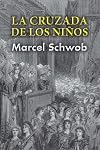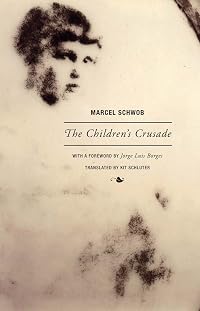
The children's crusade
by Marcel Schwob
On This Page
Description
"I've just read Marcel Schwob's The Children's Crusade twice over, with deep admiration and reverence. I am profoundly moved: what a work And to think I'd never heard the name of Marcel Schwob. Who is he?"--Rainer Maria RilkeMarcel Schwob's 1896 novella The Children's Crusade retells the medieval legend of the exodus of some 30,000 children from all countries to the Holy Land, who traveled to the shores of the sea, which--instead of parting to allow them to march on to Jerusalem--instead show more delivered them to merchants who sold them into slavery in Tunisia or delivered them to a watery death. It is a cruel and sorrowful story mingling history and legend, which Schwob recounts through the voices of eight different protagonists: a goliard, a leper, Pope Innocent III, a cleric, a qalandar and Pope Gregory IX, as well as two of the marching children, whose naive faith eventually turns into growing fear and anguish.Though it is a tale drawn from the early 13th century, Schwob presents it through a modern framework of shifting subjectivity and fragmented coherency, and its subject matter and its succession of different narrative perspectives has been seen as an influence on and precursor to such diverse works as Alfred Jarry's The Other Alcestis, Ryunosuke Akutagawa's "In a Grove," William Faulkner's As I Lay Dying and Jerzy Andrzejewski's The Gates of Paradise. It is a tale told by many yet understood by few, a mosaic surrounding a void, describing a world in which innocence must perish. show lessTags
Recommendations






Member Reviews
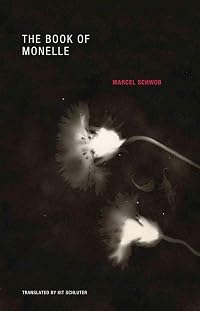
This tiny little tragedy is an interesting piece in Schwob's oeuvre, as it's quite difficult for me not to read it as both a coda and rejoinder to The Book of Monelle, especially given Schwob was reportedly very frustrated at being primary known as the author of the latter. Like Monelle, this is a bleak, polyvocal tale of metaphysical child suffering. Here, though, it's vastly more nihilist. No longer do children, in their innocence and ephemeralness, exist to teach lessons or remind adults of something or bring other children to safety. Instead they exist purely as strange, innocent beings with terrible, senseless fates at the hands of adults and the uncaring cruelty of nature/G-d. Schwob mentions on the first page the disgust at show more people who cut up kids and put them on display to provoke sympathy and that absolutely is something I read as a critique of his own writing.
Also, interestingly, Schwob was (as far as I know) an assimilated Jew and there's a funny dynamic here where he has a sort of fascinated outsider perspective on both Christianity and Islam, but Judaism is completely missing.
All-in-all, a book that's very slight and thus doesn't have a huge impact, but which is a well-wrought tragedy and is particularly of interest for folks who care about Schwob as a writer writ large.
Note: This book is as weird about Islam and "the east" as you'd expect a book from a European about the crusades with white as the primary symbol to be. show less
Also, interestingly, Schwob was (as far as I know) an assimilated Jew and there's a funny dynamic here where he has a sort of fascinated outsider perspective on both Christianity and Islam, but Judaism is completely missing.
All-in-all, a book that's very slight and thus doesn't have a huge impact, but which is a well-wrought tragedy and is particularly of interest for folks who care about Schwob as a writer writ large.
Note: This book is as weird about Islam and "the east" as you'd expect a book from a European about the crusades with white as the primary symbol to be. show less
Schwob nos narra el episodio medieval de una forma onírica tal que casi parece un relato de fantasmas. Todo tiene un aire irreal pero a la vez anticipa la tragedia. Muy bueno (Y una traducción excelente)
Schwob nos narra el episodio medieval de una forma onírica tal que casi parece un relato de fantasmas. Todo tiene un aire irreal pero a la vez anticipa la tragedia. Muy bueno (Y una traducción excelente)
Schwob nos narra el episodio medieval de una forma onírica tal que casi parece un relato de fantasmas. Todo tiene un aire irreal pero a la vez anticipa la tragedia. Muy bueno (Y una traducción excelente)
Schwob nos narra el episodio medieval de una forma onírica tal que casi parece un relato de fantasmas. Todo tiene un aire irreal pero a la vez anticipa la tragedia. Muy bueno (Y una traducción excelente)
A mudança de perspectiva dos narradores desse livro combina maravilhosamente com ficção histórica.
Ratings
Members
- Recently Added By
Lists

Wakefield Press Ranked
20 works; 1 member
Author Information

89+ Works 1,568 Members
Awards and Honors
Notable Lists
Series
Belongs to Publisher Series
Common Knowledge
- Canonical title
- The children's crusade
- Original title
- La croisade des enfants. L' etoile de bois
Classifications
Statistics
- Members
- 131
- Popularity
- 248,819
- Reviews
- 6
- Rating
- (4.00)
- Languages
- 7 — English, French, German, Italian, Japanese, Portuguese (Portugal), Spanish
- Media
- Paper, Ebook
- ISBNs
- 21
- ASINs
- 5