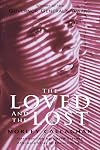
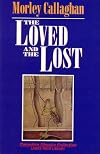
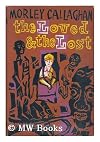
The Loved and the Lost
by Morley Callaghan
On This Page
Description
Set in the early 1950s in Montreal, this is the story of enigmatic Peggy Sanderson--a woman who has become a socially awkward presence due to her open and casual association with black musicians in Lower Town nightclubs. White and black men assume she must be involved sexually with the musicians, white women are perplexed by her, and black women both fear and loathe her. Yet Peggy's almost guileless sense of ease is at complete variance with these assumptions and attitudes. When Jim show more McAlpine, a writer and journalistically engaged intellectual, falls in love with her, lives are ruined and careers are broken. Taking place before the civil rights movement, this tragic story explores race relations with great moral complexity and compassion. show lessTags
Recommendations



















Member Reviews
Was Canada a cultural desert for 20th century writers before Leonard Cohen burst on the scene with an album of songs (The Songs of Leonard Cohen) or was it more to the point that if writers chose to stay in Canada they would never get a foot on the world stage. Morley Callaghan was part of the group of writers centred around Paris in 1929 which included Ernest Hemingway, Ezra Pound, Gertrude Stein, F Scott Fitzgerald and James Joyce, unfortunately for him (as far as international fame is concerned) he chose to return to Canada. Fitzgerald, Hemingway, Stein, Joyce, Pound and er.... um Morley Callaghan? His novels were published by Scribners and he regularly had stories published in the New Yorker, but none of his novels were published in show more the United Kingdom. When I read the wikipedia article it would seem he was more famous for an alleged boxing match with Ernest Hemingway than any book he wrote. So then what of The Loved and the Lost his novel published in 1951 and now available on kindle.
Jim McAlpine is a college professor who leaves his post to seek his fortune and widen his horizons in a new city. He has the chance to get a regular column in a prestigious newspaper and also to romance the wealthy owners daughter. He is a man with liberal some might say progressive views but he must overcome the suspicions of the editor in chief to get employment. He charms both the owner Mr Carver and his daughter Catherine and is made to believe his appointment is only a matter of a delay of a week or two. Meanwhile he is introduced to Peggy Sanderson a sort of femme fatale, with whom he quickly falls in love. Peggy is trying to make ends meet in the city, but is not helped by her associations with some black musicians who play jazz in a dive in the black district across the tracks. Jim starts to follow her around and into the cafe where the musicians play. He must balance his chance of employment with his growing obsession for Peggy whose reputation is becoming increasingly disreputable with the English and French white communities.
The city is obviously Montreal although it is not named and it is winter time and a bitterly cold period. The snow fall seems to mirror Jim's struggle as he moves through the city with some difficulty. He shivers in pursuit of Peggy who leads him around her regular haunts, while he seeks shelter in bars and eating houses. At times he becomes lost not able to find places in which he feels secure and although he is a confident man, he is cast into a world where he starts to feel out of his depth. Morley Callaghan paints a vivid portrait of the city and keys into the events and lives of the people surrounding Jim. It is a psychological approach and although detached; in as much as there is no moral tone the author lays bare the thoughts and feelings of Jim, however hazy they might be. Peggy of course remains an enigma, but a back story of her childhood (which she tells to Jim) of her joyous relationship with a large black family when she was a child uncovers her motives to become accepted by the black community. It is a snapshot of the lives of the communities in the city told through the experiences of a select group of people. The author refuses to make any moral judgements and although a major theme of the book is black and white relationships and those between the rich and not so rich, Morley Callaghan refrains from making or leading to any judgements. It is up to the reader to find his own way. The book has an overtone of tragedy almost from the start, but this is not overplayed and the excellent pacing moves through the gears to its unsurprising conclusion. It is a dose of sharply observed reality with suspense and anticipation building through its wintry urban landscapes.
Morley Callaghan was a journalist and his sharp observations reflect this background, but there is no clipped journalistic style in his beautifully turned prose. His psychological interest do not at any stage hint at a crusade. He tells the story of the relationships between the communities with sympathy for the economic deprivation of the black people, but any stance on racism is not evident from this novel, however It was written in 1951 and so black people are referred to as negroes or mulattos and by more colloquial terms by some of the white characters. Morley Callaghan from the evidence of this novel is a major discovery for me and I look forward to reading more by him. Evidently he was an excellent writer of short stories. 4.5 stars. show less
Jim McAlpine is a college professor who leaves his post to seek his fortune and widen his horizons in a new city. He has the chance to get a regular column in a prestigious newspaper and also to romance the wealthy owners daughter. He is a man with liberal some might say progressive views but he must overcome the suspicions of the editor in chief to get employment. He charms both the owner Mr Carver and his daughter Catherine and is made to believe his appointment is only a matter of a delay of a week or two. Meanwhile he is introduced to Peggy Sanderson a sort of femme fatale, with whom he quickly falls in love. Peggy is trying to make ends meet in the city, but is not helped by her associations with some black musicians who play jazz in a dive in the black district across the tracks. Jim starts to follow her around and into the cafe where the musicians play. He must balance his chance of employment with his growing obsession for Peggy whose reputation is becoming increasingly disreputable with the English and French white communities.
The city is obviously Montreal although it is not named and it is winter time and a bitterly cold period. The snow fall seems to mirror Jim's struggle as he moves through the city with some difficulty. He shivers in pursuit of Peggy who leads him around her regular haunts, while he seeks shelter in bars and eating houses. At times he becomes lost not able to find places in which he feels secure and although he is a confident man, he is cast into a world where he starts to feel out of his depth. Morley Callaghan paints a vivid portrait of the city and keys into the events and lives of the people surrounding Jim. It is a psychological approach and although detached; in as much as there is no moral tone the author lays bare the thoughts and feelings of Jim, however hazy they might be. Peggy of course remains an enigma, but a back story of her childhood (which she tells to Jim) of her joyous relationship with a large black family when she was a child uncovers her motives to become accepted by the black community. It is a snapshot of the lives of the communities in the city told through the experiences of a select group of people. The author refuses to make any moral judgements and although a major theme of the book is black and white relationships and those between the rich and not so rich, Morley Callaghan refrains from making or leading to any judgements. It is up to the reader to find his own way. The book has an overtone of tragedy almost from the start, but this is not overplayed and the excellent pacing moves through the gears to its unsurprising conclusion. It is a dose of sharply observed reality with suspense and anticipation building through its wintry urban landscapes.
Morley Callaghan was a journalist and his sharp observations reflect this background, but there is no clipped journalistic style in his beautifully turned prose. His psychological interest do not at any stage hint at a crusade. He tells the story of the relationships between the communities with sympathy for the economic deprivation of the black people, but any stance on racism is not evident from this novel, however It was written in 1951 and so black people are referred to as negroes or mulattos and by more colloquial terms by some of the white characters. Morley Callaghan from the evidence of this novel is a major discovery for me and I look forward to reading more by him. Evidently he was an excellent writer of short stories. 4.5 stars. show less
For the most part, I liked this book, although it has been criticized for not making more of a statement about segregation and inter-racial relationships
Ratings
Members
- Recently Added By
Lists

Governor General of Canada's English Fiction Awards
89 works; 3 members
Author Information

77+ Works 1,251 Members
Morley Callaghan 1903-1990 Morley Callaghan was born on February 22, 1903 in Toronto, Canada. A master of the short story and author of several excellent novels, Callaghan has long been a writer of international reputation. He educated at St. Michael's College, University of Toronto, and Osgoode Hall Law school. Working as a reporter for the show more Toronto Daily Star, he met Ernest Hemingway who was also working with the newspaper. In 1929, the same year as his first volume of short stories, Native Argosy, was published, Callaghan traveled to Paris, where he became reacquainted with Hemingway and met James Joyce and F. Scott Fitzgerald. That Summer in Paris (1963) contains Callaghan's memoirs of his experiences with these famous expatriates. Morley Callaghan is renowned for the clarity and economy of his prose. While Callaghan's work appears forthright and uncomplicated, each of the novels focuses on a character who faces a crisis. How this turning point is handled determines the direction the character's life will take. Callaghan, who was a devout Catholic, saw himself as a moralist as well as one who gave "shape and form to human experience." Callaghan was awarded the Royal Society of Canada's Lorne Pierce Medal in 1960. In 1982 he was made a Companion of the Order of Canada. Callaghan's works include The Loved and the Lost (which won the Governor General's Award in 1951), The Many Colored robe, A Time for Judas, Our Lady of the Snows, and A Wild Old man Down the Road. He died at the age of 87 and was interred at Mount Hope Catholic Cemetery in Ontario. (Bowker Author Biography) show less
Awards and Honors
Awards
Series
Belongs to Publisher Series
Common Knowledge
- Original publication date
- 1951
- First words
- Joseph Carver, the publisher of the Montreal Sun, lived on the mountain.
Classifications
Statistics
- Members
- 78
- Popularity
- 406,261
- Reviews
- 2
- Rating
- (3.69)
- Languages
- English
- Media
- Paper, Ebook
- ISBNs
- 7
- ASINs
- 3