On This Page
Description
Four World War II infantrymen recover at an army hospital, and struggle to readjust to the home front, in this New York Times–bestselling novel.At the end of a long journey across the Pacific, a ship catches sight of California. On board are hundreds of injured soldiers, survivors of the American infantry's battle to wrest the South Seas from the Japanese Empire. As the men on deck cheer their imminent return to their families, wives, and favorite girls, four stay below, unable to join in show more the celebration. These men are broken by war and haunted by what they learned there of the savagery of mankind. As they convalesce in a hospital in Memphis, the pain of that knowledge will torment them far worse than any wound.
The third of James Jones's epics based on his life in the army, this posthumously published novel draws on his own experiences to depict the horrors of war and their persistence even after the jungle is left behind.
This ebook features an illustrated biography of James Jones including rare photos from the author's estate.
. show less
Tags
Recommendations















Member Reviews
Ah, James Jones, you and I are old friends, aren't we? I remember when I first heard your name when I saw the film adaptation of your book "The Thin Red Line". An incredible movie on all fronts, far better than its apparent rival Saving Private Ryan (afraid I'm in 'that' camp) that completely changed how I looked at not only film but also at how a story could be told and told well, even profoundly so.
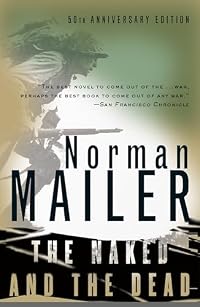
Fast forward a couple years from that and I finally got around to reading the source text, your novel James, and it was damn good. Wow, remembering now I'm amazed my eyes didn't bleed out completely from all the burn out texts I was running on (Ulysses, Gravity's Rainbow, Thus Spoke Zarathustra, among others) along with yours, Jim. Sorry, show more you knew I was a philandering bibliophile when we met. In fact I actually remember reading Thin Red not long after reading Norman Mailer's, your friend (as much as Mailer could or did have 'friends' in the traditional sense of that word) "The Naked and The Dead" (it's been three/maybe four years already?) which was a similar novel to yours in setting though different in execution and voice.
I rated Mailer a bit higher, sorry Jim, due to the bombastic and even Icarus-like ambition of the text, to me at least, that simultaneously showed Mailer's brilliance matched and weighed down, slightly, by his flaws (those flaws binged and fattened with Mailer's ensuing career but that's for another piece...) but your book left an incredible impression nonetheless. Not only for the starkness of the Pacific war setting but also for the brutally honest depiction of men at war where patriotism, propaganda, and sloganeering have no febrile minds in which to take root. And all that's left is the business of war and what it does to those people quite literally caught up and lost in it. Mailer's book was the feast and your book, Jim, well, that was the meditation, two counterpoints I'm thankful for reading so close to one another.
Another year or so later I began the project of reading your first and most well known and most successful novel From Here to Eternity. I remember starting your book while working at an AMC Movie Theater near Beverly Hills (bad job, weak hours, I certainly felt like a damn dogface with an even worse uniform) then continuing, along with other books, as a QA tester at a video game company (better job, terrible hours, with dreams of Israeli Military Service consuming my minds eye and snapping at my heels) and finally finishing the book a few long months into my long attempted stay in Israel. It was at a doctor's office in Jerusalem that I finally put the last word of your 800+ page tome behind me. And yeah, James, it was a tome. As an aspiring, forget it, as a writer, I weigh my words as best I can.
I loved it, Jim.
The book put in my mind now as it did then Melville's Moby Dick. Specifically, that it's a text where you like Mr. Melville threw every last bit of yourself, heart, mind, and body, into the long and exhausting task of mapping out his experiences so thoroughly, and in such a long and all encompassing form, that we can only stand back in appreciation and growing awe as we begin to realize what we're seeing. And that is the human soul being laid bare, and the metaphorical curtain being pulled back, just momentarily, so that we can see its inner workings, and know something of it, even if only slightly, but to know it definitely. Melville had his whaling industry. Mr. Jones, you had your World War II Pacific Theater Campaign. More than one way to reach the goal, you know?
And now here we are once again. I received "Whistle" from my parents when I was in Israel and it remained on the backlog while I a.) read other books and b.) tried to eke out some kind of existence in the apparent homeland, the former was a success, the latter not quite as much. I started reading the book en route from Estonia to New York and back again to old Los Angeles which made it's opening passage, wherein the wounded soldiers from the American Pacific campaign on a hospital ship catch their first glimpse of California and America after months and years long absences, resonate more than a little jarringly. Don't think I didn't pick up on that James, the irony was thick enough it left a taste in my mouth.
I read your book intermittently, James. I hope you don't take that as a slight. Your style is deceptively simple, being like a fuller, more satisfying Hemingway with some working man's Faulkner thrown in for spice and gravitas. But it still took me a while. You write simply but you write fully and truly, and this can require a lot from a reader, least of all time, and most of all commitment. It would seem that the book was too much for you in the end though, that you had to commission fellow writer Willie Morris to write the last few sections of the book (with your copious notes as a basis) in a truncated and even summarized fashion, definitely stings. But even reduced, your message is clear. War is not only hell but it's a living hell, it's a waking hell, it's a living breathing entity that stays with men long after any surrender or victory or treaty. Fuck 'the greatest generation'. Fuck this idea of the just war. Necessary? Yes. Just? Just towards whom? To the soldiers? To those men and boys? The four soldiers, three of whom (spoiler) die, two, possibly three by their own hand, and the fourth, maybe the most intelligent one, driven mad by his own survival, what do you think they would have to say about this saccharine cottage industry that's sprung up around America's involvement in World War II and the idea of 'the greatest generation'?
Now, James, you've been accused of propagating sexism. And I have to say I definitely see it. Partly I see it as based in reality, and partly as something not sexism. It felt more like a combination mass debauch and coping mechanism. Men and women wrestling with something they hadn't ever experienced, a World War and near total mobilization and the promise of death behind it all, and doing all they could to alleviate the pain and make something of their time and even plan for a future. Justified? Of course not. But life it seems can be often explained but only occasionally justified.
Overall the book, your book James, is a punch to the gut, a rubbing of dirt in the mind's eye and a grimly realistic story of what war leaves behind. And scaling back, to take in the greater picture you were trying to make, or in your words regarding your war trilogy as a whole and how it would say "Just about everything I have ever had to say, or will ever have to say, on the human condition of war.", I can't say if you accomplished that James. But I can say you accomplished something wrenching but necessary, you've shone a light on the wounds that may never heal but need to be seen, need to be known, if we as a species on this planet stand any chance of surviving or even of salvation. And that James, is an achievement that could be called grand, at the very least. show less
Fast forward a couple years from that and I finally got around to reading the source text, your novel James, and it was damn good. Wow, remembering now I'm amazed my eyes didn't bleed out completely from all the burn out texts I was running on (Ulysses, Gravity's Rainbow, Thus Spoke Zarathustra, among others) along with yours, Jim. Sorry, show more you knew I was a philandering bibliophile when we met. In fact I actually remember reading Thin Red not long after reading Norman Mailer's, your friend (as much as Mailer could or did have 'friends' in the traditional sense of that word) "The Naked and The Dead" (it's been three/maybe four years already?) which was a similar novel to yours in setting though different in execution and voice.
I rated Mailer a bit higher, sorry Jim, due to the bombastic and even Icarus-like ambition of the text, to me at least, that simultaneously showed Mailer's brilliance matched and weighed down, slightly, by his flaws (those flaws binged and fattened with Mailer's ensuing career but that's for another piece...) but your book left an incredible impression nonetheless. Not only for the starkness of the Pacific war setting but also for the brutally honest depiction of men at war where patriotism, propaganda, and sloganeering have no febrile minds in which to take root. And all that's left is the business of war and what it does to those people quite literally caught up and lost in it. Mailer's book was the feast and your book, Jim, well, that was the meditation, two counterpoints I'm thankful for reading so close to one another.
Another year or so later I began the project of reading your first and most well known and most successful novel From Here to Eternity. I remember starting your book while working at an AMC Movie Theater near Beverly Hills (bad job, weak hours, I certainly felt like a damn dogface with an even worse uniform) then continuing, along with other books, as a QA tester at a video game company (better job, terrible hours, with dreams of Israeli Military Service consuming my minds eye and snapping at my heels) and finally finishing the book a few long months into my long attempted stay in Israel. It was at a doctor's office in Jerusalem that I finally put the last word of your 800+ page tome behind me. And yeah, James, it was a tome. As an aspiring, forget it, as a writer, I weigh my words as best I can.
I loved it, Jim.
The book put in my mind now as it did then Melville's Moby Dick. Specifically, that it's a text where you like Mr. Melville threw every last bit of yourself, heart, mind, and body, into the long and exhausting task of mapping out his experiences so thoroughly, and in such a long and all encompassing form, that we can only stand back in appreciation and growing awe as we begin to realize what we're seeing. And that is the human soul being laid bare, and the metaphorical curtain being pulled back, just momentarily, so that we can see its inner workings, and know something of it, even if only slightly, but to know it definitely. Melville had his whaling industry. Mr. Jones, you had your World War II Pacific Theater Campaign. More than one way to reach the goal, you know?
And now here we are once again. I received "Whistle" from my parents when I was in Israel and it remained on the backlog while I a.) read other books and b.) tried to eke out some kind of existence in the apparent homeland, the former was a success, the latter not quite as much. I started reading the book en route from Estonia to New York and back again to old Los Angeles which made it's opening passage, wherein the wounded soldiers from the American Pacific campaign on a hospital ship catch their first glimpse of California and America after months and years long absences, resonate more than a little jarringly. Don't think I didn't pick up on that James, the irony was thick enough it left a taste in my mouth.
I read your book intermittently, James. I hope you don't take that as a slight. Your style is deceptively simple, being like a fuller, more satisfying Hemingway with some working man's Faulkner thrown in for spice and gravitas. But it still took me a while. You write simply but you write fully and truly, and this can require a lot from a reader, least of all time, and most of all commitment. It would seem that the book was too much for you in the end though, that you had to commission fellow writer Willie Morris to write the last few sections of the book (with your copious notes as a basis) in a truncated and even summarized fashion, definitely stings. But even reduced, your message is clear. War is not only hell but it's a living hell, it's a waking hell, it's a living breathing entity that stays with men long after any surrender or victory or treaty. Fuck 'the greatest generation'. Fuck this idea of the just war. Necessary? Yes. Just? Just towards whom? To the soldiers? To those men and boys? The four soldiers, three of whom (spoiler) die, two, possibly three by their own hand, and the fourth, maybe the most intelligent one, driven mad by his own survival, what do you think they would have to say about this saccharine cottage industry that's sprung up around America's involvement in World War II and the idea of 'the greatest generation'?
Now, James, you've been accused of propagating sexism. And I have to say I definitely see it. Partly I see it as based in reality, and partly as something not sexism. It felt more like a combination mass debauch and coping mechanism. Men and women wrestling with something they hadn't ever experienced, a World War and near total mobilization and the promise of death behind it all, and doing all they could to alleviate the pain and make something of their time and even plan for a future. Justified? Of course not. But life it seems can be often explained but only occasionally justified.
Overall the book, your book James, is a punch to the gut, a rubbing of dirt in the mind's eye and a grimly realistic story of what war leaves behind. And scaling back, to take in the greater picture you were trying to make, or in your words regarding your war trilogy as a whole and how it would say "Just about everything I have ever had to say, or will ever have to say, on the human condition of war.", I can't say if you accomplished that James. But I can say you accomplished something wrenching but necessary, you've shone a light on the wounds that may never heal but need to be seen, need to be known, if we as a species on this planet stand any chance of surviving or even of salvation. And that James, is an achievement that could be called grand, at the very least. show less
"Whistle", the grand finale of James Jones "From Here To Eternity" trilogy, brings the WW II drama to a heartbreaking conclusion. Whistle follows the soldiers from the battle field to the VA hospital, the most vulnerable situation imaginable. The beaten down, injured veterans are confronted with limited choices - leave the service permanently wounded, maimed, disfigured, and crippled, or regain their health enough to return to their platoon, knowing the odds are against ever surviving another battle.
The injured soldiers suffer just as much from mental anguish as from the physical injuries. They live with nightly dreams that cause them to wake up screaming and panting for breath. They feel guilt - for leaving their platoon behind, for show more being the one to survive when many of their close associates fell to death on the battle field. They feel guilty simply for being alive. They can not communicate any of the pain - to anyone. Loved ones at home do not comprehend what they experienced. And they are too proud and stubborn to reveal their true feelings of pain to fellow soldiers. They are determined to appear strong and almost indifferent to the weakness and vulnerability they really feel. They fear if they let their guard down just once, they may totally break and never recover. Some do just that.
This is the continuing story of four injured soldiers. It begins as they wait at the Army base to learn their fate. Will they recover and be sent back to battle or will they be discharged? And if they are discharged, what kind of life awaits at home - is there anyone at all waiting for them? They were accustomed to getting the proverbial “Dear John” letters - “Sorry honey, while you’ve been gone I have started a new life with someone else,
After viewing hundreds of WW II movies over the years, and reading extensively about the war, I was still unprepared for the raw emotion of these army soldiers - uncensored, unfiltered, raw emotion.
The advice to young budding authors has always been, “write what you know about” and indeed, James Jones did just that. This trilogy, although fictional, is based on James Jones own experiences in the army during the war. But I do wonder, were the soldiers really that obsessed with sex, or was that just James Jones obsession.
It is a terribly depressing, heart-wrenching story - but worthy of the highest rating in every category: character development, style, plot, and over-all presentation.
Rated 5 Stars August 2021 show less
The injured soldiers suffer just as much from mental anguish as from the physical injuries. They live with nightly dreams that cause them to wake up screaming and panting for breath. They feel guilt - for leaving their platoon behind, for show more being the one to survive when many of their close associates fell to death on the battle field. They feel guilty simply for being alive. They can not communicate any of the pain - to anyone. Loved ones at home do not comprehend what they experienced. And they are too proud and stubborn to reveal their true feelings of pain to fellow soldiers. They are determined to appear strong and almost indifferent to the weakness and vulnerability they really feel. They fear if they let their guard down just once, they may totally break and never recover. Some do just that.
This is the continuing story of four injured soldiers. It begins as they wait at the Army base to learn their fate. Will they recover and be sent back to battle or will they be discharged? And if they are discharged, what kind of life awaits at home - is there anyone at all waiting for them? They were accustomed to getting the proverbial “Dear John” letters - “Sorry honey, while you’ve been gone I have started a new life with someone else,
After viewing hundreds of WW II movies over the years, and reading extensively about the war, I was still unprepared for the raw emotion of these army soldiers - uncensored, unfiltered, raw emotion.
The advice to young budding authors has always been, “write what you know about” and indeed, James Jones did just that. This trilogy, although fictional, is based on James Jones own experiences in the army during the war. But I do wonder, were the soldiers really that obsessed with sex, or was that just James Jones obsession.
It is a terribly depressing, heart-wrenching story - but worthy of the highest rating in every category: character development, style, plot, and over-all presentation.
Rated 5 Stars August 2021 show less
The novel follows the crew from "From Here to Eternity" in their interaction with the hospitals where they have ended up. Though as usual, the names have been changed from the original set, a decision that Jones later found a mistake on his part, you can easily re-establish who everyone is supposed to be. There process of physical healing is well developed, and though there will be some glitches in following this story through to complete civilian life in "Some Came Running", if you are reading the "Pruitt" cycle chronologically, this is a worthy chapter. These are high quality fiction, in my estimation, and well worth the read.
perdut.- Hi ha altre exemplar amb Reg. 00704
Jan 10, 2023Catalan
Jaume Llorens
Nov 22, 2021Catalan
Ratings
Members
- Recently Added By
Author Information

21+ Works 5,056 Members
James Jones was born in Robinson, Illinois on November 6, 1921. He was unable to afford college, so he enlisted in the Army in 1939. His experiences during World War II inspired his best-known works: From Here to Eternity, which won the National Book Award in 1952, The Thin Red Line, and Whistle. His other works include The Pistol, Go to the show more Widow-Maker, The Ice-Cream Headache and Other Stories, and The Merry Month of May. Many of his books were adapted into movies including From Here to Eternity, Some Came Running, and The Thin Red Line. He died of congestive heart failure on May 9, 1977. (Bowker Author Biography) show less
Awards and Honors
Distinctions
Series


Work Relationships
Is contained in
Is abridged in
Common Knowledge
- Canonical title*
- Terugkeer der verdoemden
- Original title
- Go to the Widow-Maker
- Original publication date
- 1978
- People/Characters
- John Strange; Robert Prell; Marion Landers; Winch
- Important places
- Memphis, Tennessee, USA; Luxor, Tennessee (fictional)
- Important events
- World War II, American Home Front
- Epigraph
- Harp Song of the
Dane Women
What is a woman that you forsake her,
And the hearth-fire and the home-acre,
To go with the old grey Widow-maker? ...
Rudyard Kipling - Dedication
- Dedication
This book is dedicated
to my daughter
Kaylie
with the information that the
reason her father never tried to write
about a great love story before was
because he had never experienced one
unt... (show all)il he met her mother. - First words
- On a hot February day, in the port town of Ganado Bay in the island of Jamaica in the Caribbean Sea, two white Americans stood by the side of an old, dilapidated hotel's deserted and dilapidated saltwater swimming pool.
- Last words
- (Click to show. Warning: May contain spoilers.)His New York lawyers were quite pleased with the way René had handled his loan, because when the schooner was sold at auction in the liquidation of the corporation's assets, Grant's first mortgage on the schooner of $4,500 was the first thing to be paid.
- Blurbers
- Geismar, Maxwell
*Some information comes from Common Knowledge in other languages. Click "Edit" for more information.
Classifications
- Genres
- General Fiction, Fiction and Literature, Historical Fiction
- DDC/MDS
- 813.5 — Literature & rhetoric American literature in English American fiction in English 1900-1999
- LCC
- PZ4 .J77 — Language and Literature Fiction and juvenile belles lettres Fiction and juvenile belles lettres Fiction in English
- BISAC
Statistics
- Members
- 360
- Popularity
- 86,484
- Reviews
- 5
- Rating
- (3.70)
- Languages
- 8 — Danish, Dutch, English, French, German, Hungarian, Polish, Spanish
- Media
- Paper, Ebook
- ISBNs
- 27
- ASINs
- 20