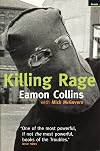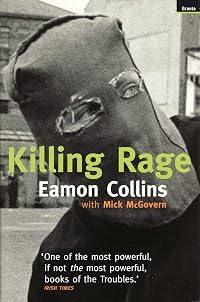
Killing Rage
by Eamon Collins
On This Page
Description
This is an account of how an angry young man can cross the line that divides theoretical support for violence from a state of 'killing rage', in which the murder of neighbour becomes thinkable. Over 3000 people have died in Northern Ireland since 1969, and most of them have died at the hands of their neighbours. The intimacy of the Ulster conflict, what it means to carry out a political murder when in all probability the victim is personally known, or lives in a nearby street, is described show more accurately by an honest participant. The book does not attempt to soften the impact of the events it describes through euphemism or rhetoric. It is a truthful picture of the brutality and waste caused by the IRA's unwinnable campaign, and of its human consequences. It is also a self-portrait of the despair and disintegration, the hardening to conscience and grief, that accompany political violence. show lessTags
Recommendations











Member Reviews
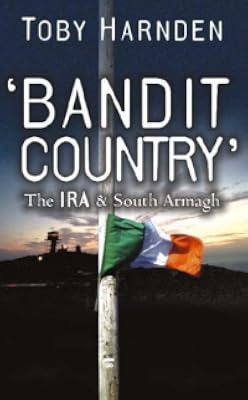
Killing Rage is a personal account of what it's like to be a soldier in a political war, and the cost of running a campaign of assassination and terror. Growing up in Camlough, in the "bandit country" of Armagh, Northern Ireland, Eamon inherited a nationalist imagination from his mother, and an iron irascibility from his father.
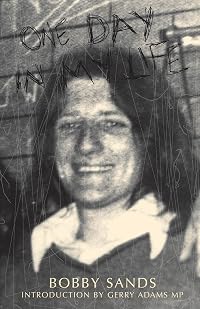
A variety of causes lead him into the war. Perhaps primarily was a botched arrest of himself, his father, and his brother on bad intelligence by a British Army unit. The teenage Eamon was beaten with rifle butts by drunken soldiers, had his tooth chipped when a rifle was shoved in his mouth, and saw his father humiliated. Along with that came the hunger strike of Bobby Sands and other IRA prisoners. And finally, show more a journey into Marxist revolutionary ideology.
Collins worked as customs officer in Her Majesty's Government, and he first participated in an assassination against a coworker, Ian Toombs, who was also a major in the Royal Ulster Constabulary. Collins provided the intelligence, which allowed another IRA fighter to walk into the office and gun Toombs down in the middle of the day. From then on, Collins became a committed soldier. He plotted bombings and assassination, recruited many men, including his cousin Mickey into the IRA. He was evening promoted to the elite internal security unit called the Nutting Squad.
Over the years, Collins' doubts mounted. Botched operations, including the killing on Norman Hanna, who had retired from the Ulster Defence Regiment, wore away at his revolutionary certainty. His fellow IRA members were frequently thugs and incompetents, not the revolutionary paragons he wanted. Leadership's two pronged pursuit of both democratic legitimacy via Sinn Fein and warfare via the IRA could only end in failure. When Collins was arrested in the wake of deadly mortar attack, he broke and turned against the IRA, confessing everything. The confession didn't stick, and Collins recanted, avoiding a prison sentence, and yet continuing to antagonize the IRA on the outside. He was finally murdered, almost certainly by his former colleagues, a few years after this book was published and the Good Friday accords brought an end to the worst of the violence.
Several things come through. The first is the absolute moral event horizon of political violence. The IRA harmed almost everyone who worked for it. The second is the strange asymmetry of the Troubles. For all the violence, there were rules. The IRA tried to focus on legitimate targets. The British government followed legal procedures in arresting and trying even obvious IRA figures like Collins. It's also difficult to see the violence as anything but a self-inflicted cycle. Both the IRA and the British forces need the other side to justify their existence. The people of Northern Ireland were victims caught in the middle.
"You can never kill a uniform. You can only kill the man wearing it." show less
A variety of causes lead him into the war. Perhaps primarily was a botched arrest of himself, his father, and his brother on bad intelligence by a British Army unit. The teenage Eamon was beaten with rifle butts by drunken soldiers, had his tooth chipped when a rifle was shoved in his mouth, and saw his father humiliated. Along with that came the hunger strike of Bobby Sands and other IRA prisoners. And finally, show more a journey into Marxist revolutionary ideology.
Collins worked as customs officer in Her Majesty's Government, and he first participated in an assassination against a coworker, Ian Toombs, who was also a major in the Royal Ulster Constabulary. Collins provided the intelligence, which allowed another IRA fighter to walk into the office and gun Toombs down in the middle of the day. From then on, Collins became a committed soldier. He plotted bombings and assassination, recruited many men, including his cousin Mickey into the IRA. He was evening promoted to the elite internal security unit called the Nutting Squad.
Over the years, Collins' doubts mounted. Botched operations, including the killing on Norman Hanna, who had retired from the Ulster Defence Regiment, wore away at his revolutionary certainty. His fellow IRA members were frequently thugs and incompetents, not the revolutionary paragons he wanted. Leadership's two pronged pursuit of both democratic legitimacy via Sinn Fein and warfare via the IRA could only end in failure. When Collins was arrested in the wake of deadly mortar attack, he broke and turned against the IRA, confessing everything. The confession didn't stick, and Collins recanted, avoiding a prison sentence, and yet continuing to antagonize the IRA on the outside. He was finally murdered, almost certainly by his former colleagues, a few years after this book was published and the Good Friday accords brought an end to the worst of the violence.
Several things come through. The first is the absolute moral event horizon of political violence. The IRA harmed almost everyone who worked for it. The second is the strange asymmetry of the Troubles. For all the violence, there were rules. The IRA tried to focus on legitimate targets. The British government followed legal procedures in arresting and trying even obvious IRA figures like Collins. It's also difficult to see the violence as anything but a self-inflicted cycle. Both the IRA and the British forces need the other side to justify their existence. The people of Northern Ireland were victims caught in the middle.
"You can never kill a uniform. You can only kill the man wearing it." show less
Self-adulating ramblings of a narcissist of questionable credibility delivered in a self-righteous and moralizing tone. At the beginning of the book, there's a documentary mentioned called "Confessions", which came out shortly prior to this book. If you watch it (it's on YT), you'll see a man who's doing this for the sole purpose of being remembered. If you're in the mood for a clichee laden Farewell to Arms, read this.
Ratings
Members
- Recently Added By
Lists

Ireland
3 works; 1 member
Author Information

1 Work 258 Members
Classifications
- Genres
- Nonfiction, History, Biography & Memoir, General Nonfiction
- DDC/MDS
- 941 — History & geography History of Europe British Isles
- LCC
- DA990 .U452 .C655 — History of Europe, Asia, Africa and Oceania Great Britain History of Great Britain Ireland Local history and description Northern Ireland (Ulster)
- BISAC
Statistics
- Members
- 258
- Popularity
- 125,254
- Reviews
- 2
- Rating
- (3.93)
- Languages
- English, German
- Media
- Paper
- ISBNs
- 5
- ASINs
- 1