On This Page
Description
Having been discovered as a stowaway as she tries to reach Barbados in 1760 to claim her father's estate, teenaged English orphan Patricia Kelley struggles to survive by learning to be a ship's doctor and by disguising herself as a man when necessary. Includes glossary of nautical terms.Tags
Recommendations












Member Reviews
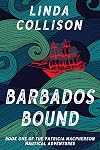
Linda Collison’s recently released “Barbados Bound,” begins provocatively, “I came aboard with the prostitutes the night before the ship set sail.”
The year is 1760 and not yet 17 year old Patricia Kelley is, quite literally, seeking to find her place in the world. The illegitimate daughter of a West Indies plantation owner, attending an English boarding school, she finds herself without money, family or connections when her father dies suddenly. With a head full of dreams of reclaiming the plantation where she was born and largely raised, that her father promised to her as a dowry, she stows away aboard a merchant ship carrying gunpowder and military stores, bound for Barbados. She has much to learn of the world and her show more education is just beginning.
Discovered and befriended by a young gunner’s mate, Patricia initially avoids detection as a stowaway by coming on deck only at night and in sailor’s clothes. Tall and lanky, she learns that she can pass as man, if need be, a discovery which will later prove invaluable. When discovered as a stowaway, she avoids being put ashore at the next port by agreeing to work as a loblolly, an assistant to the ship’s surgeon. As a proper lady, it is not a job she would prefer but in exchange for passage she agrees.
Patricia is to become a surgeon’s mate in more senses than one. When her chimerical dreams of plantation ownership vanish, she agrees to a marriage of necessity to the older Scottish ship’s doctor. In a personal, and often brutal, voyage of discovery, Patricia comes to know the horrors of yellow fever in British military camps, as well as the nightmarish conditions aboard a Royal Navy hospital ship. She will survive fire, shipwreck, fever, and battles at sea and ashore. She will, ultimately, be forced to leave Patricia behind, to become known as Patrick.
Linda Collison brings just the right experience to Barbados Bound. In addition to the necessary historical research, she knows both the nautical and medical sides to her tale. Having sailed across the Pacific on a replica of Captain James Cook’s HMS Endeavour, Collison understands the technical aspects of the rigging as well as the the sights, sound and smells of sailing on a square rigged ship. She is also a trained nurse, so the descriptions of the medical scenes are suitably vivid and no doubt accurate.
Barbados Bound is a rousing and engaging tale of the almost impossible challenges facing a young woman cast adrift in 18th Century British empire. Fascinating and vividly told. Highly recommended.
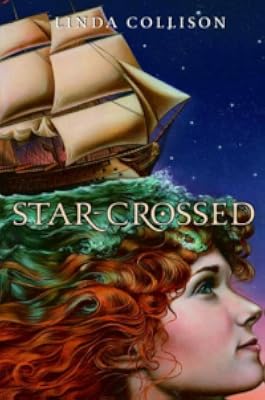
The book is the first book in the Patricia McPherson Nautical Adventure series. Barbados Bound was inspired by Collison’s young-adult historical novel, Star-Crossed. The New York Public Library chose Star-Crossed to be among the Books for the Teen Age — 2007. show less
The year is 1760 and not yet 17 year old Patricia Kelley is, quite literally, seeking to find her place in the world. The illegitimate daughter of a West Indies plantation owner, attending an English boarding school, she finds herself without money, family or connections when her father dies suddenly. With a head full of dreams of reclaiming the plantation where she was born and largely raised, that her father promised to her as a dowry, she stows away aboard a merchant ship carrying gunpowder and military stores, bound for Barbados. She has much to learn of the world and her show more education is just beginning.
Discovered and befriended by a young gunner’s mate, Patricia initially avoids detection as a stowaway by coming on deck only at night and in sailor’s clothes. Tall and lanky, she learns that she can pass as man, if need be, a discovery which will later prove invaluable. When discovered as a stowaway, she avoids being put ashore at the next port by agreeing to work as a loblolly, an assistant to the ship’s surgeon. As a proper lady, it is not a job she would prefer but in exchange for passage she agrees.
Patricia is to become a surgeon’s mate in more senses than one. When her chimerical dreams of plantation ownership vanish, she agrees to a marriage of necessity to the older Scottish ship’s doctor. In a personal, and often brutal, voyage of discovery, Patricia comes to know the horrors of yellow fever in British military camps, as well as the nightmarish conditions aboard a Royal Navy hospital ship. She will survive fire, shipwreck, fever, and battles at sea and ashore. She will, ultimately, be forced to leave Patricia behind, to become known as Patrick.
Linda Collison brings just the right experience to Barbados Bound. In addition to the necessary historical research, she knows both the nautical and medical sides to her tale. Having sailed across the Pacific on a replica of Captain James Cook’s HMS Endeavour, Collison understands the technical aspects of the rigging as well as the the sights, sound and smells of sailing on a square rigged ship. She is also a trained nurse, so the descriptions of the medical scenes are suitably vivid and no doubt accurate.
Barbados Bound is a rousing and engaging tale of the almost impossible challenges facing a young woman cast adrift in 18th Century British empire. Fascinating and vividly told. Highly recommended.
The book is the first book in the Patricia McPherson Nautical Adventure series. Barbados Bound was inspired by Collison’s young-adult historical novel, Star-Crossed. The New York Public Library chose Star-Crossed to be among the Books for the Teen Age — 2007. show less
I think it's important that there be books written specifically for "Young Adults" (even if the phrase itself is oxymoronic) as well as for girls. Young folks generally, and girls specifically, should be able to discover the joy of reading in books that are designed to engage their interests, concerns, sensibilities and viewpoints. However, I think that those of us who are not young, and not girls, can also enjoy these books -- at least the good ones. I do. Just as a for-instance, I read the first twenty or so Tamora Pierce novels along with my (then) adolescent daughter. We both enjoyed them (although maybe in different ways) and it was a great experience for both of us to talk them over.
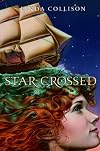
Linda Collison, in Star-Crossed, puts a young show more woman aboard Royal Navy ships and creates a YA girl’s book in the Historic Naval Fiction genre. The historic side is genuine and well-handled, although the focus is (for the better, IMO) just a bit different from most HNF. The reader is never involved in tactics, much less strategy – our view is limited to that of Patricia Kelley, who, like most of the crew of a naval ship, only experiences her little piece of a hugely complex machine. The book is no less lively and fascinating for that. Collison has real understanding of the workings of a ship and a gift for describing them. Kelley’s first time aloft is given in a marvelous passage that combines accurate technical information (ratlines, shrouds, futtocks, etc.) with her thoughts and emotions. Collison also uses Kelley’s fresh eyes to great effect in describing life aboard ship, gunnery and, above all, shipboard medicine.
Patricia Kelley is orphaned and stows away on a bark under contract to the Royal Navy in an attempt to reach Barbados to claim her inheritance. She is, of course, discovered and spends the rest of the book (since the inheritance comes to naught) trying to find a way to make a life in her new shipboard world. There were not many options open to women who chose to work on ships. The most common (or at least the most commonly documented) was to work in an unpaid and unrecognized capacity as the wife or protégée of one of the ship’s warrant officers. Kelley soon finds a place working for the ship’s surgeon. Collison devotes some of her best writing to a vivid and unflinching exploration of a surgeon’s duties. We experience not only the treatment of battle wounds, but the horror of “yellow jack” and the other diseases that killed far more soldiers and sailors than all the battles put together.
Early in the book, Kelley talks to some sailors about the less accepted ways that a woman might live on a ship. She hears tales of women disguised as men who serve as crew members as well as of famous pirate leaders like Anne Bonney. She declares that she is no freebooter, but when she loses the protection of her surgeon, Kelley disguises herself as a man and signs onto a frigate as a surgeon’s mate. She shares her secret only with the handsome gunner that she loves. At one point, a wise old slave woman sees through the disguise and asks Kelley why she is dressed like a boy. She replies simply, “Because it suits me.” Collison has given an eighteenth-century girl the twenty-first century determination to make her own way, live life on her own terms and not to be defined in terms of who her husband might be. Patriarchal history has not been kind to any such women who may have actually existed, but I don’t think Collison’s point is an indictment of history. Star-Crossed offers a fine adventure, an un-romanticised look at shipboard and shoreside life in the 18th century, and an invitation to consider gender issues that may not always be in the forefront of our thoughts. Her website promises two more books in “The Star-Crossed Trilogy.” I await them eagerly. show less
Linda Collison, in Star-Crossed, puts a young show more woman aboard Royal Navy ships and creates a YA girl’s book in the Historic Naval Fiction genre. The historic side is genuine and well-handled, although the focus is (for the better, IMO) just a bit different from most HNF. The reader is never involved in tactics, much less strategy – our view is limited to that of Patricia Kelley, who, like most of the crew of a naval ship, only experiences her little piece of a hugely complex machine. The book is no less lively and fascinating for that. Collison has real understanding of the workings of a ship and a gift for describing them. Kelley’s first time aloft is given in a marvelous passage that combines accurate technical information (ratlines, shrouds, futtocks, etc.) with her thoughts and emotions. Collison also uses Kelley’s fresh eyes to great effect in describing life aboard ship, gunnery and, above all, shipboard medicine.
Patricia Kelley is orphaned and stows away on a bark under contract to the Royal Navy in an attempt to reach Barbados to claim her inheritance. She is, of course, discovered and spends the rest of the book (since the inheritance comes to naught) trying to find a way to make a life in her new shipboard world. There were not many options open to women who chose to work on ships. The most common (or at least the most commonly documented) was to work in an unpaid and unrecognized capacity as the wife or protégée of one of the ship’s warrant officers. Kelley soon finds a place working for the ship’s surgeon. Collison devotes some of her best writing to a vivid and unflinching exploration of a surgeon’s duties. We experience not only the treatment of battle wounds, but the horror of “yellow jack” and the other diseases that killed far more soldiers and sailors than all the battles put together.
Early in the book, Kelley talks to some sailors about the less accepted ways that a woman might live on a ship. She hears tales of women disguised as men who serve as crew members as well as of famous pirate leaders like Anne Bonney. She declares that she is no freebooter, but when she loses the protection of her surgeon, Kelley disguises herself as a man and signs onto a frigate as a surgeon’s mate. She shares her secret only with the handsome gunner that she loves. At one point, a wise old slave woman sees through the disguise and asks Kelley why she is dressed like a boy. She replies simply, “Because it suits me.” Collison has given an eighteenth-century girl the twenty-first century determination to make her own way, live life on her own terms and not to be defined in terms of who her husband might be. Patriarchal history has not been kind to any such women who may have actually existed, but I don’t think Collison’s point is an indictment of history. Star-Crossed offers a fine adventure, an un-romanticised look at shipboard and shoreside life in the 18th century, and an invitation to consider gender issues that may not always be in the forefront of our thoughts. Her website promises two more books in “The Star-Crossed Trilogy.” I await them eagerly. show less
Reviewed by Emylee for TeensReadToo.com
Patricia Kelley, a former pupil at Wiltshire Boarding School for Gentlemen's Daughters, has recently been orphaned at the impressionable age of sixteen. Left with nothing but her wits and the promise of her deceased father's estate in the Barbados, she sneakily stows away on the Canopus, a seemingly distinguished merchant ship. She does not stay hidden for long, and soon must earn her passage on the Canopus by training to become the surgeon's mate. It is during her stay on the ship that she meets the free-spirited Brian Dalton, bosun's mate and unattainable love interest.
Unexpected complications arise when Patricia tries to reclaim her birthright, and she marries out of desperation in order to show more survive. She wonders if she can survive a loveless marriage as well as her continuing life as a surgeon's mate. As if she does not already have enough things to worry about, thoughts of Brian Dalton keep reappearing in her mind after she and her husband leave the Canopus to fulfill their duties aboard a warship. Can Patricia handle the enormous changes headed her way?
Filled with vivid descriptions of sea-life and the historical restrictions that were placed on women during the time period, STAR-CROSSED is an exceptional novel that will entrance readers of any age. When I first picked up the book, I was skeptical of whether or not I would enjoy it. However, by the fifth page I was completely hooked. The action in the novel greatly adds to the piece, and the romantic theme does not dominate the plot. I recommend this book to readers of any age or gender. show less
Patricia Kelley, a former pupil at Wiltshire Boarding School for Gentlemen's Daughters, has recently been orphaned at the impressionable age of sixteen. Left with nothing but her wits and the promise of her deceased father's estate in the Barbados, she sneakily stows away on the Canopus, a seemingly distinguished merchant ship. She does not stay hidden for long, and soon must earn her passage on the Canopus by training to become the surgeon's mate. It is during her stay on the ship that she meets the free-spirited Brian Dalton, bosun's mate and unattainable love interest.
Unexpected complications arise when Patricia tries to reclaim her birthright, and she marries out of desperation in order to show more survive. She wonders if she can survive a loveless marriage as well as her continuing life as a surgeon's mate. As if she does not already have enough things to worry about, thoughts of Brian Dalton keep reappearing in her mind after she and her husband leave the Canopus to fulfill their duties aboard a warship. Can Patricia handle the enormous changes headed her way?
Filled with vivid descriptions of sea-life and the historical restrictions that were placed on women during the time period, STAR-CROSSED is an exceptional novel that will entrance readers of any age. When I first picked up the book, I was skeptical of whether or not I would enjoy it. However, by the fifth page I was completely hooked. The action in the novel greatly adds to the piece, and the romantic theme does not dominate the plot. I recommend this book to readers of any age or gender. show less
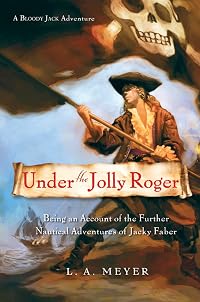
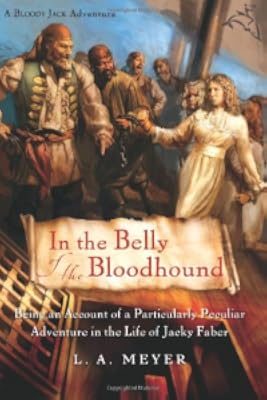
This tale of a young woman who stows away on a ship in hopes of gaining an inheritance overseas reminded me in some particulars of L.A. Meyer's 'Jacky Faber' novels. However, where Meyer's over-the-top tales cruise on their own high-spirited energy, the more down-to-earth tone of "Star-Crossed" serves to point out some of the events' unlikeliness. Still, can there really be too many tales of girls leaving their stuffy schools, running off to sea, and finding adventure, independence and love amidst the waves? Probably not.
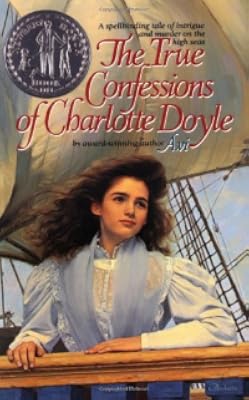
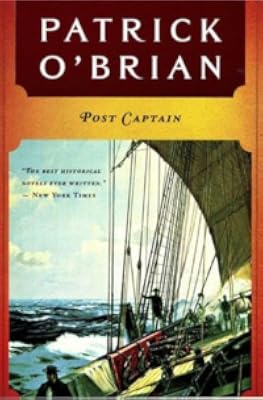
Star-Crossed is an excellent and historically accurate seafaring novel. The story, told in first person, is the account of Patricia Kelley, a young girl who is orphaned, broke, and alone. She stows away upon a ship bound for Barbados where her father's plantation awaits her to claim, if only she can get there. Although Patricia is discovered as a female stowaway very early on in the novel, she continues to frequently dress as male for freedom and for self preservation. For those who like a little romance, Patricia develops a relationship with a Brian Dalton, a bosun's mate, but they are star-crossed lovers, as the title suggests. The story is very dark and gritty at times, Collison does not spare the disgusting details of ship life, and show more Patricia's experiences are not sugar coated and sweet, but this only enhances the novel. Fans of Patrick O'Brien, Avi's: The True Confessions of Charlotte Doyle, and L. A. Meyer's Bloody Jack series will enjoy immensely. show less
I loved this book, the way she described the battle action was awesome. She also described Patricias' feelings throughout the book and I felt like I was Patricia. My favorite part was when Patricia dessed as a boy to get on the Richmond. Q4P4 AHS/Julie I.
(blank)
Members
- Recently Added By
Author Information

8 Works 183 Members

Linda Collison is a LibraryThing Author, an author who lists their personal library on LibraryThing.
Linda.Collison is also the author Linda Collison.
Series

Common Knowledge
- Canonical title
- Star-Crossed
- Original title
- Barbados Bound
- Original publication date
- 2008-08-12
- People/Characters
- Patricia Kelley; Aeneas MacPherson; John Dalton
- Important places
- Barbados; West Indies; England, UK
- First words
- "God's blood, Henry, can't you row any faster?"
Classifications
Statistics
- Members
- 147
- Popularity
- 222,218
- Reviews
- 9
- Rating
- (3.58)
- Languages
- English
- Media
- Paper, Ebook
- ISBNs
- 7