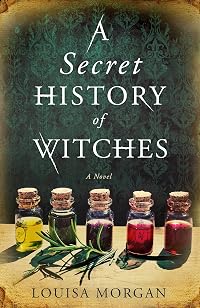
A Secret History of Witches
by Louisa Morgan
On This Page
Description
A sweeping historical saga that traces five generations of fiercely powerful mothers and daughters — witches whose magical inheritance is both a dangerous threat and an extraordinary gift.Brittany, 1821.
After Grand-Mere Ursule gives her life to save her family, their magic seems to die with her.
Even so, the Orchires fight to keep the old ways alive, practicing half-remembered spells and arcane rites in hopes of a revival. And when their youngest daughter comes of age, magic flows anew. show more The lineage continues, though new generations struggle not only to master their power, but also to keep it hidden.
But when World War II looms on the horizon, magic is needed more urgently than ever — not for simple potions or visions, but to change the entire course of history.
Praise for A Secret History of Witches:
"I loved it. A beautiful generational tale, reminiscent of Practical Magic. . .. Grounded and real, painful and hopeful at the same time." —Laure Eve, author of The Graces
"Historical fiction at its absolute finest....Deliciously absorbing." —Boston Globe
"At once sprawling and intimate, A Secret History of Witches deftly captures the greatest magic of all: the love between mothers and daughters." —Jordanna Max Brodsky, author of The Wolf in the Whale
For more from Louisa Morgan, check out:
The Witch's Kind
The Age of Witches. show less
Tags
Recommendations
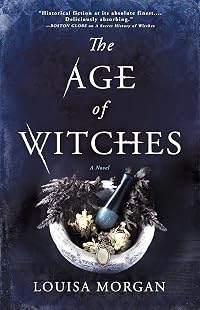


Member Reviews
I've read my fair share of books about witches (yes, I went through a phase as a teenager, but the 1990s and early 2000s were ripe with supernatural fiction), but this book stood out for its very serious focus on history. Most stories about witchcraft and magic in general often touch on history in relation to the craft's tradition or in regard to historic persecution of magic practitioners, but MOrgan's story that follows the line or Orchiére witches from the 1800s to the 1950s centres the story far more solidly for its truthful treatment of the various time periods. Through her characters we witness the persecution of the romani by ignorant townsfolk and the Church, see how a witch's power can use used selfishly for gain, and how show more women throughout the ages have survived even as the so-called "weaker sex." The final woman whose story we are told has a far happier ending than I expect, but considering all the suffering that her family has seen she deserve some solace and stability. In many ways this book was a more female-centric story in the same lines as Edward Rutherfurd's historic epics, since we see a family throughout the ages (albeit in much shorter and condensed form). Morgan lacks some of his attention to historical detail (the historian in me will always want more, even if the general public doesn't care) and writing panache, but her story remains highly engaging throughout. The only thing that I couldn't take seriously was her royal name dropping during the World War II era story - I won't tell you who the alleged witch is, but I couldn't help but laugh! show less
(Warning: This review is long.)
There is something magical about a great historical fantasy. It is easy enough to imagine how history might have changed if magic existed, but a historical fantasy writer needs to make it feel real. They need to balance the fantastic and the realistic. A great historical fantasy should stand up to scrutiny.
A Secret History of Witches by Louisa Morgan... well, it wobbles under scrutiny. This is not a knock against Morgan, as writing a five-generation family saga about magic, strife, and love is not easy. I respect the amount of work put into this novel. But that does not mean it is perfect.
Let's start with the positives. The novel is an enjoyable read. I enjoyed reading it! All five main characters have show more strong, distinct personalities that draw the reader in. Even when things start going wrong, you still want to see how it ends. The pacing of the novel is also excellent. I often get distracted during the slower parts of books, but A Secret History of Witches kept me engaged the entire time.
The book also does a great job highlighting the cyclical aspect of family sagas. The individual plotlines mirror each other, but they aren't exact copies. And the characters are so distinct that it makes sense for similar plotlines to go in completely different directions. Nanette has a cool confidence in herself, Ursule is sensible and grounded, Irene is selfish, Morwen is quietly bold, and Veronica is strong and competent. The book also clearly shows how each daughter's personality is a direct response to her mother's actions. Ursule clings to objectivity in the face of Nanette's spirituality. Irene rebels against Ursule's frugal nature. Morwen goes along with her domineering parents until they go too far. Veronica has to be the strong one, as no one else in her family can be. Even rash or poorly thought-out choices make sense for the characters.
The romances in the novel were less solid but still okay. Nothing enchanting or overly heart-wrenching. The characters meet a handsome man, fall for him, and he (usually) loves them back. Some online reviews critiqued how hetero-normative the relationships were. These reviewers have a point. But a family saga requires characters to have children, and historically, that required a man and a woman. Given that the novel already has some strong gender roles (only women who menstruate are witches, men are frightened of magic, etc.), I wasn't expecting anything revolutionary.
Another common complaint is that none of the male characters in this book are 'good'. That just confused me. There are 'good', positive, helpful male characters. They care for the main characters and don't consider women lesser. But these male characters aren't the norm. That makes perfect sense. There have always been men who weren't sexist or awful toward women. But the existence of these men does not mean that the patriarchy suddenly disappears. It's the same in the novel. Having a few men who can deal with witchcraft does not mean that magic is suddenly okay for everyone.
But. as stated earlier, the novel is not perfect. The magic system established in this book felt very... wishy-washy? It just does whatever the plot needs at that moment. Scrying? Sure. Medicine? Yep. Enchanting a horse to impress a rich man? I guess. Morgan was clearly trying to base the magic on actual pagan beliefs, but it still seems like a cop-out in the novel. Sometimes the characters need a spell for magic, sometimes they don't. Sometimes a whole ritual is needed, sometimes they do magic in pajamas. Sometimes a potion makes a man attack you, other times the same potion just makes him want to marry you. One character claims that magic is getting weaker in the modern world, but the main family gets stronger throughout the generations.
The novel also would have benefitted from having a few experts and sensitivity readers involved. For example, the prologue establishes that the main family, the Orchieres, is a Romani family from the Brittany area of France. But Romani culture never really shows up in the story. At most, the characters wear colorful clothing and have curly hair. They also never speak any Romani languages, despite multilingualism being a thing for multiple characters. They speak English and French and Old French and various Celtic languages, but never a Romani language. Their magic is all based around Celtic holidays, too. Now, I know that is because modern paganism is based heavily on Celtic culture. And yes, the Orchiere come from a Celtic part of France and live in Celtic areas of England, and it is possible they could have incorporated those beliefs and holidays into their traditions. But from a historical perspective, is it likely? I don't think so. Frankly, it reads more like Morgan wanted a reason for her characters to be 'exotic outsiders' but didn't actually do that much research in Roma culture. A better choice would have been to make her characters Irish/Scottish and have them move into a rural, central of England. This would have given a better basis for the Celtic stuff and still made them outsiders.
Morgan also should have consulted with some pagan skeptics. Early in the novel, the characters discuss 'The Burning Times'. This is a long period in the Early Modern era where thousands of witches were supposedly tortured and burnt at the stake all throughout Europe. Some modern pagans compare it to the Holocaust. But 'The Burning Times' probably didn't happen in the way some modern pagans believe. Yes, the Early Modern period did have some witchcraft panics. However, historians are not entirely sure of how many people actually accused and killed during these panics. Some claim impossibly high numbers, while others say it was a small percentage of the population. 'The Burning Times' hypothesis wasn't even really written about until the 20th century, so it's odd that 19th-century witches are using that exact phrase.
Also, Morgan made a member of the British Royal Family a witch. And no, it's probably not the one you're thinking of.
Was A Secret History of Witches a fun read? Yeah. If you like fantasy, romance, and family stories, you will probably enjoy it. Morgan is a good writer, and I enjoyed the book when I didn't think too hard about it. But if you are someone with a deep interest in history, especially the history of witchcraft? Or someone interested in a story about Roma culture and characters? You should probably pick something else. show less
There is something magical about a great historical fantasy. It is easy enough to imagine how history might have changed if magic existed, but a historical fantasy writer needs to make it feel real. They need to balance the fantastic and the realistic. A great historical fantasy should stand up to scrutiny.
A Secret History of Witches by Louisa Morgan... well, it wobbles under scrutiny. This is not a knock against Morgan, as writing a five-generation family saga about magic, strife, and love is not easy. I respect the amount of work put into this novel. But that does not mean it is perfect.
Let's start with the positives. The novel is an enjoyable read. I enjoyed reading it! All five main characters have show more strong, distinct personalities that draw the reader in. Even when things start going wrong, you still want to see how it ends. The pacing of the novel is also excellent. I often get distracted during the slower parts of books, but A Secret History of Witches kept me engaged the entire time.
The book also does a great job highlighting the cyclical aspect of family sagas. The individual plotlines mirror each other, but they aren't exact copies. And the characters are so distinct that it makes sense for similar plotlines to go in completely different directions. Nanette has a cool confidence in herself, Ursule is sensible and grounded, Irene is selfish, Morwen is quietly bold, and Veronica is strong and competent. The book also clearly shows how each daughter's personality is a direct response to her mother's actions. Ursule clings to objectivity in the face of Nanette's spirituality. Irene rebels against Ursule's frugal nature. Morwen goes along with her domineering parents until they go too far. Veronica has to be the strong one, as no one else in her family can be. Even rash or poorly thought-out choices make sense for the characters.
The romances in the novel were less solid but still okay. Nothing enchanting or overly heart-wrenching. The characters meet a handsome man, fall for him, and he (usually) loves them back. Some online reviews critiqued how hetero-normative the relationships were. These reviewers have a point. But a family saga requires characters to have children, and historically, that required a man and a woman. Given that the novel already has some strong gender roles (only women who menstruate are witches, men are frightened of magic, etc.), I wasn't expecting anything revolutionary.
Another common complaint is that none of the male characters in this book are 'good'. That just confused me. There are 'good', positive, helpful male characters. They care for the main characters and don't consider women lesser. But these male characters aren't the norm. That makes perfect sense. There have always been men who weren't sexist or awful toward women. But the existence of these men does not mean that the patriarchy suddenly disappears. It's the same in the novel. Having a few men who can deal with witchcraft does not mean that magic is suddenly okay for everyone.
But. as stated earlier, the novel is not perfect. The magic system established in this book felt very... wishy-washy? It just does whatever the plot needs at that moment. Scrying? Sure. Medicine? Yep. Enchanting a horse to impress a rich man? I guess. Morgan was clearly trying to base the magic on actual pagan beliefs, but it still seems like a cop-out in the novel. Sometimes the characters need a spell for magic, sometimes they don't. Sometimes a whole ritual is needed, sometimes they do magic in pajamas. Sometimes a potion makes a man attack you, other times the same potion just makes him want to marry you. One character claims that magic is getting weaker in the modern world, but the main family gets stronger throughout the generations.
The novel also would have benefitted from having a few experts and sensitivity readers involved. For example, the prologue establishes that the main family, the Orchieres, is a Romani family from the Brittany area of France. But Romani culture never really shows up in the story. At most, the characters wear colorful clothing and have curly hair. They also never speak any Romani languages, despite multilingualism being a thing for multiple characters. They speak English and French and Old French and various Celtic languages, but never a Romani language. Their magic is all based around Celtic holidays, too. Now, I know that is because modern paganism is based heavily on Celtic culture. And yes, the Orchiere come from a Celtic part of France and live in Celtic areas of England, and it is possible they could have incorporated those beliefs and holidays into their traditions. But from a historical perspective, is it likely? I don't think so. Frankly, it reads more like Morgan wanted a reason for her characters to be 'exotic outsiders' but didn't actually do that much research in Roma culture. A better choice would have been to make her characters Irish/Scottish and have them move into a rural, central of England. This would have given a better basis for the Celtic stuff and still made them outsiders.
Morgan also should have consulted with some pagan skeptics. Early in the novel, the characters discuss 'The Burning Times'. This is a long period in the Early Modern era where thousands of witches were supposedly tortured and burnt at the stake all throughout Europe. Some modern pagans compare it to the Holocaust. But 'The Burning Times' probably didn't happen in the way some modern pagans believe. Yes, the Early Modern period did have some witchcraft panics. However, historians are not entirely sure of how many people actually accused and killed during these panics. Some claim impossibly high numbers, while others say it was a small percentage of the population. 'The Burning Times' hypothesis wasn't even really written about until the 20th century, so it's odd that 19th-century witches are using that exact phrase.
Also, Morgan made a member of the British Royal Family a witch. And no, it's probably not the one you're thinking of.
Was A Secret History of Witches a fun read? Yeah. If you like fantasy, romance, and family stories, you will probably enjoy it. Morgan is a good writer, and I enjoyed the book when I didn't think too hard about it. But if you are someone with a deep interest in history, especially the history of witchcraft? Or someone interested in a story about Roma culture and characters? You should probably pick something else. show less
Witches. What woman has not been called a witch in the course of her life, often for nothing more than standing up for herself or expressing a dissenting opinion? Strong, intelligent, and independent women have always made men uncomfortable for as long as the patriarchal society reigns supreme. In A Secret History of Witches, no one knows this truth more than the Orchiere women.
What is compelling about the Orchiere women is their acceptance of their powers through the generations and the differences one generation can make when it comes to personality. For each teenage girl just learning about the matriarchal history, there is a mother with a different agenda. The familial relationships – strained, close, and everything else show more in-between – are the strongest sections of the story, as they show that sometimes no matter what you do, your children will follow their own path. The use of the passage of time is also quite interesting. Each generation has a differing opinion of magic and a varying level of acceptance of her powers, but this acceptance does not necessarily diminish as time progresses. Modern does not always mean one scoffs at magic. There could almost be a separate study on the events of the time versus the character’s acceptance of her powers; I can see this as a potential book club discussion point.
The remainder of the novel follows a fairly repetitive format with a story that is as familiar as it is comforting. Like many a fairy tale, some of the stories have a happier ending than others. All provide some form of life lesson, and all reiterate the idea that men are not comfortable around independent and strong-willed women. This latter message is disheartening for rather than encouraging women to stand tall and be proud of who they are, the message of the Orchiere women is to hide who they are and always defer to the men in their lives. This is not quite the message I want to pass along these days.
Educational A Secret History of Witches is not, but it is entertaining and harmless, for the most part. I do wish those strong-willed Orchiere women who failed to kow-tow to the men had happier endings. It is such a slight thing, and yet anything that perpetuates the norm these days is questionable. The idea of witches has always been a threat to the patriarchy, and Ms. Morgan fails to capitalize on that threat by showing that a family that hides to survive but loses their independent identity in the process. show less
What is compelling about the Orchiere women is their acceptance of their powers through the generations and the differences one generation can make when it comes to personality. For each teenage girl just learning about the matriarchal history, there is a mother with a different agenda. The familial relationships – strained, close, and everything else show more in-between – are the strongest sections of the story, as they show that sometimes no matter what you do, your children will follow their own path. The use of the passage of time is also quite interesting. Each generation has a differing opinion of magic and a varying level of acceptance of her powers, but this acceptance does not necessarily diminish as time progresses. Modern does not always mean one scoffs at magic. There could almost be a separate study on the events of the time versus the character’s acceptance of her powers; I can see this as a potential book club discussion point.
The remainder of the novel follows a fairly repetitive format with a story that is as familiar as it is comforting. Like many a fairy tale, some of the stories have a happier ending than others. All provide some form of life lesson, and all reiterate the idea that men are not comfortable around independent and strong-willed women. This latter message is disheartening for rather than encouraging women to stand tall and be proud of who they are, the message of the Orchiere women is to hide who they are and always defer to the men in their lives. This is not quite the message I want to pass along these days.
Educational A Secret History of Witches is not, but it is entertaining and harmless, for the most part. I do wish those strong-willed Orchiere women who failed to kow-tow to the men had happier endings. It is such a slight thing, and yet anything that perpetuates the norm these days is questionable. The idea of witches has always been a threat to the patriarchy, and Ms. Morgan fails to capitalize on that threat by showing that a family that hides to survive but loses their independent identity in the process. show less
This lackluster novel about several generations of witches grinds it way through 130 years before finally petering out in an open-ended conclusion that leaves several questions unanswered. One hopes there is no sequel in the offing.
First and foremost, the characters in Morgan’s tale are all denied, for one reason or another, the kind of lifelong study of the craft deemed de rigueur in most literature for a successful practitioner. In this world, however, it’s apparently enough to be born into the line and then, when the time is right, you simply light the candle, sprinkle a little salt around, mouth a few lines of tortured doggerel and presto!, you’re a successful spell casting, crystal gazing potion brewing witch.
Which brings up show more another issue and is something that has annoyed this reviewer for years in novels of the occult. Why do the charms and spells need to be in badly-written quatrain format? Why can’t one just say “Farmer Brown is a mean nasty man and he should come down with a bad case of boils until he learns to be nicer”? No, it has to be crunched and cajoled and massaged into something like “Mother Goddess, heed my call, / Farmer Brown is worst of all. / Bless the kettle as it roils, / Curse his ugly form with boils”. Or something equally banal. All the characters in ‘Secret History’ commit this particular sin in one way or another, until one wishes Mother Goddess would apparate at some point and say “Just spit it out, girl!”
Morgan also manages to ignore the entire Romani culture, despite repeatedly telling the reader that it gave birth to her characters. In fact, there’s a whole lot of telling going on here, and not much showing. The characters move around the chessboard Morgan has set up for them, going through the motions that will advance the plot, with nary a surprise or an emotional punch to be had. show less
First and foremost, the characters in Morgan’s tale are all denied, for one reason or another, the kind of lifelong study of the craft deemed de rigueur in most literature for a successful practitioner. In this world, however, it’s apparently enough to be born into the line and then, when the time is right, you simply light the candle, sprinkle a little salt around, mouth a few lines of tortured doggerel and presto!, you’re a successful spell casting, crystal gazing potion brewing witch.
Which brings up show more another issue and is something that has annoyed this reviewer for years in novels of the occult. Why do the charms and spells need to be in badly-written quatrain format? Why can’t one just say “Farmer Brown is a mean nasty man and he should come down with a bad case of boils until he learns to be nicer”? No, it has to be crunched and cajoled and massaged into something like “Mother Goddess, heed my call, / Farmer Brown is worst of all. / Bless the kettle as it roils, / Curse his ugly form with boils”. Or something equally banal. All the characters in ‘Secret History’ commit this particular sin in one way or another, until one wishes Mother Goddess would apparate at some point and say “Just spit it out, girl!”
Morgan also manages to ignore the entire Romani culture, despite repeatedly telling the reader that it gave birth to her characters. In fact, there’s a whole lot of telling going on here, and not much showing. The characters move around the chessboard Morgan has set up for them, going through the motions that will advance the plot, with nary a surprise or an emotional punch to be had. show less
Just loved this story of magic and family. Interesting plot combining history with fantasy and I liked that the personalities of the five women showed how women related in the same family can be very different...
Starting in Brittany in 1821, this is the history of one family of witches, the Orchieres. They are Romani, and therefore automatically suspect whenever someone wants to persecute a witch. Which is why one night Grand-mere Ursule gives her life to hide the family from a witch hunting priestI, telling them to flee across the channel to Cornwall, taking the family’s two treasures: the grimoire, and the large crystal that was dug from the mud many generations ago.
Seventeen years later, having found an abandoned farmstead and settled on it, the priest who had been searching for them on the night Ursule died finds them again. Nanette, the youngest girl of the family, finds that Ursules power has passed to her, and she and her sisters make show more a spell of protection. And so it goes through the generations; in each generation, there is one powerful woman. Others may have the knack of potions or small spells, but only one carries the power to activate the crystal.
We meet five generations of women. Some I adored; one I disliked intensely. Fortunes change through the years- drastically. Some are lucky in love; some are not. Some are dedicated to honoring the wheel of the year; some don’t perform the rituals for years. In the final book, the power of the Orchiere line becomes crucial to the protection of England. Through it all, their power and religion must be kept strictly secret.
I really enjoyed this book. The details of the lives of the women- especially during their years on the farm- bring the story to life. These are vivid, strong women. The only flaw in the book is the last book; after the body of the book is told in a way that one could easily believe it could have happened, the last book is rather over the top. It makes use of a historic person who seems like an unlikely witch, although it *would* explain her amazingly long life! I’d say four and a half stars out of five. show less
Seventeen years later, having found an abandoned farmstead and settled on it, the priest who had been searching for them on the night Ursule died finds them again. Nanette, the youngest girl of the family, finds that Ursules power has passed to her, and she and her sisters make show more a spell of protection. And so it goes through the generations; in each generation, there is one powerful woman. Others may have the knack of potions or small spells, but only one carries the power to activate the crystal.
We meet five generations of women. Some I adored; one I disliked intensely. Fortunes change through the years- drastically. Some are lucky in love; some are not. Some are dedicated to honoring the wheel of the year; some don’t perform the rituals for years. In the final book, the power of the Orchiere line becomes crucial to the protection of England. Through it all, their power and religion must be kept strictly secret.
I really enjoyed this book. The details of the lives of the women- especially during their years on the farm- bring the story to life. These are vivid, strong women. The only flaw in the book is the last book; after the body of the book is told in a way that one could easily believe it could have happened, the last book is rather over the top. It makes use of a historic person who seems like an unlikely witch, although it *would* explain her amazingly long life! I’d say four and a half stars out of five. show less
I enjoyed certain parts of this book, particular stories of the women involved and, others, not so much. It started with promise, sort of went downhill in the middle then picked up with Morwen's story. Unfortunately, that was about as good as it got.
The final story, to me, seemed disjointed and lost. Almost as if the Author had run out of things these women and their descendants could do. In the final story, she has a tendency to use the same words over and again; did she lose her thesaurus?
Despite this, I will try reading some of her other works in the hopes it was just this story she had difficulty holding together.
The final story, to me, seemed disjointed and lost. Almost as if the Author had run out of things these women and their descendants could do. In the final story, she has a tendency to use the same words over and again; did she lose her thesaurus?
Despite this, I will try reading some of her other works in the hopes it was just this story she had difficulty holding together.
Members
- Recently Added By
Lists

Feminism
167 works; 4 members

Book Worlds We'd Like To Visit
322 works; 158 members
Author Information

6 Works 2,440 Members
Some Editions
Awards and Honors
Awards
Common Knowledge
- Canonical title
- A Secret History of Witches
- Original title
- A Secret History of Witches
- Dedication
- In loving memory of my mother,
June Margaret Bishop Campbell.
May your line continue forever. - First words
- The layered clouds, gray as cold charcoal, shifted this way and that, mirroring the waves below.
- Last words
- (Click to show. Warning: May contain spoilers.)"At the very least, my dear love, it will be great fun."
- Publisher's editor
- Hall, Lindsey
- Blurbers
- Brodsky, Jordanna Max; Eve, Laura; Lenhardt, Melissa; Goodman, Carol; Shinn, Sharon; Thawer, Tish
- Original language
- English
Classifications
- Genres
- Fiction and Literature, General Fiction, Fantasy, Historical Fiction
- DDC/MDS
- 813.54 — Literature & rhetoric American literature in English American fiction in English 1900-1999 1945-1999
- LCC
- PS3563 .A6732 .S43 — Language and Literature American literature American literature Individual authors 1961-
- BISAC
Statistics
- Members
- 1,323
- Popularity
- 18,221
- Reviews
- 31
- Rating
- (3.52)
- Languages
- English, Polish
- Media
- Paper, Audiobook, Ebook
- ISBNs
- 15
- ASINs
- 6