On This Page
Description
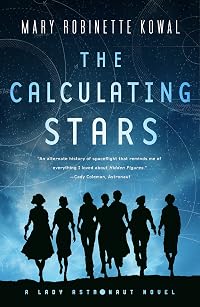
On a cold spring night in 1952, a huge meteorite fell to earth and obliterated much of the east coast of the United States, including Washington D.C. The ensuing climate cataclysm will soon render the earth inhospitable for humanity, as the last such meteorite did for the dinosaurs. This looming threat calls for a radically accelerated effort to colonize space, and requires a much larger share of humanity to take part in the process. Elma York's experience as a WASP pilot and mathematician show more earns her a place in the International Aerospace Coalition's attempts to put man on the moon, as a calculator. But with so many skilled and experienced women pilots and scientists involved with the program, it doesn't take long before Elma begins to wonder why they can't go into space, too. Elma's drive to become the first Lady Astronaut is so strong that even the most dearly held conventions of society may not stand a chance against her. show lessTags
Recommendations





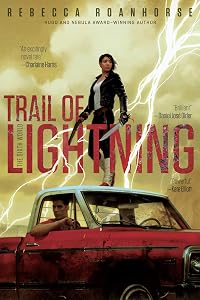
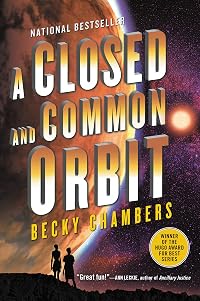
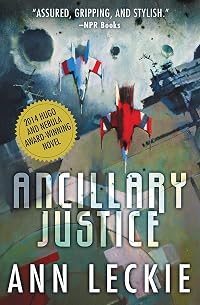
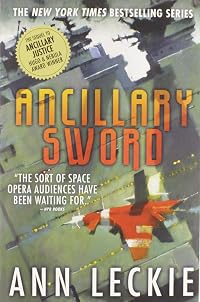



Member Recommendations
Member Reviews
The first full novel in the Lady Astronaut series, which began with the wonderful novellette "The Lady Astronaut of Mars", this book is a thoughtful alternate history of the space program, one which imagines what might have happened in the mid-twentieth century if North America had been struck by an extinction-level meteorite. Would we, perhaps, have saved humanity by taking them to the stars? Kowal imagines that moment, accelerating the space program and imagining the latter half of the 1900s as a wholly different kind of space race, all while maintaining the character of the period.
If you've read Kowal before, you'll know her reputation for exquisite research and her knack for fitting the fantastic -- or, in this case, the futuristic show more -- neatly into a time period without disturbing its nature. This book once again showcases her gift. Our main character, Dr. Elma York, encounters the same challenges and characteristics of the 1950s that happened in the real world -- post-war prejudice is alive and well in the novel, for example. Dr. York, a human calculator at the novel's version of NASA, struggles with sexism, cultural ignorance toward her own Jewish heritage, and other such issues still common today. She also struggles with her own personal prejudices and puts her foot in it more than once as the novel progresses, eventually having to face her own mistakes and assumptions even as she takes steps toward breaking the glass ceiling that prevents women from becoming astronauts.
In a move becoming -- thank goodness -- more and more common in literature today, Kowal has given her main character another struggle: mental illness. In this case, Elma has severe anxiety -- and the portrayal of both her outward symptoms and her inner struggle feel authentic and exceptionally human, a well-handled and sympathetic portrayal that may ring bells for readers. (Kowal kindly puts a note at the end of the book, encouraging those readers for whom the descriptions ring particularly true, to seek help and know they aren't alone.) And, lest you think our main character's life is all struggle, we are also treated to a wonderful depiction of a healthy -- very healthy, in fact -- marriage between Dr. York and her husband, Dr. York. Kowal brings out the humanity and the genuine love of their relationship with the same deftness she brings to all her characters.
The opening salvo of the novel is breathless, intense, and so engaging you won't want to stop reading. It's a well-crafted first act, so much so that the slower pace of the rest of the novel sometimes fails to compare. That and its occasional over-earnestness, though, are the only complaints I can muster, and it's hardly a flaw to have an opening so extraordinary that it makes the rest of the book look merely very good by comparison. And that earnest tone is perfectly appropriate for a novel that makes use of its time period both factually and by reputation. Kowal masterfully combines frankness with nostalgia in her setting and does right by the era by including the many different voices that were active in the space program at the time.
Overall, this is a wonderful book, full of very real references and yet soaring with imagination when it comes to what might have been. An enjoyable read, even in the moments where one is breathless with the shock of large-scale destruction or cringing at the familiar flaws of the characters. An excellent read all around. show less
If you've read Kowal before, you'll know her reputation for exquisite research and her knack for fitting the fantastic -- or, in this case, the futuristic show more -- neatly into a time period without disturbing its nature. This book once again showcases her gift. Our main character, Dr. Elma York, encounters the same challenges and characteristics of the 1950s that happened in the real world -- post-war prejudice is alive and well in the novel, for example. Dr. York, a human calculator at the novel's version of NASA, struggles with sexism, cultural ignorance toward her own Jewish heritage, and other such issues still common today. She also struggles with her own personal prejudices and puts her foot in it more than once as the novel progresses, eventually having to face her own mistakes and assumptions even as she takes steps toward breaking the glass ceiling that prevents women from becoming astronauts.
In a move becoming -- thank goodness -- more and more common in literature today, Kowal has given her main character another struggle: mental illness. In this case, Elma has severe anxiety -- and the portrayal of both her outward symptoms and her inner struggle feel authentic and exceptionally human, a well-handled and sympathetic portrayal that may ring bells for readers. (Kowal kindly puts a note at the end of the book, encouraging those readers for whom the descriptions ring particularly true, to seek help and know they aren't alone.) And, lest you think our main character's life is all struggle, we are also treated to a wonderful depiction of a healthy -- very healthy, in fact -- marriage between Dr. York and her husband, Dr. York. Kowal brings out the humanity and the genuine love of their relationship with the same deftness she brings to all her characters.
The opening salvo of the novel is breathless, intense, and so engaging you won't want to stop reading. It's a well-crafted first act, so much so that the slower pace of the rest of the novel sometimes fails to compare. That and its occasional over-earnestness, though, are the only complaints I can muster, and it's hardly a flaw to have an opening so extraordinary that it makes the rest of the book look merely very good by comparison. And that earnest tone is perfectly appropriate for a novel that makes use of its time period both factually and by reputation. Kowal masterfully combines frankness with nostalgia in her setting and does right by the era by including the many different voices that were active in the space program at the time.
Overall, this is a wonderful book, full of very real references and yet soaring with imagination when it comes to what might have been. An enjoyable read, even in the moments where one is breathless with the shock of large-scale destruction or cringing at the familiar flaws of the characters. An excellent read all around. show less
This book is full of science and feels. It's intense from the start, with a meteorite impact right off the eastern coast of the United States. Elma and her husband survive thanks to their science know-how--she's a WWII WASP and a computer for the rocket program, and he's a lead engineer--but as they assist the rebirth of the government, they stumble upon the awful truth that this is an extinction-level event. Humankind will need to depart the planet to survive.
Elma York is such an inspiration. She's smart, savvy in a disaster, and also fights crippling social anxiety. The entire cast exemplifies representation and diversity. This is a book that shows how the "good old 1950s" were for all sides (non-spoiler alert: the decade was not so show more pleasant if you weren't a white dude), even in the aftermath of a cataclysm. As if the doom of Earth wasn't enough, there's the antagonist Stetson Parker who needs to die in some terribly painful way that doesn't make him a hero. Honestly, the realism of the book is what got me. Everything felt terrible and plausible, from the science and math (vetted by astronauts!) to the adorably affectionate relationship between the Yorks to the complexity of Stetson Parker.
Needless to say, I bought the sequel straight away. I can't wait to find out what happens next. show less
Elma York is such an inspiration. She's smart, savvy in a disaster, and also fights crippling social anxiety. The entire cast exemplifies representation and diversity. This is a book that shows how the "good old 1950s" were for all sides (non-spoiler alert: the decade was not so show more pleasant if you weren't a white dude), even in the aftermath of a cataclysm. As if the doom of Earth wasn't enough, there's the antagonist Stetson Parker who needs to die in some terribly painful way that doesn't make him a hero. Honestly, the realism of the book is what got me. Everything felt terrible and plausible, from the science and math (vetted by astronauts!) to the adorably affectionate relationship between the Yorks to the complexity of Stetson Parker.
Needless to say, I bought the sequel straight away. I can't wait to find out what happens next. show less
I almost missed out on Mary Robinette Kowal's Lady Astronaut series. I passed on the first book, The Calculating Stars, when it came out in 2018 because I read the Lady Astronaut label as meaning that I'd be getting some anachronistic, patronising, retro-macho humour dressed as Science Fiction. I should have realised how wrong I was when, a year later, The Calculating Stars won the Nebula Award for Best Novel, the Locus Award for Best Science Fiction Novel, the Hugo Award for Best Novel, and the Sidewise Award for Alternate History but all of those slipped by me. Anyway, I eventually picked up the book because I'd had such a good time with Mary Robinette Kowal's 2022 novel The Spare Man.
This alternative history opens in 1952 with an show more Extinction Event: a meteorite striking the Chesapeake Bay, obliterating most of the Eastern Seaboard and irrevocably changing the Earth's atmosphere so that the planet will become uninhabitable within fifty years. What drew me in to the novel was that, instead of dumping this information, Star Wars style: "A long time ago in a galaxy far, far away...", Mary Robinette Kowal brought the event down to a human scale by telling the story as a first-person recollection that sets the tone for the book. It starts:
"Do you remember where you were when the meteor hit? I've never understood why people phrase it as a question, because of course you remember. I was in the mountains with Nathaniel. He had inherited this cabin from his father and we used to go up there for stargazing. By which I mean: sex. Oh, don't pretend that you're shocked. Nathaniel and I were a healthy young married couple, so most of the stars I saw were painted across the inside of my eyelids.
If I'd known how long the stars were going to be hidden, I'd have spent a lot more time outside with the telescope."
The person speaking is Elma York, a talented mathematician and former W.A.S.P. (Women's Auxiliary Service Pilot). Her husband, Nathaniel, is the lead engineer at N.A.C.A. (National Advisory Committee for Aeronautics) which is currently winning the space race with Russia. After a tense escape from the mountain, which includes Elma having to land her plane after its engine has failed, the couple become central to efforts firstly to convince the powers that be that there has been an Extinction Event and then to commit the resources needed to take humanity to the Moon and then on to Mars while there is still time.
This is a remarkable book. Yes, it covers a space program in an alternative history version of the 1950s, following an extinction event, and it does it well, but it does so much more than that. It's not an 'against the odds' struggle story, although the odds are stacked against Elma York and her desire to go into space. What makes it powerful is that It's a personal story about loss, mental health, discrimination, family and friendship.
The storytelling made me laugh and cry but never dropped into melodrama. It stayed true to the science without force-feeding me endless technical information and it reflected the politics and prejudices of the time without becoming preachy or sanctimonious.
What kept me engaged was that the astronauts, the men as well as the women, felt like real people with weaknesses as well as strengths which stripped away the emotional distance that sometimes makes it hard to take in the human collaboration and discipline and courage that makes space travel possible.
I also liked that Elma York was not a kick-ass heroine. She wasn't even a perfect geek-made-good heroine. She was an exceptionally bright woman who suffered from spells of chronic crippling anxiety. She is sometimes blind to her own privilege and her prejudices. She makes mistakes. She's also driven by her own ambition as much as by the desire to save humanity. All of which made me care about what happened to Elma York, to mourn her losses, regret her failures and celebrate her successes.
On top of all that, the plot is exciting, the pace keeps up the tension and Mary Robinette Kowal's narration is pretty close to perfect.
I've already downloaded The Fated Sky, the second book in the series. show less
This alternative history opens in 1952 with an show more Extinction Event: a meteorite striking the Chesapeake Bay, obliterating most of the Eastern Seaboard and irrevocably changing the Earth's atmosphere so that the planet will become uninhabitable within fifty years. What drew me in to the novel was that, instead of dumping this information, Star Wars style: "A long time ago in a galaxy far, far away...", Mary Robinette Kowal brought the event down to a human scale by telling the story as a first-person recollection that sets the tone for the book. It starts:
"Do you remember where you were when the meteor hit? I've never understood why people phrase it as a question, because of course you remember. I was in the mountains with Nathaniel. He had inherited this cabin from his father and we used to go up there for stargazing. By which I mean: sex. Oh, don't pretend that you're shocked. Nathaniel and I were a healthy young married couple, so most of the stars I saw were painted across the inside of my eyelids.
If I'd known how long the stars were going to be hidden, I'd have spent a lot more time outside with the telescope."
The person speaking is Elma York, a talented mathematician and former W.A.S.P. (Women's Auxiliary Service Pilot). Her husband, Nathaniel, is the lead engineer at N.A.C.A. (National Advisory Committee for Aeronautics) which is currently winning the space race with Russia. After a tense escape from the mountain, which includes Elma having to land her plane after its engine has failed, the couple become central to efforts firstly to convince the powers that be that there has been an Extinction Event and then to commit the resources needed to take humanity to the Moon and then on to Mars while there is still time.
This is a remarkable book. Yes, it covers a space program in an alternative history version of the 1950s, following an extinction event, and it does it well, but it does so much more than that. It's not an 'against the odds' struggle story, although the odds are stacked against Elma York and her desire to go into space. What makes it powerful is that It's a personal story about loss, mental health, discrimination, family and friendship.
The storytelling made me laugh and cry but never dropped into melodrama. It stayed true to the science without force-feeding me endless technical information and it reflected the politics and prejudices of the time without becoming preachy or sanctimonious.
What kept me engaged was that the astronauts, the men as well as the women, felt like real people with weaknesses as well as strengths which stripped away the emotional distance that sometimes makes it hard to take in the human collaboration and discipline and courage that makes space travel possible.
I also liked that Elma York was not a kick-ass heroine. She wasn't even a perfect geek-made-good heroine. She was an exceptionally bright woman who suffered from spells of chronic crippling anxiety. She is sometimes blind to her own privilege and her prejudices. She makes mistakes. She's also driven by her own ambition as much as by the desire to save humanity. All of which made me care about what happened to Elma York, to mourn her losses, regret her failures and celebrate her successes.
On top of all that, the plot is exciting, the pace keeps up the tension and Mary Robinette Kowal's narration is pretty close to perfect.
I've already downloaded The Fated Sky, the second book in the series. show less
I hadn't realized I needed this book in my life until I started reading it. I loved Hidden Figures, to the point where I watched it in the theaters three times (and I have sensory issues with movie theaters so that is a really big deal). I loved that the movie celebrated the women in the space program, and that women were allowed to be smart and capable, and that ability and brains knew no boundary of sex or color.
It is impossible to not draw parallels between Hidden Figures and The Calculating Stars - for one, the cover blurb from Cady Coleman mentions it. But this is the story of a space program in an alternate history where by necessity, women HAD to be included. The end goal was not just exploration, but colonization, after all. The show more main character, Elma, was marvelous. And Kowal did her justice, making her driven and determined, brilliant and stubborn. But also flawed - she had her blind spots and biases, and she had to face those head-on, as she realized that her white skin gave her a privileged life. And she did her best to use her privilege to open the door for others as well.
Also, Kowal peppered the book with little in-jokes that made me smile. Some where more obvious ("the first rule of flight club..."). Others, you had to have some knowledge of history (Maggie Gee!!!), and I'm sure I missed so much because I never was a student of WW2 history, or of the space program.
And this book honestly dealt with anxiety, and that it's okay to ask for help and it's okay to take the pills that help your body do what it can't. It was refreshing, and I hope that message helps some people.
Stetson Parker was the guy we love to hate. He was the perfect antagonist to Elma, and I both appreciated him and wanted to punch him in the rocket. And while he represented 1950s male misogyny, he was also a great marker to measure the other characters against, and to see how they grew to respect and trust the women amongst them. (In contrast, I think I fell in love with Nathaniel, who is a complete foil to Parker.)
This book was masterfully done and if it's not on the Hugo ballot next year, I'll be damn surprised. I've already started the sequel.
(And who doesn't love awkward rocket euphemisms for sex?) show less
It is impossible to not draw parallels between Hidden Figures and The Calculating Stars - for one, the cover blurb from Cady Coleman mentions it. But this is the story of a space program in an alternate history where by necessity, women HAD to be included. The end goal was not just exploration, but colonization, after all. The show more main character, Elma, was marvelous. And Kowal did her justice, making her driven and determined, brilliant and stubborn. But also flawed - she had her blind spots and biases, and she had to face those head-on, as she realized that her white skin gave her a privileged life. And she did her best to use her privilege to open the door for others as well.
Also, Kowal peppered the book with little in-jokes that made me smile. Some where more obvious ("the first rule of flight club..."). Others, you had to have some knowledge of history (Maggie Gee!!!), and I'm sure I missed so much because I never was a student of WW2 history, or of the space program.
And this book honestly dealt with anxiety, and that it's okay to ask for help and it's okay to take the pills that help your body do what it can't. It was refreshing, and I hope that message helps some people.
Stetson Parker was the guy we love to hate. He was the perfect antagonist to Elma, and I both appreciated him and wanted to punch him in the rocket. And while he represented 1950s male misogyny, he was also a great marker to measure the other characters against, and to see how they grew to respect and trust the women amongst them. (In contrast, I think I fell in love with Nathaniel, who is a complete foil to Parker.)
This book was masterfully done and if it's not on the Hugo ballot next year, I'll be damn surprised. I've already started the sequel.
(And who doesn't love awkward rocket euphemisms for sex?) show less
Where were you when the meteorite struck? Elma and Nathaniel York were vacationing in the Poconos, which definitely saved their lives when a meteorite hit the ocean and took out all of Washington, DC and most of the eastern seaboard. In the aftermath of putting the government back together and getting in touch with what family is still alive, Elma, a computer for NACA and brilliant at math, realizes that the meteorite may be an extinction event: the amount of steam that rose when it hit the ocean is going into the atmosphere, causing a few years of cold followed by a huge spike in temperature. This puts the space program into overdrive, so Elma and Nathaniel (an engineer) go to work preparing for space travel, and potential colonization show more of the moon or Mars.
This alternate history has a fascinating set up as an almost a pre-apocalyptic story. The meteorite was devastating to begin with, but really this is about the space race and what it might have looked like with these particular stakes and a woman pilot (Elma was also a WASP in World War 2) who wants to be an astronaut. There's a lot of hope and humor in this story that deals with the sexism Elma faces, as well as racism in the field, and her own challenges with anxiety. Superb storytelling, and I'm looking forward to reading the sequel. show less
This alternate history has a fascinating set up as an almost a pre-apocalyptic story. The meteorite was devastating to begin with, but really this is about the space race and what it might have looked like with these particular stakes and a woman pilot (Elma was also a WASP in World War 2) who wants to be an astronaut. There's a lot of hope and humor in this story that deals with the sexism Elma faces, as well as racism in the field, and her own challenges with anxiety. Superb storytelling, and I'm looking forward to reading the sequel. show less
On the face of it, an alternate history mash-up between The Right Stuff and Hidden Figures.
Mathematician Dr Elma York, daughter of a general, is married to a rocket engineer. In the 1950s, they have borrowed a friend's mountain cabin for a get-away; while there, a meteor hits Chesapeake Bay wiping out much of the Eastern seaboard. While helping with the rescue and reconstruction efforts, it becomes apparent that the long term outcome is going to be a run-away greenhouse effect; the sea ground zero means that major amounts of water vapour have entered the atmosphere. Humanity's only hope is to leave Earth; a multi-national NASA-equivalent agency is set up, and the Yorks both join.
The story has much to say about the stultifying show more atmosphere in 1950s USA for women and people of colour. Elma dreams of becoming an astronaut but is denied because of her sex even though females are better suited physically (this is actually historic). Even when accepted into astronaut training, the female candidates are treated like pin-ups not people with a serious job.
I enjoyed this very much, and I can see it would cause issues with the puppy brigade. Recommended show less
Mathematician Dr Elma York, daughter of a general, is married to a rocket engineer. In the 1950s, they have borrowed a friend's mountain cabin for a get-away; while there, a meteor hits Chesapeake Bay wiping out much of the Eastern seaboard. While helping with the rescue and reconstruction efforts, it becomes apparent that the long term outcome is going to be a run-away greenhouse effect; the sea ground zero means that major amounts of water vapour have entered the atmosphere. Humanity's only hope is to leave Earth; a multi-national NASA-equivalent agency is set up, and the Yorks both join.
The story has much to say about the stultifying show more atmosphere in 1950s USA for women and people of colour. Elma dreams of becoming an astronaut but is denied because of her sex even though females are better suited physically (this is actually historic). Even when accepted into astronaut training, the female candidates are treated like pin-ups not people with a serious job.
I enjoyed this very much, and I can see it would cause issues with the puppy brigade. Recommended show less
This is an alternate history novel, where an asteroid hits the east coast of the United States in the 1950s, destroying Washington, D.C., and also damaging the global climate sufficiently that Earth will become uninhabitable, necessitating an acceleration of the space program so that humanity can survive through colonization. It's told in the first person from the perspective of a female "computer" (think Hidden Figures) who is married to an engineer on the space program. Elma York was a WASP pilot during World War II, and now wants to be an astronaut; the book chronicles her work for the space program as she tries to get this desire taken seriously, contending with the sexism of the era, widespread denial of the problem, her own show more racism, and her mental health issues.
It's a great book, definitely the best of the five Hugo finalists I've read so far this year. Kowal pulls you in with an intense opening, with Elma and her husband in the Poconos during the meteorite impact, destruction everywhere around them. It's a slow book, but in a good way-- it's very deliberate, bringing you into this world and Elma, and her struggles both internal and external. (I've seen complaints that Elma is always right, and the men she's up against are always evil sexists, but these feel like people projecting their own biases onto the book in a way that causes them to ignore its nuance. Elma is often flawed, especially as regards race, even after it's been pointed out to her, and we learn a lot about the psychology of her antagonists, in a way that makes us sympathize with them, too.) The end has some great moments, too, as she begins to realize her ambitions, and I'm always a sucker for stories where highly trained professionals work together to solve problems.
It's the first book of a duology, and I'll definitely be picking up the second half. show less
It's a great book, definitely the best of the five Hugo finalists I've read so far this year. Kowal pulls you in with an intense opening, with Elma and her husband in the Poconos during the meteorite impact, destruction everywhere around them. It's a slow book, but in a good way-- it's very deliberate, bringing you into this world and Elma, and her struggles both internal and external. (I've seen complaints that Elma is always right, and the men she's up against are always evil sexists, but these feel like people projecting their own biases onto the book in a way that causes them to ignore its nuance. Elma is often flawed, especially as regards race, even after it's been pointed out to her, and we learn a lot about the psychology of her antagonists, in a way that makes us sympathize with them, too.) The end has some great moments, too, as she begins to realize her ambitions, and I'm always a sucker for stories where highly trained professionals work together to solve problems.
It's the first book of a duology, and I'll definitely be picking up the second half. show less
Members
- Recently Added By
Lists

Best Science Fiction Novels
816 works; 430 members

Favorite Science Fiction by Women Authors
737 works; 202 members

2019 Hugo Eligible Novels
40 works; 12 members

Best Alternate History
111 works; 60 members

Hugo Awards - Best Novel
69 works; 10 members

NPR Summer 2021: 50 Favorite Sci-Fi And Fantasy Books Of The Past Decade
50 works; 8 members

Locus Award for Best Novel/SF Novel
53 works; 6 members

Science Fiction by female authors
43 works; 4 members

Top Five Books of 2018
802 works; 265 members
Nebula Award
111 works; 14 members

2018 New SF Releases
24 works; 1 member
Hugo Award 2019 Reading List
126 works; 4 members

Female Author
1,234 works; 65 members

Speculative Fiction to Read
706 works; 31 members

Books With Our Favorite First Lines
168 works; 104 members

Books Read in 2023
5,638 works; 147 members

Books Read in 2025
4,128 works; 98 members

Vlogbrothers Book Recommendations
307 works; 4 members

Books Mentioned in the A+ Autostraddle Pop Up Discords Nov 2022 & Dec 2022
223 works; 3 members

Books Read in 2021
5,361 works; 114 members

Alternate Americas
15 works; 7 members

Books Read in 2022
5,226 works; 115 members
Female Protagonist
1,056 works; 57 members

Books Read in 2019
4,052 works; 108 members

Litsy Awards 2018
248 works; 9 members
Books Read in 2018
4,360 works; 110 members
Favorite Science Fiction
456 works; 218 members

ALA The Reading List
490 works; 28 members
Author Information


Mary Robinette Kowal is a LibraryThing Author, an author who lists their personal library on LibraryThing.
Some Editions
Awards and Honors
Awards
Series

Belongs to Publisher Series
Gallimard, Folio SF (714)
Work Relationships
Is abridged in
Common Knowledge
- Canonical title
- The Calculating Stars
- Original title
- The Calculating Stars
- Original publication date
- 2018-07-03
- People/Characters
- Elma York; Nathaniel York; Eugene Lindholm (Major); Myrtle Lindholm (Mrs. Lindholm); Stetson Parker (Colonel); Hershel Wexler (show all 65); Doris Wexler; Mr. Goldman; Edward R. Murrow; Phillip Williams; Charles F. Brannan; M. Scherzinger; O'Neill (Mr.); Huilang "Helen" Liu; Reynard Carmouche; Neuberger (Rabbi); Basira; Leroy Pluckett; Norman Clemons (IAC Director); Pearl; Elizabeth "Betty" Ralls; Mrs. Kare; Nicole Wargin; Kenneth T. Wargin; Mrs. Hieber; Ida Peaks; Imogene Braggs; Sarah Coleman; Sabiha Gökçen; Evgeniya Shakhovaskaya (Princess Shakhovaskaya); Mrs. Rogers; Don Herbert (Mr. Wizard); Mr. Yoder; Rita McLaughlin (child actress on Watch Mr. Wizard); Rachel Wexler; Jean-Paul Lebourgeois; Randy B. Cleary; Halim Malouf ("Hotdog"); Tommy Wexler; Derek Benkoski; Lynn Bromenshenkel (née Weyer); Luther Bromenshenkel; Claire Lebourgeois; Clarence "Bubbles" Bobienski; Mason (Senator); Haddad (Dr.); Wernher von Braun; Estevan Terrazas; Violette Lebourgeois; Max Benkoski; Mrs. Benkoski; Lorraine Purvis; Esther Wexler; Maggie Gee; Francesca Gurrieri; Mrs. Rhode; Irene Leverton; Sarah Gorelick; Robert Horn; Julia Horn; Chanie Horn; Shoshana Horn; Jacira Paz-Viveiros; Mr. Pommier; Mr. Smith
- Important places
- Wright-Patterson Air Force Base, Dayton, Ohio, USA; Kansas City, Kansas, USA; Sunflower Mission Control, Kansas, USA (fictitious); Chicago, Illinois, USA; 99s Flight Club, Kansas City, Kansas, USA; Space (show all 8); The Moon; International Aerospace Coalition, Kansas City, Kansas, USA (fictitious)
- Important events
- Meteor Age (fictitious)
- Dedication
- For my niece, Emily Harrison, who is in the Mars Generation
- First words
- Do you remember where you were when the Meteor hit?
- Last words
- (Click to show. Warning: May contain spoilers.)I am sitting in a capsule, on my way to the moon.
- Publisher's editor
- Gorinsky, Liz
- Blurbers
- Coleman, Cady (Astronaut) (Astronaut)
- Original language
- English
Classifications
Statistics
- Members
- 2,562
- Popularity
- 7,449
- Reviews
- 155
- Rating
- (3.88)
- Languages
- 5 — English, French, German, Italian, Spanish
- Media
- Paper, Audiobook, Ebook
- ISBNs
- 17
- ASINs
- 8