
The Ides of March
by Thornton Wilder
On This Page
Description
Drawing on such unique sources as Thornton Wilder's unpublished letters, journals, and selections from the extensive annotations Wilder made years later in the margins of the book, Tappan Wilder's Afterword adds a special dimension to the reissue of this internationally acclaimed novel. The Ides of March, first published in 1948, is a brilliant epistolary novel set in Julius Caesar's Rome. Thornton Wilder called it "a fantasia on certain events and persons of the last days of the Roman show more republic." Through vividly imagined letters and documents, Wilder brings to life a dramatic period of world history and one of history's most magnetic, elusive personalities. In this inventive narrative, the Caesar of history becomes Caesar the human being. Wilder also resurrects the controversial figures surrounding Caesar -- Cleopatra, Catullus, Cicero, and others. All Rome comes crowding through these pages -- the Rome of villas and slums, beautiful women and brawling youths, spies and assassins. --Publisher. show lessTags
Recommendations



















Member Recommendations

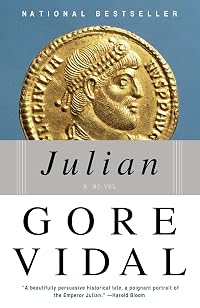
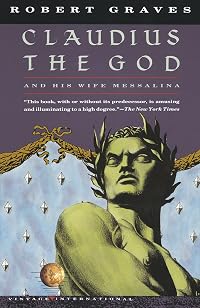
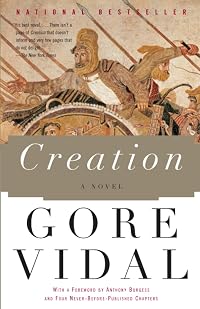
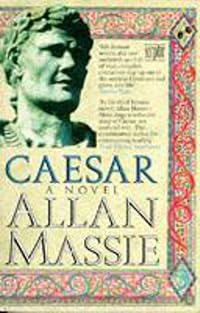
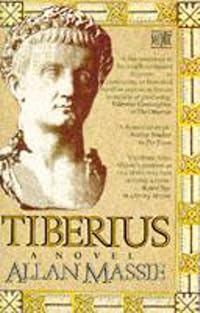
vguy Great novel about Catullus. Brings the period and his passion to life.

Member Reviews
It was clever of Wilder to put this novel in the form of letters and official correspondences, because this allows the action to do the talking, and for him to use the historical Caesar and Cleopatra as a framework to ponder deeper questions – man’s role in the universe, the nature of power, and destiny. This is also certainly an erudite work, showing off not only Wilder’s education and knowledge in the classics, but also his post-war interaction with Sartre and existentialism. Here’s how he described the latter in a letter to a friend, which I smiled over: “Baby, you’ll sit up. There is no God; there is the concession of the absurdity of man’s reason in a universe which can never be explained by reason; yet there is a show more freedom of the will defended for the first time on non-religious grounds, and how.”
It’s somewhat interesting to see the side of Caesar dealing with day to day operational issues with running the state, ruing the superstitious rites of the religion of the day, and maneuvering through politics with great clemency and stoicism, but I think critics were right in pointing out that the novel is a bit on the intellectual side, one saying it was like a Roman portrait bust, “cold, precise, artful, and quite lacking in the divine fire that glows about a major work of art.” Have a look at the amazing (to me anyway) quotes though:
On being too decisive without deliberation; it reminds me of a leader I know:
“Caesar is not a philosophical man. His life has been one long flight from reflection. At least he is clever enough not to expose the poverty of his general ideas; he never permits the conversation to move toward philosophical principles. Men of his type so dread all deliberation that they glory in the practice of the instantaneous decision. They think they are saving themselves from irresolution; in reality they are sparing themselves the contemplation of all the consequences of their acts. Moreover, in this way they can rejoice in the illusion of never having made a mistake; for act follows so swiftly on act that it is impossible to reconstruct the past and say that an alternative decision would have been better. They can pretend that every act was forced on them under emergency and that every decision was mothered by necessity. This is the vice of military leaders for whom every defeat is a triumph and every triumph almost a defeat.”
On love unrequited; this from the poet Catullus:
“It is torture to be awake and not beside you; it is starvation to be asleep and not beside you. At dark I went out with Attius – another torture, to be thinking only of you and yet not to talk of you. It is midnight. I have written and written and torn up what I have written. Oh, the sweetness, the wildness of love, what tongue can tell it? Why must I attempt it; why was I born to be hunted by demons to tell of it?”
On the meaning of life; I loved the last line:
“You taught me all that I know; but you stopped short. You withheld the essential. You taught me that the world has no mind. When I said - that you remember and why I said it – that life was horrible, you said no, that life was neither horrible nor beautiful. That living had no character at all and had no meaning. You said that the universe did not know that men were living in it.
And this one, arriving at truth by subtraction:
“And none of these meanings are meanings for me, though at various times in my life I have held all of them. With the loss of each of them I have been filled with an increased strength. I feel if I can rid myself of the wrong ones, I shall be coming closer to the right one.
But I am an aging man. Time presses.”
And:
“Life has no meaning save that which we confer upon it. It neither supports man nor humiliates him. Agony of mind and uttermost joy we cannot escape, but those states have, of themselves, nothing to say to us; those heavens and hells await the sense we give to them … With this thought I dare at last to gather about me those blessed shades of my past whom hitherto I had thought of as victims of life’s incoherence. I dare to ask that from my good Calpurnia a child may arise to say: On the Meaningless I choose to press a meaning and in the wastes of the Unknowable I choose to be known.”
On poetry:
“I believe that all poets in childhood have received some deep wound or mortification from life which renders them forever fearful of all the situations of our human existence. In their hatred and distrust they are driven to build in imagination another world. The world of poets is the creation not of deeper insights but of more urgent longings. Poetry is a separate language within the language contrived for describing an existence that never has been and never will be, and so seductive are their images that all men are led to share them and to seem themselves other than they are. I take it to be confirmation of this that even when poets write verses which pour scorn on life, describing it in all its evident absurdity, they do it in such a way that their readers are uplifted by it, for the terms of the poets’ condemnation presuppose a nobler and fairer order by which we are judged and to which it is possible to attain.” show less
It’s somewhat interesting to see the side of Caesar dealing with day to day operational issues with running the state, ruing the superstitious rites of the religion of the day, and maneuvering through politics with great clemency and stoicism, but I think critics were right in pointing out that the novel is a bit on the intellectual side, one saying it was like a Roman portrait bust, “cold, precise, artful, and quite lacking in the divine fire that glows about a major work of art.” Have a look at the amazing (to me anyway) quotes though:
On being too decisive without deliberation; it reminds me of a leader I know:
“Caesar is not a philosophical man. His life has been one long flight from reflection. At least he is clever enough not to expose the poverty of his general ideas; he never permits the conversation to move toward philosophical principles. Men of his type so dread all deliberation that they glory in the practice of the instantaneous decision. They think they are saving themselves from irresolution; in reality they are sparing themselves the contemplation of all the consequences of their acts. Moreover, in this way they can rejoice in the illusion of never having made a mistake; for act follows so swiftly on act that it is impossible to reconstruct the past and say that an alternative decision would have been better. They can pretend that every act was forced on them under emergency and that every decision was mothered by necessity. This is the vice of military leaders for whom every defeat is a triumph and every triumph almost a defeat.”
On love unrequited; this from the poet Catullus:
“It is torture to be awake and not beside you; it is starvation to be asleep and not beside you. At dark I went out with Attius – another torture, to be thinking only of you and yet not to talk of you. It is midnight. I have written and written and torn up what I have written. Oh, the sweetness, the wildness of love, what tongue can tell it? Why must I attempt it; why was I born to be hunted by demons to tell of it?”
On the meaning of life; I loved the last line:
“You taught me all that I know; but you stopped short. You withheld the essential. You taught me that the world has no mind. When I said - that you remember and why I said it – that life was horrible, you said no, that life was neither horrible nor beautiful. That living had no character at all and had no meaning. You said that the universe did not know that men were living in it.
And this one, arriving at truth by subtraction:
“And none of these meanings are meanings for me, though at various times in my life I have held all of them. With the loss of each of them I have been filled with an increased strength. I feel if I can rid myself of the wrong ones, I shall be coming closer to the right one.
But I am an aging man. Time presses.”
And:
“Life has no meaning save that which we confer upon it. It neither supports man nor humiliates him. Agony of mind and uttermost joy we cannot escape, but those states have, of themselves, nothing to say to us; those heavens and hells await the sense we give to them … With this thought I dare at last to gather about me those blessed shades of my past whom hitherto I had thought of as victims of life’s incoherence. I dare to ask that from my good Calpurnia a child may arise to say: On the Meaningless I choose to press a meaning and in the wastes of the Unknowable I choose to be known.”
On poetry:
“I believe that all poets in childhood have received some deep wound or mortification from life which renders them forever fearful of all the situations of our human existence. In their hatred and distrust they are driven to build in imagination another world. The world of poets is the creation not of deeper insights but of more urgent longings. Poetry is a separate language within the language contrived for describing an existence that never has been and never will be, and so seductive are their images that all men are led to share them and to seem themselves other than they are. I take it to be confirmation of this that even when poets write verses which pour scorn on life, describing it in all its evident absurdity, they do it in such a way that their readers are uplifted by it, for the terms of the poets’ condemnation presuppose a nobler and fairer order by which we are judged and to which it is possible to attain.” show less
This is a novel which is like a Russian doll. There are four sections, each one beging earlier, and ending later than the preceeding section. Into the bargain, several of the characters are dead at the time they are described as carrying out their actions in the novel. it is quite a puzzle, and yet a coherent narrative. Wilder is showing off, but he also brings it off.
This is only loosely a historical novel --it combines events leading up to Caesar's assassination with the much earlier events surrounding Catullus's love for Clodia ("Lesbia') and the scandal when Clodia's brother
Publius Clodius was caught disguised as a woman attending the rites of Bona Dea which were strictly for women only; he was allegedly there to see his presumed lover who was then Caesar's wife (the one he divorced for not being "above suspicion") -- she was not in fact his wife at the time of the events leading to his death. It is told as an epistolary novel with wonderful letters not only from the characters already mentioned but also other figures such as Cicero and letters to a hideously mutilated Roman officer whom Caesar show more takes care of. Rereading it lately, I thought some of Caesar's philosophical musings pretentious but much of the rest stands up --it develops real suspense even knowing how events turned out. show less
Publius Clodius was caught disguised as a woman attending the rites of Bona Dea which were strictly for women only; he was allegedly there to see his presumed lover who was then Caesar's wife (the one he divorced for not being "above suspicion") -- she was not in fact his wife at the time of the events leading to his death. It is told as an epistolary novel with wonderful letters not only from the characters already mentioned but also other figures such as Cicero and letters to a hideously mutilated Roman officer whom Caesar show more takes care of. Rereading it lately, I thought some of Caesar's philosophical musings pretentious but much of the rest stands up --it develops real suspense even knowing how events turned out. show less
How brilliant. I enjoyed the construction and method of his storytelling, even though texts in epistolary form are not my absolute favorite. The missives were interesting, thought-provoking, and in some cases, amusing. It is a shame though that there has been no noticeable improvement in human nature since Wilder penned his characters in 1948.
In this work of historical fiction, Wilder uses a combination of letters, diary entries and official documents to tell the story of the last year of Julius Caesar’s life.
Thank heavens I already knew the basic outline of this story. It was simply torture to read. Wilder divides the novel into four “books.” But the time frames overlap. For example, book one begins with a letter dated Sep 1 (45 BC), includes later entries marked “written the previous spring, has a memo dated Sep 30 near the end, followed by two undated notes, and a final document “written some fifteen years after the preceding.” Then we move on to Book Two, which begins with a letter dated Aug 17 (45 BC). S*I*G*H
The second difficulty I had was with the names show more / relationships. They frequently use nick names or code names when trying to ensure secrecy from prying eyes, should a letter fall into the wrong hands. THEY know who they refer to, but this reader was frequently confused.
And the third reason I found this so challenging are the many asides / footnotes / remarks that the author inserts. For example, in Book I, in the middle of a rather long “historical document” the author writes: Here follows the passage in which cicero discusses the possibility that Marcus Junius Brutus may be Caesar’s son. It is given in the document which opens Book IV..
Now, I appreciate Wilder’s writing, and there were times in the book that I was completely engaged in the story. I was fascinated to read of the intrigue and espionage, the role of Cleopatra, etc. But on the whole … well I think I had more “fun” translating Cicero’s oration against Cataline when I studied Latin in high school (and I hated that). show less
Thank heavens I already knew the basic outline of this story. It was simply torture to read. Wilder divides the novel into four “books.” But the time frames overlap. For example, book one begins with a letter dated Sep 1 (45 BC), includes later entries marked “written the previous spring, has a memo dated Sep 30 near the end, followed by two undated notes, and a final document “written some fifteen years after the preceding.” Then we move on to Book Two, which begins with a letter dated Aug 17 (45 BC). S*I*G*H
The second difficulty I had was with the names show more / relationships. They frequently use nick names or code names when trying to ensure secrecy from prying eyes, should a letter fall into the wrong hands. THEY know who they refer to, but this reader was frequently confused.
And the third reason I found this so challenging are the many asides / footnotes / remarks that the author inserts. For example, in Book I, in the middle of a rather long “historical document” the author writes: Here follows the passage in which cicero discusses the possibility that Marcus Junius Brutus may be Caesar’s son. It is given in the document which opens Book IV..
Now, I appreciate Wilder’s writing, and there were times in the book that I was completely engaged in the story. I was fascinated to read of the intrigue and espionage, the role of Cleopatra, etc. But on the whole … well I think I had more “fun” translating Cicero’s oration against Cataline when I studied Latin in high school (and I hated that). show less
Well, what can I say about this? Some books are very difficult to love, or even get through. It helped that this one was short. Which sounds as if I thought this book was terrible, but it really wasn't. It was well-written, it was just not something I could really get into.
I knew before starting out that it was told in a format of a series of letters and that it had some serious historical inaccuracy. The historical inaccuracy didn't so much bother me; the letter format though made it hard for me to really get into the flow of the story. Though it did lend it a certain "historical" feel in a sense.
Certain things were very odd, like at one point there's a series of chain letters being distributed around Rome, which would be very show more difficult to do in a age without a printing press or copy machine. And there's an "Aemillian Droughts and Swimming Club" which just took me right out of the time period of the novel every time it was mentioned, because it just didn't fit.
A lot of really antiquated ideas about women in here, and I can't honestly tell if it's because Thornton Wilder was writing this in the late 1940s or if he was writing what he thought Roman men thought about women (which they well might have).
I didn't really buy that Caesar would be so fascinated by Catullus. I don't know, I just didn't.
Overall, I kind of felt like I wasn't really smart enough to enjoy a book like this. show less
I knew before starting out that it was told in a format of a series of letters and that it had some serious historical inaccuracy. The historical inaccuracy didn't so much bother me; the letter format though made it hard for me to really get into the flow of the story. Though it did lend it a certain "historical" feel in a sense.
Certain things were very odd, like at one point there's a series of chain letters being distributed around Rome, which would be very show more difficult to do in a age without a printing press or copy machine. And there's an "Aemillian Droughts and Swimming Club" which just took me right out of the time period of the novel every time it was mentioned, because it just didn't fit.
A lot of really antiquated ideas about women in here, and I can't honestly tell if it's because Thornton Wilder was writing this in the late 1940s or if he was writing what he thought Roman men thought about women (which they well might have).
I didn't really buy that Caesar would be so fascinated by Catullus. I don't know, I just didn't.
Overall, I kind of felt like I wasn't really smart enough to enjoy a book like this. show less
Wilder's own effort at giving us new insight into the murder of Julius Caesar. Told using letters, we see fate unfolding remorselessly.
Members
- Recently Added By
Lists

Best Historical Fiction
620 works; 258 members

Best historical fiction set in the ancient world
126 works; 40 members

once upon a time ~ ancient world
46 works; 7 members

Books Set in Rome
98 works; 2 members

Favorite Epistolary Fiction
143 works; 144 members

Writers In Public Domain 2026
90 works; 1 member
Author Information

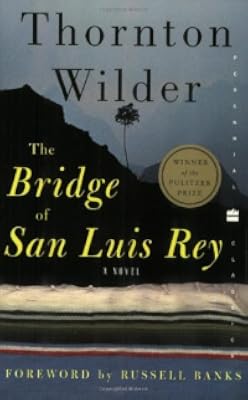
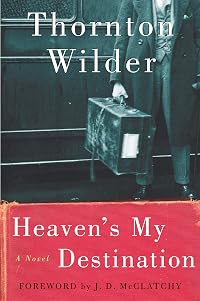
One of the most honored and versatile of modern writers, Thornton Wilder combined a career as a successful novelist with work for the theater that made him one of this century's outstanding dramatists. It was an early short novel, however, that first brought him fame. The Bridge of San Luis Rey (1927), a bestseller that won the Pulitzer Prize in show more 1927, is the story of a group of assorted people who happen to be on a bridge in Peru when it collapses. Ingeniously constructed and rich in its philosophical implications about fate and synchronicity, Wilder's book would seem to be the first well-known example of a formula that has become a cliche in popular literature. His attraction to classical themes is manifested in The Woman of Andros (1930), a tragedy about young love in pre-Christian Greece, and The Ides of March (1948), set in the time of Julius Caesar and told in letters and documents covering a long span of years. Heaven's My Destination (1934), is a seriocomic and picaresque story about a young book salesman traveling through the Midwest during the early years of the Great Depression.Theophilus North (1973), Wilder's last novel, disappointed many reviewers, but it provided its author with opportunities to offer some wry observations on the life of the idle rich in Newport during the summer of 1926 and to ponder in the story of his alter ego what might have happened if Wilder had stayed home, so to speak, instead of becoming Thornton Wilder. As a serious writer of fiction, Wilder's main claim rests on The Eighth Day (1967), an intellectual thriller, which the N.Y. Times called "the most substantial fiction of his career." It won the National Book Award for fiction in 1968. (Bowker Author Biography) show less
Some Editions
Awards and Honors
Series
Belongs to Publisher Series
Work Relationships
Common Knowledge
- Canonical title
- The Ides of March
- Original title
- The Ides of March
- Original publication date
- 1948
- People/Characters
- Julius Caesar
- Important places
- Ancient Rome
- Epigraph*
- Das Schauderin ist der Menschheit bestes Teil;
Wie auch die Welt ihm das Gefühl verteure...
Goethe: Faust, Part Two
The shudder of awe is humanity's highest faculty,
Even though this world is fo... (show all)r ever altering its values...
Gloss: out of man's recognition in fear and awe that there is an
Unknowable comes all that is best in the explorations of his
mind - even though that recognition is often misled into super-
stition, enslavement, and over-confidence. - Dedication*
- This work is dedicated
to two friends:
LAURO DE BOSIS
Roman poet, who lost his life
marshalling a resistance against
the absolute power of Mussolini;
his aircraft pursued by those of the Duce
and to
EDWARD SHELDON
who though immobile and blind
for over twenty years
was the dispenser of wisdom,
courage, and gaiety
to a large number of people
*Some information comes from Common Knowledge in other languages. Click "Edit" for more information.
Classifications
- Genres
- Fiction and Literature, General Fiction, Historical Fiction
- DDC/MDS
- 813.52 — Literature & rhetoric American literature in English American fiction in English 1900-1999 1900-1945
- LCC
- PS3545 .I345 .I3 — Language and Literature American literature American literature Individual authors 1900-1960
- BISAC
Statistics
- Members
- 1,086
- Popularity
- 23,653
- Reviews
- 17
- Rating
- (3.69)
- Languages
- 11 — Catalan, Czech, Danish, English, Estonian, French, German, Greek, Italian, Russian, Spanish
- Media
- Paper, Audiobook, Ebook
- ISBNs
- 49
- UPCs
- 1
- ASINs
- 53