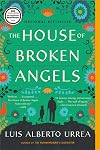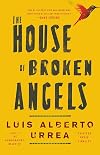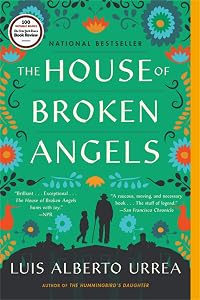
The House of Broken Angels
by Luis Alberto Urrea 
On This Page
Description
In this "raucous, moving, and necessary" story by a Pulitzer Prize finalist (San Francisco Chronicle), the De La Cruzes, a family on the Mexican-American border, celebrate two of their most beloved relatives during a joyous and bittersweet weekend."All we do, mija, is love. Love is the answer. Nothing stops it. Not borders. Not death."
In his final days, beloved and ailing patriarch Miguel Angel de La Cruz, affectionately called Big Angel, has summoned his entire clan for one last legendary show more birthday party. But as the party approaches, his mother, nearly one hundred, dies, transforming the weekend into a farewell doubleheader. Among the guests is Big Angel's half brother, known as Little Angel, who must reckon with the truth that although he shares a father with his siblings, he has not, as a half gringo, shared a life.
Across two bittersweet days in their San Diego neighborhood, the revelers mingle among the palm trees and cacti, celebrating the lives of Big Angel and his mother, and recounting the many inspiring tales that have passed into family lore, the acts both ordinary and heroic that brought these citizens to a fraught and sublime country and allowed them to flourish in the land they have come to call home.
Teeming with brilliance and humor, authentic at every turn, The House of Broken Angels is Luis Alberto Urrea at his best, and cements his reputation as a storyteller of the first rank.
"Epic . . . Rambunctious . . . Highly entertaining." — New York Times Book Review"Intimate and touching . . . the stuff of legend." — San Francisco Chronicle"An immensely charming and moving tale." — Boston GlobeNational Bestseller and National Book Critics Circle Award finalistA New York Times Notable BookOne of the Best Books of the Year from National Public Radio, American Library Association, San Francisco Chronicle, BookPage, Newsday, BuzzFeed, Kirkus, St. Louis Post-Dispatch, Literary Hub. show less
Tags
Recommendations







Member Reviews
House of Broken Angels was my first book by Luis Alberto Urrea, and it won't be my last. What an easy, confident writing style he has. This one is about the de la Cruz family gathering, with a funeral for the clan mother and a birthday party for the patriarch Big Angel, who may be in his last innings. There is sadness, but there's also a fierce undercurrent of joy. Even those who have made missteps are welcomed back and folded into the family embrace.
“Big Angel could not reconcile himself to this dirty deal they had all been dealt. Death. What a ridiculous practical joke. Every old person gets the punch line that the kids are too blind to see. All the striving, lusting, dreaming, suffering, working, hoping, yearning, mourning, show more suddenly revealed itself to be an accelerating countdown to nightfall.
....This is the prize: to realize, at the end, that every minute was worth fighting for with every ounce of blood and fire.”
Big Angel overflows with life, imperfect, declining, but still treasuring sensuality with his beloved Perla, and filling notebooks with memories of what he's loved. Most notebook entries are one word, like "family" and "oysters".
“And everyone loved sunsets. The light lost its sanity as it fell over the hills and into the Pacific--it went red and deeper red, orange, and even green. The skies seemed to melt, like lava eating black rock into great bite marks of burning. Sometimes all the town stopped and stared west. Shopkeepers came from their rooms to stand in the street. Families brought out their invalids on pallets and in wheelbarrows to wave their bent wrists at the madness consuming their sky. Swirls of gulls and pelicans like God's own confetti snowed across those sky riots.”
The book invites the reader into an irresistible family party. And what a family! Half-brother Little Angel comes from Seattle, envied by all for his assumed American wealth. Is Little Angel overshadowed, or able to walk in his own light? La Gloriosa, up in years now but still yearned for by all the men; as she explains, her beauty is "aided but not diminished by artifice". Ookie, seemingly mentally slow, but of hidden genius. Perla, who risked all to come to northern Mexico with Big Angel, and was rewarded with an adoring love and a larger than life partner. Son Yndio, a bruising physical specimen with a love for cabaret performing as a woman. And on and on.
Like many family gatherings, some exchanges are hilariously lowbrow, and some are poignantly highbrow.
“There is a minute in the day, a minute for everyone, though most everyone is too distracted to notice its arrival. A minute of gifts coming from the world like birthday presents. A minute given to every day that seems to create a golden bubble available to everyone.”
I loved this novel. Bear with it in the beginning, as you start to sort out who's who. Five stars. show less
“Big Angel could not reconcile himself to this dirty deal they had all been dealt. Death. What a ridiculous practical joke. Every old person gets the punch line that the kids are too blind to see. All the striving, lusting, dreaming, suffering, working, hoping, yearning, mourning, show more suddenly revealed itself to be an accelerating countdown to nightfall.
....This is the prize: to realize, at the end, that every minute was worth fighting for with every ounce of blood and fire.”
Big Angel overflows with life, imperfect, declining, but still treasuring sensuality with his beloved Perla, and filling notebooks with memories of what he's loved. Most notebook entries are one word, like "family" and "oysters".
“And everyone loved sunsets. The light lost its sanity as it fell over the hills and into the Pacific--it went red and deeper red, orange, and even green. The skies seemed to melt, like lava eating black rock into great bite marks of burning. Sometimes all the town stopped and stared west. Shopkeepers came from their rooms to stand in the street. Families brought out their invalids on pallets and in wheelbarrows to wave their bent wrists at the madness consuming their sky. Swirls of gulls and pelicans like God's own confetti snowed across those sky riots.”
The book invites the reader into an irresistible family party. And what a family! Half-brother Little Angel comes from Seattle, envied by all for his assumed American wealth. Is Little Angel overshadowed, or able to walk in his own light? La Gloriosa, up in years now but still yearned for by all the men; as she explains, her beauty is "aided but not diminished by artifice". Ookie, seemingly mentally slow, but of hidden genius. Perla, who risked all to come to northern Mexico with Big Angel, and was rewarded with an adoring love and a larger than life partner. Son Yndio, a bruising physical specimen with a love for cabaret performing as a woman. And on and on.
Like many family gatherings, some exchanges are hilariously lowbrow, and some are poignantly highbrow.
“There is a minute in the day, a minute for everyone, though most everyone is too distracted to notice its arrival. A minute of gifts coming from the world like birthday presents. A minute given to every day that seems to create a golden bubble available to everyone.”
I loved this novel. Bear with it in the beginning, as you start to sort out who's who. Five stars. show less
"The entire history of his family, the world itself, the solar system and galaxy, swirled around him now in weird silence, and he felt blood dribbled down inside his body and the clock, the clock, chipped away at his existence."
“That is the prize: to realize, at the end, that every minute was worth fighting for with every ounce of blood and fire.”
Miguel Angel De La Cruz, also known as Big Angel is ailing. He doesn't think he has much time left and when his mother suddenly dies, as she approaches her 100th birthday. This beloved patriarch decides to throw a big birthday bash for himself and for his big, shaggy, but lovable family, in their San Diego neighborhood.
Most of the events here, other than the flashbacks, take place over show more one long weekend, as the party preparations come together, in quite dramatic and humorous ways. We are introduced to quite a cast of characters, but at the center of the novel are Big Angel and his young brother Little Angel, (based somewhat on the author).
This is a Mexican-American family but I think it is an American story, first and foremost. Urrea proves, once again that he is a master storyteller. Yes, there is humor and pathos here but every so often Urrea floors the reader with a stream of gorgeous, poetic prose. If you are looking for the perfect summer read, look no further.
**This is also wonderful on audio, with Urrea doing a fantastic job narrating. show less
“That is the prize: to realize, at the end, that every minute was worth fighting for with every ounce of blood and fire.”
Miguel Angel De La Cruz, also known as Big Angel is ailing. He doesn't think he has much time left and when his mother suddenly dies, as she approaches her 100th birthday. This beloved patriarch decides to throw a big birthday bash for himself and for his big, shaggy, but lovable family, in their San Diego neighborhood.
Most of the events here, other than the flashbacks, take place over show more one long weekend, as the party preparations come together, in quite dramatic and humorous ways. We are introduced to quite a cast of characters, but at the center of the novel are Big Angel and his young brother Little Angel, (based somewhat on the author).
This is a Mexican-American family but I think it is an American story, first and foremost. Urrea proves, once again that he is a master storyteller. Yes, there is humor and pathos here but every so often Urrea floors the reader with a stream of gorgeous, poetic prose. If you are looking for the perfect summer read, look no further.
**This is also wonderful on audio, with Urrea doing a fantastic job narrating. show less
If one thinks there is not much to be written about a physically broken Mexican American patriarch living in San Diego who is near death and knows it then one will be so surprised how much life writer Luis Alberto Urrea puts into him, his family, and surroundings. The dialogue is especially a great aid in this with its death defying circus act of English, Spanish, and their inevitable mixing, clashing and competing for the spot light. In between the sadness and trauma Urrea masterfully places humor. This is an immigrant or near immigrant story that rightfully, in an often bumptious way, and,without apologies, demands its place in the American story.
Quotes: (page 14) “His great-grandfather had been a soldier. And Gramps Antonio had show more been some kind of a badass cop. Grandma Ame`rica---she had been a trip. She managed to be sweet as she kicked everybody's ass. She had been badder than Abuelo Antonio. Sorry to be burying her today, for reals. He wasn't about to even begin considering burying Pops.”
(page 28) “Big Angel's half brother had thought he'd be late. As old as he was, they all thought of him as the baby, including himself. The oldest twenty-eight-year-old on Earth, an age he had managed to maintain for an extra twenty years.
You couldn't miss the matriarch's funeral. She wasn't his mom---he was often reminded of this in small pointed ways. He was the footnote to the family, that detail everybody had to deal with when he deigned to appear. Son of an American woman who had been branded in the family legends as the gringa hussy who had taken away their Great Father, Don Antonio. Somehow they even resented his mother's death. She had managed to join Father in the afterlife before Moma Ame`rica could go over to wrestle him back from the American's clutches.”
(page 167) “The sibs all thought Little Angel was cheating the system somehow. A culture thief. A fake Mexican. More gringo than anything. He knew that. He had heard his sister call him a 'gringo-Mex.' As if any kind of Mexican in California was a ride in the Rose Parade. But what was he going to say? Tell them all the times he had been called 'taco bender' or 'wetback'? 'Burrito breath'? They would laugh at him. Should he make lists of the Mexican girls he dated when he was a kid? Show them poems he'd written in Spanish?'
(page 270) “'If I go,' he finally said, 'I will never come back.'
'Sit. Down. Carnal,' Big Angel said.
Slowly, he sat.
'You already left us forever.' his brother said. 'I had to die to bring you home.' Big Angel started taking his pills. Noisy little gulps of tamarind juice. 'I destroyed my own family,' the patriarch said.” show less
Quotes: (page 14) “His great-grandfather had been a soldier. And Gramps Antonio had show more been some kind of a badass cop. Grandma Ame`rica---she had been a trip. She managed to be sweet as she kicked everybody's ass. She had been badder than Abuelo Antonio. Sorry to be burying her today, for reals. He wasn't about to even begin considering burying Pops.”
(page 28) “Big Angel's half brother had thought he'd be late. As old as he was, they all thought of him as the baby, including himself. The oldest twenty-eight-year-old on Earth, an age he had managed to maintain for an extra twenty years.
You couldn't miss the matriarch's funeral. She wasn't his mom---he was often reminded of this in small pointed ways. He was the footnote to the family, that detail everybody had to deal with when he deigned to appear. Son of an American woman who had been branded in the family legends as the gringa hussy who had taken away their Great Father, Don Antonio. Somehow they even resented his mother's death. She had managed to join Father in the afterlife before Moma Ame`rica could go over to wrestle him back from the American's clutches.”
(page 167) “The sibs all thought Little Angel was cheating the system somehow. A culture thief. A fake Mexican. More gringo than anything. He knew that. He had heard his sister call him a 'gringo-Mex.' As if any kind of Mexican in California was a ride in the Rose Parade. But what was he going to say? Tell them all the times he had been called 'taco bender' or 'wetback'? 'Burrito breath'? They would laugh at him. Should he make lists of the Mexican girls he dated when he was a kid? Show them poems he'd written in Spanish?'
(page 270) “'If I go,' he finally said, 'I will never come back.'
'Sit. Down. Carnal,' Big Angel said.
Slowly, he sat.
'You already left us forever.' his brother said. 'I had to die to bring you home.' Big Angel started taking his pills. Noisy little gulps of tamarind juice. 'I destroyed my own family,' the patriarch said.” show less
As soon as I finished this novel, I reread it, because in galloping through the first time, I missed way too much. The large and complicated Mexican-American family, with its secrets, surprises, hardships, and delights, needs to be savored on a slow boil. Told from the perspectives of two brothers, Big Angel and Little Angel, every character's character pops from the page in such pungent words, as does the earlier immigrant experience, with frequent and conflict-free passages from Tijuana to San Diego and back. Big Angel is dying of painful bone cancer, and his family is planning a grand 70th birthday bash - but when his mother dies a week before, the family's kind of pleased, since mother America was a hardass (see:parrot smuggling) show more and now, with the cremation ceremony a day before the party, now no one needs to take extra days off from work. This extravagant, joyous, pain-filled fiesta of a novel will remain imbedded in your consciousness for a long time, so okay, read it twice, once for the story and a second (maybe third) for the extraordinary writing skills.
Quotes: "Pigeons flocked all about the alpine roofline, moving neurotically from palm tress to mortuary to taqueria and back again, frantic that one of them might have found an onion ring that had been overlooked by the others."
"Her small flock of doggies was scuttling around like animated empanadas on meth."
"That ravaged face held two ardent coals - his black eyes shone with mad light, hunger for the world, amusement, and excitement. They raged with delight in everything."
"They thought he was stupid, as parents often do. Well, he was stupid, as children often are."
"There is a minute in the day, a minute for everyone, though most everyone is too distracted to notice its arrival. A minute that seems to create a golden bubble available to everyone."
"Big Angel was aware of the sad steps of the dance. When you died, you died in small doses. And then you suddenly felt better and fooled yourself into believing that a miracle was about to happen. Well, wasn't that all a dirty rotten thing to pull on somebody."
"Men who do good deeds only wish to atone for their sins."
"Big Angel's favorite definition of Mexican was "Out of nothing, food."
" Every man dies with secrets. A life was a long struggle to come to terms with things and keep some things from others."
"There were always more details trailing any good story. Like tin cans on the back bumper of a newlywed's car. Rattles and pings and wonderful small moments spinning in the wake of a great life." show less
Quotes: "Pigeons flocked all about the alpine roofline, moving neurotically from palm tress to mortuary to taqueria and back again, frantic that one of them might have found an onion ring that had been overlooked by the others."
"Her small flock of doggies was scuttling around like animated empanadas on meth."
"That ravaged face held two ardent coals - his black eyes shone with mad light, hunger for the world, amusement, and excitement. They raged with delight in everything."
"They thought he was stupid, as parents often do. Well, he was stupid, as children often are."
"There is a minute in the day, a minute for everyone, though most everyone is too distracted to notice its arrival. A minute that seems to create a golden bubble available to everyone."
"Big Angel was aware of the sad steps of the dance. When you died, you died in small doses. And then you suddenly felt better and fooled yourself into believing that a miracle was about to happen. Well, wasn't that all a dirty rotten thing to pull on somebody."
"Men who do good deeds only wish to atone for their sins."
"Big Angel's favorite definition of Mexican was "Out of nothing, food."
" Every man dies with secrets. A life was a long struggle to come to terms with things and keep some things from others."
"There were always more details trailing any good story. Like tin cans on the back bumper of a newlywed's car. Rattles and pings and wonderful small moments spinning in the wake of a great life." show less
Big Angel de la Cruz is dying. However, he has two things to take care of over the next few days before he goes. First, he must avoid being late to his mother’s funeral. Second, he needs to join his extended family and many friends in celebrating his own 70th birthday party. That is the basic plot of The House of Broken Angels, Luis Alberto Urrea’s deeply affecting meditation on, among other things, the joys and foibles of family life, the challenges of being caught between two cultures, and the impact that one man can have on those around him.
The novel traces Big Angel’s story from his youth in La Paz, Mexico under the domineering presence of his father Don Antonio to his exile from the family that eventually takes him to show more Tijuana and San Diego, California. Along the way, we meet many of the important people in his life, including his beloved wife Perla, their siblings, their children, and their seemingly countless nieces, nephews, and grandchildren. Big Angel’s journey is often hard and heartbreaking, but one that is filled with considerable joy as well. Urrea’s storytelling is heartfelt and beautiful, at once elegiac and humorous in roughly equal amounts, with a fair bit of Spanglish thrown in for authentic measure.
As he reveals at the outset in a letter to the reader, this is a deeply personal account for the author, whose alter ego appears in the character of Little Angel, the younger brother who has spent much of his adult life trying to escape the family’s influence. The two brothers share a decidedly complicated history—they have the same father but different mothers, and both are conflicted about various aspects of their Mexican-American heritage. While much of the narrative development in The House of Broken Angels is devoted to explaining and resolving their relationship, that is not the essence of the novel. Urrea set out to make this a story about “la familia” and he has succeeded admirably in doing just that. These are characters who will stay with me for a while. show less
The novel traces Big Angel’s story from his youth in La Paz, Mexico under the domineering presence of his father Don Antonio to his exile from the family that eventually takes him to show more Tijuana and San Diego, California. Along the way, we meet many of the important people in his life, including his beloved wife Perla, their siblings, their children, and their seemingly countless nieces, nephews, and grandchildren. Big Angel’s journey is often hard and heartbreaking, but one that is filled with considerable joy as well. Urrea’s storytelling is heartfelt and beautiful, at once elegiac and humorous in roughly equal amounts, with a fair bit of Spanglish thrown in for authentic measure.
As he reveals at the outset in a letter to the reader, this is a deeply personal account for the author, whose alter ego appears in the character of Little Angel, the younger brother who has spent much of his adult life trying to escape the family’s influence. The two brothers share a decidedly complicated history—they have the same father but different mothers, and both are conflicted about various aspects of their Mexican-American heritage. While much of the narrative development in The House of Broken Angels is devoted to explaining and resolving their relationship, that is not the essence of the novel. Urrea set out to make this a story about “la familia” and he has succeeded admirably in doing just that. These are characters who will stay with me for a while. show less
Oh, my--this book! I was overwhelmed by this boisterous, complicated, colorful family gathered for the funeral of their matriarch and the last birthday of her son Big Angel, who is dying of cancer.
As I read, this family took residence in my heart. They were not so unlike my own family. I remembered the large family gatherings of my childhood; we have our 'colorful' characters, too. My cousins and I are are too quickly becoming the oldest generation--the next to die.
Through the story of one particular Mexican-American family, The House of Broken Angels recalls what it means to be family. Through the life and death of one man, we grapple with the purpose of our own life and death.
Big Angel's grandfather came to America after the Mexican show more Revolution, tried to enlist for service during WWI, then in 1932 the family was deported back to Mexico. He was First Angel.
Big Angel's deceased father, a cop, is still a powerful presence in the lives of Big Angel and his half-brother, Little Angel. He was feared, he was idolized, and he was hated. Big Angel's dad abandoned his family for an American woman,"all Indiana milk and honey" with "Cornflower-blue eyes." He had 'forgotten' he had a son named Angel in his first family. The half-brothers have had an uneasy relationship.
At his seventieth birthday party, Big Angel is surrounded by his beloved Perla and their children, Perla's sisters who he helped raise, his half-siblings, and grandkids. Those who have died, and a son who has been estranged, are present in aching hearts.
As Big Angel struggles with how to die, how to atone for his sins, and the legacy he wants to leave his family, we learn the family's stories, the things that have divided and alienated them, and the things that bind them together. They will break your heart and they will inspire you with the strength and love of their family bonds. The revelation of this purpose is the climax of the novel, a scene that you will never forget.
Author Luis Alberto Urrea was inspired by his own family in writing this book. His eldest brother was dying when a day before his birthday he had to bury his mother. The family put on a 'blowout party, the kind of ruckus he would have delighted in during better days."
Urrea also wanted to tell the story of Mexican-American families, about immigrants and the American dream, living on the border between two countries and cultures, the hopes and dreams and cruel realities.
Reviewers use the word exuberant in describing this book. It is!
I received a free ebook from the publisher through NetGalley in exchange for a fair and unbiased review. show less
As I read, this family took residence in my heart. They were not so unlike my own family. I remembered the large family gatherings of my childhood; we have our 'colorful' characters, too. My cousins and I are are too quickly becoming the oldest generation--the next to die.
Through the story of one particular Mexican-American family, The House of Broken Angels recalls what it means to be family. Through the life and death of one man, we grapple with the purpose of our own life and death.
Big Angel's grandfather came to America after the Mexican show more Revolution, tried to enlist for service during WWI, then in 1932 the family was deported back to Mexico. He was First Angel.
Big Angel's deceased father, a cop, is still a powerful presence in the lives of Big Angel and his half-brother, Little Angel. He was feared, he was idolized, and he was hated. Big Angel's dad abandoned his family for an American woman,"all Indiana milk and honey" with "Cornflower-blue eyes." He had 'forgotten' he had a son named Angel in his first family. The half-brothers have had an uneasy relationship.
At his seventieth birthday party, Big Angel is surrounded by his beloved Perla and their children, Perla's sisters who he helped raise, his half-siblings, and grandkids. Those who have died, and a son who has been estranged, are present in aching hearts.
As Big Angel struggles with how to die, how to atone for his sins, and the legacy he wants to leave his family, we learn the family's stories, the things that have divided and alienated them, and the things that bind them together. They will break your heart and they will inspire you with the strength and love of their family bonds. The revelation of this purpose is the climax of the novel, a scene that you will never forget.
Author Luis Alberto Urrea was inspired by his own family in writing this book. His eldest brother was dying when a day before his birthday he had to bury his mother. The family put on a 'blowout party, the kind of ruckus he would have delighted in during better days."
Urrea also wanted to tell the story of Mexican-American families, about immigrants and the American dream, living on the border between two countries and cultures, the hopes and dreams and cruel realities.
Reviewers use the word exuberant in describing this book. It is!
I received a free ebook from the publisher through NetGalley in exchange for a fair and unbiased review. show less
A beautifully written, rough and rowdy, raw and real, warm and tender novel based on a remembrance of the author’s brother. Urrea makes it clear that it is a novel and not the story of his brother, but also says that he drew from the rich experiences of his extended family to create the narrative. I learned about this book by hearing an interview with the author and was inspired to read it. Glad I did. His writing is poetic and colorful to reflect his Mexican culture. I felt I had a window into a life I otherwise would miss.
Some favorite quotes:
Gauzy scarves of cloud slipped across the moon. Dog barks echoed in the canyon. Little Angel listened to the crickets like a haiku poet, reaching out to them as if they were lovers whispering show more hope.
There were other things, though. There were always more details trailing any good story. Like tin cans on the back bumper of a newlywed's car. Rattles and pings and wonderful small moments spinning in the wake of a great life. Things they would talk about forever. show less
Some favorite quotes:
Gauzy scarves of cloud slipped across the moon. Dog barks echoed in the canyon. Little Angel listened to the crickets like a haiku poet, reaching out to them as if they were lovers whispering show more hope.
There were other things, though. There were always more details trailing any good story. Like tin cans on the back bumper of a newlywed's car. Rattles and pings and wonderful small moments spinning in the wake of a great life. Things they would talk about forever. show less
Members
- Recently Added By
Lists

2019 Tournament of Books
18 works; 17 members

Top Five Books of 2018
802 works; 265 members

Litsy Awards 2018
248 works; 9 members

2019 Notable Books for Adults
26 works; 3 members

Kirkus Starred Fiction Reviews of Books Published in 2018
330 works; 3 members
Amazon best fictional genre picks monthly for 2018
418 works; 9 members

World Books
51 works; 4 members

Books Read in 2019
4,052 works; 110 members

High School Novels about Immigration
40 works; 1 member

Which house?
423 works; 16 members

Top Five Books of 2025
954 works; 303 members
Author Information

25+ Works 6,925 Members
Luis Alberto Urrea is the author of many books of nonfiction and poetry. He has won the Christopher Award, the Western States Book Award, and most recently, the American Book Award.
Awards and Honors
Awards
Distinctions
Common Knowledge
- Original title
- The House of Broken Angels
- Original publication date
- 2018
- People/Characters
- Big Angel de la Cruz; Little Angel; Perla de la Cruz; La Gloriosa; Don Antonio de la Cruz; Minnie (show all 10); Lalo de la Cruz; Pato de la Cruz; Ookie; Yndio de la Cruz
- Important places
- San Diego, California, USA; Tijuana, Baja California, Mexico; La Paz, Baja California Sur, Mexico
- Dedication
- Jim Harrison told me to write this book. Cinderella told me first. You were both right. This is for her.
My niece Emilia Urrea was a shining example through times that inspired events in this novel.
A... (show all)nd for Chayo, who danced at the funeral.
Juan Francisco and the Urrea family showed me how this story was possible. - First words
- Big Angel was late to his own mother's funeral.
- Last words
- (Click to show. Warning: May contain spoilers.)They would head north and west, and when they arrived at the shore, they would watch great waves traveling forever across the open copper sea.
- Blurbers
- Freeman, John; Nguyen, Viet Thanh; Greenblatt, Leah; Quade, Kristen Valdez; Lindgren, Michael; Burling, Alexis (show all 12); Winik, Marion; Meyer, Lily; Macdonald, Marion; Postlewaite, Diana; Upchurch, Michael; Roy, Nilanjana
- Original language
- English
Classifications
Statistics
- Members
- 964
- Popularity
- 27,435
- Reviews
- 57
- Rating
- (4.16)
- Languages
- English, Spanish
- Media
- Paper, Audiobook, Ebook
- ISBNs
- 17
- ASINs
- 2