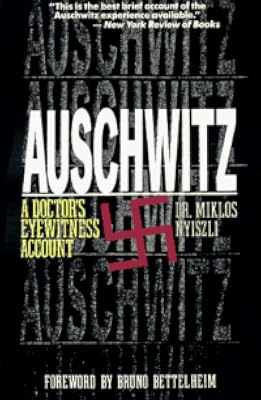
Auschwitz: A Doctor's Eyewitness Account
by Dr. Miklos Nyiszli
On This Page
Description
Auschwitz was one of the first books to bring the full horror of the Nazi death camps to the American public; this is, as the New York Review of Books said, "the best brief account of the Auschwitz experience available."When the Nazis invaded Hungary in 1944, they sent virtually the entire Jewish population to Auschwitz. A Jew and a medical doctor, the prisoner Dr. Miklos Nyiszli was spared death for a grimmer fate: to perform "scientific research" on his fellow inmates under the show more supervision of the man who became known as the infamous "Angel of Death": Dr. Josef Mengele. Nyiszli was named Mengele's personal research pathologist. In that capactity he also served as physician to the Sonderkommando, the Jewish prisoners who worked exclusively in the crematoriums and were routinely executed after four months. Miraculously, Nyiszli survived to give this horrifying and sobering account.
Auschwitz was one of the first books to bring the full horror of the Nazi death camps to the American public. Although much has since been written about the Holocaust, this eyewitness account remains, as the New York Review of Bookssaid in 1987, "the best brief account of the Auschwitz experience available." Of Bruno Bettelheim's famous foreword Neal Ascherson has written, "Its eloquence and outrage must guarantee it a permanent place in Jewish historiography."
. show less
Tags
Recommendations


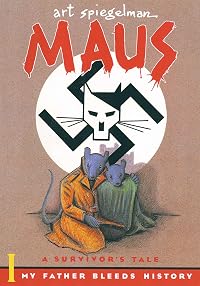

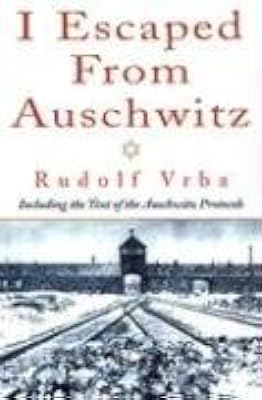
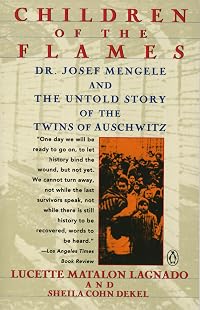
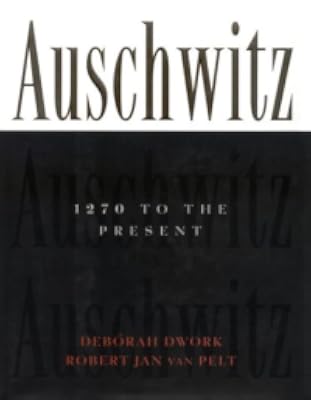
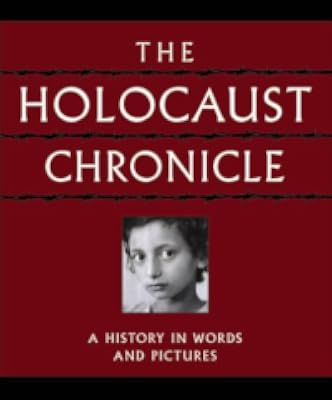
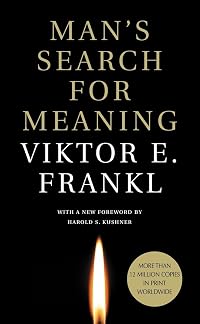
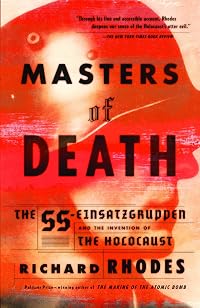
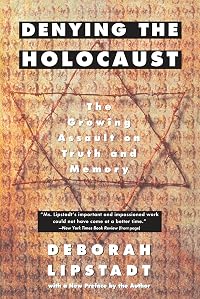
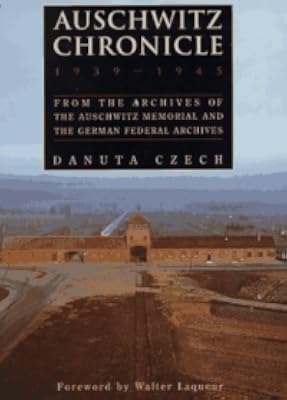

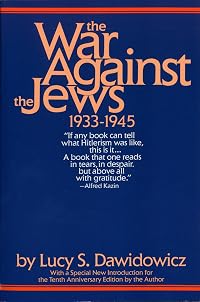

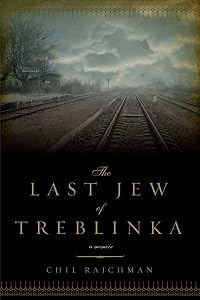
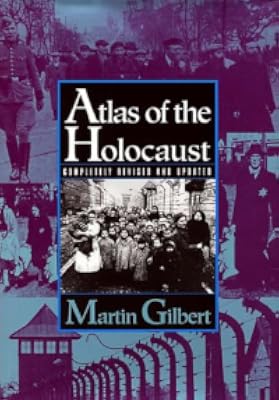

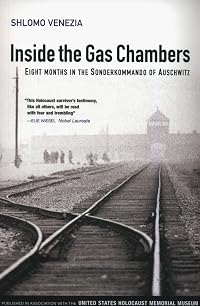
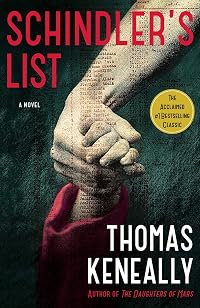
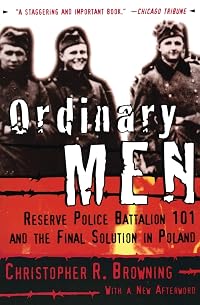
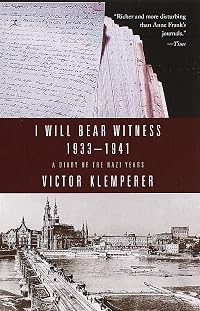
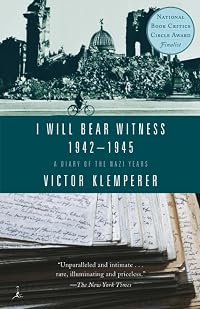
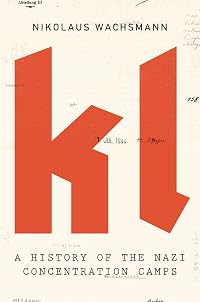
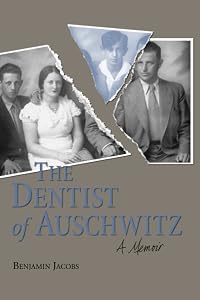
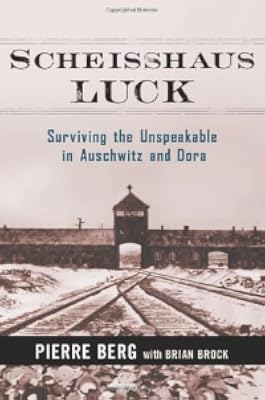
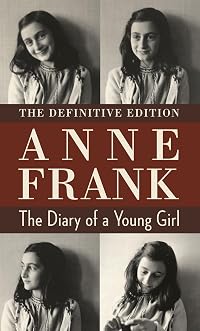

Member Recommendations
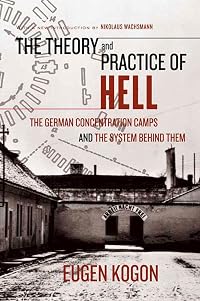
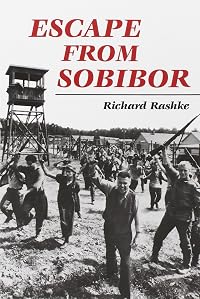
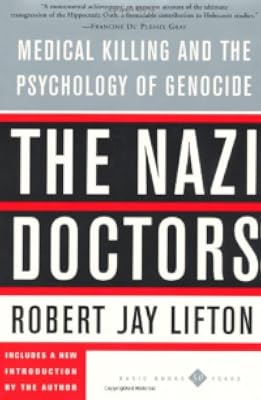
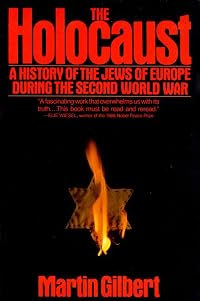
bluepiano Documents presented at Nuremberg trials from and about the pseudo-scientific experiments conducted by doctors who unlike Nyiszli freely chose the nefarious. Gruelling but important.
Member Reviews
I almost passed this book along, without reading it. The cover is off putting. The cover seems more like the book is from a Nazi by choice, rather than someone who was brought to Auschwitz to be killed and was spared because of his forensic knowledge. I will not read a book from Nazis, but will read a book by someone who has survived them. However, in these times, I think it is important for all of us in the world, because of certain people, to remind ourselves what has happened in the past. It seems a small thing to read a book, but if all of us would read certain books (though some might say that seems like the opposite of book banning and also bad), then we won't be reliving history over and over again. To me, current immigration show more deportation policies are edging a little closer to what happened in Europe 80 years ago. Reading this book from a doctor, who never thought he would survive Auschwitz, who felt he needed to be a witness to as much as possible in case he DID make it out, was very powerful. As Dr. Mengele's assistant, he was privy to a lot of info. He mentions the book isn't literary enough, but I don't think that is what anyone is looking for while reading this. The facts are important. The account of what happened is important. I hope we all know the basics of what happened, but this firsthand account went further. And of course it is more stark, more methodical than seems possible. Of course this man didn't think he would be believed, as so much that happened within these pages is unbelievable. The forward wonders why there wasn't more resistance to being murdered, less "business as usual" but I think it was because the situation was just so unbelievable, the victims had a sense that "this can't be happening" until the very end. And all of us on the side of good can not be complacent with current things happening in 2025. Noone in the world deserves this and we can't let it happen again. For the miracle of this man's survival and for the existence of this book alone, I give the book five stars. I'm glad I read this, no matter how horrifying. show less
A short yet enlightening read. Dissector for Mengele at Auschwitz, the author had a unique view of the final months of the "KZ" and the final days of the concentration camp system. This is the first time I heard an explanation of Mengele's deadly and cruel fascination with twins: he thought it was a route to more prolific breeding of the "master race". The author goes into this and more details of how he put his scalpel to work there. Also covered is the crematorium-destroying revolt of the 12th Sonderkommando. I was disappointed there plan to have any of their number flee ultimately proved hopeless.
Perhaps the most unsettling part of the book is Bruno Bettelheim's foreword which seems to blame Jewish cultural traits for the success of show more The Holocaust. He says "the walk to the gas chamber was the last act of a business-as-usual philosophy", etc. show less
Perhaps the most unsettling part of the book is Bruno Bettelheim's foreword which seems to blame Jewish cultural traits for the success of show more The Holocaust. He says "the walk to the gas chamber was the last act of a business-as-usual philosophy", etc. show less
On the one hand, this book was totally as expected: a description of the often-told horrors of Auschwitz by in inside witness. And yet it manages to shock again, not just through the physical cruelty described herein, but with the psychologically dehumanising effects of the extermination programme. People in this camp were resigned to their eventual deaths, including the Sonderkommandos (jews who worked in the gas chambers and the cremation ovens) who knew that they would survive four months at most. And yet only one of the 14 Sonderkommandos decided to go down fighting (and to destroy one of the four crematoria in the process). The author continues to perform autopsies for Dr. Mengele on sets of twins that were murdered especially for show more this purpose, as if he were working "in the pathology university faculty of a middle-sized town". I was struck by little details that illustrate this madness: the prisoners inthe Sonderkommando would trade food for 140 gramme gold coins (melted from gold tooth fillings extracted from the gassed corpses),since that was the only currency they could have access to. Nazis would talk to a Jew (especially a useful jew like the expert pathologist who wrote this book), but would never greet him when arriving or leaving - because they didn't deserve to be further acknowledged. Not a fun read, but one I will remember for a long time. show less
I gained a lot of questions from this but the one I always come back to is the one asked by Bruno Bettelheim; what would the past have looked like if as he suggests every Jew had been more 'in touch with reality' and more likely to get a gun or see the Nazis for what they were? Would Anne Frank have survived?
This question may be considered off putting to many but I think asking it is key for if we don't then we end up harboring doubt.
Whilst many may doubt Bruno's right to speak on the subject, do remember that he was a Jew, he was someone imprisoned in a concentration camp and he did spend almost a year of his life there. There's a ton of flaws in his arguments and it doesn't apply to himself either as he claims that living on in death show more with dignity intact is far better than becoming a slave. But isn't that what happened to him.
Whilst Bruno intrigued me and I'll definitely be reading up a bit more on him- coming to the main book, it was an eye opener in regards to governments, a malicious will to power and the purpose of morality without getting too much into the meat of the book. Read it. Make your children read it. Forgetting history is exactly why mistakes reoccur. show less
This question may be considered off putting to many but I think asking it is key for if we don't then we end up harboring doubt.
Whilst many may doubt Bruno's right to speak on the subject, do remember that he was a Jew, he was someone imprisoned in a concentration camp and he did spend almost a year of his life there. There's a ton of flaws in his arguments and it doesn't apply to himself either as he claims that living on in death show more with dignity intact is far better than becoming a slave. But isn't that what happened to him.
Whilst Bruno intrigued me and I'll definitely be reading up a bit more on him- coming to the main book, it was an eye opener in regards to governments, a malicious will to power and the purpose of morality without getting too much into the meat of the book. Read it. Make your children read it. Forgetting history is exactly why mistakes reoccur. show less
I enjoyed this book a lot, to the extent you can "enjoy" a book about the Holocaust. Dr. Nyiszli was in a very, very unique position as a prisoner at Auschwitz. As an accomplished doctor with a great deal of experience in dissection, he was afforded comparatively luxurious accommodations at Auschwitz so that he could assist Dr. Josef Mengele in his medical "research." He worked in the crematoriums, so he witnessed the masses of people being led to the gas chambers, the firing squads, and so-called medical research on living subjects, particularly twins. This book is a chronological account of his time at Auschwitz.
If you are looking for a lot of details on Nazi medical research, you really won't find it here. It's more a personal show more account of how Dr. Nyiszli used his academic and practical background to survive, and how he was largely spared from physical abuse but could not avoid psychological horrors. He does talk about his dissections and what he learned about Nazi experiments, but the detail is more in his observations about life as a crematorium worker.
There is a long introduction to this book that is a rambling philosophical treatise on why concentration camp prisoners behaved the way they sometimes did. Why they willingly got on trains to go to the camps, why they didn't fight, etc, etc. I read a little bit of this section and ended up skipping it. I found that the facts of the book spoke for themselves, and that we can understand the "whys" by trying to conceive of the horrors that the prisoners faced for years.
Overall, a horrifying but necessary read. show less
If you are looking for a lot of details on Nazi medical research, you really won't find it here. It's more a personal show more account of how Dr. Nyiszli used his academic and practical background to survive, and how he was largely spared from physical abuse but could not avoid psychological horrors. He does talk about his dissections and what he learned about Nazi experiments, but the detail is more in his observations about life as a crematorium worker.
There is a long introduction to this book that is a rambling philosophical treatise on why concentration camp prisoners behaved the way they sometimes did. Why they willingly got on trains to go to the camps, why they didn't fight, etc, etc. I read a little bit of this section and ended up skipping it. I found that the facts of the book spoke for themselves, and that we can understand the "whys" by trying to conceive of the horrors that the prisoners faced for years.
Overall, a horrifying but necessary read. show less
This is probably the most disturbing account of what went on in the abominable concentration camps of World War 2 that I have read. Not only are the graphic details of how the Nazis attempted their grotesque extermination plans described in full, but it also raises moral and philosophical questions about the nature of mankind, and the extent to which we will go to survive. Bruno Bettelheim's introduction questions the motives and wisdom of accepting our fate without struggle and of collaborating in the grossest, most sadistic acts imaginable as a means to survival but it is impossible to know how one would react in such a situation. Read also Primo Levi's "If this is a Man" and ponder how very close we can be to reversion to barbarity show more and perversion. show less
Dr. Miklos Nyiszli was sent to Auschwitz when the Nazis invaded Hungary in 1944. As a Jew he was a condemned man. As a medical doctor he was useful so was spared from death and assigned a worse fate: to assist in performing "scientific research" on his fellow inmates under the direct supervision of Dr. Mengele himself. Somehow Dr. Miklos survived Auschwitz and wrote this short memoir of his time there.
This was an interesting read about a difficult subject. The writing is surprisingly accessible and Dr. Nyiszli's story engaging, though I found I had to read it in small chunks due to the subject matter. Dr. Nyiszli explains at the beginning of the book that he writes this as a doctor from a doctor's perspective so there is a bit of a show more clinical feel to it which lessens the emotional impact to a degree. I wonder if this is how the doctor protected himself to keep his own sanity while relating his story of the horrors he lived through. Dr. Nyiszli was a pathologist and performed many autopsies after the prisoners were killed. While he does describe some of the methods of death at the Nazi's the bulk of the atrocities committed are absent from this text. Still it's an important book and worth reading for a different perspective of someone's time at Auschwitz. show less
This was an interesting read about a difficult subject. The writing is surprisingly accessible and Dr. Nyiszli's story engaging, though I found I had to read it in small chunks due to the subject matter. Dr. Nyiszli explains at the beginning of the book that he writes this as a doctor from a doctor's perspective so there is a bit of a show more clinical feel to it which lessens the emotional impact to a degree. I wonder if this is how the doctor protected himself to keep his own sanity while relating his story of the horrors he lived through. Dr. Nyiszli was a pathologist and performed many autopsies after the prisoners were killed. While he does describe some of the methods of death at the Nazi's the bulk of the atrocities committed are absent from this text. Still it's an important book and worth reading for a different perspective of someone's time at Auschwitz. show less
Members
- Recently Added By
Lists

Holocaust
100 works; 13 members

KayStJ's to-read list
1,616 works; 11 members

Holocaust Narratives
159 works; 3 members
Author Information

4 Works 1,475 Members
Some Editions
Common Knowledge
- Canonical title*
- Sono stato l'assistente del dottor Mengele: memorie di un medico internato ad Auschwitz
- Original title
- Dr. Mengele boncoloorvosa voltam az Auschwitz-i krematoriumban.
- Alternate titles
- I was Dr. Mengele's assistant; Auschwitz. An eyewitness account of Mengele's infamous death camp.
- Original publication date
- 1960
- People/Characters
- Josef Mengele; Miklós Nyiszli; Otto Moll, SS Hauptscharfuhrer; Eric Muhsfeldt; Heinz Thilo; Géza Mansfeld (show all 13); Berthold Epstein; Charles Sigismund Bendel; Karl-Fritz Steinberg; Fritz Klein; Denes Gorog; Adolph Fischer; Jozef Korner
- Important places
- Auschwitz-Birkenau concentration and extermination camps, Oświęcim, Lesser Poland, Poland; Oświęcim, Poland; Germany (Nazi Germany); Mauthausen concentration camp, Mauthausen, Upper Austria, Austria; Melk, Lower Austria, Austria; Ebensee concentration camp, Ebensee, Upper Austria, Austria (show all 7); Poland
- Important events
- World War II (1939 | 1945); Holocaust; Shoah; Deportation of Hungarian Jews (1944)
- Related movies
- The Grey Zone (2001 | IMDb)
*Some information comes from Common Knowledge in other languages. Click "Edit" for more information.
Classifications
Statistics
- Members
- 1,469
- Popularity
- 15,969
- Reviews
- 39
- Rating
- (4.14)
- Languages
- 14 — Chinese, Dutch, English, Finnish, French, German, Hungarian, Italian, Norwegian (Bokmål), Polish, Portuguese, Russian, Spanish, Swedish
- Media
- Paper, Audiobook, Ebook
- ISBNs
- 44
- ASINs
- 23