
Richard Rashke
Author of Escape from Sobibor
About the Author
Richard Rashke is the author of several nonfiction books including The Killing of Karen Silkwood and Useful Enemies. His Escape from Sobibor was made into a three hour television movie. Rashke is also a screenwriter and a playwright whose work has appeared on network television as well as in show more theaters in Warsaw, New York, Washington and Miami. He lives in Washington, D.C. show less
Works by Richard Rashke
The Killing of Karen Silkwood: The Story Behind the Kerr-McGee Plutonium Case (1981) 155 copies, 1 review
Tagged
Common Knowledge
- Birthdate
- 1936
- Gender
- male
- Birthplace
- Milwaukee, Wisconsin, USA
- Associated Place (for map)
- Wisconsin, USA
Members
Reviews
One of the frequently asked questions when Auschwitz survivor Primo Levi spoke publicly about his experiences was “Why weren’t there more escapes?”. Levi would patiently explain: if an inmate escaped, his entire barracks would be immediately executed; thus the prisoners were their own guards – anyone who seemed to be preparing for escape would be turned in. If questioners used the example of Allied soldiers escaping from POW Levi pointed out that the POWs were reasonably well fed and show more could store up rations in advance of an escape, while the death and labor camp inmates were always on the knife edge of starvation and had no chance to store up supplies.
Still, there was a camp where an escape did succeed. Sobibor was in the extreme east of the Polish General Government, just across the Bug River from the Soviet Union. Compared to the vast death factory at Auschwitz, it was something of a stepchild; the gas chambers used exhaust from a Russian tank engine instead of Zyklon B and the crematorium was just large open air racks where the bodies were piled in heaps and incinerated over piles of wood cut from the surrounding forest. Still the procedure was more or less the same; a transport train would come in and unload one car at a time. The passengers would be separated by age and sex; women and children in one line and men in another. If any asked questions, an SS man in a white doctor’s coat would assure them that they were being disinfected before transfer to another train taking them further east to a labor camp. Other SS men would walk down the lines selecting people who claimed some ability – tailors, cobblers, women who could knit. The unselected would enter a sort of tunnel – high barbed wire fences covered with branches cut fresh every few days, so they were unable to see out. They diverted into a room where they left their hand luggage behind – each receiving a claim check – then into another room where they disrobed (again receiving a claim check), then into a third room where their heads were shaved, and finally into the shower room. After it was over the bodies were removed by camp inmates and heaped in cars on a little railway, which was shoved by hand to the cremating racks and unloaded. The inmates then raked over the dirt in the tunnel to erase footprints and removed all the belongings to warehouses for sorting; trying to convince each fresh batch they were the first to take this path.
Many, of course, knew exactly what was going on. When the SS inspector called for tailors or cobblers, they would volunteer even if they didn’t know one end of needle from the other or which side of a shoe the sole went on. And they watched while their parents and brothers and sisters disappeared down the tunnel. (Unlike the GULAG, it didn’t help to be an attractive young woman or a pretty boy; the SS and Ukrainian guards had brothels stocked with Russian women, and it was a serious offence to have any sort of intimate relationship with a Jewish inmate; transfer to a penal unit at the front for the guard and immediate execution for the Jew).
The selected few stayed alive as long as they didn’t attract too much attention and were adequately obsequious. Some really were cobblers and tailors and knitters; the others learned quickly or died. One coveted position was luggage sorter; people sometimes had canned food in their suitcases or money sewed into the seams of their clothing. Of course, if a guard caught you with food or money it meant an immediate bullet in the head, but if you were lucky there were places to hide it.
The selected inmates realized, of course, that their days were numbered and eventually they would join their families. Various escape plans were discussed, more urgently as incoming transports began to slow down in 1943. Fortuitously, a train came in with a batch of Jewish Russian POWs who had been working in labor camps and were now surplus. The inmates, led by Leon Feldhendler, cautiously approached the Russians and broached the subject of an escape; Lieutenant Alexander Pechersky agreed to take over the operation. The Russians had been put to work in the forest cutting wood; they were able to steal some axes.
They waited until some of the more astute of the guards were on leave. Then, one by one, SS men were lured by some pretext – to a cobbler or tailor for a fitting, to a warehouse to examine something found in luggage – and a Russian came up behind them with an axe. One this started, of course, there was no turning back; unfortunately only a few inmates could be let in on the plan, so when the sirens started blowing almost all were just as surprised as the Germans. The original idea had been to simply march out of the camp through the main gate, as if it were an unusually large work detail; but only the Russians could maintain this sort of discipline so everybody else just broke and ran, forcing down the barbed wire with the weight of their own bodies and taking their chances with the minefields. There were about 600 inmates in the camp; about 300 actually tried to escape. Most off these either died in the minefield or were quickly tracked down and shot; Polish partisans accounted for more and others were turned in by Polish civilians when they came begging for help. After leading the escape Pechersky abandoned the non-Russians and headed east, eventually joining up with a partisan band. Between 50 and 70 Sobibor escapees survived the war (Leon Feldhendler was murdered after the war by anti-Semites in his own home village).
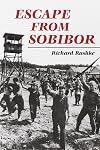
Author Richard Rashke succeeds in a difficult task. Previous literature about the camp and the escape was extremely limited; a book published in Moscow in 1964 is “pure fiction” and a memoir by one of the survivors who emigrated to Brazil is only available in Portuguese. The survivors that Rashke was able to locate were almost uniformly reluctant to be interviewed; many expressed surprise that a non-Jew would write a book about Sobibor and insisted he could never understand what happened there. Rashke traveled to California, New England, Brazil, Israel, and the Soviet Union for the interviews and his accounts of these are almost as compelling as the main story, as men and women who had tried to put Sobibor out of the minds for years now broke down as they attempted to speak of it again. Not surprisingly, almost nobody had anything complimentary to say about Germans, Poles, or Ukrainians (one couple who was helped by a Polish farm family was still sending them gift packages in 1982 when Rashke interviewed them, but they were an exception). The book was made into a TV movie in 1987 (scripted by Rashke); a still used as the book cover shows Alan Arkin (playing Feldhendler), Rutger Hauer (playing Pechersky) and Joanna Pacuła (playing Pechersky’s love interest) looking remarkably healthy as they triumphantly wave weapons over their heads while running from the camp; nothing like this is described in the book so I expect Rashke added it for cinematic value. A sequel (Escape from Sobibor: The Aftermath) was proposed but sponsors dropped out when American-Ukrainians protested.
Well written, if gut-wrenching. The book is now 30 years old; I expect most of the people Rashke interviewed are no longer with us. There are extensive endnotes, which explain some of the editorial decisions Rashke had to make; these are all immaterial to the history (examples: the exact spelling of the names of some of the guards and prisoners; whether the gas chamber was powered by a tank or truck engine). The bibliography (as mentioned) is sparse, considering the historical importance of the event.
One thing Rashke doesn’t do is explain why Sobibor was the most successful escape at any of the death camps (there was an escape attempt Treblinka which involved more inmates but fewer actually made it out of the camp and survived to the end of the war). Reading the interviews provides some explanation. The Sobibor camp was surrounded by forest; until the Russian POWs arrived all the inmates were urban Jews who had no outdoors experience. One of the survivors recounted wandering in circles in the forest for four days only to arrive outside the camp gates again; another was more terrified of imaginary hazards in the forest (wild animals) than staying in the camp and had to be more or less dragged out by her boyfriend. More inexplicably, a number of the escapees headed toward their former homes, where they were quickly spotted and turned in by local Poles. It’s ironic that people who had survived successfully in the camp couldn’t make it outside.
Another factor Rashke doesn’t mention is survivor guilt; the same thing occurs in memoirs of former GULAG prisoners. In order to live for any time in either the death camps or the GULAG, you had to cooperate with the authorities. In the GULAG, for example, you could get extra rations or an easy job by turning informant – Solzhenitsyn, for example, was nominally an informant although he claimed he never revealed any information that harmed another prisoner. In Sobibor, in order to live you had to make jackboots for the SS, or repair uniforms, or sort through the belongings of the dead, or cut their hair just before they died. One of Rashke’s informants had the barber’s job for a while; he was only 16 and had never seen a naked woman before but now had to shave them at the last stop before they went to the gas chamber. He didn’t look in their eyes. I expect forty-year delay between the escape and Rashke’s interviews allowed some of the escapees to come to terms with this but it’s probably the reason why others wouldn’t talk to him at all. I’m not judging; you do what’s necessary to survive but that doesn’t mean you want to talk about it. show less
Still, there was a camp where an escape did succeed. Sobibor was in the extreme east of the Polish General Government, just across the Bug River from the Soviet Union. Compared to the vast death factory at Auschwitz, it was something of a stepchild; the gas chambers used exhaust from a Russian tank engine instead of Zyklon B and the crematorium was just large open air racks where the bodies were piled in heaps and incinerated over piles of wood cut from the surrounding forest. Still the procedure was more or less the same; a transport train would come in and unload one car at a time. The passengers would be separated by age and sex; women and children in one line and men in another. If any asked questions, an SS man in a white doctor’s coat would assure them that they were being disinfected before transfer to another train taking them further east to a labor camp. Other SS men would walk down the lines selecting people who claimed some ability – tailors, cobblers, women who could knit. The unselected would enter a sort of tunnel – high barbed wire fences covered with branches cut fresh every few days, so they were unable to see out. They diverted into a room where they left their hand luggage behind – each receiving a claim check – then into another room where they disrobed (again receiving a claim check), then into a third room where their heads were shaved, and finally into the shower room. After it was over the bodies were removed by camp inmates and heaped in cars on a little railway, which was shoved by hand to the cremating racks and unloaded. The inmates then raked over the dirt in the tunnel to erase footprints and removed all the belongings to warehouses for sorting; trying to convince each fresh batch they were the first to take this path.
Many, of course, knew exactly what was going on. When the SS inspector called for tailors or cobblers, they would volunteer even if they didn’t know one end of needle from the other or which side of a shoe the sole went on. And they watched while their parents and brothers and sisters disappeared down the tunnel. (Unlike the GULAG, it didn’t help to be an attractive young woman or a pretty boy; the SS and Ukrainian guards had brothels stocked with Russian women, and it was a serious offence to have any sort of intimate relationship with a Jewish inmate; transfer to a penal unit at the front for the guard and immediate execution for the Jew).
The selected few stayed alive as long as they didn’t attract too much attention and were adequately obsequious. Some really were cobblers and tailors and knitters; the others learned quickly or died. One coveted position was luggage sorter; people sometimes had canned food in their suitcases or money sewed into the seams of their clothing. Of course, if a guard caught you with food or money it meant an immediate bullet in the head, but if you were lucky there were places to hide it.
The selected inmates realized, of course, that their days were numbered and eventually they would join their families. Various escape plans were discussed, more urgently as incoming transports began to slow down in 1943. Fortuitously, a train came in with a batch of Jewish Russian POWs who had been working in labor camps and were now surplus. The inmates, led by Leon Feldhendler, cautiously approached the Russians and broached the subject of an escape; Lieutenant Alexander Pechersky agreed to take over the operation. The Russians had been put to work in the forest cutting wood; they were able to steal some axes.
They waited until some of the more astute of the guards were on leave. Then, one by one, SS men were lured by some pretext – to a cobbler or tailor for a fitting, to a warehouse to examine something found in luggage – and a Russian came up behind them with an axe. One this started, of course, there was no turning back; unfortunately only a few inmates could be let in on the plan, so when the sirens started blowing almost all were just as surprised as the Germans. The original idea had been to simply march out of the camp through the main gate, as if it were an unusually large work detail; but only the Russians could maintain this sort of discipline so everybody else just broke and ran, forcing down the barbed wire with the weight of their own bodies and taking their chances with the minefields. There were about 600 inmates in the camp; about 300 actually tried to escape. Most off these either died in the minefield or were quickly tracked down and shot; Polish partisans accounted for more and others were turned in by Polish civilians when they came begging for help. After leading the escape Pechersky abandoned the non-Russians and headed east, eventually joining up with a partisan band. Between 50 and 70 Sobibor escapees survived the war (Leon Feldhendler was murdered after the war by anti-Semites in his own home village).
Author Richard Rashke succeeds in a difficult task. Previous literature about the camp and the escape was extremely limited; a book published in Moscow in 1964 is “pure fiction” and a memoir by one of the survivors who emigrated to Brazil is only available in Portuguese. The survivors that Rashke was able to locate were almost uniformly reluctant to be interviewed; many expressed surprise that a non-Jew would write a book about Sobibor and insisted he could never understand what happened there. Rashke traveled to California, New England, Brazil, Israel, and the Soviet Union for the interviews and his accounts of these are almost as compelling as the main story, as men and women who had tried to put Sobibor out of the minds for years now broke down as they attempted to speak of it again. Not surprisingly, almost nobody had anything complimentary to say about Germans, Poles, or Ukrainians (one couple who was helped by a Polish farm family was still sending them gift packages in 1982 when Rashke interviewed them, but they were an exception). The book was made into a TV movie in 1987 (scripted by Rashke); a still used as the book cover shows Alan Arkin (playing Feldhendler), Rutger Hauer (playing Pechersky) and Joanna Pacuła (playing Pechersky’s love interest) looking remarkably healthy as they triumphantly wave weapons over their heads while running from the camp; nothing like this is described in the book so I expect Rashke added it for cinematic value. A sequel (Escape from Sobibor: The Aftermath) was proposed but sponsors dropped out when American-Ukrainians protested.
Well written, if gut-wrenching. The book is now 30 years old; I expect most of the people Rashke interviewed are no longer with us. There are extensive endnotes, which explain some of the editorial decisions Rashke had to make; these are all immaterial to the history (examples: the exact spelling of the names of some of the guards and prisoners; whether the gas chamber was powered by a tank or truck engine). The bibliography (as mentioned) is sparse, considering the historical importance of the event.
One thing Rashke doesn’t do is explain why Sobibor was the most successful escape at any of the death camps (there was an escape attempt Treblinka which involved more inmates but fewer actually made it out of the camp and survived to the end of the war). Reading the interviews provides some explanation. The Sobibor camp was surrounded by forest; until the Russian POWs arrived all the inmates were urban Jews who had no outdoors experience. One of the survivors recounted wandering in circles in the forest for four days only to arrive outside the camp gates again; another was more terrified of imaginary hazards in the forest (wild animals) than staying in the camp and had to be more or less dragged out by her boyfriend. More inexplicably, a number of the escapees headed toward their former homes, where they were quickly spotted and turned in by local Poles. It’s ironic that people who had survived successfully in the camp couldn’t make it outside.
Another factor Rashke doesn’t mention is survivor guilt; the same thing occurs in memoirs of former GULAG prisoners. In order to live for any time in either the death camps or the GULAG, you had to cooperate with the authorities. In the GULAG, for example, you could get extra rations or an easy job by turning informant – Solzhenitsyn, for example, was nominally an informant although he claimed he never revealed any information that harmed another prisoner. In Sobibor, in order to live you had to make jackboots for the SS, or repair uniforms, or sort through the belongings of the dead, or cut their hair just before they died. One of Rashke’s informants had the barber’s job for a while; he was only 16 and had never seen a naked woman before but now had to shave them at the last stop before they went to the gas chamber. He didn’t look in their eyes. I expect forty-year delay between the escape and Rashke’s interviews allowed some of the escapees to come to terms with this but it’s probably the reason why others wouldn’t talk to him at all. I’m not judging; you do what’s necessary to survive but that doesn’t mean you want to talk about it. show less
This is a brilliant, heartbreaking book and put together very well. It's a non-fiction story about a real event, but the way it's written, it reads like a Frederick Forsyth novel. If you didn't know if was non-fiction you wouldn't guess from reading it. Yet the author also includes endnotes where he explains what sources he uses, and how he dealt with conflicting sources, and his opinions as to what was reliable and what wasn't -- just like in a regular history book.
I read this book feeling show more a lot of rage and frustration. At the Allies mostly, who knew perfectly well what was going on and were united in their indifference to it. At the Poles, for being so brutal and inhuman to their fellow countrymen, to the point where they were as dangerous to Jews as the Nazis themselves if not more so.
Even after their escape from Sobibor, things did not really improve for the survivors sometimes until years had passed. One group of three were hidden in a farmer's barn and he gradually milked them of all the money and gold they had, then ambushed and shot them in their hiding place. (Two of them survived the ambush by playing dead and then escaped, wounded; a third was killed outright.) A couple who had met and fell in love in Sobibor were hidden by a somewhat nicer farmer who also charged them a bundle for it but did not kill them. This couple married and had a baby right after the war...only to see it die a few months later, at sea, as they were on a ship home to Holland. One of the leaders of the uprising, Leon Feldhander, made it back to Lublin and settled in his own apartment...only to be murdered there by anti-Semetic Poles after liberation.
Given all they went through, I'm amazed that the survivors Rashke interviewed for his book had come out as well as they did, psychologically speaking. The last part of the book, where he describes tracking down these people and interviewing them, kind of dragged a bit, but I still think it was a valuable addition to the book.
This is definitely one of the best Holocaust books I've read. And I think the story was told just in time. I'd be surprised if there were any Sobibor survivors left today, and even most Holocaust researchers know very little about the camp. But this is a story worth knowing. show less
I read this book feeling show more a lot of rage and frustration. At the Allies mostly, who knew perfectly well what was going on and were united in their indifference to it. At the Poles, for being so brutal and inhuman to their fellow countrymen, to the point where they were as dangerous to Jews as the Nazis themselves if not more so.
Even after their escape from Sobibor, things did not really improve for the survivors sometimes until years had passed. One group of three were hidden in a farmer's barn and he gradually milked them of all the money and gold they had, then ambushed and shot them in their hiding place. (Two of them survived the ambush by playing dead and then escaped, wounded; a third was killed outright.) A couple who had met and fell in love in Sobibor were hidden by a somewhat nicer farmer who also charged them a bundle for it but did not kill them. This couple married and had a baby right after the war...only to see it die a few months later, at sea, as they were on a ship home to Holland. One of the leaders of the uprising, Leon Feldhander, made it back to Lublin and settled in his own apartment...only to be murdered there by anti-Semetic Poles after liberation.
Given all they went through, I'm amazed that the survivors Rashke interviewed for his book had come out as well as they did, psychologically speaking. The last part of the book, where he describes tracking down these people and interviewing them, kind of dragged a bit, but I still think it was a valuable addition to the book.
This is definitely one of the best Holocaust books I've read. And I think the story was told just in time. I'd be surprised if there were any Sobibor survivors left today, and even most Holocaust researchers know very little about the camp. But this is a story worth knowing. show less
The Killing of Karen Silkwood: The Story Behind the Kerr-McGee Plutonium Case, Second Edition by Richard Rashke

One Conspiracy Theory That Just Might Be True
I became interested in Karen Silkwood after watching the 1983 movie "Silkwood". The film seemed to suggest that Silkwood was murdered, but a number of reviews I subsequently read dismissed "Silkwood" as an irresponsible docudrama that was based on sensationalism rather than fact.
After reading Richard Rashke's "The Killing of Karen Silkwood", I'd have to say that the film didn't take its allegations far enough. Based on thousands of pages of court show more documents, including depositions, sworn statements, internal memos, and federal records, Rashke makes a convincing case for the following:
Silkwood was deliberately contaminated with plutonium by someone at Kerr-McGee, perhaps on several occasions. Had she lived, Silkwood had a good likelihood of developing cancer because of the significant exposure she experienced.
Silkwood was most likely carrying important documents the night she was murdered; among other things, she had proof that 42.5 pounds of plutonium was missing from K-M's Cimarron plant, which is enough to make three or four nuclear bombs.
Security at the Cimarron plant was dangerously lax, as were safety measures. Workers received little education in regards to nuclear energy or the safety risks that accompany it, and consequently contamination was not taken seriously by employees.
Union members' (and particularly Karen Silkwood's) rights were repeatedly violated by K-M officials, who continually interfered in union activities and even began to spy on Silkwood.
However, the conspiracy surrounding Silkwood's death became even more heinous and inconceivable as Silkwood's side investigated in preparation for trial. Though the truth will probably never be known, Rashke lays out a compelling - though sketchy - account, involving the FBI, the CIA, the National Intelligence Agency (NIA), the National Security Agency (NSA), the Justice Department, the Atomic Energy Commission (AEC), and a shadowy network of Iranians, Russians, and Israelis. Rashke hints at an international plutonium smuggling ring, and supplies evidence that the FBI was responsible for illegally and covertly spying on a number of organizations as late as the mid-1970s, including various labor unions and their members - and Silkwood was one of their targets.
Rashke's story might sound unbelievable, but most of it is based on public court documents. His interviews with the assorted players in the case may be less trustworthy; yet, many statements are corroborated by court papers. Also lending credence to the Silkwood camp's version of the story is the fact that several significant witnesses died, disappeared, or were threatened during the investigation and ensuing court case. Additionally, the Silkwood lawyers and investigator received death threats and were followed and even assaulted - one must wonder why, if the Silkwood case was wholly without merit. Especially appalling is the federal government's role in the affair, and their failure to cooperate with the civil case.
"Who Killed Karen Silkwood" reads like a novel - it's a compelling book that's hard to put down. Indeed, I expect that I won't soon be able to forget about Silkwood's story and its larger implications. I'm far from what you'd call a conspiracy nut (though I love the X-Files, I identify with Scully as opposed to Mulder!) - yet, the evidence in this case is as convincing as it is frightening. The final two pages will simply blow you away.
My only gripe - Rashke's update to the 2nd edition of the book (released to commemorate the 25th anniversary of Silkwood's death) was sorely lacking. He made no mention of what's become of those involved in the case; of any information, either directly or indirectly related to the case, that's been discovered since the end of the investigation; or of the movie, which was a critical and box-office success. Rashke coins the newest section "The Legacy", but he doesn't discuss Silkwood's legacy even briefly. The new chapters focus on the court battles since May 1979 and K-M's troubles with and termination of their nuclear program, but speak little of Silkwood.
http://www.easyvegan.info/2003/10/17/the-killing-of-karen-silkwood-2nd-ed-by-ric... show less
I became interested in Karen Silkwood after watching the 1983 movie "Silkwood". The film seemed to suggest that Silkwood was murdered, but a number of reviews I subsequently read dismissed "Silkwood" as an irresponsible docudrama that was based on sensationalism rather than fact.
After reading Richard Rashke's "The Killing of Karen Silkwood", I'd have to say that the film didn't take its allegations far enough. Based on thousands of pages of court show more documents, including depositions, sworn statements, internal memos, and federal records, Rashke makes a convincing case for the following:
Silkwood was deliberately contaminated with plutonium by someone at Kerr-McGee, perhaps on several occasions. Had she lived, Silkwood had a good likelihood of developing cancer because of the significant exposure she experienced.
Silkwood was most likely carrying important documents the night she was murdered; among other things, she had proof that 42.5 pounds of plutonium was missing from K-M's Cimarron plant, which is enough to make three or four nuclear bombs.
Security at the Cimarron plant was dangerously lax, as were safety measures. Workers received little education in regards to nuclear energy or the safety risks that accompany it, and consequently contamination was not taken seriously by employees.
Union members' (and particularly Karen Silkwood's) rights were repeatedly violated by K-M officials, who continually interfered in union activities and even began to spy on Silkwood.
However, the conspiracy surrounding Silkwood's death became even more heinous and inconceivable as Silkwood's side investigated in preparation for trial. Though the truth will probably never be known, Rashke lays out a compelling - though sketchy - account, involving the FBI, the CIA, the National Intelligence Agency (NIA), the National Security Agency (NSA), the Justice Department, the Atomic Energy Commission (AEC), and a shadowy network of Iranians, Russians, and Israelis. Rashke hints at an international plutonium smuggling ring, and supplies evidence that the FBI was responsible for illegally and covertly spying on a number of organizations as late as the mid-1970s, including various labor unions and their members - and Silkwood was one of their targets.
Rashke's story might sound unbelievable, but most of it is based on public court documents. His interviews with the assorted players in the case may be less trustworthy; yet, many statements are corroborated by court papers. Also lending credence to the Silkwood camp's version of the story is the fact that several significant witnesses died, disappeared, or were threatened during the investigation and ensuing court case. Additionally, the Silkwood lawyers and investigator received death threats and were followed and even assaulted - one must wonder why, if the Silkwood case was wholly without merit. Especially appalling is the federal government's role in the affair, and their failure to cooperate with the civil case.
"Who Killed Karen Silkwood" reads like a novel - it's a compelling book that's hard to put down. Indeed, I expect that I won't soon be able to forget about Silkwood's story and its larger implications. I'm far from what you'd call a conspiracy nut (though I love the X-Files, I identify with Scully as opposed to Mulder!) - yet, the evidence in this case is as convincing as it is frightening. The final two pages will simply blow you away.
My only gripe - Rashke's update to the 2nd edition of the book (released to commemorate the 25th anniversary of Silkwood's death) was sorely lacking. He made no mention of what's become of those involved in the case; of any information, either directly or indirectly related to the case, that's been discovered since the end of the investigation; or of the movie, which was a critical and box-office success. Rashke coins the newest section "The Legacy", but he doesn't discuss Silkwood's legacy even briefly. The new chapters focus on the court battles since May 1979 and K-M's troubles with and termination of their nuclear program, but speak little of Silkwood.
http://www.easyvegan.info/2003/10/17/the-killing-of-karen-silkwood-2nd-ed-by-ric... show less

Escape from Sobibor offers proof of resistance--in this case successful--by victims of the Holocaust. The smallest of the extermination camps operated by Nazi Germany during World War II, Sobibor also was the scene of the war's biggest prisoner escape. Richard Rashke's interviews with eighteen of those who survived provide the foundation for this volume. He also draws on books, articles, and diaries to make vivid the camp, the uprising, and the escape.
Rashke challenges historians of the show more Holocaust to reexamine a "flawed premise" of much of their writing. Unconsciously accepting the flawed premise that "if the Nazis...did not give it much significance, it wasn’t significant," Rashke argues, historians have distorted the nature of the Jewish response to the Final Solution. Most historians have mistakenly portrayed Jews "as a flock of sheep on the road to slaughter," he insists, "causing intense suffering and irreparable damage to the Jewish people." He offers his own book as an antidote. The story of the escape from Sobibor and those who survived it, he argues, "represents the buried stories of hundreds of thousands who fought and died in ghettos no one ever heard of; who tried to escape on the way to camps but never made it; who fought back inside camps but were killed anyway; who managed to escape only to be recaptured and executed; who formed or joined partisan groups from the woods of Vilna to the forest of the owls and who never saw liberation...."
"Breathtakingly suspenseful and horrifying at the same time." -- Publishers Weekly
"Brilliantly reconstructs the degradation and drama of Sobibor. . . . A memorable and moving saga, full of anger and anguish, a reminder never to forget." -- Jordan E. Cohn, San Francisco Chronicle
"A sensitive, thoughtful, and well-researched account of the 'biggest prisoner escape of World War II.'" --Samuel Gold, Jewish Chicago
"A journalistic account in the tradition of Truman Capote's In Cold Blood." -- Choice
"The authoritative version of the breakout from the Nazi extermination camp at Sobibor. . . . Gives us a very good idea of how the will to survive can lead quite ordinary people to surmount the most extraordinary obstacles." -- Meir Ronnen, Jerusalem Post
"This moving and angry book deserves to be read." -- Susan Osnos, Washington Post
"A unique, unforgettable, deeply moving and effective account of a death camp." -- Allen A. Warsen, Detroit Jewish News. show less
Rashke challenges historians of the show more Holocaust to reexamine a "flawed premise" of much of their writing. Unconsciously accepting the flawed premise that "if the Nazis...did not give it much significance, it wasn’t significant," Rashke argues, historians have distorted the nature of the Jewish response to the Final Solution. Most historians have mistakenly portrayed Jews "as a flock of sheep on the road to slaughter," he insists, "causing intense suffering and irreparable damage to the Jewish people." He offers his own book as an antidote. The story of the escape from Sobibor and those who survived it, he argues, "represents the buried stories of hundreds of thousands who fought and died in ghettos no one ever heard of; who tried to escape on the way to camps but never made it; who fought back inside camps but were killed anyway; who managed to escape only to be recaptured and executed; who formed or joined partisan groups from the woods of Vilna to the forest of the owls and who never saw liberation...."
"Breathtakingly suspenseful and horrifying at the same time." -- Publishers Weekly
"Brilliantly reconstructs the degradation and drama of Sobibor. . . . A memorable and moving saga, full of anger and anguish, a reminder never to forget." -- Jordan E. Cohn, San Francisco Chronicle
"A sensitive, thoughtful, and well-researched account of the 'biggest prisoner escape of World War II.'" --Samuel Gold, Jewish Chicago
"A journalistic account in the tradition of Truman Capote's In Cold Blood." -- Choice
"The authoritative version of the breakout from the Nazi extermination camp at Sobibor. . . . Gives us a very good idea of how the will to survive can lead quite ordinary people to surmount the most extraordinary obstacles." -- Meir Ronnen, Jerusalem Post
"This moving and angry book deserves to be read." -- Susan Osnos, Washington Post
"A unique, unforgettable, deeply moving and effective account of a death camp." -- Allen A. Warsen, Detroit Jewish News. show less
Lists
Awards

You May Also Like


Associated Authors
Statistics
- Works
- 10
- Members
- 618
- Popularity
- #40,696
- Rating
- 4.1
- Reviews
- 12
- ISBNs
- 45
- Languages
- 5