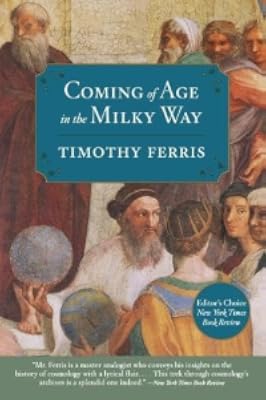
Coming of Age in the Milky Way
by Timothy Ferris
On This Page
Description
From the second-century celestial models of Ptolemy to modern-day research institutes and quantum theory, this classic book offers a breathtaking tour of astronomy and the brilliant, eccentric personalities who have shaped it. From the first time mankind had an inkling of the vast space that surrounds us, those who study the universe have had to struggle against political and religious preconceptions. They have included some of the most charismatic, courageous, and idiosyncratic thinkers of show more all time. In Coming of Age in the Milky Way, Timothy Ferris uses his unique blend of rigorous research and captivating narrative skill to draw us into the lives and minds of these extraordinary figures, creating a landmark work of scientific history. show lessTags
Recommendations








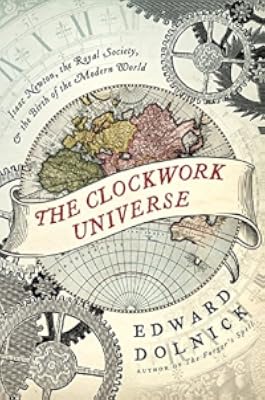



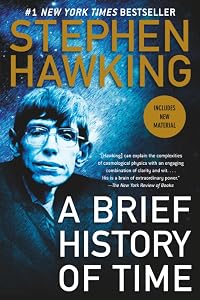
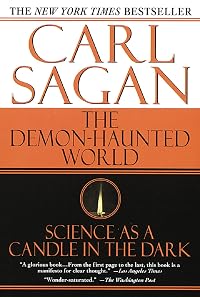
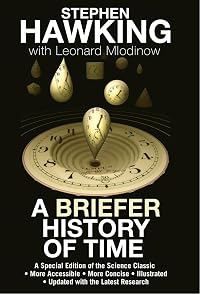

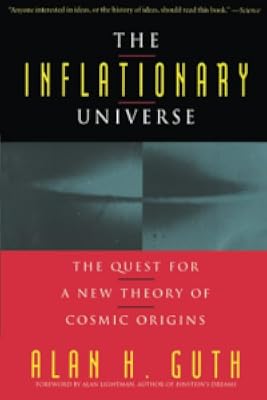

Member Recommendations
The Clockwork Universe: Isaac Newton, the Royal Society, & the Birth of the Modern World by Edward Dolnick
rakerman Many of the same scientists show up in Coming of Age and The Clockwork Universe, with different emphasis and focus. The books complement one another, for example there are more details about Kepler's work in The Clockwork Universe.
30
Member Reviews
This ambitious work chronicles the history of how humans have come to understand the size, age, and origin of the universe. Given that this book was originally published in 1988, I'm sure that some of the data in the later chapters has since been disproven by more recent research; however, since it is primarily a history, it is not nearly as dated as most 1980's books on astrophysics probably are, and I wouldn't hesitate to recommend it to modern readers with an interest in the history of astronomy and physics.
Coming of Age in the Milky Way is in many ways a formative book for me. I first read it as a teen, and it helped to encourage my love for astronomy and physics (and later, to major in physics at university). The first two show more sections, which are a history of pre-20th century physics, are the most interesting to me personally. Ferris does an excellent job both of capturing the personalities involved (especially of figures like Galileo, Kepler, and Newton) and of describing the science in a succinct and understandable way. He covers a lot of ground, touching on geology and evolution as well as astronomy. The final section is less interesting to me, as quantum mechanics and the various theories associated with the Big Bang tend to make my head spin, and I kept wondering which 1980's theories are no longer valid today. Still, Coming of Age in the Milky Way is a well-written book that will likely always have a place on my bookshelf. show less
Coming of Age in the Milky Way is in many ways a formative book for me. I first read it as a teen, and it helped to encourage my love for astronomy and physics (and later, to major in physics at university). The first two show more sections, which are a history of pre-20th century physics, are the most interesting to me personally. Ferris does an excellent job both of capturing the personalities involved (especially of figures like Galileo, Kepler, and Newton) and of describing the science in a succinct and understandable way. He covers a lot of ground, touching on geology and evolution as well as astronomy. The final section is less interesting to me, as quantum mechanics and the various theories associated with the Big Bang tend to make my head spin, and I kept wondering which 1980's theories are no longer valid today. Still, Coming of Age in the Milky Way is a well-written book that will likely always have a place on my bookshelf. show less
This fascinating and very readable history of physics takes the read step-by-step through the great discoveries about the universe we live in. The book is divided into three sections. I was right with the author all through Space, got a little lost in Time, and then was quite overcome by Creation. No matter. Ferris's style is accessible for the non-scientist reader, but he doesn't talk down either.
I particularly enjoyed getting to know the great thinkers of human history: Galileo, Newton, Darwin, Einstein. Ferris sprinkles his narrative with personal anecdotes that give these geniuses personality. But he keeps pulling the reader onward, from the earliest conceptions of the universe as a closed system, the stars a ceiling just over our show more heads, to the vast reaches of time and space that we now know the universe to contain, to the mind-warping properties of the sub-molecular universe and the early moments following the Big Bang. I won't claim to have understood it all, but I found it all fascinating, and would recommend this book to anyone who looks out at the night sky and longs to understand what she sees. show less
I particularly enjoyed getting to know the great thinkers of human history: Galileo, Newton, Darwin, Einstein. Ferris sprinkles his narrative with personal anecdotes that give these geniuses personality. But he keeps pulling the reader onward, from the earliest conceptions of the universe as a closed system, the stars a ceiling just over our show more heads, to the vast reaches of time and space that we now know the universe to contain, to the mind-warping properties of the sub-molecular universe and the early moments following the Big Bang. I won't claim to have understood it all, but I found it all fascinating, and would recommend this book to anyone who looks out at the night sky and longs to understand what she sees. show less
(posted on my blog: davenichols.net)
Tim Ferris has a gift for writing history of science books, and many consider Coming of Age in the Milky Way his best. I have to agree. The history of astronomy and physics presented here is fantastic and engaging. Ferris has a great pace and narrative, and offers the reader a well-developed and engrossing look at what other authors have turned into a dry dissertation.
The book takes the reader through a timeline of discovery as humans came to understand various bis about their place in the universe. Early ideas, such as those of Aristole and Ptolemy are explored. The discussion of how scientists such as Copernicus, Brahe, Kepler, Gallileo, and Newton (among others) came to notice and explore phenomena show more left unexplained by existing theories. As humans expanded their understanding of the depths and reach of space, the progress from the Ancient Greeks to the notion of an expanding universe takes on a fascinating and is woven by Ferris into an epic tapestry of scientific discovery.
The second part of the book looks at the notions of Time as they progressed from various ancient theories to the modern understanding that the universe as we know it is many billions of years old.
Part Three offers a look at theories of creation, from the quantum nature of things to the concepts which developed into the Big Bang and inflationary theory. The weakest parts of the book are found in Chapters 19 and 20, where the science behind a couple of points in Ferris's narrative has become dated and shown inaccurate (the book was published in 1989). Specifically, the concept of an expanding universe which is slowing down its acceleration has been trumped by modern research (recent discoveries point to an acceleration which is increasing). Also, Ferris describes the nature of the pre-Big Bang singularity first posited by Stephen Hawking and others, a concept which Hawking has vehemently backed away from since Coming of Age was published, and Hawking now no longer supports this theory.
Still, Coming of Age is an enjoyable read for anyone who likes astronomy or history of science books. Ferris is an accomplished author whose work is easily approached by novices and delightful for those with experience. Four stars. show less
Tim Ferris has a gift for writing history of science books, and many consider Coming of Age in the Milky Way his best. I have to agree. The history of astronomy and physics presented here is fantastic and engaging. Ferris has a great pace and narrative, and offers the reader a well-developed and engrossing look at what other authors have turned into a dry dissertation.
The book takes the reader through a timeline of discovery as humans came to understand various bis about their place in the universe. Early ideas, such as those of Aristole and Ptolemy are explored. The discussion of how scientists such as Copernicus, Brahe, Kepler, Gallileo, and Newton (among others) came to notice and explore phenomena show more left unexplained by existing theories. As humans expanded their understanding of the depths and reach of space, the progress from the Ancient Greeks to the notion of an expanding universe takes on a fascinating and is woven by Ferris into an epic tapestry of scientific discovery.
The second part of the book looks at the notions of Time as they progressed from various ancient theories to the modern understanding that the universe as we know it is many billions of years old.
Part Three offers a look at theories of creation, from the quantum nature of things to the concepts which developed into the Big Bang and inflationary theory. The weakest parts of the book are found in Chapters 19 and 20, where the science behind a couple of points in Ferris's narrative has become dated and shown inaccurate (the book was published in 1989). Specifically, the concept of an expanding universe which is slowing down its acceleration has been trumped by modern research (recent discoveries point to an acceleration which is increasing). Also, Ferris describes the nature of the pre-Big Bang singularity first posited by Stephen Hawking and others, a concept which Hawking has vehemently backed away from since Coming of Age was published, and Hawking now no longer supports this theory.
Still, Coming of Age is an enjoyable read for anyone who likes astronomy or history of science books. Ferris is an accomplished author whose work is easily approached by novices and delightful for those with experience. Four stars. show less
Just read this again after having read it the first time about 20 years ago. It really is a beautiful book that hasn't lost any of its relevance even with 20 years of additional discovery (which it deals with in an afterwards).
It tells the story of the Universe while also telling the story of telling the story of the Universe, from the first decipherable cave paintings to up to date discoveries in the field of particle physics - all in a way that can be understood by folks like me that have an interest in science and discovery but have no aptitude for it!
It tells the story of the Universe while also telling the story of telling the story of the Universe, from the first decipherable cave paintings to up to date discoveries in the field of particle physics - all in a way that can be understood by folks like me that have an interest in science and discovery but have no aptitude for it!
I thoroughly enjoyed this book, and I recommend it to anyone interested in the history of science, the process of science, or general astronomy or physics.
Summary: Coming of Age in the Milky Way tells the story of how humankind came to know its place in the universe. Though the book has three distinct themes (Space, Time, and Creation), the main focus is on Space: how did we learn the size of the Earth, the extent of and laws governing the Solar System, that the Milky Way is a "galaxy" and only one of many, and that the universe is giant and expanding? The other two sections expand on this history of revelations. The Time section discusses how we discovered that the Earth (as well as humans as a species and the universe as a whole) are show more not unchanging, static and infinite, and the Creation section focuses more on the marriage of quantum physics and cosmology: how did the elements and subatomic particles and, indeed, the universe itself come to be?
Review: As an astronomer, none of the actual science here was new to me, but I can say that, unlike many popular treatments of physics, very little of the descriptions made my inner "but that's not really true ..." voice cringe. (There were maybe two pages like this, and one of them may have actually involved something that was believed to be true in the late 1980s.)
Primarily, though, this is a history book, and I found the history fascinating. Ferris paints a detailed and colorful portait of the personalities and worldly changes (politics, well-timed supernovae, etc.) that led to these revelations (and occasional setbacks). The writing is lyrical, poetic even, and yet detailed and straightforward when need be. The book is stock full of quotes, none of which feel out of place or difficult to read (as thousand-year-old quotations are apt to be). The transition of this writing style into the modern age—when quotes were garnered via interviews instead of meticulous combing of however-the-hell people figure these things out—was seemless. Though published in 1988, Coming of Age in the Milky Way is surprisingly not out-of-date 20 years later; as the views of the 1980s are not treated as The Answer, a 21st century reader will only notice that the story seems to stop a little earlier than expected.
Cross posted at a geocentric view. show less
Summary: Coming of Age in the Milky Way tells the story of how humankind came to know its place in the universe. Though the book has three distinct themes (Space, Time, and Creation), the main focus is on Space: how did we learn the size of the Earth, the extent of and laws governing the Solar System, that the Milky Way is a "galaxy" and only one of many, and that the universe is giant and expanding? The other two sections expand on this history of revelations. The Time section discusses how we discovered that the Earth (as well as humans as a species and the universe as a whole) are show more not unchanging, static and infinite, and the Creation section focuses more on the marriage of quantum physics and cosmology: how did the elements and subatomic particles and, indeed, the universe itself come to be?
Review: As an astronomer, none of the actual science here was new to me, but I can say that, unlike many popular treatments of physics, very little of the descriptions made my inner "but that's not really true ..." voice cringe. (There were maybe two pages like this, and one of them may have actually involved something that was believed to be true in the late 1980s.)
Primarily, though, this is a history book, and I found the history fascinating. Ferris paints a detailed and colorful portait of the personalities and worldly changes (politics, well-timed supernovae, etc.) that led to these revelations (and occasional setbacks). The writing is lyrical, poetic even, and yet detailed and straightforward when need be. The book is stock full of quotes, none of which feel out of place or difficult to read (as thousand-year-old quotations are apt to be). The transition of this writing style into the modern age—when quotes were garnered via interviews instead of meticulous combing of however-the-hell people figure these things out—was seemless. Though published in 1988, Coming of Age in the Milky Way is surprisingly not out-of-date 20 years later; as the views of the 1980s are not treated as The Answer, a 21st century reader will only notice that the story seems to stop a little earlier than expected.
Cross posted at a geocentric view. show less
This book is breathtaking in its historical scope, research, and in the author's ability to explain complex concepts in astronomy and physics to those of us without advanced degrees in those fields. On top of all that Ferris is a superb writer.
Ferris is such an excellent science writer. His history is rife with the personal anecdotes that make history fun, and his science is competently explained. Presenting physics theories alongside their history and associated experiments makes them much more understandable.
Members
- Recently Added By
Lists

Best Science Books for Non-Scientists
113 works; 57 members

For Science!
39 works; 5 members

Non-Fiction Worth Reading
1,025 works; 264 members

Read These Too
458 works; 9 members

BingoDOG - Books About Scientists: Nonfiction
9 works; 5 members

Books Read in 2011
684 works; 20 members

Mustich's 1000 Books to Read Before You Die: A Life Changing List
1,001 works; 20 members
Author Information

23+ Works 6,790 Members
Timothy Ferris was born on August 29, 1944, in Miami, Florida. He graduated from Northwestern University with a B.A. in 1966 and did graduate work from 1966-1967. Ferris is the author of Coming of Age in the Milky Way, for which he was awarded the American Institute of Physics Prize and nominated for a Pulitzer Prize; The Red Limit; The Whole show more Shebang: A State of the Universe(s) Report; Galaxies; The Mind's Sky; The Science of Liberty: Democracy, Reason, and the Laws of Nature, and other popular books on astronomy and physics. He has received the American Institute of Physics Prize, the American Association for the Advancement of Science Prize, the Klumpke-Roberts Prize, and a Guggenheim Fellowship. Books by Ferris have been nominated for the National Book Award and the Pulitzer Prize. His PBS special, The Creation of the Universe, won an Emmy nomination in 1986. In addition to his books, Ferris is a former editor of Rolling Stone magazine and has authored more than 100 articles, essays, and reviews in such publications as Esquire, Nature, The New Republic, The New York Times Book Review, and Reader's Digest. He is a regular contributor to The New Yorker, writes a column for Scientific American, has served as an essayist for The MacNeil-Lehrer News Hour, and is a commentator for National Public Radio's All Things Considered. Ferris produced the Voyager phonograph record, an artifact of human civilization containing music, the sounds of Earth, and encoded photographs, that was launched aboard the Voyager spacecraft. He serves as a consultant to NASA on long-term space exploration policy. A polymath scholar, Ferris has taught in five disciplines at four universities including City University of New York and University of Southern California. Professor Ferris lives with his wife and family in San Francisco and teaches at the University of California, Berkeley, in the departments of journalism and astronomy, where he is an emeritus professor. (Bowker Author Biography) Timothy Ferris, author of seven books on astronomy, regularly contributes to such publications as The New Yorker, Life, Nature, Esquire, & The New York Times Magazine. He wrote & narrated the award-winning PBS television special "The Creation of the Universe." He lives in San Francisco, California. (Bowker Author Biography) show less
Awards and Honors
Awards
Distinctions
Work Relationships
Has as a student's study guide
Common Knowledge
- Original publication date
- 1988
- People/Characters
- Plato, ca. 428-347 BC; Aristotle, 384-322; Nicolaus Copernicus; Johannes Kepler; Galileo Galilei; Isaac Newton (show all 10); William Herschel; Albert Einstein; Charles Darwin [Charles Robert: 1809-1882]; Guillaume Le Gentil
- Epigraph
- One thing I have learned in a long life: that all our science, measured against reality, is primitive and childlike—yet it is the most precious thing we have.
—Albert Einstein
The wind was flapping a temple flag, and two monks were having an argument about it. One said the flag was moving, the other said that the wind was moving; and they could come to no agreement on the matter. They argued back... (show all) and forth. Eno the Patriarch said, "It is not that the wind is moving; it is not that the flag is moving; it is that your honourable minds are moving."
—Platform Sutra
[Preface and Acknowledgments]
How oft we sigh
When histories charm to think that histories lie!
--Thomas Moore
[Part One]
The self shines in space through knowing.
--The Upanishads
[Chapter 1]
You may have heard the music of Man but not the music of Earth. You may have heard the music of Earth but not the music of Heaven.
--Chuang Tzu
Had we never seen the stars, and the sun, and the heave... (show all)n, none of the words which we have spoken about the universe would ever have been uttered. But now the sight of day and night, and the months and the revolutions of the years, have created number, and have given us a conception of time, and the power of enquiring about the nature of the universe; and from this source we have derived philosophy, than which no greater good ever was or will be given by the gods to mortal man.
--Plato
[Chapter 2]
Aristarchus of Samos supposed that the heavens remained immobile and that the earth moved through an oblique circle, at the same time turning about its own axis.
--Plutarch
Now see that mind that sear... (show all)ched and made
All Nature's hidden secrets clear
Lie prostrate prisoner of night.
--Boethius
[Chapter 3]
There will come a time in the later years when Ocean shall loosen the bonds by which we have been confined, when an immense land shall be revealed . . . and Thule will no longer be the most remote of countries.... (show all)
--Seneca
The sea was like a river.
--Christopher Columbus
[Chapter 4]
There is no new thing under the sun.
--Ecclesiastes
Amazed, and as if astonished and stupefied, I stood still, gazing for a certain length of time with my eyes fixed intently upon it . . . When I had ... (show all)satisfied myself that no star of that kind had ever shone forth before, I was led into such perplexity by the unbelievability of the thing that I began to doubt the faith of my own eyes.
--Tycho, on the supernova of 1572
[Chapter 5]
Pure logical thinking cannot yield us any knowledge of the empirical world; all knowledge of reality starts from experience and ends in it. . . . Because Galileo saw this, and particularly because he drummed it... (show all) into the scientific world, he is the father of modern physics -- indeed, of modern science altogether.
--Einstein
What if the sun
Be Center to the World, and . . .
The Planet Earth, so stedfast [sic] though she seem,
Insensibly three different Motions move?
--Milton, Paradise Lost
[Chapter 6]
Watch the stars, and from them learn.
To the Master's honor all must turn,
each in its track, without a sound,
forever tracing Newton's ground.
--Einstein
Nearer the gods no mortal may approa... (show all)ch.
--Edmond Halley, on Newton's Principia
[Chapter 7]
In Tahiti . . . the women are possessed of a delicate organization, a sprightly turn of mind, a lively, fanciful imagination, a wonderful quickness of parts and sensibility, a sweetness of temper, and a desire ... (show all)to please.
--Johann Georg Forster, 1778
[Chapter 8]
The infinitude of the creation is great enough to make a world, or a Milky Way of worlds, look in comparison with it what a flower or an insect does in comparison with the earth.
--Immanuel Kant
I ha... (show all)ve looked farther into space than ever [a] human being did before me.
--William Herschel
[Chapter 9]
The light of the fixed stars is of the same nature [as] the light of the sun.
--Newton
Observations always involve theory.
--Edwin Hubble
[Chapter 10]
I want to know how God created this world. I am not interested in this or that phenomenon, in the spectrum of this or that element. I want to know His thoughts, the rest are details.
--Einstein
Onc... (show all)e the validity of this mode of thought has been recognized, the final results appear almost simple; any intelligent undergraduate can understand them without much trouble. But the years of searching in the dark for a truth that one feels, but cannot express; the intense desire and the alternations of confidence and misgiving, until one breaks through to clarity and understanding, are only known to him who has himself experienced them.
--Einstein
[Chapter 11]
Nature lives in motion.
--James Hutton
Eyesight should learn from reason.
--Kepler
[Part Two]
The leading idea which is present in all our researches, and which accompanies every fresh observation, the sound which to the ear of the student of Nature seems continually echoed in every part of her works, is... (show all) -- Time! -- Time! -- Time!
--George Scrope
Change is my theme. You gods, whose power has wrought
All transformations, aid the poet's thought,
And make my song's unbroken sequence flow
From earth's beginnings to the days we know.
--Ovid
[Chapter 12]
We aspire in vain to assign limits to the works of creation in space, whether we examine the starry heavens, or that world of minute animalcules which is revealed to us by the microscope. We are prepar... (show all)ed, therefore, to find that in time also the confines of the universe lie beyond the reach of mortal ken.
--Charles Lyell
And this our life, exempt from public haunt,
Finds tongues in trees, books in the running brooks,
Sermons in stones, and good in everything.
--Shakespeare
[Chapter 13]
The antiquity of time is the youth of the world.
--Francis Bacon
What we take for the history of nature is only the very incomplete history of an instant.
--Denis Diderot
[Chapter 14]
At quite uncertain times and places,
The atoms left their heavenly path,
And by fortuitous embraces,
Engendered all that being hath.
--James Clerk Maxwell
For I have already at times been a ... (show all)boy and a girl, and a bush and a bird and a mute fish in the salty waves.
--Empedocles
[Part Three]
O landless void, O skyless void,
O nebulous, purposeless space,
Eternal and timeless,
Become the world, extend!
--Tahitian creation tale
What really interests me is whether God had any choic... (show all)e in the creation of the world.
--Einstein
[Chapter 15]
What is the path? There is no path.
--Niels Bohr, quoting Goethe
Progress in physics has always moved from the intuitive toward the abstract.
--Max Born
[Chapter 16]
Spirit of BEAUTY, that dost consecrate
With thine own hues all thou dost shine
upon
Of human thought or form, where art
thou gone?
Why dost thou pass away, and leave our
state,
Tis dim vas... (show all)t vale of tears, vacant and
desolate?
--Shelley, "Hymn to Intellectual Beauty"
The Universe is built on a plan the profound symmetry of which is somehow present in the inner structure of our intellect.
--Paul Valéry
[Chapter 17]
Every present state of a simple substance is naturally a consequence of its preceding state, in such a way that its present is big with its future.
--Leibniz
He who has seen present things has seen a... (show all)ll, both everything which has taken place from all eternity and everything which will be for time without end; for all things are of one kin and of one form.
--Marcus Aurelius
[Chapter 18]
Where wast thou when I laid the foundations of the earth? Declare if thou has understanding!
--Yahweh, to Job
Who really knows?
--Rig-Veda
[Chapter 19]
Life, like a dome of many-colored glass,
Stains the white radiance of Eternity.
--Shelley
A sad spectacle. If they be inhabited, what a scope for misery and folly. If they not be inhabited, what... (show all) a waste of space.
--Thomas Carlyle
[Chapter 20]
Drawn by my eager wish, desirous of seeing the great confusion of the various strange forms created by ingenious nature, I wandered for some time among the shadowed cliffs, and came to the entrance of a great ... (show all)cavern. I remained before it for a while, stupefied, and ignorant of the existence of such a thing, with my back bent and my left hand resting on my knee, and shading my eyes with my right, with lids lowered and closed, and often bending this way and that to see whether I could discern anything within; but this was denied me by the great darkness inside. And after I stayed a while, suddenly there arose in me two things, fear and desire -- fear because of the menacing dark cave, and desire to see whether there were any miraculous thing within.
--Leonardo da Vinci
A great truth is a truth whose opposite is also a great truth.
--Niels Bohr
[Glossary]
The breaking of a wave cannot explain the whole sea.
--Vladimir Nabokov
[Bibliography]
A man will turn over half a library to make one book.
--Samuel Johnson
[endpaper]
Three philosophers came together to taste vinegar, the Chinese symbol for the spirit of life. First Confucius drank of it. "It is sour," he said. Next, Buddha drank. He pronounced the vinegar bitter. Then L... (show all)ao-tzu tasted it. He exclaimed, "It is fresh!"
--Traditional Chinese tale, repeated by Niels Bohr
For all my pains, I only beg this favor, that whenever you see the sun, the heavens, or the stars, you will think of me.
--Bernard de Fontenelle - Dedication
- For Carolyn
If I could write the beauty of your eyes
And in fresh numbers number all your graces,
The age to come would say, "This poet lies—
Such heavenly touches ne'er touched earthly faces."
—Shakesp... (show all)eare - First words
- The skies of our ancestors hung low overhead.
- Last words
- (Click to show. Warning: May contain spoilers.)Therefore, we say—speaking as living and (we think) thinking beings, as carriers of the fire—therefore, choose life.
Classifications
Statistics
- Members
- 1,719
- Popularity
- 12,968
- Reviews
- 13
- Rating
- (4.20)
- Languages
- 10 — Chinese, Danish, Dutch, English, French, German, Italian, Japanese, Portuguese, Spanish
- Media
- Paper, Audiobook, Ebook
- ISBNs
- 28
- UPCs
- 1
- ASINs
- 10