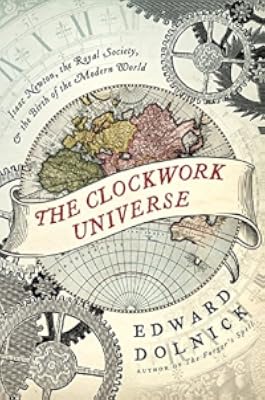
The Clockwork Universe: Isaac Newton, the Royal Society, & the Birth of the Modern World
by Edward Dolnick
On This Page
Description
A"New York Times"-bestselling author presents the true story of a pivotal moment in modern history when a group of strange, tormented geniuses--Isaac Newton chief among them--invented science and remade our understanding of the world.Tags
Recommendations
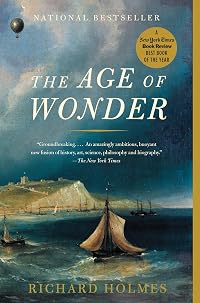
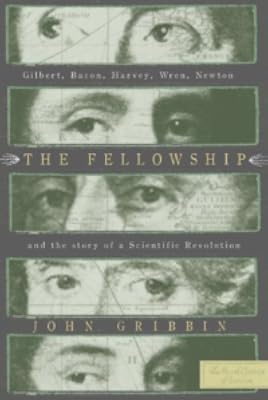
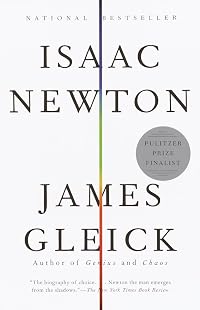
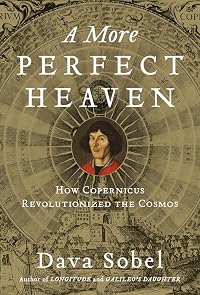



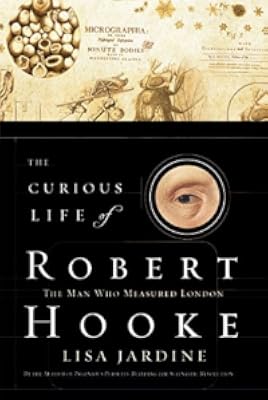

Member Recommendations
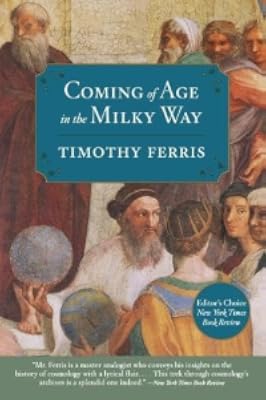
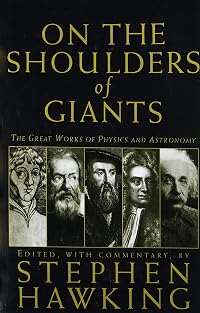
rakerman Many of the same scientists show up in Coming of Age and The Clockwork Universe, with different emphasis and focus. The books complement one another, for example there are more details about Kepler's work in The Clockwork Universe.
20
rakerman The Clockwork Universe is to some extent a history of science ending with Newton as the key figure; The Universe Within also provides a history of science but starts with Newton and then moves on to quantum physicists.
Member Reviews
An entertaining and fast-moving historical narrative of the scientific revolution, including fascinating insights into the lives of luminaries such as Isaac Newton, Leibniz, Galileo, Johannes Kepler, and more.
There are many ways to make a science book dull. I’ve read my share of popular science that included either too many equations, too much biographical detail, or otherwise dry, lifeless writing. Not so with The Clockwork Universe.
The author gets the proportion of biography, science, and history exactly right, giving the reader the full picture of the people and culture of the times and also the revolutionary nature of the science itself. The writing is vibrant, succinct, and conveys just the right amount of scientific detail.
What show more was particularly interesting to me was how much of a struggle it was for humanity to escape the grips of superstition. The most prominent figure of the scientific revolution, Isaac Newton, was a deeply superstitious and spiritual man. We know him best for proposing the laws of motion and universal gravitation in his masterpiece, Mathematical Principles of Natural Philosophy, but it came as a surprise to learn that Newton spent more time on alchemy and analyzing scripture for secret messages, than he spent on physics.
It makes you wonder what he could have accomplished had he dedicated all his time to physics or another area of science. But he was, unfortunately, in addition to being a genius, a product of his times. As John Maynard Keynes wrote, “Newton was not the first of the age of reason. He was the last of the magicians, the last of the Babylonians and Sumerians, the last great mind which looked out on the visible and intellectual world with the same eyes as those who began to build our intellectual inheritance rather less than 10,000 years ago.”
As a man of his times, his times were extremely superstitious. To begin with, belief in God was essentially mandatory and in large part fully rational. In fact, being an atheist in the 17th century would have been seen as irrational. We should remember that the 17th century was still 200 years before Darwin.
Without the theory of evolution, you had to believe one of two things, that either 1) humans were created or 2) humans have else always existed. Since option two was absurd, option one was taken for granted, and everyone knew that what is created requires a creator.
The idea that humans evolved from other species, to the degree that it even crossed anyone’s mind, wouldn’t have been convincing in the absence of evidence. No one knew the Earth was more than a few thousand years old, so there would not have been enough time for evolution to work even if the theory was accepted. (This is why Christopher Hitchens noted that, while Abraham Lincoln and Charles Darwin were born on the same day, Darwin would go on to become the greater liberator.)
And so, creation, and the belief in God, was the default position. That type of thinking led quite naturally to a host of other beliefs I would label “trickle-down superstition”, including the existence of angels, witches, demonic possessions, and divine retribution for sin in the form of natural disasters and plagues.
So the real genius of the 17th century scientists was to see beyond all of this chaos and randomness to find order in the universe according to general laws. The irony is that Newton thought he was investigating the mind of God through these natural laws, but in reality he was forming the laws that would ultimately render God unnecessary.
This caused much disagreement. Newton, for example, claimed that God actively intervened in the universe because a universe without the need of intervention would diminish God’s will, while Leibniz argued that divine intervention in the universe would diminish God’s omniscience, implying that the universe was not created in perfect order in the first place. But neither man would dare come to the conclusion that perhaps there was no God at all, or else a God that, as Spinoza would claim, was synonymous with the universe or else didn’t concern itself with human affairs.
The dispute between Newton and Leibniz would introduce a troubling paradox of God’s omnipotence. It can be phrased as a question: is God powerful enough to create a universe in which any intervention would render it less perfect? If He could, then that would preclude any intervention, and if He could not intervene, then He is not all-powerful. And if He can’t create such a universe, then He is not all-powerful to begin with. You’ll note that this is a variation of the “Can God create a stone so heavy even He can’t lift it?” paradox.
And so the concept of omnipotence itself is seen as absurd and contradictory, and the idea of an all-powerful God, to which the medieval concept of God depended, is thus refuted.
Note that, today, you can still posit the existence of a creator if you’d like, but that it is not required to explain the workings of the universe or of life. You can claim that a creator had to at least craft the laws of physics, but this introduces more questions, the main one being who created the creator. Either way, God is now a possible but not necessary hypothesis.
And therein lies the ultimate irony of the scientific revolution: the mission to comprehend the mind of God found no God to comprehend. We’ve been dealing with the repercussions, both positive and negative, ever since. show less
There are many ways to make a science book dull. I’ve read my share of popular science that included either too many equations, too much biographical detail, or otherwise dry, lifeless writing. Not so with The Clockwork Universe.
The author gets the proportion of biography, science, and history exactly right, giving the reader the full picture of the people and culture of the times and also the revolutionary nature of the science itself. The writing is vibrant, succinct, and conveys just the right amount of scientific detail.
What show more was particularly interesting to me was how much of a struggle it was for humanity to escape the grips of superstition. The most prominent figure of the scientific revolution, Isaac Newton, was a deeply superstitious and spiritual man. We know him best for proposing the laws of motion and universal gravitation in his masterpiece, Mathematical Principles of Natural Philosophy, but it came as a surprise to learn that Newton spent more time on alchemy and analyzing scripture for secret messages, than he spent on physics.
It makes you wonder what he could have accomplished had he dedicated all his time to physics or another area of science. But he was, unfortunately, in addition to being a genius, a product of his times. As John Maynard Keynes wrote, “Newton was not the first of the age of reason. He was the last of the magicians, the last of the Babylonians and Sumerians, the last great mind which looked out on the visible and intellectual world with the same eyes as those who began to build our intellectual inheritance rather less than 10,000 years ago.”
As a man of his times, his times were extremely superstitious. To begin with, belief in God was essentially mandatory and in large part fully rational. In fact, being an atheist in the 17th century would have been seen as irrational. We should remember that the 17th century was still 200 years before Darwin.
Without the theory of evolution, you had to believe one of two things, that either 1) humans were created or 2) humans have else always existed. Since option two was absurd, option one was taken for granted, and everyone knew that what is created requires a creator.
The idea that humans evolved from other species, to the degree that it even crossed anyone’s mind, wouldn’t have been convincing in the absence of evidence. No one knew the Earth was more than a few thousand years old, so there would not have been enough time for evolution to work even if the theory was accepted. (This is why Christopher Hitchens noted that, while Abraham Lincoln and Charles Darwin were born on the same day, Darwin would go on to become the greater liberator.)
And so, creation, and the belief in God, was the default position. That type of thinking led quite naturally to a host of other beliefs I would label “trickle-down superstition”, including the existence of angels, witches, demonic possessions, and divine retribution for sin in the form of natural disasters and plagues.
So the real genius of the 17th century scientists was to see beyond all of this chaos and randomness to find order in the universe according to general laws. The irony is that Newton thought he was investigating the mind of God through these natural laws, but in reality he was forming the laws that would ultimately render God unnecessary.
This caused much disagreement. Newton, for example, claimed that God actively intervened in the universe because a universe without the need of intervention would diminish God’s will, while Leibniz argued that divine intervention in the universe would diminish God’s omniscience, implying that the universe was not created in perfect order in the first place. But neither man would dare come to the conclusion that perhaps there was no God at all, or else a God that, as Spinoza would claim, was synonymous with the universe or else didn’t concern itself with human affairs.
The dispute between Newton and Leibniz would introduce a troubling paradox of God’s omnipotence. It can be phrased as a question: is God powerful enough to create a universe in which any intervention would render it less perfect? If He could, then that would preclude any intervention, and if He could not intervene, then He is not all-powerful. And if He can’t create such a universe, then He is not all-powerful to begin with. You’ll note that this is a variation of the “Can God create a stone so heavy even He can’t lift it?” paradox.
And so the concept of omnipotence itself is seen as absurd and contradictory, and the idea of an all-powerful God, to which the medieval concept of God depended, is thus refuted.
Note that, today, you can still posit the existence of a creator if you’d like, but that it is not required to explain the workings of the universe or of life. You can claim that a creator had to at least craft the laws of physics, but this introduces more questions, the main one being who created the creator. Either way, God is now a possible but not necessary hypothesis.
And therein lies the ultimate irony of the scientific revolution: the mission to comprehend the mind of God found no God to comprehend. We’ve been dealing with the repercussions, both positive and negative, ever since. show less
I really enjoyed this overview of the painful transition into the modern world Newton helped usher in with Philosophiae Naturalis Principia Mathematica (great) and bitter, year-slong disputes with Leibniz, Robert Hooke, etc. (not so great). At times, the august Royal Society seems like Stupid Redneck Tricks on YouTube for their attraction to explosions and suffocations. Still, this all came together to give us calculus, Newton's Laws, the Theory of Gravity, etc. and this was good enough for the industrial age and getting to the moon. The author does very well to explain the technical aspects in layman's terms.
38. The Clockwork Universe : Isaac Newton, the Royal Society, and the Birth of the Modern World by Edward Dolnick (2011, 364 pages, read Aug 11-18)
Dolnick does several things wonderfully - he tries to put the reader into the mentality of the era (Newton lived 1642 to 1727), then he explores what it took the discover/invent Calculus, then covers the Newton-Leibniz wars over who invented calculus, which Newton won in the most bastardly of ways, then what it took to be Newton and come up Principia, and just how out there Newton was. There are several interesting conclusions. One conclusion is summed in a quote by "a NASA climatologist", "Newton may have been an ass, but the theory of gravity still works." Another highlights how the show more hyper-religious & religiously-driven Newton essentially took God out of the physical universe by making God unnecessary. (And how Leibniz did too, in his own way. He was also very religious) A side note at the end is that this stuff in the scientific revolution leads to the American Revolution.
That's enough of a review. But I'm in a mass information mentality, the more the better, and I want to share. Feel free to stop here... but I have more to say ...
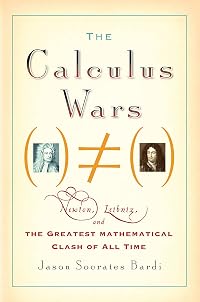
The Calculus War: For a while Gottfried Wilhelm von Leibniz becomes the hero of this book, and Newton quite the villain. Dolnick concludes that both Leibniz and Newton invented calculus independently, because you see them working it out in their existing notes (which are extensive in both cases). But in the battle, and it was a bitter one, there were some interesting variables and Newton had a tactical advantage. Leibniz was brilliant polymath, with a wide range of expertise. But, his mind was his livelihood. Dependent on acquiring sponsors, he was constantly trying to impress (and succeeding). His main sponsor, a German nobleman, became the King George I of England, which would have been great if Newton hadn't also been English and George hadn't felt some need to act more English. Newton was a landowner. He wasn't wealthy but he didn't have work. So, he could afford to spend years working out ideas, and maybe still not publish them (He never published any of this 1000 pages of notes on alchemy). Newton was also president of the Royal Society. Failing to get help from King George in his battle with Newton over credit for calculus, Leibniz handed the judgment, following King George's advice, to the Royal Society! Oops. Newton personally wrote the judgment, presented as that of a special committee. The committee gave credit to being first (Newton was 20 years ahead of Leibniz in inventing calculus, but didn't publish) and also falsely accused Leibniz of getting a hold of Newton's notes and therefore possibly stealing the idea of calculus from Newton. This judgment was passed all around Europe as that of the highly regarded Royal Society and was widely accepted. Leibniz was crushed. Newton would die a hero and, have a hero's funeral march and massive tomb. Leibniz would die simply, with no fanfare in a simple grave. The irony of all this is that Newton's notation was unclear and difficult to use, whereas that Leibniz's notation was quite nice. Today we use Leibniz's notation when writing out calculus.
The Clockwork Universe: Dolnick's final conclusion is one of the most interesting parts of the book. At this point we know how religious Newton was. He really believed that God has made the world and that the more we understood how the world works, the closer we got to god. So, working out the ideas in his Principia was, for him, a very religious and religiously driven act. But, if you can explain how God's world works...well, you no longer need god. And that, ironically, is Newton's legacy. His Principia was critical to freeing future scientists from religious bonds. The world worked as it did, whatever the initial cause. Studying this world became a purely physical endeavor.
Side Note 1: I think it is fascinating and hysterical that the inventor of calculus did not use it for explaining gravity or anything else in Principia. It's all explained with painstakingly worked out geometry and algebra and the like. It is such an embarrassing thing that Newton later claimed he did the initial work using calculus, but was afraid no one would believe it unless he also worked it out in the way he presented it. That was a lie, he really didn't use his own tool.
Side Note 2: I should also point out that Dolnick does not appear to use many primary sources, which I think is fine considering what he doing here. But, wow, his secondary sources make up an absolutely wonderful list of books published over the last 50 years.
To see this review within the context of my 2013 LT thread, go here: http://www.librarything.com/topic/154187#4317459 show less
Dolnick does several things wonderfully - he tries to put the reader into the mentality of the era (Newton lived 1642 to 1727), then he explores what it took the discover/invent Calculus, then covers the Newton-Leibniz wars over who invented calculus, which Newton won in the most bastardly of ways, then what it took to be Newton and come up Principia, and just how out there Newton was. There are several interesting conclusions. One conclusion is summed in a quote by "a NASA climatologist", "Newton may have been an ass, but the theory of gravity still works." Another highlights how the show more hyper-religious & religiously-driven Newton essentially took God out of the physical universe by making God unnecessary. (And how Leibniz did too, in his own way. He was also very religious) A side note at the end is that this stuff in the scientific revolution leads to the American Revolution.
That's enough of a review. But I'm in a mass information mentality, the more the better, and I want to share. Feel free to stop here... but I have more to say ...
The Calculus War: For a while Gottfried Wilhelm von Leibniz becomes the hero of this book, and Newton quite the villain. Dolnick concludes that both Leibniz and Newton invented calculus independently, because you see them working it out in their existing notes (which are extensive in both cases). But in the battle, and it was a bitter one, there were some interesting variables and Newton had a tactical advantage. Leibniz was brilliant polymath, with a wide range of expertise. But, his mind was his livelihood. Dependent on acquiring sponsors, he was constantly trying to impress (and succeeding). His main sponsor, a German nobleman, became the King George I of England, which would have been great if Newton hadn't also been English and George hadn't felt some need to act more English. Newton was a landowner. He wasn't wealthy but he didn't have work. So, he could afford to spend years working out ideas, and maybe still not publish them (He never published any of this 1000 pages of notes on alchemy). Newton was also president of the Royal Society. Failing to get help from King George in his battle with Newton over credit for calculus, Leibniz handed the judgment, following King George's advice, to the Royal Society! Oops. Newton personally wrote the judgment, presented as that of a special committee. The committee gave credit to being first (Newton was 20 years ahead of Leibniz in inventing calculus, but didn't publish) and also falsely accused Leibniz of getting a hold of Newton's notes and therefore possibly stealing the idea of calculus from Newton. This judgment was passed all around Europe as that of the highly regarded Royal Society and was widely accepted. Leibniz was crushed. Newton would die a hero and, have a hero's funeral march and massive tomb. Leibniz would die simply, with no fanfare in a simple grave. The irony of all this is that Newton's notation was unclear and difficult to use, whereas that Leibniz's notation was quite nice. Today we use Leibniz's notation when writing out calculus.
The Clockwork Universe: Dolnick's final conclusion is one of the most interesting parts of the book. At this point we know how religious Newton was. He really believed that God has made the world and that the more we understood how the world works, the closer we got to god. So, working out the ideas in his Principia was, for him, a very religious and religiously driven act. But, if you can explain how God's world works...well, you no longer need god. And that, ironically, is Newton's legacy. His Principia was critical to freeing future scientists from religious bonds. The world worked as it did, whatever the initial cause. Studying this world became a purely physical endeavor.
Side Note 1: I think it is fascinating and hysterical that the inventor of calculus did not use it for explaining gravity or anything else in Principia. It's all explained with painstakingly worked out geometry and algebra and the like. It is such an embarrassing thing that Newton later claimed he did the initial work using calculus, but was afraid no one would believe it unless he also worked it out in the way he presented it. That was a lie, he really didn't use his own tool.
Side Note 2: I should also point out that Dolnick does not appear to use many primary sources, which I think is fine considering what he doing here. But, wow, his secondary sources make up an absolutely wonderful list of books published over the last 50 years.
To see this review within the context of my 2013 LT thread, go here: http://www.librarything.com/topic/154187#4317459 show less
I didn't know what to expect going into this. I got it because it was on sale, but I really enjoyed it. It gave me a deeper knowledge of Newton, his contemporaries and predecessors. I didn't previously know what a jerk Newton must have been, and gained a new liking for Liebniz.
Excellent popular history of how during the 1600s math became the new tool for explaining the natural world. In fact geometry had been around since the Greeks, but that is only for objects at rest, not in motion, thus had limited application. Isaac Newton invented Calculus which explained objects in motion (geometry on the move) and opened up many fields of scientific inquiry (indeed science itself). The central tenant of the book is that 17th century thinkers came to believe God made the world based on math. This is an unintuitive historical shift in our view of the cosmos, and goes a long way to explain why the West had such a head start over other parts of the world. Why did this happen? Math was an arcane and rarely studied field at show more the time, not even required in school. Well Dolnik doesn't really explain other than "special pleading": it was mathematicians who decided the world was based on math, and thus God's language, since they themselves were math experts. Not a satisfactory answer and a major fault in the book to not explore this in more detail. Where the book shines is to make math seem new and exciting. I'd never had an interest in Calculus but am now curious to learn more, since I now understand who invented it and for what. Overall an interesting book with lots to offer for a general introduction to some of the great minds and ideas of the 17th century. show less
This is a lively and entertaining history of science in the 17th century, and the birth of the science that helped make the modern world. He gives us a history of the birth of modern mathematics and the science it enabled, including, but not only, modern astronomy. It's filled with not just the achievements but the personalities of Kepler, Galileo, Tycho, Leibnitz, Newton, Halley, and others. Both the achievements and the e egotistical silliness are on display here.
Unfortunately, Dolnick seems to be a better science writer than a historian. He speaks of these men having been born in a medieval world of faith, revealed truth, and predestination as if the preceding century of the had never happened.
In support of this, he quotes Jonathan show more Edwards--who was a New England Puritan preacher, i.e., one of the notable leaders in the 18th century of a sect that left England in the 17th century because they were Dissenters, unable to practice their religion without harassment in England. Neither the Church of England nor the Roman Catholic Church did or ever has embraced predestination.
He says people didn't bathe because they believed it would make them sick. Well, early modern English didn't bathe as often as contemporary people do--because they didn't have hot and cold running water, or indoor plumbing. Water had to be drawn from the pump or the well, heated, put into the bathtub, and that was an awful lot of work. It's one thing if you have servants to do that for you, and another thing if you have to do that yourself.
And then, as a practical matter, many families had to share the same tub of water, bathing very quickly to let everyone bathe before it cooled--and that might be entirely healthy. A great way to pass illness around the entire family.
Yeah. They wanted to be clean. Bathing wasn't the obvious and easy thing it is for us.
Dolnick doesn't seem to have a good grasp of the world he's writing about.
The science, though, and the math, as far as my knowledge goes, he does well with that, It's interesting, lively, and really gives a great sense of the personalities of the people involved.
So, recommended with the above caveats.
I bought this audiobook. show less
Unfortunately, Dolnick seems to be a better science writer than a historian. He speaks of these men having been born in a medieval world of faith, revealed truth, and predestination as if the preceding century of the had never happened.
In support of this, he quotes Jonathan show more Edwards--who was a New England Puritan preacher, i.e., one of the notable leaders in the 18th century of a sect that left England in the 17th century because they were Dissenters, unable to practice their religion without harassment in England. Neither the Church of England nor the Roman Catholic Church did or ever has embraced predestination.
He says people didn't bathe because they believed it would make them sick. Well, early modern English didn't bathe as often as contemporary people do--because they didn't have hot and cold running water, or indoor plumbing. Water had to be drawn from the pump or the well, heated, put into the bathtub, and that was an awful lot of work. It's one thing if you have servants to do that for you, and another thing if you have to do that yourself.
And then, as a practical matter, many families had to share the same tub of water, bathing very quickly to let everyone bathe before it cooled--and that might be entirely healthy. A great way to pass illness around the entire family.
Yeah. They wanted to be clean. Bathing wasn't the obvious and easy thing it is for us.
Dolnick doesn't seem to have a good grasp of the world he's writing about.
The science, though, and the math, as far as my knowledge goes, he does well with that, It's interesting, lively, and really gives a great sense of the personalities of the people involved.
So, recommended with the above caveats.
I bought this audiobook. show less
A well-written book about the most rational of irrational times, since it would be a mistake to think that what we call the modern science was born in a very rational way. The best thinkers of the time, Newton included, were on a quest to read the God’s mind, as much in astronomy, chemistry and physics as in astrology, alchemy and theology. All sorts of ideas were up for grabs and it seems a miracle that modern science was born out of that chaos. Moreover, the heavens seemed to baffle all learned men of the times. It seemed obvious that anything created by God had to be perfect, so the main preoccupation of the times was that it didn’t seem so, and if it wasn’t, how did it all work and made sense.
Newton provided an answer to this show more quest with a plethora of epic discoveries and a set of laws and forces that came to be known as the ‘clockwork universe’. It proposed that the same set of basic rules and forces made both the heavens and the earth go round. The idea was very novel and unusually daring for the times as it proposed that the heavens were really no different from the Earth, yet it fit well with the belief of the perfection of God’s design.
‘Throughout his life Newton believed that God operated in the simplest, neatest, most efficient way imaginable. That principle served as his starting point whether he was studying the Bible or the natural world- ‘It is ye perfection of God’s works that they are all done with ye greatest simplicity.” The universe had no superfluous parts or forces for exactly the reason that a clock had no superfluous wheels or springs.”
Newton made a few monumental discoveries on the way to this thesis, like calculus and gravity, and a big part of the book is devoted to them. Quite a bit of space is dedicated to Leibnitz-Newton calculus feud and there are well-drawn portrayals of bigger and lesser scientists of the Royal Society.
Apparently, each age has its challenges. In the 17th century people found out that the universe was far from perfect, yet governed by a few predicable laws; in the 20th and into the 21st reality suddenly seems to have become much more complicated, much less solid and less predictable. Arguably, just like the workings of the Universe were the main mystery and preoccupation of the times of Newton, it’s the nature of our life and consciousness that seems to cause as much controversy nowadays. As religion and belief in God were a given in the Newton’s times, it is far from universal in our times.
I really enjoyed the book, and both read and listened to it. If you choose to listen to it, it’s a great audio production. Nevertheless, having the book is helpful, even if to look at the graphs together with the text, especially if you’re not a math or physics buff. The infinity and calculus ideas are much more understandable together with the graphs and pictures in the book, even though the audio offers a separate pdf file with those as well. show less
Newton provided an answer to this show more quest with a plethora of epic discoveries and a set of laws and forces that came to be known as the ‘clockwork universe’. It proposed that the same set of basic rules and forces made both the heavens and the earth go round. The idea was very novel and unusually daring for the times as it proposed that the heavens were really no different from the Earth, yet it fit well with the belief of the perfection of God’s design.
‘Throughout his life Newton believed that God operated in the simplest, neatest, most efficient way imaginable. That principle served as his starting point whether he was studying the Bible or the natural world- ‘It is ye perfection of God’s works that they are all done with ye greatest simplicity.” The universe had no superfluous parts or forces for exactly the reason that a clock had no superfluous wheels or springs.”
Newton made a few monumental discoveries on the way to this thesis, like calculus and gravity, and a big part of the book is devoted to them. Quite a bit of space is dedicated to Leibnitz-Newton calculus feud and there are well-drawn portrayals of bigger and lesser scientists of the Royal Society.
Apparently, each age has its challenges. In the 17th century people found out that the universe was far from perfect, yet governed by a few predicable laws; in the 20th and into the 21st reality suddenly seems to have become much more complicated, much less solid and less predictable. Arguably, just like the workings of the Universe were the main mystery and preoccupation of the times of Newton, it’s the nature of our life and consciousness that seems to cause as much controversy nowadays. As religion and belief in God were a given in the Newton’s times, it is far from universal in our times.
I really enjoyed the book, and both read and listened to it. If you choose to listen to it, it’s a great audio production. Nevertheless, having the book is helpful, even if to look at the graphs together with the text, especially if you’re not a math or physics buff. The infinity and calculus ideas are much more understandable together with the graphs and pictures in the book, even though the audio offers a separate pdf file with those as well. show less
Members
- Recently Added By
Published Reviews
ThingScore 75
London before the mid-1600s was a general calamity. The streets were full of thieves, murderers and human waste. Death was everywhere: doctors were hapless, adults lived to about age 30, children died like flies. In 1665, plague moved into the city, killing sometimes 6,000 people a week. In 1666, an unstoppable fire burned the city to the ground; the bells of St. Paul’s melted. Londoners show more thought that the terrible voice of God was “roaring in the City,” one witness wrote, and they would do best to accept the horror, calculate their sins, pray for guidance and await retribution.
In the midst of it all, a group of men whose names we still learn in school formed the Royal Society of London for the Improvement of Natural Knowledge. They thought that God, while an unforgiving judge, was also a mathematician. As such, he had organized the universe according to discernible, mathematical law, which, if they tried, they could figure out. They called themselves “natural philosophers,” and their motto was “Nullius in verba”: roughly, take no one’s word for anything. You have an idea? Demonstrate it, do an experiment, prove it. The ideas behind the Royal Society would flower into the Enlightenment, the political, cultural, scientific and educational revolution that gave rise to the modern West.
This little history begins Edward Dolnick’s “Clockwork Universe,” so the reader might think the book is about the Royal Society and its effects. But the Royal Society is dispatched in the first third of the book, and thereafter, the subject is how the attempt to find the mathematics governing the universe played out in the life of Isaac Newton. . . . show less
In the midst of it all, a group of men whose names we still learn in school formed the Royal Society of London for the Improvement of Natural Knowledge. They thought that God, while an unforgiving judge, was also a mathematician. As such, he had organized the universe according to discernible, mathematical law, which, if they tried, they could figure out. They called themselves “natural philosophers,” and their motto was “Nullius in verba”: roughly, take no one’s word for anything. You have an idea? Demonstrate it, do an experiment, prove it. The ideas behind the Royal Society would flower into the Enlightenment, the political, cultural, scientific and educational revolution that gave rise to the modern West.
This little history begins Edward Dolnick’s “Clockwork Universe,” so the reader might think the book is about the Royal Society and its effects. But the Royal Society is dispatched in the first third of the book, and thereafter, the subject is how the attempt to find the mathematics governing the universe played out in the life of Isaac Newton. . . . show less
added by PLReader
Lists

Readers Guide to Steampunk
65 works; 1 member

Sonlight Books
1,487 works; 25 members
Author Information

12+ Works 3,465 Members
Edward Dolnick is the author of Down the Great Unknown, The Forger's Spell, and the Edgar Award-winning The Rescue Artist. A former chief science writer at the Boston Globe, he lives with his wife near Washington, D.C.
Awards and Honors
Common Knowledge
- Canonical title
- The Clockwork Universe: Isaac Newton, the Royal Society, & the Birth of the Modern World
- Original publication date
- 2011
- People/Characters
- Isaac Newton; Johannes Kepler; Gottfried Wilhelm von Leibniz; Galileo Galilei
- Epigraph
- The universe is but a watch on a larger scale.
-- Bernard de Fontenelle, 1686 - Dedication
- For Lynn
- First words
- A stranger to the city who happened to see the parade of eager, chattering men disappearing into Thomas Gresham's mansion might have found himself at a loss.
- Last words
- (Click to show. Warning: May contain spoilers.)His fellow professors did know what the lines represented, but they stepped carefully around them, in order to avoid hindering the work of the lonely genius struggling to decipher God's codebook.
Classifications
Statistics
- Members
- 945
- Popularity
- 28,187
- Reviews
- 27
- Rating
- (3.92)
- Languages
- English, Italian, Polish
- Media
- Paper, Audiobook, Ebook
- ISBNs
- 7
- ASINs
- 6