On This Page
Description
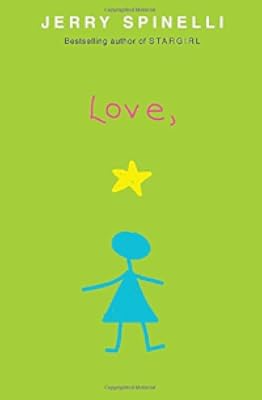
Still moping months after being dumped by her Arizona boyfriend Leo, fifteen-year-old Stargirl, a home-schooled free spirit, writes "the world's longest letter" to Leo, describing her new life in Pennsylvania.Tags
Recommendations










Member Recommendations

Member Reviews
Love, Stargirl is the sequel to Spinelli’s 2004 charmer, Stargirl.
It’s rough.
It is also interesting.
Love, Stargirl is written as one epically-long letter sent from Stargirl to her Arizona-dwelling ex from the first book, Leo Borlock. As the story opens we find Stargirl still reeling over Leo’s rejection. She’s a bit of a mess, and so is the book at this point. A host of lovable wackos (as only Spinelli can write them) are swiftly dropped on the reader: an agoraphobic former beauty queen, a donut-delivery girl clawing her way from girlhood to adolescence, a completely uninhibited five-year-old who keeps her eyes on the prize, this list goes on and on. Her happy wagon is looking pretty sad. It’s a lot to take, in the beginning, show more and I wasn’t sure I was going to make it through the book as Stargirl carried on moping and being sanctimonious by turns.
Then, around page one-hundred-twenty-four, it started to gel. Yes, that’s quite a long way in, and it should rightfully give some readers pause. If this isn’t your kind of story, it’s probably not worth the grind to page one-twenty-four. At this point it suddenly becomes clear that each of the extreme characters with whom Stargirl has been spending her time, represents some part of herself or her grieving process for what she had with Leo. Five-year-old Dootsie is her past, her essence, seed of a future Stargirl. Agoraphobic Betty Lou is her loneliness. Donut-delivering Alvina is her struggle to remain true to herself in her dealings with boys.
There are men and boys in the book, too. One mirrors Stargirl, sitting shiva for a lost love; another is a litmus test for future love. This is where the book finally gels, in a moment where Stargirl has tracked down a local ladies-man for reasons she doesn’t really understand. The dialogue between them never fails to spark in a way that her cutesy interactions with Dootsie don’t begin to approach. He is the catalyst for her recovery, asking her the hard questions when she won’t ask them herself.
Stargirl was told from Leo’s perspective: his experience of an exotic creature who appeared in his life and chose him to share hers, until he couldn’t bear her difference any longer. Love, Stargirl takes her down from that mythic pedestal and allows her to be human. Flawed, judgmental, naive, jealous, brave, nurturing, and (perhaps most of all) lost. She finds her way by shepherding others, reminding herself as she reminds them that world is there waiting when they decide to come back and join it.
I liked this book, but as The Librarian Who Doesn’t Say Sssh noted, it may make a difference whether you are a Leo or a Stargirl. I have always been, for better or worse, a Stargirl. Leos may find this loose, at times seemingly random, emotional narrative exasperating. Trust me that every (???) moment pays off in the end. show less
It’s rough.
It is also interesting.
Love, Stargirl is written as one epically-long letter sent from Stargirl to her Arizona-dwelling ex from the first book, Leo Borlock. As the story opens we find Stargirl still reeling over Leo’s rejection. She’s a bit of a mess, and so is the book at this point. A host of lovable wackos (as only Spinelli can write them) are swiftly dropped on the reader: an agoraphobic former beauty queen, a donut-delivery girl clawing her way from girlhood to adolescence, a completely uninhibited five-year-old who keeps her eyes on the prize, this list goes on and on. Her happy wagon is looking pretty sad. It’s a lot to take, in the beginning, show more and I wasn’t sure I was going to make it through the book as Stargirl carried on moping and being sanctimonious by turns.
Then, around page one-hundred-twenty-four, it started to gel. Yes, that’s quite a long way in, and it should rightfully give some readers pause. If this isn’t your kind of story, it’s probably not worth the grind to page one-twenty-four. At this point it suddenly becomes clear that each of the extreme characters with whom Stargirl has been spending her time, represents some part of herself or her grieving process for what she had with Leo. Five-year-old Dootsie is her past, her essence, seed of a future Stargirl. Agoraphobic Betty Lou is her loneliness. Donut-delivering Alvina is her struggle to remain true to herself in her dealings with boys.
There are men and boys in the book, too. One mirrors Stargirl, sitting shiva for a lost love; another is a litmus test for future love. This is where the book finally gels, in a moment where Stargirl has tracked down a local ladies-man for reasons she doesn’t really understand. The dialogue between them never fails to spark in a way that her cutesy interactions with Dootsie don’t begin to approach. He is the catalyst for her recovery, asking her the hard questions when she won’t ask them herself.
Stargirl was told from Leo’s perspective: his experience of an exotic creature who appeared in his life and chose him to share hers, until he couldn’t bear her difference any longer. Love, Stargirl takes her down from that mythic pedestal and allows her to be human. Flawed, judgmental, naive, jealous, brave, nurturing, and (perhaps most of all) lost. She finds her way by shepherding others, reminding herself as she reminds them that world is there waiting when they decide to come back and join it.
I liked this book, but as The Librarian Who Doesn’t Say Sssh noted, it may make a difference whether you are a Leo or a Stargirl. I have always been, for better or worse, a Stargirl. Leos may find this loose, at times seemingly random, emotional narrative exasperating. Trust me that every (???) moment pays off in the end. show less
Just as amazing as the first! Jerry Spinelli is truly a master.
I throughly enjoyed the new cast of characters that found their way into Stargirl's life in this book! From tiny Dootsie to the infamous Perry, I loved them all. It was refreshing to read things from Stargirl's point of view for a change, to see how she was affected by Leo.
Once again what I love most about this book is just how true Stargirl is to herself. Yes, she goes through moments where she questions who she is, but she always finds her way back to her true self. Not afraid to be odd, not afraid to be different, not even afraid to be unpopular. Her attitude and passion shine off of the pages.
I recommended the first of these books to everyone I knew, and they will hear show more about this one as well! Leo and Stargirl forever! show less
I throughly enjoyed the new cast of characters that found their way into Stargirl's life in this book! From tiny Dootsie to the infamous Perry, I loved them all. It was refreshing to read things from Stargirl's point of view for a change, to see how she was affected by Leo.
Once again what I love most about this book is just how true Stargirl is to herself. Yes, she goes through moments where she questions who she is, but she always finds her way back to her true self. Not afraid to be odd, not afraid to be different, not even afraid to be unpopular. Her attitude and passion shine off of the pages.
I recommended the first of these books to everyone I knew, and they will hear show more about this one as well! Leo and Stargirl forever! show less
Every bit as good as the first. Some of the more eccentric town characters take some suspension of disbelief, but on the whole, Stargirl's story is by turns heartwarming and heartbreaking as she documents--in "the world's longest letter"--the year that follows her breakup with Leo and her move from the Arizona desert. This is the year she hits bottom; her happiness wagon--with 20 pebbles in it a year earlier, First Kiss Day--shrinks to just one stone. Stargirl clings to herself, unwilling to turn into plain Susan for a second time in a year, and it's that strength of spirit that might eventually save her--and some others, as well.
I can't put my finger on what it is that makes this book so wonderful--it's sweet and touching and poetic show more but never crosses into saccharine or treacly. I guess it just is what it is--much like Stargirl herself. show less
I can't put my finger on what it is that makes this book so wonderful--it's sweet and touching and poetic show more but never crosses into saccharine or treacly. I guess it just is what it is--much like Stargirl herself. show less
I enjoyed this story, both as a continuation of the story begun in Stargirl, and on its own. This book had a more melancholy tone, as Stargirl looks to continue her life after her year in Arizona. She still pines for Leo, but knows in her heart that she and Leo can't be together unless he grows up more. Her guilt over her growing feelings for Perry was palpable and her empathy for both the 6 year-old Dootsie, agoraphobic Betty Lou and lonely Charlie rounded out Stargirl's personality. The Winter Solstice celebration was a joyous high to end the book on. As a teacher, I'd rather my students read about such an individual than other, similarly leveled, but much different views of girl-hood.
Stargirl is obviously trying to mend from a broken heart in a new place. She's a quirky character who shares her unique view of the world with new friends and neighbors. There were some cute moments in this novel (I particularly liked Dootsie).
One must read "Stargirl" before reading "Love, Stargirl." Most sequels are forgiving of those who read out of order. This one isn't.
After leaving Arizona at the end of the first book, Stargirl is being homeschooled again, now in Pennsylvania. She decides to write to Leo, her boyfriend who dumped her in Arizona, the longest letter ever. The book is a letter/diary written to Leo over the course of one year. In it, we meet a variety of eccentric people in town (though few as eccentric as Stargirl herself). She does what she does... whatever it takes to bring happiness into the lives of other people.
The one weakness for me was Perry. Towards the end, as we learn more about Perry, he is a little easier to swallow. But early on, he was so show more repulsive, the idea that Stargirl of all people would get a pseudo-crush on him just defied belief, even in a highly fantastical book. Would she try to improve Perry? Yes. Would she try to make him happy, even though he was an obnoxious ass? yes. But crush on him? No. I just couldn't buy that. Not Stargirl. show less
After leaving Arizona at the end of the first book, Stargirl is being homeschooled again, now in Pennsylvania. She decides to write to Leo, her boyfriend who dumped her in Arizona, the longest letter ever. The book is a letter/diary written to Leo over the course of one year. In it, we meet a variety of eccentric people in town (though few as eccentric as Stargirl herself). She does what she does... whatever it takes to bring happiness into the lives of other people.
The one weakness for me was Perry. Towards the end, as we learn more about Perry, he is a little easier to swallow. But early on, he was so show more repulsive, the idea that Stargirl of all people would get a pseudo-crush on him just defied belief, even in a highly fantastical book. Would she try to improve Perry? Yes. Would she try to make him happy, even though he was an obnoxious ass? yes. But crush on him? No. I just couldn't buy that. Not Stargirl. show less
“I’m homeschooling again. Gee, I wonder why — my Mica High School experience went so well!”
Stargirl’s days at Mica High are behind her–days during which she danced around the cafeteria playing a ukulele, cheered for the opposing team at sports events, and rode out the extremes of popularity and unpopularity. She has also left Leo behind, but she has by no means forgotten him. Love, Stargirl is comprised of a self-described “world’s longest letter” to Leo regarding her feelings for him, her experiences at Mica High, and her new post-Mica High existence.
Whereas Stargirl is narrated by Leo; Love, Stargirl has Stargirl herself solidly at the helm. Not only has the point of view altered, but Stargirl’s inner thoughts of show more sadness, loss, and insecurity will make her seem to readers of the first book like an almost entirely unfamiliar girl. The letters reflect a girl trying to understand how she feels about a boy she loves who let her down.
Yet, while it becomes clear that Stargirl’s spirit took a beating during her experiences in the first book, traces of her essence shine through. Her happy wagon (the stones that represent how happy she is at the moment) is greatly depleted, but as she meets new people and makes new memories one gets the sense that she will be happy again someday. Stargirl’s world becomes full again with a little girl, an agoraphobic, a donut lady, a mourning elderly man who has lost the love of his life, and a boy who quite possibly has a criminal record. Leo changed her indelibly and others she encounters will change her too, but Stargirl at her core remains the girl who brims with small kindnesses and compassion for strangers, who effects others positively, and who is “not just any girl.”
Spinelli’s Stargirl books have a lot to say about conformity, individuality, and self-discovery. While Stargirl speaks to these themes within the context of high school cliques and outsider shunning, Love, Stargirl tackles these same ideas in the bigger world with a wider cast of characters. Both books are enjoyable in their own way and are recommended for young adults who are facing similar struggles of developing their own unique identities and discovering their place in this big world while facing peer pressure to conform to small, status quo ideas.
For other titles about identity and conformity, try some of the suggestions on the ATN reading lists “If you like Stargirl”:
* Alice, I Think by Susan Juby
* Buddha Boy, by Kathe Koja
* Dolores: Seven Stories About Her by Bruce Brooks
* Flipped by Wendelin Van Draanen
* Razzle by Ellen Wittlinger
* The Curious Incident of the Dog in the Night-time by Mark Haddon
* The Misfits by James Howe
A few other books for young people that offer unique characters facing issues of identity and conformity include Feed by M.T. Anderson, the Uglies series by Scott Westerfeld, and Emma Jean Lazarus Fell out of a Tree by Lauren Tarshis. The hope is that journeying alongside these unique fictional characters will support young people in their own journeys of self-discovery. show less
Stargirl’s days at Mica High are behind her–days during which she danced around the cafeteria playing a ukulele, cheered for the opposing team at sports events, and rode out the extremes of popularity and unpopularity. She has also left Leo behind, but she has by no means forgotten him. Love, Stargirl is comprised of a self-described “world’s longest letter” to Leo regarding her feelings for him, her experiences at Mica High, and her new post-Mica High existence.
Whereas Stargirl is narrated by Leo; Love, Stargirl has Stargirl herself solidly at the helm. Not only has the point of view altered, but Stargirl’s inner thoughts of show more sadness, loss, and insecurity will make her seem to readers of the first book like an almost entirely unfamiliar girl. The letters reflect a girl trying to understand how she feels about a boy she loves who let her down.
Yet, while it becomes clear that Stargirl’s spirit took a beating during her experiences in the first book, traces of her essence shine through. Her happy wagon (the stones that represent how happy she is at the moment) is greatly depleted, but as she meets new people and makes new memories one gets the sense that she will be happy again someday. Stargirl’s world becomes full again with a little girl, an agoraphobic, a donut lady, a mourning elderly man who has lost the love of his life, and a boy who quite possibly has a criminal record. Leo changed her indelibly and others she encounters will change her too, but Stargirl at her core remains the girl who brims with small kindnesses and compassion for strangers, who effects others positively, and who is “not just any girl.”
Spinelli’s Stargirl books have a lot to say about conformity, individuality, and self-discovery. While Stargirl speaks to these themes within the context of high school cliques and outsider shunning, Love, Stargirl tackles these same ideas in the bigger world with a wider cast of characters. Both books are enjoyable in their own way and are recommended for young adults who are facing similar struggles of developing their own unique identities and discovering their place in this big world while facing peer pressure to conform to small, status quo ideas.
For other titles about identity and conformity, try some of the suggestions on the ATN reading lists “If you like Stargirl”:
* Alice, I Think by Susan Juby
* Buddha Boy, by Kathe Koja
* Dolores: Seven Stories About Her by Bruce Brooks
* Flipped by Wendelin Van Draanen
* Razzle by Ellen Wittlinger
* The Curious Incident of the Dog in the Night-time by Mark Haddon
* The Misfits by James Howe
A few other books for young people that offer unique characters facing issues of identity and conformity include Feed by M.T. Anderson, the Uglies series by Scott Westerfeld, and Emma Jean Lazarus Fell out of a Tree by Lauren Tarshis. The hope is that journeying alongside these unique fictional characters will support young people in their own journeys of self-discovery. show less
Members
- Recently Added By
Lists

Female Protagonist
1,056 works; 57 members

Best Friendship Stories
205 works; 16 members
Author Information

66+ Works 60,870 Members
Jerry Spinelli was born in Norristown, Pennsylvania on February 1, 1941. He received a bachelor's degree from Gettysburg College and a master's degree from Johns Hopkins University. He worked as an editor with Chilton from 1966 to 1989. He launched his career in children's literature with Space Station 7th Grade in 1982. He has written over 30 show more books including The Bathwater Gang, Picklemania, Stargirl, Milkweed, and Mama Seeton's Whistle. In 1991, he won the Newbery Award for Maniac Magee. In 1998, Wringer was named a Newbery Honor book. (Bowker Author Biography) show less
Some Editions
Awards and Honors
Series

Work Relationships
Is contained in
Common Knowledge
- Canonical title
- Love, Stargirl
- Original title
- Love, Stargirl
- Original publication date
- 2007
- People/Characters
- Susan "Stargirl" Caraway; Perry Delloplane; Leo Borlock; Dootsie; Betty Lou
- Important events
- When Stargirl leaves Arizona. She leaves few people, Leo, Archie, and dori.
- First words
- Dear Leo,
- Last words
- (Click to show. Warning: May contain spoilers.)Love and Love and Love Again, Stargirl
Classifications
- Genres
- Tween, Kids, Fiction and Literature, Teen, Young Adult
- DDC/MDS
- 813.54 — Literature & rhetoric American literature in English American fiction in English 1900-1999 1945-1999
- LCC
- PZ7 .S75663 .L — Language and Literature Fiction and juvenile belles lettres Fiction and juvenile belles lettres Juvenile belles lettres
- BISAC
Statistics
- Members
- 2,692
- Popularity
- 6,902
- Reviews
- 104
- Rating
- (3.76)
- Languages
- 5 — English, French, German, Italian, Portuguese (Brazil)
- Media
- Paper, Audiobook, Ebook
- ISBNs
- 25
- ASINs
- 11