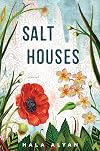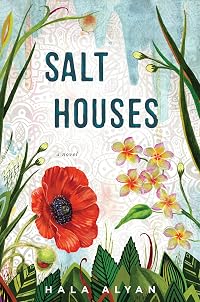
Salt Houses
by Hala Alyan
On This Page
Description
From a dazzling new literary voice, a debut novel about a Palestinian family caught between present and past, between displacement and home On the eve of her daughter Alia's wedding, Salma reads the girl's future in a cup of coffee dregs. She sees an unsettled life for Alia and her children; she also sees travel, and luck. While she chooses to keep her predictions to herself that day, they will all soon come to pass when the family is uprooted in the wake of the Six-Day War of 1967. Salma is show more forced to leave her home in Nablus; Alia's brother gets pulled into a politically militarized world he can't escape; and Alia and her gentle-spirited husband move to Kuwait City, where they reluctantly build a life with their three children. When Saddam Hussein invades Kuwait in 1990, Alia and her family once again lose their home, their land, and their story as they know it, scattering to Beirut, Paris, Boston, and beyond. Soon Alia's children begin families of their own, once again navigating the burdens (and blessings) of assimilation in foreign cities. Lyrical and heartbreaking, Salt Houses is a remarkable debut novel that challenges and humanizes an age-old conflict we might think we understand-one that asks us to confront that most devastating of all truths: you can't go home again. show lessTags
Recommendations



























Member Reviews
Alyan crafts a beautiful story with well-drawn complex characters about the bonds of family, the trials of displacement, and the pain of the loss of the place called home.
This family saga follows four generations of a Palestinian family starting in 1968 where they are currently been living in Nablus (West Bank) for fifteen years after being displaced from Jaffa. Due to their family’s wealth they avoided being placed in a refugee camp, but as political events constantly change in the region, family members find themselves living in Kuwait, Amman, Beirut, France, and America.
The story revolves around eight main characters, and each chapter focuses on one of them. Often, we gain more insight on the other characters, than the one show more narrating. While the family lands on its feet with each move, the privilege that comes from money and connections, does not erase the trauma, prejudice, and discrimination that they experience for being Palestinian.
This is a gripping narrative richly told with cultural and historical details written by a first rate storyteller. show less
This family saga follows four generations of a Palestinian family starting in 1968 where they are currently been living in Nablus (West Bank) for fifteen years after being displaced from Jaffa. Due to their family’s wealth they avoided being placed in a refugee camp, but as political events constantly change in the region, family members find themselves living in Kuwait, Amman, Beirut, France, and America.
The story revolves around eight main characters, and each chapter focuses on one of them. Often, we gain more insight on the other characters, than the one show more narrating. While the family lands on its feet with each move, the privilege that comes from money and connections, does not erase the trauma, prejudice, and discrimination that they experience for being Palestinian.
This is a gripping narrative richly told with cultural and historical details written by a first rate storyteller. show less
“The sea was like another member of the household, a recalcitrant child at times, a soothing aunt at others. She crooned them awake; she crooned them to sleep. Everywhere, there was the smell of salt.”
“What is a life? A series of yeses and noes, photographs you shove in a drawer somewhere, loves you think will save you but that cannot. Continuing to move, enduring, not stopping even when there is pain. That’s all life is, he wants to tell her. It’s continuing.”
A multi-generational story of a family in the Middle East. A Palestinian family constantly in motion, displaced by various wars, moving from Nablus, to Kuwait City, Paris and Boston, with other stops in between, all yearning for a stationary, but elusive homeland. show more The narrative shifts between different family members, through the decades, giving the reader a full perspective of how this dislocation molds each character.
This is an impressive debut. The author is also a poet and this becomes apparent in her lyrical prose. She is also a fine storyteller and I am all ready looking forward to seeing what she does next. show less
“What is a life? A series of yeses and noes, photographs you shove in a drawer somewhere, loves you think will save you but that cannot. Continuing to move, enduring, not stopping even when there is pain. That’s all life is, he wants to tell her. It’s continuing.”
A multi-generational story of a family in the Middle East. A Palestinian family constantly in motion, displaced by various wars, moving from Nablus, to Kuwait City, Paris and Boston, with other stops in between, all yearning for a stationary, but elusive homeland. show more The narrative shifts between different family members, through the decades, giving the reader a full perspective of how this dislocation molds each character.
This is an impressive debut. The author is also a poet and this becomes apparent in her lyrical prose. She is also a fine storyteller and I am all ready looking forward to seeing what she does next. show less
Salt Houses by Hala Alyan is a moving account about four generations of a Palestinian family and how they are scattered across the Middle East in an effort to find a place to belong and to be safe. The author delivers a very engrossing story that encompasses the displacement and dispersal of Palestinians woven into an epic tale of one family.
The story unfolds in a series of stories about various individuals in the family and encompasses events from 1963 up to 2014. Some segments are more absorbing than others, and some characters grabbed my sympathy and attention more than others. One character that stood out for me was Atef, a flawed man both proud of his family but haunted by a past that involved his brother-in-law’s disappearance. show more
I also enjoyed the contrast between his two daughters, Riham and Souad, one quietly religious while the other was out-spoken and stubborn.
The author is a poet and this shows in her lyrical prose. While at times her writing felt a little flowery or over-blown, for the most part this was a powerful, heartfelt and layered story that captures Palestinian history with depth and emotion. show less
The story unfolds in a series of stories about various individuals in the family and encompasses events from 1963 up to 2014. Some segments are more absorbing than others, and some characters grabbed my sympathy and attention more than others. One character that stood out for me was Atef, a flawed man both proud of his family but haunted by a past that involved his brother-in-law’s disappearance. show more
I also enjoyed the contrast between his two daughters, Riham and Souad, one quietly religious while the other was out-spoken and stubborn.
The author is a poet and this shows in her lyrical prose. While at times her writing felt a little flowery or over-blown, for the most part this was a powerful, heartfelt and layered story that captures Palestinian history with depth and emotion. show less
“He thinks of them, instinctively touching the soil again. All the houses they have lived in, the ibriks and rugs and curtains they have bought; how many windows should any person own? The houses float up to his mind’s eye like jinn, past lovers…. They glitter whitely in him mind, like structures made of salt, before a tidal wave comes and sweeps them away.” – Hala Alyan, Salt Houses
Salt Houses is a multi-generational family saga that shows how a family is changed by displacement. The Yacoub family moves from Israel to Palestine to Kuwait, Jordan, and Lebanon. Some family members find home in the United States for a while, others in France. Alyan explores the impact of war, exile, and separation on a family. It is a show more character-driven novel of people that feel fragmented due to multiple moves over time, losing pieces of their history and identity. For example, the younger family members are seen by society as Palestinian, though they have never lived there. They only know what their parents or grandparents have told them.
The chapters read almost like a series of short stories, focusing on different family members of all ages over a timespan of four generations. Alyan’s writing is elegant. The characters are well-developed and believable. The inter-generational disputes are particularly convincing. It focuses on interactions among family members, their marriages, disagreements, personality conflicts, and how they adapt to different homes. Recommended to those that enjoy stories of immigration, refugee experiences, or family dynamics. show less
Salt Houses is a multi-generational family saga that shows how a family is changed by displacement. The Yacoub family moves from Israel to Palestine to Kuwait, Jordan, and Lebanon. Some family members find home in the United States for a while, others in France. Alyan explores the impact of war, exile, and separation on a family. It is a show more character-driven novel of people that feel fragmented due to multiple moves over time, losing pieces of their history and identity. For example, the younger family members are seen by society as Palestinian, though they have never lived there. They only know what their parents or grandparents have told them.
The chapters read almost like a series of short stories, focusing on different family members of all ages over a timespan of four generations. Alyan’s writing is elegant. The characters are well-developed and believable. The inter-generational disputes are particularly convincing. It focuses on interactions among family members, their marriages, disagreements, personality conflicts, and how they adapt to different homes. Recommended to those that enjoy stories of immigration, refugee experiences, or family dynamics. show less
Salt Houses is Hala Alyan's debut novel and it is terrific. The story follows several generations of the Yacoub family which originated in Jaffa, Israel and were displaced to Nablus, Palestine after Israel was created in 1948. With the 1967 war they moved to Kuwait City and with each successive war they were displaced to Beirut, Amman, Paris and Boston.
The story opens in Nablus with the family matriarch Salma preparing coffee leaves to read for her daughter Alia who is about to marry Atef Yacoub. Salma sees in the coffee dregs a drooping roof and houses that will be lost for her daughter and her future grandchildren but doesn't tell her daughter nor the women assembled what she sees. Instead Salma says that she sees a baby coming in the show more first year.
Alia is a modern Arabic woman. She does not wear a headdress like her sister Wadid and her prayer life is fleeting when she is young. She, Atef and her brother Mustafa are the best of friends and meet daily to smoke, drink and discuss the politics of the day. Alia remembers a little about her family's life in the port of Jaffa on the Mediterranean Sea before the Israeli's forced them to leave and remembers her father never recovering emotionally from the loss. The family was middle class and did not end up in a refugee camp. Their wealth would always take care of them.
In 1965 Mustafa's visits to the local mosque change from being social to religious and political in nature as an imam inspired him. However, when the war drums began pounding in 1967 Mustafa wanted to leave Palestine for Amman where his mother then lived. Atef called him a coward and convinced him to go to war. In a few days they were in jail. Atef never told his wife they he was the person who gave up Mustafa's name to the Israeli's who promptly killed him.
After prison, Atef moved himself and Alia permanently to Kuwait Cty to start a new life and a family of their own. Each chapter focused on a different family member at a different time in history to give the reader a seven decade history of this family.
Salt Houses is a different type of story about the displacement caused by war. This family was wealthy and never ended up in a refugee camp as other books on the subject have detailed. However, every few years they had to uproot themselves, find a house in a new city and somehow make it feel like home.
They placed importance on material possessions because there was nothing else permanent about their lives. Salma read Alia's coffee dregs from her first purchase as a wife in Nablus, a coffee set. Salma cherished this set because the design pattern resembled the design pattern on the coffee set her mother gave her when she married, the set she had to leave behind in Jaffa. This is typical behavior for the Palestinian diaspora; a girl receiving a piece of jewelry owned by an ancestor, etc...
I loved this family saga and while this story takes place in the past 70 years it is historical in that is shows the reader what life was/is like for the Palestinians. show less
The story opens in Nablus with the family matriarch Salma preparing coffee leaves to read for her daughter Alia who is about to marry Atef Yacoub. Salma sees in the coffee dregs a drooping roof and houses that will be lost for her daughter and her future grandchildren but doesn't tell her daughter nor the women assembled what she sees. Instead Salma says that she sees a baby coming in the show more first year.
Alia is a modern Arabic woman. She does not wear a headdress like her sister Wadid and her prayer life is fleeting when she is young. She, Atef and her brother Mustafa are the best of friends and meet daily to smoke, drink and discuss the politics of the day. Alia remembers a little about her family's life in the port of Jaffa on the Mediterranean Sea before the Israeli's forced them to leave and remembers her father never recovering emotionally from the loss. The family was middle class and did not end up in a refugee camp. Their wealth would always take care of them.
In 1965 Mustafa's visits to the local mosque change from being social to religious and political in nature as an imam inspired him. However, when the war drums began pounding in 1967 Mustafa wanted to leave Palestine for Amman where his mother then lived. Atef called him a coward and convinced him to go to war. In a few days they were in jail. Atef never told his wife they he was the person who gave up Mustafa's name to the Israeli's who promptly killed him.
After prison, Atef moved himself and Alia permanently to Kuwait Cty to start a new life and a family of their own. Each chapter focused on a different family member at a different time in history to give the reader a seven decade history of this family.
Salt Houses is a different type of story about the displacement caused by war. This family was wealthy and never ended up in a refugee camp as other books on the subject have detailed. However, every few years they had to uproot themselves, find a house in a new city and somehow make it feel like home.
They placed importance on material possessions because there was nothing else permanent about their lives. Salma read Alia's coffee dregs from her first purchase as a wife in Nablus, a coffee set. Salma cherished this set because the design pattern resembled the design pattern on the coffee set her mother gave her when she married, the set she had to leave behind in Jaffa. This is typical behavior for the Palestinian diaspora; a girl receiving a piece of jewelry owned by an ancestor, etc...
I loved this family saga and while this story takes place in the past 70 years it is historical in that is shows the reader what life was/is like for the Palestinians. show less
Salt Houses is a beautiful novel by Hala Anyan that explores what it means to be of a place where you have never been. She tells the story of a Palestinian family through the generations, beginning with the marriage of Alia seen through her mother’s eyes and ending with Alia’s granddaughter nursing the first of the next generation, five generations from the 1960s to the present. The story begins in Nablus when Alia marries Atef, her brother Mustafa’s best friend and a true love match.
The family had been expelled from their home in Jaffa during the partition and were living in Nablus. A well-off professional family with resources that insulated them from life in the refugee camps, they had a lovely home, a garden and a relatively show more comfortable life until the 1967 war forced them to Kuwait and their diaspora spread to Amman, Beirut, Paris, and Boston. Throughout their decades, through wars and turmoil, the people of this family grow older, marry, have children and always retain this Palestinian identity, a connection with a country that most of them have never seen. Salt Houses is beautifully written. A moving story about a family, a story that moved me to tears as the vibrant Alia and the wise and loving Atef struggle with old age.
This is a beautiful story of a family that struggles with the usual difficulties of family, rebellious teens, fiery personalities, marital squabbles, disappointment, anger, old age, and mostly, above all, love. It is a consideration of identity and displacement. Can you be Palestinian if you have never been. Is there a connection to the land or is the connection to the people and the culture, wherever you find yourself.
It is also a story with voices people do not hear very often, the voices of the dispossessed. Even those this family has privilege, can send their children to schools, move to safety in Kuwait or to Paris and never once have to stay in a refugee camp, they are still dispossessed. They really don’t talk that much about it, though, about their losses. It’s not that kind of book and they aren’t that kind of people. Even when one of their family is murdered in an Israeli prison they do not talk of him or their loss. What is lost, people or land, is not spoken of. Does that make the loss more or less bearable?
This is an important book because it is so very ordinary, this story of this family. What could be more radical that to reveal the humanity and commonplace decency of people who are routinely demonized, whose humanity has been discounted and ignored for seventy years?
Salt Houses will be released May 2nd. I was provided an e-galley for review by the publisher through Edelweiss.
★★★★★
http://tonstantweaderreviews.wordpress.com/2017/04/29/9780544912588/ show less
The family had been expelled from their home in Jaffa during the partition and were living in Nablus. A well-off professional family with resources that insulated them from life in the refugee camps, they had a lovely home, a garden and a relatively show more comfortable life until the 1967 war forced them to Kuwait and their diaspora spread to Amman, Beirut, Paris, and Boston. Throughout their decades, through wars and turmoil, the people of this family grow older, marry, have children and always retain this Palestinian identity, a connection with a country that most of them have never seen. Salt Houses is beautifully written. A moving story about a family, a story that moved me to tears as the vibrant Alia and the wise and loving Atef struggle with old age.
This is a beautiful story of a family that struggles with the usual difficulties of family, rebellious teens, fiery personalities, marital squabbles, disappointment, anger, old age, and mostly, above all, love. It is a consideration of identity and displacement. Can you be Palestinian if you have never been. Is there a connection to the land or is the connection to the people and the culture, wherever you find yourself.
It is also a story with voices people do not hear very often, the voices of the dispossessed. Even those this family has privilege, can send their children to schools, move to safety in Kuwait or to Paris and never once have to stay in a refugee camp, they are still dispossessed. They really don’t talk that much about it, though, about their losses. It’s not that kind of book and they aren’t that kind of people. Even when one of their family is murdered in an Israeli prison they do not talk of him or their loss. What is lost, people or land, is not spoken of. Does that make the loss more or less bearable?
This is an important book because it is so very ordinary, this story of this family. What could be more radical that to reveal the humanity and commonplace decency of people who are routinely demonized, whose humanity has been discounted and ignored for seventy years?
Salt Houses will be released May 2nd. I was provided an e-galley for review by the publisher through Edelweiss.
★★★★★
http://tonstantweaderreviews.wordpress.com/2017/04/29/9780544912588/ show less
SALT HOUSES by Hala Alyan
The meaning of the title is noted three fourth of the way through the book when the family patriarch, Atef, reminisces, “the houses glitter whitely…like structures made of salt before a tidal wave sweeps them away.” His family – 4 generations – leave behind houses as war follows them from Palestine, to Kuwait, Lebanon, Jordan, Boston, Manhattan and back to Lebanon. One of the daughters in trying to identify her heritage is at a loss. Is she Palestinian – she has never lived there. Is she Lebanese or Arab or Kuwaiti or……..
And that is the essence of this tale. What is our heritage? Is it the place of our birth, where we live NOW, where we lived before, how do we define ourselves?
Alyan describes show more loss and heartache in beautiful prose. Her characters live and breathe. The sense of place is palpable. Although this tale is specifically Palestinian, the rootlessness of the refugee is timeless and placeless.
You will need the family tree at the beginning of the book to keep the generations straight. The time and place notations at the beginning of each chapter help the reader keep track of the family’s migrations and the time frame of the various wars and tragedies from just before the 6 Day War through the current Middle East uprisings.
Lots for book groups to discuss here.
5 of 5 stars show less
The meaning of the title is noted three fourth of the way through the book when the family patriarch, Atef, reminisces, “the houses glitter whitely…like structures made of salt before a tidal wave sweeps them away.” His family – 4 generations – leave behind houses as war follows them from Palestine, to Kuwait, Lebanon, Jordan, Boston, Manhattan and back to Lebanon. One of the daughters in trying to identify her heritage is at a loss. Is she Palestinian – she has never lived there. Is she Lebanese or Arab or Kuwaiti or……..
And that is the essence of this tale. What is our heritage? Is it the place of our birth, where we live NOW, where we lived before, how do we define ourselves?
Alyan describes show more loss and heartache in beautiful prose. Her characters live and breathe. The sense of place is palpable. Although this tale is specifically Palestinian, the rootlessness of the refugee is timeless and placeless.
You will need the family tree at the beginning of the book to keep the generations straight. The time and place notations at the beginning of each chapter help the reader keep track of the family’s migrations and the time frame of the various wars and tragedies from just before the 6 Day War through the current Middle East uprisings.
Lots for book groups to discuss here.
5 of 5 stars show less
Members
- Recently Added By
Published Reviews
In what feels like a very personal debut novel, the award-winning poet Alyan, her lyrical skills on full display, traces four generations of the Yacoub family as they are forced into the ranks of the Palestinian diaspora. Constantly uprooted by war, Salma, Hussam, and their children Widad, Alia, and Mustafa make disparate decisions that have ramifications for their offspring over five decades. show more First fleeing Israeli tanks that bulldoze through their home in Jaffa, later settling in Nablus, only to be routed by the 1967 Six-Day War, Alia and her husband, Atef, relocate with her sister Widad to Kuwait. Salma, now a widow, joins the family in Amman, Jordan, while Mustafa, the rebellious brother who was the light around which his family circled, disappears. The Yacoubs are fortunate. Not relegated to refugee camps, they have the wherewithal to fashion new lives for themselves. Still, Alyan makes it abundantly clear how displaced persons, separated from their culture, their religion, and their homeland, are forever altered. VERDICT This timely historical does for the Palestinians what Khaled Hosseini did for the people of Afghanistan. By placing readers inside the hearts and minds of one Arab family scattered from Paris to Boston to Lebanon, she beautifully illustrates the resilience of the human spirit. show less
added by kthomp25
Lists

Top Five Books of 2018
802 works; 265 members

Middle East Fiction
179 works; 16 members

Kirkus Starred Fiction Reviews of Books Published in 2017
412 works; 7 members

Middle Eastern Literature & Non-Fiction
99 works; 3 members

Islam & the Middle East
127 works; 1 member

Top Five Books of 2024
795 works; 264 members
Author Information

12+ Works 1,240 Members
Hala Alyan, first poetry collection, Atrium, was awarded the 2013 Arab American Book Award in Poetry. Her second book, Four Cities, was published in September 2015. She is a clinical psychologist in New York City.
Some Editions
Awards and Honors
Awards
Distinctions
Notable Lists
Common Knowledge
- Canonical title
- Salt Houses
- Original title
- Salt Houses
- Original publication date
- 2017
- People/Characters
- Atef Yacoub; Alia Yacoub; Salma; Hussam; Widad; Mustafa
- Important places
- Kuwait; Palestine
- Dedication
- For my family, who gave me stories to tell
Classifications
Statistics
- Members
- 787
- Popularity
- 35,392
- Reviews
- 32
- Rating
- (3.96)
- Languages
- English, French, German
- Media
- Paper, Audiobook, Ebook
- ISBNs
- 19
- ASINs
- 5