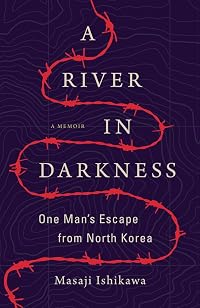
A River in Darkness: One Man's Escape from North Korea
by Masaji Ishikawa
On This Page
Description
"Half-Korean, half-Japanese, Masaji Ishikawa has spent his whole life feeling like a man without a country. This feeling only deepened when his family moved from Japan to North Korea when Ishikawa was just thirteen years old, and unwittingly became members of the lowest social caste. His father, himself a Korean national, was lured to the new Communist country by promises of abundant work, education for his children, and a higher station in society. But the reality of their new life was far show more from utopian. A memoir translated from the original Japanese, Ishikawa candidly recounts his tumultuous upbringing and the brutal thirty-six years he spent living under a crushing totalitarian regime, as well as the challenges he faced repatriating to Japan after barely escaping North Korea with his life."--Publisher's description. show lessTags
Recommendations
























Member Reviews
During the Japanese occupation of the Korean peninsula (1910-1945), Koreans were conscripted as laborers or emigrated to Japan in search of jobs after losing their land to the Japanese. By 1945 two million Koreans lived in Japan. These Zainichi found conditions to be little better for them in Japan, due to intense discrimination. Beginning in 1956, the Japanese Red Cross began repatriating ethnic Koreans to North Korea. The Communists wanted labor, and the Japanese wanted to get rid of a potential source of social unrest. The General Association of Korean Residents in Japan convinced many that life in North Korea would be a paradise of socialist humanitarianism and that returnees would be home again (despite the fact that most were from show more the southern part of Korea). Between 1960 and 1961 alone, 70,000 Zainichi were shipped to North Korea. Masaji Ishikawa was one of those.
Ishikawa's father was Zainichi, but his mother was Japanese. He was thirteen years old when he left Japan with his parents and two younger sisters. From the moment they landed in North Korea, however, they learned that everything they had been told was a lie. North Korea was far from paradise, and, equally devastating, the Zainichi were treated as badly in North Korea as they had been in Japan. His family was ostracized for being Japanese, and from the moment they arrived, they never had enough food. When Kim Il-Sung died in 1994 and his inept son took over, hunger became starvation. In 1996, Ishikawa decided that the only hope for his family to survive was if he escaped back to Japan, got a job, and sent them money until he could bring them to Japan as well.
I found this memoir mesmerizing from his descriptions of life in 1950s Japan to his life under the harsh North Korean regime to his reception after his escape. His writing is straightforward and plain, but his words pack a punch. It's not an easy book to read as things go from bad to worse, but it is invaluable for it's depictions of the Zainichi in North Korea. show less
Ishikawa's father was Zainichi, but his mother was Japanese. He was thirteen years old when he left Japan with his parents and two younger sisters. From the moment they landed in North Korea, however, they learned that everything they had been told was a lie. North Korea was far from paradise, and, equally devastating, the Zainichi were treated as badly in North Korea as they had been in Japan. His family was ostracized for being Japanese, and from the moment they arrived, they never had enough food. When Kim Il-Sung died in 1994 and his inept son took over, hunger became starvation. In 1996, Ishikawa decided that the only hope for his family to survive was if he escaped back to Japan, got a job, and sent them money until he could bring them to Japan as well.
I found this memoir mesmerizing from his descriptions of life in 1950s Japan to his life under the harsh North Korean regime to his reception after his escape. His writing is straightforward and plain, but his words pack a punch. It's not an easy book to read as things go from bad to worse, but it is invaluable for it's depictions of the Zainichi in North Korea. show less
It is deeply heartbreaking to read this book. This is the memoirs of a man who was born in Japan to a Japanese mother and Korean father. When he was a young teenager, his father was convinced to take his family to North Korea by a group giving false promises of good work for the father and free education for the children. All of the promises were false.
Life in North Korea was terribly difficult for many reasons, but mostly due to the lack of freedom and inability for an average person whose was not a party member to make a living and provide for a family. We in the western world don't often get glimpses of what is truly going on in such countries as North Korea. Reading this book made me empathize with refugees, the poverty-stricken, show more the unemployed, and those whose countries lack freedom for individual rights and freedom from surveillance. It also makes me increasingly uneasy about what can happen anywhere at any time.
One wishes for a good outcome for a person who suffered as much as the author did, but such an outcome is not ensured. This is a riveting read, but very depressing on a human level. Where is compassion for other human beings? show less
Life in North Korea was terribly difficult for many reasons, but mostly due to the lack of freedom and inability for an average person whose was not a party member to make a living and provide for a family. We in the western world don't often get glimpses of what is truly going on in such countries as North Korea. Reading this book made me empathize with refugees, the poverty-stricken, show more the unemployed, and those whose countries lack freedom for individual rights and freedom from surveillance. It also makes me increasingly uneasy about what can happen anywhere at any time.
One wishes for a good outcome for a person who suffered as much as the author did, but such an outcome is not ensured. This is a riveting read, but very depressing on a human level. Where is compassion for other human beings? show less
This is a really hard read. It feels like it should be dystopian fiction. It feels like it should have a happy ending. It feels like this can't possibly be real. It feels like a bleaker 1984 retelling.
But the truth of it is that this is not Orwell. This is the darkness that can happen when people in control lose their humanity. And while the ending is better than it was, it is not happy. It is barely even hopeful. I really, really hope that many people read this and others like it so that we can try to prevent similar horrors from happening in the future.
But the truth of it is that this is not Orwell. This is the darkness that can happen when people in control lose their humanity. And while the ending is better than it was, it is not happy. It is barely even hopeful. I really, really hope that many people read this and others like it so that we can try to prevent similar horrors from happening in the future.
As with a lot of non-fiction books these days, subtitles can be misleading. While the escape is in the book, it takes the last few pages only. But that's what sells I guess.
After the end of WWII, a huge number of Koreans remained in Japan. Almost none of them were there by choice - some were dragged there as soldiers, some were almost enslaved to assist with the agriculture while the Japanese men were fighting. With the war over, noone was really interested in spending the resources to send them home (plus the Korean war started soon enough, complicating things even more.
So the Koreans settled as best as they could, most of them creating families (sometimes with other Koreans, sometimes with the local Japanese). But in a society as show more insular and as traditional as the Japanese in mid century, accepting the other was not high on anyone's priority list.
Masaji Ishikawa was born in 1947 to a Japanese mother and a Korean father. The father was a brute; the mother escaped but was convinced to come back (not by her family - her family did all they could to convince her to stay away, despite the children). When in 1960 Kim Il-sung invited the Koreans stuck in Japan to come home, a lot of them decided to believe the promises of good education, better future and a better place to live - even if they were from the southern parts of the country originally. Ishikawa's father was one of these people and he put his wife and children on one of the ships ran by the Red Cross and left Japan for a better future. Except that North Korea was anything but...
The life of the family was never easy in Japan but once they ended up in North Korea, things went much much worse. Ishikawa is careful to only use his own memories (augmented here and there maybe) - we never hear him speculate about what his mother or father thought - he talks about what he thought, about what he was told and what he saw.
The bulk of the book is his story of his life in North Korea. There is little analysis - it is a memoir of a broken man who never had the chance to really go to school beyond the mandatory high school, a man who spend most of his adult life trying to survive, away from the capital and the big cities of Korea. The only ray of sunshine in the whole situation was the father - the brute from Japan suddenly changes to a man who cares about his family. Ishikawa never stops wondering about that change - was that because the father could speak his own language and did not need to prove that he is equal to everyone else? Or was it because the conditions were so hard and he was ashamed from dragging his family into it? The author never learns and we don't either.
Despite the hunger, despite the misery, life continues. Ishikawa gets married, has children and tries to survive. Until things get so bad that he choses to try to get back to Japan. He succeeds in 1996, 36 years after he leaves Japan but his family remains behind, despite his plans.
The book was originally published in 2000 in Japan and you can see some hope at the end of the text. I don't know how much of the current Epilogue was in that first edition - a lot of it are updates on the family from later years so not much could have been there. By the time the current epilogue was completed, more than a decade had passed and the dream of sending money to the family or pulled them out had never worked out. Ishikawa is as much a foreigner back in Japan as he was in North Korea - a man who should have belonged to two countries and belongs to none. His disappointment is palpable in that epilogue.
If you expect sparkling prose, beautifully crafted sentences and analysis of North Korea's economy/social life, look elsewhere. But if you want a heartfelt memoir of a man who survived the hell of North Korea, that would be your book. Ishikawa does not set out to tell you all about North Korea or the reasons for it being what it is. He wants to tell his story - which may as well be the story of a lot of other people, returnees or not. It is repetitive in places but so was his life. And some of the stories inside made me so very thankful for not being born in that part of the world. show less
After the end of WWII, a huge number of Koreans remained in Japan. Almost none of them were there by choice - some were dragged there as soldiers, some were almost enslaved to assist with the agriculture while the Japanese men were fighting. With the war over, noone was really interested in spending the resources to send them home (plus the Korean war started soon enough, complicating things even more.
So the Koreans settled as best as they could, most of them creating families (sometimes with other Koreans, sometimes with the local Japanese). But in a society as show more insular and as traditional as the Japanese in mid century, accepting the other was not high on anyone's priority list.
Masaji Ishikawa was born in 1947 to a Japanese mother and a Korean father. The father was a brute; the mother escaped but was convinced to come back (not by her family - her family did all they could to convince her to stay away, despite the children). When in 1960 Kim Il-sung invited the Koreans stuck in Japan to come home, a lot of them decided to believe the promises of good education, better future and a better place to live - even if they were from the southern parts of the country originally. Ishikawa's father was one of these people and he put his wife and children on one of the ships ran by the Red Cross and left Japan for a better future. Except that North Korea was anything but...
The life of the family was never easy in Japan but once they ended up in North Korea, things went much much worse. Ishikawa is careful to only use his own memories (augmented here and there maybe) - we never hear him speculate about what his mother or father thought - he talks about what he thought, about what he was told and what he saw.
The bulk of the book is his story of his life in North Korea. There is little analysis - it is a memoir of a broken man who never had the chance to really go to school beyond the mandatory high school, a man who spend most of his adult life trying to survive, away from the capital and the big cities of Korea. The only ray of sunshine in the whole situation was the father - the brute from Japan suddenly changes to a man who cares about his family. Ishikawa never stops wondering about that change - was that because the father could speak his own language and did not need to prove that he is equal to everyone else? Or was it because the conditions were so hard and he was ashamed from dragging his family into it? The author never learns and we don't either.
Despite the hunger, despite the misery, life continues. Ishikawa gets married, has children and tries to survive. Until things get so bad that he choses to try to get back to Japan. He succeeds in 1996, 36 years after he leaves Japan but his family remains behind, despite his plans.
The book was originally published in 2000 in Japan and you can see some hope at the end of the text. I don't know how much of the current Epilogue was in that first edition - a lot of it are updates on the family from later years so not much could have been there. By the time the current epilogue was completed, more than a decade had passed and the dream of sending money to the family or pulled them out had never worked out. Ishikawa is as much a foreigner back in Japan as he was in North Korea - a man who should have belonged to two countries and belongs to none. His disappointment is palpable in that epilogue.
If you expect sparkling prose, beautifully crafted sentences and analysis of North Korea's economy/social life, look elsewhere. But if you want a heartfelt memoir of a man who survived the hell of North Korea, that would be your book. Ishikawa does not set out to tell you all about North Korea or the reasons for it being what it is. He wants to tell his story - which may as well be the story of a lot of other people, returnees or not. It is repetitive in places but so was his life. And some of the stories inside made me so very thankful for not being born in that part of the world. show less
Memoir of Masaji Ishikawa wherein he relates the details of his life from being born in Japan in 1947 to moving with his family to North Korea, where they were promised “paradise on earth,” to his escape to Japan in 1996. Unsurprisingly, the so-called paradise never materialized, and his family’s standard of living gradually diminished until it reached starvation-level.
Ishikawa tells his story in a very straight-forward conversational manner. This memoir delivered educational information about life in North Korea under Kim Il-sung. It is often a gut-wrenchingly difficult read, as he and his family dealt with such an array of appalling circumstances, such as racism, brutality, discrimination, threats, policies that made no sense show more but were mandated to be followed, brainwashing of the masses by the government, and death of family members. Short but powerful. Recommended to those interested in Korean history, especially first-hand accounts of life in North Korea.
Memorable quotes:
“When you find yourself caught in a crazy system dreamed up by dangerous lunatics, you just do what you’re told.”
“No one thought or talked about anything except food. When we could manage to get around, we spent all our time searching and searching for anything remotely edible. We were nothing but a bunch of ravenous ghosts. The barely living dead.” show less
Ishikawa tells his story in a very straight-forward conversational manner. This memoir delivered educational information about life in North Korea under Kim Il-sung. It is often a gut-wrenchingly difficult read, as he and his family dealt with such an array of appalling circumstances, such as racism, brutality, discrimination, threats, policies that made no sense show more but were mandated to be followed, brainwashing of the masses by the government, and death of family members. Short but powerful. Recommended to those interested in Korean history, especially first-hand accounts of life in North Korea.
Memorable quotes:
“When you find yourself caught in a crazy system dreamed up by dangerous lunatics, you just do what you’re told.”
“No one thought or talked about anything except food. When we could manage to get around, we spent all our time searching and searching for anything remotely edible. We were nothing but a bunch of ravenous ghosts. The barely living dead.” show less
I was not prepared for how devastating this book is. I didn't go into this thinking I was getting a fairy tale and I don't even know if I expected a good ending. But I did not expect my stomach to ache after reading it and tears to flow when attempting to tell my husband about the story.
You can read or hear the sentence, "People starved to death" and think, "Wow, that's horrible." But actually following the process of the starvation - the foraging for weeds, acorns, and poisonous bark and the havoc it wreaks on your system, the inability to feed a newborn, the slow metamorphosis of your family into skeletons, and stepping over dead bodies in the streets - brings a whole new light onto the sentence "people starved to death." And all of show more this after hearing that they were going to a paradise, a land of milk and honey where education and food were plenty.
This book is given 5 stars, not because it's a feel-good book and not even because "it makes you think." It's 5 stars because it does more than that. Everything I see in my home looks like a luxury now. I weep for the people of North Korea and I want to help them, if possible. show less
You can read or hear the sentence, "People starved to death" and think, "Wow, that's horrible." But actually following the process of the starvation - the foraging for weeds, acorns, and poisonous bark and the havoc it wreaks on your system, the inability to feed a newborn, the slow metamorphosis of your family into skeletons, and stepping over dead bodies in the streets - brings a whole new light onto the sentence "people starved to death." And all of show more this after hearing that they were going to a paradise, a land of milk and honey where education and food were plenty.
This book is given 5 stars, not because it's a feel-good book and not even because "it makes you think." It's 5 stars because it does more than that. Everything I see in my home looks like a luxury now. I weep for the people of North Korea and I want to help them, if possible. show less
After reading Ishikawa’s account of his life, I have no complaints about mine. An unbelievable tale of how much a person can endure. North Korea is a nation populated by animated skeletons trudging through a miserable life while singing praises to the Great Leader.
Members
- Recently Added By
Lists

Top Five Books of 2023
767 works; 317 members

North Korean Authors
15 works; 2 members
Author Information
1 Work 1,077 Members
Some Editions
Common Knowledge
- Original title
- 北朝鮮大脱出地獄からの生還
- Original publication date
- 2017 (English) (English); 2000
- Important places
- North Korea
- First words
- What do I remember of that night?
- Quotations
- I became obsessed with all the things I had taken for granted before...
And I came to recognize that, no matter how difficult the reality, you mustn’t let yourself be beaten. You must have a strong will. You have to summon what you know is right from your innermost depths and follow it. - Last words
- (Click to show. Warning: May contain spoilers.)People talk about God. Although I can’t see him myself, I still pray for a happy ending.
- Original language
- Japanese
Classifications
- Genres
- Biography & Memoir, General Nonfiction, Nonfiction, History
- DDC/MDS
- 306.095193 — Society, government, & culture Social sciences, sociology & anthropology Social Behavior - Dating, Marriage, Divorce Social history Asia China & Korea
- LCC
- HN730.6 .A85 .I8 — Social sciences Social history and conditions. Social problems. Social reform Social history and conditions. Social problems. By region or country
- BISAC
Statistics
- Members
- 1,078
- Popularity
- 23,799
- Reviews
- 48
- Rating
- (4.09)
- Languages
- 8 — English, Finnish, Malayalam, Polish, Portuguese, Spanish, Swedish, Turkish
- Media
- Paper, Audiobook, Ebook
- ISBNs
- 15
- ASINs
- 6
