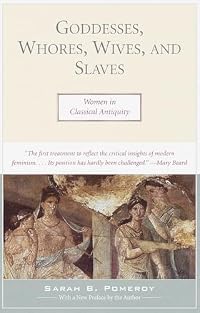
Goddesses, Whores, Wives, and Slaves: Women in Classical Antiquity
by Sarah B. Pomeroy
On This Page
Description
"The first general treatment of women in the ancient world to reflect the critical insights of modern feminism. Though much debated, its position as the basic textbook on women's history in Greece and Rome has hardly been challenged."--Mary Beard, Times Literary Supplement. Illustrations.Tags
Recommendations
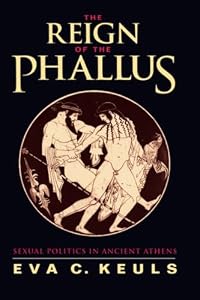

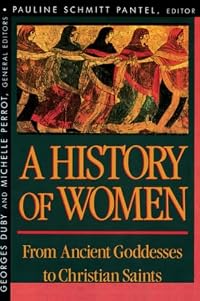
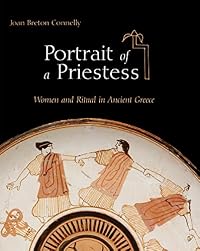
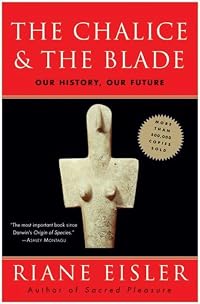















Member Recommendations
Member Reviews
Think about the stories of the Greeks and Romans. Sure, women might be in the story in various places; they might even motivate some of the action in them. But overall the women are not doing much of the acting. They might be indispensable, but they certainly can be marginalized.
Sarah Pomeroy led the way in Classics with the first real history of women in the Classical world with her 1975 Goddesses, Whores, Wives, and Slaves: Women in Classical Antiquity. In this edition the author provides an updated preface but otherwise the work remains substantially the same.
Pomeroy began with the theology of the Classical world and how the Greeks and Romans imagined their gods and goddesses. She then considered what can be known of Greek women in show more the Bronze Age and in Homeric epic (~2500-1000 BCE), the “dark age” and archaic period (1000-500 BCE), women in Athens, public and private from 500-300 BCE, how women were portrayed in the literature of Athens at that time, women in the Hellenistic world (332-30 BCE), Roman matrons of the period around 150 BCE-100 CE, women of the lower classes of Rome, and finally how women functioned within Roman religion.
The story overall is one of marginalization, especially in classical Athens. While it cannot be doubted that the story presented in the Old and New Testaments has its points of misogyny, it becomes painfully apparent in this reading how much of the heritage of modern Western misogyny in fact stems from the classical Greek authors. Their view of women and their capacities was quite dismal. Women would obtain slightly more freedom in previous times and in the Hellenstic age, and Roman women would be able to enjoy slightly more freedom, but nothing approaching anything we would imagine as true freedom or equality in worth or value. As is noted in the text and more thoroughly in the epilogue, it would seem Greek and Roman culture had more men than women in it, which would be a function of choice in terms of which children were raised and/or favored. We can find modern parallels in certain cultures which to this day prioritize boys over girls and that gets manifest in population numbers.
For freeborn women in the Classical world, if they survived long enough, the vast majority would become wives. Some would be whores. A precious few would have significant roles in religious matters. A very large number would be slaves and treated as such. They would all have goddesses to honor, yet even they would generally be seen as less active or propitious than the male gods.
This book remains the standard of the field for good reason. It holds up very well despite being almost fifty years old - which for the field would otherwise be rather dated. Since many of the architects of our society were enamored with the Classical authors, and many to this day draw their inspiration from them, it is good to be aware of Classical perspectives on women and to be willing to call out its misogyny. Just because ancient Greeks believed something does not make it good or right, and we should never be so entranced with them as to disregard and degrade women today because of them. show less
Sarah Pomeroy led the way in Classics with the first real history of women in the Classical world with her 1975 Goddesses, Whores, Wives, and Slaves: Women in Classical Antiquity. In this edition the author provides an updated preface but otherwise the work remains substantially the same.
Pomeroy began with the theology of the Classical world and how the Greeks and Romans imagined their gods and goddesses. She then considered what can be known of Greek women in show more the Bronze Age and in Homeric epic (~2500-1000 BCE), the “dark age” and archaic period (1000-500 BCE), women in Athens, public and private from 500-300 BCE, how women were portrayed in the literature of Athens at that time, women in the Hellenistic world (332-30 BCE), Roman matrons of the period around 150 BCE-100 CE, women of the lower classes of Rome, and finally how women functioned within Roman religion.
The story overall is one of marginalization, especially in classical Athens. While it cannot be doubted that the story presented in the Old and New Testaments has its points of misogyny, it becomes painfully apparent in this reading how much of the heritage of modern Western misogyny in fact stems from the classical Greek authors. Their view of women and their capacities was quite dismal. Women would obtain slightly more freedom in previous times and in the Hellenstic age, and Roman women would be able to enjoy slightly more freedom, but nothing approaching anything we would imagine as true freedom or equality in worth or value. As is noted in the text and more thoroughly in the epilogue, it would seem Greek and Roman culture had more men than women in it, which would be a function of choice in terms of which children were raised and/or favored. We can find modern parallels in certain cultures which to this day prioritize boys over girls and that gets manifest in population numbers.
For freeborn women in the Classical world, if they survived long enough, the vast majority would become wives. Some would be whores. A precious few would have significant roles in religious matters. A very large number would be slaves and treated as such. They would all have goddesses to honor, yet even they would generally be seen as less active or propitious than the male gods.
This book remains the standard of the field for good reason. It holds up very well despite being almost fifty years old - which for the field would otherwise be rather dated. Since many of the architects of our society were enamored with the Classical authors, and many to this day draw their inspiration from them, it is good to be aware of Classical perspectives on women and to be willing to call out its misogyny. Just because ancient Greeks believed something does not make it good or right, and we should never be so entranced with them as to disregard and degrade women today because of them. show less
Pomeroy published this book the same year Evelyn Reed's Woman's Evolution was published. Overall, Reed's book, while it has some too obviously Marxist views (too much pounding of the private property is evil drum), is superior in its scholarly efforts to examine what life for women must have been like in both pre-history and antiquity.
Too often Pomeroy asserts statements that demonstrate how much she still believes the idea that men are superior to women, sometimes soon after making statements that are clearly feminist. On page 8 of the edition I have, for instance, she stated that "a fully realized female tends to engender anxiety in the insecure male." Yet on p. 33, she asserts, "thus, the role of women--because it was biologically show more determined--displayed a continuity throughout these obscure times--despite the upheavals that changed men's lives," clearly buying into the idea that women's roles are solely determined by biology.
Pomeroy also gives up valuable logical ground too easily, asserting, for instance, that there is no evidence for matriarchal cultures prior to the pre-historical Greek cultures she examines, even while admitting that this period appears to be transitional--from matriarchal to patriarchal, which is something Reed argues more strongly and more clearly. Even though Pomeroy wants to paint herself as a feminist, she buys into the arguments against matriarchal cultures and strong women with the same illogical arguments that are still used today: there is no definitive proof for matriarchal societies (even though plenty of evidence exists, this evidence is usually dismissed since we cannot read anything specific about that era), therefore they did not exist. This spurious argument goes the other way--since there is no definitive proof that the patriarchy always existed.
Perhaps more disturbing is how she dismisses owners' rape of their slaves as the women's being "sexually available," as well as how she continually refers to prostitutes and courtesans as "whores."
So, while this book offers some tantalizing insights into the lives of women from the early Greek through the Roman republican periods, Pomeroy's basic argument isn't really an argument at all: she believes the misogynistic Stoics' "argumentation [that women should confine their energies to marriage and motherhood} is brilliant and difficult to refute. And this rationalized confinement of women to the domestic sphere, as well as the systematization of anti-female thought by poets and philosophers, are two of the most devastating creations in the classical legacy" (230). No kidding.
Overall, Pomeroy could have used more Marxist perspective in her examination, while Reed could have beat that drum less often, but both books are worth reading, examining, and re-visiting. show less
Too often Pomeroy asserts statements that demonstrate how much she still believes the idea that men are superior to women, sometimes soon after making statements that are clearly feminist. On page 8 of the edition I have, for instance, she stated that "a fully realized female tends to engender anxiety in the insecure male." Yet on p. 33, she asserts, "thus, the role of women--because it was biologically show more determined--displayed a continuity throughout these obscure times--despite the upheavals that changed men's lives," clearly buying into the idea that women's roles are solely determined by biology.
Pomeroy also gives up valuable logical ground too easily, asserting, for instance, that there is no evidence for matriarchal cultures prior to the pre-historical Greek cultures she examines, even while admitting that this period appears to be transitional--from matriarchal to patriarchal, which is something Reed argues more strongly and more clearly. Even though Pomeroy wants to paint herself as a feminist, she buys into the arguments against matriarchal cultures and strong women with the same illogical arguments that are still used today: there is no definitive proof for matriarchal societies (even though plenty of evidence exists, this evidence is usually dismissed since we cannot read anything specific about that era), therefore they did not exist. This spurious argument goes the other way--since there is no definitive proof that the patriarchy always existed.
Perhaps more disturbing is how she dismisses owners' rape of their slaves as the women's being "sexually available," as well as how she continually refers to prostitutes and courtesans as "whores."
So, while this book offers some tantalizing insights into the lives of women from the early Greek through the Roman republican periods, Pomeroy's basic argument isn't really an argument at all: she believes the misogynistic Stoics' "argumentation [that women should confine their energies to marriage and motherhood} is brilliant and difficult to refute. And this rationalized confinement of women to the domestic sphere, as well as the systematization of anti-female thought by poets and philosophers, are two of the most devastating creations in the classical legacy" (230). No kidding.
Overall, Pomeroy could have used more Marxist perspective in her examination, while Reed could have beat that drum less often, but both books are worth reading, examining, and re-visiting. show less
An overview of the position of women in Classical antiquity in myth, legend, literature, and history.
This was a groundbreaking book when it was published in 1975, the first to examine the position of women of those times in such a comprehensive manner. In some ways it's very much of its time. I suspect a modern book would give more credence to systemic sociological and economic factors rather than psychoanalytical ones, for example. But, having said that, it's full of interesting tidbits presented in an engaging manner.
This was a groundbreaking book when it was published in 1975, the first to examine the position of women of those times in such a comprehensive manner. In some ways it's very much of its time. I suspect a modern book would give more credence to systemic sociological and economic factors rather than psychoanalytical ones, for example. But, having said that, it's full of interesting tidbits presented in an engaging manner.
I picked up this book from a library display based on its interesting title. Originally published in 1975, this book provides an introduction to what we know about women's lives in classical antiquity.
Extremely helpful! I use excerpts frequently in my World Lit classes.
Every woman should read this book.
Members
- Recently Added By
Lists

History and Biography Read in 2016
20 works; 3 members

Reading list
170 works; 1 member

Books Read in 2016
4,666 works; 197 members

r/AskHistorians' Recommended Books
1,068 works; 17 members
Author Information

16+ Works 2,739 Members
Some Editions
Series
Belongs to Publisher Series
Studies in the Life of Women (1975)
Common Knowledge
- Original publication date
- 1975
- Dedication
- To the memory of John Day
Classifications
- Genres
- History, Nonfiction, Sexuality and Gender Studies, General Nonfiction, Religion & Spirituality
- DDC/MDS
- 305.420938 — Society, government, & culture Social sciences, sociology & anthropology Social group - Age, Gender, Ethnicity Women Social role and status of women Standard subdivisions History, geographic treatment, biography Women in Ancient Greece
- LCC
- HQ1134 .P64 — Social sciences The family. Marriage, Women and Sexuality The Family. Marriage. Women Women. Feminism
- BISAC
Statistics
- Members
- 1,139
- Popularity
- 22,051
- Reviews
- 10
- Rating
- (3.85)
- Languages
- English, German, Italian, Spanish
- Media
- Paper, Ebook
- ISBNs
- 14
- ASINs
- 11