Sirius: A Fantasy of Love and Discord
by Olaf Stapledon
On This Page
Description
Sirius is Thomas Trelone's great experiment - a huge, handsome dog with the brain and intelligence of a human being. Raised and educated in Trelone's own family alongside Plaxy, his youngest daughter, Sirius is a truly remarkable and gifted creature. His relationship with the Trelones, particularly with Plaxy, is deep and close, and his inquiring mind ranges across the spectrum of human knowledge and experience. But Sirius isn't human and the conflicts and inner turmoil that torture him show more cannot be resolved. show lessTags
Recommendations
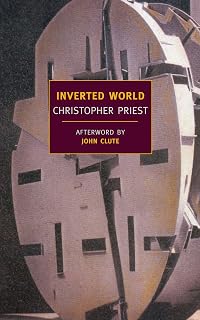
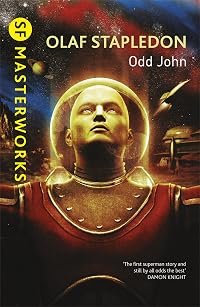
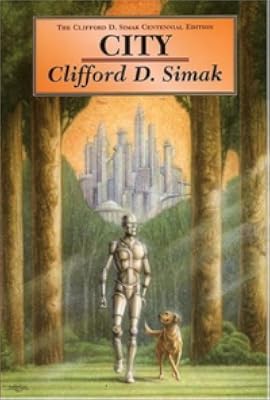


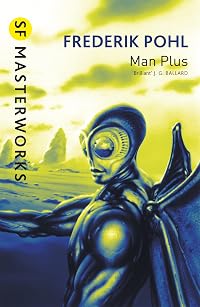


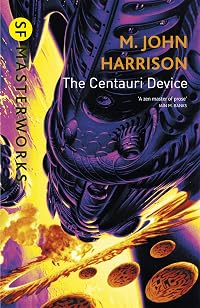
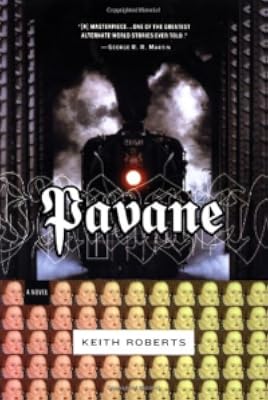
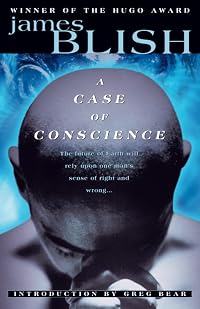



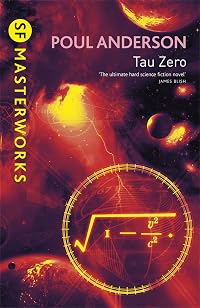






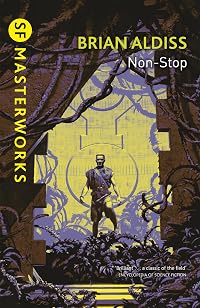




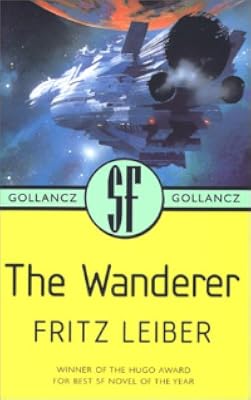
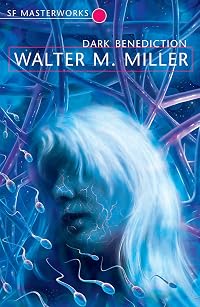


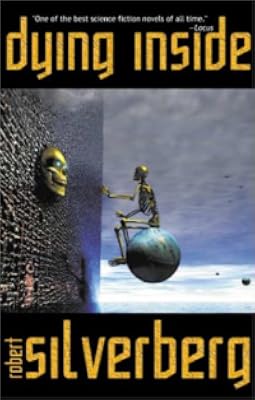
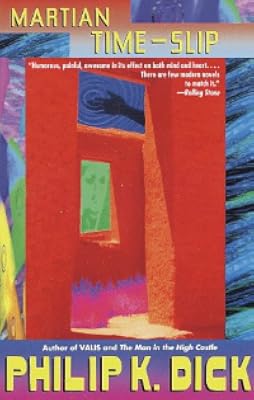



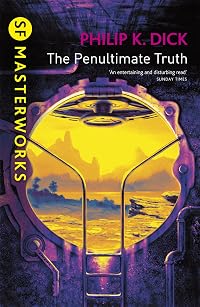
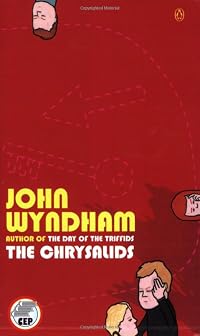

Member Recommendations
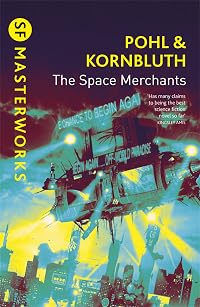
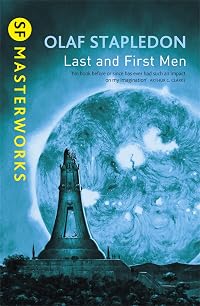
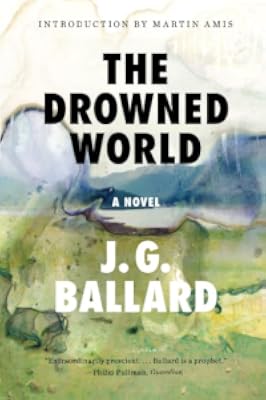
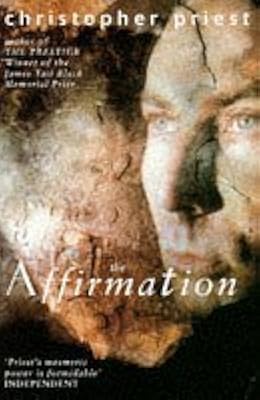
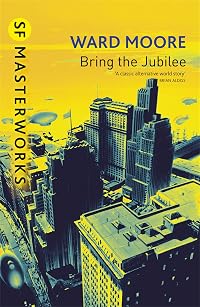
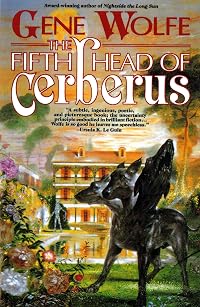
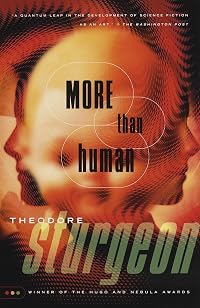
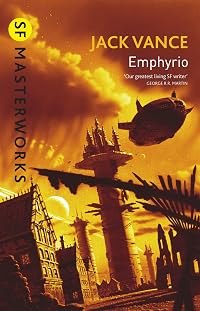
Bookwomble Both feature dogs endowed with human intelligence, though they seem to inhabit different ends of the moral spectrum.
Member Reviews
[Sirius: A fantasy of Love and Discord] by Olaf Stapledon
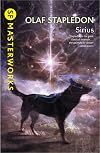
The Mind of a man trapped inside a dog's body might scream out at you from a gaudy cover had this 1944 science fiction novel been published recently in an attempt to appeal to a mass market. The fact that to my knowledge it never has (although this would be an excellent short description of the novel), but has usually had a more tasteful cover like the excellent S F Masterworks cover above, shows the high regard in which this book is still held by many readers.
It is a familiar premise for Stapledon readers: a lone scientist experiments with the foetus of dogs in order to produce super intelligent puppies, but with the puppy Sirius he manages to produce an animal that melds the show more mind of a dog with that of a man. The puppy develops at a very slow rate keeping pace with the scientists daughter born around the same time and the novel describes his development and learning experiences through his youth to early adult hood. Stapledon paints a believable portrait of a human mind that is painfully aware that he shares the characteristics of a human being and a dog. He thinks of himself as a man without hands that is subject to the call of the wild and it is the dog like actions of Sirius; hunting, chasing bitches in heat, using his olfactory powers explained in human terms that makes this such a fascinating read. Sirius puzzles long and hard about where he fits in to society and like Stapledons earlier novel [Odd John] it becomes clear that there is no place for him. A loving relationship develops between Sirius and the scientists daughter (Plaxy) which goes through all the tribulations of young people growing up, and Stapledon is not afraid to tell of it's sexual nature. This together with the backdrop of England during the second world war places this novel firmly in context and provokes sympathy for Plaxy and Sirius and all those who seek to protect them.
Stapledon is able through the structure of the novel to pass comments on Human society as seen through the eyes of Sirius, here is what he says about the scientific community with whom he works:
"They were so very distinguished, and all so seeming modest and so seeming friendly; and yet every one of them, every bloody one of them, if he could trust his nose and his sensitive ears, was itching for personal success, for the limelight, or worse scheming to push someone else out of the limelight, or make someone in it foolish or ugly. No doubt dogs would be as bad really, except when their glorious loyalty was upon them. That was the point loyalty with dogs could be absolute and pure. With men it was always queered by their inveterate self love. God! They must be insensitive really; drunk with self, and insensitive to all else. There was something reptilian about them, snakish"
Stapledon allows Sirius to communicate with those people who have the patience to understand his intelligible doggy sounds and he also gives him the ability to make music with his voice that is far superior to most humans, but he is a freak and like [Odd John] the reader fears for him as he tries to make his way in an alien world. The novel never descends into bathos as Stapledon continues to explore intelligently the dilemma that is at the heart of this novel. There are some brilliant descriptions of Sirius working as a sheep dog and running free over the moorland and the love story with Plaxy is both insightful and desperate. There is plenty of literary merit in this novel and as an achievement it ranks with Odd John, but because the themes are so similar and as Sirius came along nine years after, then I would rate it at 4 stars. show less
The Mind of a man trapped inside a dog's body might scream out at you from a gaudy cover had this 1944 science fiction novel been published recently in an attempt to appeal to a mass market. The fact that to my knowledge it never has (although this would be an excellent short description of the novel), but has usually had a more tasteful cover like the excellent S F Masterworks cover above, shows the high regard in which this book is still held by many readers.
It is a familiar premise for Stapledon readers: a lone scientist experiments with the foetus of dogs in order to produce super intelligent puppies, but with the puppy Sirius he manages to produce an animal that melds the show more mind of a dog with that of a man. The puppy develops at a very slow rate keeping pace with the scientists daughter born around the same time and the novel describes his development and learning experiences through his youth to early adult hood. Stapledon paints a believable portrait of a human mind that is painfully aware that he shares the characteristics of a human being and a dog. He thinks of himself as a man without hands that is subject to the call of the wild and it is the dog like actions of Sirius; hunting, chasing bitches in heat, using his olfactory powers explained in human terms that makes this such a fascinating read. Sirius puzzles long and hard about where he fits in to society and like Stapledons earlier novel [Odd John] it becomes clear that there is no place for him. A loving relationship develops between Sirius and the scientists daughter (Plaxy) which goes through all the tribulations of young people growing up, and Stapledon is not afraid to tell of it's sexual nature. This together with the backdrop of England during the second world war places this novel firmly in context and provokes sympathy for Plaxy and Sirius and all those who seek to protect them.
Stapledon is able through the structure of the novel to pass comments on Human society as seen through the eyes of Sirius, here is what he says about the scientific community with whom he works:
"They were so very distinguished, and all so seeming modest and so seeming friendly; and yet every one of them, every bloody one of them, if he could trust his nose and his sensitive ears, was itching for personal success, for the limelight, or worse scheming to push someone else out of the limelight, or make someone in it foolish or ugly. No doubt dogs would be as bad really, except when their glorious loyalty was upon them. That was the point loyalty with dogs could be absolute and pure. With men it was always queered by their inveterate self love. God! They must be insensitive really; drunk with self, and insensitive to all else. There was something reptilian about them, snakish"
Stapledon allows Sirius to communicate with those people who have the patience to understand his intelligible doggy sounds and he also gives him the ability to make music with his voice that is far superior to most humans, but he is a freak and like [Odd John] the reader fears for him as he tries to make his way in an alien world. The novel never descends into bathos as Stapledon continues to explore intelligently the dilemma that is at the heart of this novel. There are some brilliant descriptions of Sirius working as a sheep dog and running free over the moorland and the love story with Plaxy is both insightful and desperate. There is plenty of literary merit in this novel and as an achievement it ranks with Odd John, but because the themes are so similar and as Sirius came along nine years after, then I would rate it at 4 stars. show less
So much love!
Olaf Stapledon was a lot of things. Philosopher in real life, novelist in his spare time. But what really made him stand out was the fact that he could write short novels that encompass VAST stretches of time, events, and concepts. One had him envisioning a fate of mankind both good and bad across many thousands of years, or following a future history of mankind until all versions of us died off over a million years, or even encompassing the entire breadth of time and space until we're masters of the universe... and beyond.
And then we have THIS beautiful little novel that seems as far from any of these as anything I might imagine from him!
This came out in 1944. But think Lassie (ten years after this) meets [b:Flowers for show more Algernon|36576608|Flowers for Algernon|Daniel Keyes|https://images.gr-assets.com/books/1510416245s/36576608.jpg|3337594] (15 years after this). Add a serious tone about fitting in when in 30's and 40's England when you're not the right skin shade or sex, throw in a very disturbing commentary on religion "for the right kind", and make two unforgettable characters in love with each other. And do it without making it creepy.
And what you have is Sirius. One of the very best tales of its kind. You can substitute the dog with a man's intelligence with any member of society who just Can Not fit in and this would be on par with any classic of traditional literature.
Honestly, the more I read of Olaf Stapledon, the more timeless his writing becomes. This ought to be a true classic on everyone's shelves if you like SF at all. show less
Olaf Stapledon was a lot of things. Philosopher in real life, novelist in his spare time. But what really made him stand out was the fact that he could write short novels that encompass VAST stretches of time, events, and concepts. One had him envisioning a fate of mankind both good and bad across many thousands of years, or following a future history of mankind until all versions of us died off over a million years, or even encompassing the entire breadth of time and space until we're masters of the universe... and beyond.
And then we have THIS beautiful little novel that seems as far from any of these as anything I might imagine from him!
This came out in 1944. But think Lassie (ten years after this) meets [b:Flowers for show more Algernon|36576608|Flowers for Algernon|Daniel Keyes|https://images.gr-assets.com/books/1510416245s/36576608.jpg|3337594] (15 years after this). Add a serious tone about fitting in when in 30's and 40's England when you're not the right skin shade or sex, throw in a very disturbing commentary on religion "for the right kind", and make two unforgettable characters in love with each other. And do it without making it creepy.
And what you have is Sirius. One of the very best tales of its kind. You can substitute the dog with a man's intelligence with any member of society who just Can Not fit in and this would be on par with any classic of traditional literature.
Honestly, the more I read of Olaf Stapledon, the more timeless his writing becomes. This ought to be a true classic on everyone's shelves if you like SF at all. show less
https://nwhyte.livejournal.com/3424586.html
As a kid I hugely enjoyed Diana Wynne Jones' Dogsbody and A.M. Lightner's Star Dog (the latter long out of print), both of which centre around the relationship between a human and a puppy which has been born with unearthly powers due to extraterrestrial intervention. Here, the eponymous Sirius is the product of human intervention, enhanced to superior intellectual abilities and also much longer lifespan. I've read a lot of Stapledon's cosmic fiction before, and not always been hugely impressed; I found Sirius much easier to relate to both as a book and as a character. Sure, it draws heavily on Frankenstein, but I think Stapledon brings a lot of new material to his source - most particulary the show more intense relationship between dog and girl. You know of course where it is going to end, but it kept me very engaged until we got there. show less
As a kid I hugely enjoyed Diana Wynne Jones' Dogsbody and A.M. Lightner's Star Dog (the latter long out of print), both of which centre around the relationship between a human and a puppy which has been born with unearthly powers due to extraterrestrial intervention. Here, the eponymous Sirius is the product of human intervention, enhanced to superior intellectual abilities and also much longer lifespan. I've read a lot of Stapledon's cosmic fiction before, and not always been hugely impressed; I found Sirius much easier to relate to both as a book and as a character. Sure, it draws heavily on Frankenstein, but I think Stapledon brings a lot of new material to his source - most particulary the show more intense relationship between dog and girl. You know of course where it is going to end, but it kept me very engaged until we got there. show less
In the 1920s Cambridge scientist Thomas Trelone attempts to increase the capabilities of the human mind by experimenting first with dogs. By injecting hormones in pregnant bitches he produces some super-intelligent sheepdogs with large capacity brains; but it is only with a predominantly Alsatian puppy called Sirius (after the dog star) that he manages to breed an individual capable of human mental processes and feelings. Unlike normal dogs Sirius ages and matures at the rate corresponding to that of humans and is even just able to form intelligible speech. But here’s the conundrum: what kind of being is this, and how should one treat it?
By presenting his work as a fiction the author manages to raise big philosophical questions around show more what it means to be human as well as trying to get the reader to gauge what their emotional response should be. It’s to Stapledon’s credit that he largely persuades us to invest in Sirius as a credible character. We see the puppy, brought up by Trelone’s own family in a Welsh farmhouse, treated much the same as Plaxy, a girl close in age to Sirius, to the extent that the two — like siblings or even twins — remain almost inseparable. We learn how Sirius finds the lack of hands frustrating but still manages to engage in everyday human activities. He develops skills as a working dog herding Welsh sheep but is well able to act on his own initiative; he participates willingly in aptitude tests and assessments at Cambridge University; he experiences life in the deprived and disadvantaged East End of London. But the Second World War is looming, and when it comes disaster not only threatens but strikes.
This is an extraordinary realisation. I found it slow at first, and in its almost dry-as-dust way it read like an academic report. But then I was drawn in, intrigued by Sirius’ existential musings, by the innate conflicts between his canine nature and his human brain and by the reactions of the humans who come into contact with him. At times I was reminded of the Houyhnhnms, the intelligent horses of Swift’s savage satire Gulliver’s Travels who make the narrator ashamed of his fellow humans. At other times it felt like a version of Mary Shelley’s Frankenstein, in which the doctor creates a being whom he fails to nurture and understand properly, thereby initiating the countdown to potential tragedies of one kind or another.
In Sirius’ dealings with his foster-sibling Plaxy there was more than a hint of the Red Riding Hood and the Wolf fairytale — but with several twists, one of which is that we view all from Sirius’ perspective. And, if the subtitle (“a fantasy of love and discord”) wasn’t enough of a clue there is also a New Testament echo of Sirius’ reception and treatment; though he brings a message of love and hope the man-dog, being of two natures, is also feared, for we always fear what we do not understand. With a little adjustment the famous Isaiah prophecy — “He is despised and rejected of men; a man of sorrows, and acquainted with grief: and we hid as it were our faces from him; he was despised, and we esteemed him not” — is, though some may see it as blasphemous, a fitting commentary on Sirius’ fate.
It is easy to see many aspects of Stapledon’s own concerns reflected in this novel. His academic career as a philosopher and his pacifist convictions (as a conscientious objector he served as an ambulance-driver in the Great War) inform the story of Sirius as retold by Plaxy’s lover Robert. To give the bald outline of the plot is make the novel appear like a pulp SF story, but Stapledon’s careful assembling of detail and reconstruction of conversations within a logical timeframe conversely give it a very human dimension (a point well made by Graham Sleight in his introduction) and allowed me to invest in and believe in Sirius as a real character. Paradoxically I was less convinced by many of the humans, though Welsh shepherd Llewelyn Pugh I felt came closest to a credible individual.
My appreciation of Sirius was heightened by my several years spent in the Preseli Hills — Welsh upland similar to the Trawsfynydd area and the Rhinog range where Sirius is raised — especially having experienced the seasonal changes and cycles which dominate the working lives of sheep farmers. But viewing human life through the fictional eyes of this more-than-canine sheepdog, especially in the varied contexts of Cambridge, London’s East End and Merseyside during a blitz, is eye-opening in a Swiftian way. It’s enough to make one despair that there will ever be an end to man’s inhumanity to man. Unlike Romulus and Remus brought up by a she-wolf there will be no lasting legacy from this dog raised by humans.
http://wp.me/s2oNj1-sirius show less
By presenting his work as a fiction the author manages to raise big philosophical questions around show more what it means to be human as well as trying to get the reader to gauge what their emotional response should be. It’s to Stapledon’s credit that he largely persuades us to invest in Sirius as a credible character. We see the puppy, brought up by Trelone’s own family in a Welsh farmhouse, treated much the same as Plaxy, a girl close in age to Sirius, to the extent that the two — like siblings or even twins — remain almost inseparable. We learn how Sirius finds the lack of hands frustrating but still manages to engage in everyday human activities. He develops skills as a working dog herding Welsh sheep but is well able to act on his own initiative; he participates willingly in aptitude tests and assessments at Cambridge University; he experiences life in the deprived and disadvantaged East End of London. But the Second World War is looming, and when it comes disaster not only threatens but strikes.
This is an extraordinary realisation. I found it slow at first, and in its almost dry-as-dust way it read like an academic report. But then I was drawn in, intrigued by Sirius’ existential musings, by the innate conflicts between his canine nature and his human brain and by the reactions of the humans who come into contact with him. At times I was reminded of the Houyhnhnms, the intelligent horses of Swift’s savage satire Gulliver’s Travels who make the narrator ashamed of his fellow humans. At other times it felt like a version of Mary Shelley’s Frankenstein, in which the doctor creates a being whom he fails to nurture and understand properly, thereby initiating the countdown to potential tragedies of one kind or another.
In Sirius’ dealings with his foster-sibling Plaxy there was more than a hint of the Red Riding Hood and the Wolf fairytale — but with several twists, one of which is that we view all from Sirius’ perspective. And, if the subtitle (“a fantasy of love and discord”) wasn’t enough of a clue there is also a New Testament echo of Sirius’ reception and treatment; though he brings a message of love and hope the man-dog, being of two natures, is also feared, for we always fear what we do not understand. With a little adjustment the famous Isaiah prophecy — “He is despised and rejected of men; a man of sorrows, and acquainted with grief: and we hid as it were our faces from him; he was despised, and we esteemed him not” — is, though some may see it as blasphemous, a fitting commentary on Sirius’ fate.
It is easy to see many aspects of Stapledon’s own concerns reflected in this novel. His academic career as a philosopher and his pacifist convictions (as a conscientious objector he served as an ambulance-driver in the Great War) inform the story of Sirius as retold by Plaxy’s lover Robert. To give the bald outline of the plot is make the novel appear like a pulp SF story, but Stapledon’s careful assembling of detail and reconstruction of conversations within a logical timeframe conversely give it a very human dimension (a point well made by Graham Sleight in his introduction) and allowed me to invest in and believe in Sirius as a real character. Paradoxically I was less convinced by many of the humans, though Welsh shepherd Llewelyn Pugh I felt came closest to a credible individual.
My appreciation of Sirius was heightened by my several years spent in the Preseli Hills — Welsh upland similar to the Trawsfynydd area and the Rhinog range where Sirius is raised — especially having experienced the seasonal changes and cycles which dominate the working lives of sheep farmers. But viewing human life through the fictional eyes of this more-than-canine sheepdog, especially in the varied contexts of Cambridge, London’s East End and Merseyside during a blitz, is eye-opening in a Swiftian way. It’s enough to make one despair that there will ever be an end to man’s inhumanity to man. Unlike Romulus and Remus brought up by a she-wolf there will be no lasting legacy from this dog raised by humans.
http://wp.me/s2oNj1-sirius show less
I knew nothing about this before reading and i havn't read any other reviews yet but i'm pretty sure about what aspect of this story most reviews are likely to focus on :lol .
Anyway so this is about a dog given human level intelligence and examines his life and that of the girl who he's raised alongside.
Its such a detailed... logical... psychological and social examination of its central premise, really interesting. It reminded me strongly of certain superhero story's like [b:Gladiator|211809|Gladiator|Philip Wylie|https://images.gr-assets.com/books/1347252461s/211809.jpg|900608] or Swamp Thing. Or perhaps Frankenstein if the monster wasn't rejected by his creator, or maybe Beauty and the Beast if there was never any chance of lifting show more the curse ;) .
And if your thinking, 'sentient dog and close relationship with human girl, is this going to get creepy?' well rest assured that...
Sirius made another remark with a sly look and a tremor of the tail. She turned back to him laughing, and softly smacked his face. "Beast," she said, "I shall not tell Robert that."
...eh, yes yes it will get a bit creepy :P .
The dry, logical writing stops it getting too uncomfortable though but this also leads to the main issue. The dry tone works fine most of the time but theres a couple of key scenes involving deaths which should have been really involving and moving but instead fall flat because of the writing.
So despite how interesting from an intellectual point of view the plot is i was still only going to give it 3 stars, however the writer does manage to pull off the last vital scene with a flourish and i am a sucker for a solid ending so bumped to 4 just about.
Edit: Made available by the Merril Collection. show less
Anyway so this is about a dog given human level intelligence and examines his life and that of the girl who he's raised alongside.
Its such a detailed... logical... psychological and social examination of its central premise, really interesting. It reminded me strongly of certain superhero story's like [b:Gladiator|211809|Gladiator|Philip Wylie|https://images.gr-assets.com/books/1347252461s/211809.jpg|900608] or Swamp Thing. Or perhaps Frankenstein if the monster wasn't rejected by his creator, or maybe Beauty and the Beast if there was never any chance of lifting show more the curse ;) .
And if your thinking, 'sentient dog and close relationship with human girl, is this going to get creepy?' well rest assured that...
Sirius made another remark with a sly look and a tremor of the tail. She turned back to him laughing, and softly smacked his face. "Beast," she said, "I shall not tell Robert that."
...eh, yes yes it will get a bit creepy :P .
The dry, logical writing stops it getting too uncomfortable though but this also leads to the main issue. The dry tone works fine most of the time but theres a couple of key scenes involving deaths which should have been really involving and moving but instead fall flat because of the writing.
So despite how interesting from an intellectual point of view the plot is i was still only going to give it 3 stars, however the writer does manage to pull off the last vital scene with a flourish and i am a sucker for a solid ending so bumped to 4 just about.
Edit: Made available by the Merril Collection. show less
I read this because P said it was a bit like Chocky. I'm not sure it is. However, rather than judging it for what it isn't, it seems better to try and talk about what it is - which is a short and densely packed tale of self-growth, discovery of religion, loss of parents, isolation, incest and prejudice, all packaged up as a sci-fi story about a talking super-dog.
I never quite got the Otherness of Sirius. It felt too much like a direct analogy for a human life - the 'not being understood by my parents about religion', the 'being divided between the place I grew up and the place I went to university', the difficulties of finding ones own purpose and place in the world - they were very human themes. There were interesting side notes - show more Sirius's music, and his wild side - but the story feels very much as though it is about a human who is disabled by being born as a dog, not about a dog.
It was also much more adult than I was expecting - if we ever went to a classification system for books, one feels that the murder and bestiality would definitely make it an 18.
I didn't find the response of Plaxy's boyfriend to discovering her relationship with Sirius rang true. Of all the book, that felt too easy and contrived. Then again, lots of people find ways to make unconventional relationships work for them... but I felt his 'twitch, that's a bit difficult, but Sirius is a jolly good chap and I know it's what Plaxy needs' was very quick and trivial. Maybe that is just because I am used to YA where the love triangle has to be Angst and Drama.
But I loved it. It was beautifully crafted, and Sirius's explorations of his own personality and his place in the universe really struck a chord with me. show less
I never quite got the Otherness of Sirius. It felt too much like a direct analogy for a human life - the 'not being understood by my parents about religion', the 'being divided between the place I grew up and the place I went to university', the difficulties of finding ones own purpose and place in the world - they were very human themes. There were interesting side notes - show more Sirius's music, and his wild side - but the story feels very much as though it is about a human who is disabled by being born as a dog, not about a dog.
It was also much more adult than I was expecting - if we ever went to a classification system for books, one feels that the murder and bestiality would definitely make it an 18.
I didn't find the response of Plaxy's boyfriend to discovering her relationship with Sirius rang true. Of all the book, that felt too easy and contrived. Then again, lots of people find ways to make unconventional relationships work for them... but I felt his 'twitch, that's a bit difficult, but Sirius is a jolly good chap and I know it's what Plaxy needs' was very quick and trivial. Maybe that is just because I am used to YA where the love triangle has to be Angst and Drama.
But I loved it. It was beautifully crafted, and Sirius's explorations of his own personality and his place in the universe really struck a chord with me. show less
This 1944 sci-fi novel is about a genetically-modified humanized dog and the girl who loved him. I doubt that Lassie or Fury owes anything to it, but Dean Koontz must have known it when he wrote Watchers (there's even a small clue in a very brief mention of a failed ape experiment in Sirius).
[According to his Wikipedia article, DK has a long relationship with dogs and with a charitable organization for service dogs.]
Anyway, as mildly interesting as this book is, if you are not a connoisseur of this type of thing and want to read about a super-smart dog, I would recommend Watchers instead.
[According to his Wikipedia article, DK has a long relationship with dogs and with a charitable organization for service dogs.]
Anyway, as mildly interesting as this book is, if you are not a connoisseur of this type of thing and want to read about a super-smart dog, I would recommend Watchers instead.
Members
- Recently Added By
Lists

S.F. Masterworks (Complete)
229 works; 15 members

SF Masterworks
193 works; 8 members

1945 (2020) Retro-Hugo Eligible Novels
14 works; 1 member

Nonhuman Protagonists
243 works; 35 members

Page Turners
185 works; 11 members

Books Read in 2018
4,360 works; 110 members

Books Read in 2019
4,052 works; 110 members
Favorite Animal Fiction
359 works; 156 members
Author Information

70+ Works 6,353 Members
Some Editions
Awards and Honors
Awards
Distinctions
Notable Lists
Series
Belongs to Publisher Series
Work Relationships
Is contained in
Common Knowledge
- Canonical title
- Sirius: A Fantasy of Love and Discord
- Original title
- Sirius
- Original publication date
- 1944-01
- People/Characters
- Sirius; Thomas Trelone; Plaxy Trelone
Classifications
Statistics
- Members
- 658
- Popularity
- 43,917
- Reviews
- 22
- Rating
- (3.89)
- Languages
- 8 — Dutch, English, French, German, Hungarian, Italian, Polish, Spanish
- Media
- Paper, Audiobook, Ebook
- ISBNs
- 28
- UPCs
- 2
- ASINs
- 26