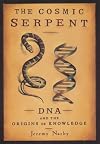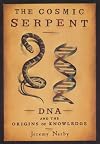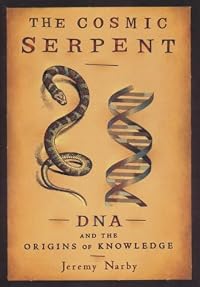
The Cosmic Serpent
by Jeremy Narby
On This Page
Description
This adventure in science and imagination, which the Medical Tribune said might herald "a Copernican revolution for the life sciences," leads the listener through unexplored jungles and uncharted aspects of mind to the heart of knowledge. In a first-person narrative of scientific discovery that opens new perspectives on biology, anthropology, and the limits of rationalism, The Cosmic Serpent reveals how startlingly different the world around us appears when we open our minds to it.Tags
Recommendations




















Member Reviews
If I was feeling really kind and generous, I would call this book "woefully misinformed and outdated". If I was feeling cynical and insensitive I would say that it is just complete crap. I'm feeling somewhere in the middle.
The irony of this book is that the first couple chapters are devoted to bemoaning the fact that no one takes anthropologists seriously. The rest of the book is devoted to making wild generalizations based on faulty, incomplete science.
Essentially it goes like this: The author went to the Amazon to study Amazonian Shamans. He took the drugs that the shamans take. While he was hallucinating, he saw brightly colored snakes. He asked the other members of the tribe and they said that they saw snakes too. He read some show more books about drug-induced hallucinations in other indigenous tribes around the world and learned that they see snakes too. Thus, he decided that when shamans take hallucinogenic drugs, the "snakes" that they are seeing are actually DNA, and the DNA talks to them.
Do you see the disconnect? Apparently it seemed much more logical to the author that all squiggles and snakes in artwork and mythology are direct communication from DNA than that squiggles and snakes are very common shapes. The author tries to debunk modern biology using the same tactics that he complained about biologists using against anthropology. He says that all biologists are cold and overly-rational and "deny themselves a sense of wonder". For example, the following paragraph:
"One of the facts that troubled me most was the astronomical length of the DNA contained in a human body: 125 billion miles. There, I thought, is the Ashaninca {an Amazonian tribe with a myth about a rope that connects earth and heaven}'s sky-rope. It is inside us and is certainly long enough to connect earth and heaven. What did biologists make of this cosmic number? Most of them did not even mention it, and those who did talked of a 'useless but amusing fact.'"
What more does he want from biologists? Yes, that is a very very large number. We do sometimes sit back and think about how large that number is. But what else are we supposed to do? Stop doing science immediately because omg look at how big that number is?
The author apparently believes that his theories are scientifically sound, because he read some books on genetics. However, since the author did not start learning about molecular biology or biochemistry or genetics until after he had come to his conclusions, his evidence is circumstantial at best, but mostly leans toward flat-out-wrong. He believes things about DNA replication and cell structure that are not true, and confuses metaphors that are commonly used to teach genetics with actual genetics. Like most other creationism arguments (and that is what this book turns out to be), the author uses a very common set of examples that supposedly provide proof against evolution. As usual, these are all easily proven incorrect.
It's a good thing that I was rather fond of anthropology before I read this book, because otherwise reading drivel like this would certainly turn me off. show less
The irony of this book is that the first couple chapters are devoted to bemoaning the fact that no one takes anthropologists seriously. The rest of the book is devoted to making wild generalizations based on faulty, incomplete science.
Essentially it goes like this: The author went to the Amazon to study Amazonian Shamans. He took the drugs that the shamans take. While he was hallucinating, he saw brightly colored snakes. He asked the other members of the tribe and they said that they saw snakes too. He read some show more books about drug-induced hallucinations in other indigenous tribes around the world and learned that they see snakes too. Thus, he decided that when shamans take hallucinogenic drugs, the "snakes" that they are seeing are actually DNA, and the DNA talks to them.
Do you see the disconnect? Apparently it seemed much more logical to the author that all squiggles and snakes in artwork and mythology are direct communication from DNA than that squiggles and snakes are very common shapes. The author tries to debunk modern biology using the same tactics that he complained about biologists using against anthropology. He says that all biologists are cold and overly-rational and "deny themselves a sense of wonder". For example, the following paragraph:
"One of the facts that troubled me most was the astronomical length of the DNA contained in a human body: 125 billion miles. There, I thought, is the Ashaninca {an Amazonian tribe with a myth about a rope that connects earth and heaven}'s sky-rope. It is inside us and is certainly long enough to connect earth and heaven. What did biologists make of this cosmic number? Most of them did not even mention it, and those who did talked of a 'useless but amusing fact.'"
What more does he want from biologists? Yes, that is a very very large number. We do sometimes sit back and think about how large that number is. But what else are we supposed to do? Stop doing science immediately because omg look at how big that number is?
The author apparently believes that his theories are scientifically sound, because he read some books on genetics. However, since the author did not start learning about molecular biology or biochemistry or genetics until after he had come to his conclusions, his evidence is circumstantial at best, but mostly leans toward flat-out-wrong. He believes things about DNA replication and cell structure that are not true, and confuses metaphors that are commonly used to teach genetics with actual genetics. Like most other creationism arguments (and that is what this book turns out to be), the author uses a very common set of examples that supposedly provide proof against evolution. As usual, these are all easily proven incorrect.
It's a good thing that I was rather fond of anthropology before I read this book, because otherwise reading drivel like this would certainly turn me off. show less
I read Jeremy Narby's The Cosmic Serpent in a sequence that I began with Bateson's Mind and Nature: A Necessary Unity and continued with Koestler's The Ghost in the Machine. All of these books are generalist studies that apply the latest (1960s for the earlier ones, and 1990s for Narby) scientific information about biology and evolution to problems that include the nature of consciousness and the alienation of humanity. Narby, like Bateson, is an anthropologist by primary academic training. Like Koestler in The Ghost in the Machine, he turns vigorously against the intellectual status quo, challenging the implicit doctrines of anthropology in the way that Koestler does for psychology. All three authors ultimately reject to varying show more degrees the mechanistic materialism that is the principal intellectual heritage of the 19th and 20th centuries.
Narby's (prudent) decision to frame his book as a narrative of personal discovery creates an apparent kinship with the "thick description" ethnography of Geertz, but one of his indictments of the anthropological field is that its texts (particularly those of the structuralists) tend to be arcane and tedious. A graver accusation, and probably one of more general application, is that anthropologists are involved in a work of cultural and intellectual expropriation, plundering the knowledge of societies they study, but attempting to "preserve" indigenous peoples by insulating them from the ability to criticize or benefit from Western knowledge. He also insists that the method and products of comparative religion (after the fashion of Eliade) deserve rehabilitation in the face of anthropological critiques.
Although rooted in Narby's experiences doing anthropological fieldwork among the Ashaninca people of the Amazon basin, the thesis of this book was developed through a cultivated mixture of academic textual research and "defocusing" non-rational contemplation. Wrestling with such difficulties as the mechanisms of hallucination and the nature of spirits that provide indigenous people with sophisticated botanical knowledge, he began to understand metaphoric expression and interpretation as necessary to his work. The section that describes the development of his method culminates in a fusion of his abstracted awareness with his concrete surroundings: "The path I was following led to a crystalline cascade gushing out a limestone cliff. The water was sparkling and tasted like champagne" (52). I read this partly to describe the exhilaration of his emergence from the rational academic consensus, and also as a metaphor for DNA (the "crystalline cascade") as the destination of the intellectual "path [he] was following."
After much provocative exploration of molecular biology and comparative shamanism (for which his sources are all of impeccable credibility), Narby intimates that it may be a function of the "junk DNA," which comprises the vast majority of known bio-genetic material, to communicate and coordinate through the emission and reception of electromagnetic signals. Consequently, the entire biosphere may possess a single, ramified consciousness -- the Cosmic Serpent of the title -- which is accessible in whole or part to individual humans with the use of shamanic techniques.
It is of no small interest to me that Narby's ideas track very closely with my own accustomed readings of preeminent passages in Thelemic scripture, as well as illuminating certain symbols of secret initiation to the real summit of the Royal Art. My reading of this book (and it didn't take very long) was attended by some notable synchronistic experiences. To instance one: I acquired an "Aquarius Dragon" to supplement a card game, with the net effect that the game now represents a world of five elements uncoiling from a dragon. [And minutes after first writing this review, I read that the private aerospace company Space X will be launching their Dragon vehicle to dock with the International Space Station this weekend.]
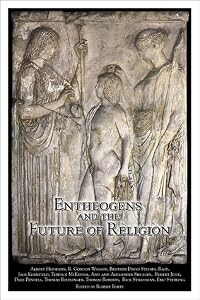
I hugely enjoyed this book, and I anticipate that I will eventually get around to its successor volume Intelligence in Nature. In the meanwhile, however, this thread of my reading will take a turn into the anthology volume Entheogens and the Future of Religion. (Narby, by the way, discountenances the term entheogen because of its metaphysical baggage. He passes no judgment on the word psychedelic -- which seems congenial to his thesis -- but he uses and seeks to revalorize hallucinogen, insisting that its pejorative connotation is alien to its etymology.) show less
Narby's (prudent) decision to frame his book as a narrative of personal discovery creates an apparent kinship with the "thick description" ethnography of Geertz, but one of his indictments of the anthropological field is that its texts (particularly those of the structuralists) tend to be arcane and tedious. A graver accusation, and probably one of more general application, is that anthropologists are involved in a work of cultural and intellectual expropriation, plundering the knowledge of societies they study, but attempting to "preserve" indigenous peoples by insulating them from the ability to criticize or benefit from Western knowledge. He also insists that the method and products of comparative religion (after the fashion of Eliade) deserve rehabilitation in the face of anthropological critiques.
Although rooted in Narby's experiences doing anthropological fieldwork among the Ashaninca people of the Amazon basin, the thesis of this book was developed through a cultivated mixture of academic textual research and "defocusing" non-rational contemplation. Wrestling with such difficulties as the mechanisms of hallucination and the nature of spirits that provide indigenous people with sophisticated botanical knowledge, he began to understand metaphoric expression and interpretation as necessary to his work. The section that describes the development of his method culminates in a fusion of his abstracted awareness with his concrete surroundings: "The path I was following led to a crystalline cascade gushing out a limestone cliff. The water was sparkling and tasted like champagne" (52). I read this partly to describe the exhilaration of his emergence from the rational academic consensus, and also as a metaphor for DNA (the "crystalline cascade") as the destination of the intellectual "path [he] was following."
After much provocative exploration of molecular biology and comparative shamanism (for which his sources are all of impeccable credibility), Narby intimates that it may be a function of the "junk DNA," which comprises the vast majority of known bio-genetic material, to communicate and coordinate through the emission and reception of electromagnetic signals. Consequently, the entire biosphere may possess a single, ramified consciousness -- the Cosmic Serpent of the title -- which is accessible in whole or part to individual humans with the use of shamanic techniques.
It is of no small interest to me that Narby's ideas track very closely with my own accustomed readings of preeminent passages in Thelemic scripture, as well as illuminating certain symbols of secret initiation to the real summit of the Royal Art. My reading of this book (and it didn't take very long) was attended by some notable synchronistic experiences. To instance one: I acquired an "Aquarius Dragon" to supplement a card game, with the net effect that the game now represents a world of five elements uncoiling from a dragon. [And minutes after first writing this review, I read that the private aerospace company Space X will be launching their Dragon vehicle to dock with the International Space Station this weekend.]
I hugely enjoyed this book, and I anticipate that I will eventually get around to its successor volume Intelligence in Nature. In the meanwhile, however, this thread of my reading will take a turn into the anthology volume Entheogens and the Future of Religion. (Narby, by the way, discountenances the term entheogen because of its metaphysical baggage. He passes no judgment on the word psychedelic -- which seems congenial to his thesis -- but he uses and seeks to revalorize hallucinogen, insisting that its pejorative connotation is alien to its etymology.) show less
Fascinating hypothesis: that in hallucinatory trances induced by psychoactive plants, shamans are able to perceive and receive metaphorical communication from their own microbiology, their own DNA. Narby seems convinced as a result of his experiences and research that some kind of intentional mind universally underlies matter. But it's not necessary to go that far to feel that his speculations are important and inspiring. They are important to me because they challenge the self-fulfilling prophecies of a narrowly reductionist, mechanistic conception of life, consciousness, and matter. The reductionist consensus, a sometimes absurd overreaction against pre-scientific metaphysical approaches, doesn't do justice to the dynamism and show more irreducible complexity of the real. And it's been put entirely at the service of a political economy that wants to commodify everything that lives. Narby's way offers an open sky of inquiry rather than a sealed box. And the naysayers should go back and read The Structure of Scientific Revolutions to understand how the insights of outsiders and non-experts can contribute to paradigm shifts in scientific understanding. show less
I read around Narby's book in the years after it came out, on the early millennial internet. I leafed through it a few times at bookstores. I finally got down to actually reading it, out of order, after having read his more recent Plant Teachers. The gist is, Narby hypothesizes, that hallucinogens, like ayahuasca, allow shamans to communicate with DNA. DNA, the "cosmic serpent" of the title, the theory goes, is a kind of radio transmitter and receiver, and binds all living things together. On a side theory, Narby thinks DNA was sent here, panspermia style (which, and this is the major failing of panspermic theory only pushes the mysterious origins of life elsewhere and further back in time). Narby gets to his theory, his surmises, his show more philosophical questions, really by a combination of anthropological research among ayahuasceros, research into anthropology and biological sciences, and flashes of insight. A lot of things to chew on intellectually, maybe not all right, but interesting nonetheless. You can tell why this is a foundational book in smart New Age circles, it is a key book among the druggie New Age set, too. show less
Narby's book doesn't perhaps have the most compelling narrative - he traces quite a 'serpentine' path through science, anthropology, evolutionary biology, etc, and whilst these observations are frequently fascinating and thought provoking, they don't especially make for a coherent 'story'.
But it's Narby's overall hypothesis which is most intriguing. The shamans of the Amazon - along with other native cultures - profess a detailed knowledge of botany and the effects of various psychotropic substances that is difficult to account for rationally. This, of course, is a disputable claim, but if true it demands an answer: How did they come by such knowledge? But it is an answer that, Narby argues, traditional anthropology and science are not show more in a position to provide.
Narby's proposed solution is that we should take the claims of the shamans seriously: they say that 'the spirits tell them', so why not believe them? But 'spirits', in Narby's interpretation, are not the traditional immaterial entities of myth and religion, but the mechanism of life itself - specifically, DNA. Highlighting the prevalence of serpent symbolism in shamanic cultures (especially in the Amazon), Narby argues that shamans have found a means to 'interrogate' the information held in DNA (the snake-like double helix), and in fact to 'converse' with it. In his words, the biosphere which is controlled and moulded by DNA is 'minded' - it is conscious and intelligent.
It is to Narby's credit that, whilst endeavouring to make his case in robust scientific terms, he recognises that his argument will do nothing to convince the harder-headed type of scientist and rational sceptic, considering their world view to be inherently opposed to his hypothesis. Here, he makes some good observations, I think, concerning how the method and principles of modern scientific materialism (of which Darwinism is an expression) necessarily exclude a number of intriguing possibilities: that nature is conscious and purposive; that - even if we are not talking of divine design - there may be other principles at work in evolution than the mechanistic theory of natural selection (which he considers woefully inadequate to account for biological complexity and intentionality).
This is, obviously, an unpopular view (the majority of evolutionary biologists being firmly in the mechanistic/materialistic Darwinian camp). Add to this Narby's openness to the meaningfulness of shamanic-type hallucinogenic experiences, and it is easy to see how the book will be summarily dismissed or ignored by those who would be best placed to consider his arguments (biologists, anthropologists, scientists in general). However, this would be a great shame. This is far from a 'quack' book. Narby is personally and passionately invested in the issues he raises - he talks hallucinogens himself, under supervision of a native shaman, and through his involvement in the indigenous culture he comes to realise the threats and dangers they face from Westernisation and the exploitation of big business. Furthermore, his sincere and thoughtful appraisal of the topics raised, always seeking to phrase his ideas in the terms of science and rational discourse, make this a valuable contribution not only to literature on shamanism and hallucinogenics, but also to those seeking to appraise the biases of science and the Western perspective.
Gareth Southwell is a philosopher, writer and illustrator. show less
But it's Narby's overall hypothesis which is most intriguing. The shamans of the Amazon - along with other native cultures - profess a detailed knowledge of botany and the effects of various psychotropic substances that is difficult to account for rationally. This, of course, is a disputable claim, but if true it demands an answer: How did they come by such knowledge? But it is an answer that, Narby argues, traditional anthropology and science are not show more in a position to provide.
Narby's proposed solution is that we should take the claims of the shamans seriously: they say that 'the spirits tell them', so why not believe them? But 'spirits', in Narby's interpretation, are not the traditional immaterial entities of myth and religion, but the mechanism of life itself - specifically, DNA. Highlighting the prevalence of serpent symbolism in shamanic cultures (especially in the Amazon), Narby argues that shamans have found a means to 'interrogate' the information held in DNA (the snake-like double helix), and in fact to 'converse' with it. In his words, the biosphere which is controlled and moulded by DNA is 'minded' - it is conscious and intelligent.
It is to Narby's credit that, whilst endeavouring to make his case in robust scientific terms, he recognises that his argument will do nothing to convince the harder-headed type of scientist and rational sceptic, considering their world view to be inherently opposed to his hypothesis. Here, he makes some good observations, I think, concerning how the method and principles of modern scientific materialism (of which Darwinism is an expression) necessarily exclude a number of intriguing possibilities: that nature is conscious and purposive; that - even if we are not talking of divine design - there may be other principles at work in evolution than the mechanistic theory of natural selection (which he considers woefully inadequate to account for biological complexity and intentionality).
This is, obviously, an unpopular view (the majority of evolutionary biologists being firmly in the mechanistic/materialistic Darwinian camp). Add to this Narby's openness to the meaningfulness of shamanic-type hallucinogenic experiences, and it is easy to see how the book will be summarily dismissed or ignored by those who would be best placed to consider his arguments (biologists, anthropologists, scientists in general). However, this would be a great shame. This is far from a 'quack' book. Narby is personally and passionately invested in the issues he raises - he talks hallucinogens himself, under supervision of a native shaman, and through his involvement in the indigenous culture he comes to realise the threats and dangers they face from Westernisation and the exploitation of big business. Furthermore, his sincere and thoughtful appraisal of the topics raised, always seeking to phrase his ideas in the terms of science and rational discourse, make this a valuable contribution not only to literature on shamanism and hallucinogenics, but also to those seeking to appraise the biases of science and the Western perspective.
Gareth Southwell is a philosopher, writer and illustrator. show less
I'd wanted to read this when it first came out but never got around to it. And I'm glad I waited, because it clarified my thinking about aspects of my own writing that needed some clarity. But beyond that I found it a fascinating examination of mythological imagery, shamanism, hallucinogenic substances, and DNA.
What's that? How do all those things relate to each other? To give it to you in the proverbial nutshell, Narby believes that DNA speaks to people, specifically shamans, and specifically while they are under the influence of drugs. "Oh sure," you say. "Pull the other one, it's got bells." But Narby has done a pretty good job documenting the medical uses of plant material discovered by these same shamans, and used by their tribes show more for centuries, plants which western pharma companies are only now beginning to exploit, even though they still don't actually know why the plants work the way they do. He's also traced a lot of ancient imagery and mythology which feature helical structures, entwined serpents, twisting ladders and stairwells; in short he feels they're symbols of the double helix of DNA.
Because I'm not trying to convince anyone, and because in order to fully understand and appreciate Narby's thesis, you really do have to read the book, I don't have any real stake in anyone's belief or disbelief. I found the book fascinating, the more so because it has some professional importance to me. I actually find it far more interesting and even convincing than the conclusions drawn by Yuval Harari's Sapiens. YMMV. show less
What's that? How do all those things relate to each other? To give it to you in the proverbial nutshell, Narby believes that DNA speaks to people, specifically shamans, and specifically while they are under the influence of drugs. "Oh sure," you say. "Pull the other one, it's got bells." But Narby has done a pretty good job documenting the medical uses of plant material discovered by these same shamans, and used by their tribes show more for centuries, plants which western pharma companies are only now beginning to exploit, even though they still don't actually know why the plants work the way they do. He's also traced a lot of ancient imagery and mythology which feature helical structures, entwined serpents, twisting ladders and stairwells; in short he feels they're symbols of the double helix of DNA.
Because I'm not trying to convince anyone, and because in order to fully understand and appreciate Narby's thesis, you really do have to read the book, I don't have any real stake in anyone's belief or disbelief. I found the book fascinating, the more so because it has some professional importance to me. I actually find it far more interesting and even convincing than the conclusions drawn by Yuval Harari's Sapiens. YMMV. show less
This is one of the most thought provoking books I have read, not so much because the arguments and theories presented are correct (they can never be scientifically proven) but because it really gave me cause for wonder and to ponder on how the mind/brain/body might function right down to the DNA level. Who is to say that the arguments the author presents are wrong? And if so, prove it!
Members
- Recently Added By
Lists

Brain Mutations and Spiritual Ladders
7 works; 1 member

Dishonourable Mentions of 2013
189 works; 62 members

The Joe Rogan Experience Library
254 works; 3 members

Mythical Monsters of the World
199 works; 79 members
Author Information

10+ Works 1,334 Members
Jeremy Narby, Ph.D., grew up in Canada and Switzerland, studied history at the University of Canterbury, and received his doctorate in anthropology from Stanford University.
Some Editions
Work Relationships
Common Knowledge
- Canonical title
- The Cosmic Serpent
- Alternate titles
- Cosmic Serpent
- Original publication date
- 1998
- First words
- The first time an Ashaninca man told me that he had learned the medicinal properties of plants by drinking a hallucinogenic brew, I thought he was joking.
- Last words
- (Click to show. Warning: May contain spoilers.)All things considered, wisdom requires not only the investigation of many things, but contemplation of the mystery.
Classifications
- Genres
- Anthropology, Science & Nature, Nonfiction, General Nonfiction, Religion & Spirituality, Philosophy
- DDC/MDS
- 306.0899839 — Social sciences Social sciences, sociology & anthropology Culture and institutions With Respect to Particular Groups
- LCC
- F3429.3 .D79 .N3713 — Local History of the United States, Canada and Latin America Latin America. Spanish America South America Peru
- BISAC
Statistics
- Members
- 844
- Popularity
- 32,257
- Reviews
- 20
- Rating
- (3.97)
- Languages
- 10 — Czech, Dutch, English, Estonian, French, German, Italian, Polish, Portuguese, Spanish
- Media
- Paper, Audiobook, Ebook
- ISBNs
- 22
- ASINs
- 7