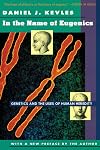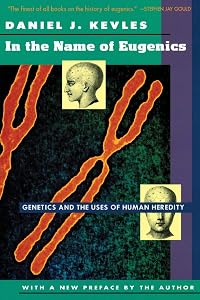
In the Name of Eugenics: Genetics and the Uses of Human Heredity
by Daniel J. Kevles
On This Page
Description
Daniel Kevles traces the study and practice of eugenics--the science of "improving" the human species by exploiting theories of heredity--from its inception in the late nineteenth century to its most recent manifestation within the field of genetic engineering. It is rich in narrative, anecdote, attention to human detail, and stories of competition among scientists who have dominated the field.Tags
Recommendations


























Member Reviews
Daniel J. Kevles writes In the Name of Eugenics: Genetics and the Uses of Human Heredity in light of the claim that modern genetic research is tinged with the eugenic legacy. He makes the book “a comparative history of eugenics in the United States and Britain from the late nineteenth century to the present day, giving attention to its expressions elsewhere, especially in Germany, insofar as they affected Anglo-American developments” (pg. x).
Kevles begins with Francis Galton, the originator of eugenics, who drew upon medical statistics. He writes, “The core of his work in statistics constituted a sharp and irreversible departure from the mere data gathering that had characterized the science in midcentury. Galton insisted that show more statistics had to incorporate the theory and methods of mathematical probability. By doing precisely that, he produced, with regression and correlation, a seminally important innovation” (pg. 17). In addressing Karl Pearson, Kevles writes, “Eugenic enthusiasm was highest among social radicals” (pg. 21). Of Charles Davenport, he writes, “Like many of his colleagues, Davenport equated national and ‘racial’ identity, and assumed as well that race determined behavior” (pg. 46). Further, “Anxious that the nation’s protoplasm was threatened from without, Davenport favored a selective immigration policy” (pg. 47). Kevles continues, “Charles Davenport argued that the selection should be on an individual basis, that no national group could be classified as undesirable. But by the early nineteen-twenties, the eugenic principle of selection on the basis of individual biological and mental quality had been submerged in a principle of racial- or ethnic-group selection. The shift no doubt bespoke the weight of the national clamor for immigration restriction; it also expressed the patent racial prejudices of many eugenicists, prejudices which took the form of biologically celebrating Wasps and denigrating non-Wasps” (pg. 95).
Kevles writes of the followers of eugenics, “Eugenics enthusiasts in the United States and Britain were largely middle to upper middle class, white, Anglo-Saxon, predominantly Protestant, and educated. The movement’s leaders tended to be well-to-do rather than rich, and many were professionals – physicians, social workers, clerics, writers, and numerous professors, notably in the biological and social sciences” (pg. 64). Further, “Important to the eugenics movement was the increasingly widespread notion that heredity determined not simply physical characteristic but temperament and behavior. In the late nineteenth century a growing body of social-Darwinist writings had commonly held that paupers spawned paupers and criminals bred criminals” (pg. 71). Further, “Socialist, progressive, liberal, and conservative eugenicists may have disagreed about the kind of society they wished to achieve, but they were united in a belief that the biological expertise they commanded should determine the essential human issues of the new urban, industrial order” (pg. 76).
Kevles writes, “The barbarousness of Nazi policies eventually provoked a powerful anti-eugenic reaction, but the reaction, perhaps because of its pervasive power, obscured a deeper historical reality: many thoughtful members of the British and American public had already recognized that a good deal was wrong with mainline eugenics. Indeed, long before the Nazis came to power a growing, influential coalition had turned against the mainline movement. The opposition came from diverse sources both secular and religious” (pg. 118). In this way, “by the mid-thirties, mainline eugenics had generally been recognized as a farrago of flawed science” (pg. 164). Despite this, the incorporation of Mendel’s genetics and later understandings of DNA led to new eugenic studies. Kevles writes, “In its efforts to encourage the use of genetics for medical purposes and to improve the biological quality of human populations, reform eugenics had helped lead to the opening of facilities devoted explicitly to genetic advisory services” (pg. 253). show less
Kevles begins with Francis Galton, the originator of eugenics, who drew upon medical statistics. He writes, “The core of his work in statistics constituted a sharp and irreversible departure from the mere data gathering that had characterized the science in midcentury. Galton insisted that show more statistics had to incorporate the theory and methods of mathematical probability. By doing precisely that, he produced, with regression and correlation, a seminally important innovation” (pg. 17). In addressing Karl Pearson, Kevles writes, “Eugenic enthusiasm was highest among social radicals” (pg. 21). Of Charles Davenport, he writes, “Like many of his colleagues, Davenport equated national and ‘racial’ identity, and assumed as well that race determined behavior” (pg. 46). Further, “Anxious that the nation’s protoplasm was threatened from without, Davenport favored a selective immigration policy” (pg. 47). Kevles continues, “Charles Davenport argued that the selection should be on an individual basis, that no national group could be classified as undesirable. But by the early nineteen-twenties, the eugenic principle of selection on the basis of individual biological and mental quality had been submerged in a principle of racial- or ethnic-group selection. The shift no doubt bespoke the weight of the national clamor for immigration restriction; it also expressed the patent racial prejudices of many eugenicists, prejudices which took the form of biologically celebrating Wasps and denigrating non-Wasps” (pg. 95).
Kevles writes of the followers of eugenics, “Eugenics enthusiasts in the United States and Britain were largely middle to upper middle class, white, Anglo-Saxon, predominantly Protestant, and educated. The movement’s leaders tended to be well-to-do rather than rich, and many were professionals – physicians, social workers, clerics, writers, and numerous professors, notably in the biological and social sciences” (pg. 64). Further, “Important to the eugenics movement was the increasingly widespread notion that heredity determined not simply physical characteristic but temperament and behavior. In the late nineteenth century a growing body of social-Darwinist writings had commonly held that paupers spawned paupers and criminals bred criminals” (pg. 71). Further, “Socialist, progressive, liberal, and conservative eugenicists may have disagreed about the kind of society they wished to achieve, but they were united in a belief that the biological expertise they commanded should determine the essential human issues of the new urban, industrial order” (pg. 76).
Kevles writes, “The barbarousness of Nazi policies eventually provoked a powerful anti-eugenic reaction, but the reaction, perhaps because of its pervasive power, obscured a deeper historical reality: many thoughtful members of the British and American public had already recognized that a good deal was wrong with mainline eugenics. Indeed, long before the Nazis came to power a growing, influential coalition had turned against the mainline movement. The opposition came from diverse sources both secular and religious” (pg. 118). In this way, “by the mid-thirties, mainline eugenics had generally been recognized as a farrago of flawed science” (pg. 164). Despite this, the incorporation of Mendel’s genetics and later understandings of DNA led to new eugenic studies. Kevles writes, “In its efforts to encourage the use of genetics for medical purposes and to improve the biological quality of human populations, reform eugenics had helped lead to the opening of facilities devoted explicitly to genetic advisory services” (pg. 253). show less
Ratings
Members
- Recently Added By
Lists

The Great Courses: The Darwinian Revolution
50 works; 1 member

Works Cited in The History of White People by Nell Irvin Painter
321 works; 2 members

Books Cited in Blueprint by Nicholas Christakis
261 works; 1 member
Author Information

6+ Works 579 Members
Awards and Honors
Awards
Classifications
- Genres
- Science & Nature, Nonfiction, History, General Nonfiction
- DDC/MDS
- 304.5 — Society, government, & culture Social sciences, sociology & anthropology Factors affecting social behavior Genetic factors
- LCC
- HQ751 .K48 — Social sciences The family. Marriage, Women and Sexuality The Family. Marriage. Women The family. Marriage. Home Eugenics
- BISAC
Statistics
- Members
- 232
- Popularity
- 140,464
- Reviews
- 1
- Rating
- (3.92)
- Languages
- English, Spanish
- Media
- Paper, Ebook
- ISBNs
- 6
- ASINs
- 3