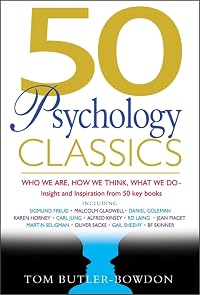
50 Psychology Classics: Who We Are, How We Think, What We Do; Insight and Inspiration from 50 Key Books
by Tom Butler-Bowdon 
Butler-Bowden's 50 Classics
On This Page
Description
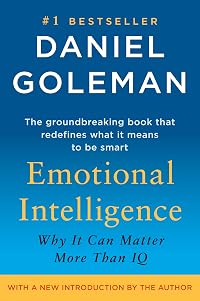
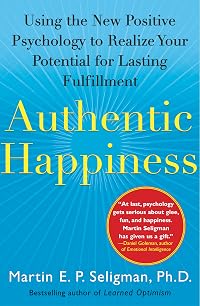
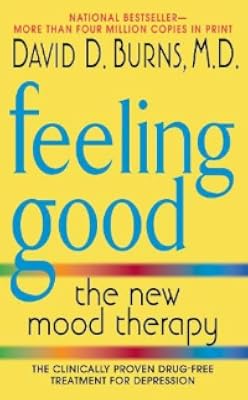
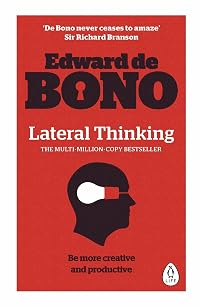
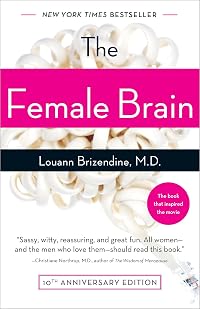
A Thinking Person's Guide to Popular Psychology We would all like to know the secrets of human nature - who we are, how we think, and what we do. In a journey that spans 50 books, hundreds of ideas, and over a century in time, 50 Psychology Classics explores important contemporary writings such as Gladwell's Blink and Seligman's Authentic Happiness as well as wisdom from key figures in psychology's development. EXPLORE the work of some of the greatest thinkers in psychology: ALFRED ADLER · show more ALBERT ELLIS · MILTON ERICKSON · ERIK ERIKSON · VICTOR FRANKL · ANNA FREUD · SIGMUND FREUD · HARRY HARLOW · KAREN HORNEY· WILLIAM JAMES · CARL JUNG · ALFRED KINSEY · MELANIE KLEIN · RD LAING · ABRAHAM MASLOW · STANLEY MILGRAM · IVAN PAVLOV · FRITZ PERLS · JEAN PIAGET · CARL ROGERS · BF SKINNER. GAIN insights into the scientific research of leading contemporary psychologists, psychiatrists and neurologists: Authentic Happiness · The Blank Slate · Emotional Blackmail · Feeling Good · The Female Brain · Frames of Mind · The Origins of Everyday Moods · The Paradox of Choice · Phantoms in the Brain · Stumbling on Happiness · Working with Emotional Intelligence DISCOVER why we think and act the way we do through the landmark bestsellers of psychology: Blink · Difficult Conversations · Games People Play · The Gift of Fear · I'm OK - You're OK · Influence: The Psychology of Persuasion · Lateral Thinking · The Man Who Mistook His Wife for a Hat · Passages · People Skills · The Psychology of Self-Esteem · The Seven Principles for Making Marriage Work With insightful commentaries on each classic, biographical information on the authors, plus a guide to further key titles, 50 PSYCHOLOGY CLASSICS provides a unique overview of this fascinating subject.. show less
Tags
Recommendations




Member Reviews
This book is an easy introduction to the current state of popular psychology (or rather to the arrival of serious psychological research into mainstream culture).
It is particularly valuable for anyone whose education in these matters ended before the massive flow of insights since the early 1980s on sexual difference, techniques of persuasion, emotional intelligence and the actual rather than theoretical workings of the unconscious.
The psychologists are a-political in general but their findings generally place to one side and forever the theory of the 'blank slate' that has driven so much progressive thinking for so long.
Men and women are now recognised as thinking profoundly differently for very fundamental hormonal and brain show more structure reasons. Society is better for that common sense realisation - even if ageing feminists of both sexes just cannot get their head around this fact of life.
The new gender psychology gives its due to both sexes' rights to negotiate their own sexual identity and remain responsible for themselves. I guess that our kids are going to be a lot more 'together' (on average) than anyone hitting their late 30s and above.
As for the manipulative aspects of psychology, thinking on these matters started as early as Stanley Milgram's experiments and the analyses of the Jonestown massacre in the 1970s.
It has taken almost thirty years and Abu Ghraib (and recent child abuse scandals) for it to sink into public consciousness that any claim of authority must be looked on with a very jaundiced eye if we are to avoid being dragged back into the social criminalities of the last century.
This, too, is fundamentally political. If the rising generations are conservative, they are also profoundly distrusting of the State and libertarian - and often more highly educated and resistant to the persuasive techniques of the market.
They will accept the latter but only as a form of permanent consumer-led entertainment, a process helped by the critical role of new technologies in moving sentiment against those who would manipulate too crassly. On the other hand, through movements like NLP, 'manipulation' has become democratised, creating an uncertain environment in interpersonal relations.
It may take a while for these changes to work through the system. Post-35 voters clearly dominate the agenda in recent US elections (this review has been revised slightly since it was originally written in 2008).
Each book is covered in a short, usually six-page, summary, that helps one choose which books might be chosen to read later because of one's particular interests.
The author (who has produced recent similar guides on self-help, spiritual and wealth creation) has a talent for distilling complex arguments into sufficient narrative that you move on feeling that you have both learnt something and want to learn more.
The only quibble is a common irritation that publishers always seem to insist on introducing books or ideas alphabetically - an irrational approach derived from the dictionary and encyclopedia. This is wholly inappropriate for contextual learning, ironically showing that the publishers and author (in this case) have not mentally moved on from older patterns of thinking.
This approach weakens the reader's ability to see how the discipline of psychology has developed, from William James, Sigmund Freud and Jean Piaget to Pinker, Seligman, Schwartz, Gladwell, Brizendine and Gilbert.
Fortunately, the author is intelligent enough to provide a useful introduction on the 'themes' at the beginning of the book and then a chronological list of texts (and another 50 influential books also introduced chronologically) at the back. Highly recommended. show less
It is particularly valuable for anyone whose education in these matters ended before the massive flow of insights since the early 1980s on sexual difference, techniques of persuasion, emotional intelligence and the actual rather than theoretical workings of the unconscious.
The psychologists are a-political in general but their findings generally place to one side and forever the theory of the 'blank slate' that has driven so much progressive thinking for so long.
Men and women are now recognised as thinking profoundly differently for very fundamental hormonal and brain show more structure reasons. Society is better for that common sense realisation - even if ageing feminists of both sexes just cannot get their head around this fact of life.
The new gender psychology gives its due to both sexes' rights to negotiate their own sexual identity and remain responsible for themselves. I guess that our kids are going to be a lot more 'together' (on average) than anyone hitting their late 30s and above.
As for the manipulative aspects of psychology, thinking on these matters started as early as Stanley Milgram's experiments and the analyses of the Jonestown massacre in the 1970s.
It has taken almost thirty years and Abu Ghraib (and recent child abuse scandals) for it to sink into public consciousness that any claim of authority must be looked on with a very jaundiced eye if we are to avoid being dragged back into the social criminalities of the last century.
This, too, is fundamentally political. If the rising generations are conservative, they are also profoundly distrusting of the State and libertarian - and often more highly educated and resistant to the persuasive techniques of the market.
They will accept the latter but only as a form of permanent consumer-led entertainment, a process helped by the critical role of new technologies in moving sentiment against those who would manipulate too crassly. On the other hand, through movements like NLP, 'manipulation' has become democratised, creating an uncertain environment in interpersonal relations.
It may take a while for these changes to work through the system. Post-35 voters clearly dominate the agenda in recent US elections (this review has been revised slightly since it was originally written in 2008).
Each book is covered in a short, usually six-page, summary, that helps one choose which books might be chosen to read later because of one's particular interests.
The author (who has produced recent similar guides on self-help, spiritual and wealth creation) has a talent for distilling complex arguments into sufficient narrative that you move on feeling that you have both learnt something and want to learn more.
The only quibble is a common irritation that publishers always seem to insist on introducing books or ideas alphabetically - an irrational approach derived from the dictionary and encyclopedia. This is wholly inappropriate for contextual learning, ironically showing that the publishers and author (in this case) have not mentally moved on from older patterns of thinking.
This approach weakens the reader's ability to see how the discipline of psychology has developed, from William James, Sigmund Freud and Jean Piaget to Pinker, Seligman, Schwartz, Gladwell, Brizendine and Gilbert.
Fortunately, the author is intelligent enough to provide a useful introduction on the 'themes' at the beginning of the book and then a chronological list of texts (and another 50 influential books also introduced chronologically) at the back. Highly recommended. show less
After an introduction, the book consists of fifty short chapters each laying out the main ideas in a classic psychology book. Each chapter concludes with a short biography of the author or authors. The chapters are well written, give a good summary of the main ideas and avoid controversy. This book is good if you want an overview of the various schools of thought of psychology. I found some chapters very interesting so it has been helpful in directing my reading to my interests. It is worthwhile noting the chapters that are of particular interest so that you don't have to go back over the book. There is probably too little detail to be of very much use to psychology students. The book concludes with a list of fifty more books with a one show more sentence description which is also useful. show less
With 50 Psychology Classics, we are introduced to a distilled version of fifty works in Psychology. They aren’t all classics, so the title might be a bit misleading. The book spans from William James to Walter Mischel. Some of the works are quite recent, but influence in other ways. They might be bestsellers or quoted a great amount. Some of the works are ones that I have read or at least have heard of. This is a pretty good introduction to Psychology in general, in that it recommends books and gets you interested in the material. The same guy does this series, and I have read the one on Philosophy.
I really enjoyed the book and would highly recommend it. I actually bought a copy of it, but I don’t remember where I got it from.
I really enjoyed the book and would highly recommend it. I actually bought a copy of it, but I don’t remember where I got it from.
Good collection of chapter-length summaries of 50 classics in psychology. About half of the works are either so dated or so bad that the summary is all that's ever needed from them, but it's still good to know the basics of these books. Several of the summarized books are so good that they're absolutely worth reading in full. Others are more context-dependent. The author did a good job of summarizing (based on a few of the books I've already read; assuming he did an equally good job on the others), so this is a good collection.
With 50 Psychology Classics, we are introduced to a distilled version of fifty works in Psychology. They aren’t all classics, so the title might be a bit misleading. The book spans from William James to Walter Mischel. Some of the works are quite recent but have influence in other ways. They might be bestsellers or quoted a great amount. Some of the works are ones that I have read or at least have heard of. This is a pretty good introduction to Psychology in general in that it recommends books and gets you interested in the material. The same guy does this series and I have read the one on Philosophy.
I really enjoyed the book and would recommend it pretty highly. I actually bought a copy of it but I don’t remember where I got it from.
I really enjoyed the book and would recommend it pretty highly. I actually bought a copy of it but I don’t remember where I got it from.
A decent summary of 50 of the most popular / influential popular psychology books. It's a good way to get a overview of the works which are influences our popular culture and modern psychology, but it does not do deep analysis nor systemamitizes the information.
50 Psychology Classics is an excellent overview of key texts throughout the field of psychology. Butler-Bowden distills the texts in a way that is lucid and insightful and provides an organizational structure that constantly skips back and forth through chronology.
Members
- Recently Added By
Author Information

27+ Works 1,810 Members
Tom Butler-Bowdon is a LibraryThing Author, an author who lists their personal library on LibraryThing.
All Editions
Series

Common Knowledge
- People/Characters
- Alfred Adler; Gavin de Becker; Eric Berne; Robert Bolton; Edward de Bono; Nathaniel Branden (show all 54); Isabel Briggs Meyers; Louann Brizendine; David D. Burns; Robert Cialdini; Mihaly Csikszentmihalyi; Albert Ellis; Robert A. Harper; Sidney Rosen; Erik Erikson; Hans Eysenck; Susan Forward; Viktor Frankl; Anna Freud; Sigmund Freud; Howard Gardner; Daniel Gilbert; Malcolm Gladwell; Daniel Goleman; John M. Gottman; Harry Harlow; Thomas A. Harris; Eric Hoffer; Karen Horney; William James; Carl Jung; Alfred Kinsey; Melanie Klein; R. D. Laing; Abraham Maslow; Stanley Milgram; Anne Moir; David Jessel; Ivan Pavlov; Fritz Perls; Jean Piaget; Steven Pinker; V. S. Ramachandran; Carl Rogers; Oliver Sacks; Barry Schwartz; Martin Seligman; Gail Sheehy; B. F. Skinner; Douglas Stone; Bruce Patton; Sheila Heen; William Styron; Robert E. Thayer
- Dedication
- For Cherry
- First words
- In a journey that spans 50 books, hundreds of ideas, and over a century in time, 50 Psychology Classics looks at some of the most intriguing questions relating to what motivates us, what makes us feel and act in certain ways,... (show all) how our brains work, and how we create a sense of self.
- Blurbers
- Persaud, Raj; Ramachandran, V. S.; Stone, Douglas
Classifications
Statistics
- Members
- 562
- Popularity
- 52,399
- Reviews
- 11
- Rating
- (3.79)
- Languages
- 7 — Dutch, English, German, Hungarian, Spanish, Swedish, Turkish
- Media
- Paper, Audiobook, Ebook
- ISBNs
- 28
- ASINs
- 9