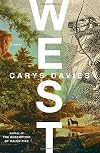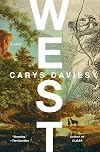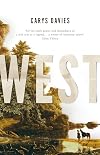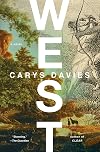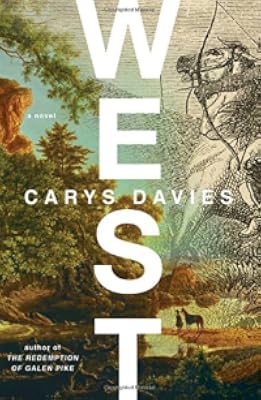
West
by Carys Davies
On This Page
Description
When widowed mule breeder Cy Bellman reads in the newspaper that colossal ancient bones have been discovered in the salty Kentucky mud, he sets out from his small Pennsylvania farm to see for himself if the rumors are true: that the giant monsters are still alive and roam the uncharted wilderness beyond the Mississippi River. Promising to write and to return in two years, he leaves behind his daughter, Bess, to the tender mercies of his taciturn sister and heads west. With only a barnyard show more full of miserable animals and her dead mother's gold ring to call her own, Bess, unprotected and approaching womanhood, fills lonely days tracing her father's route on maps at the subscription library and waiting for his letters to arrive. Bellman, meanwhile, wanders farther and farther from home, across harsh and alien landscapes in reckless pursuit of the unknown. From Frank O'Connor Award winner Carys Davies, West is a spellbinding and timeless epic-in-miniature, an eerie parable of the American frontier, and an electric monument to possibility. show lessTags
Recommendations











Member Recommendations
Inland by Téa Obreht
by doryfish

MM_Jones For those interested in a real view of living in the West
Member Reviews
In the early years of the nineteenth century Cyrus Bellman leaves his farm and his daughter in Pennsylvania to head west. He wears his thick woollen coat and his brand new stovepipe hat (all the better to impress any Native Americans he might encounter). As trade goods he takes his dead wife's blouse, her steel knitting needles, her copper thimble and a tin trunk full of beads - objects are important in this book. All because after reading a newspaper account of the discovery of the bones of massive and unknown creatures in a Kentucky bog, Bellman's mind will not let go of the conviction that the creatures must be alive somewhere in the relatively unexplored West, and he is determined to find them. Perhaps not such a strange conviction show more in an age when the idea of extinction itself was relatively new.
The novel alternates from the viewpoints of Cyrus and his guide (an unfortunately named Shawnee boy called Old Woman From a Distance) in the West and Cyrus's ten year old daughter Bess who has been left behind with her Aunt Julie in Pennsylvania. Each of these three characters tries to make sense of the world in which they find themselves, with Bess facing dangers at home no less real than those faced by her father.
Carys Matthews won thé Wales Book of the Year Fiction Award in 2019 and was a worthy winner in my opinion. (I don't know why L.T. seems to think she is Australian - it doesn't mention anything about Australia on her own website.) With sparse prose and each word carefully placed, this short book – more of a novella rather than a novel – is beautifully written and lays bare the unexpressed emotions of Bess and her father.
Highly recommended. show less
The giant beasts drifted across his mind like the vast creature-shaped clouds he saw when he stood in the yard behind the house and tipped his head up to the sky. When he closed his eyes, they moved behind the lids in the darkness, slowly, silently, as if through water—they walked and they drifted, pictures continually blooming in his imagination and then vanishing into the blackness beyond it, where he could not grasp them, the only thing left in his head the thought of them being alive and perambulating out there in the unknown, out there in the west beyond the United States in some kind of wilderness of rivers and trees and plains and mountains and there to behold with your own two eyes if you could just get yourself out there and find them.
The novel alternates from the viewpoints of Cyrus and his guide (an unfortunately named Shawnee boy called Old Woman From a Distance) in the West and Cyrus's ten year old daughter Bess who has been left behind with her Aunt Julie in Pennsylvania. Each of these three characters tries to make sense of the world in which they find themselves, with Bess facing dangers at home no less real than those faced by her father.
Carys Matthews won thé Wales Book of the Year Fiction Award in 2019 and was a worthy winner in my opinion. (I don't know why L.T. seems to think she is Australian - it doesn't mention anything about Australia on her own website.) With sparse prose and each word carefully placed, this short book – more of a novella rather than a novel – is beautifully written and lays bare the unexpressed emotions of Bess and her father.
Highly recommended. show less
I admit to not having high expectations for this short novel despite the blurbs, the premise seemed rather simple or folksy or something, but nonetheless something made me bring it home with me.
WEST tells the story of John Cyrus Bellman, a widowed, mule-breeder in Pennsylvania, who becomes enamored or obsessed with a newspaper article about huge, ancient animal bones found in Kentucky and decides he must go west, alone, to find the creatures which belong to these colossal bones. He packs up and rides off west, fancying himself a kind of noble explorer. But this short book also tells the story of the 11 year old daughter he leaves behind with his rather stern, unmarried sister. As Bellman explores and travels the next few years, show more overcoming harsh winter and other threats and obstacles, his lonely daughter draws back from her aunt and tries to follow her father’s route using library sources. She faces threats of her own.
Despite my pre-judgement, it took less than than a few pages before I was completely engrossed in this story and the spare 150 pages flew by. In a blurb, Tóibin claims the story has “all the immediacy of a folk tale or a legend” and I would agree. It feels like a classic tale, a bit of history, but there is something much deeper there I can’t quite put my finger on… show less
WEST tells the story of John Cyrus Bellman, a widowed, mule-breeder in Pennsylvania, who becomes enamored or obsessed with a newspaper article about huge, ancient animal bones found in Kentucky and decides he must go west, alone, to find the creatures which belong to these colossal bones. He packs up and rides off west, fancying himself a kind of noble explorer. But this short book also tells the story of the 11 year old daughter he leaves behind with his rather stern, unmarried sister. As Bellman explores and travels the next few years, show more overcoming harsh winter and other threats and obstacles, his lonely daughter draws back from her aunt and tries to follow her father’s route using library sources. She faces threats of her own.
Despite my pre-judgement, it took less than than a few pages before I was completely engrossed in this story and the spare 150 pages flew by. In a blurb, Tóibin claims the story has “all the immediacy of a folk tale or a legend” and I would agree. It feels like a classic tale, a bit of history, but there is something much deeper there I can’t quite put my finger on… show less
I like what I have read from Davies (this novel and "Clear"). There is the visceral sense of nature and outdoors as a character. It's harshness and power. I did have some trouble with the motivation for the quest at the center of this story...it didn't work for me. There is not much tension in this, but what she is good at is imagery. And this book of full of great descriptions. What seems to permeate everything is death and futility. It's turning point was so understated and unexpected. Things in general unfold in fairly unrealistic ways, but that's just the way it is. At the end of the day, you read this for the language and what it creates in your mind, not for its psychological realism.
Sometimes, when I look at the books which are earnestly delivered to us, I wonder why some people tell stories. Why go to the trouble of writing if you don't seem to have anything to say? Is it just for the sake of the craft, for doodles? A lot of modern writers – particularly, it seems, the fêted ones – have skill as prose-mongers but deliver a very superficial sense of meaning.
Carys Davies' tame novella West (more like a long short story, but at the RRP of a novel) brought such questions to my mind again. It ticks all the boxes you don't want to tick for a modern novel: a timeworn plot enlivened by a gimmick (here, dinosaur bones); one-note characters; bland functional dialogue; rape as a plot device; some trendy message about show more the plight of women or minorities (both here) in the face of evil, lecherous white men (we have room for not one but two different seedy paedophiles in this short, short book); and all coloured with some dimly-lit symbolism learned from Creative Writing seminars and a daft, open-ended ending that makes a clumsy play for profundity. They play it safe, these tame writers, and everyone calls it genius (it 'unfolds with a sense of inevitability', they say, rather than just saying it is predictable from first to last). West is beige, middle-class fiction for reading groups (those well-known lovers of Westerns…) and seems to exist only to pass the time. And because of its short length, it doesn't even pass much of that.
I didn't dislike the book. I didn't really have any negative emotion towards it, just a mild sense of bewilderment and growing indifference, and bafflement at why it has been praised so effusively and universally. The flaws in the book abound, even beyond those I have already mentioned. I love short, sparse stories, but West is far too short for what it seems to want to do (those who compare this book to Steinbeck should actually go and read some Steinbeck). The sprawling quest is not really unpacked, so you don't get a sense of the passage of time (which is supposed to be more than two years) and none of the characters transcend their function. There's far too many of them to leave room for any character development. Criminally, Davies just tells us they have changed (face-heel turns for the protagonist, for example, who one moment is driving forward for his quixotic quest and the next wants to go home; and for the Indian boy, who one moment hates Bellman and the next admires him) and expects us to accept it. We're told of the changes in them, but the author, with her perfunctory manner, doesn't convince us of them. They have no motivation that manifests itself to the reader, and it is as if Davies is creating her characters simply to send them to die on a pointless hill, like a World War One general seeking to gain a half-mile of mud and ground for no discernible strategic reason.
Other reviewers have praised the prose, and it is tidy, but it is not particularly fine. It is a clean book but there was no line – either in the dialogue, in the pace, or in the descriptive writing – which really took my breath away. And I am a reader who lives for such fashionings. It is trying to do too much without being able to do anything; and the attempt at clean prosing doesn't mix with the wishy-washy symbolism and the pointless shifts between past and present tense. The attempt to enjoy the adventure doesn't mix well with the fact that the protagonist has abandoned his ten-year-old orphan daughter, prejudicing us against him from the off. And the attempts at black comedy are tone-deaf alongside major plot points which revolve around child abandonment and paedophilic rape. A hypothetical novel could conceivably hit all these marks, but not something so short, spartan and sophomoric as West.
What has the writer provided us, except a short doodle? Plot and character are undercooked. Theme is beaten down into mere reading-group symbolism. And meaning is absent, for it is a godless world (and I don't literally mean God, rather that it has no soul or purpose). What have we here? It's not really a Western, not even a literary Western, but my disappointment does not stem from that. Rather, it's that it's not anything. I wish it had more meat, for it is all bones. It is a middle-of-the-road book when the West is all about pathless adventure and possibility. We have ambivalence when we should have magnificence. It is as shallow as the country is deep; as safe as America is raw. Not all stories have to devastate the world, but the great arena of the American West deserves more than just a shrug. Davies and her characters both are essentially just playing games with trinkets. show less
Carys Davies' tame novella West (more like a long short story, but at the RRP of a novel) brought such questions to my mind again. It ticks all the boxes you don't want to tick for a modern novel: a timeworn plot enlivened by a gimmick (here, dinosaur bones); one-note characters; bland functional dialogue; rape as a plot device; some trendy message about show more the plight of women or minorities (both here) in the face of evil, lecherous white men (we have room for not one but two different seedy paedophiles in this short, short book); and all coloured with some dimly-lit symbolism learned from Creative Writing seminars and a daft, open-ended ending that makes a clumsy play for profundity. They play it safe, these tame writers, and everyone calls it genius (it 'unfolds with a sense of inevitability', they say, rather than just saying it is predictable from first to last). West is beige, middle-class fiction for reading groups (those well-known lovers of Westerns…) and seems to exist only to pass the time. And because of its short length, it doesn't even pass much of that.
I didn't dislike the book. I didn't really have any negative emotion towards it, just a mild sense of bewilderment and growing indifference, and bafflement at why it has been praised so effusively and universally. The flaws in the book abound, even beyond those I have already mentioned. I love short, sparse stories, but West is far too short for what it seems to want to do (those who compare this book to Steinbeck should actually go and read some Steinbeck). The sprawling quest is not really unpacked, so you don't get a sense of the passage of time (which is supposed to be more than two years) and none of the characters transcend their function. There's far too many of them to leave room for any character development. Criminally, Davies just tells us they have changed (face-heel turns for the protagonist, for example, who one moment is driving forward for his quixotic quest and the next wants to go home; and for the Indian boy, who one moment hates Bellman and the next admires him) and expects us to accept it. We're told of the changes in them, but the author, with her perfunctory manner, doesn't convince us of them. They have no motivation that manifests itself to the reader, and it is as if Davies is creating her characters simply to send them to die on a pointless hill, like a World War One general seeking to gain a half-mile of mud and ground for no discernible strategic reason.
Other reviewers have praised the prose, and it is tidy, but it is not particularly fine. It is a clean book but there was no line – either in the dialogue, in the pace, or in the descriptive writing – which really took my breath away. And I am a reader who lives for such fashionings. It is trying to do too much without being able to do anything; and the attempt at clean prosing doesn't mix with the wishy-washy symbolism and the pointless shifts between past and present tense. The attempt to enjoy the adventure doesn't mix well with the fact that the protagonist has abandoned his ten-year-old orphan daughter, prejudicing us against him from the off. And the attempts at black comedy are tone-deaf alongside major plot points which revolve around child abandonment and paedophilic rape. A hypothetical novel could conceivably hit all these marks, but not something so short, spartan and sophomoric as West.
What has the writer provided us, except a short doodle? Plot and character are undercooked. Theme is beaten down into mere reading-group symbolism. And meaning is absent, for it is a godless world (and I don't literally mean God, rather that it has no soul or purpose). What have we here? It's not really a Western, not even a literary Western, but my disappointment does not stem from that. Rather, it's that it's not anything. I wish it had more meat, for it is all bones. It is a middle-of-the-road book when the West is all about pathless adventure and possibility. We have ambivalence when we should have magnificence. It is as shallow as the country is deep; as safe as America is raw. Not all stories have to devastate the world, but the great arena of the American West deserves more than just a shrug. Davies and her characters both are essentially just playing games with trinkets. show less
Rating: 3.9* of five
A lovely little book, a slip of a thing that has the gravitas of a far longer book in a far more concentrated and sharp novella.
I can't blame anyone for finding the story sad, it surely is; but with an ending so deeply felt and so beautifully wrought that the most size-conscious reader can't come away feeling gypped. Old Woman from a Distance is a beautifully rendered portrait of The Survivor; Bellman is the portrait of The Fool. Deveraux and Aunt Julie are sides of the coin that Elmer and Hollinghurst steal with simple, transparent tricks. I knew I'd loathe Aunt Julie on p23:
Yeah, no. We ain't a-gonna be book-besties, me'n'Julie, no way no how. Nor does Bess find much to love in her father's sister:
Aunt Julie in a nutshell; Bess to the teeth an anti-Julie like anti-matter to baryonic matter. A horrible life to live, one with someone who simply isn't capable of connecting with you. But worse is to come, as we know.
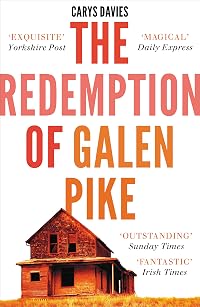
When events unspool in the second half of the book and several separate tragedies unfold, it's Author Davies's skill at telling the story that keeps pages turning. You see, this is a tale told, not a life lived in prose. This book is the well-written story of the story. It's a distancing narrative strategy. I don't mind it too awful terrible much when the sentences are lovely and the paragraphs lead me to the finish line without becoming arch, or unfocused. Archness is perhaps the bigger danger, since Author Davies is an experienced hand at writing short stories (eg, [Some New Ambush], [The Redemption of Galen Pike]). In fact, this feels like a novella that sprang from a short story which simply couldn't contain the entire necessary plot.
So I'm a fraction off ecstatic, but on the high end of very well pleased, at the end of the read. I recommend it to anyone who needs a dose of a truly spunky and resourceful character (Bellman) and a stern, steely hero (Bess) who meet their fates without a single illusion between them and reality. The illusions have all burned away. This explains their differing ends. show less
A lovely little book, a slip of a thing that has the gravitas of a far longer book in a far more concentrated and sharp novella.
I can't blame anyone for finding the story sad, it surely is; but with an ending so deeply felt and so beautifully wrought that the most size-conscious reader can't come away feeling gypped. Old Woman from a Distance is a beautifully rendered portrait of The Survivor; Bellman is the portrait of The Fool. Deveraux and Aunt Julie are sides of the coin that Elmer and Hollinghurst steal with simple, transparent tricks. I knew I'd loathe Aunt Julie on p23:
After a month {Bess} asked her Aunt Julie if they could go to the library so she could look at the big journals of the President's Expeditionshow more
and see the path her father had taken into the west, but Aunt Julie only looked at her in a kind of irritated amazement.
"And when, child," Bellman's sister demanded to know, "do you suppose I have time to sit in a library?
Yeah, no. We ain't a-gonna be book-besties, me'n'Julie, no way no how. Nor does Bess find much to love in her father's sister:
Aunt Julie said what a pretty girl Dorothy had turned into and she wouldn't be surprised if Sidney {a rich-but-loutish boy Bess told off some time ago} and Dorothy weren't a married pair a few years from now. What did Bess think of that?
Bess said she thought nothing of it. Bess said that was the last thing in the world she'd think of thinking about.
Aunt Julie in a nutshell; Bess to the teeth an anti-Julie like anti-matter to baryonic matter. A horrible life to live, one with someone who simply isn't capable of connecting with you. But worse is to come, as we know.
When events unspool in the second half of the book and several separate tragedies unfold, it's Author Davies's skill at telling the story that keeps pages turning. You see, this is a tale told, not a life lived in prose. This book is the well-written story of the story. It's a distancing narrative strategy. I don't mind it too awful terrible much when the sentences are lovely and the paragraphs lead me to the finish line without becoming arch, or unfocused. Archness is perhaps the bigger danger, since Author Davies is an experienced hand at writing short stories (eg, [Some New Ambush], [The Redemption of Galen Pike]). In fact, this feels like a novella that sprang from a short story which simply couldn't contain the entire necessary plot.
So I'm a fraction off ecstatic, but on the high end of very well pleased, at the end of the read. I recommend it to anyone who needs a dose of a truly spunky and resourceful character (Bellman) and a stern, steely hero (Bess) who meet their fates without a single illusion between them and reality. The illusions have all burned away. This explains their differing ends. show less
WEST seems like a simple enough story. A man learns about dinosaur bones from a newspaper and decides that he must find out if these creatures still exist in the vast unknown wilderness of the 18th century American West. Davies uses this simple premise to create a deceptively complex and interesting novel that has more in common with fables than it does with big historical novels. Using the sparest of language and many first person narratives, she creates something that is quite magical more for what is left unsaid than for what is said. Her dual protagonists—the one who leaves (Cy Bellman) and the one who stays behind (daughter Bess)—tell the story from both fronts. The added narrations from minor characters give the novel the show more flavor of a Greek chorus permitting Davies to explore a few morally ambiguous questions that still resonate today.
At what point does exploration become plunder and genocide? In the early 18th century, Native Americans were migrated out of the places that the Whites wanted in exchange for useless trinkets. Bellman was looking for creatures that long ago became extinct accompanied by a Shawnee guide—“Old Woman From A Distance”—whose people also were being threatened with extinction. Through his first person narrative, Davies shows this Native American boy to be more complex than the racist stereotype prevalent at the time and characterized by the frontier fixer, Devereux. Not unlike the Palestinians of today, “Woman” not only was angry about how his people were being treated but also clear-eyed about what would be necessary for them to survive. “Remember, there are no gods,” he thinks. “We have ourselves and nothing else.”
When does ambition and curiosity become pure folly? Bellman articulates a rationale for his curious quest as follows: “You had so many ways of deciding which way to live your life. It made his head spin to think of them. It hurt his heart to think that he had decided on the wrong way.” Bellman’s curiosity was not unlike that of all geniuses—exploring the unknown is in our nature. Davies, notwithstanding, is able to humanize Bellman by giving him some more self-centered reasons for leaving his home and daughter in the care of his cold spinster sister, Julie: boredom with his small community, disappointment with excessive family commitments, weariness with mule breeding, and especially grieving for his recently deceased wife. Clearly, Bellman’s quest turns into something more challenging than he initially perceived. He estimated that his excursion might take one year or slightly more, but never the time it actually took. In the end, one sees Cy Bellman begin to realize the hardships that the West presented and the shear folly of his quest.
What does it take for hope to become despair? Bess clearly adores her father and is heartbroken by his leaving. But she keeps hope alive by following what she believes to be his travels by reading about the now famous Lewis and Clark expedition in the local subscription library. Bellman tries to maintain a correspondence with Bess but never learns that his letters don’t make it to her. Nonetheless Bess never abandons hope that Bellman would return until the end of the novel when Davies works in a remarkable twist that would be too much of a spoiler to reveal. Bess eventually sees that her father will not be coming home through some adornments that make their way beck to her in a most interesting way.
The writing is lucid and lyrical often resembling poetry. The narrative is as fast-paced as a short story, leaving much to be inferred. Of particular note is Davies’ use of common items to show just how tenuous life was both in more settled Pennsylvania and in the vast Western wilderness. Of course the stovepipe hat plays a starring role serving as a dominance icon for the “savages.” Other items with prominent roles include his wife’s striped blouse and knitting needles. The items he takes reveal also his naïve expectations and include a few weapons, an overcoat, and a box of trinkets for trade. The only insurance policy he leaves with Bess and Julie is his wife’s gold wedding ring. show less
At what point does exploration become plunder and genocide? In the early 18th century, Native Americans were migrated out of the places that the Whites wanted in exchange for useless trinkets. Bellman was looking for creatures that long ago became extinct accompanied by a Shawnee guide—“Old Woman From A Distance”—whose people also were being threatened with extinction. Through his first person narrative, Davies shows this Native American boy to be more complex than the racist stereotype prevalent at the time and characterized by the frontier fixer, Devereux. Not unlike the Palestinians of today, “Woman” not only was angry about how his people were being treated but also clear-eyed about what would be necessary for them to survive. “Remember, there are no gods,” he thinks. “We have ourselves and nothing else.”
When does ambition and curiosity become pure folly? Bellman articulates a rationale for his curious quest as follows: “You had so many ways of deciding which way to live your life. It made his head spin to think of them. It hurt his heart to think that he had decided on the wrong way.” Bellman’s curiosity was not unlike that of all geniuses—exploring the unknown is in our nature. Davies, notwithstanding, is able to humanize Bellman by giving him some more self-centered reasons for leaving his home and daughter in the care of his cold spinster sister, Julie: boredom with his small community, disappointment with excessive family commitments, weariness with mule breeding, and especially grieving for his recently deceased wife. Clearly, Bellman’s quest turns into something more challenging than he initially perceived. He estimated that his excursion might take one year or slightly more, but never the time it actually took. In the end, one sees Cy Bellman begin to realize the hardships that the West presented and the shear folly of his quest.
What does it take for hope to become despair? Bess clearly adores her father and is heartbroken by his leaving. But she keeps hope alive by following what she believes to be his travels by reading about the now famous Lewis and Clark expedition in the local subscription library. Bellman tries to maintain a correspondence with Bess but never learns that his letters don’t make it to her. Nonetheless Bess never abandons hope that Bellman would return until the end of the novel when Davies works in a remarkable twist that would be too much of a spoiler to reveal. Bess eventually sees that her father will not be coming home through some adornments that make their way beck to her in a most interesting way.
The writing is lucid and lyrical often resembling poetry. The narrative is as fast-paced as a short story, leaving much to be inferred. Of particular note is Davies’ use of common items to show just how tenuous life was both in more settled Pennsylvania and in the vast Western wilderness. Of course the stovepipe hat plays a starring role serving as a dominance icon for the “savages.” Other items with prominent roles include his wife’s striped blouse and knitting needles. The items he takes reveal also his naïve expectations and include a few weapons, an overcoat, and a box of trinkets for trade. The only insurance policy he leaves with Bess and Julie is his wife’s gold wedding ring. show less
This book is a fever dream of a story and the only good that happens is that everything that could go badly doesn't, quite. It does capture a bit of that midlife madness that segregates the mind from real problems by pickling it in a new obsession and the pre-teen isolation of having no sympathetic people to share time, space, and fascinations.
Members
- Recently Added By
Lists

2022 Christmas Gifts
60 works; 13 members

Books Read in 2023
5,547 works; 145 members

Kirkus Starred Fiction Reviews of Books Published in 2018
330 works; 3 members

Books Read in 2018
4,360 works; 110 members

2023 Christmas Gifts
39 works; 11 members

Books Read in 2024
4,623 works; 126 members

Books Read in 2026
1,856 works; 66 members
Author Information

Some Editions
Awards and Honors
Awards
Distinctions
Common Knowledge
- Canonical title
- West
- Original publication date
- 2018-04-24
- People/Characters
- John Cyrus Bellman; Bess Bellman; Julie Bellman; Elmer Jackson; Sidney Lott; Helen Lott (show all 8); Devereux; Old Woman From A Distance
- Dedication
- for C, G, B & A
- First words
- From what she could see he had two guns, a hatchet, a knife, his rolled blanket, the big tin chest, various bags and bundles, one of which, she supposed, contained her mother's things.
- Last words
- (Click to show. Warning: May contain spoilers.)When she closed her eyes she saw them fluttering behind him in the morning breeze like a flag, and a jeweled cape.
- Blurbers
- Obreht, Téa; Toibin, Colm; Messud, Claire; Sharma, Akhil; MacLaverty, Bernard
Classifications
Statistics
- Members
- 432
- Popularity
- 71,074
- Reviews
- 32
- Rating
- (3.74)
- Languages
- 8 — Dutch, English, French, German, Italian, Portuguese (Portugal), Spanish, Turkish
- Media
- Paper, Audiobook, Ebook
- ISBNs
- 22
- ASINs
- 7