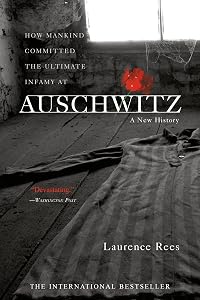
Auschwitz : The Nazis & the 'Final Solution'
by Laurence Rees
On This Page
Description
This vivid and harrowing narrative history of the most notorious concentration camp of the Holocaust preserves the authentic voices of survivors and perpetrators The largest mass murder in human history took place in World War II at Auschwitz. Yet its story is not fully known. In "Auschwitz", Laurence Rees reveals new insights from more than 100 original interviews with survivors and Nazi perpetrators who speak on the record for the first time. Their testimonies provide a portrait of the show more inner workings of the camp in unrivalled detail-from the techniques of mass murder, to the politics and gossip mill that turned between guards and prisoners, to the on-camp brothel in which the lines between those guards and prisoners became surprisingly blurred. Rees examines the strategic decisions that led the Hitler and Himmler to make Auschwitz the primary site for the extinction of Europe's Jews-their "Final Solution." He concludes that many of the horrors that were perpetrated in Auschwitz were the result of a terrible immoral pragmatism. The story of the camp becomes a morality tale, too, in which evil is shown to proceed in a series of deft, almost noiseless incremental steps until it produces the overwhelming horror of the industrial scale slaughter that was inflicted in the gas chambers of Auschwitz. show lessTags
Recommendations



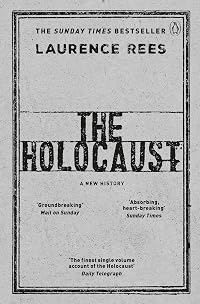

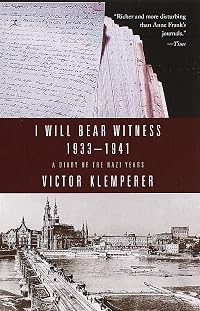


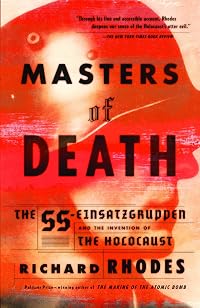

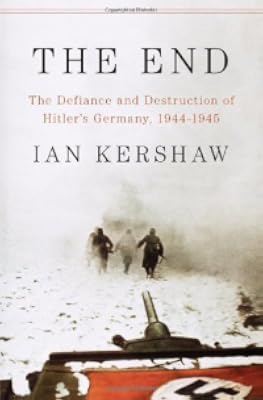









Member Recommendations

Member Reviews
One of the most baffling feature of the Nazi regime was that, despite being a brutal dictatorship obsessed with order, perfection, and discipline, some of the major decisions that came to define it were actually taken in complete chaos, rushed uncertainty, and wild arbitrariness, often under the pressure of outside and unpredictable events. Tragically, Auschwitz, which since then became the symbol of a whole nauseating ideology, didn't escape such rule; like Laurence Rees reminds us here in this remarkable book retelling the story of the camp.
The British historian and journalist (he wrote and produced many documentaries for the BBC) shows how what started as a simple transit camp for prisoners slowly turned into one of the most show more efficient killing machine of the Third Reich. Cleverly structured, he gives us to see the Auschwitz-monstrosity continuously metamorphosing itself, depending varyingly on the circumstances of the war - especially events on the Eastern front.
Beyond that, he also tries to understand how human beings could have committed such atrocities. There's the abject and brutal cynicism of a Rudolf Hoess, or, the sadism of a Joseph Mengele; but, beyond these two emblematic and well-known figures, Laurence Rees actually went to interview SS involved in the extermination process (in Auschwitz and elsewhere). The window thus opened upon their psyche is chilling. Without denying the issue of individual responsibility when faced with immoral and unethical choices, by putting their deeds straight back into the context of the time we get a better glimpse of why they ultimately went with it all. Such awareness is shocking, but, it also help to shed lights as to why, loosing itself into the Cold War and the fog of another brutal and murderous regime (Stalinism in Eastern Europe) we will have to wait several decades after the end of WWII before fully getting to grip with the true magnitude of such a genocide. Back then indeed, antisemitism and anti-Jewish actions were far from being the sole prerogative of the Nazis! Most culprits went unpunished. Let's remember, too, that despite the Allies knowing about it all at least since the summer of 1944, liberating these camps were not a priority on their military agendas (the camp will ultimately be liberated only in January 1945...).
Polemics aside, one of the core strength of the book is that the author takes the time, each chapter, to dedicate a few pages to personal stories of people having been through it. It's not about a vulgar display of pathos (though it can be an emotionally difficult read) but, about better understanding the human impact of what were cold and bureaucratic measures (eg. the brutality of the ghettos in Poland, their cleansing, the mass arrests in France, the Danish exception...). On an even more individual level, he even reveals amazing stories where truth surpasses fiction (eg. a Jewish prisoner and a SS guard falling in love with each other...) blowing thus away the black or white dichotomy so easy to fall into when dealing with such topics.
Informed, rich, intelligent, sensitive... Here's a must read for anyone trying to better understand one of the most bewildering episode of our history. show less
The British historian and journalist (he wrote and produced many documentaries for the BBC) shows how what started as a simple transit camp for prisoners slowly turned into one of the most show more efficient killing machine of the Third Reich. Cleverly structured, he gives us to see the Auschwitz-monstrosity continuously metamorphosing itself, depending varyingly on the circumstances of the war - especially events on the Eastern front.
Beyond that, he also tries to understand how human beings could have committed such atrocities. There's the abject and brutal cynicism of a Rudolf Hoess, or, the sadism of a Joseph Mengele; but, beyond these two emblematic and well-known figures, Laurence Rees actually went to interview SS involved in the extermination process (in Auschwitz and elsewhere). The window thus opened upon their psyche is chilling. Without denying the issue of individual responsibility when faced with immoral and unethical choices, by putting their deeds straight back into the context of the time we get a better glimpse of why they ultimately went with it all. Such awareness is shocking, but, it also help to shed lights as to why, loosing itself into the Cold War and the fog of another brutal and murderous regime (Stalinism in Eastern Europe) we will have to wait several decades after the end of WWII before fully getting to grip with the true magnitude of such a genocide. Back then indeed, antisemitism and anti-Jewish actions were far from being the sole prerogative of the Nazis! Most culprits went unpunished. Let's remember, too, that despite the Allies knowing about it all at least since the summer of 1944, liberating these camps were not a priority on their military agendas (the camp will ultimately be liberated only in January 1945...).
Polemics aside, one of the core strength of the book is that the author takes the time, each chapter, to dedicate a few pages to personal stories of people having been through it. It's not about a vulgar display of pathos (though it can be an emotionally difficult read) but, about better understanding the human impact of what were cold and bureaucratic measures (eg. the brutality of the ghettos in Poland, their cleansing, the mass arrests in France, the Danish exception...). On an even more individual level, he even reveals amazing stories where truth surpasses fiction (eg. a Jewish prisoner and a SS guard falling in love with each other...) blowing thus away the black or white dichotomy so easy to fall into when dealing with such topics.
Informed, rich, intelligent, sensitive... Here's a must read for anyone trying to better understand one of the most bewildering episode of our history. show less
Pretty good book about the Holocaust focusing mainly on Auschwitz that also covers a lot of rest of the so-called Final Solution too; the motivations, personnel, bureaucracy, logistics. etc. The best aspect is the mundanity of it all except for the victims. Most people like you and me, when asked say "I'd never do a thing like that," or I'd resist." Bullshit! Replace the Jew, for which you might not have a great hatred for, by Muslim, or Gay, African-American or Asian, Transgender...you get what I mean. What if your government showed up tomorrow and said: "We want you to take care of these people in resettlement camps," or "How about a nice paying job in the administration, say paying twice what your getting now, with healthcare." Or show more how about as they are just rounding up these folks or as they truck/bus them by your house. You'd be out in the street throwing rocks, screaming and shouting with a rake at the perpetrators even if they told you they knew where you lived or there was plenty of room for you too, or your kids. Right. Even worse, when they put up those "We're Hiring" notices at three times what your making at WalMart? You'd never do it. Or a cushy executive/manager job in "logistics" or "engineering," where you never have to see a gun, or worse; particularly if your other choice was going to Iraq, or Afghanistan, or Korea, or the Republic of Niger or Mexico. You'd be right there at the job fair, maybe I would too. That's the real scary part. Both sides of the fence were just ordinary people in a civilized modern country, not some madmen.
Look in the mirror tomorrow and seriously ask the question. It'll creep you out. show less
Look in the mirror tomorrow and seriously ask the question. It'll creep you out. show less
The history of the development of Auschqitz-Birkenau is one filled with horror, secrets, and often confusion, but this book does an admirable job of exploring many of the topics that get glossed over. I was very impressed particularly with the effort that the author made to examine the mindsets of many of the Nazy leaders who had direct influence over Jewish policy and the development of the death camps, as well as discusses the stories of lesser SS members who were involved in the everyday running of the camps. Much of this type of psychological speculation is just that - speculation - even though we do have many interviews, documents, and memoirs to work with, but by asking these questions we may be able to answer some of the large show more social questions that surround that time period, and come to realizations about why these events happenned. show less
Auschwitz is a good history of what is probably the best known, at least by name, of the German concentration/death camps. Rees traces the development of Auschwitz from its origins as a concentration camp, plans for it to become an agricultural research centre (Himmler was very keen), its evolution into an industrial production site with the active compliance of I.G.Farben (which never produced anything of value), and then its final incarnation as a death camp. Along the way, he details how the whole process from transportation, to selection, to murder, to disposal of bodies, and the harvesting of valuables down to removing gold fillings continued to evolve and "improve" its efficiencies. As Rees says:
..this was a collective enterprise show more owned by thousands of people, who each made the decision not just to take part but to contribute initiatives in order to solve the problem of how to kill human beings and dispose of their bodies on a scale never attempted before.
Rees feels that the story provides insight into the human condition, and that is mostly not good. This is a story of human degradation and suffering that is almost never redemptive. More than 200,000 children were murdered in Auschwitz, and at one time, the procession of empty baby carriages pushed out of Auschwitz towards the train station, in rows of five, took an hour to pass.
Rees knows that:
What these survivors have taught me (and, if I am honest, I learned it from the perpetrators as well) is that human behaviour is fragile and unpredictable and often at the mercy of the situation.
Which recalls a quote from Paul Fussell that I have always remembered:
...if you can't imagine yourself as an SS officer hustling Jewish women and children into the gas chamber, you need to be more closely in touch with your buried self.
Who knows how any one of us might react in a given situation? And then there is the seduction of the "cumulative radicalization" of the Nazi regime that produced monsters from perfectly ordinary people who, in another lifeline, would have led full but uneventful lives that harmed no one. (See Christopher Browning's excellent study on one police battalion that became engaged in the murder of Jews in the Soviet Union). Christabel Bielenburg captured this in her excellent memoir, The Past is Myself:
..it became increasingly difficult for us to escape the occasional compromise. By compromising we could learn how each small demand for our outward acquiescence could lead to the next and with the gentle persistence of an incoming tide could lap at the wall of just that integrity we were so anxious to preserve.
Interestingly, although they started from a very different place, even the Nazi leadership was susceptible to the effects of this cumulative radicalization. Rees quotes statement from both Himmler and Heydrich, in 1940, to the effect that "biological extermination is undignified for the German people as a civilized nation". But the progress of the war, the increasing mania about the Jews, and the greatly improved gathering and killing methods, led to the development and implementation and commitment of vast resources to the Final Solution.
Rees puts his history within the broader context of evolution of Nazi Jewish policy and addresses the differing reactions of various countries, from the shameful complicity of the French authorities "at every stage" to the honourable actions of the Danes to save their Jewish citizens.
Rees also argues that a recurring theme in practically every aspect of Nazi planning and actions, not just limited to the murder of Jews but in the whole conduct of the war,, is that, "the Nazi leadership constantly must contend with events they have not properly anticipated".
This is never an easy story, and Rees has a number of individual stories of horror to recount as well, but it is an important one. show less
..this was a collective enterprise show more owned by thousands of people, who each made the decision not just to take part but to contribute initiatives in order to solve the problem of how to kill human beings and dispose of their bodies on a scale never attempted before.
Rees feels that the story provides insight into the human condition, and that is mostly not good. This is a story of human degradation and suffering that is almost never redemptive. More than 200,000 children were murdered in Auschwitz, and at one time, the procession of empty baby carriages pushed out of Auschwitz towards the train station, in rows of five, took an hour to pass.
Rees knows that:
What these survivors have taught me (and, if I am honest, I learned it from the perpetrators as well) is that human behaviour is fragile and unpredictable and often at the mercy of the situation.
Which recalls a quote from Paul Fussell that I have always remembered:
...if you can't imagine yourself as an SS officer hustling Jewish women and children into the gas chamber, you need to be more closely in touch with your buried self.
Who knows how any one of us might react in a given situation? And then there is the seduction of the "cumulative radicalization" of the Nazi regime that produced monsters from perfectly ordinary people who, in another lifeline, would have led full but uneventful lives that harmed no one. (See Christopher Browning's excellent study on one police battalion that became engaged in the murder of Jews in the Soviet Union). Christabel Bielenburg captured this in her excellent memoir, The Past is Myself:
..it became increasingly difficult for us to escape the occasional compromise. By compromising we could learn how each small demand for our outward acquiescence could lead to the next and with the gentle persistence of an incoming tide could lap at the wall of just that integrity we were so anxious to preserve.
Interestingly, although they started from a very different place, even the Nazi leadership was susceptible to the effects of this cumulative radicalization. Rees quotes statement from both Himmler and Heydrich, in 1940, to the effect that "biological extermination is undignified for the German people as a civilized nation". But the progress of the war, the increasing mania about the Jews, and the greatly improved gathering and killing methods, led to the development and implementation and commitment of vast resources to the Final Solution.
Rees puts his history within the broader context of evolution of Nazi Jewish policy and addresses the differing reactions of various countries, from the shameful complicity of the French authorities "at every stage" to the honourable actions of the Danes to save their Jewish citizens.
Rees also argues that a recurring theme in practically every aspect of Nazi planning and actions, not just limited to the murder of Jews but in the whole conduct of the war,, is that, "the Nazi leadership constantly must contend with events they have not properly anticipated".
This is never an easy story, and Rees has a number of individual stories of horror to recount as well, but it is an important one. show less
Excellent, though not exactly cheery reading. Rees - who is rapidly becoming the go-to guy for historical analysis of genocide and war crime in the Twentieth Century - details how Auschwitz became the most illustrative and extreme expression of the Nazi Regime in all its insanity, its murderousness and its incompetence.
It's the incompetence that comes as a surprise. Despite the myth that Nazis were highly organised and efficient, Rees demonstrates that the regime was a clumsy and bumbling mess of conflicting and competing bureaucracies that worked, usually against each other, to find ways to impress Hitler by putting his insane but largely abstract ideas into action.
Rees also dismisses the idea of the SS as mindless automatons who show more simply "obeyed orders" without question or thought. Far from simply doing as instructed, SS officers and even lower ranks were actually given wide parameters for their "duties" and it was consistently *them* who came up with ways to kill and dispose of their victims; often with ingenuity and always with enthusiasm. Many of the most horrific elements of the death factories for which Auschwitz was the model did not come from orders from the "top" but from innovations from the bottom.
Rees further argues that its the industrialisation and depersonalisation that became built into the process that sets the Holocaust apart from other genocides and crimes against humanity. He also makes a compelling case for Auschwitz as a microcosm of the Nazi regime generally.
At times the detailed description of how this industrialisation of mass murder is so methodical that the Nazis' insane ideas almost start to take on a kind of perverse logic. But every two pages or so a particularly macabre detail amongst the catalogues of official memos and lists of transport schedules snaps the reader back to a realisation of what it is that Rees is explaining.
Eye witness accounts of the sand covering a new mass grave moving and writhing as wounded victims tried to fight their way out of the mass of fresh corpses or a bizarre column of the prams of gassed children, five prams wide and taking an hour to go past, are images that are hard to forget.
This will probably be the definitive history of Auschwitz for decades to come and deservedly so. Chilling but superb. show less
It's the incompetence that comes as a surprise. Despite the myth that Nazis were highly organised and efficient, Rees demonstrates that the regime was a clumsy and bumbling mess of conflicting and competing bureaucracies that worked, usually against each other, to find ways to impress Hitler by putting his insane but largely abstract ideas into action.
Rees also dismisses the idea of the SS as mindless automatons who show more simply "obeyed orders" without question or thought. Far from simply doing as instructed, SS officers and even lower ranks were actually given wide parameters for their "duties" and it was consistently *them* who came up with ways to kill and dispose of their victims; often with ingenuity and always with enthusiasm. Many of the most horrific elements of the death factories for which Auschwitz was the model did not come from orders from the "top" but from innovations from the bottom.
Rees further argues that its the industrialisation and depersonalisation that became built into the process that sets the Holocaust apart from other genocides and crimes against humanity. He also makes a compelling case for Auschwitz as a microcosm of the Nazi regime generally.
At times the detailed description of how this industrialisation of mass murder is so methodical that the Nazis' insane ideas almost start to take on a kind of perverse logic. But every two pages or so a particularly macabre detail amongst the catalogues of official memos and lists of transport schedules snaps the reader back to a realisation of what it is that Rees is explaining.
Eye witness accounts of the sand covering a new mass grave moving and writhing as wounded victims tried to fight their way out of the mass of fresh corpses or a bizarre column of the prams of gassed children, five prams wide and taking an hour to go past, are images that are hard to forget.
This will probably be the definitive history of Auschwitz for decades to come and deservedly so. Chilling but superb. show less
This is not the sole story of Auschwitz per se. This book is in fact an attempt, through the constantly changing measures implemented in Auschwitz and the evolution of the camp itself, to better understand Nazi policy -how this government finally ended orchestrating such a genocide.
Thus, showing how what was at first a 'simple' concentration camp turned into the most efficient murdering factory ever seen, Laurence Rees illustrates how arbitrary and chaotic Nazi politics was -indeed a paradox for a regime so obsessed with order and discipline.
Richly detailed, clever and, leaving enough space for some individual stories (a good way to show the real impact of Nazi racial measures on people across various countries) this is a must read.
Thus, showing how what was at first a 'simple' concentration camp turned into the most efficient murdering factory ever seen, Laurence Rees illustrates how arbitrary and chaotic Nazi politics was -indeed a paradox for a regime so obsessed with order and discipline.
Richly detailed, clever and, leaving enough space for some individual stories (a good way to show the real impact of Nazi racial measures on people across various countries) this is a must read.
Excellent tome on The Final Solution, focusing (of course) on Auschwitz, the foremost concentration camp in The Third Reich, if one counts by the number of dead. Rees has researched the subject for many years, and even facts from the 21st century are included here. Apart from the sheer chronological dealings, Rees exemplifies, factualises and explains everything in lay-person terms, going to great extent to bring out the humanity of it all, i.e. how humans are at their worst and best in a variety of ways, before, during and after WWII. A must-read, as a brilliant accommodation to the likewise brilliant BBC TV series.
Members
- Recently Added By
Lists

History can be Interesting (or Horrifying or Fun...)
14 works; 2 members
Author Information

43+ Works 4,276 Members
Laurence Rees is the former head of BBC History and an award-winning filmmaker of historical documentary series such as the Peabody-winning Nazis: A Warning from History. He is also the author of Auschwitz, which won History Book of the Year at the British Book Awards and is the world's bestselling history of the camp.
Some Editions
Awards and Honors
Series
Belongs to Publisher Series
Booket (3041)
Le livre de poche (31018)
Work Relationships
Is an adaptation of
Common Knowledge
- Canonical title
- Auschwitz : The Nazis & the 'Final Solution'
- Original title
- Auschwitz : The Nazis & the 'Final Solution'
- Original publication date
- 2005
- People/Characters
- Otto Moll, SS Hauptscharfuhrer
- Important places
- Auschwitz concentration camp, Oświęcim, Lesser Poland, Poland
- Important events
- World War II (1939-1945); Holocaust; Shoah
- Dedication
- In memory of the 1.1 million men, women, and children who died at Auschwitz
- First words
- Introduction: There is much in this book that is upsetting, but I still think it is a necessary piece of work.
On April 30, 1940, SS Hauptsturmfuhrer (Captain) Rudolf Hoss achieved a great ambition. - Last words
- (Click to show. Warning: May contain spoilers.)A warning for us, and for those who will come after.
- Original language*
- Anglais (Royaume-Uni) (Royaume-Uni)
*Some information comes from Common Knowledge in other languages. Click "Edit" for more information.
Classifications
- Genres
- History, Nonfiction, General Nonfiction
- DDC/MDS
- 940.531853858 — History & geography History of Europe History of Europe 1918- World War II, 1939-1945 Social, political, economic history; Holocaust Holocaust Ghettos and extermination camps maintained by Axis Powers Germany & Central Europe Poland
- LCC
- D805.5 .A96 .R44 — History of Europe, Asia, Africa and Oceania History (General) World War II (1939-1945)
- BISAC
Statistics
- Members
- 1,874
- Popularity
- 11,541
- Reviews
- 25
- Rating
- (4.28)
- Languages
- 16 — Catalan, Chinese, Czech, Danish, Dutch, English, French, German, Hungarian, Italian, Lithuanian, Norwegian (Bokmål), Polish, Portuguese, Spanish, Swedish
- Media
- Paper, Ebook
- ISBNs
- 44
- ASINs
- 10