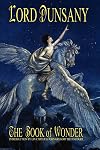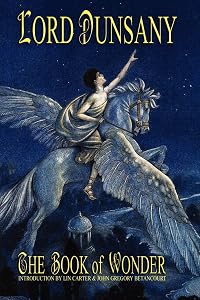
The Book of Wonder
by Lord Dunsany
On This Page
Description
Looking for a stiff dose of classic fantasy? Look no further than Lord Dunsany's remarkably well-written collection, A Book of Wonder. This medley of fables, fantasy, and action-adventure will pique the interest of a wide array of readers. If you're in the mood for tales of quests, dragons, and brave warriors, this collection will definitely do the trick..
Tags
Recommendations



















Member Reviews
This Modern Library edition combines two collections while borrowing the title from the one published last.
The Book Of Wonder originally published in 1912 and featuring 14 fabulist stories, 12 of which accompanied by an original Sidney Sime illustration. "Accompanied" is not quite apt, however: the images were entirely of Sime's making, and Dunsany wrote stories afterward to "explain" each illustration. Some of the Weird aspect when reading can be accounted for by this unusual approach to storytelling, but the effect is somewhat distorted here by the editorial decision to omit the illustrations.
Indeed the editor fails to mention Sime's contributions altogether, which must lead to unnecessary confusion for readers new to the collection. show more I purchased the edition as a reference copy with plans of replacing with a proper edition.
//
These tales are of things that befel the gods and men in Yarnith, Averon, and Zarkandhu, and in the other countries of my dreams.
-- Preface, Time And The Gods
Time And The Gods, also included in this edition, reads less Weird and more proto-mythopoeic than The Book Of Wonder. Dunsany's prose, however, is as pleasing as all Dunsany I've read. The stories here slightly mask a melancholic pessimism regarding civilisation if not all humanity. Wikipedia suggests the title is a nod to Swinburne's line "Time and the Gods are at strife", reflecting Dunsany's tone and outlook.
Dunsany could deliberately smuggle serious criticism of Church, Crown, or Pub within such stories, if he intended: irrespective of intent, the criticism is there, couched in Dunsany's peerless prose stylings and fanciful names. "For The Honour Of The Gods" and again "Mlideen" do not even disguise it, apart from the fabulist setting.
//
My Modern Library edition (1918) evidently was unauthorised and is regrettable in not including the original Sime illustrations. The Sime illustrations for Time And The Gods are not as central to the stories as were those for The Book Of Wonder, but Dunsany approved them well enough to own the originals and I count them a sore loss. The edition also omits Dunsany's 1906 Preface (a single sentence in length, one wonders at the editorial decision there); it could not include the new Introduction supplied by Dunsany for the 1922 edition, of course, as it was not yet written. show less
The Book Of Wonder originally published in 1912 and featuring 14 fabulist stories, 12 of which accompanied by an original Sidney Sime illustration. "Accompanied" is not quite apt, however: the images were entirely of Sime's making, and Dunsany wrote stories afterward to "explain" each illustration. Some of the Weird aspect when reading can be accounted for by this unusual approach to storytelling, but the effect is somewhat distorted here by the editorial decision to omit the illustrations.
Indeed the editor fails to mention Sime's contributions altogether, which must lead to unnecessary confusion for readers new to the collection. show more I purchased the edition as a reference copy with plans of replacing with a proper edition.
//
These tales are of things that befel the gods and men in Yarnith, Averon, and Zarkandhu, and in the other countries of my dreams.
-- Preface, Time And The Gods
Time And The Gods, also included in this edition, reads less Weird and more proto-mythopoeic than The Book Of Wonder. Dunsany's prose, however, is as pleasing as all Dunsany I've read. The stories here slightly mask a melancholic pessimism regarding civilisation if not all humanity. Wikipedia suggests the title is a nod to Swinburne's line "Time and the Gods are at strife", reflecting Dunsany's tone and outlook.
Dunsany could deliberately smuggle serious criticism of Church, Crown, or Pub within such stories, if he intended: irrespective of intent, the criticism is there, couched in Dunsany's peerless prose stylings and fanciful names. "For The Honour Of The Gods" and again "Mlideen" do not even disguise it, apart from the fabulist setting.
//
My Modern Library edition (1918) evidently was unauthorised and is regrettable in not including the original Sime illustrations. The Sime illustrations for Time And The Gods are not as central to the stories as were those for The Book Of Wonder, but Dunsany approved them well enough to own the originals and I count them a sore loss. The edition also omits Dunsany's 1906 Preface (a single sentence in length, one wonders at the editorial decision there); it could not include the new Introduction supplied by Dunsany for the 1922 edition, of course, as it was not yet written. show less
Lord Dunsany's fantasy is unlike any I have ever read, and the best description I can give of these short stories is that they read like a collection of dark nursery rhymes, without the nursery and without the rhymes but with that strange sense of logical illogic that characterizes the more memorable of the genre. You know how some Mother Goose nursery rhymes are so illogical and make no sense outside their own little world contained in a few lines of rhyme? That is just how these stories are: nonsensically sensible little snippets of a different world.
These stories are very short with the same brevity of a nursery rhyme intent on fitting its setting, characters, and story into four or so lines. And they mostly end unhappily. The brave show more hero going off to face the monster is killed (and eaten). Two little idols become rivals and their battle causes an earthquake that ruins their temple. Things end neatly, but not happily.
Wikipedia renders a fascinating fact: Dunsany's illustrator, Sidney Sime, was complaining that he did not get to illustrate the type of stories he preferred, so Dunsany suggested that Sime draw whatever he liked and he would write this collection of tales around the illustrations. Perhaps this accounts for the dark tone of the tales; the austere, detailed tone of Sime's fabulous illustrations rather precludes the usual happy fairytale.
I read this collection in one sitting and while I can't say I really loved it, it had its own reality about it, rather like the sensation of a vivid dream that you try to recapture not because it was a particularly wonderful dream, but for its arresting sense of really having happened. show less
These stories are very short with the same brevity of a nursery rhyme intent on fitting its setting, characters, and story into four or so lines. And they mostly end unhappily. The brave show more hero going off to face the monster is killed (and eaten). Two little idols become rivals and their battle causes an earthquake that ruins their temple. Things end neatly, but not happily.
Wikipedia renders a fascinating fact: Dunsany's illustrator, Sidney Sime, was complaining that he did not get to illustrate the type of stories he preferred, so Dunsany suggested that Sime draw whatever he liked and he would write this collection of tales around the illustrations. Perhaps this accounts for the dark tone of the tales; the austere, detailed tone of Sime's fabulous illustrations rather precludes the usual happy fairytale.
I read this collection in one sitting and while I can't say I really loved it, it had its own reality about it, rather like the sensation of a vivid dream that you try to recapture not because it was a particularly wonderful dream, but for its arresting sense of really having happened. show less
Dunsany's stories provide a welcome diversion from modern fantasy. The stories are short and very barebones in terms of plot and character development, nothing of the epicness about them that we have to come to associate with fantasy, at least since Tolkien. Focus is on setting and imagery - it's more about creating pictures in the reader's mind than telling a coherent storyline. Especially the endings are often very abrupt and left hanging, without the happy resolution (or any resolution at all) the reader might expect.
I read (got read) these more like fairy tales or parables than as full-grown stories.
I read (got read) these more like fairy tales or parables than as full-grown stories.
Geek that I am I actually read this to prepare for the Tolkien Professor’s Faerie & Fantasy podcast seminar that covers the book. I am rather conflicted about Dunsany in general and this book in particular. After finishing the first half I found that _The Book of Wonder_ more or less confirmed for me my initial impressions of Dunsany gathered when I first read _The Hashish Man and Other Stories_ many years ago. Namely that while Dunsany is an excellent prose stylist and creator of many arresting images in his short tales there is still something missing. The missing elements are pretty major: plot and character. Of the first few stories only “The Bride of the Man-Horse” and “Miss Cubbidge and the Dragon of Romance” struck me show more with their images and ideas in a meaningful way, the others came across more as fragments that may have presented some interesting imagery, but they were not enough to really maintain my interest. As I continued on with the second half of the book, however, I started to feel that maybe these arresting images were enough and the stories seemed to gather more steam.
In many ways Dunsany, in his short tales at least, has always been for me less a writer and more a painter of prose pictures. Many of his tales from _The Book of Wonder_ are probably best taken in conjunction with the lush and beautiful drawings of them made by Sydney Sime since it often felt to me like they didn’t really have a beginning or an end, though they generally gave me a vivid picture of some arresting image or idea. Whether this was the gloomy house of the doomed Sphinx, the majestic and exhilarating ride of the centaur Shepperalk, or the final hopeless venture of the thief Thangobrid we are given by Dunsany what amounts to a painting in words, but it isn’t a story (or it is only part of one). When a writer like Tolkien makes an offhand reference to some other place or person in his tales it carries with it the weight of a true tale and the depth of history, we know that it isn’t merely a colourful name inserted for flavour…with Dunsany I do not always get this impression.
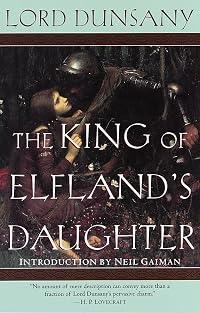
The comparison to pictures is instructive in that it points out both Dunsany’s strengths and his weaknesses. He is a vivid writer of poetic prose, able to evoke emotions and an almost painful nostalgia for the magical and the dreamlike, a yearning for what has been, or soon will be, lost. On the other hand he can be, at his worst, two dimensional. I think this is why I have always preferred Dunsany’s longer works such as _The Charwoman’s Shadow_ or _The King of Elfland’s Daughter_ to his shorter ones. In these longer works he is constrained by the demands of his form to have at least the semblance of plot and character and even the minimal skeleton he builds in this regard is enough to carry his lush prose and beautiful images beyond being mere pictures. They now have context that makes the heartsick longing meaningful.
And yet…and yet. As I finished this volume I kept coming back to the ability of Dunsany as a prose stylist. At first I was content with the thought that I should simply treat my visits to his work as a trip to a fantastic museum where I would be treated to some startling paintings; or better yet a sampling from the amuses bouches of a master confectioner that may give me food for thought and a sip from an inexplicable draught, but for real nourishment I would have to look elsewhere. As I finished the volume, however, I felt that I had to perhaps re-evaluate this position. Tales like “The Hoard of the Gibbelins”, “How Nuth would have Practiced his Art upon the Gnoles”, “How One Came, as was Foretold, to the City of Never”, and especially the somewhat thematically twinned tales “The Coronation of Mr. Thomas Shap“ and “The Wonderful Window” either seemed to come together more coherently as stories or had such well expressed ideas and images of wonder that I had to admit that Dunsany had achieved something meaningful here.
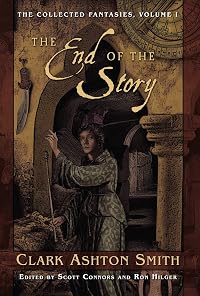
I still think that if I want lush prose and vivid, weird imagery I am more likely to go to Clark Ashton Smith, who married these strengths to more elements of plot and character than I am likely to find in Dunsany, but I am starting to see that perhaps I am merely expecting something from Dunsany’s tales that he never intended to deliver, and that his contribution to the genre as a founder and necessary first step can’t be denied. show less
In many ways Dunsany, in his short tales at least, has always been for me less a writer and more a painter of prose pictures. Many of his tales from _The Book of Wonder_ are probably best taken in conjunction with the lush and beautiful drawings of them made by Sydney Sime since it often felt to me like they didn’t really have a beginning or an end, though they generally gave me a vivid picture of some arresting image or idea. Whether this was the gloomy house of the doomed Sphinx, the majestic and exhilarating ride of the centaur Shepperalk, or the final hopeless venture of the thief Thangobrid we are given by Dunsany what amounts to a painting in words, but it isn’t a story (or it is only part of one). When a writer like Tolkien makes an offhand reference to some other place or person in his tales it carries with it the weight of a true tale and the depth of history, we know that it isn’t merely a colourful name inserted for flavour…with Dunsany I do not always get this impression.
The comparison to pictures is instructive in that it points out both Dunsany’s strengths and his weaknesses. He is a vivid writer of poetic prose, able to evoke emotions and an almost painful nostalgia for the magical and the dreamlike, a yearning for what has been, or soon will be, lost. On the other hand he can be, at his worst, two dimensional. I think this is why I have always preferred Dunsany’s longer works such as _The Charwoman’s Shadow_ or _The King of Elfland’s Daughter_ to his shorter ones. In these longer works he is constrained by the demands of his form to have at least the semblance of plot and character and even the minimal skeleton he builds in this regard is enough to carry his lush prose and beautiful images beyond being mere pictures. They now have context that makes the heartsick longing meaningful.
And yet…and yet. As I finished this volume I kept coming back to the ability of Dunsany as a prose stylist. At first I was content with the thought that I should simply treat my visits to his work as a trip to a fantastic museum where I would be treated to some startling paintings; or better yet a sampling from the amuses bouches of a master confectioner that may give me food for thought and a sip from an inexplicable draught, but for real nourishment I would have to look elsewhere. As I finished the volume, however, I felt that I had to perhaps re-evaluate this position. Tales like “The Hoard of the Gibbelins”, “How Nuth would have Practiced his Art upon the Gnoles”, “How One Came, as was Foretold, to the City of Never”, and especially the somewhat thematically twinned tales “The Coronation of Mr. Thomas Shap“ and “The Wonderful Window” either seemed to come together more coherently as stories or had such well expressed ideas and images of wonder that I had to admit that Dunsany had achieved something meaningful here.
I still think that if I want lush prose and vivid, weird imagery I am more likely to go to Clark Ashton Smith, who married these strengths to more elements of plot and character than I am likely to find in Dunsany, but I am starting to see that perhaps I am merely expecting something from Dunsany’s tales that he never intended to deliver, and that his contribution to the genre as a founder and necessary first step can’t be denied. show less
Take the worst kind of second rate fantasy and the worst kind of Alice in Wonderland nonsense, and it turns out two wrongs do make a right :) . This isn't amazing but it does work. The best part is that so many of the tales feel allegorical.. except your never quite sure what they're allegories of :lol .
I also don't think these tales should be read in order, at least for me the best section is a run of three stories near the end, 'City of Never', 'Coronation of Mr.Shap', 'Chu-Bu and Sheemish'.
I was also quite impressed that two of the tales appear to be about online gaming addiction, i didn't even know they played Warcraft in the 1920s :P , or perhaps that's another allegory i misinterpreted ;) .
I also don't think these tales should be read in order, at least for me the best section is a run of three stories near the end, 'City of Never', 'Coronation of Mr.Shap', 'Chu-Bu and Sheemish'.
I was also quite impressed that two of the tales appear to be about online gaming addiction, i didn't even know they played Warcraft in the 1920s :P , or perhaps that's another allegory i misinterpreted ;) .
This is a collection of stories that I will return to later. Back in middle school I went through a phase of reading myths and folktales from around the world. This collection reminds me of those stories with a seasoning of fantasy. A wonderful collection to be savored some times for just the wondrous language that Dunsany weaves.
Incredible prose will win me over any time. See: The Lord of the Rings, Infinite Jest.
First read: Aug 29, 2014-Sept 18, 2014.
Second read: ended Aug 28, 2016
First read: Aug 29, 2014-Sept 18, 2014.
Second read: ended Aug 28, 2016
Members
- Recently Added By
Lists

Lovecraft's 'Supernatural Horror in Literature' Reading List
216 works; 8 members

Books Read in 2013
1,630 works; 51 members

Books Read in 2018
4,360 works; 110 members

Books Read in 2025
4,128 works; 98 members
Author Information

393+ Works 10,115 Members
Though during his lifetime the Irish nobleman Lord Edward John Moreton Drax Plunkett, the 18th Baron Dunsany, was perhaps regarded as a minor talent, his somber short fantasies and novels had a significant impact on the development of fantasy and horror fiction. In real life, Dunsany was as interesting and versatile as anyone about whom he wrote. show more He was an African big-game hunter, a soldier in both the Boer War and World War I, and was wounded in the 1916 Irish Easter Rebellion. He was also the national chess champion of Ireland. Dunsany's first short story collection, The Gods of Pegana, was published in 1905 and was soon followed by other fantasy anthologies, including Time and the Gods (1906) and The Sword of Welleran and Other Stories (1908), among others. These stories are distinguished by their elegant, fairy tale settings and Dunsany's unique, macabre sense of humor. Dunsany's novels, such as The King of Elfland's Daughter (1924) and The Charwoman's Shadow (1926), are considered fantasy classics. Although Dunsany wrote prodigiously and with great versatility throughout his life, many regard his early, highly stylized short fiction to be his best work, and his most important. (Bowker Author Biography) show less
Some Editions
Awards and Honors
Series
Belongs to Publisher Series
Work Relationships
Common Knowledge
- Original title
- The book of wonder
- Original publication date
- 1912
- People/Characters
- Shepperalk; Sombelenë; Thangobrind; Hlo-hlo; Slith; Sippy (show all 19); Slorg; Pombo; Duth; Sylvia; Ackronnion; Arrath; Alderic; Nuth; Tommy Tonker; Thomas Shap; Chu-bu; Sheemish; Gibbelins
- Important places
- Tower of the Gibbelins; Terra Cognita; Ocean; Impassable Forest
- First words
- PREFACE
Come with me, ladies and gentlemen who are in any wise weary of London: come with me: and those that tire at all of the world we know: for we have new worlds here.
In the morning of his two hundred and fiftieth year Shepperalk the centaur went to the golden coffer, wherein the treasure of the centaurs was, and taking from it the hoarded amulet that his father, Jyshak, in the years of hi... (show all)s prime, had hammered from mountain gold and set with opals bartered from the gnomes, he put it upon his wrist, and said no word, but walked from his mother's cavern. - Last words
- (Click to show. Warning: May contain spoilers.)Behold, the caravans start.
- Disambiguation notice
- This collection contains 14 tales:
PREFACE
THE BRIDE OF THE MAN-HORSE
DISTRESSING TALE OF THANGOBRIND THE JEWELLER
THE HOUSE OF THE SPHINX
PROBABLE ADVENTURE OF THE THREE LITERARY MEN
THE LOOT OF BOMBASHARNA
MISS CUBBIDGE AND THE DRAGON OF ROMANCE
THE QUEST OF THE QUEEN'S TEARS
THE HOARD OF THE GIBBELINS
HOW NUTH WOULD HAVE PRACTISED HIS ART UPON THE GNOLES
HOW ONE CAME, AS WAS FORETOLD, TO THE CITY OF NEVER
THE CORONATION OF MR. THOMAS SHAP
CHU-BU AND SHEEMISH
THE WONDERFUL WINDOW
EPILOGUE
Classifications
Statistics
- Members
- 305
- Popularity
- 105,163
- Reviews
- 8
- Rating
- (3.92)
- Languages
- 6 — English, French, Italian, Japanese, Portuguese, Spanish
- Media
- Paper, Audiobook, Ebook
- ISBNs
- 41
- ASINs
- 19