
On This Page
Description
The third novel in the award-winning author's classic Galactic Center series is available once again. "A challenging, pacesetting work of hard science fiction that should not be missed."--"Los Angeles Times."Tags
Recommendations

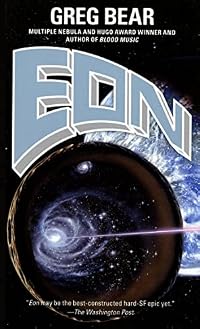

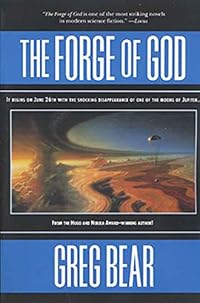
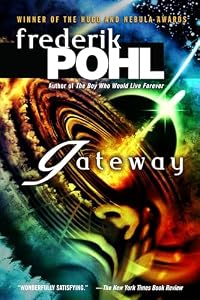
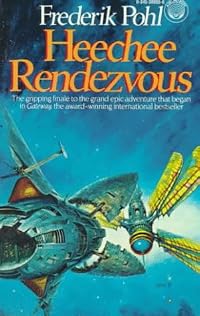





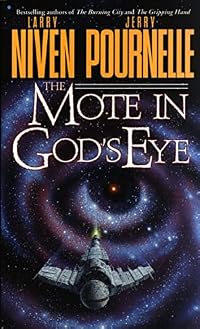
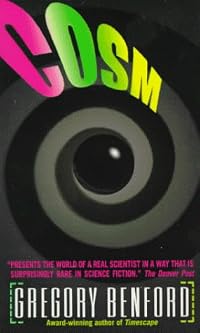

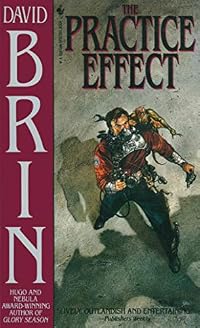
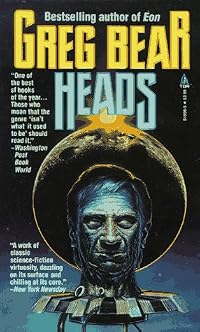




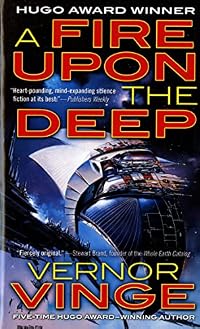
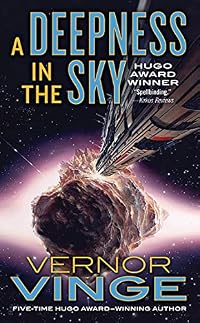
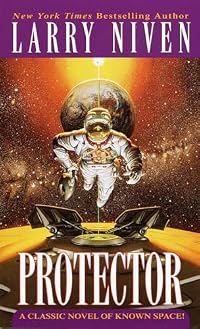
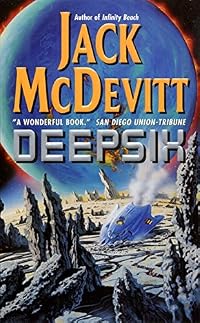



Member Recommendations

sf_addict Great sky River was the first Benford book I read. I thoroughly enjoyed it and had to read the rest of the series! The earlier books however, dealing with Walmsey, are rather less interesting.
Member Reviews
Benford, Gregory. Great Sky River. 1987. Galactic Center No. 3. Aspect, 2004.
I like to imagine Gregory Benford sitting in a theater in 1984 watching Arnold Schwarzenegger terrorize California in The Terminator. He must have thought, I can do this in my Galactic Hub series and make the mechs more plausible. Three years later, that is exactly what he accomplished in Great Sky River. Having discovered the hostile mech civilization at the center of the galaxy, humans have begun to settle multiple systems trying to grab a toehold in which they can survive. Great Sky River is set on a colony planet where things have not gone well. The ecology has been devastated by mech invaders and only a few bands of nomadic humans survive to wage a feeble show more insurgency. They scavenge and adapt what they can of mech technology and struggle to maintain their cultural heritage. By this point in the series, Benford has a solid grip on where he wants the six-novel sequence to go. Epic space opera at its best. show less
I like to imagine Gregory Benford sitting in a theater in 1984 watching Arnold Schwarzenegger terrorize California in The Terminator. He must have thought, I can do this in my Galactic Hub series and make the mechs more plausible. Three years later, that is exactly what he accomplished in Great Sky River. Having discovered the hostile mech civilization at the center of the galaxy, humans have begun to settle multiple systems trying to grab a toehold in which they can survive. Great Sky River is set on a colony planet where things have not gone well. The ecology has been devastated by mech invaders and only a few bands of nomadic humans survive to wage a feeble show more insurgency. They scavenge and adapt what they can of mech technology and struggle to maintain their cultural heritage. By this point in the series, Benford has a solid grip on where he wants the six-novel sequence to go. Epic space opera at its best. show less
A bit of a stretch for Benford -- gritty, nasty, and planet bound, and hence more modern than most of his work and much of what was published in the 1980s. On a colony planet in the far future, humanity consists of a few hundred people in small tribes constantly on the run (literally) from intelligent machines. Those machines gradually and violently took over the planet and are now terraforming it to their own needs. Most machines actually don't care about people, killing them only when they get in the way. A few though are hunting people down and sure-deathing them, i.e., not only killing them but sucking up the memories that would normally be saved on chips and carried by the remaining colonists.
Most of the book relentlessly follows show more this theme, getting grotesque in certain parts not unlike Banks or other more recent space opera. But every once in a while, some message arrives to reset the plot, straight out of pulp SF 1930s roots. This was the biggest flaw of the book for me. To an older reader of SF in the 1980s, this probably made the grimness of the book more palatable and familiar. To a reader of modern SF, it's jarring and damaging to the integrity of the story.
Another flaw, annoying but not fatal, was Benford's need to explain everything. The colonists have no understanding of te sophisticated mech suits they wear, part human-built, part cannibalized from the machines. To make sure the reader knows he did his world-building homework, Benford keeps tossing in paragraphs about how things works always tagged with some form of "unknown to Killeem" or "without Killem's understanding".
With the caveat that you need to be prepared for some deus ex machina plot shifts, I recommend this as an above average entry in Benford's Galactic Center series. It is not necessary to have read the previous books. show less
Most of the book relentlessly follows show more this theme, getting grotesque in certain parts not unlike Banks or other more recent space opera. But every once in a while, some message arrives to reset the plot, straight out of pulp SF 1930s roots. This was the biggest flaw of the book for me. To an older reader of SF in the 1980s, this probably made the grimness of the book more palatable and familiar. To a reader of modern SF, it's jarring and damaging to the integrity of the story.
Another flaw, annoying but not fatal, was Benford's need to explain everything. The colonists have no understanding of te sophisticated mech suits they wear, part human-built, part cannibalized from the machines. To make sure the reader knows he did his world-building homework, Benford keeps tossing in paragraphs about how things works always tagged with some form of "unknown to Killeem" or "without Killem's understanding".
With the caveat that you need to be prepared for some deus ex machina plot shifts, I recommend this as an above average entry in Benford's Galactic Center series. It is not necessary to have read the previous books. show less
Benford is one of the SF greats and Great Sky River one of his great books. As an act of imagination it's a triumph, as a piece of storytelling and writing it is by turns soaring, lyrical, and poetic. And sometimes it falls a bit flat on its face. That's OK because in the main Great Sky River works very well and the failings are because Benford seems to be pushing his considerable talents as a writer to the limit - and those sorts of failings you can easily forgive.
So sometimes he over-indulges himself with explanation, and sometimes he doesn't quite break free of the preconceptions of his own era. As a result the narrative can meander or jerk in a few places. On the other hand his views of machine intelligence, its struggle and failure show more to understand organic life and the catastrophic consequences that result, all told through the story and characters of this bold novel, are as thoughtful and profound as anything you'll find in fiction.
It's his gifts as a writer, his empathy with the human condition and universe-building that make me think of him as a kind of Ian Banks of his era. Except in Benford's universe humanity lives in no perfect culture. The glory days have long gone, mankind is flat on its face and struggling to rise again. Still bold and brave, still striving to understand, broken, bloody, and in its beaten and bested way still magnificent. show less
So sometimes he over-indulges himself with explanation, and sometimes he doesn't quite break free of the preconceptions of his own era. As a result the narrative can meander or jerk in a few places. On the other hand his views of machine intelligence, its struggle and failure show more to understand organic life and the catastrophic consequences that result, all told through the story and characters of this bold novel, are as thoughtful and profound as anything you'll find in fiction.
It's his gifts as a writer, his empathy with the human condition and universe-building that make me think of him as a kind of Ian Banks of his era. Except in Benford's universe humanity lives in no perfect culture. The glory days have long gone, mankind is flat on its face and struggling to rise again. Still bold and brave, still striving to understand, broken, bloody, and in its beaten and bested way still magnificent. show less
According to the timeline in the back of my copy of the book, 35,000 years have passed since the events in Across the Sea of Suns. The survivors of that book were joined by expeditions from Earth in the central region of the Milky Way. Humanity enjoyed a second Renaissance that lasted thousands of years, but it ultimately caught the attention of the Mechanicals, who proceeded to methodically fight a war of attrition against them. Six years ago on the planet Snowglade, where this story takes place, the Mechanicals overwhelmed the Citadels and forced the survivors into a nomadic lifestyle, feeding off the scraps of the fringes of Mechanicals' civilization.
The humans on Snowglade are augmented, their bodies implanted with and connected to show more so many cybernetic parts that they're vulnerable to electromagnetic attacks and computer virus infections. To compound the problem, the humans on Snowglade have been regressing over the centuries. They've become so dependent on their technology to do everything for them that they no longer possess the knowledge to create anything new. Sure, they can fix some things, but they typically don't seem to be much more than cybernetic cavemen. They can't even understand the information that appears in their HUDs. Distant dead ancestors were digitized, and it's every adult survivor's responsibility to carry their share of these personalities around with them in their personal computer memory. But rather than make the most of the knowledge that these digital ancestors still retain, they're often brushed aside because they're annoying.
The story is told from the POV of Killeen, a member of the Bishop family (tribe). His father and wife died when their citadel was destroyed. His son, Toby, is all he cares about now. We witness the raids on Mechanicals' manufacturing outposts and attacks on the family by Marauder machines through his eyes. He comes to realize that the nature of the attacks is changing. There's a machine out there that possesses a cunning, ruthless intelligence that is unlike any Marauder. He names it the Mantis.
The Mantis has taken a perverse interest in humanity, and it is up to Killeen and his tribe to figure out its motives.
Benford has made some dramatic improvements in this series. First off, the arrogant protagonist of the first two novels, Nigel Walmsley, has been pushed into the historical record. Secondly, but no less important, female characters are finally treated as equals. Fanny is the captain of the Bishop tribe at the onset of the story, and Killeen greatly respects her leadership. Shibo is a survivor from another tribe who impresses Killeen with her knowledge and skill. No damsel in distress here.
The dialogue took some getting used to. Benford grants the Snowglade denizens a dialect that comprises several slang words and new terms ("yeasay", "suredead", "mechtalk", etc.) and modifies their grammar to help craft an image of them as hillbillies. That's not meant to be an insult.
There are some scenes in the lair of the Mantis that appear to be inspired by H.R. Giger. In many of his works, Giger blended humans and animals with machines to create disturbing biomechanoid images (the creature in the movie Alien being his most famous work). Benford puts his own spin on the concept. Whether or not the descriptions will disturb the reader is up to said reader's ability to visualize what Benford writes. I give him points for the effort.
While not a reboot of the series, Benford in effect wipes the proverbial slate clean. With a new protagonist and solid supporting cast of characters, the Galactic Center saga takes on a fresh new look.
3.5 stars rounded up to 4 because there was enough improvement in Benford's style and characterization to be rewarded for it. show less
The humans on Snowglade are augmented, their bodies implanted with and connected to show more so many cybernetic parts that they're vulnerable to electromagnetic attacks and computer virus infections. To compound the problem, the humans on Snowglade have been regressing over the centuries. They've become so dependent on their technology to do everything for them that they no longer possess the knowledge to create anything new. Sure, they can fix some things, but they typically don't seem to be much more than cybernetic cavemen. They can't even understand the information that appears in their HUDs. Distant dead ancestors were digitized, and it's every adult survivor's responsibility to carry their share of these personalities around with them in their personal computer memory. But rather than make the most of the knowledge that these digital ancestors still retain, they're often brushed aside because they're annoying.
The story is told from the POV of Killeen, a member of the Bishop family (tribe). His father and wife died when their citadel was destroyed. His son, Toby, is all he cares about now. We witness the raids on Mechanicals' manufacturing outposts and attacks on the family by Marauder machines through his eyes. He comes to realize that the nature of the attacks is changing. There's a machine out there that possesses a cunning, ruthless intelligence that is unlike any Marauder. He names it the Mantis.
The Mantis has taken a perverse interest in humanity, and it is up to Killeen and his tribe to figure out its motives.
Benford has made some dramatic improvements in this series. First off, the arrogant protagonist of the first two novels, Nigel Walmsley, has been pushed into the historical record. Secondly, but no less important, female characters are finally treated as equals. Fanny is the captain of the Bishop tribe at the onset of the story, and Killeen greatly respects her leadership. Shibo is a survivor from another tribe who impresses Killeen with her knowledge and skill. No damsel in distress here.
The dialogue took some getting used to. Benford grants the Snowglade denizens a dialect that comprises several slang words and new terms ("yeasay", "suredead", "mechtalk", etc.) and modifies their grammar to help craft an image of them as hillbillies. That's not meant to be an insult.
There are some scenes in the lair of the Mantis that appear to be inspired by H.R. Giger. In many of his works, Giger blended humans and animals with machines to create disturbing biomechanoid images (the creature in the movie Alien being his most famous work). Benford puts his own spin on the concept. Whether or not the descriptions will disturb the reader is up to said reader's ability to visualize what Benford writes. I give him points for the effort.
While not a reboot of the series, Benford in effect wipes the proverbial slate clean. With a new protagonist and solid supporting cast of characters, the Galactic Center saga takes on a fresh new look.
3.5 stars rounded up to 4 because there was enough improvement in Benford's style and characterization to be rewarded for it. show less
Well, now I'm hooked. This is the third book in Benford's "Galactic Center" series, but the first one set this far in the future. I liked it. I will have to see what happens in the next book, too.
The author has created a rich world of the future where mankind is on the run from intelligent machines that dominate his world. Centuries of human advancement have seemingly been lost in the years of war. The story is about the struggle of a last few hundred on one planet.
Mr. Benford heightens the interest by allowing the characters to speak in a language that is both familiar and different. The world they inhabit is alien to both them and the reader and the author's descriptions keep it that way, without getting burdensome.
This is one of the show more most satisfying SF novels I've read in a while. show less
The author has created a rich world of the future where mankind is on the run from intelligent machines that dominate his world. Centuries of human advancement have seemingly been lost in the years of war. The story is about the struggle of a last few hundred on one planet.
Mr. Benford heightens the interest by allowing the characters to speak in a language that is both familiar and different. The world they inhabit is alien to both them and the reader and the author's descriptions keep it that way, without getting burdensome.
This is one of the show more most satisfying SF novels I've read in a while. show less
I could not finish this book.
Ciclo del Centro Galactico III
Members
- Recently Added By
Lists

Best Science Fiction Novels
816 works; 426 members

Books Read in 2018
4,360 works; 110 members
Talk Discussions
Past Discussions
Millitary SF with alien invaders and mecha suits in Name that Book (December 2018)
Author Information

237+ Works 22,266 Members
Gregory Benford, was born on January 30, 1941 in Mobile, Alabama. He is a physicist and science fiction writer who earned his Ph.D. from the University of California, San Diego, in 1967. He is a Woodrow Wilson Fellow and a consultant for NASA. Benford's first novel "Deeper than the Darkness" (1970), which was revised as "The Stars in Shroud" show more (1978), gave him notice as a serious Science Fiction writer. His most popular work is "Timescape" (1980), which was the winner of the Nebula and John W. Campbell Memorial Awards; it presented a hard physics approach to limited time travel. "In the Ocean of Night" (1977), "Across the Sea of Suns" (1984), "Great Sky River" (1987), "Tides of Light" (1989) and "Furious Gulf" (1994) were all a part of the Galactic Cluster Series. He has also written the juvenile novel "Jupiter Project" (1975), "Against Infinity" (1983) and the thriller "Artifact" (1985). He has been nominated for 12 Nebula Awards (winning for "Timescape" and for the novelette, "If the Stars are Gods"). Benford, writing alternately with Bruce Sterling, produces science fact articles for the Magazine of Fantasy and Science Fiction. They took over after the death of regular columnist Isaac Asimov. He has also co-edited theme anthologies with Martin H. Greenburg, which include "Hitler Victorious" (1986), "Nuclear War" (1988), "What Might Have Been, Volume 1: Alternate Empires" (1988), "Volume 2: Alternate Heroes" (1989) and "Volume 3: Alternate Wars." (Bowker Author Biography) show less
Some Editions
Awards and Honors
Awards
Series

Common Knowledge
- Canonical title*
- Il grande fiume del cielo
- Original title
- Great Sky River
- Original publication date
- 1987
- Dedication
- To
Lou Aronica and David Brin
two knights of the Sevagram - First words
- Killeen walked among the vast ruins.
- Last words
- (Click to show. Warning: May contain spoilers.)Killeen blinked, and even mouthed the word out loud. Then, slowly, he nodded.
- Blurbers
- Minsky, Marvin
*Some information comes from Common Knowledge in other languages. Click "Edit" for more information.
Classifications
Statistics
- Members
- 1,004
- Popularity
- 25,825
- Reviews
- 11
- Rating
- (3.62)
- Languages
- 7 — Dutch, English, French, German, Italian, Lithuanian, Spanish
- Media
- Paper, Audiobook, Ebook
- ISBNs
- 22
- ASINs
- 9