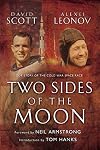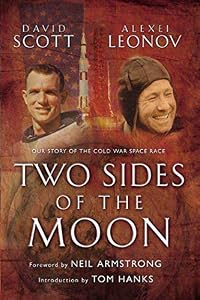
Two Sides of the Moon: Our Story of the Cold War Space Race
by David Scott, A. A. Leonov
On This Page
Description
Growing up on either side of the Iron Curtain, David Scott and Alexei Leonov experienced very different childhoods but shared the same dream to fly. Excelling in every area of mental and physical agility, Scott and Leonov became elite fighter pilots and were chosen by their countries' burgeoning space programs to take part in the greatest technological race ever-to land a man on the moon. In this unique dual autobiography, astronaut Scott and cosmonaut Leonov recount their exceptional lives show more and careers spent on the cutting edge of science and space exploration. With each mission fraught with perilous risks, and each space program touched by tragedy, these parallel tales of adventure and heroism read like a modern-day thriller. Cutting fast between their differing recollections, this book reveals, in a very personal way, the drama of one of the most ambitious contests ever embarked on by man, set against the conflict that once held the world in suspense: the clash between Russian communism and Western democracy.Before training to be the USSR's first man on the moon, Leonov became the first man to walk in space. It was a feat that won him a place in history but almost cost him his life. A year later, in 1966, Gemini 8, with David Scott and Neil Armstrong aboard, tumbled out of control across space. Surviving against dramatic odds-a split-second decision by pilot Armstrong saved their lives-they both went on to fly their own lunar missions: Armstrong to command Apollo 11 and become the first man to walk on the moon, and Scott to perform an EVA during the Apollo 9 mission and command the most complex expedition in the history of exploration, Apollo 15. Spending three days on the moon, Scott became the seventh man to walk on its breathtaking surface. Marking a new age of USA/USSR cooperation, the Apollo-Soyuz Test Project brought Scott and Leonov together, finally ending the Cold War silence and building a friendship that would last for decades. Their courage, passion for exploration, and determination to push themselves to the limit emerge in these memoirs not only through their triumphs but also through their perseverance in times of extraordinary difficulty and danger. show lessTags
Recommendations

































Member Reviews
Two Sides of the Moon is a dual memoir of Astronaut David Scott, seventh man to walk on the moon (Gemini 8, Apollo 9, Apollo 15), and Cosmonaut Alexei Leonov, first man to walk in space (Voskhod 2, Apollo-Soyuz). Their stories are basket-weaved together creating a truly engaging 360-degree look at the Space Race between the USA and USSR.
Each recounted their early love of flying, their candidate selection, national pride and enthusiasm for doing something never before tried. Both men lost several friends. Scott was close with the (original) Gemini 9 and Apollo 1 crews and Leonov was the one called to identify Yuri Garagin, his best friend, after a MiG accident. Each address the ways these deaths affected their programs and of their show more frustrations with management.
Both men talk of trying to follow the 'other side' as close as possible, although Leonov had an easier time of it because he was able to read LIFE magazine articles about the astronauts. The USSR wasn't quite as forthcoming about their own people. And they recount how at international forums, such as the Paris air show, astronauts and cosmonauts would occasionally meet and sit down with each other, even when instructed not to by their superiors. They enjoyed being with other men who had had the same experiences, lived similar lives, even when they didn't speak the same language.
Leonov and Scott nearly perished on missions. During his EVA, Leonov's suit expanded and he had trouble fitting back into his capsule. Scott was aboard Gemini 8 with Neil Armstrong and had to abort their mission due to a stuck handstick, which kept the capsule in a constant left-hand roll. Both men express how important they believed the Space Race to be in proving their own national ideology and both went up in space again.
Scott and Leonov met a few times during the planning stages for the Apollo-Soyuz joint mission even though only Leonov flew it. Both truly felt that the future of spaceflight would be accomplished together and were disappointed when relations between the USA and USSR broke down. Each took prestigious positions in their respective programs but eventually left for jobs in the private sector.
To see how their lives paralleled each other made really interesting reading. This might just be my favorite Space Race book yet. show less
Each recounted their early love of flying, their candidate selection, national pride and enthusiasm for doing something never before tried. Both men lost several friends. Scott was close with the (original) Gemini 9 and Apollo 1 crews and Leonov was the one called to identify Yuri Garagin, his best friend, after a MiG accident. Each address the ways these deaths affected their programs and of their show more frustrations with management.
Both men talk of trying to follow the 'other side' as close as possible, although Leonov had an easier time of it because he was able to read LIFE magazine articles about the astronauts. The USSR wasn't quite as forthcoming about their own people. And they recount how at international forums, such as the Paris air show, astronauts and cosmonauts would occasionally meet and sit down with each other, even when instructed not to by their superiors. They enjoyed being with other men who had had the same experiences, lived similar lives, even when they didn't speak the same language.
Leonov and Scott nearly perished on missions. During his EVA, Leonov's suit expanded and he had trouble fitting back into his capsule. Scott was aboard Gemini 8 with Neil Armstrong and had to abort their mission due to a stuck handstick, which kept the capsule in a constant left-hand roll. Both men express how important they believed the Space Race to be in proving their own national ideology and both went up in space again.
Scott and Leonov met a few times during the planning stages for the Apollo-Soyuz joint mission even though only Leonov flew it. Both truly felt that the future of spaceflight would be accomplished together and were disappointed when relations between the USA and USSR broke down. Each took prestigious positions in their respective programs but eventually left for jobs in the private sector.
To see how their lives paralleled each other made really interesting reading. This might just be my favorite Space Race book yet. show less
A solid dual history of the space race with interwoven Russian and American narratives. Leonov's perspective is more interesting because it's less familiar . . . Scott, though he comes off as a single-mindedly dull fellow, finally comes to life when describing the excitement he felt making spectacular geological discoveries on the Moon.
Ratings
Members
- Recently Added By
Author Information

1+ Work 229 Members
4 Works 238 Members
Some Editions
Common Knowledge
- People/Characters
- Neil Armstrong; Alexey Leonov; David Randolph Scott
- Important places
- The Moon
- Important events
- Cold War
Classifications
- Genres
- Nonfiction, Science & Nature, Biography & Memoir, General Nonfiction, History
- DDC/MDS
- 629.4 — Applied Science & Technology Engineering Transportation Vehicles Spacecraft & Vehicles
- LCC
- TL789.8 .U5 .L46 — Technology Motor vehicles. Aeronautics. Astronautics Motor vehicles. Aeronautics. Astronautics Astronautics. Space travel
- BISAC
Statistics
- Members
- 230
- Popularity
- 141,093
- Reviews
- 2
- Rating
- (3.98)
- Languages
- English, German
- Media
- Paper, Ebook
- ISBNs
- 9
- ASINs
- 2