
Tom Hanks
Author of Uncommon Type: Some Stories
About the Author
Image credit: Tom Hanks
Series
Works by Tom Hanks
The Making of Another Major Motion Picture Masterpiece: A novel (2023) — Author — 743 copies, 34 reviews
4 Film Favorites: Romantic Comedy Collection: Laws of Attraction / Must Love Dogs / Two Weeks Notice / You've Got Mail (2010) — Director — 4 copies
Tom Hanks Collection (Bachelor Party / Big / The Man With One Red Shoe / The Road To Perdition / That Thing You Do) — Director & Actor — 1 copy
Big / That Thing You Do! / Man With One Red Shoe (3 Disc Set) (DVD) — Director — 1 copy
Associated Works
With the Old Breed: At Peleliu and Okinawa (1981) — Narrator, some editions — 2,787 copies, 73 reviews
A Man on the Moon: The Voyages of the Apollo Astronauts (1994) — Foreword, some editions — 1,489 copies, 37 reviews
Time: D-Day: 24 Hours That Saved the World (2004) — Introduction, some editions — 231 copies, 1 review
Two Sides of the Moon: Our Story of the Cold War Space Race (2004) — Introduction, some editions — 230 copies, 2 reviews
Cast Away / The Last of the Mohicans / Master and Commander: The Far Side of the World / Kingdom of Heaven (2014) 8 copies
Iconic Movie Collection: Cast Away / Walk the Line / The Last of the Mohicans / Wall Street — Actor — 1 copy
The Terminal / Catch Me If You Can / Cast Away — Actor — 1 copy
4 Movie Marathon: Hollywood Stars (Mazes and Monsters / The Next Man / Tears in the Rain / Ruby's Dream ) — Actor — 1 copy
Triple Feature: Meg Ryan 1 copy
Tagged
Common Knowledge
- Legal name
- Hanks, Thomas Jeffrey
- Birthdate
- 1956-07-09
- Gender
- male
- Occupations
- actor
- Short biography
- Thomas Jeffrey Hanks (born July 9, 1956) is an American actor and filmmaker. Known for both his comedic and dramatic roles, Hanks is one of the most popular and recognizable film stars worldwide, and is widely regarded as an American cultural icon. Hanks' films have grossed more than $4.9 billion in North America and more than $9.96 billion worldwide, making him the fifth-highest-grossing actor in North America.
Hanks made his breakthrough with leading roles in the comedies Splash (1984) and Big (1988). He won two consecutive Academy Awards for Best Actor for starring as a gay lawyer suffering from AIDS in Philadelphia (1993) and a young man with below-average IQ in Forrest Gump (1994). Hanks collaborated with film director Steven Spielberg on five films: Saving Private Ryan (1998), Catch Me If You Can (2002), The Terminal (2004), Bridge of Spies (2015), and The Post (2017), as well as the 2001 miniseries Band of Brothers, which launched him as a director, producer, and screenwriter.
Hanks' other notable films include the romantic comedies Sleepless in Seattle (1993) and You've Got Mail (1998); the dramas Apollo 13 (1995), The Green Mile (1999), Cast Away (2000), Road to Perdition (2002), and Cloud Atlas (2012); and the biographical dramas Saving Mr. Banks (2013), Captain Phillips (2013), Sully (2016), and A Beautiful Day in the Neighborhood (2019). He has also appeared as the title character in the Robert Langdon film series, and has voiced Sheriff Woody in the Toy Story film series (1995-2019).
Hanks' accolades include two Academy Awards out of six nominations. He has received the Stanley Kubrick Britannia Award for Excellence in Film from the British Academy of Film and Television Arts in 2004. In 2014, he received a Kennedy Center Honor, and in 2016, he received a Presidential Medal of Freedom from President Barack Obama, as well as the French Legion of Honor. - Nationality
- USA
- Birthplace
- Concord, California, USA
- Map Location
- USA
Members
Discussions
Tom Hanks on harassment in Pro and Con (December 2017)
Reviews
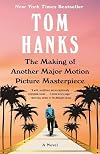
This is an ambitious book, but with so many different parts there’s likely to be something to appeal to most readers.
Ostensibly, it’s the tale of the making of a movie. If that’s something that you’re interested in, then you’ll learn a lot about the many, many different areas of expertise that go into running a functioning movie set, from teamsters to gaffers to hair/makeup. I found these bits of the book both fascinating and informative. However, if you’re looking for a show more “dirty underbelly of the industry” perspective, look elsewhere! Hanks is unwaveringly fawning in his depiction of his colleagues: everyone is professional, clever, and personable, with the exception of a single character whose cartoonish bad behaviour is so absurd, readers obviously aren’t meant to take him seriously.
But mostly it's a tapestry woven of life stories. If you did a page count, I imagine most of them would be devoted to the business of exploring the lives of the folks who have, via various paths, comes to intersect with the movie, from the traumatized WW2 vet whose war experiences inspired the character in the movie to the edgy cartoonist who immortalized him in comic book form; from the supernaturally competent producer who was "discovered” at the desk of a small-town hotel to the small-time comedian who suddenly finds himself cast in a critical supporting role; from the level-headed geologist girlfriend of the genius director to the jobbing actor who rose from the ranks of “Dr. Gore’s Horror Show” dinner theater to Hollywood. There isn’t a bit character that Hanks doesn’t feel worthy of at least a few paragraphs of backstory. Some of the stories are funny, some tender, some painful, some poignant - for the most part, however, they hit as deeply authentic and human. Some might argue that all this time spent on characterization drags the pace of the storytelling, to which I would counter: the book isn’t about plot, it’s about process - a process so unimaginably complex that only the combined competence of thousands of different individuals makes it work at all ... so the time spent exploring how those individuals came to hone their disparate competencies is absolutely relevant.
Finally, it’s a book about the relationship between movies and their viewers, an exploration of the place where culture, capitalism, and fantasy intersect. It’s about the unfathomably complicated business of pulling together millions of pieces in the hopes that, once assembled, they achieve that most ephemeral of goals: a story so engaging, so engrossing, so well-told that it justifies the vast investment of resources, energies, and dreams that went into the making of it.
I get that Hank’s writing style might not be to everyone’s taste, but I liked the way that he mixes narrative styles, shifting from close POV to third person exposition to interviews, testimonials ... even the occasional comic book page. Yes, I found his tendency to overelaborate easy concepts while simultaneously under-explaining more complex ideas a bit frustrating, but not off-puttingly so. Might this book have been more interesting if not for Hanks’ upbeat, buoyant, “smile, everyone!” approach towards storytelling? Undoubtedly! But if you take it for what it is, I'm comfortable recommending this as a charming, engaging, and often quite moving read. show less
Ostensibly, it’s the tale of the making of a movie. If that’s something that you’re interested in, then you’ll learn a lot about the many, many different areas of expertise that go into running a functioning movie set, from teamsters to gaffers to hair/makeup. I found these bits of the book both fascinating and informative. However, if you’re looking for a show more “dirty underbelly of the industry” perspective, look elsewhere! Hanks is unwaveringly fawning in his depiction of his colleagues: everyone is professional, clever, and personable, with the exception of a single character whose cartoonish bad behaviour is so absurd, readers obviously aren’t meant to take him seriously.
But mostly it's a tapestry woven of life stories. If you did a page count, I imagine most of them would be devoted to the business of exploring the lives of the folks who have, via various paths, comes to intersect with the movie, from the traumatized WW2 vet whose war experiences inspired the character in the movie to the edgy cartoonist who immortalized him in comic book form; from the supernaturally competent producer who was "discovered” at the desk of a small-town hotel to the small-time comedian who suddenly finds himself cast in a critical supporting role; from the level-headed geologist girlfriend of the genius director to the jobbing actor who rose from the ranks of “Dr. Gore’s Horror Show” dinner theater to Hollywood. There isn’t a bit character that Hanks doesn’t feel worthy of at least a few paragraphs of backstory. Some of the stories are funny, some tender, some painful, some poignant - for the most part, however, they hit as deeply authentic and human. Some might argue that all this time spent on characterization drags the pace of the storytelling, to which I would counter: the book isn’t about plot, it’s about process - a process so unimaginably complex that only the combined competence of thousands of different individuals makes it work at all ... so the time spent exploring how those individuals came to hone their disparate competencies is absolutely relevant.
Finally, it’s a book about the relationship between movies and their viewers, an exploration of the place where culture, capitalism, and fantasy intersect. It’s about the unfathomably complicated business of pulling together millions of pieces in the hopes that, once assembled, they achieve that most ephemeral of goals: a story so engaging, so engrossing, so well-told that it justifies the vast investment of resources, energies, and dreams that went into the making of it.
I get that Hank’s writing style might not be to everyone’s taste, but I liked the way that he mixes narrative styles, shifting from close POV to third person exposition to interviews, testimonials ... even the occasional comic book page. Yes, I found his tendency to overelaborate easy concepts while simultaneously under-explaining more complex ideas a bit frustrating, but not off-puttingly so. Might this book have been more interesting if not for Hanks’ upbeat, buoyant, “smile, everyone!” approach towards storytelling? Undoubtedly! But if you take it for what it is, I'm comfortable recommending this as a charming, engaging, and often quite moving read. show less
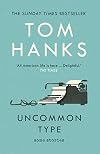
I once read something attributed to Phillips Brooks which said that when America names its man, it names Lincoln. Well, perhaps, but it could just as easily name Tom Hanks. Hanks epitomises an American type which is common but which doesn't often get noticed because, unlike the lonesome cowboy or the hardass lawyer or the nasal-voiced tourist, it is hard to caricature. It is a type which is talented, successful, versatile, but also casual, genial, hospitable. A new neighbour who knocks on show more the door to say 'hi' and who will offer you the use of his lawnmower, but won't outstay his welcome. Confident and healthy, perhaps a tad complacent: someone with a decent status in a country which is broad and bountiful and with big blue skies.
I mention this for two reasons. Firstly, because the Hanks type is so pleasant and inoffensive that you're inclined to be kind also. (You wouldn't tell that friendly new neighbour to get the hell off your property.) And it's certainly not a reach to say nice things about his writing in Uncommon Type, his book of short stories. It's good enough, and he certainly doesn't embarrass himself. In fact, he's a cut above most celebrity writers, because most celebrity writers choose formula: thrillers, chick lit, and so on. Cheaply-won vanity projects, to tell the truth. Hanks is at least trying his hand at original literary writing, and working at establishing a voice. There's integrity here.
The second reason I mentioned this American type is because the geniality and celebrity of Tom Hanks combine to become an unexpected virtue. The stories here are filled with warm and idyllic Americana; nostalgic motifs and details like road trips, diners, corn dogs and green lawns in the suburbs. Such things are considered uncool in contemporary fiction trends, and wouldn't have been published if not for the Hanks name (I mean that as a comment on the content, not the quality). Happily, Hanks' celebrity allows such stories to emerge without being nixed by the publishing industry, because the name will sell the thing. It might not be devastating literature, but to be honest I quite liked reading some evenly-paced stories describing people sitting in a quiet kitchen drinking coffee, or stopping for lunch at a roadside café. There's an endearing sentimentality here that isn't often allowed to emerge in contemporary fiction. Hanks is willing to stop and let a character savour a milkshake, trusting that we'll enjoy those sips too.
Now, Hanks' celebrity is the unavoidable elephant in the room when trying to assess the quality of his short stories. Sometimes it's overt: you can't read his World War Two story, with its M1 Garand going "pi-cling" when the clip is empty (pg. 54), without thinking of Saving Private Ryan, and you can't read the stories like 'Alan Bean Plus Four', which discuss Apollo and the Space Age, without thinking of Apollo 13. Sometimes it's a virtue, as I mentioned above.
And sometimes it's not a virtue; the problem with writing literature is that all those who attempt literature fail often (including those who eventually succeed), and it seems no one is willing or able to tell Tom Hanks – super-successful, universally beloved cultural icon Tom Hanks – that such-and-such is good but not yet up to par. Hanks can write well enough, and is quite good at building a story, but too often I found the endings to be an anti-climax. There often seemed to be no purpose other than to have a pleasant amble. A good example of this is 'A Special Weekend', which builds a relationship between a young boy and his mother, and the complications of her new beau and the boy's father, from whom she is separated. The story sees the boy go on a road trip, take his first flight in an aeroplane, and get treated to milkshakes, and it's all very agreeable, but there's no purpose, no message, no resolution to the tension at the end.
Considering how many of the stories have weak endings, it's a bit surprising that I was rarely frustrated in reading Uncommon Type, and found a number of stories which I liked. I didn't like the recurring stories which focused around the friend group of Anna, M-Dash and Steve Wong, which I found non-descript, nor did I warm to the Hank Fiset vignettes, but 'Christmas Eve 1953' is an early highlight, containing (despite its title) the World War Two material I mentioned earlier. 'The Past is Important to Us' is, surprisingly, a straight-up time-travel story, and its unabashed nostalgia for the 1939 World's Fair in New York – "filled with so many promises of the world as it could have been" (pg. 253) – is entertainingly transmuted into a sort of wanderlust for the past.
The best story, however, is not coincidentally the one with the strongest ending: 'These Are the Meditations of My Heart'. This delves most heavily into the typewriter motif which recurs, however briefly, in each of the stories in Uncommon Type. Hanks' ability to develop typewriters as a sort of totem for his Americana and his nostalgia – "they were built to last forever" (pg. 232) – is where he comes closest to establishing his bona fides as a writer. Perhaps his greatest success here is in making his celebrity ambiguous: for all that there will be those who say, with some justification, that he has been elevated as a writer because of his celebrity, there is also a case to be made that his fame unfairly obscures some of his other qualities in evidence here. It's interesting to follow him from left to right across the page, and what writer could ask for more than that? show less
I mention this for two reasons. Firstly, because the Hanks type is so pleasant and inoffensive that you're inclined to be kind also. (You wouldn't tell that friendly new neighbour to get the hell off your property.) And it's certainly not a reach to say nice things about his writing in Uncommon Type, his book of short stories. It's good enough, and he certainly doesn't embarrass himself. In fact, he's a cut above most celebrity writers, because most celebrity writers choose formula: thrillers, chick lit, and so on. Cheaply-won vanity projects, to tell the truth. Hanks is at least trying his hand at original literary writing, and working at establishing a voice. There's integrity here.
The second reason I mentioned this American type is because the geniality and celebrity of Tom Hanks combine to become an unexpected virtue. The stories here are filled with warm and idyllic Americana; nostalgic motifs and details like road trips, diners, corn dogs and green lawns in the suburbs. Such things are considered uncool in contemporary fiction trends, and wouldn't have been published if not for the Hanks name (I mean that as a comment on the content, not the quality). Happily, Hanks' celebrity allows such stories to emerge without being nixed by the publishing industry, because the name will sell the thing. It might not be devastating literature, but to be honest I quite liked reading some evenly-paced stories describing people sitting in a quiet kitchen drinking coffee, or stopping for lunch at a roadside café. There's an endearing sentimentality here that isn't often allowed to emerge in contemporary fiction. Hanks is willing to stop and let a character savour a milkshake, trusting that we'll enjoy those sips too.
Now, Hanks' celebrity is the unavoidable elephant in the room when trying to assess the quality of his short stories. Sometimes it's overt: you can't read his World War Two story, with its M1 Garand going "pi-cling" when the clip is empty (pg. 54), without thinking of Saving Private Ryan, and you can't read the stories like 'Alan Bean Plus Four', which discuss Apollo and the Space Age, without thinking of Apollo 13. Sometimes it's a virtue, as I mentioned above.
And sometimes it's not a virtue; the problem with writing literature is that all those who attempt literature fail often (including those who eventually succeed), and it seems no one is willing or able to tell Tom Hanks – super-successful, universally beloved cultural icon Tom Hanks – that such-and-such is good but not yet up to par. Hanks can write well enough, and is quite good at building a story, but too often I found the endings to be an anti-climax. There often seemed to be no purpose other than to have a pleasant amble. A good example of this is 'A Special Weekend', which builds a relationship between a young boy and his mother, and the complications of her new beau and the boy's father, from whom she is separated. The story sees the boy go on a road trip, take his first flight in an aeroplane, and get treated to milkshakes, and it's all very agreeable, but there's no purpose, no message, no resolution to the tension at the end.
Considering how many of the stories have weak endings, it's a bit surprising that I was rarely frustrated in reading Uncommon Type, and found a number of stories which I liked. I didn't like the recurring stories which focused around the friend group of Anna, M-Dash and Steve Wong, which I found non-descript, nor did I warm to the Hank Fiset vignettes, but 'Christmas Eve 1953' is an early highlight, containing (despite its title) the World War Two material I mentioned earlier. 'The Past is Important to Us' is, surprisingly, a straight-up time-travel story, and its unabashed nostalgia for the 1939 World's Fair in New York – "filled with so many promises of the world as it could have been" (pg. 253) – is entertainingly transmuted into a sort of wanderlust for the past.
The best story, however, is not coincidentally the one with the strongest ending: 'These Are the Meditations of My Heart'. This delves most heavily into the typewriter motif which recurs, however briefly, in each of the stories in Uncommon Type. Hanks' ability to develop typewriters as a sort of totem for his Americana and his nostalgia – "they were built to last forever" (pg. 232) – is where he comes closest to establishing his bona fides as a writer. Perhaps his greatest success here is in making his celebrity ambiguous: for all that there will be those who say, with some justification, that he has been elevated as a writer because of his celebrity, there is also a case to be made that his fame unfairly obscures some of his other qualities in evidence here. It's interesting to follow him from left to right across the page, and what writer could ask for more than that? show less

I am not a short story fan. But some of these stories were pretty gosh darn good. (I think you have to talk like that around Hanks.) The stories all dealt with actual typewriters. The title deals with “type.” “Type of what?” you may ask. Types of people, typesetting, yes, and even type writers. And typewriters. The cover illustration (spoiler alert?) itself is of typewriter keys. It took me a while to catch that. Yeah, I’m slow.
I hope someone—his agent? His publisher? —hog show more ties him to his Royal, his Olympia, whatever, and makes him continue Asan’s story (into a novel or novella) in “Go See Kostas.” I kinda fell for that G space space U space space Y. show less
I hope someone—his agent? His publisher? —hog show more ties him to his Royal, his Olympia, whatever, and makes him continue Asan’s story (into a novel or novella) in “Go See Kostas.” I kinda fell for that G space space U space space Y. show less
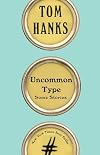
In his first story collection, Tom Hanks demonstrates, to my astonishment at least, that the character he’s played in virtually every movie since Splash is actually him—earnest, but playful; witty, but never ironic; extraverted, but with self-awareness; and fundamentally optimistic. As the British actor Stephen Fry says on the back cover, there’s something quintessentially American about this character, something that makes Hanks the natural successor to Jimmy Stewart. In his fiction, show more we find also that Hanks’ admiration for the men and women who fought World War II is genuine and deep; that he really is interested in the space program; and that he’s not too golly-gee naïve to drop an f-bomb once in a while. He appears to be the real deal.
He’s not going to win the Nobel Prize for Literature for these stories, but they’re far from a waste of time. If the ten-year-old’s point of view in “A Special Weekend” becomes cloying, that of a still-young veteran in 1953, providing for his family despite his physical and emotional scars, is moving. And given that Hanks has spent the last thirty years living in L.A., wealthy and famous, I was surprised by his ability to conjure the lives of ordinary people such as the divorcée in “A Month on Greene Street” and the immigrant in “Go See Costas.” If there’s a message in these stories, it’s that people in general are interesting, work crazily hard, and deserve your understanding and respect. It’s not hammered home or overdone. It’s as genuine as Tom Hanks, and, as they used to say in the ‘50s when several of these stories are set—my hat’s off to him. show less
He’s not going to win the Nobel Prize for Literature for these stories, but they’re far from a waste of time. If the ten-year-old’s point of view in “A Special Weekend” becomes cloying, that of a still-young veteran in 1953, providing for his family despite his physical and emotional scars, is moving. And given that Hanks has spent the last thirty years living in L.A., wealthy and famous, I was surprised by his ability to conjure the lives of ordinary people such as the divorcée in “A Month on Greene Street” and the immigrant in “Go See Costas.” If there’s a message in these stories, it’s that people in general are interesting, work crazily hard, and deserve your understanding and respect. It’s not hammered home or overdone. It’s as genuine as Tom Hanks, and, as they used to say in the ‘50s when several of these stories are set—my hat’s off to him. show less
Lists
Awards


You May Also Like


Associated Authors
Statistics
- Works
- 45
- Also by
- 104
- Members
- 4,786
- Popularity
- #5,249
- Rating
- 4.0
- Reviews
- 171
- ISBNs
- 134
- Languages
- 12
- Favorited
- 1
