
Robert Zemeckis
Author of The Polar Express [2004 film]
About the Author
Works by Robert Zemeckis
Romancing the Stone [and] The Jewel of the Nile (Double Feature Video) (2008) — Director — 72 copies
Back to the Future: The Complete Adventures — Director — 21 copies
Dr. Seuss' How the Grinch Stole Christmas [1966 TV special] / The Polar Express [2004 film] (2016) — Director — 15 copies
The Landmark Collection - Cast Away / Saving Private Ryan / Catch Me if You Can / Forrest Gump / The Terminal — Director — 5 copies
Triple Feature: Tom Hanks: Forrest Gump [and] The Green Mile [and] Road to Perdition — Director — 4 copies
Bird on a Wire / Death Becomes Her / Housesitter 3-Movie Laugh Pack [DVD] (2017) — Director — 3 copies
The Polar Express, 2 disc, 2D & 3D 2 copies
Zurück in die Zukunft - 40th Anniversary Trilogie [Blu-ray] — Director — 1 copy
Roald Dahl's The Witches 1 copy
La leggenda di Beowulf 1 copy
The Curious Case of Benjamin Button [and] Forrest Gump (Double Feature Video) (2014) — Director — 1 copy
Back to the Future I & II, Indiana Jones & Last Crusade — Director — 1 copy
Jessi's Girls / Death Becomes Her / Out of Control (Triple Feature Video) — Director — 1 copy
Associated Works
Tales from the Crypt: Season 4 16 copies
Tales from the Crypt: Season 6 13 copies
Cast Away / The Last of the Mohicans / Master and Commander: The Far Side of the World / Kingdom of Heaven (2014) — Director — 8 copies
Tagged
Common Knowledge
- Canonical name
- Zemeckis, Robert
- Legal name
- Zemeckis, Robert Lee
- Other names
- Zemeckis, Bob
- Birthdate
- 1951-05-14
- Gender
- male
- Education
- University of Southern California (BA|1973)
- Occupations
- film director
screenwriter
producer - Relationships
- Zemeckis, Leslie (spouse)
- Nationality
- USA
- Birthplace
- Chicago, Illinois, USA
- Map Location
- Illinois, USA
Members
Reviews

Madeline Ashton (Meryl Streep) and Helen Sharp (Goldie Hawn) are childhood rivals/frenemies who never outgrew their rivalry. When Helen becomes engaged to Dr. Ernest Menville (Bruce Willis), a famous plastic surgeon, she decides to put him to the test by introducing him to Madeline before their marriage - Madeline always managed to seduce guys away from her, so if his feelings are genuine, theoretically he won't be swayed. What Helen didn't count on was that Ernest is a big fan of Madeline's show more acting career. Despite his assurances, he ends up married to Madeline instead of Helen.
Seven years later, Helen is obese and completely obsessed with Madeline. Seven years after that, she has somehow slimmed down and become the author of a highly successful book called Forever Young. She flaunts her success and beauty in Madeline's face, and it works, because Madeline is now painfully aware of every little way in which her looks and allure are abandoning her. Ernest, now an alcoholic reconstructive mortician, is miserable as Madeline's husband and finds himself drawn to Helen.
While Helen tries to charm Ernest into a plan to kill Madeline, Madeline visits Lisle Von Rhuman, a mysterious and beautiful woman who claims to have a rejuvenation potion. She sells it to Madeline and sends her off with a warning to take care of her body. And so begins the next stage of Madeline and Helen's vicious and obsessive competition with one another.
I last watched this years ago and couldn't remember much about it beyond the ending and a few scenes with Madeline and Helen fighting. Since I seem to be in the process of a big movie binge with an occasional trip down memory lane, I decided to give this one a go. I'd completely forgotten how long it takes to get to the point where Madeline actually drinks the potion - the best and most memorable parts of the movie are definitely everything that comes after that. Yeesh, Goldie Hawn playing an overweight and deliberately gross Helen was very cringe-worthy.
I had also completely forgotten that Bruce Willis had a role in this movie. Considering the recent news about his aphasia, seeing him here was bittersweet. Ernest was a very different role from many of the ones he took throughout his career - a doormat of a guy designed to be a stereotypical "Beta male." Neither Madeline nor Helen really loved him. He was just another way for them to one-up each other.
I think viewers were supposed to see Ernest as the sympathetic character. Helen and Madeline were obviously toxic and ruled by their obsessions, but honestly I didn't like Ernest either. For him to be sympathetic, viewers had to see him as being so weak that he had no free will beyond whatever Madeline and Helen wanted. That's garbage, though - he was a person too, one who ditched Helen for Madeline, who ruined his own career, and who talked himself into helping commit murder. Unlike Helen and Madeline, he eventually managed to make better choices, but I still think this movie was about three terrible people, not just two.
The gender aspects were ugly and shallow, but, even so, the best and most memorable parts were when Helen and Madeline were literally trying to kill each other. Apparently neither one of them was listening when Lisle told them to take care of their bodies. It didn't even seem to matter that they couldn't even cause each other pain - they finally had a chance to do some damage to each other, and they were absolutely going to take advantage that. Who cares if it ruined their chances of actually enjoying immortality?
This movie hasn't aged well, and this rewatch didn't work out as well as some of my others, but it was still nice to watch Meryl Streep, Goldie Hawn, and Bruce Willis have some fun being awful together.
Extras:
Although the box didn't mention any extras, there was a "making of" featurette that was interesting to watch, considering the kinds of special effects the movie required.
(Original review posted on A Library Girl's Familiar Diversions.) show less
Seven years later, Helen is obese and completely obsessed with Madeline. Seven years after that, she has somehow slimmed down and become the author of a highly successful book called Forever Young. She flaunts her success and beauty in Madeline's face, and it works, because Madeline is now painfully aware of every little way in which her looks and allure are abandoning her. Ernest, now an alcoholic reconstructive mortician, is miserable as Madeline's husband and finds himself drawn to Helen.
While Helen tries to charm Ernest into a plan to kill Madeline, Madeline visits Lisle Von Rhuman, a mysterious and beautiful woman who claims to have a rejuvenation potion. She sells it to Madeline and sends her off with a warning to take care of her body. And so begins the next stage of Madeline and Helen's vicious and obsessive competition with one another.
I last watched this years ago and couldn't remember much about it beyond the ending and a few scenes with Madeline and Helen fighting. Since I seem to be in the process of a big movie binge with an occasional trip down memory lane, I decided to give this one a go. I'd completely forgotten how long it takes to get to the point where Madeline actually drinks the potion - the best and most memorable parts of the movie are definitely everything that comes after that. Yeesh, Goldie Hawn playing an overweight and deliberately gross Helen was very cringe-worthy.
I had also completely forgotten that Bruce Willis had a role in this movie. Considering the recent news about his aphasia, seeing him here was bittersweet. Ernest was a very different role from many of the ones he took throughout his career - a doormat of a guy designed to be a stereotypical "Beta male." Neither Madeline nor Helen really loved him. He was just another way for them to one-up each other.
I think viewers were supposed to see Ernest as the sympathetic character. Helen and Madeline were obviously toxic and ruled by their obsessions, but honestly I didn't like Ernest either. For him to be sympathetic, viewers had to see him as being so weak that he had no free will beyond whatever Madeline and Helen wanted. That's garbage, though - he was a person too, one who ditched Helen for Madeline, who ruined his own career, and who talked himself into helping commit murder. Unlike Helen and Madeline, he eventually managed to make better choices, but I still think this movie was about three terrible people, not just two.
The gender aspects were ugly and shallow, but, even so, the best and most memorable parts were when Helen and Madeline were literally trying to kill each other. Apparently neither one of them was listening when Lisle told them to take care of their bodies. It didn't even seem to matter that they couldn't even cause each other pain - they finally had a chance to do some damage to each other, and they were absolutely going to take advantage that. Who cares if it ruined their chances of actually enjoying immortality?
This movie hasn't aged well, and this rewatch didn't work out as well as some of my others, but it was still nice to watch Meryl Streep, Goldie Hawn, and Bruce Willis have some fun being awful together.
Extras:
Although the box didn't mention any extras, there was a "making of" featurette that was interesting to watch, considering the kinds of special effects the movie required.
(Original review posted on A Library Girl's Familiar Diversions.) show less

Although the actors were good, it was an extremely shallow screenplay with clichéd dialogue. The director said, "This is not the Beowulf you were forced to sit through in high school." He's right; it should have been more like that, less trite and have more realistic heroism. No thought was put into preventing anachronisms: I love Angelina's 800 AD high heels. At least no one looked at their wristwatch. If you have any love of Beowulf, do not see this movie. If you do not love Beowulf, do show more not see this movie. If you like any of these actors, do not see this movie. Really, just don't.—Paul show less

A black comedy starring Meryl Streep, Goldie Hawn, Bruce Willis, and Isabella Rossellini. It showcases toxic female friendship in rivalry with Madeline and Helen's relationship, and it's only when they meet up again where you see all of their envy, vanity and pettiness on full display. Their rivalry and longing for eternal youth, and their flawed immortality that comes into play the more they try to hurt each other is comical, but also shows just how bad yet perfect they are for one another show more - not in a romantic sense in the slightest, but in the sense that no other person could ever compete with the levels of crazy they give each other, especially when they try stringing along the one mortal in their lives to drink the potion and stick with them forever as the one that puts them back together.
It's a weird little film, and one that feels shorter than the actual run time, I think because the plot is so simple. It's not too complex although the plot definitely would be if written in any other medium by writers who wanted to get deep into the nitty gritty of what their eternal youth and immortality. But as is, the film is a nice cheesy watch for the spooky season. show less
It's a weird little film, and one that feels shorter than the actual run time, I think because the plot is so simple. It's not too complex although the plot definitely would be if written in any other medium by writers who wanted to get deep into the nitty gritty of what their eternal youth and immortality. But as is, the film is a nice cheesy watch for the spooky season. show less
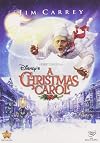
This has a great cast and there are things you can do using this animation technique that you couldn't do with just a regular film, BUT...there is just too much that is overdone here and it distracts from the story. The special effects just call attention to themselves rather than being a seamless part of the story. That--and using Jim Carrey's considerable talents--seems to have been the reason for making the film. If it distracts anyone from watching the less flashy, more heartfelt, far show more superior George C. Scott version, it would be a shame. show less
Lists
Awards


You May Also Like


Associated Authors
Statistics
- Works
- 48
- Also by
- 15
- Members
- 8,048
- Popularity
- #3,009
- Rating
- 3.9
- Reviews
- 93
- ISBNs
- 159
- Languages
- 6
- Favorited
- 1