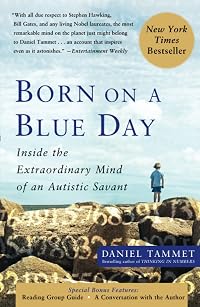
Born on a Blue Day: Inside the Extraordinary Mind of an Autistic Savant: A Memoir
by Daniel Tammet 
On This Page
Description
One of the world's fifty living autistic savants is the first and only to tell his compelling and inspiring life story---and explain how his incredible mind works.Tags
Recommendations
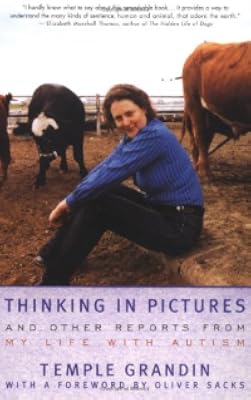
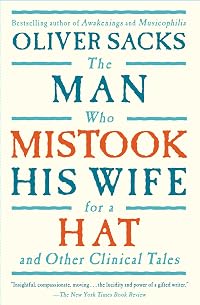
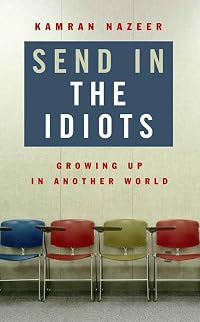

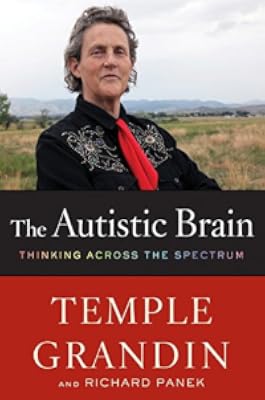
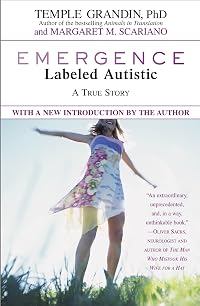
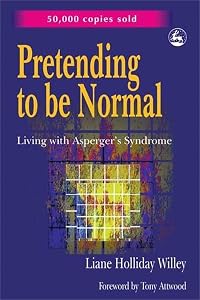
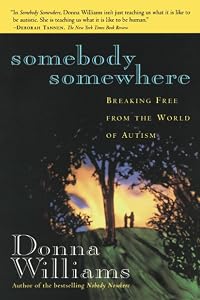











Member Recommendations

Member Reviews
Here's a fascinating insight into a baffling mind! To be autistic is rare enough. To have synaesthesia is rare too. To have savant syndrome is even rarer. Well, Daniel Tammet combines all three! More, unlike most individuals with savant syndrome -who usually are so challenged in other cognitive areas that they are dependent for their care- he is perfectly independent; and so fully able to tell about his experience. 'Born on a Blue Day' truly is an extraordinary book.
Starting by reminiscing upon his childhood, it's touching and moving to see him growing up surrounded by people who have absolutely no clue. Asperger wasn't recognised as a unique disorder before 1994, and so here we are, watching upon this little boy making his way through show more a childhood unlike any others. As with every autobiography, this is a unique personal history for sure. Yet, it echoes with the experiences of many; and when it comes to people like me (so-called 'neurotypicals') he blows away some prejudices still well ingrained among the general population. Autistic people are not loners by choice, they crave friendships and relationships as everyone does; it's their perceived weirdness which doesn't help, and so they often end up lonely by default. Autistic people are not 'retard', they hate being patronised as much as everyone else. Autistic people are also perfectly able to contribute greatly to society (he went on volunteering in Lithuania in his early twenties; and he works - unlike many others on the spectrum, sadly still left behind on the job market...). He was lucky though, in that his family was very loving, nurturing, supportive. As he acknowledges himself, his (numerous!) siblings have done wonders for improving his social skills; like, later on, his long term boyfriend will do wonders to help him connecting with his emotions.
No matter how moving and interesting, though, his family and love story is not what glued me to this read. His mind did.
Following epileptic seizures in childhood (nasty ones, we're talking here about status epilepticus...) his brain was completely reprogramed (for default of a better word) into acquiring amazing skills. Not only does he have synaesthesia, but, he developed a gift for numbers and languages. A visual mind is not unusual for autistic people. The thing with him is that he sees numbers in shapes, colours, textures, and motions! Same with words: he pictures them each with an associated colour. Beyond that, his ability to thus visualise words and numbers as he does allows him to arrange and re-arrange them mentally, merging them altogether, in such a way that he can perform unimaginable calculations. Added to an extraordinary memory for everything related to numeracy (eg dates...) here's a fascinating mind to delve into! Fluent in ten languages, he learnt Icelandic in about a week! He also holds the record for reciting the mathematical constant pi from memory to 22,514 decimal places (a feat that took him more than five hours to perform!).
Not every autistic individual is the same, and, savant syndrome is extremely rare. His autobiography is therefore unique for many reasons. However, despite his 'differentness' (as he calls it) Daniel Tammet's memoir is both touching and compelling. Touching, because being yet another voice from Asperger's his experience has to be discovered for anyone curious about how possible it is to differently perceive the world around. Compelling, because such insight into synaesthesia and savant syndrome make for a engrossing read for whoever is intrigued by how weird the human brain can be. In the end, you cannot but feel admirative in front of a such a person. Remarkable! show less
Starting by reminiscing upon his childhood, it's touching and moving to see him growing up surrounded by people who have absolutely no clue. Asperger wasn't recognised as a unique disorder before 1994, and so here we are, watching upon this little boy making his way through show more a childhood unlike any others. As with every autobiography, this is a unique personal history for sure. Yet, it echoes with the experiences of many; and when it comes to people like me (so-called 'neurotypicals') he blows away some prejudices still well ingrained among the general population. Autistic people are not loners by choice, they crave friendships and relationships as everyone does; it's their perceived weirdness which doesn't help, and so they often end up lonely by default. Autistic people are not 'retard', they hate being patronised as much as everyone else. Autistic people are also perfectly able to contribute greatly to society (he went on volunteering in Lithuania in his early twenties; and he works - unlike many others on the spectrum, sadly still left behind on the job market...). He was lucky though, in that his family was very loving, nurturing, supportive. As he acknowledges himself, his (numerous!) siblings have done wonders for improving his social skills; like, later on, his long term boyfriend will do wonders to help him connecting with his emotions.
No matter how moving and interesting, though, his family and love story is not what glued me to this read. His mind did.
Following epileptic seizures in childhood (nasty ones, we're talking here about status epilepticus...) his brain was completely reprogramed (for default of a better word) into acquiring amazing skills. Not only does he have synaesthesia, but, he developed a gift for numbers and languages. A visual mind is not unusual for autistic people. The thing with him is that he sees numbers in shapes, colours, textures, and motions! Same with words: he pictures them each with an associated colour. Beyond that, his ability to thus visualise words and numbers as he does allows him to arrange and re-arrange them mentally, merging them altogether, in such a way that he can perform unimaginable calculations. Added to an extraordinary memory for everything related to numeracy (eg dates...) here's a fascinating mind to delve into! Fluent in ten languages, he learnt Icelandic in about a week! He also holds the record for reciting the mathematical constant pi from memory to 22,514 decimal places (a feat that took him more than five hours to perform!).
Not every autistic individual is the same, and, savant syndrome is extremely rare. His autobiography is therefore unique for many reasons. However, despite his 'differentness' (as he calls it) Daniel Tammet's memoir is both touching and compelling. Touching, because being yet another voice from Asperger's his experience has to be discovered for anyone curious about how possible it is to differently perceive the world around. Compelling, because such insight into synaesthesia and savant syndrome make for a engrossing read for whoever is intrigued by how weird the human brain can be. In the end, you cannot but feel admirative in front of a such a person. Remarkable! show less
Autistics are often characterized as unempathic, but this is asking that they empathize with us when we equally fail to empathize with them. In this book, Daniel Tammet tries to bridge the gap by telling who he thinks WE are, who he thinks HE is. But he was taught to value who we are, to see himself as having deficits, and he accepts that verdict while simultaneously bragging about his "extraordinary mind." I was hoping that the chapter in which he meets "Rainman" would offer us a "marriage of true minds" connection, but alas, it does not.
In the end, I was left feeling that the autistic love of facts is a way of protecting the oversensitive, and that, as a result, I never got to know him in the way I would have liked. Maybe his show more boyfriend Neil must be the one to write such a book. show less
In the end, I was left feeling that the autistic love of facts is a way of protecting the oversensitive, and that, as a result, I never got to know him in the way I would have liked. Maybe his show more boyfriend Neil must be the one to write such a book. show less
Daniel Tammet doesn't exhibit the greatest literary style in his Born on a Blue Day. It reads as a series of anecdotes strung together; however, that doesn't matter. His book is one of the finest insights into what it feels like to be a high-functioning autistic.
Tammet additionally has synesthesia, which means he "sees" numbers and letters in colors and shapes. Not all autistics have that: My two daughters do not. Nor are all those with synesthesia autistic. But Tammet credits the synesthesia with enabling his ability to do remarkable arithmetic calculations. (Tammet is one of 50 savants in the world.)
The book is a must-read for any parent of an autistic child. I took such solace from it. My eldest daughter (a high-functioning autistic) show more goes off to Earlham College in August, and I am more nervous than most parents. But reading Tammet's book truly gave me hope.
While There's a Boy in Here: Emerging from the Bonds of Autism, Emergence: Labeled Autistic, and Nobody Nowhere: the Extraordinary Autobiography of an Autistic are all excellent first-hand accounts of being autistic, Born on a Blue Day is, by far, the best of the lot. show less
Tammet additionally has synesthesia, which means he "sees" numbers and letters in colors and shapes. Not all autistics have that: My two daughters do not. Nor are all those with synesthesia autistic. But Tammet credits the synesthesia with enabling his ability to do remarkable arithmetic calculations. (Tammet is one of 50 savants in the world.)
The book is a must-read for any parent of an autistic child. I took such solace from it. My eldest daughter (a high-functioning autistic) show more goes off to Earlham College in August, and I am more nervous than most parents. But reading Tammet's book truly gave me hope.
While There's a Boy in Here: Emerging from the Bonds of Autism, Emergence: Labeled Autistic, and Nobody Nowhere: the Extraordinary Autobiography of an Autistic are all excellent first-hand accounts of being autistic, Born on a Blue Day is, by far, the best of the lot. show less
Daniel Tammet is a savant who sees numbers as shapes, colors, and textures, and who can perform unbelievable feats of calculation in his head. In 2004 he became something of a celebrity in England when he memorized and recited the first 22,000 digits of pi, setting a new world record.
The cover is a bit misleading with the tagline, "inside the extraordinary mind of an autistic savant". The author is not, in fact, autistic, and never was. He suffered from epilepsy & seizures during early childhood which doctors and scientists believe caused his savantism. This becomes immediately clear upon reading the first pages of the book. He does have Asperger's syndrome, but although Asperger's is considered to be loosely related to autism (or more show more accurately on the spectrum), it is certainly not the same. It is a much milder disorder, much less debilitating, and much more common. It is fairly common for someone with Asperger's to lead a more or less normal life and fairly common for many to go undiagnosed until much later in life…. Several major Silicon Valley CEOs have been diagnosed with it & many more well known people of note have been retroactively diagnosed as having it. There was an article on Wired a while back entitled “The Geek Syndrome”, which seems to cover Asperger's pretty well, at a layman's level, so I'm not going to detail it further here. Long story short, I consider this tagline disingenuous on the part of the publisher.
I found this book rather interesting. It is well-written and engaging, and the main character (the author himself) is interesting to get to know.
But I began to worry that the entire book would be a loose collection of examples of synesthesia. For an example, Tammet sees the number “1″ as a very bright white, the number “11″ is friendly, and “5″ is loud like a clap of thunder. Scientists are particularly interested in his ability to see numbers as landscapes with color and texture and Tammet is currently helping them with their studies. I wonder at the outcome of this as no two people think alike and worry that his way of seeing numbers etc will be interpreted as some kind of bible within the scientific community. Tammet’s input is important but like statistics he is only one not the majority.
While there is the assumption that synaesthesia is rare I don’t believe it is “that” rare and believe that many people have some degree of it in various ways. I myself see words in images or moods as I read them and I know many others that do – and many folk who do gravitate towards the arts in some form. Ditto many musicians report seeing music in ways that the rest of us don’t experience. I have to admit I can’t do much maths these days without anti-depressants (& I’d rather not take them) - I now have a mental block for it ~ although in primary school I was pretty good & developed my own math system based on what I now know to be a binary system, until the nun’s beat it out of me,(hence the mental block)…. Anyhow that’s probably TMI - but relevant to me, so when I came to Tammet’s chapter on pi and more detailed maths I just skipped it. Maths geeks though will love it – I guess to give him his due what he can do is nothing short of amazing and his ability is compared to the ‘Rainman”, Kim Peek, who Tammet later met & continues to remain friends with.
The subsequent chapters begin a more chronological journey through the author's life. Tammet had a very difficult education. He was bullied by his classmates because of his “weirdness” and compulsive behaviour. He was socially withdrawn and preferred his own company. His parents were accepting and supporting of him and he credits their help with getting him through difficult periods.
Tammet gives this advice to parents of children suffering from epilepsy or autism:
“Give your children the self-belief to hold on to their dreams, because they are the things that shape each person’s future”. (Something all parents should try to do).
Tammet is creating his own language, strongly influenced by the vowel and image-rich languages of northern Europe. (He already speaks French, German, Spanish, Lithuanian, Icelandic and Esperanto.) The vocabulary of his language - "Mänti", meaning a type of tree - reflects the relationships between different things. The word "ema", for instance, translates as "mother", and "ela" is what a mother creates: "life". "Päike" is "sun", and "päive" is what the sun creates: "day". Tammet hopes to launch Mänti in academic circles later this year, his own personal exploration of the power of words and their inter-relationship.His website, Optimnem sells foreign language courses. Personally I found the idea of his "Mänti" language a bit pointless and silly when he can already speak multiple languages and there exists already Esperanto., but whatever rocks his boat.
Some other reviews I’ve read find difficulty in the fact that he is homosexual and Christian but there will always be naysayers and haters out there. In the ¾ quarter section of the book the narrative drifts a bit during his discussion of how he sees God & that could be my own bias in not being particularly interested one way or the other - and while I appreciate why he included it (to show he does have empathy and feelings etc), his openness on his sexuality and beliefs have probably caused him more derision than acceptance in some religious sectors. He does delve into religious matters more deeply on his blog.
Overall I’d recommend “Born on a Blue Day” to anyone interested in the workings of the human mind (particularly if you love maths). Daniel Tammet is an interesting guy. Exceptional in some areas and pretty normal in others. I feel the most positive thing is the overriding sense you get from Tammet’s life is that you cannot hurl everyone into the same basket based on stereotypical medical categories like “savant” or “asperger’s”. While he is awesome calculating pi he does the dishes just like us.
*library borrow show less
The cover is a bit misleading with the tagline, "inside the extraordinary mind of an autistic savant". The author is not, in fact, autistic, and never was. He suffered from epilepsy & seizures during early childhood which doctors and scientists believe caused his savantism. This becomes immediately clear upon reading the first pages of the book. He does have Asperger's syndrome, but although Asperger's is considered to be loosely related to autism (or more show more accurately on the spectrum), it is certainly not the same. It is a much milder disorder, much less debilitating, and much more common. It is fairly common for someone with Asperger's to lead a more or less normal life and fairly common for many to go undiagnosed until much later in life…. Several major Silicon Valley CEOs have been diagnosed with it & many more well known people of note have been retroactively diagnosed as having it. There was an article on Wired a while back entitled “The Geek Syndrome”, which seems to cover Asperger's pretty well, at a layman's level, so I'm not going to detail it further here. Long story short, I consider this tagline disingenuous on the part of the publisher.
I found this book rather interesting. It is well-written and engaging, and the main character (the author himself) is interesting to get to know.
But I began to worry that the entire book would be a loose collection of examples of synesthesia. For an example, Tammet sees the number “1″ as a very bright white, the number “11″ is friendly, and “5″ is loud like a clap of thunder. Scientists are particularly interested in his ability to see numbers as landscapes with color and texture and Tammet is currently helping them with their studies. I wonder at the outcome of this as no two people think alike and worry that his way of seeing numbers etc will be interpreted as some kind of bible within the scientific community. Tammet’s input is important but like statistics he is only one not the majority.
While there is the assumption that synaesthesia is rare I don’t believe it is “that” rare and believe that many people have some degree of it in various ways. I myself see words in images or moods as I read them and I know many others that do – and many folk who do gravitate towards the arts in some form. Ditto many musicians report seeing music in ways that the rest of us don’t experience. I have to admit I can’t do much maths these days without anti-depressants (& I’d rather not take them) - I now have a mental block for it ~ although in primary school I was pretty good & developed my own math system based on what I now know to be a binary system, until the nun’s beat it out of me,(hence the mental block)…. Anyhow that’s probably TMI - but relevant to me, so when I came to Tammet’s chapter on pi and more detailed maths I just skipped it. Maths geeks though will love it – I guess to give him his due what he can do is nothing short of amazing and his ability is compared to the ‘Rainman”, Kim Peek, who Tammet later met & continues to remain friends with.
The subsequent chapters begin a more chronological journey through the author's life. Tammet had a very difficult education. He was bullied by his classmates because of his “weirdness” and compulsive behaviour. He was socially withdrawn and preferred his own company. His parents were accepting and supporting of him and he credits their help with getting him through difficult periods.
Tammet gives this advice to parents of children suffering from epilepsy or autism:
“Give your children the self-belief to hold on to their dreams, because they are the things that shape each person’s future”. (Something all parents should try to do).
Tammet is creating his own language, strongly influenced by the vowel and image-rich languages of northern Europe. (He already speaks French, German, Spanish, Lithuanian, Icelandic and Esperanto.) The vocabulary of his language - "Mänti", meaning a type of tree - reflects the relationships between different things. The word "ema", for instance, translates as "mother", and "ela" is what a mother creates: "life". "Päike" is "sun", and "päive" is what the sun creates: "day". Tammet hopes to launch Mänti in academic circles later this year, his own personal exploration of the power of words and their inter-relationship.His website, Optimnem sells foreign language courses. Personally I found the idea of his "Mänti" language a bit pointless and silly when he can already speak multiple languages and there exists already Esperanto., but whatever rocks his boat.
Some other reviews I’ve read find difficulty in the fact that he is homosexual and Christian but there will always be naysayers and haters out there. In the ¾ quarter section of the book the narrative drifts a bit during his discussion of how he sees God & that could be my own bias in not being particularly interested one way or the other - and while I appreciate why he included it (to show he does have empathy and feelings etc), his openness on his sexuality and beliefs have probably caused him more derision than acceptance in some religious sectors. He does delve into religious matters more deeply on his blog.
Overall I’d recommend “Born on a Blue Day” to anyone interested in the workings of the human mind (particularly if you love maths). Daniel Tammet is an interesting guy. Exceptional in some areas and pretty normal in others. I feel the most positive thing is the overriding sense you get from Tammet’s life is that you cannot hurl everyone into the same basket based on stereotypical medical categories like “savant” or “asperger’s”. While he is awesome calculating pi he does the dishes just like us.
*library borrow show less
In this very straightforward and easy to read memoir, Daniel Tammet describes how his mind works with synesthesia, his struggles during childhood, and how he has blossomed as an adult. Tammet earned fame in the past decade after he took on a challenge to memorize and recite pi to over 22,500 digits, and did so in a marathon session. He was also challenged to learn Icelandic within the span of a week, with only three days of immersion in the country. However, his early childhood memories are just as fascinating. He is the eldest in a large family, and never fit in at school, though he was oblivious to his social awkwardness for many years. He was too fixated on things of interest--textures, numbers, even ladybirds (ladybugs). At the end show more of the book, he acknowledges those same deep introversion traits that alienated him as a child have earned him tremendous acclaim as an adult.
For me, this story felt very personal. My six-year-old son is autistic and some teachers have wondered if he is a savant because of his mathematical memory skills. He shares many traits with Tammet, including severe sensitivity to noise and obliviousness to things and people around him. Therefore, it was inspiring for me to read about Tammet and how far he has come in life. I'm not just speaking of the academic success; Tammet has a wonderful and supportive partner and manages a household. He has a fully-rounded and satisfying life. What more can any parent ask for?
This is a book I'm keeping on the shelf for my son to read someday. show less
For me, this story felt very personal. My six-year-old son is autistic and some teachers have wondered if he is a savant because of his mathematical memory skills. He shares many traits with Tammet, including severe sensitivity to noise and obliviousness to things and people around him. Therefore, it was inspiring for me to read about Tammet and how far he has come in life. I'm not just speaking of the academic success; Tammet has a wonderful and supportive partner and manages a household. He has a fully-rounded and satisfying life. What more can any parent ask for?
This is a book I'm keeping on the shelf for my son to read someday. show less
Daniel is a very high-functioning autistic person with savant syndrome- he has an extraordinary ability to recall and compute large numbers- due in large part to his unique way of visualizing them as distinct shapes and colors. He has synesthesia with both numbers and words. And he suffered from epilepsy as a child. This memoir describes how he grew up, isolated in many ways yet enjoying his own sensations and obsessions (especially collecting things) and only when he was older having a desire to interact with peers learning to navigate social interactions and tasks like shopping or finding his way on bus routes. He describes difficulties in school, living in a large family (nine siblings!) and how he calms himself in stressful show more situations. How he volunteered to work overseas teaching English as a second language, how his aptitude for learning languages works, how he once memorized and recited 22,000 digits of the number pi to break a world record! (It took five hours to make the recitation). And finally, how he discovered that he's gay, fell in love, and moved in with his partner, living independently and successfully started a business creating a website to help people learn foreign languages. It's astounding. Most of all to me, the very different way in which he visualizes and understands the world. Last year I watched a documentary made about him and I was just blown away. Even the mental games he tells of playing as a child, with numbers, I can't really comprehend. Although the writing style is a bit dry, he recalls incidents with a lot of detail- even from a young age. Some of them sad, to see how peers at first shunned him, and teachers misunderstood. His story of overcoming challenges living with autism and finding his way in the world, to living independently with someone he loves and even finding religion, is very inspiring.
from the Dogear Diary show less
from the Dogear Diary show less
I like the harder sort of cognitive philosophy or research, generally speaking. Sometimes, though, you have to go for something that's more human and less theoretical, and look at the experiences of the people who are dealing with these syndromes we study, and if you're feeling that this is one of those times, then this is the right book for you. It's charming and interesting, at the same time.
Tammet is a very high functioning Asperger's person, with synaesthesia and savant syndrome, and he lays out some of his thought patterns on those fronts for the reader, to get an idea of how he views the world. He discusses how he sees numbers as particular shapes with particular properties, and how he approaches language learning, and his show more abilities to deal with other people; even just about how he is in his own body. That's all very interesting, as well.
But in a way, my favorite parts of the book are just how he got through life. The descriptions of how he dealt with growing up, with his family and schoolmates and such, was very interesting, and it surprised me how much I could relate to what he said. The passages about how he found living in a different country (in his case, Lithuania), and his thoughts about falling in love and the importance of relationships, were very moving, as well.
The style is spare and simple, but compelling, and the story is really engrossing and inspiring. This may not be the best book I read this year, but it's probably my favorite non-fiction one. It's definitely worth a read, if you have the chance. show less
Tammet is a very high functioning Asperger's person, with synaesthesia and savant syndrome, and he lays out some of his thought patterns on those fronts for the reader, to get an idea of how he views the world. He discusses how he sees numbers as particular shapes with particular properties, and how he approaches language learning, and his show more abilities to deal with other people; even just about how he is in his own body. That's all very interesting, as well.
But in a way, my favorite parts of the book are just how he got through life. The descriptions of how he dealt with growing up, with his family and schoolmates and such, was very interesting, and it surprised me how much I could relate to what he said. The passages about how he found living in a different country (in his case, Lithuania), and his thoughts about falling in love and the importance of relationships, were very moving, as well.
The style is spare and simple, but compelling, and the story is really engrossing and inspiring. This may not be the best book I read this year, but it's probably my favorite non-fiction one. It's definitely worth a read, if you have the chance. show less
Members
- Recently Added By
Lists

Best Autobiographies and Memoirs
370 works; 67 members

To Read - Non Fiction
46 works; 4 members

Books Read in 2017
4,249 works; 129 members

Books I have Recommended
207 works; 1 member
Author Information

9 Works 3,751 Members
Daniel Tammet is an essayist, novelist, and translator. He is the author of Thinking in Numbers, Embracing the Wide Sky, and the New York Times bestseller Born on a Blue Day. Tammet is a Fellow of the Royal Society of Arts. He lives in Paris. danieltammet.net
Daniel Tammet is a LibraryThing Author, an author who lists their personal library on LibraryThing.
Some Editions
Awards and Honors
Work Relationships
Common Knowledge
- Canonical title
- Born on a Blue Day: Inside the Extraordinary Mind of an Autistic Savant: A Memoir
- Original title
- Born on a Blue Day
- Original publication date
- 2006
- People/Characters
- Daniel Tammet; Neil; David Letterman
- Important places
- England, UK; Lithuania; Kaunas, Lithuania; Herne Bay, Kent, England, UK; Iceland
- Dedication
- To my parents, for helping me become the person I am today and to Neil, for always being there for me.
- First words
- I was born on January 31, 1979 - a Wednesday.
- Last words
- (Click to show. Warning: May contain spoilers.)It would be like having a glimpse of heaven.
- Blurbers
- Grandin, Temple; Treffert, Darold A, M.D.; Baron-Cohen, Simon
Classifications
- Genres
- Biography & Memoir, General Nonfiction, Nonfiction
- DDC/MDS
- 362.196858820092 — Society, government, & culture Social problems and social services Social Welfare People with physical illnesses Services to people with specific conditions Diseases Diseases of nervous system and mental disorders Miscellaneous diseases of nervous system and mental disorders Personality, sexual, gender-identity, impulse-control, factitious, developmental, learning disorders; violent behavior; mental retardation Mental retardation; developmental and learning disorders Autism
- LCC
- RC553 .A88 .T36 — Medicine Internal medicine Internal medicine Neurosciences. Biological psychiatry. Neuropsychiatry Psychiatry Psychopathology
- BISAC
Statistics
- Members
- 2,681
- Popularity
- 6,918
- Reviews
- 103
- Rating
- (3.72)
- Languages
- 10 — Dutch, English, Estonian, French, German, Italian, Polish, Portuguese, Spanish, Swedish
- Media
- Paper, Audiobook, Ebook
- ISBNs
- 36
- ASINs
- 15