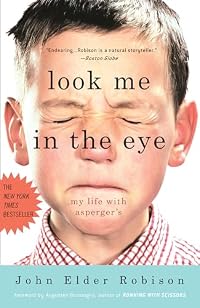
Look Me in the Eye: My Life with Asperger's
by John Elder Robison
On This Page
Description
John Robison longed to connect with other people, but by the time he was a teenager, his odd habits had earned him the label "social deviant." No guidance came from his mother, who conversed with light fixtures, or his father, who spent evenings drunk. No wonder he gravitated to machines, which could be counted on. His savant-like ability to visualize electronic circuits landed him a gig with KISS, for whom he created their legendary fire-breathing guitars. Later, he drifted into a "real" show more job, as an engineer for a major toy company. But the higher Robison rose, the more he had to pretend to be "normal" and do what he simply couldn't: communicate. It was not until he was forty that an insightful therapist told him he had the form of autism called Asperger's syndrome. That understanding transformed the way Robison saw himself--and the world.--From publisher description. show lessTags
Recommendations

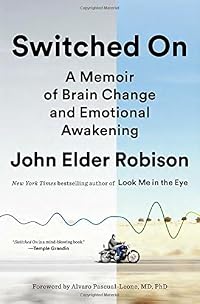
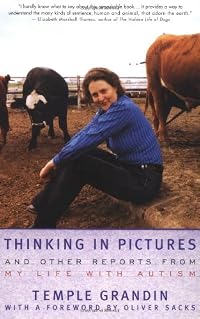
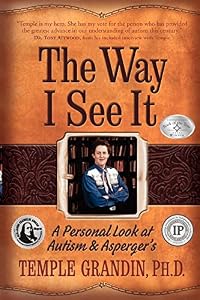



Member Recommendations
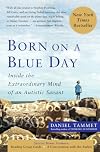
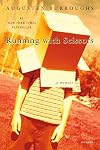
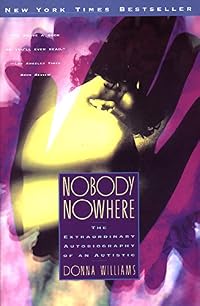
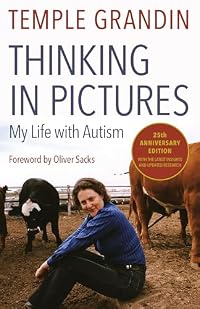
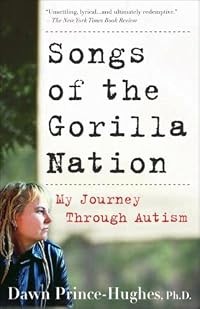
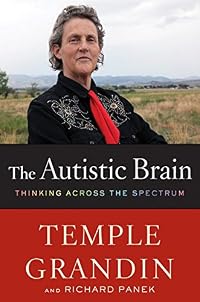
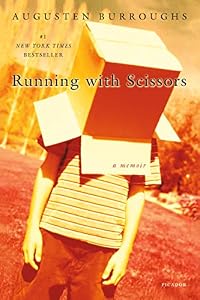
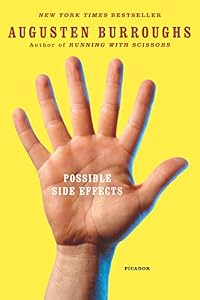
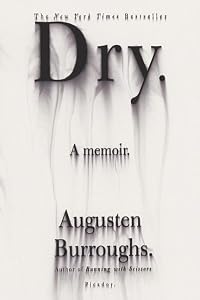
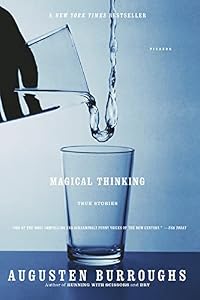
vancouverdeb Look Me in the Eye written by John Elder Robinson, the elder brother ofAugusten Burroughs who wrote Running with Scissors. Each gives a different take on their dysfunctional family.


meggyweg Memoir by John Burroughs's mother.
Member Reviews
Robinson has provided a well-written autobiography of his life challenged and enpowered by Asperger's. At times painfully sad and at others humorous. Always enlightening and insightful.
Incredibly compelling and readable. Must read for all mental health professionals, teachers, school staff, and students of psychology. And mostly everyone else.
Incredibly compelling and readable. Must read for all mental health professionals, teachers, school staff, and students of psychology. And mostly everyone else.
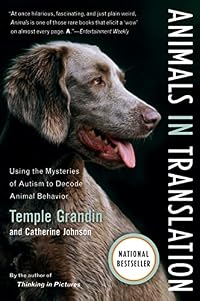
I was captured by this book from page one. I have not (YET) read any of the books written by his famous brother, Augusten X Burroughs, but after reading LOOK ME IN THE EYE, I certainly will read something of Burroughs', probably WOLF AT THE TABLE. In any case, Robison's story of his life with Asperberger's is as revealing and intimate as a memoir can be. I was pleasantly surprised to learn of his role with the roadies and techies of the KISS tour, as both of my sons are long-time KISS fans. Robison's difficulties in childhood and high school are well documented here in the most human terms, his lack of friends and the lack of empathy or understanding from teachers and other adults made me wince with sympathy. Strangely, or perhaps not, show more as I read of Robison's life, I thought of a few people I have known over the years who exhibited similar quirks and savant-like talents, and wondered if perhaps they might also have been Asperger's types. I was also quite startled to learn that perhaps one in 150 people suffer from autism, which covers a wide spectrum of difficulties. Even Robison's strange and sometimes devilish and even cruel sense of humor and his penchant for practical jokes and pranks were described in such a way that I found myself entranced rather than repelled. After all, many of his victims got only what they deserved. Robison's experiences in looking for love and his descriptions of his first girlfriend (later his first wife) are also told in utterly believable and interesting terms. His obvious love for his son, Cubby, is another plus. I picked up this book rather reluctantly, possibly because I had read ANIMALS IN TRANSLATION a few years ago, written by Temple Grandin, an autistic savant of sorts. While I found her theories interesting, her writing style was somewhat sterile and robotic, in addition to being often repetitious and borderline boring. I had also picked up another autism memoir, Daniel Tammet's BORN ON A BLUE DAY and glanced through it once. It did not engage me at all. I found none of these faults in Robison's book. This is one helluva good read. I recommend it highly. show less
John Elder Robison is eight years older than his brother Augusten Burroughs, but it was from Burroughs's 2002 Running with Scissors that the world first learned of the extraordinarily troubled family in which the brothers were brought up. Encouraged by Burroughs to share his own memories of being raised by an alcoholic father and a mentally unstable mother, Robison did so in 2008 with Look Me in the Eye, a memoir in which he gives an insider's account of what it is like to suffer from a form of autism called Asperger's syndrome.
Robison was already forty years old by the time he learned that he was, as he puts it, an Aspergian. Common symptoms of the syndrome include the inability to look someone in the eye when speaking to them, being show more unable to participate in a conversation at all if anything else catches their attention while they are speaking, non-appropriate facial expressions or body language in social situations, failure to develop peer relationships with other children, and occasional “rare gifts” like “truly extraordinary insight into complex problems.” Robison was somewhat shocked to learn that there were other people out there like him – so many of them, in fact, that the rest of the world even had a name for them.
John Robinson, from the time he was a child, liked other children and badly wanted to be part of the gang. But rather than being made a part of any neighborhood gang, Robinson most often found himself on the outside looking in, always the last to be chosen for team sports and games - if chosen at all. Unable to respond socially appropriately when given half a chance to become part of the action, he made other children so uneasy that they wanted nothing to do with him. Robison, though, is one of the luckier Aspergians, and has the kind of offsetting talents that others of us can only dream about. Not only was he the developer of the exploding, laser-firing guitars that helped to make the band KISS famous, he was instrumental in the production of the early electronic game modules that made Milton Bradley for a time the most recognizable toy company name to children all over the world.
Look Me in the Eye is fascinating because of the insights offered into an autism variation that until recent years has drawn little attention. What makes the book truly exceptional, however, is that these insights are coming from someone who has experienced the syndrome first hand, a man with a surprising storytelling ability and a well-defined sense of humor that contribute one memorable and entertaining story after another. I found myself telling some of Robison's stories to friends even before I finished reading the entire book because I was anxious to recommend it to others as quickly as I could. Look Me in the Eye is simply not to be missed.
(Review Copy provided by Publisher) show less
Robison was already forty years old by the time he learned that he was, as he puts it, an Aspergian. Common symptoms of the syndrome include the inability to look someone in the eye when speaking to them, being show more unable to participate in a conversation at all if anything else catches their attention while they are speaking, non-appropriate facial expressions or body language in social situations, failure to develop peer relationships with other children, and occasional “rare gifts” like “truly extraordinary insight into complex problems.” Robison was somewhat shocked to learn that there were other people out there like him – so many of them, in fact, that the rest of the world even had a name for them.
John Robinson, from the time he was a child, liked other children and badly wanted to be part of the gang. But rather than being made a part of any neighborhood gang, Robinson most often found himself on the outside looking in, always the last to be chosen for team sports and games - if chosen at all. Unable to respond socially appropriately when given half a chance to become part of the action, he made other children so uneasy that they wanted nothing to do with him. Robison, though, is one of the luckier Aspergians, and has the kind of offsetting talents that others of us can only dream about. Not only was he the developer of the exploding, laser-firing guitars that helped to make the band KISS famous, he was instrumental in the production of the early electronic game modules that made Milton Bradley for a time the most recognizable toy company name to children all over the world.
Look Me in the Eye is fascinating because of the insights offered into an autism variation that until recent years has drawn little attention. What makes the book truly exceptional, however, is that these insights are coming from someone who has experienced the syndrome first hand, a man with a surprising storytelling ability and a well-defined sense of humor that contribute one memorable and entertaining story after another. I found myself telling some of Robison's stories to friends even before I finished reading the entire book because I was anxious to recommend it to others as quickly as I could. Look Me in the Eye is simply not to be missed.
(Review Copy provided by Publisher) show less
Overall, this is a wonderful insight into the struggles that an "Aspergian" goes through, in childhood with no diagnosis, and throughout life struggling to fit in and connect with people. Parts I didn't like, parts I didn't enjoy, but overall a very good read.
First, I *love* the ways that this author details the things that autistic children go through. I've read my share of "clinical" books on this subject, and this book is so much easier to really understand... Like, instead of saying stuff like "autistic kids don't pick up on social cues" and leave me wondering about the whys and hows and details, this author gives real-life examples of how his childhood social interaction was different, before explaining about learning the whole show more cues thing later. To me, concrete examples, actual examples of not understanding the concept of tact, or empathy, etc, is so much better and more interesting to read then the clinical facts that I've read before.
I loved reading about all the different places he's travelled to, the different jobs he's held, and the chapters about the KISS guitars and the details about how he can work with and fix and design these incredible machines... So awesome. Very, very interesting!
I also loved the explanations about how different what people *see* can be from what someone with an autistic disorder actually experiences. Like the whole "John prefers to play by himself" thing, which is often noted with autistic children but is often wrong; The child may *want* to play with others, but lacks the social skills needed... When each social interaction ends badly, they'll stop trying, even if they do want to play with others.
There was more then a bit of "this happened, then this happened" type of writing in this book, which always annoys me. Especially in the middle chapters, about the rock and roll years and such.
Also, something that *really* annoyed me was something that was only mentioned once or twice, but really stuck with me. He wrote that he "never turned to anti-depressants or liquor or pot" despite all his troubles... Lumping anti-depressants in with booze and illegal drugs? Seriously? I admit it's a hot issue with me, since anti-depressants are basically the reason I'm *alive* today. But... grrrrr. Not cool, man. show less
First, I *love* the ways that this author details the things that autistic children go through. I've read my share of "clinical" books on this subject, and this book is so much easier to really understand... Like, instead of saying stuff like "autistic kids don't pick up on social cues" and leave me wondering about the whys and hows and details, this author gives real-life examples of how his childhood social interaction was different, before explaining about learning the whole show more cues thing later. To me, concrete examples, actual examples of not understanding the concept of tact, or empathy, etc, is so much better and more interesting to read then the clinical facts that I've read before.
I loved reading about all the different places he's travelled to, the different jobs he's held, and the chapters about the KISS guitars and the details about how he can work with and fix and design these incredible machines... So awesome. Very, very interesting!
I also loved the explanations about how different what people *see* can be from what someone with an autistic disorder actually experiences. Like the whole "John prefers to play by himself" thing, which is often noted with autistic children but is often wrong; The child may *want* to play with others, but lacks the social skills needed... When each social interaction ends badly, they'll stop trying, even if they do want to play with others.
There was more then a bit of "this happened, then this happened" type of writing in this book, which always annoys me. Especially in the middle chapters, about the rock and roll years and such.
Also, something that *really* annoyed me was something that was only mentioned once or twice, but really stuck with me. He wrote that he "never turned to anti-depressants or liquor or pot" despite all his troubles... Lumping anti-depressants in with booze and illegal drugs? Seriously? I admit it's a hot issue with me, since anti-depressants are basically the reason I'm *alive* today. But... grrrrr. Not cool, man. show less
The foreword to this book is written by Augusten Burroughs, Robison's younger brother (referred to as "Varmint" by Robison). I have not read nor seen Running With Scissors and I don't plan on it after reading John Elder Robison's memoir.
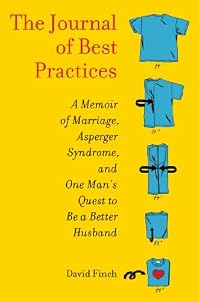
I read memoirs of those with autism as a parent of a child on the autism spectrum with many similarities as Robison. The "Aspergian" (Robison's term) memoir I could best compare this work to was David Finch's The Journal of Best Practices. Robison gives insights (and explanations) into the mind of someone on the autism spectrum but it comes after enduring the details of various stories, sometimes outlandish, sometimes mundane. These get a little old, particularly the stories of his pranks-- he became show more very good at making up lies that sounded real. One wonders how much of this book is actually made up as a result.
The tragic portion I'll get out of the way up front: Robison had a mother who was mentally ill and a father who was an abusive alcoholic. While a childhood psychologist helped some, the psychologist was himself insane and abused the family. Robison eventually gets some reconciliation with his father and a greater appreciation for his mother.
Robison was self-conscious of his social deficiencies from an early age. He felt he was a "failure" and was always "alone on the playground." But he had the remarkable ability to slowly learn social thinking and correct social responses as he gets older. This was encouraging to me as I watch my son go through therapy involving deliberate social thinking (and I live and work among likely undiagnosed people on the spectrum and observe their levels of self-consciousness as well). He is finally diagnosed with Asperger's when his own son is six, and he both sees some of the same traits in his sons and cares very much for his social development. Elder Robison still gets admonished by his son ("Dad, stop being autistic!") when he has problems sitting still and such.
One important point Robison makes, which every testimony from an autistic author I've read includes, is that he did not want to be alone, even though he was most comfortable playing alone. He desperately longed to be able to make social connections, he just didn't know how. Repeatedly in the book he laments his lack of ability to start conversations, to ask the right questions, to show empathy, to show interest in girls, etc. It's important for us parents to remember-- our kids sometimes need us to help them make social connections with friends.
"I have logical empathy," he writes. Viewed logically, the things we neurotypicals get upset about don't make sense. Why do we get upset when we see a plane crash on the news, knowing that we weren't on it and the odds of it happening to us are quite small? Robison had problems with his expressions. On hearing that someone died, he might grin-- logically he thought "I am glad it wasn't me or someone I know. I am glad I do not have to endure the hardship this person is going through," and he was therefore thankful and would smile-- not an empathetic response.
Robison had similar fixations as Finch and others-- trains, cars, electronics. He has owned and fixed up 17 Porches (selling them after he completely fixes them). After dropping out of high school, he ends up spending time on UMass' campus, working in their labs and reading engineering textbooks. He develops his own electronics workshop, which eventually leads to a gig touring with KISS and designing their famous pyrotechnic guitars and sound system. This should make him quite popular, but he remains shy around the band's groupies and lives in his own world in the midst of all the sex, drugs, and rock and roll of the band. This is after a brief stay in Montserrat jail with a band Robison played with.
Somehow, he and "Little Bear," fall in love at an early age and remain an item-- eventually getting married and having a child. He does not share much about how this relationship worked, other than she traveled with him some while he toured. There are not a lot of deep emotional insights other than they were fairly disconnected from each other. Those insights would have helped the book, but Robison does share more about the things his second wife does that helps him. She observes him carefully to determine his moods. She is patient with his repeatedly asking the same questions. She uses touch and hugs to calm him when he's anxious. She carefully observes his interactions with others and later explains nuances and important things he might not have picked up on. "Martha" brings him "joy and tranquillity" like he's never known.
By the time he's 23, he's matured and gotten a good-paying job with Milton Bradley developing their electronics. He works on the Microvision-- a precursor to Nintendo's Game Boy-- and works with a partner to save the company millions by fixing a critical defect. http://en.wikipedia.org/wiki/Microvision. While Microvision and Milton Bradley implode, Robison tries to move on to other corporate jobs. He eventually manages a team of engineers at Simplex Time Recorder and others before pursuing his love of cars by becoming his own dealer. This leads to another stint in poverty. His wife goes back to college as the relationship sours, and they have a son, "Cubby," who John cares for deeply.
The most interesting component of the book, for me, was Robison's comments about brain plasticity and how his autistic traits have lessened. He hypothesizes that some autistic children suffer the pain of social awkwardness and turn inward, becoming savants or obsessed with their own worlds as he was with mathematics and electronics. Now, however, he has worked hard at developing social awareness and when he looks at his old circuits and designs he can no longer recognize them or recreate them. He has re-wired his brian, in a sense. He ends up at a high school reunion and it's a different experience for him as he's now able to converse and make friends.
Despite the childhood setbacks and nagging voices in his head calling him a "failure," he has pressed on in the manner of his favorite childhood storybood-- The Little Engine that Could. He has since written other books for people with autism, which I'd be interested to read.
In all, I give this book 3 stars. I had to wade through a lot of seemingly unnecessary stories for the pearls of insight I gleaned. There is a lot of profanity in the book and some painful situations. It is remarkable that Robison overcame discouragement and childhood disadvantages. show less
I read memoirs of those with autism as a parent of a child on the autism spectrum with many similarities as Robison. The "Aspergian" (Robison's term) memoir I could best compare this work to was David Finch's The Journal of Best Practices. Robison gives insights (and explanations) into the mind of someone on the autism spectrum but it comes after enduring the details of various stories, sometimes outlandish, sometimes mundane. These get a little old, particularly the stories of his pranks-- he became show more very good at making up lies that sounded real. One wonders how much of this book is actually made up as a result.
The tragic portion I'll get out of the way up front: Robison had a mother who was mentally ill and a father who was an abusive alcoholic. While a childhood psychologist helped some, the psychologist was himself insane and abused the family. Robison eventually gets some reconciliation with his father and a greater appreciation for his mother.
Robison was self-conscious of his social deficiencies from an early age. He felt he was a "failure" and was always "alone on the playground." But he had the remarkable ability to slowly learn social thinking and correct social responses as he gets older. This was encouraging to me as I watch my son go through therapy involving deliberate social thinking (and I live and work among likely undiagnosed people on the spectrum and observe their levels of self-consciousness as well). He is finally diagnosed with Asperger's when his own son is six, and he both sees some of the same traits in his sons and cares very much for his social development. Elder Robison still gets admonished by his son ("Dad, stop being autistic!") when he has problems sitting still and such.
One important point Robison makes, which every testimony from an autistic author I've read includes, is that he did not want to be alone, even though he was most comfortable playing alone. He desperately longed to be able to make social connections, he just didn't know how. Repeatedly in the book he laments his lack of ability to start conversations, to ask the right questions, to show empathy, to show interest in girls, etc. It's important for us parents to remember-- our kids sometimes need us to help them make social connections with friends.
"I have logical empathy," he writes. Viewed logically, the things we neurotypicals get upset about don't make sense. Why do we get upset when we see a plane crash on the news, knowing that we weren't on it and the odds of it happening to us are quite small? Robison had problems with his expressions. On hearing that someone died, he might grin-- logically he thought "I am glad it wasn't me or someone I know. I am glad I do not have to endure the hardship this person is going through," and he was therefore thankful and would smile-- not an empathetic response.
Robison had similar fixations as Finch and others-- trains, cars, electronics. He has owned and fixed up 17 Porches (selling them after he completely fixes them). After dropping out of high school, he ends up spending time on UMass' campus, working in their labs and reading engineering textbooks. He develops his own electronics workshop, which eventually leads to a gig touring with KISS and designing their famous pyrotechnic guitars and sound system. This should make him quite popular, but he remains shy around the band's groupies and lives in his own world in the midst of all the sex, drugs, and rock and roll of the band. This is after a brief stay in Montserrat jail with a band Robison played with.
Somehow, he and "Little Bear," fall in love at an early age and remain an item-- eventually getting married and having a child. He does not share much about how this relationship worked, other than she traveled with him some while he toured. There are not a lot of deep emotional insights other than they were fairly disconnected from each other. Those insights would have helped the book, but Robison does share more about the things his second wife does that helps him. She observes him carefully to determine his moods. She is patient with his repeatedly asking the same questions. She uses touch and hugs to calm him when he's anxious. She carefully observes his interactions with others and later explains nuances and important things he might not have picked up on. "Martha" brings him "joy and tranquillity" like he's never known.
By the time he's 23, he's matured and gotten a good-paying job with Milton Bradley developing their electronics. He works on the Microvision-- a precursor to Nintendo's Game Boy-- and works with a partner to save the company millions by fixing a critical defect. http://en.wikipedia.org/wiki/Microvision. While Microvision and Milton Bradley implode, Robison tries to move on to other corporate jobs. He eventually manages a team of engineers at Simplex Time Recorder and others before pursuing his love of cars by becoming his own dealer. This leads to another stint in poverty. His wife goes back to college as the relationship sours, and they have a son, "Cubby," who John cares for deeply.
The most interesting component of the book, for me, was Robison's comments about brain plasticity and how his autistic traits have lessened. He hypothesizes that some autistic children suffer the pain of social awkwardness and turn inward, becoming savants or obsessed with their own worlds as he was with mathematics and electronics. Now, however, he has worked hard at developing social awareness and when he looks at his old circuits and designs he can no longer recognize them or recreate them. He has re-wired his brian, in a sense. He ends up at a high school reunion and it's a different experience for him as he's now able to converse and make friends.
Despite the childhood setbacks and nagging voices in his head calling him a "failure," he has pressed on in the manner of his favorite childhood storybood-- The Little Engine that Could. He has since written other books for people with autism, which I'd be interested to read.
In all, I give this book 3 stars. I had to wade through a lot of seemingly unnecessary stories for the pearls of insight I gleaned. There is a lot of profanity in the book and some painful situations. It is remarkable that Robison overcame discouragement and childhood disadvantages. show less
I appreciated this book in ways I could not have imagined. It's one of the most fascinating stories I've read. The author's Asperger's was not diagnosed until he was in his forties. He described growing up thinking that other people were acting in inexplicable ways, when in fact his actions were outside of social norms, because of the autism. Thing is, some of the things he describes about himself sounded like me. I recognized some of my own tendencies. For example, my tendency to assume my actions and beliefs are correct, and anyone who behaves differently must be uninformed. This wonderful book shows how alike people are in fundamental ways. Our differences are a matter of degrees. After you read Look Me in the Eye, you'll be more show more sympathetic to people. You'll be less likely to judge people who might be acting differently than you expect them to. Instead you'll start wondering what their story really is, what makes them tick. show less
Vacation reading: Book 7. Look Me in the Eye by John Elder Robison. This is a memoir subtitled “My Life with Asperger’s” but it’s so much more. Robison was diagnosed at age 40, but all his life he was a little different and didn’t quite get other people and social situations. He had a rough childhood. (Some of which is in this book and in his brother Augusten Burroughs’ book Running with Scissors.) Through hindsight and retrospection he can see how Asperger’s shaped his life. He compensated when he could, struggled with friendship and belonging, and harnessed his super focus and intensity to excel in jobs as a engineer, first with Pink Floyd and KISS, then the Milton Bradley toy company. Eventually he used the feedback show more he’d received his whole life that he didn’t play well with others and became his own boss and ran his own business. Some of his behavioral traits are things I see in my own quirky son.
It’s interesting to hear the stories and thoughts of an adult who lives on the autism spectrum (when this book was published, Asperger’s was still a separate DSM diagnosis, not under the umbrella of ASD.) I think parents of children with autism Dx often omit the experiences of adults with ASD because they are desperately looking only toward doctors and other parents in the trenches for insight into their children. Stories like his are reassuring that there are lots of adults who were once kids on the spectrum who have survived childhood and adolescence to become functional adults, capable, kind, caring and productive. My favorite line in the book comes as a quote from the doctor who initially suggested Asperger’s to Robison, “It’s not a disease. It doesn’t need curing. It’s just how you are.” I found the book interesting and insightful, there were some slow parts but it was overall a quick read. I didn’t realize when I picked it up that his brother had written Running with Scissors, which I read several years ago and might want to revisit now. 4/5 stars ⭐️ show less
It’s interesting to hear the stories and thoughts of an adult who lives on the autism spectrum (when this book was published, Asperger’s was still a separate DSM diagnosis, not under the umbrella of ASD.) I think parents of children with autism Dx often omit the experiences of adults with ASD because they are desperately looking only toward doctors and other parents in the trenches for insight into their children. Stories like his are reassuring that there are lots of adults who were once kids on the spectrum who have survived childhood and adolescence to become functional adults, capable, kind, caring and productive. My favorite line in the book comes as a quote from the doctor who initially suggested Asperger’s to Robison, “It’s not a disease. It doesn’t need curing. It’s just how you are.” I found the book interesting and insightful, there were some slow parts but it was overall a quick read. I didn’t realize when I picked it up that his brother had written Running with Scissors, which I read several years ago and might want to revisit now. 4/5 stars ⭐️ show less
Members
- Recently Added By
Published Reviews
ThingScore 100
Since learning about Asperger's, I have read just about every personal account I can find with regard to Asperger's. While I found all of them interesting, I can't think of one that I would have called warm or engaging - until I read John Elder Robison's memoir Look Me In The Eye: My Life With Asperger's. ...Mr. Robison tells a story that is at once heartbreaking, inspiring and funny....Mr. show more Robison's life is a testament to the fact that a life with Asperger's can be as rich as anyone else's - despite the challenges. show less
added by vancouverdeb
Lists

Dysfunctional Families
133 works; 7 members

Books featuring alcoholics
103 works; 18 members

Books Read in 2021
5,361 works; 114 members

Books Read in 2017
4,249 works; 129 members
Author Information

10 Works 3,795 Members
John Elder Robison was born in Athens, Georgia in the summer of 1957. His father was a professor of Philosophy in Amherst, Massachusetts. His brother is Augusten Burroughs, author of Running with Scissors. Growing up John did not know he had Aspergers. He did know that he had a rare insight into electronics. With that knowledge, he joined a band, show more and ended up designing special effects guitars for KISS by the late 1970s. Afterward, he was an engineer with a major toy and game company. He moved up the corporate ladder for many years, and then became unable to function in the high social climate of the corporate wold. He began fixing Mercedes and Land Rover cars in his driveway and opened his own car repair specialty shop---J E Robison Service. Eventually he was diagnosed by a therapist as having Aspergers. "Look Me in the Eye" is his honest and touching memoir. (Bowker Author Biography) show less
Some Editions
Awards and Honors
Distinctions
Notable Lists
Common Knowledge
- Original publication date
- 2007
- People/Characters
- John Elder Robison; Augusten Burroughs; Mary Trompke Robison a.k.a. Little Bear; Jack Robison a.k.a. Cubby; T. R. Rosenberg; Dr. Finch (show all 8); Martha Robison a.k.a. Chubster, a.k.a. Unit Two; Christopher Richter Robison a.k.a. Snort, a.k.a. Varmint
- Important places
- Amherst, Massachusetts, USA; Lawrenceville, Georgia, USA; Birmingham, Alabama, USA; Pittsburgh, Pennsylvania, USA; Cleveland, Ohio, USA; Lakeland, Florida, USA (show all 7); Boston, Massachusetts, USA
- Dedication
- For my brother, who encouraged me to write the story, and most especially for Unit Two and Cubby
For my brother, who encouraged me to write the story, and my family, who supported me while I did so - First words
- "Look me in the eye, young man!"
- Last words
- (Click to show. Warning: May contain spoilers.)It will take a few more years (I hope!), but I'm looking forward to the day when I can watch Cubby take his own son to the train yard to watch the locomotives.
- Blurbers
- Burroughs, Augusten; Grandin, Temple; Kimmel, Haven; Tammet, Daniel
- Original language
- English US
Classifications
- Genres
- Biography & Memoir, General Nonfiction, Nonfiction
- DDC/MDS
- 362.1968588320092 — Society, Government, and Culture Social problems and social services Social Welfare People with physical illnesses Services to people with specific conditions Diseases Diseases of nervous system and mental disorders Miscellaneous diseases of nervous system and mental disorders Personality, sexual, gender-identity, impulse-control, factitious, developmental, learning disorders; violent behavior; mental retardation Mental retardation; developmental and learning disorders Other pervasive development disorders Asperger syndrome
- LCC
- RC553 .A88 .R635 — Medicine Internal medicine Internal medicine Neurosciences. Biological psychiatry. Neuropsychiatry Psychiatry Psychopathology
- BISAC
Statistics
- Members
- 3,089
- Popularity
- 5,668
- Reviews
- 128
- Rating
- (3.72)
- Languages
- 5 — Dutch, English, German, Italian, Spanish
- Media
- Paper, Audiobook, Ebook
- ISBNs
- 20
- ASINs
- 7