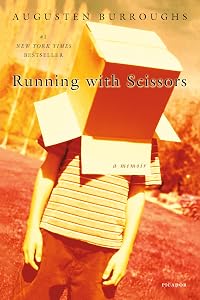
Running with Scissors
by Augusten Burroughs
On This Page
Description
This is the true story of a boy whose mother (a poet with delusions of Anne Sexton) gave him away to be raised by her psychiatrist, a dead-ringer for Santa and a lunatic in the bargain. Suddenly, at age twelve, the author found himself living in a dilapidated Victorian in perfect squalor. The doctor's bizarre family, a few patients, and a pedophile living in the backyard shed completed the tableau. Here, there were no rules, there was no school. The Christmas tree stayed up until summer, and show more Valium was eaten like Pez. And when things got dull, there was always the vintage electroshock therapy machine under the stairs. It is at turns foul and harrowing, compelling and maniacally funny, but above all, it chronicles an ordinary boy's survival under the most extraordinary circumstances. show lessTags
Recommendations



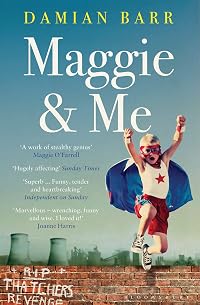
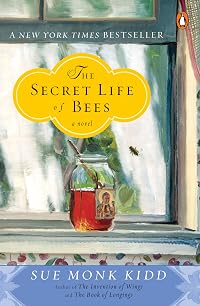
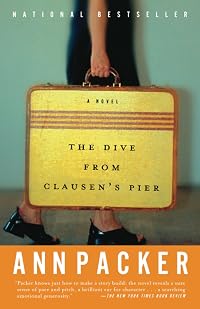
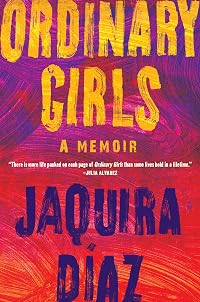
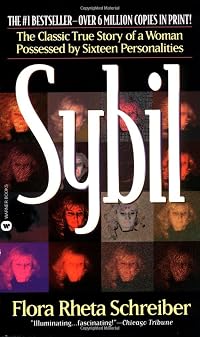
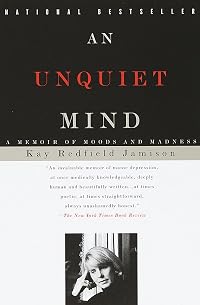
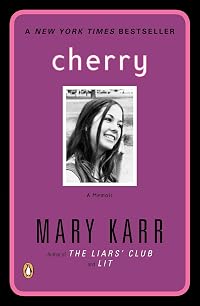
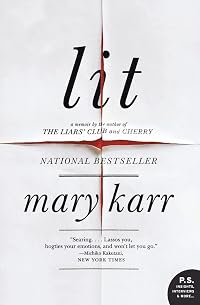

Member Recommendations
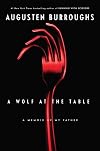

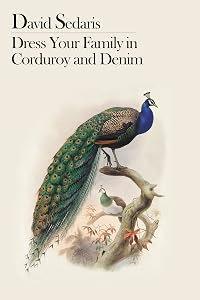
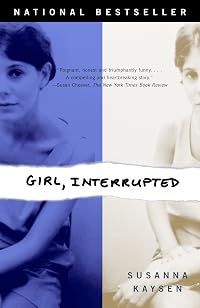
Smiler69 Memoirs told by the adopted daughter of Joan Crawford, who by all accounts was a raging alcoholic.
40
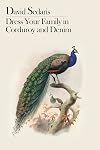
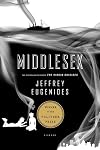
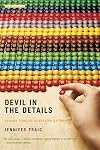
sarah-e A funny memoir of a person with unusual habits.
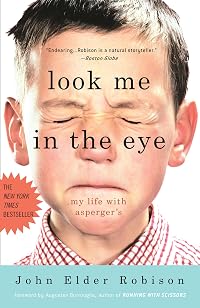
vancouverdeb Look Me in the Eye written by John Elder Robinson, the elder brother ofAugusten Burroughs who wrote Running with Scissors. Each gives a different take on their dysfunctional family.
PortiaLong Disturbing memoirs - I disliked them both for the same reasons (so someone else may LIKE them for those same reasons).
12

anonymous user A young poet battling apathy with drugs and other forms of experimental coping methods.
khoov00 This book seems to appeal to some with the same sense of humor as it would take to appreciate the book Wicked.
33

Publerati Eccentric family chaos except Normal Family is entirely set over four consecutive dysfunctional family holidays. Hysterical and bittersweet fun. Promising new writer.
11
Member Reviews
What to make of this one? It's one of the best-selling and best-known works in the "midlife memoirs" category, but it's far from the best of them. It might, however, be one of the weirdest non-stories ever committed to paper. And it's a tremendous little guilty pleasure. While you sometimes get the sense that authors in this genre "work through" their material in a sort of semi-therapeutic kind of way, I don't get the sense that any of that is going on here. Burroughs doesn't seem to be "crafting" these stories as much as reeling them off, and why not? His childhood and adolescence seem to have given him material that most memoir writers can only dream of. He's just putting it out there, really. It'd probably be too weird to work as show more fiction, and I simply can't believe somebody tried to film this thing. What can you say about a book whose high point is, very arguably, a sixteen-year-old girl's memorably vivid description of her yeast infection? Where do you even go with that?
And that, really, is the problem with "Running with Scissors". If I were a creative writing type, I'd say that it lacked narrative cohesion, but what it lacks, really, is any sort of cohesion at all. There's not much to knit these I-can't-believe-it moments of record-breaking dysfunction together, but that's less a knock on the author than an intrinsic problem with the material he's dealing with here. It'd be an even-money bet that nobody he spent a significant amount of time around before turning eighteen could've acted normal for forty-eight consecutive hours, if they had made an honest-to-God effort. He and his adopted siblings didn't grow up free-spirited as much as feral. In this book, one inexplicable near-disaster follows another, and each character that gets introduced is more estranged from reality than the last. You could read this one as an indictment of the permissive post-sixties, but nobody here even considered themselves much of a hippie or a bohemian, and one of them went to Yale Medical School. It's easier, honestly, to think of them them a horde of hopeless oddballs. "Running With Scissors" might be called episodic narrative, or a picaresque, but maybe that's just the shape texts take when things keep on happening at a furious pace and nothing ever even starts to make sense. At the end of the novel, the Burroughs tries on an authorial tone to suggest that what he really learned in the filthy, muddled space that his mother's psychiatrist called a home was survival, and, yes, it's a minor miracle that everyone here didn't end up in either Walpole or Danvers. But I also suspect that the author is trying to make sense of things that simply cannot be made sense of. To give him some credit, he seems to sense that he's got some high-octane weirdness here that can more or less speak for itself, and he's smart enough not to take himself too seriously. I'm not sure that he'd hesitate to call the version of himself we see here an immaculately shallow queer cliché. In the book, he comes off as resilient and likable enough, which is perhaps more than you can say for some of the aggressively unsocialized Finch children. The rest is noise. Oh, and bodily fluids and ill-considered construction projects. My own upbringing was, in a couple of ways, different than the ones you see on American sitcoms, but after finishing "Running With Scissors," I got to thinking that I'd never really appreciated how normal a lot of it actually was. I guess this makes this book life-changing, if perhaps not in a way that the author intended. show less
And that, really, is the problem with "Running with Scissors". If I were a creative writing type, I'd say that it lacked narrative cohesion, but what it lacks, really, is any sort of cohesion at all. There's not much to knit these I-can't-believe-it moments of record-breaking dysfunction together, but that's less a knock on the author than an intrinsic problem with the material he's dealing with here. It'd be an even-money bet that nobody he spent a significant amount of time around before turning eighteen could've acted normal for forty-eight consecutive hours, if they had made an honest-to-God effort. He and his adopted siblings didn't grow up free-spirited as much as feral. In this book, one inexplicable near-disaster follows another, and each character that gets introduced is more estranged from reality than the last. You could read this one as an indictment of the permissive post-sixties, but nobody here even considered themselves much of a hippie or a bohemian, and one of them went to Yale Medical School. It's easier, honestly, to think of them them a horde of hopeless oddballs. "Running With Scissors" might be called episodic narrative, or a picaresque, but maybe that's just the shape texts take when things keep on happening at a furious pace and nothing ever even starts to make sense. At the end of the novel, the Burroughs tries on an authorial tone to suggest that what he really learned in the filthy, muddled space that his mother's psychiatrist called a home was survival, and, yes, it's a minor miracle that everyone here didn't end up in either Walpole or Danvers. But I also suspect that the author is trying to make sense of things that simply cannot be made sense of. To give him some credit, he seems to sense that he's got some high-octane weirdness here that can more or less speak for itself, and he's smart enough not to take himself too seriously. I'm not sure that he'd hesitate to call the version of himself we see here an immaculately shallow queer cliché. In the book, he comes off as resilient and likable enough, which is perhaps more than you can say for some of the aggressively unsocialized Finch children. The rest is noise. Oh, and bodily fluids and ill-considered construction projects. My own upbringing was, in a couple of ways, different than the ones you see on American sitcoms, but after finishing "Running With Scissors," I got to thinking that I'd never really appreciated how normal a lot of it actually was. I guess this makes this book life-changing, if perhaps not in a way that the author intended. show less
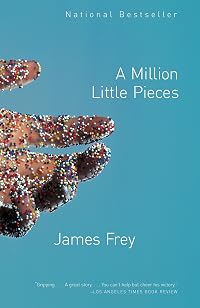
Just how much of this story is real, or fabricated? Nowadays, after A Million Tiny Pieces (or whatever that book was called) I have a healthy skepticism of autobiographies.
The psychiatrist's family is so messed up that I can't imagine he was truly qualified to help people (turns out he really wasn't, after all) His oldest daughter, who is an adult who seems normal at first, kills a cat by keeping it under a laundry basket and starving it for 4 days. Another daughter knocks a hole in the roof of the kitchen to put in a skylight (yes, she is a child, not a licensed contractor) and plaster gets all over the kitchen and Mom and Dad are like, whatevs.
One of their sons actually defecates right there in the living room in front of his show more siblings, and lets the dog lick his wee-wee. There is so much insanity (and filth) going on in the house, i found myself cringing. Some of the things in here are so over the top that I found it hard to believe. Yes, I know crazy people can be really crazy, but for god's sake, the head of the household is/was a licensed therapist.
The mom is a real piece of work too. She dumps her son off in this filthy house, instead of letting Dad have custody of him. This is a really messed up story of what happens when adults don't behave like proper, responsible adults. show less
The psychiatrist's family is so messed up that I can't imagine he was truly qualified to help people (turns out he really wasn't, after all) His oldest daughter, who is an adult who seems normal at first, kills a cat by keeping it under a laundry basket and starving it for 4 days. Another daughter knocks a hole in the roof of the kitchen to put in a skylight (yes, she is a child, not a licensed contractor) and plaster gets all over the kitchen and Mom and Dad are like, whatevs.
One of their sons actually defecates right there in the living room in front of his show more siblings, and lets the dog lick his wee-wee. There is so much insanity (and filth) going on in the house, i found myself cringing. Some of the things in here are so over the top that I found it hard to believe. Yes, I know crazy people can be really crazy, but for god's sake, the head of the household is/was a licensed therapist.
The mom is a real piece of work too. She dumps her son off in this filthy house, instead of letting Dad have custody of him. This is a really messed up story of what happens when adults don't behave like proper, responsible adults. show less
W-o-w. I must say, I am ashamed of myself for letting this one slide down TBR Mountain for so long. I'm not sure quite how to review it, except to say that this is one of those books, those turbulent memoirs, that has to be read to be believed. If you can believe it in its entirety at all, that is.
Augusten Burroughs was a strange child. He liked shiny things, making his hair lie flat, and generally being fabulous. His mother was a poet dangling over the precipice of insanity, and his father turned to alcohol to cope. Out of his life fell his father, and into his life wandered Dr Finch, his mother's psychiatrist, in more than a little need of therapy himself. While his mum hails Dr Finch as her saviour and his dubious methods as genius, show more Augusten is drawn slowly away from her into the madness of the Finch household. Hope worships her father and believes that her cat is talking to her in dreams. Agnes eats dog biscuits and has to put up with her husband's patients taking over her house. Neil, a patient of Dr Finch's, wastes no time in setting up a bizarre gay relationship with 13-year-old Augusten. A lady with OCD lives in a room upstairs and never comes out. And Natalie, cynical and driven to madness by her family, becomes his new best friend.
This world - and the book itself - is by turns repulsive and attractive, brilliant and insane, hopeful and hopeless, hilarious and deadly sober. It is incredible, it is bizarre, and the memorable childhood translates into a memorable autobiography. I liked it so much that I just ordered the movie version (starring Annette Bening and Brian Cox) and I'll be looking for 'Dry' - the follow up and by all accounts just as good - very soon! show less
Augusten Burroughs was a strange child. He liked shiny things, making his hair lie flat, and generally being fabulous. His mother was a poet dangling over the precipice of insanity, and his father turned to alcohol to cope. Out of his life fell his father, and into his life wandered Dr Finch, his mother's psychiatrist, in more than a little need of therapy himself. While his mum hails Dr Finch as her saviour and his dubious methods as genius, show more Augusten is drawn slowly away from her into the madness of the Finch household. Hope worships her father and believes that her cat is talking to her in dreams. Agnes eats dog biscuits and has to put up with her husband's patients taking over her house. Neil, a patient of Dr Finch's, wastes no time in setting up a bizarre gay relationship with 13-year-old Augusten. A lady with OCD lives in a room upstairs and never comes out. And Natalie, cynical and driven to madness by her family, becomes his new best friend.
This world - and the book itself - is by turns repulsive and attractive, brilliant and insane, hopeful and hopeless, hilarious and deadly sober. It is incredible, it is bizarre, and the memorable childhood translates into a memorable autobiography. I liked it so much that I just ordered the movie version (starring Annette Bening and Brian Cox) and I'll be looking for 'Dry' - the follow up and by all accounts just as good - very soon! show less
http://andalittlewine.blogspot.com/2012/12/review-running-with-scissors-by.html
Running with Scissors, written and read by Augusten Burroughs, was one of the best audiobooks I listened to this year, though it was hardly one of the best books I read.
Much like hearing David Sedaris read his own work, Running with Scissors was well served by its author's practiced story teling style. If Portnoy's Complaint was Philip Roth stand-up, then this worked the same way- the larger than life exploits and the unfathomable relationships.
Running with Scissors is, in its own way, a worthy memoir. More than a collection of events, it tells the story of Augusten as a casualty to his mother's struggle with her mental health. It carries the usual defamation show more law suits associated with modern memoirs; but I'm utterly uninterested in its truthfulness- it's structure is what makes it worth reading. What kept me interested in Running with Scissors was how it functions as a bildungsroman.
Background: The bildungsroman is a novel about growing up; the main character sets out from home, usually scarred by some tragedy and at odds with the world. Over time, he grows into a better version of himself, usually now comfortably a part of society and in a position to help others on their own journeys.
Running with Scissors fits the first half of the formula: young Augusten's world is turned upside down by his parent's divorce, his father's indifference, and his mother's solipsism and psychosis. His mother hands him over to the care of her shrink, who brings Augusten into his dilapidated house. The place has a Lord of the Flies social order- a put upon mother trying to hold things together, and the shrink whose authority is paramount but wielded haphazardly, the daughters whose lives could serve in a decade of case studies, and the other adopted son who becomes Augusten's lover.
Augusten grows, but does he mature? By the end of the book, he is older. He abandons formal education, takes it up again, struggles and (since we are reading the book) ultimately succeeds. While he never adopts conventional morals, he succeeds in living by a moral code of sorts- he recognizes and regrets his most destructive actions.
At the end of Running with Scissors, Augusten is not yet in a position to be a leader to the rest of the world, but he has, at least, extricated himself from the other characters of the book. When the many layered bomb at the heart of his relationship with his mother and his adoptive father finally explodes, Augusten leaves them all behind and sets off for the Big City. So the bildungsroman ends where it began: a young man sets out from home. show less
Running with Scissors, written and read by Augusten Burroughs, was one of the best audiobooks I listened to this year, though it was hardly one of the best books I read.
Much like hearing David Sedaris read his own work, Running with Scissors was well served by its author's practiced story teling style. If Portnoy's Complaint was Philip Roth stand-up, then this worked the same way- the larger than life exploits and the unfathomable relationships.
Running with Scissors is, in its own way, a worthy memoir. More than a collection of events, it tells the story of Augusten as a casualty to his mother's struggle with her mental health. It carries the usual defamation show more law suits associated with modern memoirs; but I'm utterly uninterested in its truthfulness- it's structure is what makes it worth reading. What kept me interested in Running with Scissors was how it functions as a bildungsroman.
Background: The bildungsroman is a novel about growing up; the main character sets out from home, usually scarred by some tragedy and at odds with the world. Over time, he grows into a better version of himself, usually now comfortably a part of society and in a position to help others on their own journeys.
Running with Scissors fits the first half of the formula: young Augusten's world is turned upside down by his parent's divorce, his father's indifference, and his mother's solipsism and psychosis. His mother hands him over to the care of her shrink, who brings Augusten into his dilapidated house. The place has a Lord of the Flies social order- a put upon mother trying to hold things together, and the shrink whose authority is paramount but wielded haphazardly, the daughters whose lives could serve in a decade of case studies, and the other adopted son who becomes Augusten's lover.
Augusten grows, but does he mature? By the end of the book, he is older. He abandons formal education, takes it up again, struggles and (since we are reading the book) ultimately succeeds. While he never adopts conventional morals, he succeeds in living by a moral code of sorts- he recognizes and regrets his most destructive actions.
At the end of Running with Scissors, Augusten is not yet in a position to be a leader to the rest of the world, but he has, at least, extricated himself from the other characters of the book. When the many layered bomb at the heart of his relationship with his mother and his adoptive father finally explodes, Augusten leaves them all behind and sets off for the Big City. So the bildungsroman ends where it began: a young man sets out from home. show less
A riveting memoir about growing up with a mentally unstable mother. After his parents' divorce young Augusten finds himself all but abandoned at his mother's psychologist's house. His mother is going through a hard time, and her shrink convinces her to give him legal custody of her child.
The house occupied by Doctor Finch, his family, and a revolving door of patients is a truly surreal environment. Dr. Finch believes children should not be parented after the age of thirteen (and only lightly parented prior to thirteen), so chaos reigns in his house. Animals and people defecate in the house. Roaches roam freely throughout the kitchen that is always piled high with dishes. The staircase is pulling away from the wall. Neither parents bat show more an eye when thirteen year old Augusten begins having sex with a thirty year old man. This man is actually their adopted son and a former patient of Dr. Finch. At one point Finch believes he is receiving messages from God through his own bowel movements. Holy turds are preserved on the backyard picnic table. These are only a few of the countless bizarre events that transpire during Augusten's childhood. Fascinating, an almost completely unbelievable. show less
The house occupied by Doctor Finch, his family, and a revolving door of patients is a truly surreal environment. Dr. Finch believes children should not be parented after the age of thirteen (and only lightly parented prior to thirteen), so chaos reigns in his house. Animals and people defecate in the house. Roaches roam freely throughout the kitchen that is always piled high with dishes. The staircase is pulling away from the wall. Neither parents bat show more an eye when thirteen year old Augusten begins having sex with a thirty year old man. This man is actually their adopted son and a former patient of Dr. Finch. At one point Finch believes he is receiving messages from God through his own bowel movements. Holy turds are preserved on the backyard picnic table. These are only a few of the countless bizarre events that transpire during Augusten's childhood. Fascinating, an almost completely unbelievable. show less
Wacky, off the wall, well-written, and completely insane. A lot of it was fun to read, a lot of it was uncomfortable, and some of it was completely unbelievable. I know the author swears that it's all true, but I'm with the many others who have doubts. Still, completely true or not, it's definitely the craziest memoir you'll ever read.
Un manuale di sopravvivenza per adolescenti in famiglie disfunzionali. Ecco quale dovrebbe essere la definizione corretta di questo libro. Credo infatti che sarebbero pochissime le persone che uscirebbero vive da una situazione come quella vissuta dal giovane Augusten. Lui ci è riuscito e non solo, ha anche avuto la forza di raccontarla in maniera consapevole e ironica (l'unico modo, a dir la verità, per raccontare una storia come questa senza rischiare di precipitare in un'atmosfera da tragedia greca).
Members
- Recently Added By
Published Reviews
ThingScore 88
You will either love Running With Scissors or you will hate it. I loved it. OK, there are tedious passages, when you feel Burroughs is doing the writerly equivalent of adding extra stuffing to a perfectly comfortable beanbag. But it is impossible not to laugh at all the jokes; to admire the sardonic, fetid tone; to wonder, slack-jawed and agog, at the sheer looniness of the vista he conjures up.
added by Nevov
The book, which promotes visceral responses (of laughter, wincing, retching) on nearly every page, contains the kind of scenes that are often called harrowing but which are also plainly funny and rich with child's-eye details of adults who have gone off the rails.
added by Shortride
Lists

Best Autobiographies and Memoirs
370 works; 67 members
100 Biographies and Memoirs to Read in a (Single) Lifetime
98 works; 12 members

Autodidacts
15 works; 4 members

Family Drama
56 works; 14 members

LGBTQ Memoir/Biography
52 works; 4 members

NPR Readers Poll: 100 Favorite Funny Books
100 works; 5 members

Dysfunctional Families
133 works; 7 members

Worst books read in 2011
36 works; 20 members

Books Tagged Abuse
152 works; 4 members

Books Read in 2003
257 works; 7 members

Florida
366 works; 3 members

One Book, Many Authors
441 works; 40 members

Books Read in 2005
175 works; 7 members

Read the book and saw the movie
1,170 works; 195 members

Lit Lattes Ep 002
12 works; 1 member

Page Turners
185 works; 11 members

Best 21st Century Books (So Far)
670 works; 85 members

Macmillan Publishers
129 works; 3 members

Biggest Disappointments
606 works; 163 members

Blue Pyramid 1,276 Best Books of All Time
1,248 works; 32 members

Tagged by Tim or Meh!
91 works; 9 members

Books Featuring Teens
25 works; 4 members

Literature About Mental Illness
37 works; 5 members

Books Set in Massachusetts
41 works; 8 members

Books Read in 2012
816 works; 34 members

Unread books
1,063 works; 87 members
The Best LGBTQ Nonfiction
159 works; 68 members
Author Information

Some Editions
Awards and Honors
Awards
Distinctions
Work Relationships
Is contained in
Has the adaptation
Has as a student's study guide
Common Knowledge
- Canonical title
- Running with Scissors
- Original title
- Running with Scissors
- Original publication date
- 2002-06-05
- People/Characters
- Augusten Burroughs; Deirdre Burroughs; Dr. Finch; Neil Bookman; Natalie Finch; Hope Finch (show all 9); Agnes Finch; Poo Bear; Dorothy
- Important places
- Amherst, Massachusetts, USA
- Related movies
- Running with Scissors (2006 | IMDb)
- Epigraph
- Look for the ridiculous in everything and you will find it.
Jules Renard - Dedication
- For
Dennis Pilsits - First words
- My mother is standing in front of the bathroom mirror smelling polished and ready; like Jean Naté, Dippity Do and the waxy sweetness of lipstick.
- Last words
- (Click to show. Warning: May contain spoilers.)Neil Bookman was never seen nor heard from again.
- Blurbers
- See, Carolyn; Donahue, Deirdre
- Original language
- English US
Classifications
Statistics
- Members
- 15,424
- Popularity
- 451
- Reviews
- 321
- Rating
- (3.54)
- Languages
- 12 — Chinese, Dutch, English, Finnish, French, German, Indonesian, Italian, Portuguese, Romanian, Spanish, Swedish
- Media
- Paper, Audiobook, Ebook
- ISBNs
- 61
- ASINs
- 26