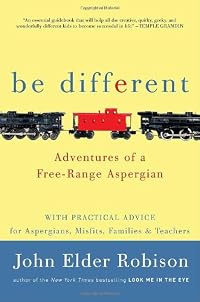
Be Different: Adventures of a Free-Range Aspergian with Practical Advice for Aspergians, Misfits, Families & Teachers
by John Elder Robison
On This Page
Description
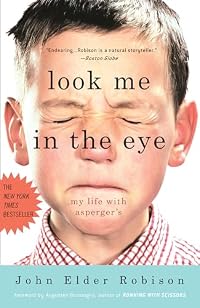
In his bestselling memoir, Look Me in the Eye, the author described growing up with Asperger's syndrome at a time when the diagnosis didn't exist. He was intelligent but socially isolated; his talents won him jobs with toy makers and rock bands but did little to endear him to authority figures and classmates, who were put off by his inclination to blurt out non sequiturs and avoid eye contact. By the time he was diagnosed at age forty, he had already developed a myriad of coping strategies show more that helped him achieve a seemingly normal, even highly successful, life. In this new book he shares a new batch of stories about his childhood, adolescence, and young adult years, giving the reader a rare window into the Aspergian mind. In each story, he offers practical advice, for Aspergians and indeed for anyone who feels "different", on how to improve the weak communication and social skills that keep so many people from taking full advantage of their often remarkable gifts. He addresses questions like: How to read others and follow their behaviors when in uncertain social situations; Why manners matter; How to harness your powers of concentration to master difficult skills; How to deal with bullies; When to make an effort to fit in, and when to embrace eccentricity; How to identify special gifts and use them to your advantage; The message this book puts forth is that every person, Aspergian or not, has something unique to offer the world, and every person has the capacity to create strong, loving bonds with their friends and family, and its goal is to help readers and those they love find their path to success. show lessTags
Recommendations




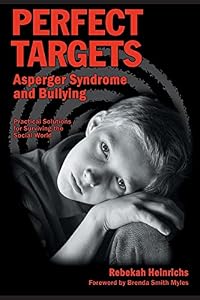
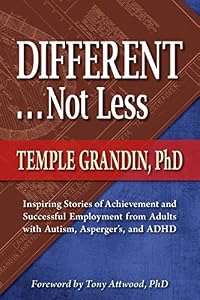
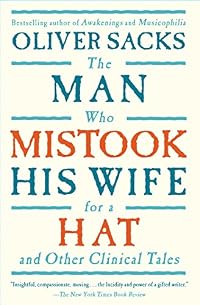
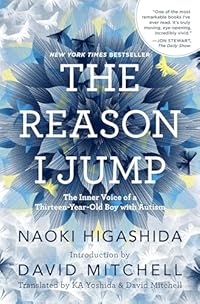



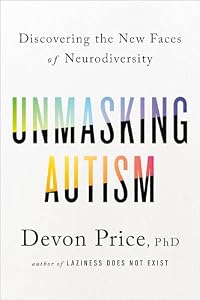
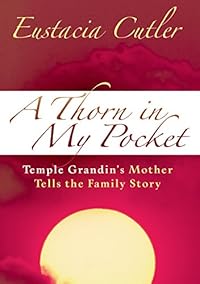
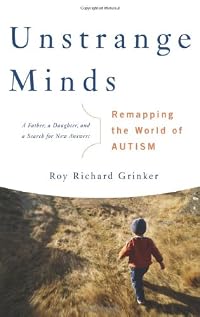
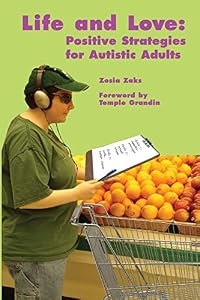
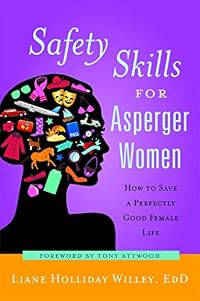
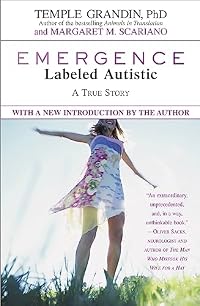
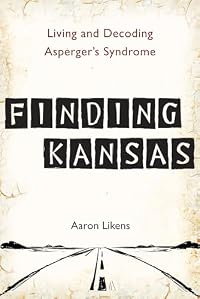
Member Recommendations
Member Reviews
A dear friend of mine, Deborah, gifted this book to me shortly after my diagnosis of ASD and ADHD in late 2023, and passed away in summer of 2024. I left her a voicemail as soon as I finished it, happy for the recommendation and completely unaware that would be the last time I’d speak to her. I don’t think I could ever get rid of my copy but it shows that she wanted for me to understand myself.
This book was like holding up a mirror in a lot of ways and gave new language to my autistic life experience, and was one of the first books I read at the start of my unmasking journey.
Being assigned female at birth and growing up in the early 2000’s and later diagnosed a month after my 25th birthday, I feel like there were some missed show more high-fives but like the adage, if you’ve met one autistic person, you’ve met ONE autistic person.
If you’re expecting to know some answers about what it means to be autistic, this is a good example of someone recognizing their neurodivergence in the early understanding of what it means to have an autistic profile.
I want to go back and highlight this book, but maybe one day when I’ve read some more books I’ve procrastinated on starting. I didn’t give it 5 stars, simply because I’m not the biggest fan of memoirs. It’s a good one, just not a fan of the genre. show less
This book was like holding up a mirror in a lot of ways and gave new language to my autistic life experience, and was one of the first books I read at the start of my unmasking journey.
Being assigned female at birth and growing up in the early 2000’s and later diagnosed a month after my 25th birthday, I feel like there were some missed show more high-fives but like the adage, if you’ve met one autistic person, you’ve met ONE autistic person.
If you’re expecting to know some answers about what it means to be autistic, this is a good example of someone recognizing their neurodivergence in the early understanding of what it means to have an autistic profile.
I want to go back and highlight this book, but maybe one day when I’ve read some more books I’ve procrastinated on starting. I didn’t give it 5 stars, simply because I’m not the biggest fan of memoirs. It’s a good one, just not a fan of the genre. show less
I finished Be Different almost a month ago, but I’ve been thinking about it all this time, trying to decide what to write. Robison’s latest book is as well-written and entertaining as his first book, Look Me In the Eye. I think I’ve hesitated to write about Be Different because I see so much of myself in the anecdotes. I see more of my son, which makes sense, as he’s been diagnosed with Asperger’s, but there’s a lot of me in there, too. Even having acknowledged several months ago that I have some Aspie tendencies, it’s still a little weird to see that many similarities. I’m what Robison calls a “Proto-Aspergian”, someone with a few Aspie traits, but isn’t completely Aspergian (Robison’s name for Aspies). show more Neurotypicals are “Nypicals”.
I don’t usually read other reviews before I write a review (and this isn’t really a review), but as I said before, I was at a loss for what to say. Until I saw a reviewer who had written that he didn’t finish the book because it was written just for Aspergians and their families, and that the advice seemed simplistic.
Honestly, I think everyone should read this book. I guess it’s pretty, well, simplistic, but I think if people would take the time to understand a little about others who aren’t like them, differences wouldn’t seem so scary or bad. If you’re a teacher or in any kind of profession where you’re around a lot of kids, reading this book will help you understand that not all those “bad” kids are bad. (Kids rarely are, but that’s for another post.) For those with friends or family members with Asperger’s, it really does help to read things written by an Aspergian. For Aspie kids, while they may realize that there is something different about them, they don’t really understand all the ways in which they think differently than Nypicals. How can they? It’s all they’ve ever known. That’s just the way things are for them. So hearing it from someone who is able to articulate it is helpful.
On a side note, Robison writes a lot about music, and I’m not a musician, but I think both his books would be enjoyed by musicians. (He used to design exploding guitars for KISS, in case you didn’t know.)
As for the reviewer’s claim that the book’s advice is simplistic, all I can say is that he obviously isn’t close to anyone with Asperger’s. If he were, he would know that, in some situations, Aspies really do need basic advice that sounds intuitive to Nypicals. The example the review gives is, “Manners are important even if they don't make sense. Read Emily Post.” That may sound ridiculous to many, but it makes perfect sense to me in relation to myself and my son. I think if you’re a Nypical reading the book, you can learn something if you keep in mind that the book was written mainly for other Aspergians.
You don’t have to read Look Me In the Eye first to understand Be Different, but I think it adds a perspective to the book that you wouldn’t have otherwise had. And reading in Be Different about John Elder teasing his younger brother wouldn’t be quite as funny without knowing all the tricks John Elder played on him when they were young… and knowing that even after all this time, he’s still falling for it. show less
I don’t usually read other reviews before I write a review (and this isn’t really a review), but as I said before, I was at a loss for what to say. Until I saw a reviewer who had written that he didn’t finish the book because it was written just for Aspergians and their families, and that the advice seemed simplistic.
Honestly, I think everyone should read this book. I guess it’s pretty, well, simplistic, but I think if people would take the time to understand a little about others who aren’t like them, differences wouldn’t seem so scary or bad. If you’re a teacher or in any kind of profession where you’re around a lot of kids, reading this book will help you understand that not all those “bad” kids are bad. (Kids rarely are, but that’s for another post.) For those with friends or family members with Asperger’s, it really does help to read things written by an Aspergian. For Aspie kids, while they may realize that there is something different about them, they don’t really understand all the ways in which they think differently than Nypicals. How can they? It’s all they’ve ever known. That’s just the way things are for them. So hearing it from someone who is able to articulate it is helpful.
On a side note, Robison writes a lot about music, and I’m not a musician, but I think both his books would be enjoyed by musicians. (He used to design exploding guitars for KISS, in case you didn’t know.)
As for the reviewer’s claim that the book’s advice is simplistic, all I can say is that he obviously isn’t close to anyone with Asperger’s. If he were, he would know that, in some situations, Aspies really do need basic advice that sounds intuitive to Nypicals. The example the review gives is, “Manners are important even if they don't make sense. Read Emily Post.” That may sound ridiculous to many, but it makes perfect sense to me in relation to myself and my son. I think if you’re a Nypical reading the book, you can learn something if you keep in mind that the book was written mainly for other Aspergians.
You don’t have to read Look Me In the Eye first to understand Be Different, but I think it adds a perspective to the book that you wouldn’t have otherwise had. And reading in Be Different about John Elder teasing his younger brother wouldn’t be quite as funny without knowing all the tricks John Elder played on him when they were young… and knowing that even after all this time, he’s still falling for it. show less
Robison has written a manual that should help anyone with Asperger’s navigate the world of neurotypicals- those who aren’t on the autism spectrum. Written as a loose autobiography, he uses his own life to illustrate the problems that those with Asperger’s can have, and tells us how he worked around those problems. His inability to read body language or read emotion on faces, his lack of understanding of social expectations, and his over sensitivity to some stimuli are all things he’s educated himself into overcoming. It took lots and lots of practice, but he’s taught himself to interact with neurotypicals.
The book is written in a clear, simple way that even a very young teen – probably younger, really- can understand. show more Robison has a humorous style that will keep the reader engaged. The hope is that others can learn from his examples and live smoother lives, with less anxiety on the part of both themselves and their families. To do this, they’ll have to be very focused on the task, but, Robison says, it’s very, very worth the effort.
The author recommends the book for anyone with Asperger’s, for anyone who is considered geeky or nerdy, and their families and teachers. I’d go further and say that it would be very helpful for anyone with a friend, family member or co-worker who seems to miss a lot of the social cues that most people get, because there are things that the neurotypical person can do to make interactions go smoother, too. show less
The book is written in a clear, simple way that even a very young teen – probably younger, really- can understand. show more Robison has a humorous style that will keep the reader engaged. The hope is that others can learn from his examples and live smoother lives, with less anxiety on the part of both themselves and their families. To do this, they’ll have to be very focused on the task, but, Robison says, it’s very, very worth the effort.
The author recommends the book for anyone with Asperger’s, for anyone who is considered geeky or nerdy, and their families and teachers. I’d go further and say that it would be very helpful for anyone with a friend, family member or co-worker who seems to miss a lot of the social cues that most people get, because there are things that the neurotypical person can do to make interactions go smoother, too. show less
At the age of 59, I was diagnosed with Asperger's. I picked this book up sometime after that diagnosis, probably within the past 3 yrs. I didn't get around to reading it until recently, and that's a shame. There is so much about Asperger's that this book helps you understand. This book explains me. Not everyone knows someone with Asperger's, and not everyone who has it, even knows they have it. I couldn't have been diagnosed at a young enough age to help me because people didn't know. They said I was lazy. They said I didn't pay enough attention. They said I was slow. Reading this book reaffirmed to me that none of that was, or is, true. I'm just different. Thanks for sharing...John Elder Robison!
If you know someone with Asperger's, or show more maybe even suspect that you do...or maybe you want to know more about Asperger's. I recommend this book. It's a very good introduction to understanding those of us who are different. show less
If you know someone with Asperger's, or show more maybe even suspect that you do...or maybe you want to know more about Asperger's. I recommend this book. It's a very good introduction to understanding those of us who are different. show less
Robison wrote this in a very easy-to-read, conversational tone. It's the kind of fast read one would feel comfortable passing over to a nine-year-old son or daughter who might crack up laughing at some of the hilarious undertones and purposeful hilarity. Anyone who has frustratedly gone to a library or bookstore and quickly thumbed through many books about Asperger's in order to decide on a book to read in order to understand a friend or family member's mind...particularly the "average" nypical, will walk away bored or annoyed by all the technical DSM-V type jargon found in other books. THIS book is the perfect read for someone who does not like to read textbooks or case studies written on collegiate level, and also perfect someone who show more LOVES to read Dave Barry-style books, as it is written intelligently by someone who has clearly tried very hard to speak as "easily" as possible, so everyone can understand.
On a personal note, I liked how he lightly brushed upon some of the Aspergian moments he's experienced, particularly that of being known as a person who feels "safe" walking in strange places alone during any weather. That is something he and I have in common, and I too have wondered what he wondered about it, if an Aspergian mind is wired to appreciate and take in the natural/biological world more so than other people's minds.
My favorite chapter involved "pliers", a short tale of strategical classroom bully-breaking from the point of view of a person who grew up to realize he ought not have stooped to a bully's level in retaliating, but that in certain measures, in certain instances, one must show bullies why it is not in their best interest to start somethin'! This chapter also highlighted the conflicting compassionate/self-interested state nypicals find maddening or intriguing when confronted with the Aspergian who is often a nice person...but (especially when younger) does not follow the same conventional rules of "falling in line" with people who demand respect without earning it.... show less
On a personal note, I liked how he lightly brushed upon some of the Aspergian moments he's experienced, particularly that of being known as a person who feels "safe" walking in strange places alone during any weather. That is something he and I have in common, and I too have wondered what he wondered about it, if an Aspergian mind is wired to appreciate and take in the natural/biological world more so than other people's minds.
My favorite chapter involved "pliers", a short tale of strategical classroom bully-breaking from the point of view of a person who grew up to realize he ought not have stooped to a bully's level in retaliating, but that in certain measures, in certain instances, one must show bullies why it is not in their best interest to start somethin'! This chapter also highlighted the conflicting compassionate/self-interested state nypicals find maddening or intriguing when confronted with the Aspergian who is often a nice person...but (especially when younger) does not follow the same conventional rules of "falling in line" with people who demand respect without earning it.... show less
This book offers practical advice on socialization and finding a career. I love this passage, which is the essence of the book:
That's the nature of Asperger's -- it produces what psychologists call "developmental delays" We're slow to pick up some social skills, and we'll never be perfect at using them, but most of us can learn enough to get by. While all of us grow and develop our entire lives, the pace of development slows down for most people in the late teen years. That's when those of us with Asperger's get our chance to catch up. Catching up may be a lot of work, but with sufficient focus and resolve it can be done. So a kid whose social sills were way behind his peers in seventh grade may end up being just a little eccentric in show more college, and downright popular in middle age.
Robison talks about the fact that areas of special interest are a part of the Asperger's condition and that while a child's talking about dinosaurs for hours on end can drive a parent up the wall, that same interest in an adult leads to competence and that competence is the way to success and friendship. He gives good advice on the necessity for manners and personal hygiene and mentions something I don't think I've read before. Robison says that, even as successful as he is, it's still very difficult to impossible for him to approach a stranger and strike up a conversation. So he says he is a chosen person. People, women, notice his interests and competence and approach him to initiate conversation, and he can take the relationship from there. He's a chosen person, not a chooser. That's a good way to look at a very effective life strategy.
This is a very helpful, encouraging, and simply written book that I would recommend to any adolescent with Asperger's or anyone who cares about them. show less
That's the nature of Asperger's -- it produces what psychologists call "developmental delays" We're slow to pick up some social skills, and we'll never be perfect at using them, but most of us can learn enough to get by. While all of us grow and develop our entire lives, the pace of development slows down for most people in the late teen years. That's when those of us with Asperger's get our chance to catch up. Catching up may be a lot of work, but with sufficient focus and resolve it can be done. So a kid whose social sills were way behind his peers in seventh grade may end up being just a little eccentric in show more college, and downright popular in middle age.
Robison talks about the fact that areas of special interest are a part of the Asperger's condition and that while a child's talking about dinosaurs for hours on end can drive a parent up the wall, that same interest in an adult leads to competence and that competence is the way to success and friendship. He gives good advice on the necessity for manners and personal hygiene and mentions something I don't think I've read before. Robison says that, even as successful as he is, it's still very difficult to impossible for him to approach a stranger and strike up a conversation. So he says he is a chosen person. People, women, notice his interests and competence and approach him to initiate conversation, and he can take the relationship from there. He's a chosen person, not a chooser. That's a good way to look at a very effective life strategy.
This is a very helpful, encouraging, and simply written book that I would recommend to any adolescent with Asperger's or anyone who cares about them. show less
The title describes the contents well: this is a readable, practical and useful guide for those somewhere at the upper end of the autism spectrum, or for those who believe that they might share some of the characteristics (what the author refers to as 'proto-aspergians'). It is a guide for becoming aware of how such cognitive differences can be accommodated and even made useful for living in a neurotypical world. Having said that, Asperger's or high-functioning autism are notoriously difficult to diagnose, so the book is likely to capture 'misfits' and self-diagnosed Aspergians. Nevertheless, the content stresses self-awareness, social context, and practical methods of 'fitting in' to wider society.for everyone who feels different.
Members
- Recently Added By
Author Information

10 Works 3,795 Members
John Elder Robison was born in Athens, Georgia in the summer of 1957. His father was a professor of Philosophy in Amherst, Massachusetts. His brother is Augusten Burroughs, author of Running with Scissors. Growing up John did not know he had Aspergers. He did know that he had a rare insight into electronics. With that knowledge, he joined a band, show more and ended up designing special effects guitars for KISS by the late 1970s. Afterward, he was an engineer with a major toy and game company. He moved up the corporate ladder for many years, and then became unable to function in the high social climate of the corporate wold. He began fixing Mercedes and Land Rover cars in his driveway and opened his own car repair specialty shop---J E Robison Service. Eventually he was diagnosed by a therapist as having Aspergers. "Look Me in the Eye" is his honest and touching memoir. (Bowker Author Biography) show less
Common Knowledge
- Dedication
- For my son, Cubby, the very embodiment of being different
- Blurbers
- Grandin, Temple; Pascual-Leone, Alvaro; Carley, Michael John; Roithmayr, Mark
Classifications
- Genres
- Nonfiction, General Nonfiction, Biography & Memoir
- DDC/MDS
- 616.85 — Applied Science & Technology Medicine & health Diseases, Allergies, Skin Conditions Nervous Disorders: Autism, Anorexia, OCD Miscellaneous
- LCC
- RC553 .A88 .R63 — Medicine Internal medicine Internal medicine Neurosciences. Biological psychiatry. Neuropsychiatry Psychiatry Psychopathology
- BISAC
Statistics
- Members
- 349
- Popularity
- 89,792
- Reviews
- 12
- Rating
- (3.75)
- Languages
- English, French, Italian
- Media
- Paper, Audiobook, Ebook
- ISBNs
- 14
- ASINs
- 3