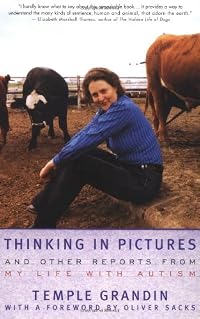
Thinking in Pictures: My Life with Autism
by Temple Grandin
On This Page
Description
Updated for a new era, the 25th anniversary edition of this seminal work on autism and neurodiversity provides “a uniquely fascinating view” (Deborah Tannen, author of You Just Don’t Understand) of the differences in our brains.Originally published in 1995 as an unprecedented look at autism, Grandin writes from the dual perspectives of a scientist and an autistic person to give a report from “the country of autism.” Introducing a groundbreaking model which analyzes people show more based on their patterns of thought, Grandin “charts the differences between her life and the lives of those who think in words” (The Philadelphia Inquirer).
For the new edition, Grandin has written a new afterword addressing recent developments in the study of autism, including new diagnostic criteria, advancements in genetic research, updated tips, insights into working with children and young people with autism, and more.
. show less
Tags
Recommendations
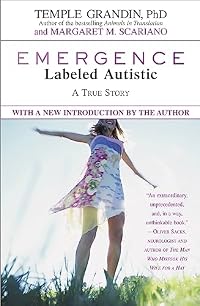
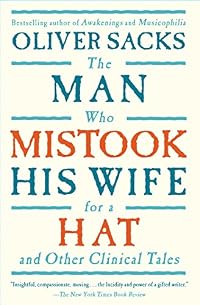
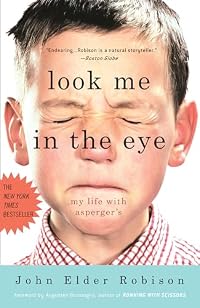
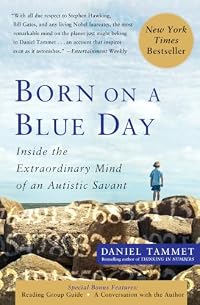
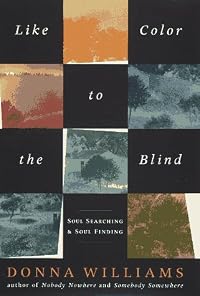
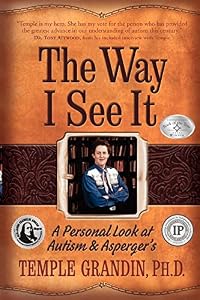
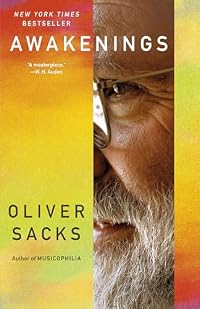
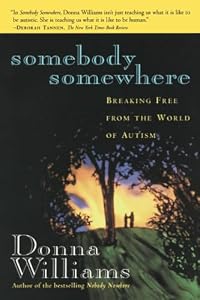

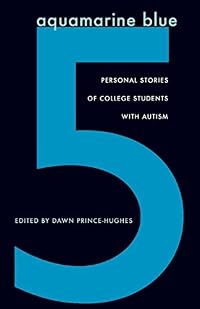

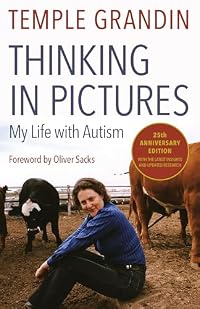
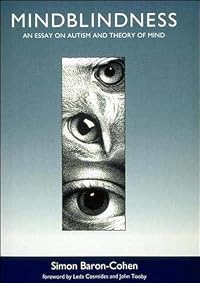

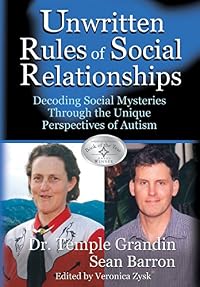











Member Recommendations

magelet87 although "the curious incident of the dog in the night" is a work of fiction, it explains the life of aspergers as well as temple grandin's book.
11
Member Reviews
Temple Grandin, like many autistic people, is a visual thinker. Now, it's extremely difficult for a language-based thinker like myself (and most of us) to properly picture (no pun intended!) how her mind works, so imagine how difficult it must have been for her to describe it! Yet, she manages this with brilliance, taking us here into her head for a incredibly worthy journey.
First, there's is the baffling overview of how such a visual thinker processes informations. Every experiences she encounters, everything she lives through, ends up stored in her brain like into a library entirely dedicated to pictures, and from which she can download images at will when needed. Whereas must of us think in words, our thoughts being like a stream of show more internal monologue and background language, she, on the contrary, has a constant display of images; like a photographer equipped with a powerful camera constantly zooming in and out. In fact, she uses such pictures stored in her mind to make associations, and so make sense of the world around her. It's, again, difficult to grab and convey for a language-based thinker; but it fully make sense when you see the results of such a way of thinking - her high visualisation skills are what allowed her to succeed professionally as an engineer, designing facilities for the livestock industry (one third of the cattle in the USA are moved through facilities she designed).
Now, we know this is not such a rare way of thinking. Many autistic people actually perceive the world as such (although not all) and, even among neurotypicals, you can find your fair share of such high visual thinkers (eg. artists, designers, architects...). But, in 1995, when this book was first published, we barely came to get this; and the impact for our understanding of the brain were quite impressive. This is where 'Thinking in Pictures' gets even more engrossing, as she delves into the science behind how we think.
The thing is, as we adhered to language-based thoughts as the only possible way of thinking, then we implied that not having language meant not being able to think. This is what we thought of animals. This is what we thought about severely autistic individuals, who were then perceived as so locked up into themselves that they couldn't have the same range of emotions as the rest of us, the same deep and complex inner life. Temple Grandin, on the contrary, offers here very insightful chapters touching on ethology; describing where we stand on understanding how animals think (and yes, most are visual thinkers too!). She also, as an autistic person herself, describes her inner life and its meaning (eg. the hyperacuity of the senses, and the impact it has upon behaviour) blowing up a lot of prejudices surrounding autism along the way.
Here's indeed a narrative shaped around her own experience, and so her life story serves as a backbone to the whole book. Her autobiography is, of course, an amazing story to be discovered and she deserves to be widely known - although, if you have seen the (fantastic!) movie based upon her life ('Temple Grandin', directed by Mick Jackson and with Claire Danes in the role-title) you will be more than familiar with all that! But what is truly fascinating in here are the first-hand insights into an incredible mind, and the light minds like hers can shed upon the functioning of the brain. The fact hers is also affected by autism gives it all an even more compelling touch, as it then greatly helped radically changing our views about such individuals. Here's a read which is unique, and highly engrossing! show less
First, there's is the baffling overview of how such a visual thinker processes informations. Every experiences she encounters, everything she lives through, ends up stored in her brain like into a library entirely dedicated to pictures, and from which she can download images at will when needed. Whereas must of us think in words, our thoughts being like a stream of show more internal monologue and background language, she, on the contrary, has a constant display of images; like a photographer equipped with a powerful camera constantly zooming in and out. In fact, she uses such pictures stored in her mind to make associations, and so make sense of the world around her. It's, again, difficult to grab and convey for a language-based thinker; but it fully make sense when you see the results of such a way of thinking - her high visualisation skills are what allowed her to succeed professionally as an engineer, designing facilities for the livestock industry (one third of the cattle in the USA are moved through facilities she designed).
Now, we know this is not such a rare way of thinking. Many autistic people actually perceive the world as such (although not all) and, even among neurotypicals, you can find your fair share of such high visual thinkers (eg. artists, designers, architects...). But, in 1995, when this book was first published, we barely came to get this; and the impact for our understanding of the brain were quite impressive. This is where 'Thinking in Pictures' gets even more engrossing, as she delves into the science behind how we think.
The thing is, as we adhered to language-based thoughts as the only possible way of thinking, then we implied that not having language meant not being able to think. This is what we thought of animals. This is what we thought about severely autistic individuals, who were then perceived as so locked up into themselves that they couldn't have the same range of emotions as the rest of us, the same deep and complex inner life. Temple Grandin, on the contrary, offers here very insightful chapters touching on ethology; describing where we stand on understanding how animals think (and yes, most are visual thinkers too!). She also, as an autistic person herself, describes her inner life and its meaning (eg. the hyperacuity of the senses, and the impact it has upon behaviour) blowing up a lot of prejudices surrounding autism along the way.
Here's indeed a narrative shaped around her own experience, and so her life story serves as a backbone to the whole book. Her autobiography is, of course, an amazing story to be discovered and she deserves to be widely known - although, if you have seen the (fantastic!) movie based upon her life ('Temple Grandin', directed by Mick Jackson and with Claire Danes in the role-title) you will be more than familiar with all that! But what is truly fascinating in here are the first-hand insights into an incredible mind, and the light minds like hers can shed upon the functioning of the brain. The fact hers is also affected by autism gives it all an even more compelling touch, as it then greatly helped radically changing our views about such individuals. Here's a read which is unique, and highly engrossing! show less
This kind of reads like a war correspondent reporting from the front lines of autism--constant battles and adjustments to a world that didn't naturally jive with her programming. That autism is not behavioral, but that behavior is a symptom of what is going on underneath was a fascinating discovery. Grandin does a solid job of laying out the forms and terms of autism in a very readable if sometimes dry way. Any dryness is mostly tempered by discussion of her adapting during her childhood or her compassion for animals--a compassion that stems somewhat from a similar way of perceiving and interpreting the world as animals are also thought to think in pictures. I also like to think of this book as kind of a victory lap for having achieved show more professionally what Grandin has despite or because of her obstacles. In some measure she also critiques society by revealing it's structure from the outside as well as having an interesting take on her flirtation with religion. Like Grandin, I was particularly drawn to her relationships with animals and look forward to reading her ANIMALS IN TRANSLATION. show less
I'm in two minds about this book.
The book is a mix of the author's own experiences and trying to explain more generally about autism.
I enjoyed hearing her own experiences. She brings a unique point of view to the table, and hearing about how she approaches and thinks about her work is interesting.
However, the information on autism suffers from the age of the book - originally written 26 years ago, and revised 15 years ago.
While she does say that autism differs in different individuals, there are plenty of sections where (what I feel is) over-generalizations are made, as if they apply to all autistic individuals.
It (briefly) talks about how vaccines may be a cause of autism, an idea that has caused much harm to autistic individuals show more over the years, and has been utterly debunked for quite a while.
The benefits of ABA are also talked about, a type of "therapy" based around training autistics to suppress their natural behavior to fit in better, rather than finding out the reasons for the behavior to help find reasonable accommodations for their needs. It is not hard to find extensive discussions of people being traumatized by this if you go looking. https://reddit.com/r/autism/comments/pe8ohn/opinion_on_aba_therapy/ is a good starting point if you want to learn more.
While the book does contain some good information, it is littered with much information I would put caveats on with our current understanding of autism. I'm sure it was quite informative at the time it was written - our understanding has just shifted since then. show less
The book is a mix of the author's own experiences and trying to explain more generally about autism.
I enjoyed hearing her own experiences. She brings a unique point of view to the table, and hearing about how she approaches and thinks about her work is interesting.
However, the information on autism suffers from the age of the book - originally written 26 years ago, and revised 15 years ago.
While she does say that autism differs in different individuals, there are plenty of sections where (what I feel is) over-generalizations are made, as if they apply to all autistic individuals.
It (briefly) talks about how vaccines may be a cause of autism, an idea that has caused much harm to autistic individuals show more over the years, and has been utterly debunked for quite a while.
The benefits of ABA are also talked about, a type of "therapy" based around training autistics to suppress their natural behavior to fit in better, rather than finding out the reasons for the behavior to help find reasonable accommodations for their needs. It is not hard to find extensive discussions of people being traumatized by this if you go looking. https://reddit.com/r/autism/comments/pe8ohn/opinion_on_aba_therapy/ is a good starting point if you want to learn more.
While the book does contain some good information, it is littered with much information I would put caveats on with our current understanding of autism. I'm sure it was quite informative at the time it was written - our understanding has just shifted since then. show less
3.5 stars
Temple Grandin is autistic, and grew up to earn a PhD in animal science. This book is an autobiography combined with information on autism, with plenty of animal anecdotes thrown in, as well.
This was good. No question my interests are more in line with the animal portions of the book, but the autistic information was interesting, as well. I was particularly interested in Temple's own childhood and how she thinks in pictures (hence the title) – some autistics do that, but not all. She included plenty of psychological and scientific information on autism, in addition to the anecdotes from her own life (and the lives of other autistics she knows or has heard from), as well as advice for parents of children with autism.
Temple Grandin is autistic, and grew up to earn a PhD in animal science. This book is an autobiography combined with information on autism, with plenty of animal anecdotes thrown in, as well.
This was good. No question my interests are more in line with the animal portions of the book, but the autistic information was interesting, as well. I was particularly interested in Temple's own childhood and how she thinks in pictures (hence the title) – some autistics do that, but not all. She included plenty of psychological and scientific information on autism, in addition to the anecdotes from her own life (and the lives of other autistics she knows or has heard from), as well as advice for parents of children with autism.
The author relates her life and experiences adapting to "normal society" while having an autistic mind. It's a very revealing examination of how social interactions are integral to success in life. The author offers tips for raising a child on the autism spectrum as well as advice about everything from medicine to religious training.
This isn't a riveting read. The author's style is dry and the different subjects seemed unconnected at times. However, from what I read in the book, this type of communication style is to be expected. I could see this being a very helpful book for parents or loved ones of an autistic individual.
This isn't a riveting read. The author's style is dry and the different subjects seemed unconnected at times. However, from what I read in the book, this type of communication style is to be expected. I could see this being a very helpful book for parents or loved ones of an autistic individual.
This is the book that sparked my interest in and curiosity about autism.
Before I read it, all I knew of autism was the stereotypical idea of a kid huddled in a corner, non-speaking, closed out from the world. But I learned that there are many forms of autism, some quite high-functioning, some unrecognizable from what I had assumed. Temple Grandin describes her own experiences, her journey through school, her amazing aunt who helped her channel an obsessive interest and turn it into a career at which she became very successful. Grandin explains how autism causes her senses to function differently from normal people's (mostly in being more sensitive). Because of this, she can understand why animals respond in certain ways to their show more environment; and she used this ability along with her drawing skills, to design more humane livestock-handling systems. Her work was innovative and award-winning.
This is a fascinating book on many levels. It can feel a bit disjointed, moving from one theme or subject to another unexpectedly, and sometimes you have to step back from the book to see how it all connects together. But I did not find this bothersome, seeing how difficult it was for the author to learn to write at all and present her thoughts in writing.
Read the original review on Dog Ear Diary show less
Before I read it, all I knew of autism was the stereotypical idea of a kid huddled in a corner, non-speaking, closed out from the world. But I learned that there are many forms of autism, some quite high-functioning, some unrecognizable from what I had assumed. Temple Grandin describes her own experiences, her journey through school, her amazing aunt who helped her channel an obsessive interest and turn it into a career at which she became very successful. Grandin explains how autism causes her senses to function differently from normal people's (mostly in being more sensitive). Because of this, she can understand why animals respond in certain ways to their show more environment; and she used this ability along with her drawing skills, to design more humane livestock-handling systems. Her work was innovative and award-winning.
This is a fascinating book on many levels. It can feel a bit disjointed, moving from one theme or subject to another unexpectedly, and sometimes you have to step back from the book to see how it all connects together. But I did not find this bothersome, seeing how difficult it was for the author to learn to write at all and present her thoughts in writing.
Read the original review on Dog Ear Diary show less
when starting it, i thought temple grandin wrote rather repetitively (as many autistics), and i thought i'd never make it through this book.....but once my thinking adapted to her writing, this was a phenomenal book. I have interests in both cattle and in counseling, so HOW BIZARRE to find a book where the 2 unlikely topics intersect. Grandin not only tackles her thinking processes, but touches on religion, slaughterhouse ethics, geniuses, learning empathy, biochemistry (although dated) and other topics. fascinating reading for those who like to step into someone else's world where things are very very different... this one will stay on my bookshelf.
Members
- Recently Added By
Lists

BingoDOG - Books About Autism: Nonfiction
14 works; 6 members

Reading list
170 works; 1 member
Author Information

46+ Works 9,523 Members
Temple Grandin was born August 29, 1947 in Boston, Massachusetts. She is a bestselling author, doctor and professor of Animal Science at Colorado State University, and leader of both the animal welfare and autism advocacy movements. Grandin was diagnosed with autism in 1950. She was immediately placed in a structured nursery, had speech therapy, show more and had a nanny spend hours playing turn-based games with her. At the age of four, she began talking and her progress continued. In 1970, Grandin received her bachelor's degree in psychology from Franklin Pierce College in Rindge, New Hampshire. She received her master's degree in animal science from Arizona State University in 1975, and in 1989, she received a Ph.D. in animal science from the University of Illinois at Urbana-Champaign. Grandin, being a high-functioning autistic, is widely-known for her work in autism advocacy. She has been featured on major televisions programs such as the Today Show and ABC's Primetime Live. She has also been featured in Time magazine, People magazine, Forbes, and the New York Times. Grandin was the subject of the Horizon documentary "The Woman Who Thinks Like a Cow" and was described by Oliver Sacks in the title of his narrative book: An Anthropologist on Mars. Grandin's bestselling book: Thinking in Pictures is scheduled to be released as an HBO film in 2009. Grandin's Animals in Translation and Animals Make Us Human have also been bestsellers. Grandin lives in Colorado, but has speaking engagements on autism and cattle handling around the world. show less
Some Editions
Awards and Honors
Notable Lists
Work Relationships
Common Knowledge
- Canonical title
- Thinking in Pictures: My Life with Autism
- Original title
- Thinking In Pictures and Other Reports From My Life With Autism
- Original publication date
- 1995
- People/Characters
- Temple Grandin; Hans Asperger; John Wayne; Oliver Sacks, M.D.; Roger Penrose
- Important places
- Colorado, USA; Arizona, USA; Kansas, USA; Alabama, USA
- Important events
- The Great Headgate Controversy; Stairway to Heaven (1974)
- Related movies
- Temple Grandin (2010 | IMDb)
- Dedication
- I dedicate this book to my mother.
Her love, dedication, and insight
enabled me to succeed. - First words
- I think in pictures.
- Last words
- (Click to show. Warning: May contain spoilers.)No words. Just one pure moment of silence. I can picture it.
- Blurbers
- Tannen, Deborah; Thomas, Elizabeth Marshall; Ratey, John; Pacheco, Alex; Stehli, Annabel
- Original language
- English
- Canonical DDC/MDS
- 616.89820092; 616.8982; 616.89; 616; 616.89'82'0092
Classifications
- Genres
- Biography & Memoir, Nonfiction, General Nonfiction
- DDC/MDS
- 616.89820092 — Applied Science & Technology Medicine & health Diseases, Allergies, Skin Conditions Nervous Disorders: Autism, Anorexia, OCD Mental disorders: bi-polar/schizophrenia Schizophrenia
- LCC
- RC553 .A88 .G74 — Medicine Internal medicine Internal medicine Neurosciences. Biological psychiatry. Neuropsychiatry Psychiatry Psychopathology
- BISAC
Statistics
- Members
- 1,254
- Popularity
- 19,469
- Reviews
- 26
- Rating
- (3.95)
- Languages
- 7 — English, French, German, Hungarian, Italian, Spanish, Turkish
- Media
- Paper, Audiobook, Ebook
- ISBNs
- 18
- ASINs
- 11