On This Page
Description
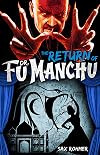
Also published under the title The Return of Fu-Manchu, this is the second entry in the long-lived and ever-popular series of mystery novels featuring the criminal genius Dr. Fu-Manchu. Delve into the workings of the mind of a diabolically brilliant underworld figure in this pulse-pounding thriller..
Tags
Recommendations











Member Reviews
Read more out of academic interest than in expectation of enjoyment, which is just as well.
The racism is obviously horrible and extreme, and many more insightful reviewers than me have rightly pulled these books apart for it. But to add to the fire, it's worth noting that it's not even as if Sax Rohmer's prejudice is a deplorable trait of an otherwise good writer (in the strictly craftsman sense of the term); it would be nothing close to an excuse, but is at least a point that could be made to explain the continued interest in, say, Ian Fleming or Hergé.
Rohmer's plotting is weak to the point of absurdity (a castle falls down for no other reason than dramatic effect), his characters and incidents pale imitations of much better ones show more (Nayland Smith one of many Holmes imitators who stuffed magazine pages at the time), and the structure abysmal (these were first published as short stories and knitted together for collected publication, and it shows).
He's got a certain talent for capturing a scary mise en scène, and individual exciting incidents went on to inspire much better writers: Fleming among them, and Alan Moore has done some interesting stuff with Rohmer's characters. But there's no pretending these are timeless works that deserve to be remembered alongside Arthur Conan Doyle.
Poor in so many more ways on top of plain prejudice. show less
The racism is obviously horrible and extreme, and many more insightful reviewers than me have rightly pulled these books apart for it. But to add to the fire, it's worth noting that it's not even as if Sax Rohmer's prejudice is a deplorable trait of an otherwise good writer (in the strictly craftsman sense of the term); it would be nothing close to an excuse, but is at least a point that could be made to explain the continued interest in, say, Ian Fleming or Hergé.
Rohmer's plotting is weak to the point of absurdity (a castle falls down for no other reason than dramatic effect), his characters and incidents pale imitations of much better ones show more (Nayland Smith one of many Holmes imitators who stuffed magazine pages at the time), and the structure abysmal (these were first published as short stories and knitted together for collected publication, and it shows).
He's got a certain talent for capturing a scary mise en scène, and individual exciting incidents went on to inspire much better writers: Fleming among them, and Alan Moore has done some interesting stuff with Rohmer's characters. But there's no pretending these are timeless works that deserve to be remembered alongside Arthur Conan Doyle.
Poor in so many more ways on top of plain prejudice. show less
The Return of Fu Manchu was to my surprise, pure pulp fiction. That would be a marvelous find, or a terrible disappointment, depending on your taste. The horribly evil and utterly brilliant Fu Manchu is out to conquer the world and gain dominion for the corrupt, sinister, inscrutable Chinese. The only thing standing in his way is Nayland Smith, who as Burmese Commissioner is the epitome of a British colonial officer – a proto James Bond -- and his trusty sidekick, Dr. Petrie. Imagine Holmes and Watson with a bit more brawn and a bit less brain.
The novel was written in 1916, just five years after the Boxer Rebellion in China had been crushed. That rebellion is mentioned only once as an aside, but it’s clear that the fear of show more destruction at the hands of millions of “devilish” Chinese colors the story. Fu Manchu is the type of villain that is delightful to despise. He steals every scene he’s in (and some he is not) and is simply great stuff, if you can manage to overlook the blatant and absurd racism.
To say the plot is breathless would be a serious understatement. Every twist is prefaced by phrases such as “Many strange and terrible memories are mine, memories stranger and more terrible than those of the average man; but this thing which now moved slowly down upon us through the gloom of that impenetrable place, was (if the term be understood) almost absurdly terrible.”
The turns of the story are easy to predict, perhaps because the book was written before such narrative surprises had become commonplace. Ugly jingoism and chilling clichés aside, The Return of Fu Manchu is a great escapist jaunt. show less
The novel was written in 1916, just five years after the Boxer Rebellion in China had been crushed. That rebellion is mentioned only once as an aside, but it’s clear that the fear of show more destruction at the hands of millions of “devilish” Chinese colors the story. Fu Manchu is the type of villain that is delightful to despise. He steals every scene he’s in (and some he is not) and is simply great stuff, if you can manage to overlook the blatant and absurd racism.
To say the plot is breathless would be a serious understatement. Every twist is prefaced by phrases such as “Many strange and terrible memories are mine, memories stranger and more terrible than those of the average man; but this thing which now moved slowly down upon us through the gloom of that impenetrable place, was (if the term be understood) almost absurdly terrible.”
The turns of the story are easy to predict, perhaps because the book was written before such narrative surprises had become commonplace. Ugly jingoism and chilling clichés aside, The Return of Fu Manchu is a great escapist jaunt. show less
M brother rather despised Nayland Smith and preferred Fu Manchu, who was, at least on occasion, more honorable than his enemies. On the whole, I tend to prefer some of Rohmer's other stories to the Fu mancu books, but there is no denying that Dr. Fu is as ,much a classic contribution to pulp literature as Dracula or Tarzan: the incarnation of the Yellow Peril.
More pulpy, briskly-paced adventure from Sax Rohmer as Commissioner Nayland Smith and Dr. Petrie combat once again their most formidable nemesis in The Return of Dr. Fu-Manchu. The incidents in this second volume of the Fu-Manchu series draw upon and are, admittedly, sometimes similar to the incidents in the first book. Nonetheless, if you're in the mood for some good, chewy pulp, Rohmer is one of the best. His language is evocative and rich, his pacing is brisk, and he is quite good at evoking sensations of eerie otherness, as evidenced in the "Cragmire Tower" section of the novel. In these "Cragmire" chapters, an element of the occult is introduced into the story, and the mood and setting are shudderingly delectable. Wonderful book.
I'm just not overly a fan of these books. They are just a bit too fantastic. I can only suspend so much disbelief.
Nowhere near as good as the first novel in the series.
Ratings
Members
- Recently Added By
Lists

First published in 1916
68 works; 4 members
Author Information

189+ Works 6,138 Members
Sax Rohmer was born in Birmingham, Warwickshire. At the age of 18, he adopted the name Sarsfield, the name of a famous Irish general admired by Rohmer's mother. He married Rose Elizabeth Knox in 1909 and, at his wife's insistence, began using the name Sax Rohmer for his fiction, eventually employing the pseudonym as his actual name. Rohmer was show more basically a self-taught scholar. He started writing as a journalist; his beat was the Limehouse underworld in London. Rohmer had a difficult time breaking into the professional fiction markets, but once he did, he became a household name for exotic adventure both in England and in America. Although his writing brought Rohmer success and money, he was never much of a businessman, and most of his wealth was squandered because of his extravagance and through financial mismanagement. Rohmer eventually moved to New York City. One of Rohmer's great intellectual interests was the occult and supernatural, and these elements frequently appeared as motifs in his fiction. His most famous creation was the evil oriental mastermind, Dr. Fu Manchu, first presented in the novel The Mystery of Fu Manchu in 1913 (later retitled The Insidious Dr. Fu Manchu for its American publication, also in 1913). Most espionage or adventure fiction exploits the social paranoias of its time, and Rohmer himself effectively tapped the Westerner's fear of the stereotyped "yellow peril" threat---the negatively perceived belief that Orientals will conquer the world. The Fu Manchu adventures were patterned, in part, after Arthur Conan Doyle's Sherlock Holmes stories. Rohmer's protagonists in these adventures, Sir Denis Nayland Smith and his companion Dr. Petrie, look very much like Doyle's Holmes and Watson, but, whereas Doyle centered his narratives on the heroes and specifically on the elaborate process of detection, Rohmer focused his attention on the villain and on slam-bang action. Fu Manchu was a master of both Western science and Eastern mysticism, and his efforts at world domination caused no end of problems for Smith and Petrie. In Fu Manchu, Rohmer had created the most famous villain in popular fiction (although Rohmer maintained that Fu Manchu was based on an actual Limehouse criminal). Despite Rohmer's use of outrageous racial stereotyping, many of his novels hold up well today and provide superior examples of how to create narrative pacing and suspense. (Bowker Author Biography) show less
Series

Belongs to Publisher Series
Work Relationships
Common Knowledge
- Original title
- The Devil Doctor
- Alternate titles
- The Return Of Dr Fu-Manchu
- Original publication date
- 1916-02
- People/Characters
- Fu Manchu; Sir Denis Nayland Smith; Dr. Petrie; Karamaneh; John Weymouth; Aziz (show all 22); Burke; Carter; The bishop of Damascus; J. D. Eltham; Forsyth; Gray; Hagar; Mrs. Newsome; Platts; Mrs. Prior; J. Salaman; Abel Slattin; Stacey; Kevan Van Roon; Ryman; Yen-Sun-Yat
- Important places
- London, England, UK; Limehouse, London, England, UK; Sedgemoor, England, UK; Upminster, Essex, England; Port Said, Egypt; Strait of Messina, Italy
- First words
- "When did you last hear from Nayland Smith?" asked my visitor.
- Last words
- (Click to show. Warning: May contain spoilers.)"Perhaps you're right, Petrie!" he said.
- Original language
- English
- Disambiguation notice
- Originally serialized in Collier's November 21, 1914-December 4, 1915.
Classifications
Statistics
- Members
- 343
- Popularity
- 92,646
- Reviews
- 6
- Rating
- (3.54)
- Languages
- 5 — Dutch, English, French, German, Spanish
- Media
- Paper, Audiobook, Ebook
- ISBNs
- 75
- ASINs
- 33