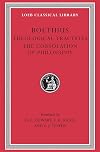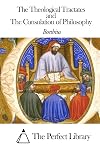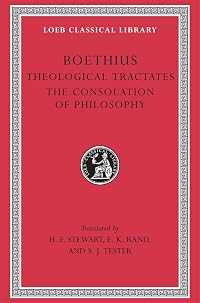
The Theological Tractates / The Consolation of Philosophy
by Boethius
On This Page
Description
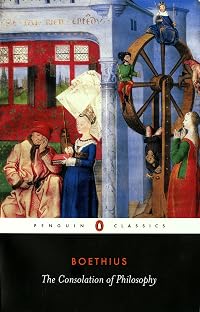
Boethius's "Consolation of Philosophy" is considered one of the most important and influential works of medieval times. Written during Boethius's year-long imprisonment for treason which would ultimately lead to his torturous execution, "Consolation of Philosophy" is a classical exposition of human nature as Boethius reflects on the treacherous betrayal by his friends that led to his fall from favor with his lord. Presented here in this volume is H.F. Stewart's translation of "Consolation of show more Philosophy" and "The Theological Tractates". show lessTags
Recommendations




Member Reviews
This review is for the “Consolation of Philosophy”.
Excellent book. I've read the book a couple of times and enjoyed it immensely, particularly when addressing fortune, adversity, the pursuit of happiness, free will and what makes life worth living. Much of the book’s philosophical arguments (particularly Book IV and V) are only valid if one believes in God and those portions make for better theology than philosophy. For example, Boethius carefully addresses the foreknowledge of God and demonstrates that this in no way negates free will. I did find Boethius’ efforts to show the unhappiness and punishment of the wicked to be strained. Regardless, “Consolation of Philosophy” remains a valuable and enlightening philosophical show more work which I highly recommend to persons interested in philosophy and theology. show less
Excellent book. I've read the book a couple of times and enjoyed it immensely, particularly when addressing fortune, adversity, the pursuit of happiness, free will and what makes life worth living. Much of the book’s philosophical arguments (particularly Book IV and V) are only valid if one believes in God and those portions make for better theology than philosophy. For example, Boethius carefully addresses the foreknowledge of God and demonstrates that this in no way negates free will. I did find Boethius’ efforts to show the unhappiness and punishment of the wicked to be strained. Regardless, “Consolation of Philosophy” remains a valuable and enlightening philosophical show more work which I highly recommend to persons interested in philosophy and theology. show less
A parallel translation, and a vivid romp into a religious view of the world and the attempt to accept one's place within it.
So brilliant, but so dense. I've read it so many times and I'm still only scratching the surface. I suspect this will play a prominent role in my dissertation.
Ratings
Members
- Recently Added By
Author Information

106+ Works 7,023 Members
Born of a distinguished family, Boethius received the best possible education in the liberal arts in Athens and then entered public life under Theodoric the Ostrogoth, ruler of Italy. Boethius obtained the highest office, but was later accused of treason, imprisoned, and executed. In the dungeon of Alvanzano, near Milan, during his imprisonment, show more he composed "The Consolation of Philosophy," a remarkable piece of prose literature as well as philosophy. Boethius's outlook, like that of all the Church Fathers, was Platonistic, but he preserved much of the elementary logic of Aristotle. Boethius reported in his commentaries the views of Aristotelians even when they disagreed with his Platonism. Thus he created an interest in Aristotle in subsequent centuries and provided a basis for the introduction of Aristotle's works into Europe in the twelfth and thirteenth centuries. Boethius was put to death in 526. (Bowker Author Biography) show less
Some Editions
Series
Belongs to Publisher Series
Common Knowledge
- Canonical title
- The Theological Tractates / The Consolation of Philosophy
- Original publication date
- 1918
- Publisher's editor
- Goold, G. P.
- Original language
- Latin
Classifications
- Genres
- Philosophy, Religion & Spirituality, Nonfiction, History
- DDC/MDS
- 180 — Philosophy & psychology Ancient, medieval & eastern philosophy Ancient, medieval, eastern philosophy
- LCC
- PA6156 .B67 — Language and Literature Greek language and literature. Latin language and literature Roman literature Translations
- BISAC
Statistics
- Members
- 432
- Popularity
- 71,461
- Reviews
- 3
- Rating
- (4.24)
- Languages
- English, Latin, Multiple languages
- Media
- Paper, Ebook
- ISBNs
- 12
- ASINs
- 12