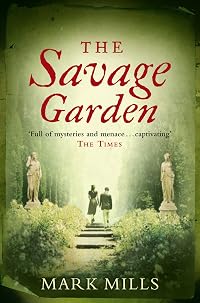
The Savage Garden
by Mark Mills
On This Page
Description
Assigned to write a monograph about a famous sixteenth-century garden, aimless young Cambridge scholar Adam Banting visits the enigmatic garden only to discover clues that the woman to whom the garden was dedicated may have been murdered, a finding that points to a related and more recent killing.Tags
Recommendations








Member Recommendations
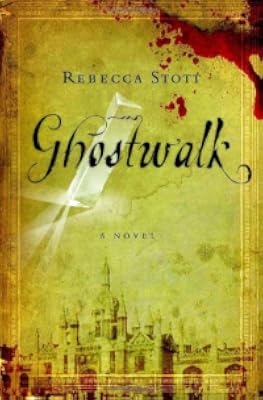
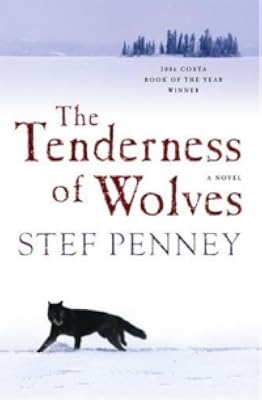
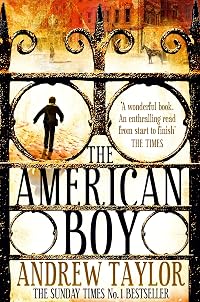
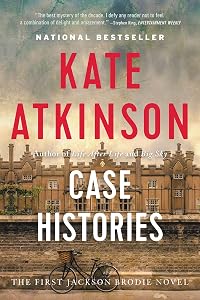
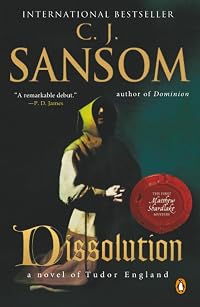
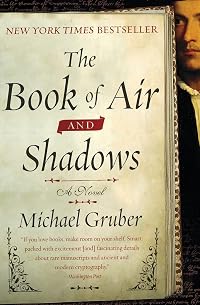
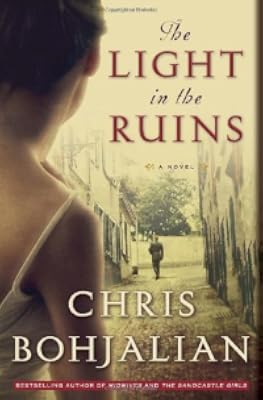
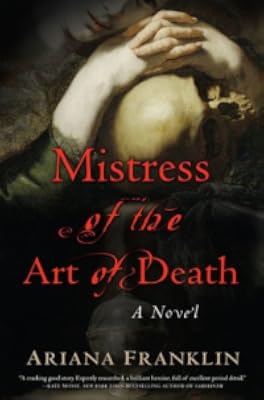
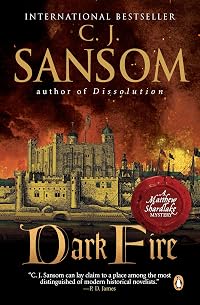
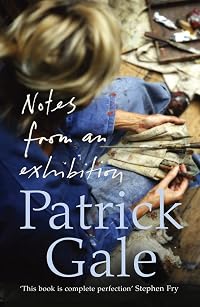
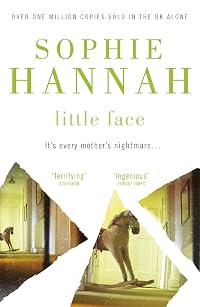
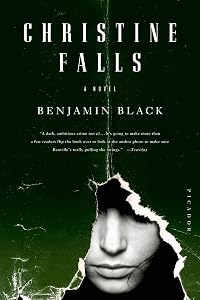
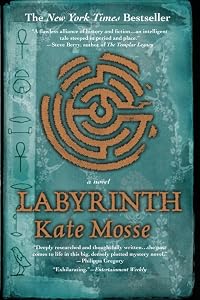
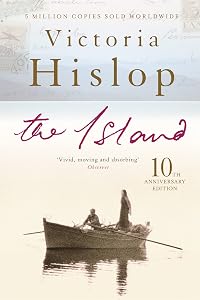
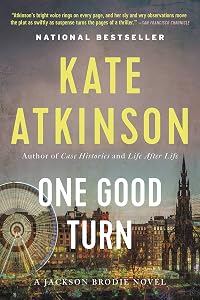
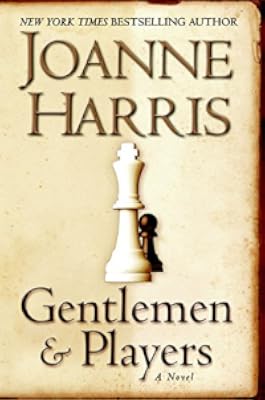
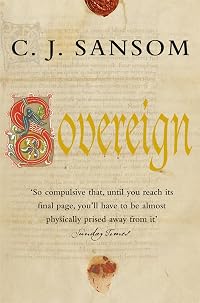
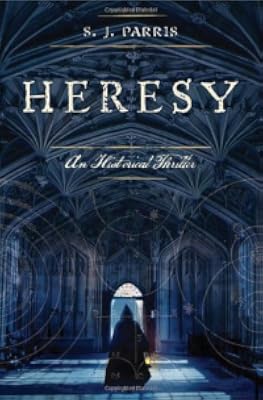
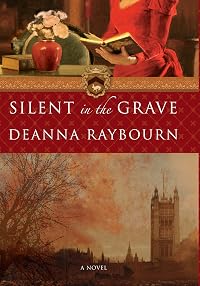
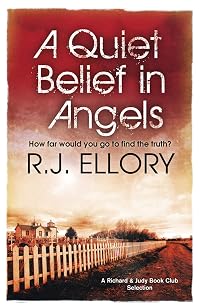
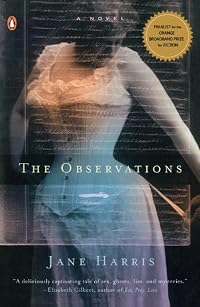
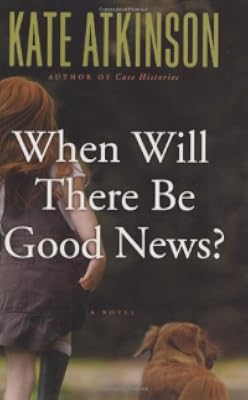
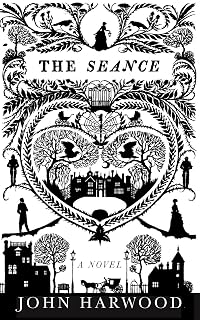
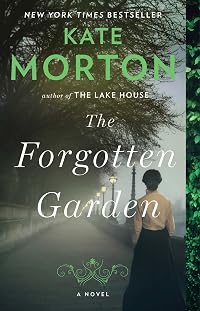
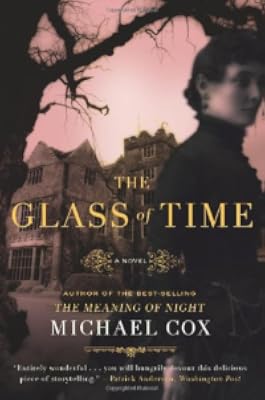
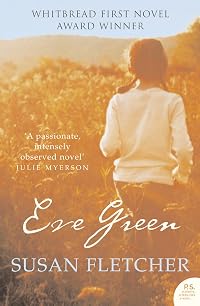
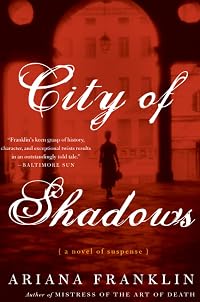
BookshelfMonstrosity In each of these atmospheric novels tinged with all the best aspects of gothic novels -- old estates, family secrets, suspicious deaths -- a garden holds the answers the protagonists seek.
Member Reviews
Brilliant but lazy college student Adam Strickland couldn't be happier when his adviser hands him a topic for his thesis - especially since the topic involves a 6-week trip to Tuscany to study the mysterious garden of a local villa. But Adam never reckoned with the possibility that not one, but two mysteries from the past would fascinate him to the point of holding him in sway until he discovers their solutions.
This is one of those books that is difficult to categorize. It's not a mystery - although it deals with the mysteries surrounding the meaning of the garden and the death of its owner's son in the last days of World War II. But it's also not self-consciously trying to be poetic, to be literary like most books that are placed in show more that category, so it seems unfair to me to lump it in with the pretentious books that tend to be labeled 'literary', but I guess that's what it actually is - more what literary is meant to be.
I really enjoyed this novel, though I wish less time had been spent on 'solving' Emilio's murder and more time had been dedicated to Adam's deciphering of the garden - the former didn't really engage me, but I found the latter fascinating. But at heart the novel isn't really about either of those mysteries. It's about Adam coming of age, using his brain, his actual talents rather than taking the easy way out and being miserable along the path his parents have laid out for him. It's about young love and betrayal and sibling rivalry. The story is one of growing up, unconsciously and sometimes painfully coming to terms with the world from a different perspective. And it's well-done. It resonates with the reader. This is the sort of novel you could write a paper about - if you wanted to. Or you could just read and savor the language , the allusions, the clever solution to the mysteries. Either way it's a good read.
Also posted at my blog. show less
This is one of those books that is difficult to categorize. It's not a mystery - although it deals with the mysteries surrounding the meaning of the garden and the death of its owner's son in the last days of World War II. But it's also not self-consciously trying to be poetic, to be literary like most books that are placed in show more that category, so it seems unfair to me to lump it in with the pretentious books that tend to be labeled 'literary', but I guess that's what it actually is - more what literary is meant to be.
I really enjoyed this novel, though I wish less time had been spent on 'solving' Emilio's murder and more time had been dedicated to Adam's deciphering of the garden - the former didn't really engage me, but I found the latter fascinating. But at heart the novel isn't really about either of those mysteries. It's about Adam coming of age, using his brain, his actual talents rather than taking the easy way out and being miserable along the path his parents have laid out for him. It's about young love and betrayal and sibling rivalry. The story is one of growing up, unconsciously and sometimes painfully coming to terms with the world from a different perspective. And it's well-done. It resonates with the reader. This is the sort of novel you could write a paper about - if you wanted to. Or you could just read and savor the language , the allusions, the clever solution to the mysteries. Either way it's a good read.
Also posted at my blog. show less
I wouldn't wish this insipid, trite, anachronistic book on my worst enemy. It's trying to be the more literary alternative to Dan Brown, but, sadly, it just comes off as sub-Dan Brown. There's really no connection between the two mysteries, and for the amount of time spent describing the garden, the solution doesn't give much payoff. The writing is painfully effortful, and the sex scenes are almost embarrassing in their clumsiness. For a supposedly perceptive young man, the protagonist comes off as a totally credulous moron and, to be honest, kind of a jerk. But the greater sin is that this novel is just excruciatingly boring. There are digressions into all kinds of irrelevant subjects (and this is a short book!), but without the spark show more to make them interesting, they just bog the novel down. Disappointing. show less
"When they start killing the men of ideas, you can be sure the Devil is laughing."
Cambridge art history student, Adam Strickland, travels to Tuscany in 1958 to work on the Renaissance garden of the Villa Docci near Florence. The garden was apparently created by a grieving husband in memory of his dead wife who died in 1548 aged 25 but Adam soon realises that the garden features some discordant iconography and that it harbours much darker secrets than is outwardly apparent, as does the villa itself. Soon, Adam is drawn into a complex mystery which shifts between the 16th century and the latter days of German Occupation in the country towards the end of WWII, and into the web of intrigue woven by the Docci family, which he tries to show more unravel with the aid of references found in Ovid and Dante.
Mills manages to paint a vivid depiction of a Renaissance garden complete with wooded glades, grottoes, temples, amphitheatres, classical statues and reflecting pools, however I felt that at times he simply went into too much unnecessary detail, made too many digressions into classical mythology or the evolution of orang-utans, meaning that although they had some minor bearings on the plot it sometimes lost its momentum.
Similarly although Mills subtly uses a suspicious death as a way of examining the scars left behind by war in tight knit communities and how families learn to cope in the aftermath, I felt that he failed to really consider quite why he had decided to set the story in 1958 other than the fact that it wasn't too long after the end of the war. This element of the novel somehow lacked the necessary authenticity, in particular I struggled to believe that young, unmarried women of the period would have such a carefree attitude to sex, even amongst University students and Italians.
Overall I found this a fun read that had been well researched but by no means a classic. show less
Cambridge art history student, Adam Strickland, travels to Tuscany in 1958 to work on the Renaissance garden of the Villa Docci near Florence. The garden was apparently created by a grieving husband in memory of his dead wife who died in 1548 aged 25 but Adam soon realises that the garden features some discordant iconography and that it harbours much darker secrets than is outwardly apparent, as does the villa itself. Soon, Adam is drawn into a complex mystery which shifts between the 16th century and the latter days of German Occupation in the country towards the end of WWII, and into the web of intrigue woven by the Docci family, which he tries to show more unravel with the aid of references found in Ovid and Dante.
Mills manages to paint a vivid depiction of a Renaissance garden complete with wooded glades, grottoes, temples, amphitheatres, classical statues and reflecting pools, however I felt that at times he simply went into too much unnecessary detail, made too many digressions into classical mythology or the evolution of orang-utans, meaning that although they had some minor bearings on the plot it sometimes lost its momentum.
Similarly although Mills subtly uses a suspicious death as a way of examining the scars left behind by war in tight knit communities and how families learn to cope in the aftermath, I felt that he failed to really consider quite why he had decided to set the story in 1958 other than the fact that it wasn't too long after the end of the war. This element of the novel somehow lacked the necessary authenticity, in particular I struggled to believe that young, unmarried women of the period would have such a carefree attitude to sex, even amongst University students and Italians.
Overall I found this a fun read that had been well researched but by no means a classic. show less
Mark Mills is rapidly becoming a favorite. I was so taken by [Amagansett] that I doubted he could equal it in this subsequent work. I'm very pleased to be able to say he didn't disappoint. He seems to have the ability to spin a mystery out of a multitude of situations, and if the library's waiting list for his latest, [The Information Officer], is any indication, a horde of other readers feel the same way.
Adam Strickland has just finished his end-of-term exams at 1958 Cambridge when his mentor offers him the opportunity to review and write a thesis on an unspoiled Renaissance garden in Tuscany. His ready acceptance plunges him into a centuries-old murder mystery, and the intrigue and life-threatening danger that surround it. Along the show more way, we touch on a more recent murder, and the family haunted by both to the present day. Young Adam excels at medieval symbolism and culture, and apparently also at following clues from much more recent crimes. Or is he?
This story offers us the sympathetic strengths of a very bright young man, adept at gleaning clues from Dante as well as modern forensics. Other attractive characters abound here, such as Adam's ne'er-do-well sculptor brother Harry, and Antonella, the beautiful-but-scarred young woman who may or may not have ulterior motives for seducing Adam. This work is cleverly constructed, a compulsive page-turner, and a very gratifying, multi-layered thriller.
Have at it! And explore the rest of Mills's oeuvre while you're at it. I certainly am. show less
Adam Strickland has just finished his end-of-term exams at 1958 Cambridge when his mentor offers him the opportunity to review and write a thesis on an unspoiled Renaissance garden in Tuscany. His ready acceptance plunges him into a centuries-old murder mystery, and the intrigue and life-threatening danger that surround it. Along the show more way, we touch on a more recent murder, and the family haunted by both to the present day. Young Adam excels at medieval symbolism and culture, and apparently also at following clues from much more recent crimes. Or is he?
This story offers us the sympathetic strengths of a very bright young man, adept at gleaning clues from Dante as well as modern forensics. Other attractive characters abound here, such as Adam's ne'er-do-well sculptor brother Harry, and Antonella, the beautiful-but-scarred young woman who may or may not have ulterior motives for seducing Adam. This work is cleverly constructed, a compulsive page-turner, and a very gratifying, multi-layered thriller.
Have at it! And explore the rest of Mills's oeuvre while you're at it. I certainly am. show less
For decades one of my favorite books has been The Magus by John Fowles, both versions. I have read both of them multiple times. Last night I had the pleasure of finishing The Savage Garden by Mark Mills. This is only his second book and he looks relatively young which is always a good thing to my mind. I certainly hope he has many more novels in him. The Savage Garden owes quite a lot to The Magus, whether intentionally or otherwise. There are huge similarities and yet they are both wonderfully unique.
The Savage Garden takes place in Italy in 1958. A young Cambridge student of Art History is sent by his advisor to examine a very special garden in Tuscany. The garden itself is full of surprises and is not what it seems at first glance. show more Nor is anyone in the Docci Villa which owns the garden and surrounding property. Like The Magus there are incidental ties to the German occupation and there are almost as many twists and turns and surprises.There is more than one mystery to be solved by the protagonist and he does so brilliantly. In the end the young student comes away with much more than just his thesis. Mills' writing is so effortless that I could see the garden perfectly in my mind's eye and hear the wind and almost smell the surrounding countryside. Several hours of reading would pass in a flash. Reading like this is what I live for (after my family of course). I have no doubt I will find this book on my shelf in years to come and be delighted to read it again show less
The Savage Garden takes place in Italy in 1958. A young Cambridge student of Art History is sent by his advisor to examine a very special garden in Tuscany. The garden itself is full of surprises and is not what it seems at first glance. show more Nor is anyone in the Docci Villa which owns the garden and surrounding property. Like The Magus there are incidental ties to the German occupation and there are almost as many twists and turns and surprises.There is more than one mystery to be solved by the protagonist and he does so brilliantly. In the end the young student comes away with much more than just his thesis. Mills' writing is so effortless that I could see the garden perfectly in my mind's eye and hear the wind and almost smell the surrounding countryside. Several hours of reading would pass in a flash. Reading like this is what I live for (after my family of course). I have no doubt I will find this book on my shelf in years to come and be delighted to read it again show less
A mysterious death in 1548. Another in 1945, in the waning days of WWII in Europe. Both involve the Docci family and revolve around their Tuscan villa and its famous garden. This is a highly literate novel and a two-fer on the mystery front. The majority of the story takes place in 1958, and the more recent death takes primacy as a young Cambridge scholar looks into matters. Both plot lines and their resolutions are extremely interesting. Add a whole host of fascinating characters, a superb narrative, a fair amount of academia, and plenty of Italian history and mythology and you end up with almost everything that I look for in a compelling novel. A real gem.
(21) This was pretty good. I found a hardcover in a used bookstore and remembered the title as something I meant to read from many years ago. Indeed, it has all the ingredients of books I love. I literary twist (Dante's Inferno, and Greek mythology) an old and a present day mystery. A bit of a twist.
A young English grad student travels to a villa outside of Florence to study a grand garden (think not tomatoes and corn, but rather the Boboli gardens or the Villa Borghese) something sinister, beautiful, and hard to decipher... This will be his thesis work. He gets involved with the family at Villa Docci, including the beautiful granddaughter with the scarred face. One of the sons was killed at the tail end of WW2 and insinuations are show more made that it was not the Germans that did it, but someone closer to home.
So the stage is set. The writing is just OK. Contrived in parts. The story was engaging, but the atmosphere did not live up. I did not feel the garden, nor the sense that we were really in Italy. The characters felt a bit wooden. The twist was OK, but one could sense that all was not as it seemed and I certainly was ready for it all to wrap up.
In the end a decent mystery. Slightly a cut above genre stuff, but I debated classifying it as literary. I think he has another literary mystery that I would pick up if it presented itself. show less
A young English grad student travels to a villa outside of Florence to study a grand garden (think not tomatoes and corn, but rather the Boboli gardens or the Villa Borghese) something sinister, beautiful, and hard to decipher... This will be his thesis work. He gets involved with the family at Villa Docci, including the beautiful granddaughter with the scarred face. One of the sons was killed at the tail end of WW2 and insinuations are show more made that it was not the Germans that did it, but someone closer to home.
So the stage is set. The writing is just OK. Contrived in parts. The story was engaging, but the atmosphere did not live up. I did not feel the garden, nor the sense that we were really in Italy. The characters felt a bit wooden. The twist was OK, but one could sense that all was not as it seemed and I certainly was ready for it all to wrap up.
In the end a decent mystery. Slightly a cut above genre stuff, but I debated classifying it as literary. I think he has another literary mystery that I would pick up if it presented itself. show less
Members
- Recently Added By
Lists

for you little gardener and lover of trees
14 works; 2 members

Garden-fiction
67 works; 20 members
Author Information

9 Works 3,163 Members
Awards and Honors
Common Knowledge
- Canonical title
- The Savage Garden
- Original publication date
- 2007
- People/Characters
- Adam Strickland; Signora Francesca Docci; Harry Strickland; Antonella; Leonard Crispin
- Important places
- Florence, Tuscany, Italy; Villa Docci; Cambridge, Cambridgeshire, England, UK; Tuscany, Italy
- Epigraph
- We shall not cease from exploration
And the end of all our exploring
Will be to arrive where we started
And know the place for the first time.
-- T.S. Eliot, "Little Gidding" - Dedication
- For Caroline, Gus, and Rosie
- First words
- He was known, primarily, for his marrows.
- Last words*
- (Click to show. Warning: May contain spoilers.)Hoezeer hij ook zijn best deed, hij had geen idee wat er in het hoofd van die vreemdeling omging, laat staan dat hij met enige zekerheid kon zeggen hoe hij zou hebben gereageerd op de mededeling dat de nabije toekomst moord en doodslag voor hem in petto had.
*Some information comes from Common Knowledge in other languages. Click "Edit" for more information.
Classifications
Statistics
- Members
- 1,423
- Popularity
- 16,631
- Reviews
- 70
- Rating
- (3.40)
- Languages
- 7 — Dutch, English, German, Italian, Portuguese, Romanian, Spanish
- Media
- Paper, Audiobook, Ebook
- ISBNs
- 33
- ASINs
- 8