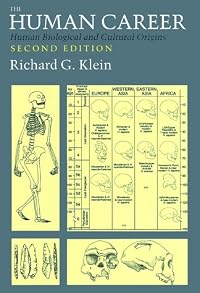
The Human Career: Human Biological and Cultural Origins
by Richard G. Klein
Prehistoric Archeology and Ecology
On This Page
Description
Described as "by far the best book of its kind" (Henry McHenry, "Evolution") and "the best introduction to the problems and data of modern palaeoanthropology yet published" (R. A. Foley, "Antiquity"), "The Human Career" has proved to be an indispensable tool in teaching human origins since its publication in 1989. This substantially revised edition retains Richard Klein's innovative approach and incorporates new findings from the past decade. "The Human Career" chronicles the evolution of show more people from the earliest primates through the emergence of fully modern humans within the past 200,000 years. Its comprehensive treatment stresses recent advances in knowledge, including, for example, ever more abundant evidence that fully modern humans originated in Africa and spread from there, replacing the Neanderthals in Europe and equally archaic people in Asia. With its coverage of both the fossil record and the archeological record over the 2.5 million years for which both are available, Klein emphasizes that human morphology and behavior evolved together. Throughout the text, Klein presents evidence for alternative points of view, but also does not hesitate to take a position. In addition to outlining the broad pattern of human evolution, "The Human Career" details the kinds of data that support this pattern, including information on archeological sites, artifacts, fossils, and methods for establishing dates in geological time. With abundant references and hundreds of illustrations, charts, and diagrams, this new edition is unparalleled in its usefulness for teaching human evolution. show lessTags
Recommendations















Member Reviews
This 1989 edition has been updated in 2000. I have not yet acquired the newer version, but even this is worthwhile for getting your feet wet on the subject of human evolution. Klein is a careful scholar, weighing evidence clearly and letting you know on what grounds he has come to his conclusions. He lays out evidence very well, and that alone makes this recommended reading, because whatever else you read on the subject, you have to understand the kinds of evidence that scientists use and how they come to conclusions from that evidence. Since this topic is a hot one, new discoveries are occurring all the time and older evidence is being reevaluated. Even so, I found Klein's chronicalling of the development of hominids into modern show more humans, very enlightening and not contradictory of newer evidence that I have read. show less
Ratings
Members
- Recently Added By
Author Information
9 Works 334 Members
Richard G. Klein is professor of anthropology and human biology at Stanford University. His books include Ice-Age Hunters of the Ukraine and (with Kathryn Cruz-Uribe) The Analysis of Animal Bones from Archeological Sites, both published by the University of Chicago Press.
Awards and Honors
Awards
Series

Classifications
- Genres
- Anthropology, Nonfiction, Science & Nature, General Nonfiction
- DDC/MDS
- 599.938 — Natural sciences & mathematics Animals Mammals Homo sapiens Genetics, sex and age characteristics, evolution Evolution
- LCC
- GN281 .K55 — Geography, Anthropology and Recreation Anthropology Anthropology Physical anthropology. Somatology Human evolution
- BISAC
Statistics
- Members
- 143
- Popularity
- 228,089
- Reviews
- 1
- Rating
- (4.11)
- Languages
- English, Italian
- Media
- Paper, Ebook
- ISBNs
- 3
- ASINs
- 2