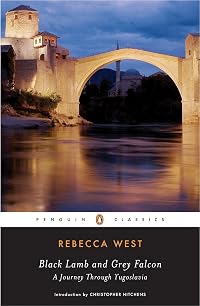
Black Lamb and Grey Falcon: A Journey through Yugoslavia
by Rebecca West
On This Page
Description
“Rebecca West’s magnum opus . . . one of the great books of our time.” —The New YorkerWritten on the brink of World War II, Rebecca West’s classic examination of the history, people, and politics of Yugoslavia illuminates a region that is still a focus of international concern. A magnificent blend of travel journal, cultural commentary, and historical insight, Black Lamb and Grey Falcon probes the troubled history of the Balkans and the uneasy relationships among its ethnic show more groups. The landscape and the people of Yugoslavia are brilliantly observed as West untangles the tensions that rule the country’s history as well as its daily life.
For more than seventy years, Penguin has been the leading publisher of classic literature in the English-speaking world. With more than 1,700 titles, Penguin Classics represents a global bookshelf of the best works throughout history and across genres and disciplines. Readers trust the series to provide authoritative texts enhanced by introductions and notes by distinguished scholars and contemporary authors, as well as up-to-date translations by award-winning translators. show less
Tags
Recommendations




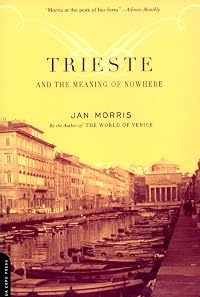
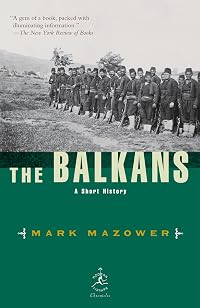

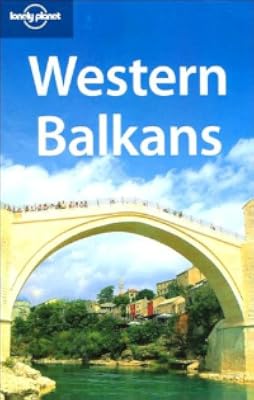

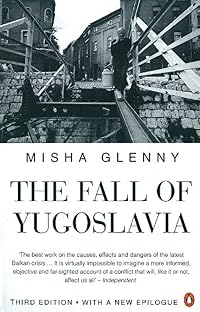

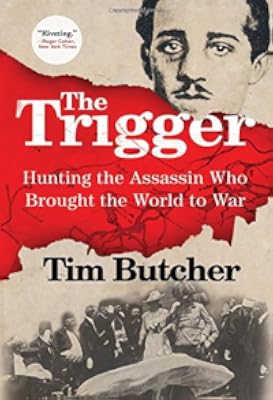
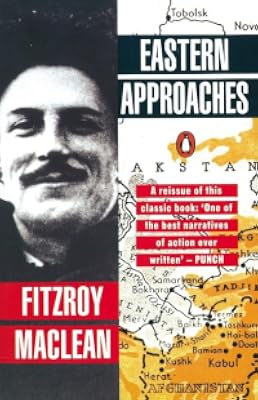
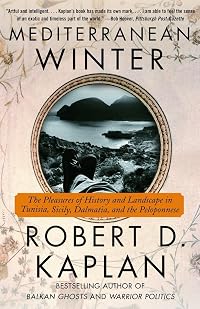
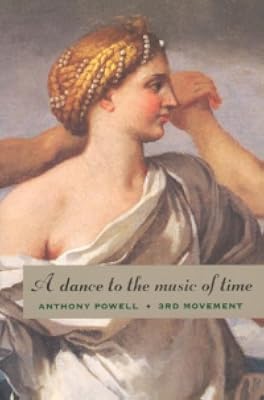
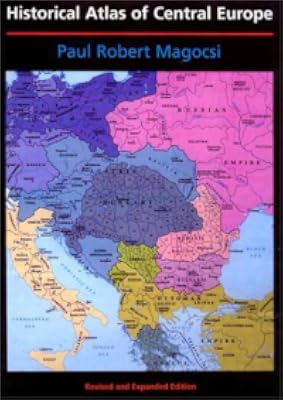

Member Recommendations

Member Reviews
This book is a monument in the English language to the Southern Slavs. It is a cornerstone of travel writing. Rebecca West loved Yugoslavia; her respect for its people and history illuminates the story. It is as topical as ever it was.
I reached the Epilogue of this wonderful book on the eve of the 2016 US election. Writing in 1941 when Yugoslavia had been over-run by Nazi Germany, West spells out the danger of mass political movements that arise from disaffected populations of industrial and urban societies. Their anger is so easily turned against the scape-goat, any available scape-goat. Slavs had been scape-goats for Turkey, Austria/Germany and Italian States for so long (sacrificial lambs). Having won a new found independence after show more centuries of sublimation, West pours out her praise for a people who chose to resist, having tasted goodness and national freedoms. show less
I reached the Epilogue of this wonderful book on the eve of the 2016 US election. Writing in 1941 when Yugoslavia had been over-run by Nazi Germany, West spells out the danger of mass political movements that arise from disaffected populations of industrial and urban societies. Their anger is so easily turned against the scape-goat, any available scape-goat. Slavs had been scape-goats for Turkey, Austria/Germany and Italian States for so long (sacrificial lambs). Having won a new found independence after show more centuries of sublimation, West pours out her praise for a people who chose to resist, having tasted goodness and national freedoms. show less
Read this in fits and starts over the course of more than 6 months. Unlike most books of this kind of formidable length, the episodic nature makes it easy to take a break every few hundred pages or so.
I’ve seen some reviews online complaining about the long-winded digressive nature of the book. I’ve always happenened to like digression, and Rebecca West is such a consumate writer that any departure from the travelogue that ostensibly makes up the backbone of the book feels like a necessary and essential piece of insight and background. West demonstrates the best kind of travel, one that in our increasingly commodified world is harder and harder to accomplish. It’s true that the kind of journey that West takes in this book is not show more only difficult but also not economically feasible for most of us; it’s also harder to find destinations genuinely different from a growing global monoculture. That said, West uses every experience during her travel through the Balkans as a jumping off point for the keenest observations on history, culture, and politics that show just how valuable traveling to a foreign land can be. Reading this book reminds me of the feeling of hyper-observance and attention to every aspect of visiting a place far away from home - I remember my first trip abroad, and the feeling that I could simply sit and fill up notebook after notebook with the insights, thrills, and insecurities of being in an alien environment. What makes Black Lamb and Grey Falcon different from some backpackers scribblings is that Rebecca West truly is one of the best to ever do it. It’s astounding the amount of research that must have gone into this book and the way it is seamlessly integrated into a narrative filled with striking detail and beautiful language. Some may claim that West’s viewpoint is dated, but I found her confidence in her assessment of cultures other than her own, even when clearly being views through her own ‘western’ biases, really refreshing and forthright. Her thoughts and feelings about her subjects are never predictable, always nuanced, so much so that I sometimes had to read a passage again just to try and figure out how she actually felt, only realize that maybe she didn’t clearly know either.
You will learn a lot from this book if you pay attention, and though it might seem meandering in the thick of it, the epilogue perfectly lays out the essential and important message of the book. The fact that it comes right at the end indicates that West was feeling out her ideas and searching for the central message of her experience in the Balkans right along with us. To be able to spend so much time with a genius, following their trains of thought as they work towards a brilliant insight is a big part of what makes this book a masterpiece. show less
I’ve seen some reviews online complaining about the long-winded digressive nature of the book. I’ve always happenened to like digression, and Rebecca West is such a consumate writer that any departure from the travelogue that ostensibly makes up the backbone of the book feels like a necessary and essential piece of insight and background. West demonstrates the best kind of travel, one that in our increasingly commodified world is harder and harder to accomplish. It’s true that the kind of journey that West takes in this book is not show more only difficult but also not economically feasible for most of us; it’s also harder to find destinations genuinely different from a growing global monoculture. That said, West uses every experience during her travel through the Balkans as a jumping off point for the keenest observations on history, culture, and politics that show just how valuable traveling to a foreign land can be. Reading this book reminds me of the feeling of hyper-observance and attention to every aspect of visiting a place far away from home - I remember my first trip abroad, and the feeling that I could simply sit and fill up notebook after notebook with the insights, thrills, and insecurities of being in an alien environment. What makes Black Lamb and Grey Falcon different from some backpackers scribblings is that Rebecca West truly is one of the best to ever do it. It’s astounding the amount of research that must have gone into this book and the way it is seamlessly integrated into a narrative filled with striking detail and beautiful language. Some may claim that West’s viewpoint is dated, but I found her confidence in her assessment of cultures other than her own, even when clearly being views through her own ‘western’ biases, really refreshing and forthright. Her thoughts and feelings about her subjects are never predictable, always nuanced, so much so that I sometimes had to read a passage again just to try and figure out how she actually felt, only realize that maybe she didn’t clearly know either.
You will learn a lot from this book if you pay attention, and though it might seem meandering in the thick of it, the epilogue perfectly lays out the essential and important message of the book. The fact that it comes right at the end indicates that West was feeling out her ideas and searching for the central message of her experience in the Balkans right along with us. To be able to spend so much time with a genius, following their trains of thought as they work towards a brilliant insight is a big part of what makes this book a masterpiece. show less
I finally finished this mother. It was given to me as a gift and I was intimidated by the heft. However, it was one of the finest books I have ever read. It is part travelog, part history, and part literature. It is one of the great books of the 20th century, a magnum opus.
A detailed history of the now Balkanized Yugoslavia up to WWII. It also features some of the finest prose ever put to paper in English. In addition it gives a delightful look into West's Easter holiday in Yugoslavia in the 1930s. By turns humorous and tragic, West also imbues it with her own idiosyncratic thoughts on history, literature, and life. She obviously loves the country and its people even as she recounts the often tragic and bloody history of the Balkans show more that continues even today. West has one of the great voices.
The book features a fine essay/introduction by the unsurpassable Christopher Hitchens that is a pleasure by itself. It is the worthiest introduction to the book I can think of. show less
A detailed history of the now Balkanized Yugoslavia up to WWII. It also features some of the finest prose ever put to paper in English. In addition it gives a delightful look into West's Easter holiday in Yugoslavia in the 1930s. By turns humorous and tragic, West also imbues it with her own idiosyncratic thoughts on history, literature, and life. She obviously loves the country and its people even as she recounts the often tragic and bloody history of the Balkans show more that continues even today. West has one of the great voices.
The book features a fine essay/introduction by the unsurpassable Christopher Hitchens that is a pleasure by itself. It is the worthiest introduction to the book I can think of. show less
I've read this book once and it is one of my favorite books ever. Rebecca West is a brilliant writer, mostly because she is completely unafraid to tell you what she thinks.
And what she thinks is amazing. She is a remarkably insightful and wise person. She reminds me of Robertson Davies: there is at least one quotable or interesting observation per chapter or even per page.
This is the best of travel writing: fascinating explorations of a place I might never go, combined with a window into a genuinely individual mind. Spend the time with Dame West - it's worth every moment.
And what she thinks is amazing. She is a remarkably insightful and wise person. She reminds me of Robertson Davies: there is at least one quotable or interesting observation per chapter or even per page.
This is the best of travel writing: fascinating explorations of a place I might never go, combined with a window into a genuinely individual mind. Spend the time with Dame West - it's worth every moment.
Writing a five-star review full of superlatives is always difficult: for people who haven’t read it yet, there’s no way any book can live up to the kind of praise that someone who loves it wants to give out. And so I really need to marshall my thoughts here, because I genuinely believe that Black Lamb and Grey Falcon is one of the three or four greatest books published in the twentieth century, and I want to make sure I present my case as well as I can. (I say ‘three or four’ just to cover myself – in the privacy of a personal conversation I’d have to admit that personally there’s nothing I’d rate over this.) This is going to be a long review, because I want to quote her in detail.
First of all, let’s acknowledge what a show more daunting prospect it is. Let’s be honest, eleven hundred pages about the Balkans sounds unpromising, and personally I doubt I would ever have read it unless I’d been travelling to Serbia and Monetenegro myself. Recommending it to people isn’t always easy, because it is certainly big, and it does contain some longueurs – but somehow they become part of its genius. There are some masterpieces which appear to be flawless, the writing of which I cannot even understand – Nabokov’s Pale Fire is one. But then there are other great works whose imperfections seem to be an intrinsic part of what makes them great, and Black Lamb is of that kind. I can understand how it was written, but the sheer depth of thinking involved staggers me.
It’s important to say what it’s not. People who criticise this book sometimes say that its politics are biased, or that recent historiography renders West’s theories about the Byzantine Empire obsolete. This is at best beside the point. The book is not a history, or a political tract: it’s a travel journal, which just happens to involve some deep thinking in several important areas. (Claims that she is ‘anti-German’ are particularly absurd – West and her husband were huge lovers of German culture. What they disliked was Germany’s political environment in the 1930s, which anyone would have to admit is fair enough.)
On the sentence-by-sentence level, her writing is exceptional in its clarity and its striking imagery, by turns witty and beautiful. ‘She was one of those widows whose majesty makes their husbands seem specially dead’, she says of one woman; and of another, ‘It is true that she was plump as an elephant, but she was so beautiful that the resemblance only served to explain what it is that male elephants feel about female elephants.’ On another occasion, after a long description of Orthodox priests chanting hymns, she concludes with extraordinary sensitivity:
If there be a God who is fount of all goodness, this is the tribute that should logically be paid to Him; if there be only goodness, it is still a logical tribute.
I melt over her description of the Islamic call to prayer:
It is a cry that holds an ultimate sadness, like the hooting of owls and the barking of foxes in night-time. The muezzins are making that plain statement of their cosmogony, and the owls and foxes are obeying the simplest need for expression; yet their cries, which they intended to mean so little, prove more conclusively than any argument that life is an occasion which justifies the hugest expenditure of pity.
What is most striking for a modern reader is how blindingly direct Rebecca is. Nowadays it’s customary for a lot of writers to distance themselves from controversial views by using disingenuous constructions like ‘Some people might say that…’ or ‘it could be argued that…’ or ‘one might suggest that…’. There is none of that here: she decides what she thinks about an issue, and says it in the most forceful way she can. Some people have taken this to mean that she has a black-and-white view of the world, but to my mind that is a disastrous misreading. Rebecca West’s understanding is very subtle, she just believes that the best way to advance an argument is to state it in its strongest form. For example, she doesn’t agree with the Islamic practice of veiling women – but she says it like this:
The veil perpetuates and renews a moment when man, being in league with death, like all creatures that must die, hated his kind for living and transmitting life, and hated woman more than himself, because she is the instrument of birth, and put his hand to the floor to find filth and plastered it on her face, to affront the breath of life in his nostrils.
It’s extremely refreshing and challenging to read arguments presented in this way. You won’t always agree with her – often you’ll disagree strongly – but you are always engaged with the prose, a two-way conversation, either yelling out in agreement or leaping out of your chair with objections. She is a visceral writer. But at this point, let me digress slightly into
A PERSONAL INTERLUDE
In the mid-2000s, I found myself lodging with a gay sexagenarian Baron who worked at a Tunbridge Wells bookshop. His baronial title had been inherited from Belgian relatives, he drank a lot of blended scotch, and he was one of the nicest people I’ve ever met. His entire house was full of books: they went from floor to ceiling in every room of the house, including the kitchen and the stairwells. A man after my own heart.
One day as we sat sipping whisky, I told him that I’d just started reading the most incredible book: ‘Black Lamb and Grey Falcon, I don’t know if you know of it….’ Nick jolted up in his chair. ‘What was that? What did you say? You’re reading Rebecca West? Well that’s – gosh. I knew her, you know….’
It turned out that she had officially opened the secondhand bookshop he used to own, and they had corresponded for a while; he’d even gone up to London with his boyfriend to have dinner with her a few times. ‘I only wish someone had Boswellized her,’ he said to me on several occasions: she was, apparently, even more brilliant and acerbic in real life than she was on paper. One of the things he pointed out to me was how extremely rare it was for a publisher to agree to bring out such a huge book on such an obscure topic in the middle of the war, during paper rationing: ‘In the end they just thought it was of such extraordinary quality that they made an exception.’
So delighted was my landlord to find that someone thirty years younger than him was enjoying this book, that when I left he pulled a 1942 first edition of it, in two volumes, from his shelves, and gave it to me as a parting gift. I kept it open on my desk as I read, and used the Canongate version for scribbling in.
THE REVIEW, CONCLUDED
It is rare to find a travel book that builds a cumulative argument, let alone an argument that can be sustained over more than a thousand pages. Ultimately what makes Black Lamb so astonishing for me is that Rebecca West uses the gifts I outlined above to probe the depths of the human condition in a very clear-sighted way. To end this review I want to look at these arguments a bit more closely – if you want to discover them for yourself, you could consider what follows to be spoilers. As West travels, Europe is on the edge of war: as she publishes, the killing is well underway. What makes humans behave like this?
It’s the sort of grandiose question that usually gets grandiose, evasive answers. But not here. West thinks long and hard about it and she is characteristically blunt in her conclusions. For her there is a systemic problem with the Christianity that underpins western culture, simply because it’s built on the idea of a human sacrifice, and that leaves us fundamentally unsure about right and wrong.
We are continually told to range ourselves with the crucified and the crucifiers, with innocence and guilt, with kind love and cruel hate. Our breasts echo for ever with the cries ‘In murdering goodness we sinned’ and ‘By murdering goodness we were saved.’ ‘The lamb is innocent and must not be killed,’ ‘The dead lamb brings us salvation,’ so we live in chaos.
She goes further than this, though. (She always goes further.) When, in Macedonia, West witnesses a lamb being sacrificed in real life, she grasps that this internal chaos mentioned above has very dark consequences for human society and conflict; indeed, for civilised nations this is a paradox that can make us want to be defeated, even when – especially when – fighting for a good cause.
We believed in our heart of hearts that life was simply this and nothing more, a man cutting the throat of a lamb on a rock to please God and obtain happiness; and when our intelligence told us that the man was performing a disgusting and meaningless act, our response was not to dismiss the idea as a nightmare, but to say, ‘Since it is wrong to be the priest and sacrifice the lamb, I will be the lamb and be sacrificed by the priest.’ We thereby set up a principle that doom was honourable for innocent things, and conceded that if we spoke of kindliness and recommended peace it was fitting that afterwards the knife should be passed across our throats. Therefore it happened again and again that when we fought well for a reasonable cause and were in sight of victory, we were filled with a sense that we were not acting in accordance with divine protocol, and turned away and sought defeat, thus betraying those who had trusted us to win them kindliness and peace.
The implications of this extraordinary passage, when it comes to war, are fully explored. West hates war, but she also hates ‘the fatuousness of such pacifism as points out the unpleasantness of war as if people had never noticed it before’.
That non-resistance paralyses the aggressor is a lie: otherwise the Jews of Germany would all be very well today.
Some causes are worth fighting for, even though doing so feels abhorrent. As far as I’m concerned, this insight has never been better expressed:
I had to be willing to fight for it even though my own cause could not fail to be repulsive to me, since the essence of civilization was disinclination to violence, and when I defended it habit would make me fear that I was betraying it.
This is the meaning of the book’s title, drawn from a Serbian fable about religious sacrifice. In the global conflict erupting around her, Rebecca West could see emerging the same impulses and psychological currents that she had been studying and thinking about for years, ebbing and flowing throughout history and crystallised in the story of Yugoslavia: because human beings are a species that have evolved just enough intelligence to know that what we do is terrible, but not enough to go beyond it; and that leaves us unable to fight for our better nature with conviction.
For we have developed enough sensibility to know that to be cruel is vile, and therefore we would not wish to be the priest whose knife made the blood spurt from the black lamb’s throat; and since we still believed the blood sacrifice to be necessary we were left with no choice, if we desired a part in the service of the good, but to be the black lamb.
I know of no other book that thinks this hard or this deeply, and where depth of thought is combined with such felicity of expression – and that’s without even considering the fact that it was written from within the heart of the maelstrom itself. Following West’s train of thought through this doorstop-sized essay is one of the biggest intellectual trips you can get from picking up a book, and everyone who can cope with the experience deserves to have it. To my mind, Black Lamb is simply unique – a thing of joy and beauty, a peerless example of applied brilliance, a dazzling masterpiece. show less
First of all, let’s acknowledge what a show more daunting prospect it is. Let’s be honest, eleven hundred pages about the Balkans sounds unpromising, and personally I doubt I would ever have read it unless I’d been travelling to Serbia and Monetenegro myself. Recommending it to people isn’t always easy, because it is certainly big, and it does contain some longueurs – but somehow they become part of its genius. There are some masterpieces which appear to be flawless, the writing of which I cannot even understand – Nabokov’s Pale Fire is one. But then there are other great works whose imperfections seem to be an intrinsic part of what makes them great, and Black Lamb is of that kind. I can understand how it was written, but the sheer depth of thinking involved staggers me.
It’s important to say what it’s not. People who criticise this book sometimes say that its politics are biased, or that recent historiography renders West’s theories about the Byzantine Empire obsolete. This is at best beside the point. The book is not a history, or a political tract: it’s a travel journal, which just happens to involve some deep thinking in several important areas. (Claims that she is ‘anti-German’ are particularly absurd – West and her husband were huge lovers of German culture. What they disliked was Germany’s political environment in the 1930s, which anyone would have to admit is fair enough.)
On the sentence-by-sentence level, her writing is exceptional in its clarity and its striking imagery, by turns witty and beautiful. ‘She was one of those widows whose majesty makes their husbands seem specially dead’, she says of one woman; and of another, ‘It is true that she was plump as an elephant, but she was so beautiful that the resemblance only served to explain what it is that male elephants feel about female elephants.’ On another occasion, after a long description of Orthodox priests chanting hymns, she concludes with extraordinary sensitivity:
If there be a God who is fount of all goodness, this is the tribute that should logically be paid to Him; if there be only goodness, it is still a logical tribute.
I melt over her description of the Islamic call to prayer:
It is a cry that holds an ultimate sadness, like the hooting of owls and the barking of foxes in night-time. The muezzins are making that plain statement of their cosmogony, and the owls and foxes are obeying the simplest need for expression; yet their cries, which they intended to mean so little, prove more conclusively than any argument that life is an occasion which justifies the hugest expenditure of pity.
What is most striking for a modern reader is how blindingly direct Rebecca is. Nowadays it’s customary for a lot of writers to distance themselves from controversial views by using disingenuous constructions like ‘Some people might say that…’ or ‘it could be argued that…’ or ‘one might suggest that…’. There is none of that here: she decides what she thinks about an issue, and says it in the most forceful way she can. Some people have taken this to mean that she has a black-and-white view of the world, but to my mind that is a disastrous misreading. Rebecca West’s understanding is very subtle, she just believes that the best way to advance an argument is to state it in its strongest form. For example, she doesn’t agree with the Islamic practice of veiling women – but she says it like this:
The veil perpetuates and renews a moment when man, being in league with death, like all creatures that must die, hated his kind for living and transmitting life, and hated woman more than himself, because she is the instrument of birth, and put his hand to the floor to find filth and plastered it on her face, to affront the breath of life in his nostrils.
It’s extremely refreshing and challenging to read arguments presented in this way. You won’t always agree with her – often you’ll disagree strongly – but you are always engaged with the prose, a two-way conversation, either yelling out in agreement or leaping out of your chair with objections. She is a visceral writer. But at this point, let me digress slightly into
A PERSONAL INTERLUDE
In the mid-2000s, I found myself lodging with a gay sexagenarian Baron who worked at a Tunbridge Wells bookshop. His baronial title had been inherited from Belgian relatives, he drank a lot of blended scotch, and he was one of the nicest people I’ve ever met. His entire house was full of books: they went from floor to ceiling in every room of the house, including the kitchen and the stairwells. A man after my own heart.
One day as we sat sipping whisky, I told him that I’d just started reading the most incredible book: ‘Black Lamb and Grey Falcon, I don’t know if you know of it….’ Nick jolted up in his chair. ‘What was that? What did you say? You’re reading Rebecca West? Well that’s – gosh. I knew her, you know….’
It turned out that she had officially opened the secondhand bookshop he used to own, and they had corresponded for a while; he’d even gone up to London with his boyfriend to have dinner with her a few times. ‘I only wish someone had Boswellized her,’ he said to me on several occasions: she was, apparently, even more brilliant and acerbic in real life than she was on paper. One of the things he pointed out to me was how extremely rare it was for a publisher to agree to bring out such a huge book on such an obscure topic in the middle of the war, during paper rationing: ‘In the end they just thought it was of such extraordinary quality that they made an exception.’
So delighted was my landlord to find that someone thirty years younger than him was enjoying this book, that when I left he pulled a 1942 first edition of it, in two volumes, from his shelves, and gave it to me as a parting gift. I kept it open on my desk as I read, and used the Canongate version for scribbling in.
THE REVIEW, CONCLUDED
It is rare to find a travel book that builds a cumulative argument, let alone an argument that can be sustained over more than a thousand pages. Ultimately what makes Black Lamb so astonishing for me is that Rebecca West uses the gifts I outlined above to probe the depths of the human condition in a very clear-sighted way. To end this review I want to look at these arguments a bit more closely – if you want to discover them for yourself, you could consider what follows to be spoilers. As West travels, Europe is on the edge of war: as she publishes, the killing is well underway. What makes humans behave like this?
It’s the sort of grandiose question that usually gets grandiose, evasive answers. But not here. West thinks long and hard about it and she is characteristically blunt in her conclusions. For her there is a systemic problem with the Christianity that underpins western culture, simply because it’s built on the idea of a human sacrifice, and that leaves us fundamentally unsure about right and wrong.
We are continually told to range ourselves with the crucified and the crucifiers, with innocence and guilt, with kind love and cruel hate. Our breasts echo for ever with the cries ‘In murdering goodness we sinned’ and ‘By murdering goodness we were saved.’ ‘The lamb is innocent and must not be killed,’ ‘The dead lamb brings us salvation,’ so we live in chaos.
She goes further than this, though. (She always goes further.) When, in Macedonia, West witnesses a lamb being sacrificed in real life, she grasps that this internal chaos mentioned above has very dark consequences for human society and conflict; indeed, for civilised nations this is a paradox that can make us want to be defeated, even when – especially when – fighting for a good cause.
We believed in our heart of hearts that life was simply this and nothing more, a man cutting the throat of a lamb on a rock to please God and obtain happiness; and when our intelligence told us that the man was performing a disgusting and meaningless act, our response was not to dismiss the idea as a nightmare, but to say, ‘Since it is wrong to be the priest and sacrifice the lamb, I will be the lamb and be sacrificed by the priest.’ We thereby set up a principle that doom was honourable for innocent things, and conceded that if we spoke of kindliness and recommended peace it was fitting that afterwards the knife should be passed across our throats. Therefore it happened again and again that when we fought well for a reasonable cause and were in sight of victory, we were filled with a sense that we were not acting in accordance with divine protocol, and turned away and sought defeat, thus betraying those who had trusted us to win them kindliness and peace.
The implications of this extraordinary passage, when it comes to war, are fully explored. West hates war, but she also hates ‘the fatuousness of such pacifism as points out the unpleasantness of war as if people had never noticed it before’.
That non-resistance paralyses the aggressor is a lie: otherwise the Jews of Germany would all be very well today.
Some causes are worth fighting for, even though doing so feels abhorrent. As far as I’m concerned, this insight has never been better expressed:
I had to be willing to fight for it even though my own cause could not fail to be repulsive to me, since the essence of civilization was disinclination to violence, and when I defended it habit would make me fear that I was betraying it.
This is the meaning of the book’s title, drawn from a Serbian fable about religious sacrifice. In the global conflict erupting around her, Rebecca West could see emerging the same impulses and psychological currents that she had been studying and thinking about for years, ebbing and flowing throughout history and crystallised in the story of Yugoslavia: because human beings are a species that have evolved just enough intelligence to know that what we do is terrible, but not enough to go beyond it; and that leaves us unable to fight for our better nature with conviction.
For we have developed enough sensibility to know that to be cruel is vile, and therefore we would not wish to be the priest whose knife made the blood spurt from the black lamb’s throat; and since we still believed the blood sacrifice to be necessary we were left with no choice, if we desired a part in the service of the good, but to be the black lamb.
I know of no other book that thinks this hard or this deeply, and where depth of thought is combined with such felicity of expression – and that’s without even considering the fact that it was written from within the heart of the maelstrom itself. Following West’s train of thought through this doorstop-sized essay is one of the biggest intellectual trips you can get from picking up a book, and everyone who can cope with the experience deserves to have it. To my mind, Black Lamb is simply unique – a thing of joy and beauty, a peerless example of applied brilliance, a dazzling masterpiece. show less
Hatred comes before love, and gives the hater strange and delicious pleasures, but its works are short-lived; the head is cut from the body before the time of natural death, the lie is told to frustrate the other rogue’s plan before it comes to fruit. Sooner or later society tires of making a mosaic of these evil fragments; and even if the rule of hatred lasts some centuries it occupies no place in real time, it is a hiatus in reality, and not the vastest material thefts, not world wide raids on mines and granaries, can give it substance.
Throughout my teetering adulthood I often assume and maintain numerous guises. Oh, I am a Southerner, I understand, I'm Irish, It is really for us Intellectuals to ponder, well, you might know if you show more were a Manchester United fan like I am. So it goes. These aren't fictions, as such, they simply are whiffs of reality rather than constitutional components. This flaccid list could also include I'm a Serb by marriage. I truly feel that I am but I can relate and certainly empathize. The principal reason I never read this book in the former Yugoslavia was that I feared I would be the everybore, asking questions about West's observations, as asking whether so-and-so spa was still in existence and could we go there, that sort of thing. When my wife and I were married 12 years ago I knew about 200 words in Serbian, now I likely know about 150. There isn't constant reinforcement for such in Indiana.
Life, however, is never as simple as that, and human beings rarely so potent.
Rebecca West traveled to Yugoslavia with her husband in the spring of 1937. She had been by herself the year before and returned to document the fascinating land as the dark clouds of war rumbled into view. There isn't a great deal of judgment about races or nations in these 1200 pages. That is refreshing. The pair arrive for a snowy Easter in Dubrovnik and travel to Zagreb and then Sarajevo. The piece here of Gavrilo Princip
and Franz Ferdinand is simply stunning. Then it is on to Belgrade and then to Macedonia, Kosovo (where the fateful battle of 1389 is explored in gorgeous detail) and finally Montenegro. there are a dozens of short sections detailing towns, vineyards and monasteries. The conceptual ambivalence of Roman rule is considered. Did the viaducts and roads outweigh the hegemony? Did the survival of Millennialist cults betray the fate of present day Bosnia? There is an exciting admixture of poetry and philosophy in these historical digressions, how the aesthetic sparkle of the Byzantines was allowed to sleep under 400 years of Ottoman degradation. Along that road, was the Turkish empire really so vacuous?
The narrative is propelled by the foil of their friend Constantine, a poet and Yugoslav official. He's a Serbian Jew married to Gerda, an ethnic German with a loathing of Slavs, the recriminations of Versailles and, well, apparently Rebecca West. This tension keeps the discussions and observations personal but the reader soon tires of Gerda's shrieking. I have been on bad road trips. I would've cut and ran. I finished the book earlier today and I remain afraid to check online for the fate of Constantine. show less
Throughout my teetering adulthood I often assume and maintain numerous guises. Oh, I am a Southerner, I understand, I'm Irish, It is really for us Intellectuals to ponder, well, you might know if you show more were a Manchester United fan like I am. So it goes. These aren't fictions, as such, they simply are whiffs of reality rather than constitutional components. This flaccid list could also include I'm a Serb by marriage. I truly feel that I am but I can relate and certainly empathize. The principal reason I never read this book in the former Yugoslavia was that I feared I would be the everybore, asking questions about West's observations, as asking whether so-and-so spa was still in existence and could we go there, that sort of thing. When my wife and I were married 12 years ago I knew about 200 words in Serbian, now I likely know about 150. There isn't constant reinforcement for such in Indiana.
Life, however, is never as simple as that, and human beings rarely so potent.
Rebecca West traveled to Yugoslavia with her husband in the spring of 1937. She had been by herself the year before and returned to document the fascinating land as the dark clouds of war rumbled into view. There isn't a great deal of judgment about races or nations in these 1200 pages. That is refreshing. The pair arrive for a snowy Easter in Dubrovnik and travel to Zagreb and then Sarajevo. The piece here of Gavrilo Princip
and Franz Ferdinand is simply stunning. Then it is on to Belgrade and then to Macedonia, Kosovo (where the fateful battle of 1389 is explored in gorgeous detail) and finally Montenegro. there are a dozens of short sections detailing towns, vineyards and monasteries. The conceptual ambivalence of Roman rule is considered. Did the viaducts and roads outweigh the hegemony? Did the survival of Millennialist cults betray the fate of present day Bosnia? There is an exciting admixture of poetry and philosophy in these historical digressions, how the aesthetic sparkle of the Byzantines was allowed to sleep under 400 years of Ottoman degradation. Along that road, was the Turkish empire really so vacuous?
The narrative is propelled by the foil of their friend Constantine, a poet and Yugoslav official. He's a Serbian Jew married to Gerda, an ethnic German with a loathing of Slavs, the recriminations of Versailles and, well, apparently Rebecca West. This tension keeps the discussions and observations personal but the reader soon tires of Gerda's shrieking. I have been on bad road trips. I would've cut and ran. I finished the book earlier today and I remain afraid to check online for the fate of Constantine. show less
I found this a really frustrating, and at times infuriating book. West does what I normally really like in a travel book, which is drop in bits of history relating to the particular place being visited, but whereas someone like Patrick Leigh Fermor got the balance really well, and I never lost my sense of the place he was visiting at the time and the history enhanced the travelogue, here the travel aspect is often utterly swamped by the history. I felt throughout my read that what this book really needed was a good (and ruthless!) editor, because it was just Way Too Long. Although in parts her descriptive writing of the places they visit is really beautiful (I really want to visit the Dalmatian islands, Macedonia and Montenegro now), in show more other parts I had no sense whatsoever of what the place was like, because of the volumes of history attached to that place. That is especially true of Sarajevo (vast reams on the decades leading up to the assassination of the Archduke Franz Ferdinand, and what happened to every little bit player afterwards) and Belgrade (pretty much a centuries-long overview of the Serbian monarchy), where there was almost no description of the place, but pages and pages about the history. When I was about half way through it suddenly occurred to me that if the book had been subtitled "A Journey Through Yugoslavia and its History" it would have bothered me much less, because I would have had more idea what to expect before I started, and after that I was less wound up by it (although I still think a good chunk of it could have been edited out).
Another really frustrating thing about it was that the author, for all her support of the suffragettes (she was a supporter of Emmeline, though not Christabel, Pankhurst) included an awful lot of gender essentialism/weaker sex stuff which I got a bit cross with, along with some most definite ethnic and national prejudices (she was not a fan of the Turks or the Germans), and a handful of instances of 'of its time' use of racist language (specifically the n-word). There was also a lot of unnecessary speculation about individual people they came across - for example during a church service she would describe one particular person in the congregation and speculate about the weight of history that was weighing down on this random woman's thoughts and personality, even though they didn't exchange so much as a glance, and she was just as likely spending half of the service thinking about what to make for dinner. There were huge bits of that sort of thing that just needed some ruthless editing.
Throughout nearly all of the journey they were accompanied by a man called Constantine (a pseudonym), a well-educated poet and Jewish Serb nationalist who was now employed by the Yugoslav authorities. Constantine was such an over-bearing presence that I found him really quite stifling at times, as he just knew everything about everything, although at other times he was utterly charming. About a third of the way through the book, the party is joined by Constantine's awful German wife Gerda, who as well as being openly anti-Slav and anti-Semitic (both of which caused obvious tensions with her husband) was also strongly dismissive of everything and everyone she met, including the author and her husband, to the point of shocking rudeness, and if Constantine's presence had been stifling at times, Gerda's was just constantly toxic and oppressive. After what in reality was 2 weeks, but reading felt like 2 years, she fell out with everyone sufficiently to get back on a train to Belgrade in a huff, and I think my sigh of relief was barely less heartfelt than the author's.
The book ends with a (long, obviously) Epilogue which starts off with their last day in Yugoslavia before heading back to Budapest, but then quickly moves on to sum up all the history again, and brings it up to date (the book was published in 1941, so obviously the menace that was sometimes hinted at during the 1937 trip was fully out in the open by then). I don't know what it is about Epilogues, but I felt similarly about this one to the one in "War and Peace", which I similarly skimmed. It was an exhausting end to an exhausting book.
So why did I persevere with it? Because, despite all my annoyance and frustration with it, and my longing for large chunks of it to be cut out, every so often she would drop in a turn of phrase so perfect that it was just sublime. In particular, I absolutely loved her take on Orthodox Christianity (as opposed to Protestantism and Catholicism), and felt that she had really captured the essence of Orthodoxy in her description of its basic premise and theology. Some of her descriptions of places, when they weren't swamped with the discussion of history, were beautifully evocative, and I felt like I was there. There was enough of that (plus my bloody-mindedness that I wasn't going to let it defeat me!) to keep me going, and at the end I am really glad I read it. But I'm also really glad I finished it! show less
Another really frustrating thing about it was that the author, for all her support of the suffragettes (she was a supporter of Emmeline, though not Christabel, Pankhurst) included an awful lot of gender essentialism/weaker sex stuff which I got a bit cross with, along with some most definite ethnic and national prejudices (she was not a fan of the Turks or the Germans), and a handful of instances of 'of its time' use of racist language (specifically the n-word). There was also a lot of unnecessary speculation about individual people they came across - for example during a church service she would describe one particular person in the congregation and speculate about the weight of history that was weighing down on this random woman's thoughts and personality, even though they didn't exchange so much as a glance, and she was just as likely spending half of the service thinking about what to make for dinner. There were huge bits of that sort of thing that just needed some ruthless editing.
Throughout nearly all of the journey they were accompanied by a man called Constantine (a pseudonym), a well-educated poet and Jewish Serb nationalist who was now employed by the Yugoslav authorities. Constantine was such an over-bearing presence that I found him really quite stifling at times, as he just knew everything about everything, although at other times he was utterly charming. About a third of the way through the book, the party is joined by Constantine's awful German wife Gerda, who as well as being openly anti-Slav and anti-Semitic (both of which caused obvious tensions with her husband) was also strongly dismissive of everything and everyone she met, including the author and her husband, to the point of shocking rudeness, and if Constantine's presence had been stifling at times, Gerda's was just constantly toxic and oppressive. After what in reality was 2 weeks, but reading felt like 2 years, she fell out with everyone sufficiently to get back on a train to Belgrade in a huff, and I think my sigh of relief was barely less heartfelt than the author's.
The book ends with a (long, obviously) Epilogue which starts off with their last day in Yugoslavia before heading back to Budapest, but then quickly moves on to sum up all the history again, and brings it up to date (the book was published in 1941, so obviously the menace that was sometimes hinted at during the 1937 trip was fully out in the open by then). I don't know what it is about Epilogues, but I felt similarly about this one to the one in "War and Peace", which I similarly skimmed. It was an exhausting end to an exhausting book.
So why did I persevere with it? Because, despite all my annoyance and frustration with it, and my longing for large chunks of it to be cut out, every so often she would drop in a turn of phrase so perfect that it was just sublime. In particular, I absolutely loved her take on Orthodox Christianity (as opposed to Protestantism and Catholicism), and felt that she had really captured the essence of Orthodoxy in her description of its basic premise and theology. Some of her descriptions of places, when they weren't swamped with the discussion of history, were beautifully evocative, and I felt like I was there. There was enough of that (plus my bloody-mindedness that I wasn't going to let it defeat me!) to keep me going, and at the end I am really glad I read it. But I'm also really glad I finished it! show less
Members
- Recently Added By
Published Reviews
ThingScore 88
Amid the chaos, however, she also found poetry, rooted in the legends of saints and warriors of Serbia's Byzantine beginnings. . . . It was a vision that some criticized as more poetry than history, but many readers, particularly in 1941 when the book was published in America, must have been stirred by it.
added by christiguc
In two almost incredibly full-packed volumes one of the most gifted and searching of modern English novelists and critics has produced not only the magnification and intensification of the travel book form, but, one may say, its apotheosis. Rebecca West's "Journey Through Yugoslavia" is carried out with tireless percipience, nourished from almost bewildering erudition, chronicled with a show more thoughtfulness itself fervent and poetic; and it explores the many-faceted being of Yugoslavia -- its cities and villages, its history and ancient custom, its people and its soul, its meaning in our world. show less
added by christiguc
Lists

Best of Travel Narratives
142 works; 28 members

Best Journalistic Travel
14 works; 4 members

Adventure Travel & Exploration In Europe
18 works; 3 members

Modern Library 100 Best Nonfiction Books
100 works; 8 members

Hidden Classics
73 works; 15 members

Blue Pyramid 1,276 Best Books of All Time
1,248 works; 32 members

Trinity College Booklist (1951): Class Five, Travel and Geography
52 works; 2 members

KIB Non-Fiction Book Cloud
41 works; 1 member

Female Author
1,234 works; 67 members

Books about the Balkans
19 works; 2 members

Mustich's 1000 Books to Read Before You Die: A Life Changing List
1,001 works; 20 members

Sense of place
156 works; 13 members

A Ukraine Reading List
129 works; 91 members
Author Information

48+ Works 8,578 Members
Taking her name from one of Henrik Ibsen's strong-minded women, Rebecca West was a politically and socially active feminist all her long life. She had an intense 10-year affair with H.G. Wells, with whom she had a son. A brilliant and versatile novelist, critic, essayist, and political commentator, West's greatest literary achievement is perhaps show more her travel diary, Black Lamb and Grey Falcon: A Journey through Yugoslavia (1942). Five years in the writing, it is the story of an Easter trip that she and her husband, British banker Henry Maxwell Andrews (whom she had married in 1930), made through Yugoslavia in 1937. A historical narrative with excellent reporting, it is essentially an analysis of Western culture. During World War II, she superintended British broadcast talks to Yugoslavia. Her remarkable reports of the treason trials of Lord Haw and John Amery appeared first in the New Yorker and are included with other stories about traitors in The Meaning of Treason (1947), which was expanded to deal with traitors and defectors since World War II as The New Meaning of Treason (1964). The Birds Fall Down (1966), which was a bestseller, is the story of a young Englishwoman caught in the grip of Russian terrorists. From a true story told to her more than half a century ago by the sister of Ford Madox Ford (who had heard it from her Russian husband), West "created a rich and instructive spy thriller, which contains an immense amount of brilliantly distributed information about the ideologies of the time, the rituals of the Russian Orthodox Church, the conflicts of customs, belief, and temperament between Russians and Western Europeans, the techniques of espionage and counter-espionage, and the life of exiles in Paris" (New Yorker). Unlike that of her more famous contemporaries, her fiction is stylistically and structurally conventional, but it effectively details the evolution of daily life amid the backdrop of such historical disasters as the world wars. Her critical works include Arnold Bennett Himself, Henry James (1916), Strange Necessity: Essays and Reviews, and The Court and the Castle (1957), a study of political and religious ideas in imaginative literature. In 1949, she was made a Dame Commander of the Order of the British Empire. (Bowker Author Biography) show less
Some Editions
Awards and Honors
Notable Lists
Series
Belongs to Publisher Series
Work Relationships
Contains
Is abridged in
Has as a student's study guide
Common Knowledge
- Canonical title
- Black Lamb and Grey Falcon: A Journey through Yugoslavia
- Original title
- Black Lamb and Grey Falcon
- Original publication date
- 1941
- People/Characters
- Rebecca West
- Important places
- Serbia; Croatia; Macedonia; Albania; Yugoslavia; Balkans
- Dedication
- TO MY FRIENDS IN YUGOSLAVIA, WHO ARE NOW ALL DEAD OR ENSLAVED
Καὶ τὴν ποθεινὴν πατρίδα παράσχου αὐτοῖς,
Παραδείσου πάλιν ποιῶν πολίτας αὐτÎ... (show all)¿ύς.
Grant to them the Fatherland of their desire,
and make them again citizens of Paradise. - First words
- I raised myself on my elbow and called through he open door into the other wagon-lit: "My dear, I know I have inconvenienced you terribly by making you take your holiday now, and I know you did not really want to come to Yug... (show all)oslavia at all.
- Last words
- (Click to show. Warning: May contain spoilers.)The tram drivers drove very slowly, and the people were able to throw down their flowers on the spot where King Alexander of Yugoslavia had been killed.
- Original language*
- Inglés
*Some information comes from Common Knowledge in other languages. Click "Edit" for more information.
Classifications
- Genres
- Travel, Nonfiction, General Nonfiction, Biography & Memoir
- DDC/MDS
- 914.970421 — History & geography Geography & travel Geography of and travel in Europe Other European Countries Serbia, Croatia, Slovenia, Bosnia and Hercegovina, Montenegro, North Macedonia; Yugolavia 1918-1991
- LCC
- DR1221 .R43 .B55 — History of Europe, Asia, Africa and Oceania Balkan Peninsula History of Balkan Peninsula Yugoslavia Description and travel
- BISAC
Statistics
- Members
- 1,940
- Popularity
- 11,027
- Reviews
- 29
- Rating
- (4.12)
- Languages
- 5 — English, French, German, Italian, Spanish
- Media
- Paper, Ebook
- ISBNs
- 24
- UPCs
- 1
- ASINs
- 37