On This Page
Description
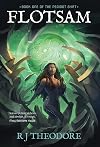
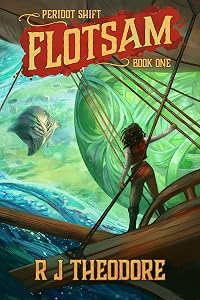
Captain Talis just wants to keep her airship crew from starving, and maybe scrape up enough cash for some badly needed repairs. When an anonymous client offers a small fortune to root through a pile of atmospheric wreckage, it seems like an easy payday. The job yields an ancient ring, a forbidden secret, and a host of deadly enemies.Now on the run from cultists with powerful allies, Talis needs to unload the ring as quickly as possible. Her desperate search for a buyer and the fallout from show more her discovery leads to a planetary battle between a secret society, alien forces, and even the gods themselves.Talis and her crew have just one desperate chance to make things right before their potential big score destroys them all. show lessTags
Recommendations





















Member Recommendations

Member Reviews
This series has a really interesting setting, and exactly how it got that way is something of a mystery that we learn more about over the course of the book. The setting reminds me a little bit of the Lady Blackbird RPG (no idea if that's a coincidence), with the airships traveling between islands and the heavy imperial presence. The protagonist and her crew are all really great characters, as is Scrimshaw the alien who they take on later . Talis is definitely a protagonist in the "means well but constantly keeps messing up" mold, but she grows a lot over the course of the story.
I love that the world of Peridot has multiple cultures and religions -- we got a close-up look at two of them, and I'm hoping we'll see more in the next couple show more books. And there are multiple queer main characters! And I love a scrappy pirate crew (although Talis really needs to step it up as a captain)! And then there's theultra-powerful naked robot woman who is also kind of the soul of the planet ? Cool! show less
I love that the world of Peridot has multiple cultures and religions -- we got a close-up look at two of them, and I'm hoping we'll see more in the next couple show more books. And there are multiple queer main characters! And I love a scrappy pirate crew (although Talis really needs to step it up as a captain)! And then there's the
Normally, I am not a scifi reader at all, but this combination of scifi, steampunk, and space opera was very engaging for me and I was pleasantly surprised at how readable it is. It is funny, the character development felt natural, the pacing felt just right, and the world is unusual enough that it is intriguing but not so unusual that it leaves you feeling confused and left behind. Once you get into the rhythm of the writing, the author's style is refreshing and it felt very "clean" in terms of efficiency; meaning, there are descriptions of characters, scenery, fighting scenes, etc., but I felt like every word counted and nothing was too flowery or ornate. Oh, and I love the glossary at the end. I am excited to see where things go with show more this series! show less
This review and others posted over at my blog.
Do you like airships, steampunk, aliens, sky pirates, cults and otherworldly beings? Then probably you should read this book because it’s a lot of fun.
I think mixing aliens, technology (both of the “modern” and steampunk variety) and magic is a tricky recipe to get right and Theodore succeeded.
From what I can tell, the world of Peridot is a fragmented planet, held together with breathable air thanks to the power of five gods. After the Cataclysm, the gods managed to save the planet and create their own unique races to populate it. These races, named for their creators, populate the islands of Peridot and navigate by way of airships. Newly arrived aliens, the Yu’Nyun, have come to show more explore the planet and research life on Peridot. Their ships are far more advanced than any of the fleets of the planet, but the race seems peaceful, only interested in history and obscure artifacts.
I did struggle to imagine Peridot, but I think I got the gist of it. Most of the book takes place on airships anyway, so that was much easier to picture. Amid airships and pre-Cataclysm ‘tronics, there are hints of the alchemical arts, as well as the power the gods possess. All these elements combined to make an interesting world.
Enter Talis and her small crew, Sophie, Tisker and Dug. The small crew allowed readers to get a good sense of each character and their history throughout the story, rather than info-dumping or too many underdeveloped characters. I enjoyed following Talis as she struggled, sometimes due to her own actions, because she was trying to find a way to provide for herself and her crew. Her motivations were clear and understandable – even amidst the chaos later in the book, she’s still trying to find a way to do right by her crew, who really is her family.
Theodore created a detailed world and I think she found the right balance between showing enough and leaving more to be revealed in the next books. We see a great deal of one of the gods, Onaya Bone, including some of her powers and a look into her temple. I loved that the gods are living beings, present (somewhat anyway) in the lives of those they created – they weren’t just an abstract idea or something long gone. We’re also given information on some of the races; there’s Cutter folk who are the main power in Peridot and come across as your garden variety humans, though many have prayerlocks (I thought of them as dreadlocks) used to invoke the blessing of their god and Bone folk who have feathers mixed in with their hair and seem to be built to be warriors.
We do get a bit about the Vein who are blind, have four arms and are possibly psychic, the Breakers who seem to be built sort of like walrus, and the Rakkar who have chitin, armor-like plates on their skin. I hope that Theodore delves more into the lives of those races in her next book.
Oh, and how could I forget to mention BLOOD DRINKING FLYING SKYMERMS! These are my favorite creatures ever! They live inside storms in the sky and prey on ships who aren’t protected and I need more of them in my life, stat! Can someone make some fan art of that?
Theodore also helpfully provides a glossary in the back that gives more details about locations, characters, the gods and their races. I found the information on the five races (and the aliens) to be especially helpful. Had I known this existed when I started reading, I would have referenced it. Instead I tried to take notes on my phone every time new info was given about a specific race.
My issues with the book are small and mostly nitpicky. As I mentioned, I did have trouble imagining the physical geography of the planet, but it was a visual (well, mental) issue and it didn’t really affect the story for me. I also noticed a few phrases that were used in back to back sentences, like “a testament to” and “little more than.” They pulled me out of the story for a moment because of the repetition. I had a similar issue with fragmented sentences. I can’t quite explain, but sometimes I would have to go back and reread a sentence or two prior because I was confused about who or what the subject of the sentence was. Again, not a huge deal. One final gripe is that Theodore describes the smell of a room with scenes of “heavy spices, sand and feathers.” What even? I’ll give her the benefit of the doubt and let sand represent heat (even though you really can’t smell heat, I think I know what she was going for) but what on earth to feathers smell like? And if the spices are heavy would you even smell the sand and feathers?
Again, these are little issues and didn’t deter me from truly enjoying this book. I was fully immersed in the world, I cared about the characters and I’m eager for the next books! Not to mention, the cover is lovely and there are some drawings inside by the author! I highly recommend if you’re looking for a magical, high-tech, steampunk adventure. Skymerms, guys – skymerms! show less
Do you like airships, steampunk, aliens, sky pirates, cults and otherworldly beings? Then probably you should read this book because it’s a lot of fun.
I think mixing aliens, technology (both of the “modern” and steampunk variety) and magic is a tricky recipe to get right and Theodore succeeded.
From what I can tell, the world of Peridot is a fragmented planet, held together with breathable air thanks to the power of five gods. After the Cataclysm, the gods managed to save the planet and create their own unique races to populate it. These races, named for their creators, populate the islands of Peridot and navigate by way of airships. Newly arrived aliens, the Yu’Nyun, have come to show more explore the planet and research life on Peridot. Their ships are far more advanced than any of the fleets of the planet, but the race seems peaceful, only interested in history and obscure artifacts.
I did struggle to imagine Peridot, but I think I got the gist of it. Most of the book takes place on airships anyway, so that was much easier to picture. Amid airships and pre-Cataclysm ‘tronics, there are hints of the alchemical arts, as well as the power the gods possess. All these elements combined to make an interesting world.
Enter Talis and her small crew, Sophie, Tisker and Dug. The small crew allowed readers to get a good sense of each character and their history throughout the story, rather than info-dumping or too many underdeveloped characters. I enjoyed following Talis as she struggled, sometimes due to her own actions, because she was trying to find a way to provide for herself and her crew. Her motivations were clear and understandable – even amidst the chaos later in the book, she’s still trying to find a way to do right by her crew, who really is her family.
Theodore created a detailed world and I think she found the right balance between showing enough and leaving more to be revealed in the next books. We see a great deal of one of the gods, Onaya Bone, including some of her powers and a look into her temple. I loved that the gods are living beings, present (somewhat anyway) in the lives of those they created – they weren’t just an abstract idea or something long gone. We’re also given information on some of the races; there’s Cutter folk who are the main power in Peridot and come across as your garden variety humans, though many have prayerlocks (I thought of them as dreadlocks) used to invoke the blessing of their god and Bone folk who have feathers mixed in with their hair and seem to be built to be warriors.
We do get a bit about the Vein who are blind, have four arms and are possibly psychic, the Breakers who seem to be built sort of like walrus, and the Rakkar who have chitin, armor-like plates on their skin. I hope that Theodore delves more into the lives of those races in her next book.
Oh, and how could I forget to mention BLOOD DRINKING FLYING SKYMERMS! These are my favorite creatures ever! They live inside storms in the sky and prey on ships who aren’t protected and I need more of them in my life, stat! Can someone make some fan art of that?
Theodore also helpfully provides a glossary in the back that gives more details about locations, characters, the gods and their races. I found the information on the five races (and the aliens) to be especially helpful. Had I known this existed when I started reading, I would have referenced it. Instead I tried to take notes on my phone every time new info was given about a specific race.
My issues with the book are small and mostly nitpicky. As I mentioned, I did have trouble imagining the physical geography of the planet, but it was a visual (well, mental) issue and it didn’t really affect the story for me. I also noticed a few phrases that were used in back to back sentences, like “a testament to” and “little more than.” They pulled me out of the story for a moment because of the repetition. I had a similar issue with fragmented sentences. I can’t quite explain, but sometimes I would have to go back and reread a sentence or two prior because I was confused about who or what the subject of the sentence was. Again, not a huge deal. One final gripe is that Theodore describes the smell of a room with scenes of “heavy spices, sand and feathers.” What even? I’ll give her the benefit of the doubt and let sand represent heat (even though you really can’t smell heat, I think I know what she was going for) but what on earth to feathers smell like? And if the spices are heavy would you even smell the sand and feathers?
Again, these are little issues and didn’t deter me from truly enjoying this book. I was fully immersed in the world, I cared about the characters and I’m eager for the next books! Not to mention, the cover is lovely and there are some drawings inside by the author! I highly recommend if you’re looking for a magical, high-tech, steampunk adventure. Skymerms, guys – skymerms! show less
Interesting setting, but lacking believably. A cloud world with a layer of crushed history from when the gods ripped it apart. Forbidden trinkets can be salvaged if you're quiet quick and able. Our tolerant captain is, with a crew mixed from the five races the gods created (reassuringly not based on standard fantasy tropes). She picks up one trinket too many, and discovers some of her deals aren't as clever as she thought. And then the arrival of aliens throws everything into the mix.
A very steampunk setting with hot air balloons of various designs being the main transport everywhere among few scattered floating 'lands' practicality seems to have been forgotten - basics like fuel etc. At the same time the author tries to keep a show more fingertip on physics, and it's probably better if they'd just abandoned all pretense at caring because none of it makes much sense. It's not clear how much power the gods have or had or what maintains it all - especially as some of that initial power seems to have been usurped into a being that doesn't quite have enough power to be a god themselves. show less
A very steampunk setting with hot air balloons of various designs being the main transport everywhere among few scattered floating 'lands' practicality seems to have been forgotten - basics like fuel etc. At the same time the author tries to keep a show more fingertip on physics, and it's probably better if they'd just abandoned all pretense at caring because none of it makes much sense. It's not clear how much power the gods have or had or what maintains it all - especially as some of that initial power seems to have been usurped into a being that doesn't quite have enough power to be a god themselves. show less
Read on my blog.
LGBTQAI : I think Tisker (a side character) is gay, but there is only really one reference to it and the word isn’t used. There are also aliens who use neopronouns. (So, not much.)
Sex on page: No (also no romance at all, only references to a past fling)
I received an ARC through NetGalley in exchange for an honest review.
I’m not even sure how to rate this book. 3 stars? 3.5?
Peridot is a fractured planet made up of many islands, home to five distinct humanoid races that were created by the Divine Alchemists, who are now worshipped as gods: Cutter, Breaker, Bone, Vein and Rakkar. The main character, Talis, and two other members of her crew are all Cutters, and the fourth one, Dug is a Bone.
I would like to start by show more saying that I loved the worldbuilding in theory – the fractured planet and the five races that were created by gods who still live among the people – but I had problems with the execution. To me, the Cutters sort of seemed like “regular” humans with no real special characteristics. We only see one Breaker in the entire book, and basically no named Rakkars. The Vein are four-limbed people who are physically blind, but oh, they have a magical sight – like every other blind race in anything ever. And finally, the Bone are dark-skinned people who live in desert tribes. While not outright barbaric, the Bone are often portrayed as violent, and the one Bone crew member, Dug, is described as large and intimidating immediately when he appears. I hope I don’t have to explain why I was conflicted about that. In short, I liked the idea but I felt like the races could have been written much better, and I’m hoping they’ll be more detailed in the sequel.
As for the characters, in the first half I was intrigued by all four crew members of the Wind Sabre – but towards the second half, Sophie and Tisker faded into the background and barely felt like individual people. Also, as I mentioned above, there is one throwaway sentence about Tisker not preferring Talis’s “parts”, which is not only a pretty cissexist way to say he’s gay, but it’s also never brought up again. (To be fair, there aren’t really heterosexual romances in the book either, other than mentions of the fling Talis used to have with one of the male antagonists.)
One thing I really enjoyed was the alien race (the Yu’Nyun) and the very different way they use gender and pronouns. They don’t seem to have genders at all, or at least at this point we don’t know anything about those – they use pronouns based on situation and class, and they have very strict rules on what class is allowed to wear what type of clothes. If I remember well, there are 9 pronoun groups, but like 50 different versions of the same pronoun? While this is only explored in a couple of scenes so far, I was genuinely intrigued by an alien race that is truly different from what we expect, and doesn’t just have the same binary genders. The characters we see use the xe/xin/xist pronoun set, and one of them becomes a major side character. (Although an actual “human” (Cutter, Bone, etc.) nonbinary character would have been nice.)
As for the plot… I sadly have to admit that I almost completely lost interest in the book about 70% in. I found myself enjoying it until then, but the main battle fell flat for me and I was begging for it to be over. Still, there were some plot twists and solutions by the crew before the 70% mark that I appreciated.
In short, I would say that Flotsam had many ideas that I liked, but the execution very often could have been better. I might pick up the sequel to see if these things improve, but at this point I am undecided. Honestly, I have no idea where the plot is going after this, but I hope we learn more about the Rakkars and the Breakers, as well as the Yu’Nyun. Especially regarding the Yu’Nyun, I have some suspicions based on hints and I would love to see more.
My rating: 👾👾👾/5. show less
LGBTQAI : I think Tisker (a side character) is gay, but there is only really one reference to it and the word isn’t used. There are also aliens who use neopronouns. (So, not much.)
Sex on page: No (also no romance at all, only references to a past fling)
I received an ARC through NetGalley in exchange for an honest review.
I’m not even sure how to rate this book. 3 stars? 3.5?
Peridot is a fractured planet made up of many islands, home to five distinct humanoid races that were created by the Divine Alchemists, who are now worshipped as gods: Cutter, Breaker, Bone, Vein and Rakkar. The main character, Talis, and two other members of her crew are all Cutters, and the fourth one, Dug is a Bone.
I would like to start by show more saying that I loved the worldbuilding in theory – the fractured planet and the five races that were created by gods who still live among the people – but I had problems with the execution. To me, the Cutters sort of seemed like “regular” humans with no real special characteristics. We only see one Breaker in the entire book, and basically no named Rakkars. The Vein are four-limbed people who are physically blind, but oh, they have a magical sight – like every other blind race in anything ever. And finally, the Bone are dark-skinned people who live in desert tribes. While not outright barbaric, the Bone are often portrayed as violent, and the one Bone crew member, Dug, is described as large and intimidating immediately when he appears. I hope I don’t have to explain why I was conflicted about that. In short, I liked the idea but I felt like the races could have been written much better, and I’m hoping they’ll be more detailed in the sequel.
As for the characters, in the first half I was intrigued by all four crew members of the Wind Sabre – but towards the second half, Sophie and Tisker faded into the background and barely felt like individual people. Also, as I mentioned above, there is one throwaway sentence about Tisker not preferring Talis’s “parts”, which is not only a pretty cissexist way to say he’s gay, but it’s also never brought up again. (To be fair, there aren’t really heterosexual romances in the book either, other than mentions of the fling Talis used to have with one of the male antagonists.)
One thing I really enjoyed was the alien race (the Yu’Nyun) and the very different way they use gender and pronouns. They don’t seem to have genders at all, or at least at this point we don’t know anything about those – they use pronouns based on situation and class, and they have very strict rules on what class is allowed to wear what type of clothes. If I remember well, there are 9 pronoun groups, but like 50 different versions of the same pronoun? While this is only explored in a couple of scenes so far, I was genuinely intrigued by an alien race that is truly different from what we expect, and doesn’t just have the same binary genders. The characters we see use the xe/xin/xist pronoun set, and one of them becomes a major side character. (Although an actual “human” (Cutter, Bone, etc.) nonbinary character would have been nice.)
As for the plot… I sadly have to admit that I almost completely lost interest in the book about 70% in. I found myself enjoying it until then, but the main battle fell flat for me and I was begging for it to be over. Still, there were some plot twists and solutions by the crew before the 70% mark that I appreciated.
In short, I would say that Flotsam had many ideas that I liked, but the execution very often could have been better. I might pick up the sequel to see if these things improve, but at this point I am undecided. Honestly, I have no idea where the plot is going after this, but I hope we learn more about the Rakkars and the Breakers, as well as the Yu’Nyun. Especially regarding the Yu’Nyun, I have some suspicions based on hints and I would love to see more.
My rating: 👾👾👾/5. show less
Flotsam was a fun read, although a little too all over the place for me, and could have benefited from a bit more editing. Talis, our heroine, was capable and believable. The elements of Steampunk were there, although it wasn't entirely steampunk, with strong rather sci-fi and fantasy elements. If the excess was trimmed, and the action was allowed to shine, it would be a very exciting read.
*eARC Netgalley*
*eARC Netgalley*
Ratings
Members
- Recently Added By
Author Information

10+ Works 82 Members

R J Theodore is a LibraryThing Author, an author who lists their personal library on LibraryThing.
Some Editions
Series

Common Knowledge
- Original publication date
- 2018
- Dedication
- For my grandfather, who never doubted me.
- First words
- Talis descended toward the sparkling layer of trash below her feet.
- Blurbers
- Ladziński, Jo; Warren, Scott; Foehner Wells, Jennifer; Stuart, Tracey; Brenik, Alan
Classifications
Statistics
- Members
- 52
- Popularity
- 584,102
- Reviews
- 6
- Rating
- (4.05)
- Languages
- English
- Media
- Paper, Audiobook, Ebook
- ISBNs
- 5
- ASINs
- 3