
The Pride of Chanur
by C. J. Cherryh
Chanur (01), Alliance-Union Universe: Publication (8), Alliance-Union Universe (14 (Chanur 01))
On This Page
Description
No one at Meetpoint Station had ever seen a creature like the Outsider. Naked-hided, blunt toothed and blunt-fingered, Tully was the sole surviving member of his company -- a communicative, spacefaring species hitherto unknown -- and he was a prisoner of his discoverer/ captors the sadistic, treacherous kif, until his escape onto the hani ship The Pride of Chanur. Little did he know when he threw himself upon the mercy of The Pride and her crew that he put the entire hani species in show more jeopardy and imperiled the peace of the Compact itself. For the information this fugitive held could be the ruin or glory of any of the species at Meetpoint Station. Cover art by Michael Whelan show lessTags
Recommendations

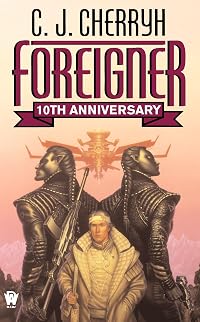
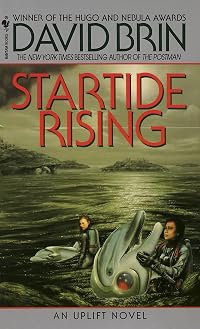
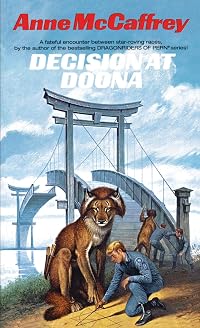
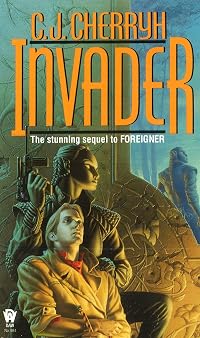

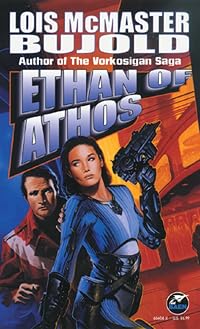


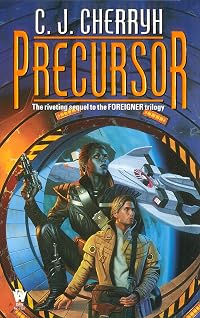













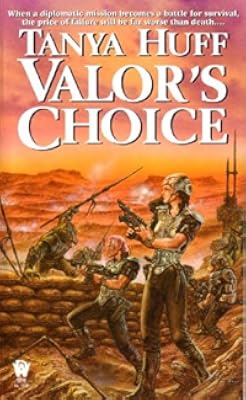


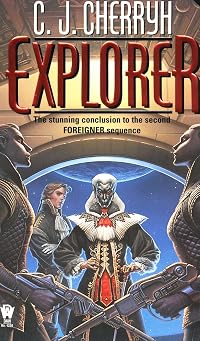
Member Recommendations



Aquila The decision at the end of Beyond the Burn Line is one that comes up a lot in Cherryh's books, but the Chanur books seem like the best matched read.
Member Reviews
I read 'The Pride Of Chanur' in 1988. By then, C. J. Cherrhy had already won three Hugo Awards, including one for 'The Pride Of Chanur' yet I had to place a special order at my local Waterstone's to get a copy and even then the bookseller handing it to me clearly thought it was an odd book for a man in his thirties to be buying. Times have changed. Science Fiction is respectable in the UK now. Even so, you won't find C. J. Cherrhy on the shelves at Waterstones. They have short memories.
A few years ago, I gave away all my C. J. Cherrhy books because the print was too small for my ageing eyes.
I hesitated to replace them. What if, thirty-five years later, I no longer enjoyed the books that pleased me so much way back in the last century? show more I'm no longer the same man and Science Fiction has moved on, hasn't it?
When I saw an audiobook version of 'The Pride Of Chanur' performed by Dina Pearlman, a favourite narrator of mine, I decided to take a chance.
Reader, it was wonderful.
The book felt fresh and exciting and matched anything being written today. And, wow, what a difference an audiobook makes. Dina Pearlman fed so much life and energy into the text and she knew how to pronounce species named Knnn and Tc'a.
The thing I'd forgotten about C. J. Cherryh is that she doesn't do world-building. Her world, her universe actually, already exists rich and entire in her imagination and she drops you into the middle of it with no warning and no explanation and immediately creates a crisis for the main characters to react to. To add an extra twist, the main character here isn't human and has never even heard of humans. Her name is Pyanfar Chanur. She's hani, a catlike spacefaring trading race. She's the captain of 'The Pride Of Chanur' and her ship has just been boarded by a stowaway creature from an unknown species that has escaped from the reviled kif, natural enemies to the hani.
What follows is a vivid, tense and remarkably realistic space opera, rich with cultural details, inter-species intrigues, emnities and alliances and domestic threats back on the hani homeworld. Much of the book has 'The Pride' running for safety, pursued by the armed kif ships.
I loved the way all the technology made sense but it was so taken for granted by everyone concerned that it never took centre-stage.
This is a tense adventure that is made even more intense by its focus on the psychological and linguistic challenges of trade and warfare between alien species and by the richly imagined details of hani culture.
I'll be back for the rest of the Chanur books and probably for 'Downbelow Station' as well. show less
A few years ago, I gave away all my C. J. Cherrhy books because the print was too small for my ageing eyes.
I hesitated to replace them. What if, thirty-five years later, I no longer enjoyed the books that pleased me so much way back in the last century? show more I'm no longer the same man and Science Fiction has moved on, hasn't it?
When I saw an audiobook version of 'The Pride Of Chanur' performed by Dina Pearlman, a favourite narrator of mine, I decided to take a chance.
Reader, it was wonderful.
The book felt fresh and exciting and matched anything being written today. And, wow, what a difference an audiobook makes. Dina Pearlman fed so much life and energy into the text and she knew how to pronounce species named Knnn and Tc'a.
The thing I'd forgotten about C. J. Cherryh is that she doesn't do world-building. Her world, her universe actually, already exists rich and entire in her imagination and she drops you into the middle of it with no warning and no explanation and immediately creates a crisis for the main characters to react to. To add an extra twist, the main character here isn't human and has never even heard of humans. Her name is Pyanfar Chanur. She's hani, a catlike spacefaring trading race. She's the captain of 'The Pride Of Chanur' and her ship has just been boarded by a stowaway creature from an unknown species that has escaped from the reviled kif, natural enemies to the hani.
What follows is a vivid, tense and remarkably realistic space opera, rich with cultural details, inter-species intrigues, emnities and alliances and domestic threats back on the hani homeworld. Much of the book has 'The Pride' running for safety, pursued by the armed kif ships.
I loved the way all the technology made sense but it was so taken for granted by everyone concerned that it never took centre-stage.
This is a tense adventure that is made even more intense by its focus on the psychological and linguistic challenges of trade and warfare between alien species and by the richly imagined details of hani culture.
I'll be back for the rest of the Chanur books and probably for 'Downbelow Station' as well. show less
A strange creature is skulking around the loading bays of Meetpoint station, a creature that none of the intelligent species making up the Compact had ever seen before ...
‘There had been something loose about the station dock all morning, skulking in amongst the gantries and the lines and the canisters which were waiting to be moved, lurking wherever shadows fell among the rampway accesses of the many ships at dock at Meetpoint. It was pale, naked, starved-looking in what fleeting glimpse anyone on The Pride of Chanur had had of it. Evidently nobody had reported it to station authorities, nor did The Pride’
The Hani, a leonine species who operate the spaceship The Pride of Chanur are inclined to ignore the creature until it finds a show more way aboard their ship, when a decision by the Hani captain, Pyanfar Chanur, has far reaching consequences for her people. For the creature has escaped from the Kif, who may be members of the Compact, but are always trouble, and they want him back...
This is a human alien encounter told very much from the point of view of the aliens, and more interesting for it. In fact there is a complex web of alien species in [The Pride of Chanur], which adds a level of complexity requiring the reader to concentrate. Not the first time in reading C.J.Cherryh novel, I realised halfway through that audio was probably not the best format! It would have been much easier to refer back to remind myself which species was which if I’d had a hard copy. That proviso aside, this was really enjoyable, and I’m certainly going to carry on with the series. I’m just going to buy the paperback copies first. show less
‘There had been something loose about the station dock all morning, skulking in amongst the gantries and the lines and the canisters which were waiting to be moved, lurking wherever shadows fell among the rampway accesses of the many ships at dock at Meetpoint. It was pale, naked, starved-looking in what fleeting glimpse anyone on The Pride of Chanur had had of it. Evidently nobody had reported it to station authorities, nor did The Pride’
The Hani, a leonine species who operate the spaceship The Pride of Chanur are inclined to ignore the creature until it finds a show more way aboard their ship, when a decision by the Hani captain, Pyanfar Chanur, has far reaching consequences for her people. For the creature has escaped from the Kif, who may be members of the Compact, but are always trouble, and they want him back...
This is a human alien encounter told very much from the point of view of the aliens, and more interesting for it. In fact there is a complex web of alien species in [The Pride of Chanur], which adds a level of complexity requiring the reader to concentrate. Not the first time in reading C.J.Cherryh novel, I realised halfway through that audio was probably not the best format! It would have been much easier to refer back to remind myself which species was which if I’d had a hard copy. That proviso aside, this was really enjoyable, and I’m certainly going to carry on with the series. I’m just going to buy the paperback copies first. show less
I wanted to like The Pride of Chanur, I really did. Science fiction with a heavy emphasis on alien cultures and/or alien linguistics is like catnip to me, and, for that reason, I've wanted to try Cherryh's works for a long time. Unfortunately, her writing style didn't work for me. This is not a long book – the print edition is only a little over 200 pages – and yet I spent more than a month alternately slogging through it or avoiding it.
The story is fairly simple. Pyanfar Chanur is the captain of the hani spaceship The Pride of Chanur. She discovers a stowaway, an odd-looking being she quickly realizes is sentient. He's a human, and none of the aliens in the book have ever seen anything like him before. Pyanfar has him put together show more a translation tape and eventually learns that his name is Tully and he's an escapee from a kif ship. The kif tortured Tully and his friends, and he was the only one who survived. Pyanfar doesn't like the kif, who are widely known as pirates and slave-traders, so she decides to help Tully. This decision ends up putting The Pride of Chanur, other hani ships, and even the hani homeworld in grave danger.
Okay, so let me get back to Cherryh's writing style, which is so distinctive it got its own section in Cherryh's Wikipedia article. Although the book was written in the third person, it was so tightly focused on Pyanfar's viewpoint that it sometimes felt like it was first person POV. Descriptions of hani characters were limited because, as a hani herself, there were things that Pyanfar simply wouldn't note. The descriptions of Tully made him feel very alien, because to Pyanfar he was – she had to interpret his appearance and behavior through what she knew of her own people and other alien species. For example, his hair and beard looked to her like a short, bedraggled hani mane.
This made for fascinating reading, at first. I don't think I've ever read anything that was written in quite this way, and I loved learning a little about the various aliens and the hani through what was pretty much Pyanfar's eyes (although I later learned I was wrong about some things – for example, I thought the Mahendo'stat looked wolf-like, but they're actually supposed to be more primate-like).
Then Cherryh ramped up the action and adrenaline a bit, and her style suddenly became a lot harder for me to deal with. There was tons of jargon and not much in the way of explanations, since Pyanfar was an experienced captain fighting for her and her crew's life - no time to think about the specifics of whatever maneuver she was executing while trying to escape the kif. I had trouble understanding the specifics of what was going on, although I could at least still follow the general situation. I found myself skimming the book's action scenes, which was a bigger problem once I got closer to the end of the book. I'm still not sure whythe kif left, since I had thought they were winning.
That said, I still want to read more of Cherryh's works in general and this series in particular, because there were aspects and ideas I loved, even if the execution didn't work for me. Hani clans (family groups) were fascinating. They were similar to lion prides, with a central male and lots of females. The hani viewed males as being too high-strung and incapable of controlling their emotions to be suitable for long periods of time on a spaceship, so all hani crews were entirely female. Tully being a male made Pyanfar very nervous, and Tully had difficulty wrapping his brain around the idea that all the hani around him were female. Besides the hani, another alien species I'd love to learn more about is the stsho, which have three genders and fragile, changeable personalities.
I also liked, for once, reading science fiction in which the human is not the bestest, cleverest, most secretly wonderful being ever. In fact, I think nearly every species got to display its strengths and weaknesses except humans. Tully was the guy who got the whole story started, but he didn't actually do much besides try really hard not to get killed or turned into a slave. That meant doing exactly what Pyanfar asked him to do, which, for a good chunk of the book, was limited to helping put together a translation tape so that everyone could understand him. By the way, I also liked the way the language stuff was handled – the translation technology wasn't 100% perfect, leading to occasional garbled bits. It felt pretty realistic, even if the “tape” part was somewhat dated.
Like I said, I do want to try another one of Cherryh's books at a later date. I've got Foreigner on my TBR pile, and I'd like to read the next Chanur novel. However, I'm a little worried that, while Cherryh's worlds will be a pleasure, her writing style will make learning about them a chore. Here's hoping her style eventually grows on me.
(Original review posted on A Library Girl's Familiar Diversions.) show less
The story is fairly simple. Pyanfar Chanur is the captain of the hani spaceship The Pride of Chanur. She discovers a stowaway, an odd-looking being she quickly realizes is sentient. He's a human, and none of the aliens in the book have ever seen anything like him before. Pyanfar has him put together show more a translation tape and eventually learns that his name is Tully and he's an escapee from a kif ship. The kif tortured Tully and his friends, and he was the only one who survived. Pyanfar doesn't like the kif, who are widely known as pirates and slave-traders, so she decides to help Tully. This decision ends up putting The Pride of Chanur, other hani ships, and even the hani homeworld in grave danger.
Okay, so let me get back to Cherryh's writing style, which is so distinctive it got its own section in Cherryh's Wikipedia article. Although the book was written in the third person, it was so tightly focused on Pyanfar's viewpoint that it sometimes felt like it was first person POV. Descriptions of hani characters were limited because, as a hani herself, there were things that Pyanfar simply wouldn't note. The descriptions of Tully made him feel very alien, because to Pyanfar he was – she had to interpret his appearance and behavior through what she knew of her own people and other alien species. For example, his hair and beard looked to her like a short, bedraggled hani mane.
This made for fascinating reading, at first. I don't think I've ever read anything that was written in quite this way, and I loved learning a little about the various aliens and the hani through what was pretty much Pyanfar's eyes (although I later learned I was wrong about some things – for example, I thought the Mahendo'stat looked wolf-like, but they're actually supposed to be more primate-like).
Then Cherryh ramped up the action and adrenaline a bit, and her style suddenly became a lot harder for me to deal with. There was tons of jargon and not much in the way of explanations, since Pyanfar was an experienced captain fighting for her and her crew's life - no time to think about the specifics of whatever maneuver she was executing while trying to escape the kif. I had trouble understanding the specifics of what was going on, although I could at least still follow the general situation. I found myself skimming the book's action scenes, which was a bigger problem once I got closer to the end of the book. I'm still not sure why
That said, I still want to read more of Cherryh's works in general and this series in particular, because there were aspects and ideas I loved, even if the execution didn't work for me. Hani clans (family groups) were fascinating. They were similar to lion prides, with a central male and lots of females. The hani viewed males as being too high-strung and incapable of controlling their emotions to be suitable for long periods of time on a spaceship, so all hani crews were entirely female. Tully being a male made Pyanfar very nervous, and Tully had difficulty wrapping his brain around the idea that all the hani around him were female. Besides the hani, another alien species I'd love to learn more about is the stsho, which have three genders and fragile, changeable personalities.
I also liked, for once, reading science fiction in which the human is not the bestest, cleverest, most secretly wonderful being ever. In fact, I think nearly every species got to display its strengths and weaknesses except humans. Tully was the guy who got the whole story started, but he didn't actually do much besides try really hard not to get killed or turned into a slave. That meant doing exactly what Pyanfar asked him to do, which, for a good chunk of the book, was limited to helping put together a translation tape so that everyone could understand him. By the way, I also liked the way the language stuff was handled – the translation technology wasn't 100% perfect, leading to occasional garbled bits. It felt pretty realistic, even if the “tape” part was somewhat dated.
Like I said, I do want to try another one of Cherryh's books at a later date. I've got Foreigner on my TBR pile, and I'd like to read the next Chanur novel. However, I'm a little worried that, while Cherryh's worlds will be a pleasure, her writing style will make learning about them a chore. Here's hoping her style eventually grows on me.
(Original review posted on A Library Girl's Familiar Diversions.) show less
I remember seeing this offered in the science-fiction book club that I was subscribed to in the 80s. For some reason— probably financial as high school me didn't have much money—I never picked it up. So when a local used bookstore went out of business and was selling off their inventory, I snatched it (along with several other books). I wish I hadn't waited so long.
The story is told from the viewpoint of Pyanfur, and I think it's a great idea. Humans are the alien here. When Tully shows up on her ship, she initially mistakes him for an intruder and thus her claws are out. She has no idea if he's a wild animal or not. When he starts writing something in his own blood, it dawns on her and her crew that this naked creature is a show more sentient being, alone and afraid. Some protective instinct is triggered inside of her, and she orders that he be treated for his wounds. It's a decision that she constantly wrestles with, for it puts her and her crew in danger. The Kif consider Tully to be their property and demand that she return "it" to them. She's no bleeding heart, but it strikes Pyanfur as wrong, and she strives to prove that Tully is sentient and deserves the rights that all sentients of the Compact—a trade agreement among several civilizations—enjoy.
Pyanfar knows that she needs allies. The way home is a long one, and the Kif have faster ships than hers. She's also outnumbered; the Hani are a feudal society and thus not all clans are willing to set aside rivalries when the threat is from another species. Pyanfar has to negotiate with other species, convince some of them not only of Tully's sentience but value as a potential trading partner once proper contact with his homeworld is established.
Communication is as much an obstacle as the Kif gauntlet. Even though Tully is an avid pupil—he realizes that he can't plead his case if no one understands him—it takes some time before he can communicate with the Hani. And even then, there's difficulty. But even among the established species of the Compact, communication is difficult. Different larynx shapes make speaking awkward. Short sentences dominate conversations. There's a lot of repetition. While there are machines to help with the process, Star Trek's universal translator does not exist. Still, when there's money to be made, people try to find a way to communicate.
I really enjoyed this story. I would've liked more world-building, but the way the story unfolds, there's really no time to dwell on that. It's very much a novel where everyone is living in the moment, trying to survive. While I appreciate shining a spotlight on the difficulty of interspecies communication, sometimes it was a bit cumbersome to read, not to mention repetitive when Pyanfar needed to get a point across. But those are just quibbles. It's definitely a classic sci-fi novel worth checking out. show less
The story is told from the viewpoint of Pyanfur, and I think it's a great idea. Humans are the alien here. When Tully shows up on her ship, she initially mistakes him for an intruder and thus her claws are out. She has no idea if he's a wild animal or not. When he starts writing something in his own blood, it dawns on her and her crew that this naked creature is a show more sentient being, alone and afraid. Some protective instinct is triggered inside of her, and she orders that he be treated for his wounds. It's a decision that she constantly wrestles with, for it puts her and her crew in danger. The Kif consider Tully to be their property and demand that she return "it" to them. She's no bleeding heart, but it strikes Pyanfur as wrong, and she strives to prove that Tully is sentient and deserves the rights that all sentients of the Compact—a trade agreement among several civilizations—enjoy.
Pyanfar knows that she needs allies. The way home is a long one, and the Kif have faster ships than hers. She's also outnumbered; the Hani are a feudal society and thus not all clans are willing to set aside rivalries when the threat is from another species. Pyanfar has to negotiate with other species, convince some of them not only of Tully's sentience but value as a potential trading partner once proper contact with his homeworld is established.
Communication is as much an obstacle as the Kif gauntlet. Even though Tully is an avid pupil—he realizes that he can't plead his case if no one understands him—it takes some time before he can communicate with the Hani. And even then, there's difficulty. But even among the established species of the Compact, communication is difficult. Different larynx shapes make speaking awkward. Short sentences dominate conversations. There's a lot of repetition. While there are machines to help with the process, Star Trek's universal translator does not exist. Still, when there's money to be made, people try to find a way to communicate.
I really enjoyed this story. I would've liked more world-building, but the way the story unfolds, there's really no time to dwell on that. It's very much a novel where everyone is living in the moment, trying to survive. While I appreciate shining a spotlight on the difficulty of interspecies communication, sometimes it was a bit cumbersome to read, not to mention repetitive when Pyanfar needed to get a point across. But those are just quibbles. It's definitely a classic sci-fi novel worth checking out. show less
I am shocked to realize that it has been nearly 40 years since I first read Pride of Chanur. I enjoyed the rereading. My taste has changed during that time but it was fun making the reacquaintance. I see why it won the Hugo. It is a first contact story from the non human perspective. The characters are well developed. I was surprised to see it reflected a feminist perspective ahead of is time.
I was happy to discover it as an audiobook
I was happy to discover it as an audiobook
10/10
A different twist on “first contact”.
I’ve been on a steady diet of Cherryh’s books over the past year (about 1 book of hers per month), but this was my first time diving into Compact space and meeting the kif, hani, knnn, and others who live and trade here. Like a few of Cherryh’s books in the Company-Alliance-Union part of the universe, this was both tightly focused on the small crew of Pride of Chanur, especially Pyanfar and Hilfy, and their human refugee, and more widely inclusive of the social/political/economic issues at stake in the systems of the Compact. Cherryh creates believable main characters who, faced with adversity and challenge, find ways to respond and adapt rather than simply react. The reader is never show more bogged down with too much detail, yet the various species are distinct, the settings are fully realized, and the plot is action-packed and well-paced.
I will be eagerly continuing this series over the next few months, interspersed with other books. show less
A different twist on “first contact”.
I’ve been on a steady diet of Cherryh’s books over the past year (about 1 book of hers per month), but this was my first time diving into Compact space and meeting the kif, hani, knnn, and others who live and trade here. Like a few of Cherryh’s books in the Company-Alliance-Union part of the universe, this was both tightly focused on the small crew of Pride of Chanur, especially Pyanfar and Hilfy, and their human refugee, and more widely inclusive of the social/political/economic issues at stake in the systems of the Compact. Cherryh creates believable main characters who, faced with adversity and challenge, find ways to respond and adapt rather than simply react. The reader is never show more bogged down with too much detail, yet the various species are distinct, the settings are fully realized, and the plot is action-packed and well-paced.
I will be eagerly continuing this series over the next few months, interspersed with other books. show less
The Chanur series is one of my faves and is one of the most intelligent, exciting, and intriguing books out there. I had to rebuy this one after a loaned-out copy didn't come back. This is the first book I read by C.J. Cherryh and I bought it because of the awesome Killer Kitties on the cover painted purrfectly by my favorite cover artist, Michael Whelan. I always did have a soft spot for feline alien races ever since I saw the cat woman on the Star Trek animated series (and the Na'vi from Avatar are just amazing), but Pyanfar Chanur and the crew of the Pride of Chanur are so much more than whiskers and fur. Captain Pyanfur is gutsy, tough, wise and has more political savvy in her furry pinky than the whole of the U.S. Congress. And boy show more does she need it since the first human to be discovered is on the run from the slimy Kif (who would love to find out where the human is from so they can be the first to take full advantage of that knowledge) and has taken refuge on the Pride. I enjoyed the intrigue, the political plays, the double-talk and double-dealing and such, but mostly I enjoyed the development of the relationship between the humans and the feline Hani and getting a good idea of what it's like to deal with a completely alien society (like the methane breathers). Warning: you WILL find yourself wishing you were part of Pyanfar's crew, you WILL find yourself tearing through this book and jumping into the sequels (there are five books total), and you WILL find yourself wanting even more. Come on, C.J.! More Chanur! show less
Members
- Recently Added By
Lists

Favorite Science Fiction by Women Authors
737 works; 202 members

Science fiction novels with a female protagonist
105 works; 30 members
Best Feminist Science Fiction
188 works; 35 members

Introduction to Fantasy and Science Fiction (Proposed Reading List)
28 works; 6 members

Nonhuman Protagonists
235 works; 34 members

Best SciFi and Fantasy Classics
53 works; 6 members

Top Five Books of 2022
736 works; 272 members
Recommended Speculative Fiction by Women and People of Color
298 works; 45 members

Female Author
1,234 works; 67 members

Literature About Women and Girls
394 works; 39 members

Fiction with Women's Names in the Title
378 works; 15 members

infjsarah's wishlist
408 works; 2 members

Books Read in 2025
4,091 works; 97 members

The Five Books That Represent Us
391 works; 148 members

Favorite Science Fiction
456 works; 218 members
Author Information

256+ Works 74,911 Members
A multiple award-winning author of more than thirty novels, C. J. Cherryh received her B.A. in Latin from the University of Oklahoma, and then went on to earn a M.A. in Classics from Johns Hopkins University. Cherryh's novels, including Tripoint, Cyteen, and The Pride of Chanur, are famous for their knife-edge suspense and complex, realistic show more characters. Cherryh won the John W. Campbell Award for Best New Writer in 1977. She was also awarded the Hugo Award for her short story Cassandra in 1979, and the novels Downbelow Station in 1982 and Cyteen in 1989. (Bowker Author Biography) show less
Some Editions
Awards and Honors
Awards
Series

Chanur
5 works (01)

Alliance-Union Universe: Publication
34 works (8)

Alliance-Union Universe
39 works (14 (Chanur 01))
Belongs to Publisher Series
Work Relationships
Common Knowledge
- Canonical title*
- El Orgullo de Chanur
- Original title
- The Pride of Chanur
- Original publication date
- 1982-01
- People/Characters
- Pyanfar Chanur; Tully; Ana Ismehanan-min 'Goldtooth'; Akukkakk; Hilfy Chanur; Chur Anify (show all 9); Geran Anify; Haral Araun; Tirun Araun
- Important places
- Compact Space; Meetpoint Station
- First words
- There had been something loose about the station dock all morning, skulking in amongst the gantries and the ines and the canisters which were waiting to be moved, lurking wherever shadows fell among the rampway accesses of th... (show all)e many ships at dock at Meetpoint.
- Last words
- (Click to show. Warning: May contain spoilers.)But the odds in that encounter were even.
- Original language*
- Inglés
*Some information comes from Common Knowledge in other languages. Click "Edit" for more information.
Classifications
Statistics
- Members
- 1,707
- Popularity
- 13,004
- Reviews
- 46
- Rating
- (3.91)
- Languages
- 6 — Czech, English, German, Hebrew, Italian, Spanish
- Media
- Paper, Audiobook, Ebook
- ISBNs
- 19
- UPCs
- 1
- ASINs
- 16