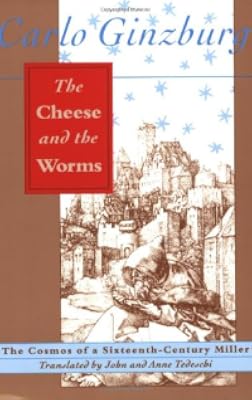
The Cheese and the Worms: The Cosmos of a Sixteenth-Century Miller
by Carlo Ginzburg
On This Page
Description
The now-classic tale of a sixteenth-century miller facing the Roman Inquisition. The Cheese and the Worms is an incisive study of popular culture in the sixteenth century as seen through the eyes of one man, the miller known as Menocchio, who was accused of heresy during the Inquisition and sentenced to death. Carlo Ginzburg uses the trial records to illustrate the religious and social conflicts of the society Menocchio lived in. For a common miller, Menocchio was surprisingly literate. In show more his trial testimony he made references to more than a dozen books, including the Bible, Boccaccio's Decameron, Mandeville's Travels, and a "mysterious" book that may have been the Koran. And what he read he recast in terms familiar to him, as in his own version of the creation: "All was chaos, that is earth, air, water, and fire were mixed together; and of that bulk a mass formed--just as cheese is made out of milk--and worms appeared in it, and these were the angels." Ginzburg's influential book has been widely regarded as an early example of the analytic, case-oriented approach known as microhistory. In a thoughtful new preface, Ginzburg offers his own corollary to Menocchio's story as he considers the discrepancy between the intentions of the writer and what gets written. The Italian miller's story and Ginzburg's work continue to resonate with modern readers because they focus on how oral and written culture are inextricably linked. Menocchio's 500-year-old challenge to authority remains evocative and vital today. show lessTags
Recommendations










Member Recommendations


by anonymous user
11

Oct326 Due testi piuttosto diversi, uno un saggio l'altro un romanzo; ciò che hanno in comune è che raccontano un processo dell'inquisizione contro un individuo di posizione sociale umile.
Member Reviews
A great account of the inquisition of a miller who can read and think independently which turns into a major problem in the 16th century. His own personal religion is a bizarre collection of folk wisdom and logic applied to a theology of which he only partially understands the orthodox version in the first place. He's also stubborn and unrepentant enough to come back for seconds after getting clemency for a sentence that nearly kills him. Fascinating character.
‘The sequence cheese-worms-angels-holy majesty-God, the most powerful of the men-angels, had been abbreviated along the way to that of cheese-worms-men-God, the most powerful among men.’
Such an engrossing analysis of a 16th century heresy trial, Menocchio is such an inspiring figure (aside from his all too human lapses and contradictions when he becomes too verbose and realises he won’t achieve clemency, denying what he had previously said and in the process demeaning himself). His individual musings on Christian theology, with his radical humanist assertion that the love of one’s neighbour supersedes the love of God in importance, as well as his invocations of oral traditions and influences ranging from the Quran to pantheism show more to the Anabaptists to the Lutherans even through to the Greek conception of chaos, were immensely enjoyable to read. I feel like him and Judge Schreber would have recorded an absolutely great podcast over goblets of mead in some tavern.
It’s also darkly amusing to reflect on just how willing religious authorities were to employ methods of torture and months of interrogations on a man who everybody was pretty much assured posed no real threat - it’s so strange to think that the Pope himself stooped so low as to sign and intensely follow the progress of this man’s death warrant. He was externally submissive to the daily trappings of the Church (following Pascal’s advice a whole century before he penned it), had no real interest in converting those around him to his fancies (he himself was always careful to say he never wished his family to share his views, and that his thoughts were mere opinions and not the truth) and was a greatly appreciated member of his society, even being allowed to work in the Church after being branded a heretic and forced to don the habitello which he hated so much. In spite of the torture, the years of prison he endured and the illness and frailty he fell prey to, he never once ratted on those companions to who he may have indulged both his mind and tongue on rare occasions. Shoutout to Menocchio, the man who made the Inquisition his bitch in the only way a self-taught Miller could. show less
Such an engrossing analysis of a 16th century heresy trial, Menocchio is such an inspiring figure (aside from his all too human lapses and contradictions when he becomes too verbose and realises he won’t achieve clemency, denying what he had previously said and in the process demeaning himself). His individual musings on Christian theology, with his radical humanist assertion that the love of one’s neighbour supersedes the love of God in importance, as well as his invocations of oral traditions and influences ranging from the Quran to pantheism show more to the Anabaptists to the Lutherans even through to the Greek conception of chaos, were immensely enjoyable to read. I feel like him and Judge Schreber would have recorded an absolutely great podcast over goblets of mead in some tavern.
It’s also darkly amusing to reflect on just how willing religious authorities were to employ methods of torture and months of interrogations on a man who everybody was pretty much assured posed no real threat - it’s so strange to think that the Pope himself stooped so low as to sign and intensely follow the progress of this man’s death warrant. He was externally submissive to the daily trappings of the Church (following Pascal’s advice a whole century before he penned it), had no real interest in converting those around him to his fancies (he himself was always careful to say he never wished his family to share his views, and that his thoughts were mere opinions and not the truth) and was a greatly appreciated member of his society, even being allowed to work in the Church after being branded a heretic and forced to don the habitello which he hated so much. In spite of the torture, the years of prison he endured and the illness and frailty he fell prey to, he never once ratted on those companions to who he may have indulged both his mind and tongue on rare occasions. Shoutout to Menocchio, the man who made the Inquisition his bitch in the only way a self-taught Miller could. show less
History tends to focus on the big people and big events. With The Cheese and the Worms, Ginzberg shows that examining history with the equivalent of a microscope can be equally enlightening. In telling the story of Mennochio, a too-smart-for-his-own-good, free-thinking miller during the Roman inquisition, we learn about the underdocumented life and religious beliefs of the peasant class. Ginzberg connects Mennochio’s heterodox and heretical religious beliefs with a vast, ancient undercurrent of peasant spirituality that was, of course, at odds with the ruling class. This book is testament to the fact that outside the halls of power, where standards, regulations, and dogma rule, the average person’s beliefs are often surprisingly show more weird. A persecution that seems like it was motivated by religion when seen from the perspective of typical historical inquiry, suddenly seems more like an oppressive tactic meant to keep the underclass in line. The irony of typical historiography is that the beliefs, practices, and thoughts of the vast majority of the population is rarely as well preserved as those in power, tipping the scales away from knowledge about how most people actually lived. Ginzberg’s book stakes a more radical path at interpreting history, and by zooming in so closely, actually provides a panorama of an under-documented facet of the time period. show less
Carlo Ginzburg’s The Cheese and the Worms offers the story of the miller Menocchio and an interpretation of the popular culture of the sixteenth century. Menocchio was the focus of a church inquisition because of his own views on God and faith – he was a reader and a thinker, and believed that his view of Christianity was better than that of the church. He had a unique view of the world colored by the unique way he read texts, which Ginzburg supposes is the juxtaposition of Menocchio’s surrounding oral culture and the written word. Because of the abundance of documented material about Menocchio’s trial, however, we have a uniquely wider view of Menocchio’s life and beliefs than we do of almost any other individual of his time, show more and thus he gives us a valuable insight into the popular culture of the time, which of course was greatly controlled by the Church – as is evident in the ultimate silencing of Menocchio for his beliefs, which were seen as a denial of Catholicism and therefore an ultimate crime against God.
By Ginzburg's estimation, Church and religion, seen as superstitious and based outside of practical reality, hold back a civilization. There is a distinct sense in the Cheese and the Worms that pulling away from the fantastic and moving into the world of science and free thought outside of a religious construct is what it means to advance civilization. show less
By Ginzburg's estimation, Church and religion, seen as superstitious and based outside of practical reality, hold back a civilization. There is a distinct sense in the Cheese and the Worms that pulling away from the fantastic and moving into the world of science and free thought outside of a religious construct is what it means to advance civilization. show less
PRATELEIRA EUNICE LIVRO 112
Um obscuro herege do século XVI é resgatado do esquecimento por Carlo Ginzburg em O queijo e os vermes. A partir daí nasce não uma dissertação acadêmica, mas uma das mais apaixonantes histórias sobre a Inquisição e sobre a cultura popular e erudita da época, por meio da vida de Menocchio, o moleiro, e sua espantosa cosmogonia: "[...] tudo era um caos, isto é, terra, ar, fogo e água juntos, e de todo aquele volume se formou uma massa, do mesmo modo como o queijo é feito do leite, e do qual surgem os vermes, e esses foram os anjos..."."O trabalho de reconstrução é brilhante, o estilo extremamente agradável e, ao fim do livro, o leitor que seguiu os passos de Carlo Ginzburg, em seu passeio show more através da mente labiríntica do moleiro de Friuli, abandonará com pesar a companhia dessa estranha personagem."The New York Review of Books show less
Um obscuro herege do século XVI é resgatado do esquecimento por Carlo Ginzburg em O queijo e os vermes. A partir daí nasce não uma dissertação acadêmica, mas uma das mais apaixonantes histórias sobre a Inquisição e sobre a cultura popular e erudita da época, por meio da vida de Menocchio, o moleiro, e sua espantosa cosmogonia: "[...] tudo era um caos, isto é, terra, ar, fogo e água juntos, e de todo aquele volume se formou uma massa, do mesmo modo como o queijo é feito do leite, e do qual surgem os vermes, e esses foram os anjos..."."O trabalho de reconstrução é brilhante, o estilo extremamente agradável e, ao fim do livro, o leitor que seguiu os passos de Carlo Ginzburg, em seu passeio show more através da mente labiríntica do moleiro de Friuli, abandonará com pesar a companhia dessa estranha personagem."The New York Review of Books show less
Such a fascinating book! I knew that this book was a notable example of "microhistory," which Ginzburg is known for developing and practicing. It is a methodological practice of history that examines events through the small-scale interactions and words of individuals. Instead of looking at historical events and allowing them to be subsumed and explained by broad historical moments and their associated political and social paradigms, microhistory (as I understand it) works more inductively, moving from individuals to trace their connections to something bigger.
This particular microhistory tells the story of a 16th century miller who stood accused of heresy during the Counter-Reformation. Rather than talking about this case of heresy as show more exemplifying or echoing the politics of peasant uprisings or the teachings of the Protestant Reformation, Ginzburg spins a tale of Menocchio's (i.e., the miller's) interactions with artists, church officials, and farmers. It is about the books that Menocchio was known to have had and read. Ginzburg uses the very words of Menocchio's testimonies before the Inquisition to find echoes of points, errors, metaphors, and misconceptions from the books he had. Ginzburg then looks at church and accounting records to reveal the web of social relations that Menocchio had by virtue of his position as a miller. These connections, amplified by the accessibility of printed literature, show a 16th century world getting smaller due to connections between people across culture and geography and socio-political boundaries. And this web of interactions is what is offered to illuminate how Menocchio came to be accused of and called upon to account for his heretical thinking.
The book is a riveting, quick read and well worth it for the demonstration of microhistorical methods alone. show less
This particular microhistory tells the story of a 16th century miller who stood accused of heresy during the Counter-Reformation. Rather than talking about this case of heresy as show more exemplifying or echoing the politics of peasant uprisings or the teachings of the Protestant Reformation, Ginzburg spins a tale of Menocchio's (i.e., the miller's) interactions with artists, church officials, and farmers. It is about the books that Menocchio was known to have had and read. Ginzburg uses the very words of Menocchio's testimonies before the Inquisition to find echoes of points, errors, metaphors, and misconceptions from the books he had. Ginzburg then looks at church and accounting records to reveal the web of social relations that Menocchio had by virtue of his position as a miller. These connections, amplified by the accessibility of printed literature, show a 16th century world getting smaller due to connections between people across culture and geography and socio-political boundaries. And this web of interactions is what is offered to illuminate how Menocchio came to be accused of and called upon to account for his heretical thinking.
The book is a riveting, quick read and well worth it for the demonstration of microhistorical methods alone. show less
The Cheese and the Worms is the history of a peasant who was put on trial for heresy. It draws on Inquisition source documents to help reveal something about popular culture which is otherwise obscure to history as few people wrote about about peasant lives. The Cheese and the Worms is probably the most popular book of this genre sometimes called microhistory.
The sixteenth-century Italian miller, Menocchio, arose from the ferment of uneducated peasant culture with sophisticated ideas about the cosmos. Historian Carlo Ginzburg struggles to explain how and where Menocchio obtained ideas similar to high European culture current at the time. Indeed so did the Inquisition, there must be some larger heresy at play, they thought. show more Unsurprisingly the questions the Inquisition sought to answer (and documented in trial records) are what Ginzberg follows. It is never possible to conclude, but Menocchio himself says his cosmological ideas were self-invented, and this is probably true. There is no evidence of an underground organized heresy, rather an outspoken Uncle Bob sort of figure who doesn't know when to shut up about his peculiar ideas, shunned by his community, abandoned by his family, given every chance to reform - yet he goes on talking heresy! Poor Menocchio, "Oh poor me", he is recorded as saying under torture (apparently the Inquisition recorded every groan and mumble during torture sessions). He knew just enough to be dangerous, probably absorbed through the osmosis of the era and the few books he read, but was an unsophisticate and the system crushed him. As the Bobby Fuller Four might say, he fought the church and the church won. Ginzburg eerily hints in the end that his story was not unusual, there is a long list of people destroyed by the Church, their stories forgotten to history. show less
The sixteenth-century Italian miller, Menocchio, arose from the ferment of uneducated peasant culture with sophisticated ideas about the cosmos. Historian Carlo Ginzburg struggles to explain how and where Menocchio obtained ideas similar to high European culture current at the time. Indeed so did the Inquisition, there must be some larger heresy at play, they thought. show more Unsurprisingly the questions the Inquisition sought to answer (and documented in trial records) are what Ginzberg follows. It is never possible to conclude, but Menocchio himself says his cosmological ideas were self-invented, and this is probably true. There is no evidence of an underground organized heresy, rather an outspoken Uncle Bob sort of figure who doesn't know when to shut up about his peculiar ideas, shunned by his community, abandoned by his family, given every chance to reform - yet he goes on talking heresy! Poor Menocchio, "Oh poor me", he is recorded as saying under torture (apparently the Inquisition recorded every groan and mumble during torture sessions). He knew just enough to be dangerous, probably absorbed through the osmosis of the era and the few books he read, but was an unsophisticate and the system crushed him. As the Bobby Fuller Four might say, he fought the church and the church won. Ginzburg eerily hints in the end that his story was not unusual, there is a long list of people destroyed by the Church, their stories forgotten to history. show less
Members
- Recently Added By
Published Reviews
ThingScore 100
Then there is the fascinating study of Menocchio, the sixteenth-century miller. Historian Carlo Ginzburg anatomizes his intellectual universe by triangulating between Menocchio's few books and the depositions taken at his trial for heresy. In The Cheese and the Worms, Ginzburg combines scholarly excavation with shrewd surmise to suggest how this lettered worker assembled a cosmology--one show more coprised in part from the rich reserves of the dominantly oral culture, and in part from his intense and methodical, if also fanciful, readings of the few texts he owned. show less
added by jodi
Lists

501 Must-Read Books
529 works; 72 members

Books referenced in History by Numbers by Pat Hudson
88 works; 1 member

r/History Recommended Reading List
603 works; 12 members

r/AskHistorians' Recommended Books
1,068 works; 18 members
Author Information

49+ Works 4,809 Members
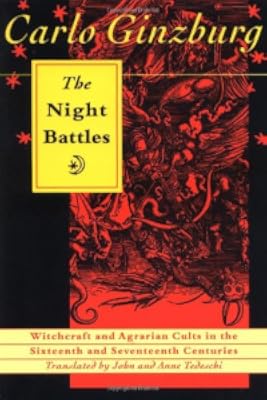
Carlo Ginzburg is Professor Emeritus of History at UCLA and the author of, among other things, The Night Battles and The Cheese and the Worms (the first of his hooks to appear in English, winning instant acclaim).
Some Editions
Awards and Honors
Series
Belongs to Publisher Series
Common Knowledge
- Canonical title*
- Le Fromage et les vers. L'univers d'un meunier du XVIe siècle
- Original title
- Il formaggio e i vermi. Il cosmo di un mugnaio del '500
- Original publication date
- 1976
- People/Characters
- Domenico (Menocchio) Scandella (Menocchio)
- Important places
- Montereale, Friuli; Pordenone
- Epigraph
- Tout ce qui est interessant se passe dans l'ombre. On ne sait rien de la veritable histoire des hommes...CELINE
- Dedication*
- a Luisa
- First words
- His name was Domenico Scandella, but he was called Menocchio.
- Quotations*
- «Io ho detto che, quanto al mio pensier et creder, tutto era un caos, cioè terra, aere, acqua et foco insieme; et quel volume andando così fece una massa, aponto come si fa il formazo nel latte, et in quel deventorno vermi... (show all), et quelli furno li angeli...»
«La maestà de Dio ha dato il Spirito Santo a tutti: a christiani, a heretici, a Turchi, a Giudei, et li ha tutti cari, et tutti si salvano a uno modo... Et vui altri preti et frati, anchora vui volete saper più de Dio, et ... (show all)sette come il demonio, et volete farvi dei in terra, et saper come Iddio a guisa del demonio: et chi più pensa di saper, manco sa.» - Last words
- (Click to show. Warning: May contain spoilers.)About this Marcato, or Marco- and so many others like him who lived and died without leaving a trace- we know nothing.
- Original language*
- Italiano
*Some information comes from Common Knowledge in other languages. Click "Edit" for more information.
Classifications
- Genres
- History, Nonfiction, General Nonfiction, Religion & Spirituality, Biography & Memoir
- DDC/MDS
- 273.6 — Religion History of Christianity Doctrinal controversies and heresies in general church history Heresies 10th-16th century: Antinomian, Bogomils, Cathars and Patarenes, the Waldenses, the Anabaptists, Paulicians
- LCC
- BR877 .F74 .G5613 — Philosophy, Psychology and Religion Christianity Christianity History By region or country
- BISAC
Statistics
- Members
- 2,176
- Popularity
- 9,340
- Reviews
- 31
- Rating
- (3.97)
- Languages
- 18 — Chinese, Czech, Danish, Dutch, English, Estonian, Finnish, French, German, Greek, Hungarian, Italian, Korean, Portuguese, Russian, Spanish, Swedish, Turkish
- Media
- Paper, Audiobook, Ebook
- ISBNs
- 57
- ASINs
- 13