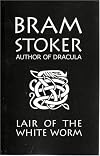
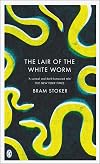
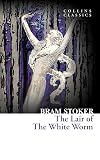
The Lair of the White Worm
by Bram Stoker 
On This Page
Description
The horror novel The Lair of the White Worm, also titled The Garden of Evil, was written by Bram Stoker, the creator of Dracula. Based in part on the Lambton Worm legend, it tells the story of Adam Salton who travels to England at his granduncle's behest in order to establish family ties. But once there Adam finds himself at the heart of strange and unaccountable developments. Ken Russell's made a film adaption in 1988, which quickly became a cult classic..
Tags
Recommendations






















Member Reviews
This falls under “There may have been promise in pockets, but otherwise not a good book.” I read this on the app Serial Reader, which breaks up works of classic literature into chunks that can be read in about 10 to 15 minutes each. This format worked well, actually, and helped create some suspense. But the story didn’t end up being that successful.
The overriding impression I had was that this story felt like an abridgement. We never really got details about where the White Worm came from and the reasons behind its terrorizing this particular bit of countryside. The story felt rushed, and some characters felt unnecessary and underdeveloped, such as Adam’s uncle, who spends the whole time having the White Worm hidden from him, show more and Oolanga, who seems to have been included primarily for the other characters to be racist about.
I wouldn’t recommend this for recreational reading — perhaps if you’re studying the evolution of the horror novel and can discuss its contents and context with someone. Otherwise, don’t bother. show less
The overriding impression I had was that this story felt like an abridgement. We never really got details about where the White Worm came from and the reasons behind its terrorizing this particular bit of countryside. The story felt rushed, and some characters felt unnecessary and underdeveloped, such as Adam’s uncle, who spends the whole time having the White Worm hidden from him, show more and Oolanga, who seems to have been included primarily for the other characters to be racist about.
I wouldn’t recommend this for recreational reading — perhaps if you’re studying the evolution of the horror novel and can discuss its contents and context with someone. Otherwise, don’t bother. show less
Well. I don't know what I was expecting, but it wasn't this. The white worm is not particularly scary, in my opinion, which is not usually a big deal. But when I add in the unnecessary, cruel, overt, baffling racism. And I mean "unnecessary" because the story line added NOTHING. It all just sort of fell apart for me. I kept reading because the writing wasn't awful and I wanted to know how in the world the author would end this thing.
NOT recommended.
NOT recommended.
You might like this book if you believe in the intrinsic superiority of the white peoples over other races, particularly black folks. Since I really don't feel that way I found myself getting more and more irate until the "savage", intrinsically "primitive" "nigger" got killed off whilst attempting murder. One might of course, think that this was the view of the other characters only and it should not be infered that Stoker believed it. Unfortunately, Oolanga is a "nigger" to the narrator, too anf that narrator is not a character and so we must assume that it is Stoker's opinion.
Now with the black guy out of the way, you might think that the offensive attitudes might also go away but that would be to ignore the outrageous sexism and show more with three major female characters, none of whom die early on, one has to suffer that right to the end. Frankly, I can't explain the masochism that made me finish this book; it was pure self torture.
The sexism is for the most part somewhat more subtle than the racism; the heroine is allowed some strength of will, bravery and independence of mind - until she gets married, at which point she immediately requires her husband's opinion on everything and defers to his view as obviously superior - because he's her husband. Even her strength of will and bravery are nothing compared to his - because he's male, of course. Are you vomiting yet? Again, is this Stoker's view? Well, a male character, an older man who is meant to be a wise, ,knowledgable character, the font of wisdom for the younger protagonists and the reader finds that the Suffragettes, "want principle". Funny, I thought they were fighting for a principle!
One might argue that one should set all this aside, because it was the attitude of the time and instead look at the literary merits of the book when judging it. One would be wrong, however: the times - they were a changing. The Suffragette movement had started. Thomas Hardy had been fighting the cause of women for decades: this was a time for choosing sides. Stoker chose the repugnant side.
So maybe you are a scary person and don't find all this offensive, or maybe you are particularly good at compartmentalising the foulness from the plot and writing. If so you really still aren't in for a treat, or even a mediocre good time. No, you are in for a waste of effort.
The set up might sound familiar; a youngish, dynamic man with an older mentor, full of obscure wisdom and knowledge. Two attractive young women in danger. An ancient evil. (In this case a hilarious one, completely empty of power to horrify or instill terror.) The protagonists more or less don't do anything for an age, then the monster attacks them - there's a scene with a carriage being chased - then some completely baffling actions by the monster. Then a denouement that has been predictable for an age.
The only thing I really liked about Dracula was the powerful sense of dread in the opening section written from Transylvania. Nowhere in this book is there anything even remotely as affecting. What a heap of rubbish! show less
Now with the black guy out of the way, you might think that the offensive attitudes might also go away but that would be to ignore the outrageous sexism and show more with three major female characters, none of whom die early on, one has to suffer that right to the end. Frankly, I can't explain the masochism that made me finish this book; it was pure self torture.
The sexism is for the most part somewhat more subtle than the racism; the heroine is allowed some strength of will, bravery and independence of mind - until she gets married, at which point she immediately requires her husband's opinion on everything and defers to his view as obviously superior - because he's her husband. Even her strength of will and bravery are nothing compared to his - because he's male, of course. Are you vomiting yet? Again, is this Stoker's view? Well, a male character, an older man who is meant to be a wise, ,knowledgable character, the font of wisdom for the younger protagonists and the reader finds that the Suffragettes, "want principle". Funny, I thought they were fighting for a principle!
One might argue that one should set all this aside, because it was the attitude of the time and instead look at the literary merits of the book when judging it. One would be wrong, however: the times - they were a changing. The Suffragette movement had started. Thomas Hardy had been fighting the cause of women for decades: this was a time for choosing sides. Stoker chose the repugnant side.
So maybe you are a scary person and don't find all this offensive, or maybe you are particularly good at compartmentalising the foulness from the plot and writing. If so you really still aren't in for a treat, or even a mediocre good time. No, you are in for a waste of effort.
The set up might sound familiar; a youngish, dynamic man with an older mentor, full of obscure wisdom and knowledge. Two attractive young women in danger. An ancient evil. (In this case a hilarious one, completely empty of power to horrify or instill terror.) The protagonists more or less don't do anything for an age, then the monster attacks them - there's a scene with a carriage being chased - then some completely baffling actions by the monster. Then a denouement that has been predictable for an age.
The only thing I really liked about Dracula was the powerful sense of dread in the opening section written from Transylvania. Nowhere in this book is there anything even remotely as affecting. What a heap of rubbish! show less
Bram Stoker’s The Lair of the White Worm was his final novel, first published in 1911 one year prior to his death. He based the story upon the legend of the Lambton Worm from County Durham in North East England. In the original legend, John Lambton, heir to the Lambton Estate, battles a giant worm (from “wyrm,” meaning dragon) that terrorized local villages.
In Stoker’s novel, an Australian named Adam Salton travels to Derbyshire where his uncle wishes to make him his heir. At a neighboring estate, Edgar Caswall makes mesmeric assault upon a local girl, Lilla Watford, while Arabella March works to enchant Caswall. Salton, finding a great many black snakes on the property, hires a mongoose to hunt them. When it attacks Arabella, show more she shoots it to death, later tearing a second mongoose apart with her bare hands. Adam and Sir Nathaniel de Salis, a friend of his uncle, make plans to stop Arabella, with Salis taking on a Van Helsing role. In the end, Adam, Mimi, and Salis use dynamite to destroy the White Worm and the house that contains it.
Stoker’s novel is steeped in class conflict, with various figures threatening the established order through their intentions to move between classes. Adam, as an Australian on his way to becoming a lord, is a novelty. Stoker portrays Arabella’s intentions on Edgar, however, as both a threat to the class structure and to gender roles, as she aggressively pursues Edgar beyond the expectations for women of the time. An African servant named Oolanga, however, makes this novel decidedly racist in addition to its classist commentary. Stoker writes Oolanga’s dialogue in dialect, portraying him as more animal than man, with his greatest threat being his dream to marry Arabella and make her love him. When she kills him, Stoker focuses the reader’s attention not to the brutal murder of a man, but on how coldly Arabella killed him.
In the introduction to this edition of the novel, the Pulp Fictions series editor writes, “No apologies are offered for delighting again in these tales of wonder and fantastic adventure. Please put you critical faculties in neutral and bask in the pure pulp escapism that these tales evoke” (pg. i). That, however, is quite impossible once one reads the sections with Oolanga. Adding further issues, this edition reprints the abridged 28-chapter 1925 version of Stoker’s novel rather than the original 40-chapter novel. While of interest to those studying late Victoriana or the fiction of the Edwardian era, it will likely not entertain casual readers as much as Stoker’s more famous Dracuala. The reader is instead directed to Ken Russell’s 1988 film loosely based on this novel, as it cuts the racism in favor of a more bizarre snake-god-cum-vampire tale that will better entertain in its strangeness. show less
In Stoker’s novel, an Australian named Adam Salton travels to Derbyshire where his uncle wishes to make him his heir. At a neighboring estate, Edgar Caswall makes mesmeric assault upon a local girl, Lilla Watford, while Arabella March works to enchant Caswall. Salton, finding a great many black snakes on the property, hires a mongoose to hunt them. When it attacks Arabella, show more she shoots it to death, later tearing a second mongoose apart with her bare hands. Adam and Sir Nathaniel de Salis, a friend of his uncle, make plans to stop Arabella, with Salis taking on a Van Helsing role. In the end, Adam, Mimi, and Salis use dynamite to destroy the White Worm and the house that contains it.
Stoker’s novel is steeped in class conflict, with various figures threatening the established order through their intentions to move between classes. Adam, as an Australian on his way to becoming a lord, is a novelty. Stoker portrays Arabella’s intentions on Edgar, however, as both a threat to the class structure and to gender roles, as she aggressively pursues Edgar beyond the expectations for women of the time. An African servant named Oolanga, however, makes this novel decidedly racist in addition to its classist commentary. Stoker writes Oolanga’s dialogue in dialect, portraying him as more animal than man, with his greatest threat being his dream to marry Arabella and make her love him. When she kills him, Stoker focuses the reader’s attention not to the brutal murder of a man, but on how coldly Arabella killed him.
In the introduction to this edition of the novel, the Pulp Fictions series editor writes, “No apologies are offered for delighting again in these tales of wonder and fantastic adventure. Please put you critical faculties in neutral and bask in the pure pulp escapism that these tales evoke” (pg. i). That, however, is quite impossible once one reads the sections with Oolanga. Adding further issues, this edition reprints the abridged 28-chapter 1925 version of Stoker’s novel rather than the original 40-chapter novel. While of interest to those studying late Victoriana or the fiction of the Edwardian era, it will likely not entertain casual readers as much as Stoker’s more famous Dracuala. The reader is instead directed to Ken Russell’s 1988 film loosely based on this novel, as it cuts the racism in favor of a more bizarre snake-god-cum-vampire tale that will better entertain in its strangeness. show less
Micsoda cím! A fehér féreg fészke! Hármas alliteráció - Babits biztos beájulna! -, az ember csak meghallja, és kúszik fel a hátán a jeges borzongás. Kár, hogy maga a könyv csak egy vontatott viktoriánus horrorsztori hímsovinizmussal és rasszizmussal meghintve, ami a feszültségteremtés csimborasszójának azt tartja, hogy a szereplők hosszadalmasan elkezdik fejtegetni, éppen mi is történik, és amikor végre kezd izgalmas lenni, kijelentik, hogy késő van, tegyük el magunkat holnapra, majd reggeli után folytatjuk.
Ügyeletes jófiúnk, Adam Salton Ausztráliából Angliába teszi át székhelyét, mert talál magának egy nagybácsit, aki rá akarja hagyni a vagyonát. Ez a nagybácsi (idősebb Salton) show more gyakorlatilag egy háztartásban él bizonyos Sir Nathaniellel, és mindketten iszonyatosan kedvesek Adammal, aki pedig (mivel jófiú) maga is visszakedveskedi őket. Egy jobb életben (és még rosszabb regényben) ők innentől harmóniában élhetnének hármasban, mint egy jól működő nem hagyományos család, de erre nincs mód, mert vannak ugye szomszédok is a világon. Az egyik a fiatal Caswall afrikai szolgájával (aki ronda és gonosz, mint az öregördög, és súlyosbító körülményként sámán is), a másik pedig Lady Arabella, a kígyóasszony, akik elkezdik jól megvuduzni környezetüket, mindenféle okkult hátborzongást idézve ezzel elő. No most a Brit Nemesség Ősi Almanachjában feketén-fehéren le van írva, hogy vuduzni majdnem akkora modortalanság egy arisztokratától, mint leszavazni a Munkáspártra, szóval a fenn említett triász beveti magát – pláne mert Caswall vuduzásának célpontjai között vannak csinos hölgyek is, és ez felébreszti Adamban az óvó hímtigrist. És közben, az éj leple alatt, az erdő avarjában, ott tekereg a hattyúfehér rettenet.
Tényleg cuki könyvként regisztrálnám, ha nem idegesítene az a nagyvonalúság, ahogy Stoker a logikát kezeli. Mondok egy példát: Lady Arabella, aki már párszor meg akarta ölni hőseinket, meghívja őket teázni. Erre minden normális ember azt mondaná, hogy „Teázni? Elmész te a búsba, hát hülye vagyok én?” De Sir Nathaniel nem ilyen földhözragadt, ő kijelenti, hogy igenis el kell fogadni a meghívást, mert – figyeljétek az okfejtést! - a csatában az győz, aki megválasztja a csatateret, és azzal, hogy elfogadják a Lady Arabella kastélyát helyszínnek, azt sajátjukévá teszik, így máris olyan, mintha ők választottak volna csatateret. Szun Ce, hallod ezt? És te, Clausewitz? Stratégia mesterfokon! Stoker amúgy is kiváltképp zavaros jelenetekkel dolgozik, a szereplők viselkedése pedig időnként a „szürreális” jelző használatára jogosít, érthetetlen cselekedeteikkel nem csak a saját dolgukat nehezítik meg, hanem az olvasóét is. Antagonistáink közül Lady Arabella úgy-ahogy elmegy, de Caswall csak kisbaltával lett tessék-lássék módon kifaragva, a „jók” meg olyan émelyítőek, mint egy nutellával megkent, lépesmézzel töltött mályvacukor. Mindent összevetve egy kis irodalmi kalandozásra jó a kötet, legalább látjuk, Stoker nem csak a Drakulát írta, hanem mást is. Csak egy pöttyet elszállt a feje fölött az idő vasfoga.
Ui.: Ja, az tuti, hogy aki a hátsó borítón összefoglalta a cselekményt, az nem olvasta a könyvet. Talán inkább a könyvből készült filmből informálódott. show less
Ügyeletes jófiúnk, Adam Salton Ausztráliából Angliába teszi át székhelyét, mert talál magának egy nagybácsit, aki rá akarja hagyni a vagyonát. Ez a nagybácsi (idősebb Salton) show more gyakorlatilag egy háztartásban él bizonyos Sir Nathaniellel, és mindketten iszonyatosan kedvesek Adammal, aki pedig (mivel jófiú) maga is visszakedveskedi őket. Egy jobb életben (és még rosszabb regényben) ők innentől harmóniában élhetnének hármasban, mint egy jól működő nem hagyományos család, de erre nincs mód, mert vannak ugye szomszédok is a világon. Az egyik a fiatal Caswall afrikai szolgájával (aki ronda és gonosz, mint az öregördög, és súlyosbító körülményként sámán is), a másik pedig Lady Arabella, a kígyóasszony, akik elkezdik jól megvuduzni környezetüket, mindenféle okkult hátborzongást idézve ezzel elő. No most a Brit Nemesség Ősi Almanachjában feketén-fehéren le van írva, hogy vuduzni majdnem akkora modortalanság egy arisztokratától, mint leszavazni a Munkáspártra, szóval a fenn említett triász beveti magát – pláne mert Caswall vuduzásának célpontjai között vannak csinos hölgyek is, és ez felébreszti Adamban az óvó hímtigrist. És közben, az éj leple alatt, az erdő avarjában, ott tekereg a hattyúfehér rettenet.
Tényleg cuki könyvként regisztrálnám, ha nem idegesítene az a nagyvonalúság, ahogy Stoker a logikát kezeli. Mondok egy példát: Lady Arabella, aki már párszor meg akarta ölni hőseinket, meghívja őket teázni. Erre minden normális ember azt mondaná, hogy „Teázni? Elmész te a búsba, hát hülye vagyok én?” De Sir Nathaniel nem ilyen földhözragadt, ő kijelenti, hogy igenis el kell fogadni a meghívást, mert – figyeljétek az okfejtést! - a csatában az győz, aki megválasztja a csatateret, és azzal, hogy elfogadják a Lady Arabella kastélyát helyszínnek, azt sajátjukévá teszik, így máris olyan, mintha ők választottak volna csatateret. Szun Ce, hallod ezt? És te, Clausewitz? Stratégia mesterfokon! Stoker amúgy is kiváltképp zavaros jelenetekkel dolgozik, a szereplők viselkedése pedig időnként a „szürreális” jelző használatára jogosít, érthetetlen cselekedeteikkel nem csak a saját dolgukat nehezítik meg, hanem az olvasóét is. Antagonistáink közül Lady Arabella úgy-ahogy elmegy, de Caswall csak kisbaltával lett tessék-lássék módon kifaragva, a „jók” meg olyan émelyítőek, mint egy nutellával megkent, lépesmézzel töltött mályvacukor. Mindent összevetve egy kis irodalmi kalandozásra jó a kötet, legalább látjuk, Stoker nem csak a Drakulát írta, hanem mást is. Csak egy pöttyet elszállt a feje fölött az idő vasfoga.
Ui.: Ja, az tuti, hogy aki a hátsó borítón összefoglalta a cselekményt, az nem olvasta a könyvet. Talán inkább a könyvből készült filmből informálódott. show less
Adam Salton, un joven australiano, acepta la invitación de su tío abuelo para viajar a Inglaterra, concretamente a su finca de Lesser Hill. Además de para conocerse mejor, el señor Salton desea que Adam conozca de primera mano las leyendas y ruinas locales, entre las que destaca la historia de una profundidad abisal en la que reside una criatura primigenia, el Gusano Blanco.
Dentro de la trama principal se encuentran algunas subtramas interesantes, que protagonizan Edgar Caswall, un vecino propietario de la finca de Castra Regis, frío y despiadado, y Lady Arabella March, tan bella como peligrosa, dueña de “La arboleda de Diana“. Otros personajes interesantes son Ulanga, el criado negro de Edgar, una especie de brujo africano, y show more las jóvenes primas Lilla y Mimi Watford, que entrarán en un conflicto de voluntades con el señor de Castra Regis.
‘La madriguera del Gusano Blanco’ (The Lair of the White Worm, 1911), fue la última novela que publicó el irlandés Bram Stoker, el famoso creador de Drácula. Pese a sus defectos, que los tiene, se trata de una muy buena novela del gótico tardío, bien escrita (o traducida), con algunos momentos realmente conseguidos. show less
Dentro de la trama principal se encuentran algunas subtramas interesantes, que protagonizan Edgar Caswall, un vecino propietario de la finca de Castra Regis, frío y despiadado, y Lady Arabella March, tan bella como peligrosa, dueña de “La arboleda de Diana“. Otros personajes interesantes son Ulanga, el criado negro de Edgar, una especie de brujo africano, y show more las jóvenes primas Lilla y Mimi Watford, que entrarán en un conflicto de voluntades con el señor de Castra Regis.
‘La madriguera del Gusano Blanco’ (The Lair of the White Worm, 1911), fue la última novela que publicó el irlandés Bram Stoker, el famoso creador de Drácula. Pese a sus defectos, que los tiene, se trata de una muy buena novela del gótico tardío, bien escrita (o traducida), con algunos momentos realmente conseguidos. show less
I quite enjoyed Dracula, so I had every expectation of liking this as well, but I was sadly mistaken; something somewhere went horribly wrong between the two. The plot is a mismash of threads that are either completely nonsensical or simply dropped after having added nothing to the story, and the characters speak in such a stilted manner that it crosses the line into unintentional humor. The characterization is more or less nonexistent (Mimi, earlier so fiercely protective of Lilla, proceeds to essentially abandon her to her fate), and their actions seem to have no basis in reason whatsoever. Even having finished it, I still have absolutely no idea what was going on the vast majority of the time. While I am usually fairly understanding show more of the fact that older books are rather less PC than anything that would get published today, it's also worth noting that this book is painfully racist, to the point that it's difficult to overlook. Absolutely not recommended by any means. show less
Members
- Recently Added By
Lists

Read the book and saw the movie
1,170 works; 192 members

Lovecraft's 'Supernatural Horror in Literature' Reading List
216 works; 8 members

Least favourite books of 2013
10 works; 2 members

Works Referenced in The League of Extraordinary Gentlemen
122 works; 6 members

372 Pages We'll Never Get Back
37 works; 3 members
Author Information

618+ Works 62,228 Members
Bram Stoker was born in Dublin, Ireland on November 8, 1847. He was educated at Trinity College. He worked as a civil servant and a journalist before becoming the personal secretary of the famous actor Henry Irving. He wrote 15 works of fiction including Dracula, The Lady of the Shroud, and The Lair of the White Worm, which was made into film. He show more died on April 20, 1912. (Bowker Author Biography) show less
Bram Stoker has a Legacy Library. Legacy libraries are the personal libraries of famous readers, entered by LibraryThing members from the Legacy Libraries group.
Some Editions
Series
Belongs to Publisher Series
Work Relationships
Is contained in
Has the adaptation
Inspired
Common Knowledge
- Canonical title
- The Lair of the White Worm
- Original title
- The Lair of the White Worm
- Alternate titles
- The Garden of Evil
- Original publication date
- 1911
- People/Characters
- Lady Arabella March
- Important places
- Diana's Grove
- Related movies
- The Lair of the White Worm (1988 | IMDb)
- Dedication
- To my friend BERTHA NICOLL with affectionate esteem
- First words
- Adam Salton sauntered into the Empire Club, Sydney, and found awaiting him a letter from his grand-uncle. (Abridged)
When Adam Salton arrived at the Great Eastern Hotel, he found awaiting him a letter in the handwriting of his grand-uncle, Richard Salton, which he knew so well from the many kind letters which he had received from him in Wes... (show all)tern Australia. (Unabridged) - Last words
- (Click to show. Warning: May contain spoilers.)Mimi's soft shy glance at her stalwart husband, was sufficient answer. (Abridged)
(Click to show. Warning: May contain spoilers.)" ... I think we all want it." (Unabridged) - Publisher's editor*
- Görden, Michael
- Original language
- English
- Canonical DDC/MDS
- 823.08738
- Disambiguation notice
- There are two versions of The Lair of the White Worm. Most editions published after 1925 are heavily abridged and partially rewritten, with only 28 chapters instead of the original 40, and over 100 pages deleted.
*Some information comes from Common Knowledge in other languages. Click "Edit" for more information.
Classifications
- Genres
- Horror, Fiction and Literature, General Fiction, Fantasy
- DDC/MDS
- 823.08738 — Literature & rhetoric English & Old English literatures English fiction By type Genre fiction Adventure fiction Horror and ghost fiction Horror fiction
- LCC
- PR6037 .T617 — Language and Literature English English Literature 1900-1960
- BISAC
Statistics
- Members
- 705
- Popularity
- 40,504
- Reviews
- 32
- Rating
- (2.60)
- Languages
- 10 — Catalan, Czech, Dutch, English, French, German, Hungarian, Italian, Spanish, Swedish
- Media
- Paper, Audiobook, Ebook
- ISBNs
- 157
- ASINs
- 42