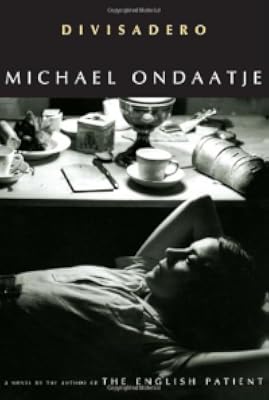
Divisadero
by Michael Ondaatje
On This Page
Description
Fiction. Literature. HTML:Northern California, 1970s. A father and his teenage daughters, Anna and Claire, work their farm with the help of Coop, an enigmatic young man who makes his home with them. Theirs is a makeshift family, until it is riven by an incident of violence that sets fire to the rest of their lives.DIVISADERO takes us from the city of San Francisco to the raucous backrooms of Nevada’s casinos and eventually to the landscape of south-central France. As the narrative moves show more back and forth in time and place, we discover each of the characters managing to find some foothold in a present rough-hewn from the past.
Breathtakingly evoked and with unforgettable characters, DIVISADERO is a multilayered novel about passion, loss, and the unshakable past, about the often discordant demands of family, love, and memory. It is Michael Ondaatje’s most intimate and beautiful novel to date. show less
Tags
Recommendations
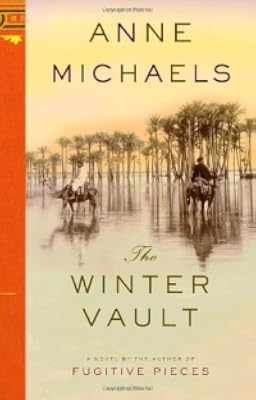
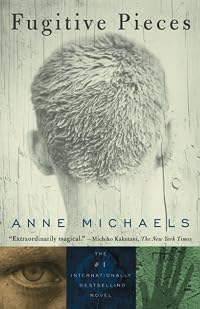

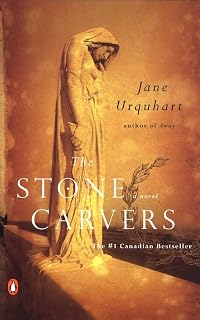

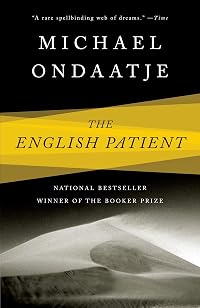
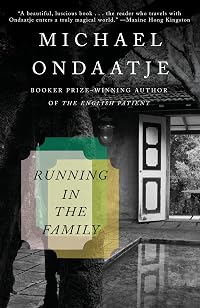
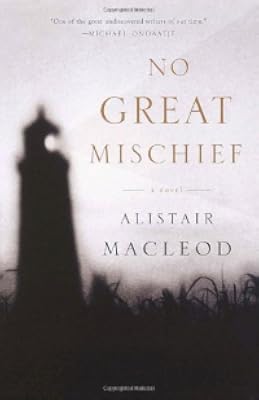
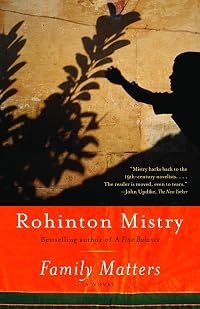
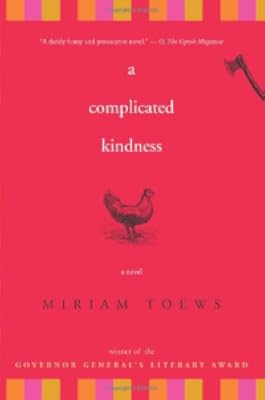



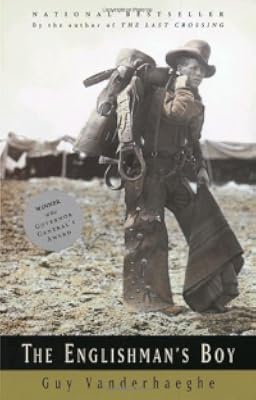
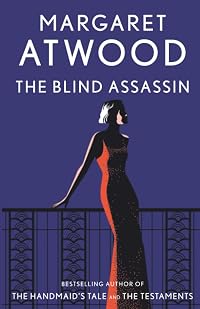
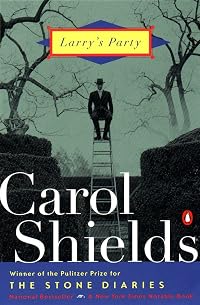
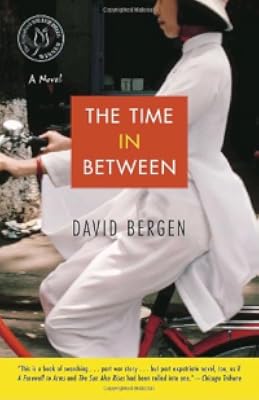

Member Recommendations
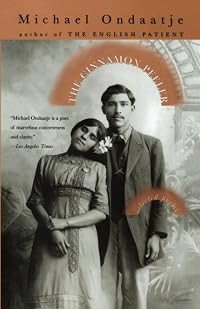
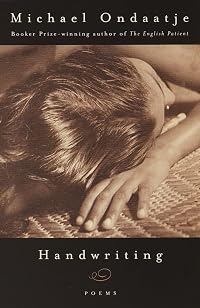
eveninglightwriter While Ondaatje is definitly more poetic in his descriptions, Julia Glass is just as enjoyable. I really felt myself swept away by both books. There seems to be a strong sense of place and time that both writers portray beautifully.
Member Reviews
This is a book that starts off with a violent incident that breaks apart the lives of four people – a father, two daughters (one adopted), and an orphaned young man raised with them. It then visits each person at a later stage of life. It highlights the difficulties that arise when trauma occurs in youth, which changes the course of their lives, and one wonders what might have been different if it had never occurred. This book does not contain a traditional storyline and feels rather disjointed. Characters appear and disappear. Scenes shift with little warning from northern California to Lake Tahoe to France. I liked it in places and the writing is beautiful, but it never cohered into a whole novel. It is more like short stories or show more vignettes that are only loosely tied together. I tend to like more of a storyline. I don’t need all loose ends tied up, but this book leaves almost everything hanging. I presume it is supposed to mirror real life in that way, but it did not quite work for me. I think it will appeal more to those who enjoy experimental fiction. If you have not read Michael Ondaatje’s work, I recommend starting elsewhere. show less
A family: two daughters, a father, a handyman. An almost numbing act of violence and each member of the family goes his or her own way. The book starts in Northern California and then roams the American West and rural France. As someone on Goodreads wrote, this “is not about the things that happened; it is a story about the things that were felt.” It is about what makes people tick and words are less important than relationships, feelings, silences. A point probably worth making: if you like “traditional” novels with a beginning, a middle, and an end, don’t read this book. It isn’t that kind of book. The middle isn’t a middle, the end most certainly is not an end. There is no end. Life has no end. Just puzzles without a show more solution, strings not tied up, false starts….
It took a while for me to get into this because Ondaatje focused on a part of the story/stories that just didn’t grab me. But once you’re involved, watch out! It’s partly the story, partly the writing, partly the omissions, the subtext. There’s a very short (maybe four or five page) “interlude” that is part of the backstory more than halfway in about a stepfather. Some of the best writing I have ever read, bar nothing. Ondaatje is one of the very best authors writing anywhere. Why isn’t HE on the Nobel short list? In a word: brilliant. show less
It took a while for me to get into this because Ondaatje focused on a part of the story/stories that just didn’t grab me. But once you’re involved, watch out! It’s partly the story, partly the writing, partly the omissions, the subtext. There’s a very short (maybe four or five page) “interlude” that is part of the backstory more than halfway in about a stepfather. Some of the best writing I have ever read, bar nothing. Ondaatje is one of the very best authors writing anywhere. Why isn’t HE on the Nobel short list? In a word: brilliant. show less
I can never quite make my mind up about Michael Ondaatje: sophisticated romance for people with university educations, or novels that expect us to take them seriously? He never seems to come off the fence, somehow. This one's a case in point: a positive delight to read, a kind of mashup between The virgin and the gypsy and one of those seventies films where Dustin Hoffman and Robert Redford play professional gamblers; full of flattering allusions to French novelists he pretends to assume we've read, with a wealth of interesting settings in California and rural France; a cast of farmers, gamblers, gypsies, and carpenters; interesting romantic tensions between people who are somewhere between lovers and elective siblings, ambiguous scenes show more that may or may not be taking place in the characters' imaginations, connections across space and time, even a little dash of World War I. But it does leave you wondering afterwards what it's all for. show less
The story of Divisadero by Michael Ondaatje is grounded in the violent dispersal of an already unusual family, and then follows the scattered pieces of people around the globe as they continue their fractured lives, echoing the patterns of other wounded souls that have come before. While the story opens in 1970s rural California farmland, it was not until several chapters in that I realized this was the case -- indeed, the early lives described seemed more fitting for the late 1800s or early 1900s... something post-gold rush and tarnished with the failure of grand dreams. Be warned that even though we get many perspectives in this novel, we may never be told anything that's true, or perhaps there's no way to know if what we remember is show more true or if it has altered in our memories. Anna, one of the main characters of the novel, tells us that she comes from Divisadero Street in San Francisco (which the reader can immediately identify as a lie, as we've already learned about her childhood in rural Northern California). Of course, the way she describes the word and its origins seems apt for the past the shaped her. “Divisadero, from the Spanish word for ‘division,’ the street that at one time was the dividing line between San Francisco and the fields of the Presidio. Or it might derive from the word divisar, meaning ‘to gaze at something from a distance.’ ” In this novel, when dealing with a first person perspective, we usually have several years' distance between the telling and the event.
A man and his wife take in a neighbor boy named Coop after he witnesses the brutal murder of his own family. Shortly thereafter, the wife dies in childbirth and the man brings home not just his own daughter, Anna, but another little girl, Claire, whose mother met the same fate as his wife, as though he was still owed another person by the hospital. The girls are raised not just as sisters, but with the linked consciousness of twins. The children inhabit their own world that revolves around the quiet life of the farm until they inevitably grow up and feel more complicated emotions for each other. Anna and Coop start a relationship and when Anna's father stumbles upon them together, he beats Coop senseless. Perhaps the only thing that stops him from killing the boy is Anna, who stabs her father with a shard of glass. Her father then drags Anna away in the middle of a storm and the family is never whole again.
The book examines the lives of these three near-siblings in fragmented pieces, shifting perspectives and leaving out blocks of time so that we only see small sections of their lives since the violence that drove them apart. Anna is in France, researching a once-famous writer named Lucien Segura and beginning a relationship with a man, as a child, knew Segura. After escaping her father as he drove her away from the farm, Anna never contacted anyone in her family again -- not her father, not Coop, not even Claire -- and never speaks about her origins with anyone. Claire works for a legal defender's office, hunting down the answers in other people's lives when she can no longer tie up the loose ends within her own. She remains the only child who still sees their father, visiting the farm on weekends to ride her horse through the hills. Coop, meanwhile, found himself in a vagabond existence as a gambler, winning money by playing cards and perhaps not realizing that the deck is stacked against him. Claire found Coop after the violent beating from their father and again finds him after another such incident. History repeats itself.
Divisadero was a book club selection and there were a wide variety of opinions about it... which makes for fantastic discussion. So even though I did not love this book, I did love the discussion that it drew from us. Rather than purchase the paperback, I bought the audio version, as read by Hope Davis. Ms. Davis has a beautiful voice and does an incredible job reading this novel; her French pronunciation in particular was lovely and it wasn't even until my book club met that I realized I took that for granted. When they learned that I had listened to the audio version, everyone demanded that I tell them how to pronounce several names and places from within the novel which then seemed odd to me to see in print. Ultimately, I found Divisadero to move incredibly slowly (I kept checking to see how much time was left of the file on my ipod, which is never a good sign) and while it was very easy to sit back and let Ms. Davis's voice wash over me, I wasn't terribly invested in the characters and so I just let the audio roll by. The only negative aspect of the audio version is the fact that shifting perspectives often mean that you're left a bit confused for a moment as you realize the narrator has shifted. At least with the book in front of you, you might realize a bit late, but go back to re-read what you had misinterpreted as belonging to a different voice. It was too much trouble to bother with that for audio and besides, it wasn't as though ten-minute sections would pass before such a realization.
Other members of book club adored the book, but those of us in the anti-camp had bigger issues with certain discrepancies in time and the lack of motivation for several characters. One person described most of them as wandering about, uncertain as to who they really are, to the point where it was surprising they hadn't been hit by a car by now for their dazed existence. Everyone seemed to have mixed feelings on just about everyone and everything, from the setting to the believability of the family make-up to the lack of communication between them in later years and so on. In addition to Anna, Coop, and Claire, we also go back to look at Lucien Segura (the author that Anna is researching) and his own broken, complicated family relationships, which take over the narrative before you even realize that we'll never get back to Anna, Coop and Claire. It was a bit of a disappointment to realize that Ondaantje has no intentions of coming to some resolution for them... which perhaps isn't surprising, but it's like failing to realize that your last interaction with a person actually was your last. There was no opportunity to say goodbye or process that this would be the last time. I also felt a bit surprised when Segura became a larger focus of book in the second half, as I had rather assumed he wouldn't enter the narrative at all.
The three not-quite-siblings in this novel are all a bit broken, forever defined by this one violent action in their lives that drove them apart. We talked a lot about what violence does to change people (Coop was the focal point of that discussion, having seen one family murdered and another destroyed) and whether one can really have one's existence defined in such a way in reality. Someone commented that Ondaatje wrote this novel as though it was a depiction of real life -- you get pieces of the picture and never a single, clear narrative. These are broken lives, which rest well in a broken narrative. It goes off on tangents and you may never fully understand a person's motivation or background... or perhaps you come close before being taken off to something else. While this might be the only real way to account for Ondaatje's vision of the novel, it hardly feels satisfying. The quality of the writing seems to demand more, but so it goes. Satisfaction is not his objective. The writing is lovely, but if you do opt to read this novel, I suggest that you do so with someone else so you can discuss it afterward, rather than stew in the book's unanswered questions. show less
A man and his wife take in a neighbor boy named Coop after he witnesses the brutal murder of his own family. Shortly thereafter, the wife dies in childbirth and the man brings home not just his own daughter, Anna, but another little girl, Claire, whose mother met the same fate as his wife, as though he was still owed another person by the hospital. The girls are raised not just as sisters, but with the linked consciousness of twins. The children inhabit their own world that revolves around the quiet life of the farm until they inevitably grow up and feel more complicated emotions for each other. Anna and Coop start a relationship and when Anna's father stumbles upon them together, he beats Coop senseless. Perhaps the only thing that stops him from killing the boy is Anna, who stabs her father with a shard of glass. Her father then drags Anna away in the middle of a storm and the family is never whole again.
The book examines the lives of these three near-siblings in fragmented pieces, shifting perspectives and leaving out blocks of time so that we only see small sections of their lives since the violence that drove them apart. Anna is in France, researching a once-famous writer named Lucien Segura and beginning a relationship with a man, as a child, knew Segura. After escaping her father as he drove her away from the farm, Anna never contacted anyone in her family again -- not her father, not Coop, not even Claire -- and never speaks about her origins with anyone. Claire works for a legal defender's office, hunting down the answers in other people's lives when she can no longer tie up the loose ends within her own. She remains the only child who still sees their father, visiting the farm on weekends to ride her horse through the hills. Coop, meanwhile, found himself in a vagabond existence as a gambler, winning money by playing cards and perhaps not realizing that the deck is stacked against him. Claire found Coop after the violent beating from their father and again finds him after another such incident. History repeats itself.
Divisadero was a book club selection and there were a wide variety of opinions about it... which makes for fantastic discussion. So even though I did not love this book, I did love the discussion that it drew from us. Rather than purchase the paperback, I bought the audio version, as read by Hope Davis. Ms. Davis has a beautiful voice and does an incredible job reading this novel; her French pronunciation in particular was lovely and it wasn't even until my book club met that I realized I took that for granted. When they learned that I had listened to the audio version, everyone demanded that I tell them how to pronounce several names and places from within the novel which then seemed odd to me to see in print. Ultimately, I found Divisadero to move incredibly slowly (I kept checking to see how much time was left of the file on my ipod, which is never a good sign) and while it was very easy to sit back and let Ms. Davis's voice wash over me, I wasn't terribly invested in the characters and so I just let the audio roll by. The only negative aspect of the audio version is the fact that shifting perspectives often mean that you're left a bit confused for a moment as you realize the narrator has shifted. At least with the book in front of you, you might realize a bit late, but go back to re-read what you had misinterpreted as belonging to a different voice. It was too much trouble to bother with that for audio and besides, it wasn't as though ten-minute sections would pass before such a realization.
Other members of book club adored the book, but those of us in the anti-camp had bigger issues with certain discrepancies in time and the lack of motivation for several characters. One person described most of them as wandering about, uncertain as to who they really are, to the point where it was surprising they hadn't been hit by a car by now for their dazed existence. Everyone seemed to have mixed feelings on just about everyone and everything, from the setting to the believability of the family make-up to the lack of communication between them in later years and so on. In addition to Anna, Coop, and Claire, we also go back to look at Lucien Segura (the author that Anna is researching) and his own broken, complicated family relationships, which take over the narrative before you even realize that we'll never get back to Anna, Coop and Claire. It was a bit of a disappointment to realize that Ondaantje has no intentions of coming to some resolution for them... which perhaps isn't surprising, but it's like failing to realize that your last interaction with a person actually was your last. There was no opportunity to say goodbye or process that this would be the last time. I also felt a bit surprised when Segura became a larger focus of book in the second half, as I had rather assumed he wouldn't enter the narrative at all.
The three not-quite-siblings in this novel are all a bit broken, forever defined by this one violent action in their lives that drove them apart. We talked a lot about what violence does to change people (Coop was the focal point of that discussion, having seen one family murdered and another destroyed) and whether one can really have one's existence defined in such a way in reality. Someone commented that Ondaatje wrote this novel as though it was a depiction of real life -- you get pieces of the picture and never a single, clear narrative. These are broken lives, which rest well in a broken narrative. It goes off on tangents and you may never fully understand a person's motivation or background... or perhaps you come close before being taken off to something else. While this might be the only real way to account for Ondaatje's vision of the novel, it hardly feels satisfying. The quality of the writing seems to demand more, but so it goes. Satisfaction is not his objective. The writing is lovely, but if you do opt to read this novel, I suggest that you do so with someone else so you can discuss it afterward, rather than stew in the book's unanswered questions. show less
His dreamily seductive writing will beguile and hold the reader. Occasionally, when Ondaatje comes down to earth, such as a mention of the Persian Gulf war, does he lose the spellbinding quality with a reminder that there is a real world out there. It's not that this is poetic in a flowery way, in fact there are some brutal scenes in this diverging (divisidero?) story yet they do not detract from its elegance. However, to take in the subtleties, Ondaatje's novels require the reader's attention, this one maybe more than any other. The strange thing about reading Ondaatje is that I can hear his velvet voice, in the same way I can hear my mother's voice when I read her letters.
Ondaatje's prose is so comforting. At the end of each chapter I crave more of where he was as he turns to somewhere new, I'm left haunted by the characterizations and situations and feelings he's just revealed. He quotes Nabokov in this book as requiring a re-read to see the thing clearly, and this will be a pleasure.
This story, one of two sisters and nearly a brother, of ranching and silence and gambling and brazen skill and stupidity, of love and love-making, of fathers and daughters of near brother and sister forbidden love and violence, of re-naming, of france and 19th century poets and lovers who were boys once who keep herbs crushed close to their heart: it's one I will keep with me for quite some time and one I will return to show more again.
I just reread this. Read it last in July 2007. show less
This story, one of two sisters and nearly a brother, of ranching and silence and gambling and brazen skill and stupidity, of love and love-making, of fathers and daughters of near brother and sister forbidden love and violence, of re-naming, of france and 19th century poets and lovers who were boys once who keep herbs crushed close to their heart: it's one I will keep with me for quite some time and one I will return to show more again.
I just reread this. Read it last in July 2007. show less
The blurb on the back cover really doesn't do justice to the poetry - or, indeed, much of the plot - of the actual novel. I was expecting some sort of rural farm-based kitchen sink drama, but the 'division' between the two sisters occurs early on, and then the story branches off into two completely different directions. Claire and Coop stay in America, meeting randomly in the midst of their separate lives, and Anna leaves for France to immerse herself in the work of a reclusive author, Lucien, and takes a lover called Rafael. We get a glimpse into the lives of every character, and the story ends with Lucien's ill-fated romance during the First World War. And Ondaatje's beautiful language is like another character in its own right - I show more kept getting caught up in his poetic turns of phrase, but never lost the threads of the story. A magical interlude. show less
Members
- Recently Added By
Lists

The Best of Canadian Literature
235 works; 33 members

Best 21st Century Books (So Far)
679 works; 86 members

Governor General of Canada's English Fiction Awards
89 works; 3 members

Mooie titels
80 works; 1 member

Books I Own But Haven't Read
144 works; 2 members

Swinging Seventies
255 works; 18 members
Author Information

68+ Works 34,896 Members
Michael Ondaatje was born in Ceylon (now Sri Lanka) on September 12, 1943. He moved to Canada in 1962 and became a Canadian citizen. He received a B.A. from the University of Toronto and a M.A. from Queen's University, Kingston, and taught English at York University. He has written several volumes of poetry, novels, and other works including show more There's a Trick with a Knife I'm Learning to Do, The Dainty Monsters, Rat Jelly, Coming through Slaughter, Running in the Family, In the Skin of a Lion, Anil's Ghost, and The Cat's Table. His title, Warlight, made the bestseller list in 2018. Ondaatje has won numerous awards including the Canadian Governor General's Award in 1971 for The Collected Works of Billy the Kid and the Booker Prize in Fiction for The English Patient, which was adapted into a film in 1996. (Bowker Author Biography) Michael Ondaatje was born in Sri Lanka. He now lives in Toronto. (Publisher Provided) show less
Some Editions
Awards and Honors
Series
Belongs to Publisher Series
Otavan kirjasto (192)
Work Relationships
Inspired
Common Knowledge
- Canonical title*
- Divisadero
- Original title
- Divisadero
- Original publication date
- 2007
- People/Characters
- Anna; Claire; Coop; Lucien Segura; Rafael
- Important places
- San Francisco, California, USA; California, USA; Nevada, USA; France
- Dedication
- For John and Beverly
and in loving memory of Creon Corea
- remembered by us as 'Egilly" - First words
- When I came to lie in your arms, you sometimes ask me in which historical moment do I wish to exist.
- Quotations
- Wij hebben kunst opdat wij niet door de waarheid zullen worden vernietigd (Nietzsche)
“There is the hidden presence of others in us, even those we have known briefly. We contain them for the rest of our lives, at every border that we cross.”
So we fall in love with ghosts.
With memory, with the reflection of an echo, a gate opens both ways. We can circle time. A paragraph or an episode from another era will haunt us in the night, as the words of a stranger can. - Last words
- (Click to show. Warning: May contain spoilers.)“He turns his back to the far shore and rows toward it. He can in this way travel away from, yet still see, his house....he feels he is riding a floating skeleton...Some birds in the almost-dark are flying as close to their reflections as possible.”
- Blurbers
- Butala, Sharon
*Some information comes from Common Knowledge in other languages. Click "Edit" for more information.
Classifications
Statistics
- Members
- 2,484
- Popularity
- 7,808
- Reviews
- 86
- Rating
- (3.51)
- Languages
- 14 — Catalan, Dutch, English, Estonian, Finnish, French, German, Italian, Norwegian (Bokmål), Polish, Portuguese, Russian, Spanish, Swedish
- Media
- Paper, Audiobook, Ebook
- ISBNs
- 46
- ASINs
- 8